Category Archives: Leadership

The Space Should Be Bounded and Open

I believe paradox is essential for educational transformation. Parker Palmer described paradox as a creative tension or “a way of holding opposites together that creates an electric charge that keeps us awake” in his book The Courage to Teach. He argued “the poles of a paradox are like the poles of a battery: hold them together, and they generate the energy of life, pull them apart, and the current stops flowing…and we become lifeless.” I elaborated on paradox in my posts Abundant Community and Paradox of Community. I propose paradox be used to revitalize the institution we call school and the conversations about this necessary enterprise.

Parker Palmer in The Courage to Teach presented six paradoxes and identified ways in which they could serve us in the classroom through pedagogical design. I believe they serve educators and their communities as foundations for conversations and a long overdue transformation.

The first paradox is “the space should be bounded and open.” School cannot be a one size fits all approach, but it cannot be a chaotic, wide-open system. There are many ways to understand school from home schooling to traditional. In between, there is diversity. Is school a building? Could it be a virtual gathering? Could it be a combination? Rigid boundaries should be replaced by flexible boundaries. If they do, then we can ask, “What serves the child?” What serves the community?”

Over the next while, I will look at each paradox, and explore how they lead conversations towards transformation.
I enjoyed this critique of Daniel Pink’s book and will read the book. Earlier. Another blog suggested the work emanating from another book by this author, A Whole New Mind, was important to educators and thinkers. Bear in mind, Daniel Pink is not an educator and his last real job, from his website, was as a political speechwriter.

I agree Alfie Kohn, who taught school, or Carol Dweck, a psychologist focusing on motivation, and her book Mindset: The New Psychology of Success,  are invaluable resources for educators.

I think a different understanding unschooling movement is extreme home schooling. Deb Meier acknowledged, in an interview, home schooled children are some of the best socialized children she has met. I think unschooling is an unfortunate descriptor and natural learning, experience-based learning, or independent learning might be less misleading. Instead of discarding the concept, consider questions about education and school’s purpose in the 21st Century. I think there is room for reasonable alternative models in a progressive and increasingly diverse world.

The Real Leadership Lessons of Steve Jobs – Harvard Business Review

The Real Leadership Lessons of Steve Jobs – Harvard Business Review.

Here is a great article written by Walter Isaacson. We often overlook the less obvious influences of people such as Steve Jobs.

I thought some of the people who read my blog might enjoy reading this posting from an excellent blog contributed to by a variety of educators. It fits with recent conversations and the World Cafe Conversations.

Transformation of the Self, Stewardship Reunderstood

This morning, as I sat quietly, the following words came to me and I am hopeful I can begin to live them.

If I am fully present for each moment in a non-judgmental way and transformed the world I live in from ordinary to extraordinary what joy I would give and receive. I fell back into old reactive habits yesterday instead of living into and embracing each moment. Time and space helps point one’s self to the moment and an understanding of those things I control. It requires quieting my ‘monkey mind’ and that was a struggle yesterday.

Transformation is slow, mindful change. It is patient moment-to-moment and incremental change. It is humbling and requires compassion as I tend and nourish an internal garden and attempt to bring the quiet of those moments into the busyness of my life. Each time I sit, I need a quiet mind to reveal the hidden wisdom.  Until this morning, I considered stewardship as caring for something external, but it begins from within.

Jerry Garcia Comparisons

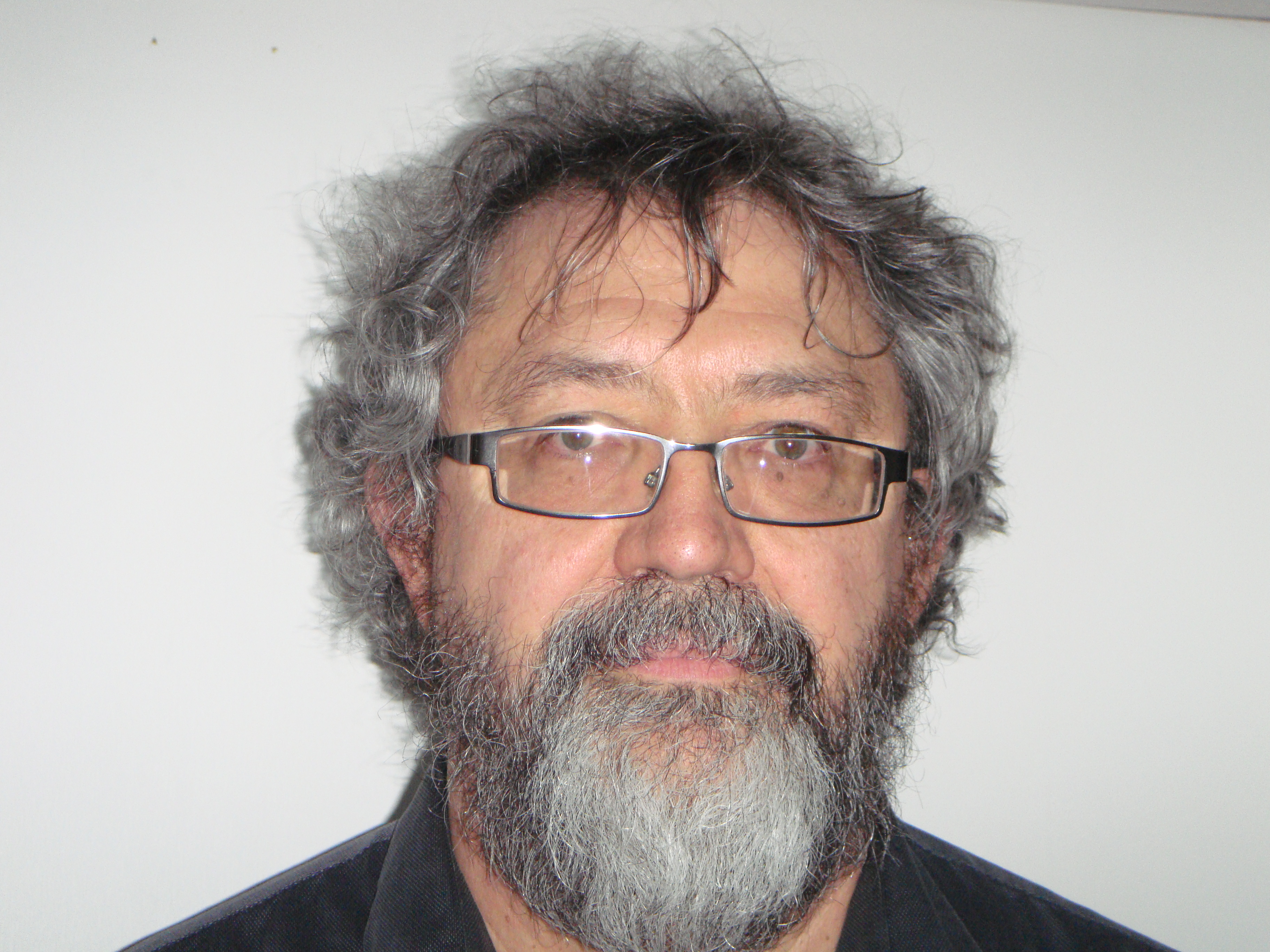
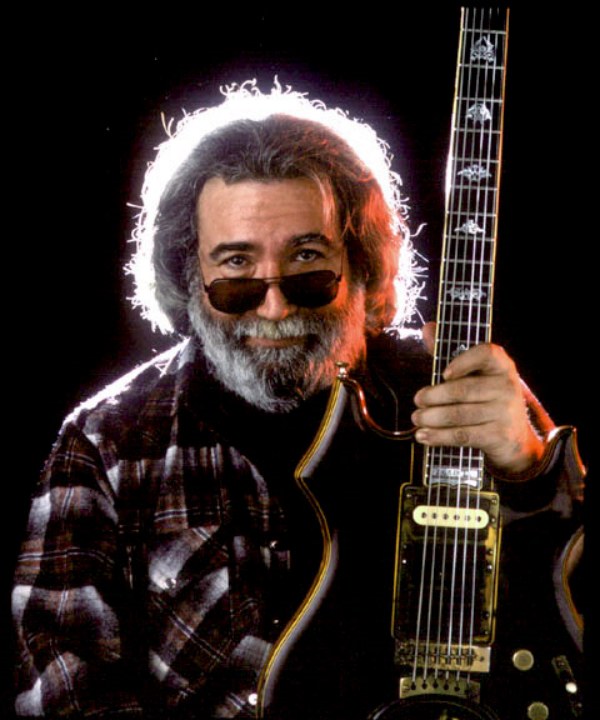
When I was in Seattle, several people mentioned I looked like Jerry Garcia. This was a first and might be a Canadian thing. Does Jerry Garcia and the Grateful Dead have the following here as in the US. I told my students about the comparison and within minutes they had gone on the Internet and found images of Jerry Garcia to compare. Today, I played some Grateful Dead and students watched videos. I mentioned, “I don’t see the similarity,” but several students disagreed.

I will leave it to you to offer a definitive answer. Here is an image of Jerry Garcia and the other of me. The Garcia image came from a Forbes article comparing the leadership of Steve Jobs and Jerry Garcia and the article is a good read.


Personally, I don’t see it.

21st Century Renaissance in Education

Will we be 21st Century Renaissance people? This question emerged from a recent conversation with a Grade 8 Social Studies class. We discussed a broad, nuanced, and emergent worldview.

Specialization and expertise are not the calling cards of success. Adaptation and transformation are at the heart of contemporary education. Transformation is not just a synonym for change and is reflective of  dramatic and systemic change. I understand transformation as a mindful, incremental process producing real change over time framed around evolving eloquent questions. What change do we need? New conversations about reimagining education producing compassionate leaders for a 21st Century Renaissance. What role will education play in helping young people become the leaders of this Renaissance? Is public education capable of transformation? Are there leaders capable of bringing forth tomorrow’s leadership? What will education of this nature look like?

Renaissance is rebirth and a time of metamorphosis and transformation. What emerges from the chrysalis stage? Ideas mature and become capable of further adaptation.  Human endeavour requires rich, inclusive conversations for profound change to occur instead of  superficial patching what the outdated models that exist. We need to prepare the soil for transformative conversations focused on eloquent questions where answers are not assumed before the conversation and invite diverse views during the course of the conversational journey.

Subversive Seuss?

Fact is stranger than fiction. Charles Adler, in an op-ed column “We don’t need no ‘educrats'”, pointed out the sometimes subversive nature of Dr. Seuss. There is more to the story than Mr. Adler revealed in his article and a more detailed account is at “Yertle the Turtle Deemed ‘Too Political’ for Fragile Canadian Children.”

I am impressed with the dedicated bureaucratic representative of Prince Rupert [British Columbia] School District who acted to make sure susceptible elementary students were not corrupted by the seditious literature of a beloved, albeit radical, children’s author. After all, those small, impressionable beings will enroll in university level classes to learn about Paulo Freire‘s critical theory or Leonardo Boff‘s liberation theology and we could have a more just, humane world to live in. When I grow up, can I be paid to sit in an ivory tower and be out of touch with the real world? The jurisdiction representative stated “It’s a good use of my time if it serves the purpose of shielding the children from political messaging.” Oh my God, political messaging; what next? What is he talking about?

There is a larger context. The British Columbia Teacher’s Federation and the province of British Columbia are involved in a bitter labour dispute. The teacher was not reading a book to students in the classroom, but the quote was taken by a teacher to a meeting with management.

If there is a political statement being made here, it is in the impact on children’s learning. The book’s line “I know up on top you are seeing great sights, but down here on the bottom, we too should have rights” points to those with the least. Dr. Seuss spoke to the greatest measure of servant-leadership. What growth do we see in those with the greatest needs? When will someone speak for the children and serve and lead at the same time? Will adults need to grow up first so that growth can be fulfilled and measured? Neither side gets a pass here.

Part of the problem for children’s learning is the use of polarizing language in the dispute. Do the children care if there is a management side or teacher side? Are adults locked in a political game replete with childish behaviours to gain real or imagined political advantage while using children as pawns? This suggests questions, not answers. Are these not someone’s children? What are parents doing? What does this say about the state of public education? We talk a good story in education and say all the right things, but I am embarrassed and angry, as an educator and as a citizen in a purportedly democratic country, when I read articles of this nature. What drew us to this vocation? Or is it just a job now? What are the qualities exemplified by great teachers: compassion, caring, collaboration, etc? Are we living up to those when we talk and act this way?

Mr. Adler has this mostly right. What is missing is the following question, “When was the last time some people were in a classroom, rolled up sleeves, and taught children?”

Educational Theory in Practice

Where I work is a place that can bring me great joy. The word work is the wrong word actually. Since beginning this ‘gig’ 12 years ago, I refer to it as the place I teach and learn. I had two chances to interview for this role. Most of us only get one chance. I made the most of the second chance and the rest has been history.

What do I do? I teach and learn in a small school setting combining a traditional attendance model and home schooling. It was the ‘brain child’ of several families almost 20 year ago. They believed there was something of worth to take from both models and they helped to build a hybrid school.

I teach multi-grade junior high students three core subjects: English Language Arts, Social Studies, and Science while students attend each Tuesday and Thursday plus every other Monday. We provide complementary programming i.e. curling, food sciences, and archery. Students learn Math at home guided by their parents and with help from the teacher, in this case me. The home school component occurs on the non-attendance days and the teacher conducts regular home visits on those days, as well. Home visits help the child and/or parent with contentious Math concepts and build relationships with families.

This community uses a three-legged stool approach. Students, parents, and educators are all important contributors to the success and quality of learning and we all are learners on a journey together. Parents learn curriculum and teaching strategies assisting the learning of their children. They assist in the classroom on a regularly scheduled basis. Students grow to accept the learning journey belongs to them. They are companions in the learning enterprise and learning is with them. Teachers learn about the children and their families through open, honest conversation. What does each child need is a central question to the conversation. Most of all, the support needed for children’s success is in a community environment where we are partners and not adversaries. This is a relationship grounded in covenant as opposed to one centered on  transactional contracts. We all commit and invest in something we dearly and deeply value.

I wanted to share this because we are an innovative educational project and some upcoming postings will share some of my experiences in this community of practice or learning organization.

What Does it Mean to Be in Control?

I arrived in Seattle today and it is raining. I am attending a Circle of Trust retreat based on the writing and work of Parker Palmer. We share stories and look at the lives we live. Today, I shared a story about my fear of flying and its underlying source. This ends up being a humourous story in the end and revealed something I am only beginning to understand.

Recently, Kathy and I flew from Edmonton to Portland. After arriving in Vancouver late, we rushed across airport and just made the Portland connection. The doors were closed before we had our seat belts fastened. I settled in, we climbed to altitude, the captain came on the intercom and announced words fearful fliers do not want to hear, “Folks there is inclement weather en route and there will be turbulence.” We did hit turbulence. It was not the worst I have experienced, but it was bad enough to create apprehension for me. Kathy calmly explained, “It is similar to a school bus on a gravel road.” I was not impressed and continued to suffer. As the turbulence died down, I reflectively asked a question: “What is causing me to feel this way?” Just as I was beginning to explore this intriguing question, we hit another patch of turbulence. Already engaged in an answer seeking mode, I realized I was moving my feet like I was working the pedals in a car. My fear of flying is largely based on a lack of control. When the flight moved past the turbulence, I mentioned this to Kathy who suggested one of us needed to get a pilot’s license to resolve the problem. We were able to laugh. The good news is today I had a relatively good and relaxed flight to Seattle. Being aware of a potential cause, is important and asking that first question was important.

This is not the first time I used this strategy. Driving to a meeting in November, I did the same thing when I grew anxious about the meeting.  I asked myself what made me feel the way I did and realized a lack of feeling in control of the meeting and its agenda was at the heart of my anxiety. I was able to relax and remain poised during the meeting. The lack of control existed in my mind as an imagined narrative I held to be true. I had not mentally rehearsed or visualized how I would handle what I assumed would be a confrontational situation. This was my normal way of dealing with these situations. The result that day was a quieter, more relaxed mind and body; better prepared actually by not preparing the old-fashioned way. Retreats, like the one I am attending this weekend offer opportunities to explore the internal landscape in a different way than normally done in the busyness of my daily life. From a leadership perspective, if a person is always going off the deep end emotionally, how can that be effective leadership? The time to reflect and spend time attending to one’s inner landscape is an essential, but overlooked aspect of true leadership.