Category Archives: Lesson Plans

Chair Building

I use this lesson plan as an activity in the Grade 7 Science Structure and Forces unit. The students work in pairs.

  • Students draw a plan for the chair design.
  • Concepts to Include might include corrugation, lamination, and triangulation; design considerations such as arches, beams, trusses, and columns; and show an understanding of what fastening techniques for this design i.e. friction fit, mass, and glue, staples, rope, tape (within reason), or nails or screws (within reason).
  •  Consider properties i.e. stability, brittleness, ductility, hardness, plasticity, compression, and tensile strength.  Students need to consider deformation, structural stress, structural fatigue, and possible structural failure. What are internal forces (mass of materials) and external forces (load on the chair).
  • What role do aesthetics play i.e. symmetry and appearance? What is the chair used for?
  • Students use recycled material i.e. cans, plastic containers, and cardboard (boxes, tubing, and pieces).
  • Students construct and track changes. The original chair design might be altered depending on material availability, functionality, and durability.  They should test the chair as they build.
  • I limit class time to 2-3 classes. Most materials are found at home and students can receive help from family, friends, or neighbours.
  • I email parents and tell them they are consultants, who can offer expertise, guidance, and time unavailable in the classroom. Parents are good about insuring students do the lion’s share.

Students are innovative. One student included pop bottle (he told me it was for pop) holders in the arms of a deck chair. Another student gathered discarded pizza boxes after hot lunch and used those.

Assessment is a rubric. A criterion is I test the chair. Its ability to hold my 250 pounds, give or take, is part of the challenge. Only one chair collapsed under my mass. It lacked support.

This is a Grade 7 project, but I think other can modify it for other grade level needs. Students can work in pairs.

Cautionary note: I allow nails, screws, and tape as fasteners, but within reason. The first time I did this activity a student built a nail chair. He used so many nails it is doubtful they were recycled.

Here are some examples of this year’s chairs.
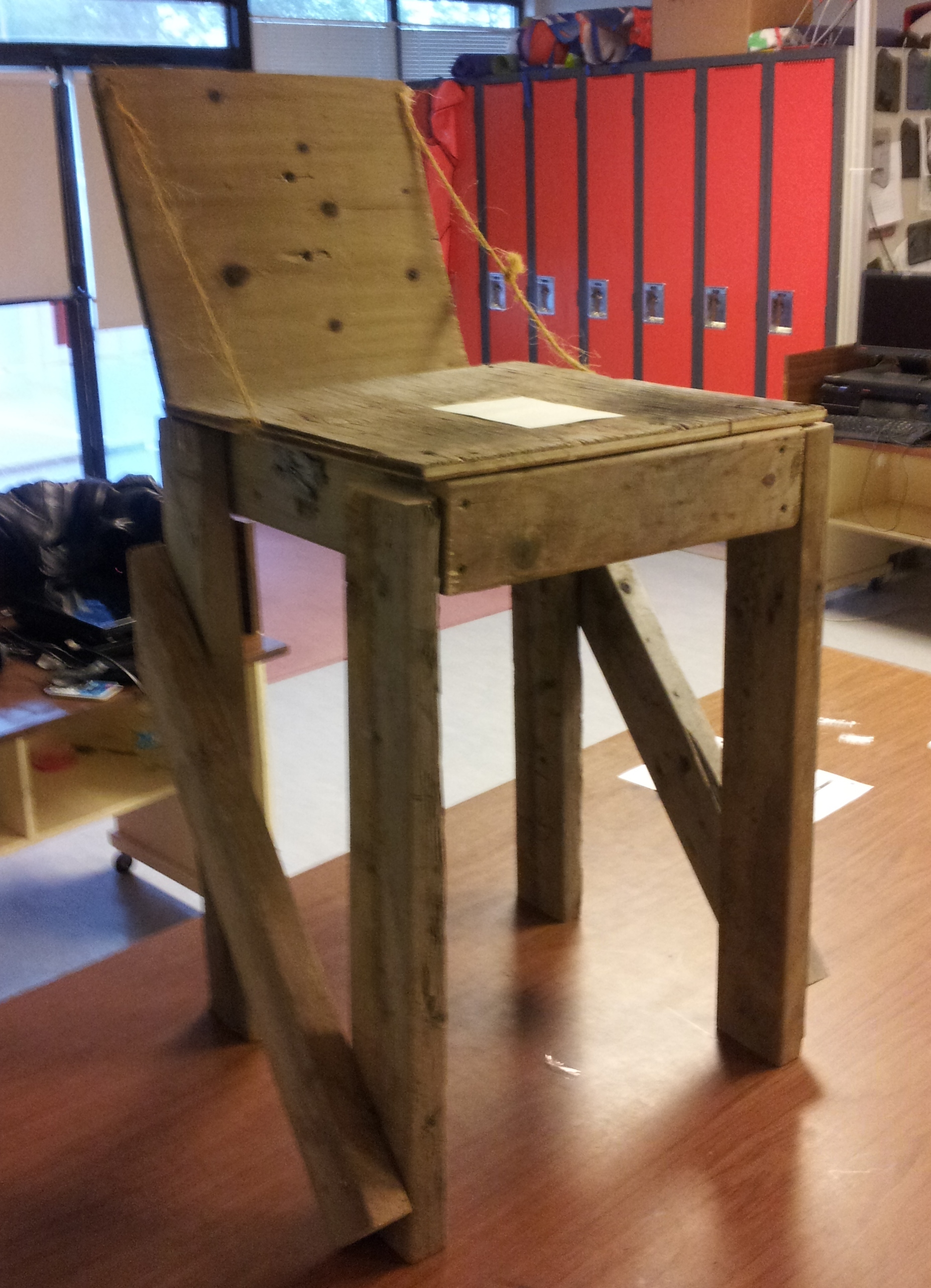
This chair is made from used pressure treated lumber and plywood. The back folds forward and the student used baling twine he got from the farm as the hinges.
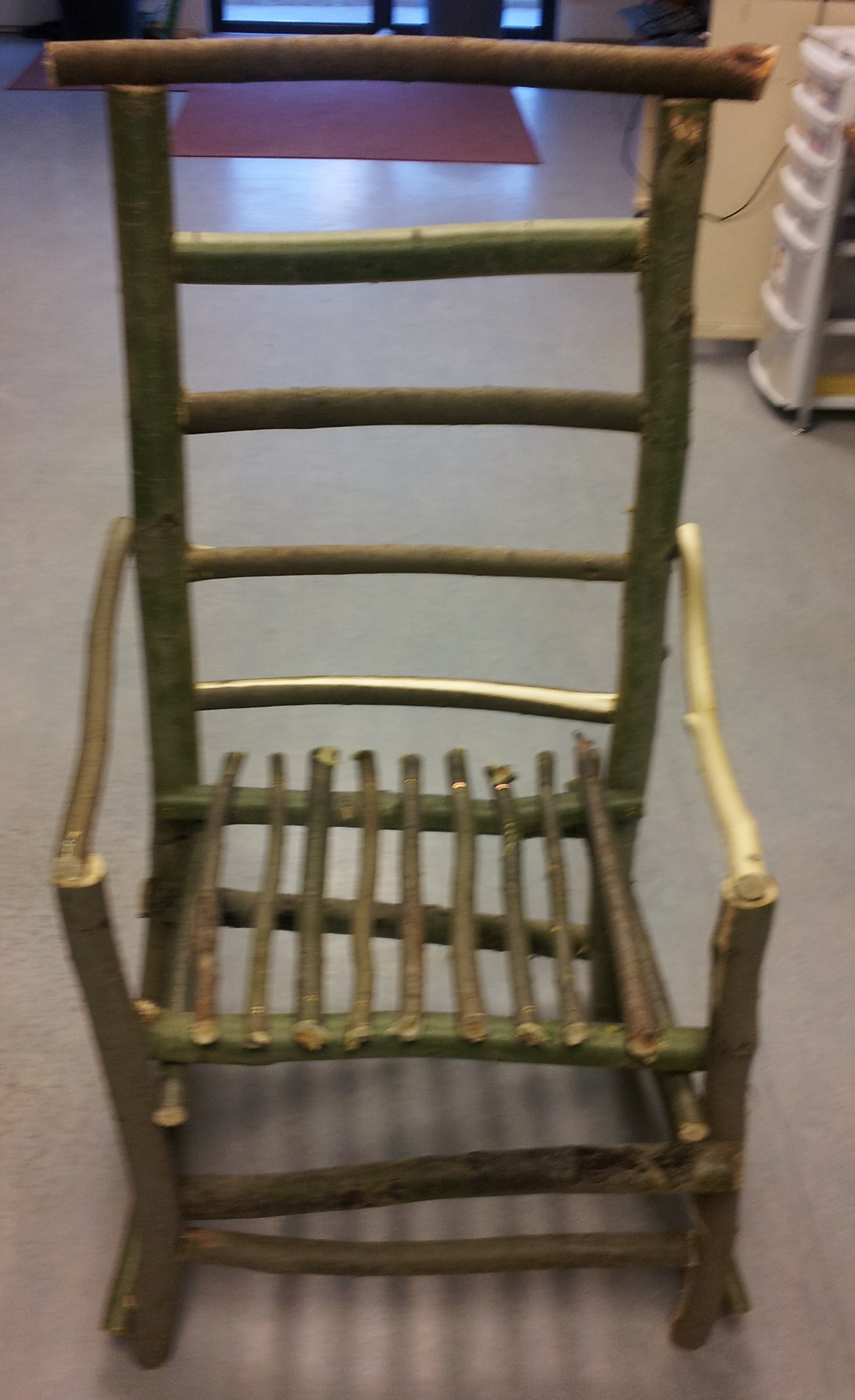
This chair is constructed from willow. The willow qualified as recyclable as the students were going to have to dispose of the willows when they cleared underbrush anyway. The only thing missing is a cushion. These students could go into business selling yard furniture.
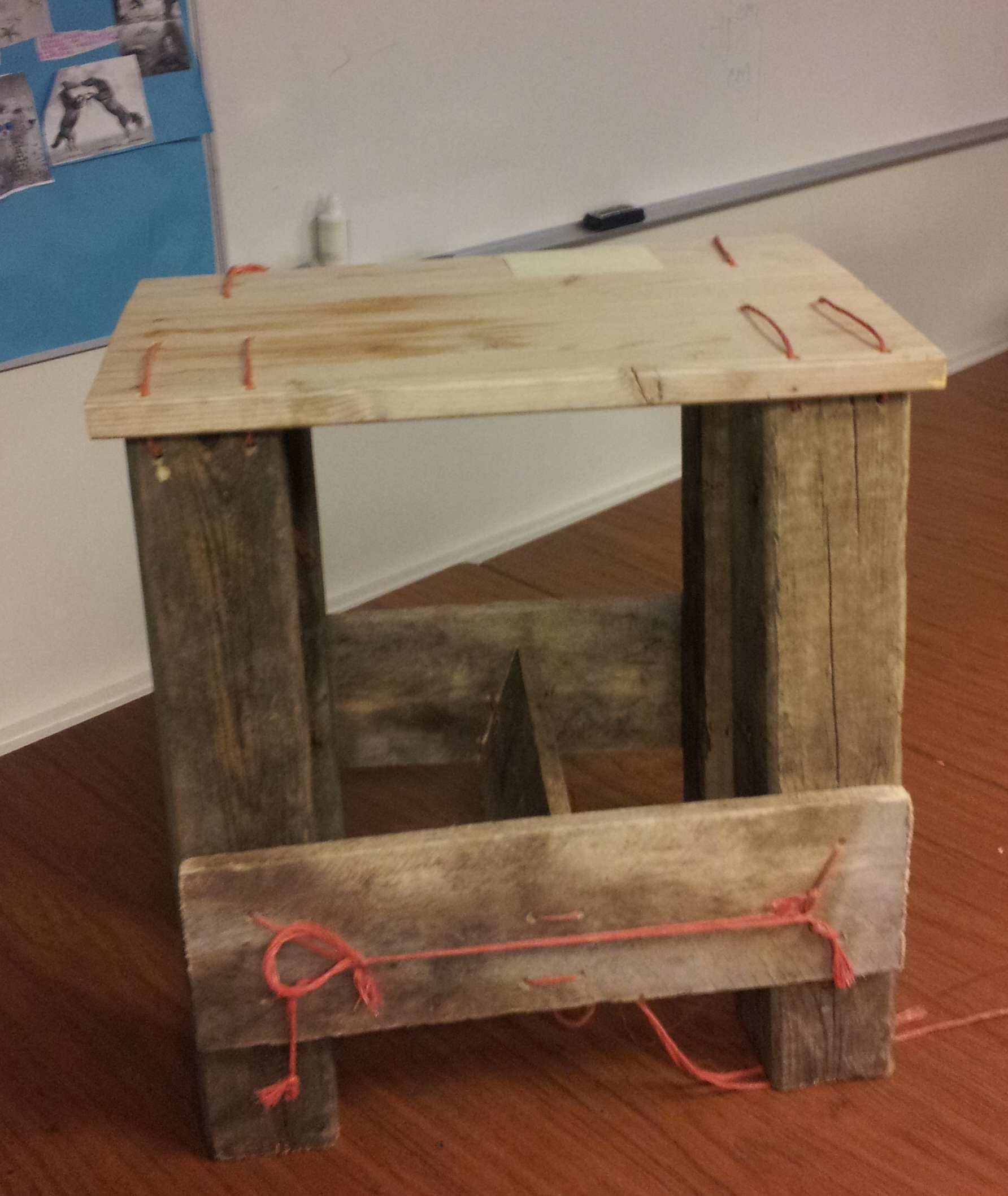
Although this stool did not have triangles for stability, the centre piece helped in that respect. When I sat on the stool, it was wobbly, but with my mass it became less so. The students used baling twine as the only fasteners. One of them has horses and these were available.
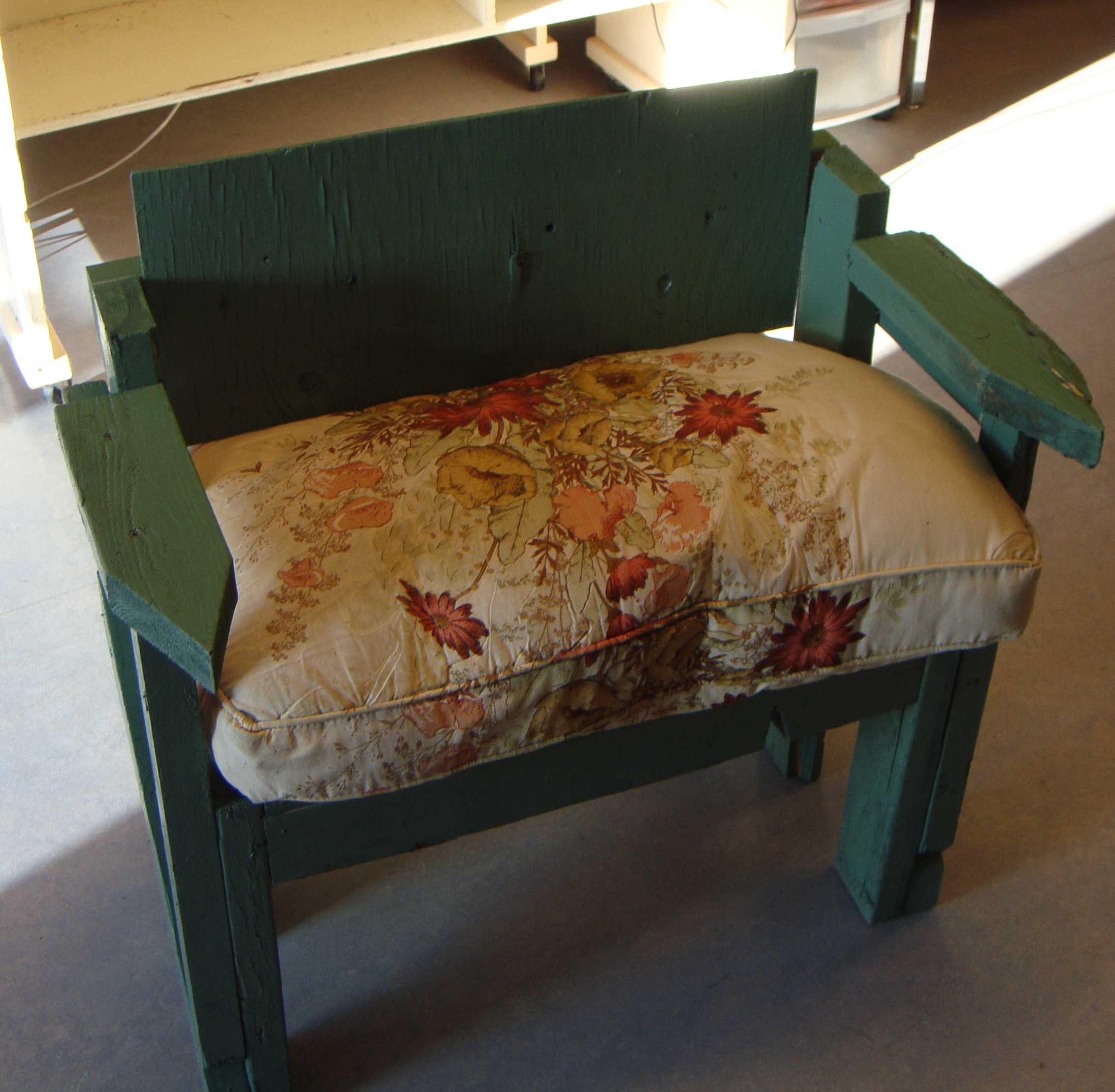
This chair is built from recycled wood and a discarded cushion. The students gathered the wood from the neighbourhood and a neighbour helped. He drilled tap holes for the screws.
Whales Forever

This is not about whales per se. Several years ago, my Grade 8 class struggled with the simple machines unit in Science. I proposed an alternative assessment route. Instead of writing a test, they could apply their learning and build a complex machine. They were all over it, but I had to come up with something and began a search of the Internet. I found an idea called Whales Forever and modified it to fit my needs. It has been a success ever since.

1. Whales become stranded on beaches around the world and Whales Forever is concerned with the survival rate of beached whales. This environmental organization rescues whales and returns them to open water quickly so they will not perish. Whales Forever announced a contest for Grade 8 students to create a prototype machine which would safely lift a stranded whale onto a hover craft so it could be transported back to open water as it receives medical treatment.

2. Students design and build a machine which with a minimum mechanical advantage (MA) of 4. The machine consists of at least two simple machines. Mechanical advantage is calculated output force divided by the input force.

3. The machine will lift the whale a height of 10 cm and lower it 5 cm onto the simulated hovercraft. The whale is simulated by a resealable plastic bag filled with marbles or sand. Students can hand position the ‘whale’ in a harness which is part of the system to begin the lifting process.

4. Students sketch exploratory labelled diagrams of their chosen design including measurements indicating critical components i.e. simple machines used, gears, and drive trains. They provide mechanical advantage calculations.

5. Students use available materials i.e. desks, stools, tables, retort stands. Last year, a student used a Meccano set and this year students used K’Nex. They are not allowed to use a motorized system. They use planes, levers, pulleys, screws, wheel and axles, and perhaps a wedge.

6. Students give a written reflection outlining the strengths and weaknesses of their design including written suggestions for improvement.

7. Students make a 4 minute presentation to the board of directors of Whales Forever.

I use a rubric and assess the design including diagrams, the effectiveness of the prototype, the reflection, and the presentation.

Here are some examples of this year’s products.

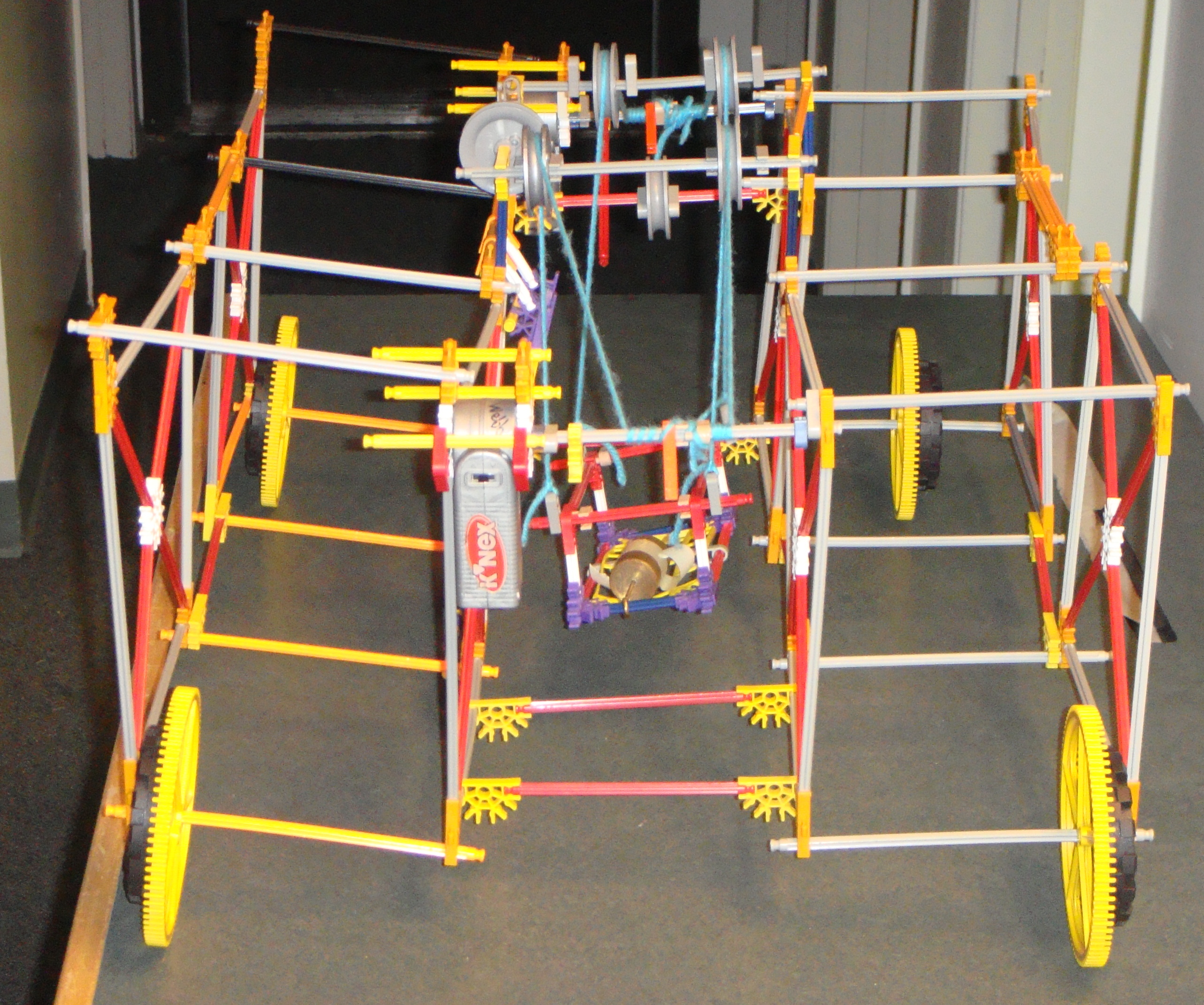
Whale Saver constructed from K’Nex. You can see the harness on this one. It had a mechanical advantage of about 15. The one challenge with the K’Nex is hooking up the scale. It took some maneuvering.

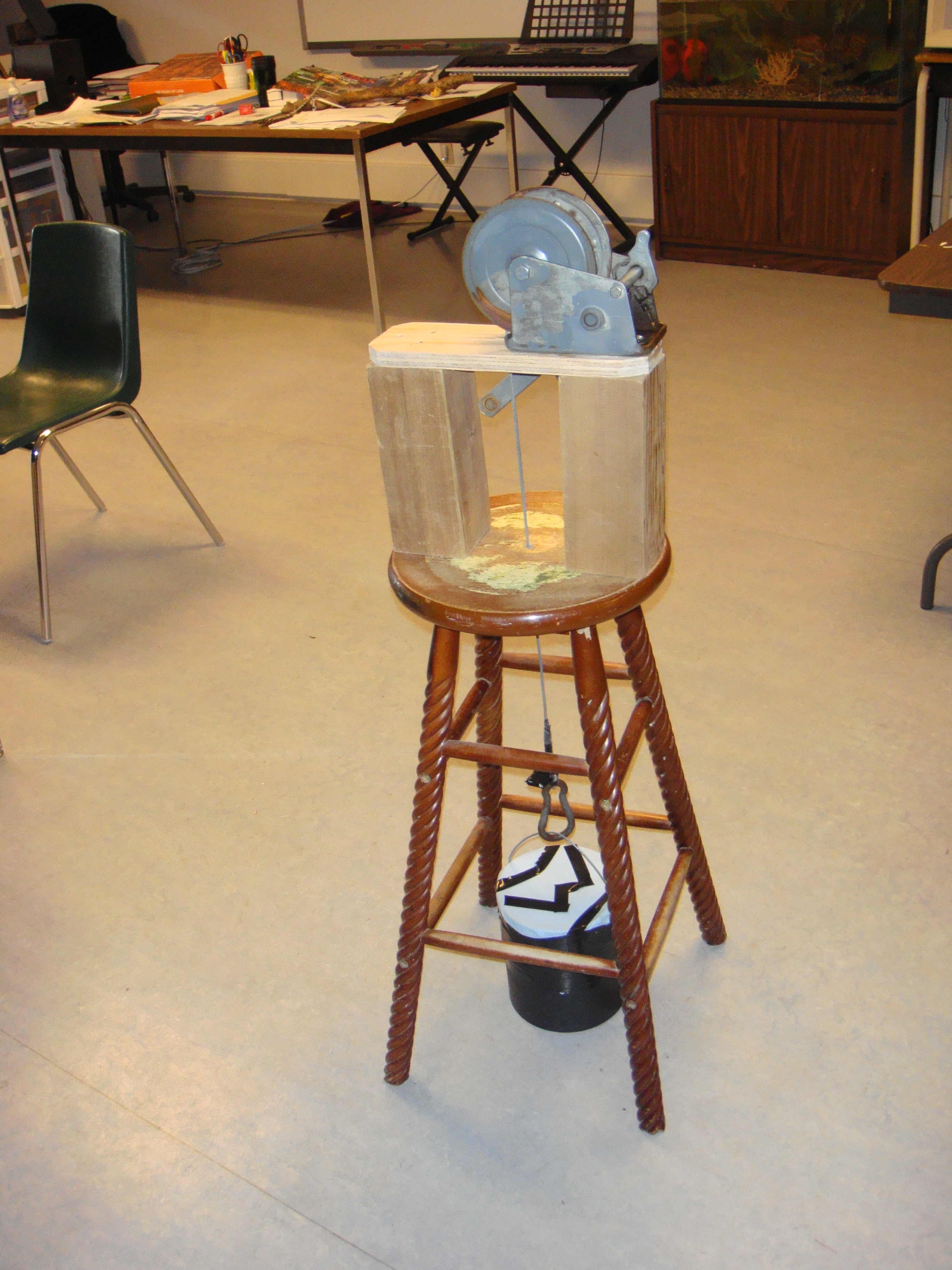
This one was homemade. It had a mechanical advantage of 20.

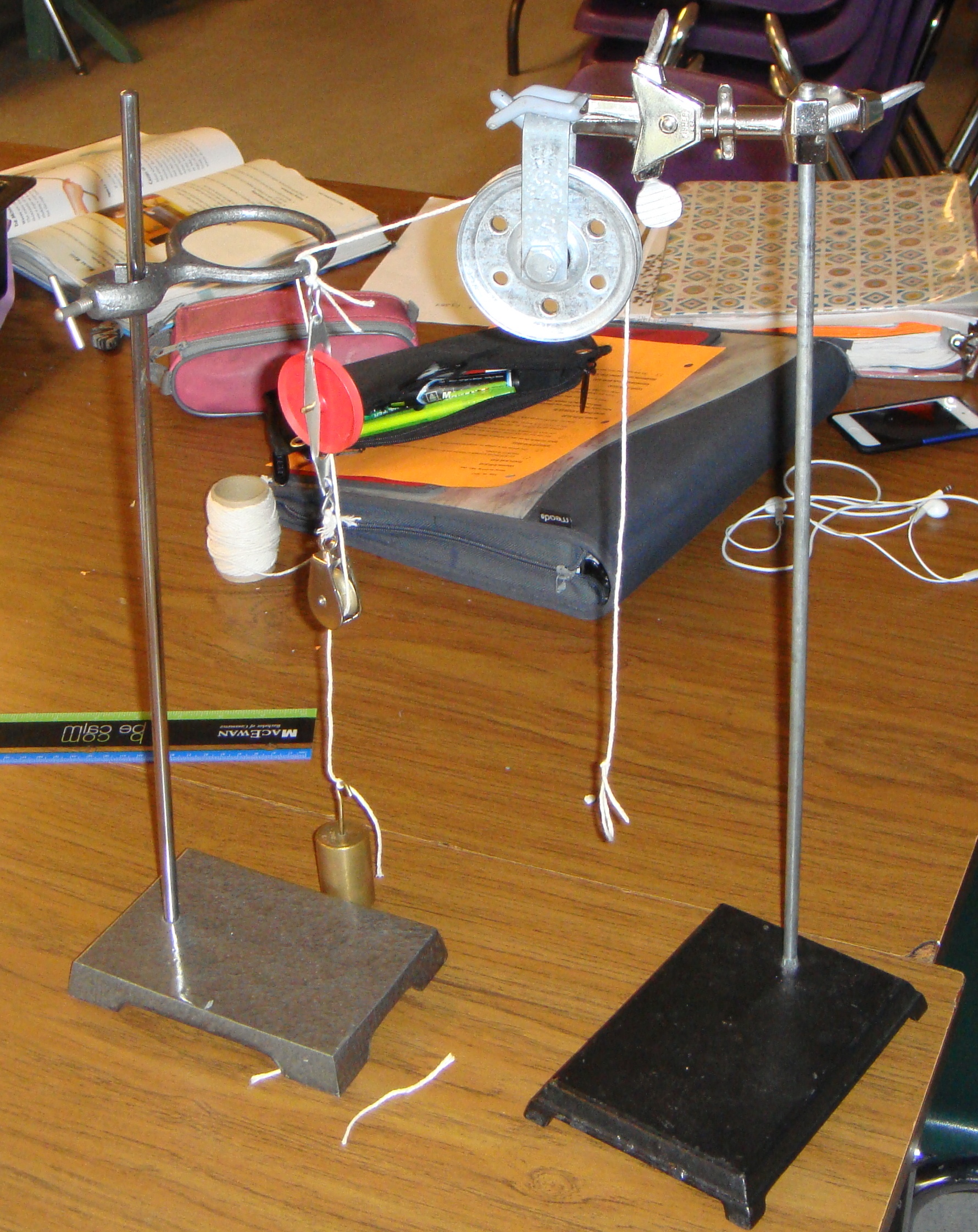
These students used materials from the classroom primarily. It had a mechanical advantage of about 8 or 9.

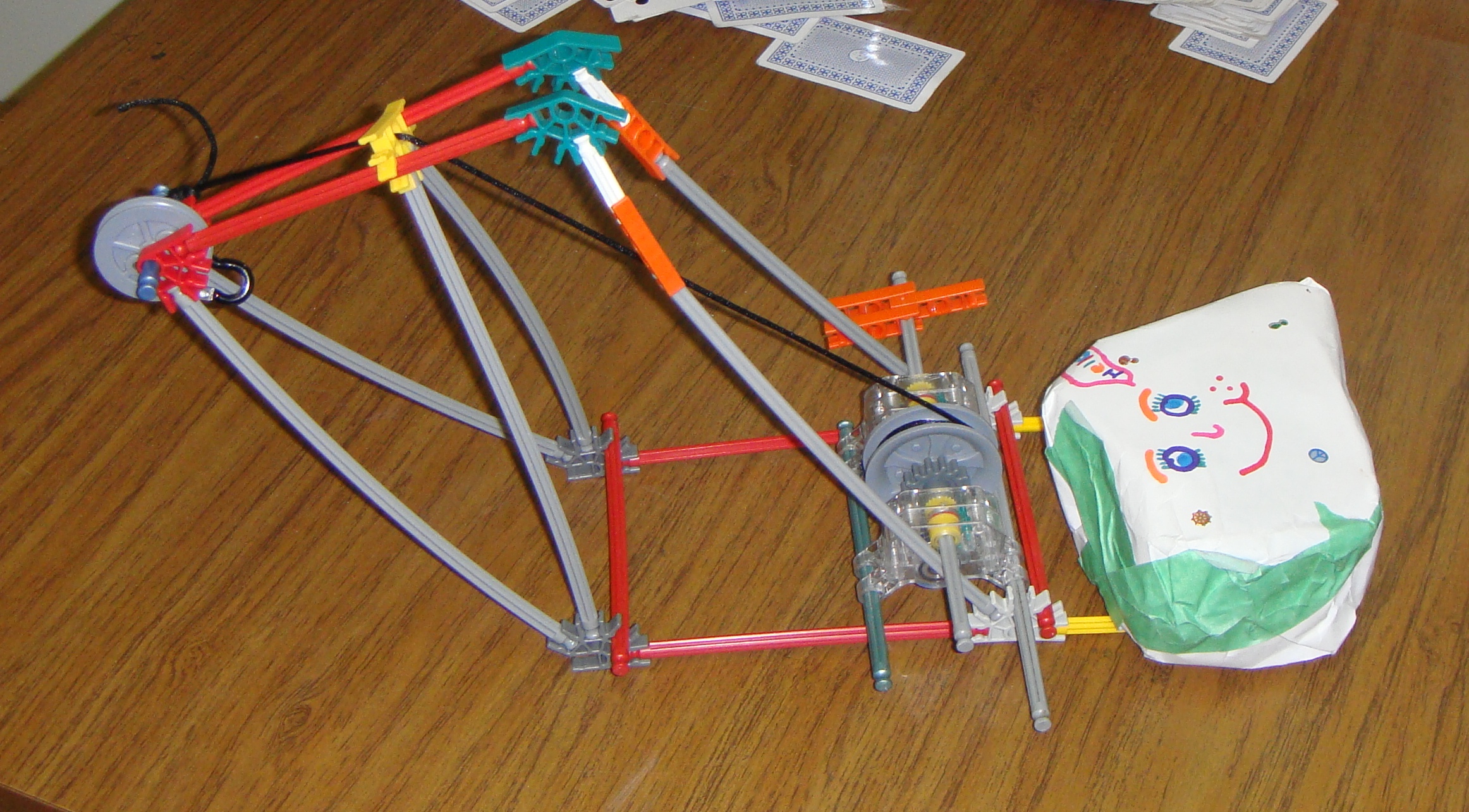
This was another K’Nex design. The thing on the right is a rock wrapped in paper with a face on it. The rock countered the weight of the whale as it was lifted. This machine had a mechanical advantage of about 10.

Ode to Grandma’s Socks

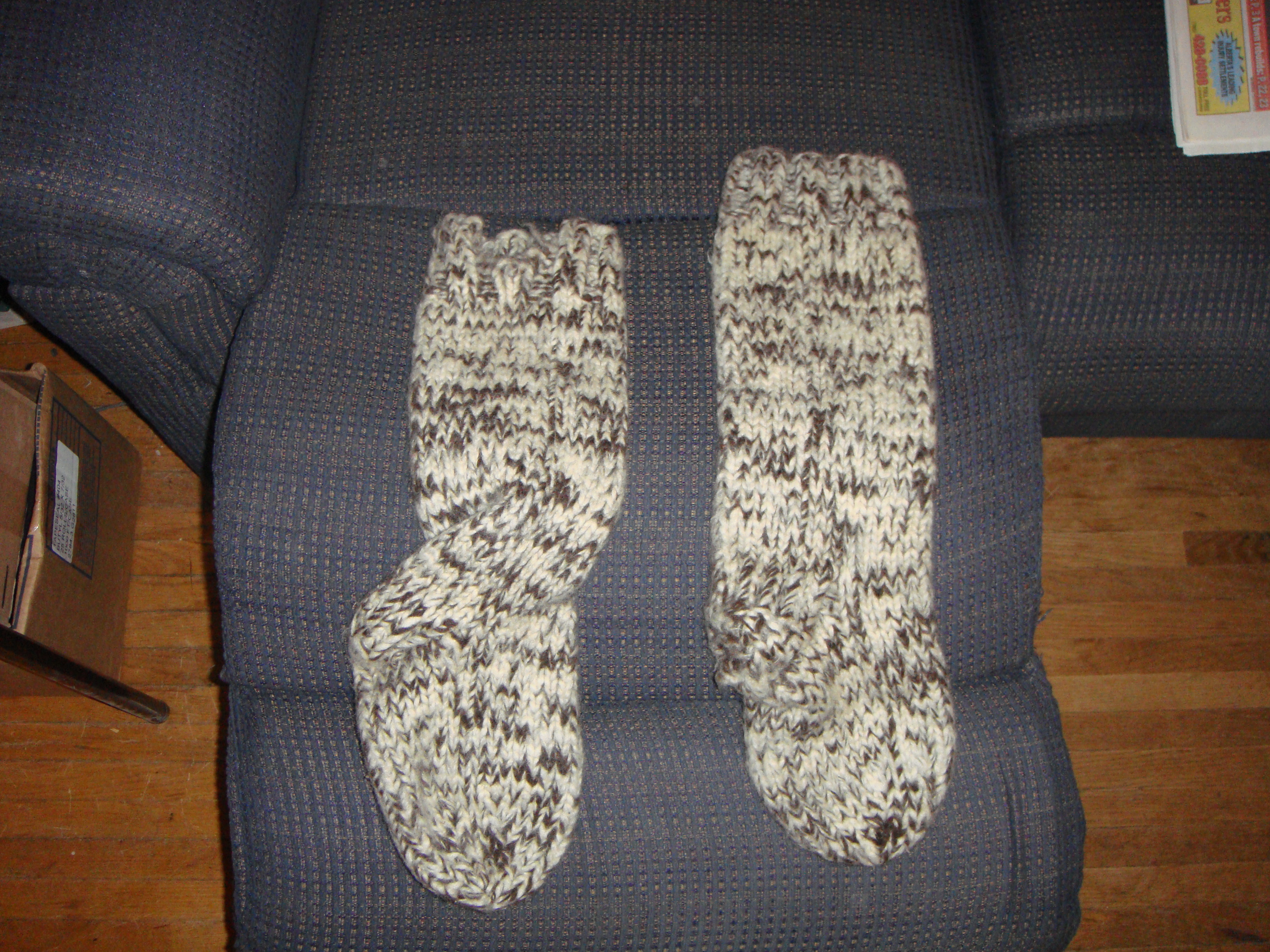
They are really my socks. They do not fit inside of any shoes or boots I own, so, technically, they might not qualify as socks, but as slippers. On cold winter mornings, I wear them around the house. What makes them interesting? I am glad you asked.

These were Christmas gifts. Kathy’s grandmother made them for us. We always knew after the first person opened their gift from Grandma what we were each receiving that year. That part never changed. What made each year’s gift deserving of an ode, was the time and generosity sewn, crafted, or knitted into the gifts. We also wanted to know what package our gift came in that year.

Grandma was a thrifty, frugal woman, not cheap. She lived and raised children in cabins almost her entire adult life. Their isolated homestead was on the McLeod River south and west of Edson, Alberta. She worked a trap line into her 80’s with the help of children and grandchildren. She worked hard and had little in terms of material wealth, but she gave gifts made by hand and given from the heart. Part of her thrift was the packaging of each gift. I think, after several years, it became part of a game, too. She packed gifts in macaroni, spaghetti, and cereal boxes. Even the adults thrived on this part of the gift-giving. What was our gift packed in that year?

When I share Pablo Neruda’s Ode to My Socks with students, I tell this story. Children and adolescents need the figurative message made concrete. This poem is about moving life’s supposedly ordinary events to the extraordinary. Students often recount a gift given or received from the heart after my story. It moves the context of daily life forward from the ordinary, and makes it rich. Beauty is twice beauty, after all.

Ode to My Socks

Mara Mori brought me
a pair of socks
which she knitted herself
with her sheepherder’s hands,
two socks as soft as rabbits.
I slipped my feet into them
as if they were two cases
knitted with threads of twilight and goatskin,
Violent socks,
my feet were two fish made of wool,
two long sharks
sea blue, shot through
by one golden thread,
two immense blackbirds,
two cannons,
my feet were honored in this way
by these heavenly socks.
They were so handsome for the first time
my feet seemed to me unacceptable
like two decrepit firemen,
firemen unworthy of that woven fire,
of those glowing socks.

Nevertheless, I resisted the sharp temptation
to save them somewhere as schoolboys
keep fireflies,
as learned men collect
sacred texts,
I resisted the mad impulse to put them
in a golden cage and each day give them
birdseed and pieces of pink melon.
Like explorers in the jungle
who hand over the very rare green deer
to the spit and eat it with remorse,
I stretched out my feet and pulled on
the magnificent socks and then my shoes.

The moral of my ode is this:
beauty is twice beauty
and what is good is doubly good
when it is a matter of two socks
made of wool in winter.

Pablo Neruda

Words for the Wise – Partie Deux

Words for the wise was a product of an incident yesterday. I was left exasperated, exhausted, and feeling somewhat unintelligent. I calmed down and found the wisdom shared by Winnie the Pooh helpful in creating a new lesson plan for today’s poetry time, but, first, let me explain the back story from yesterday.

About two months ago, a student brought their scooter to school and was riding it up and down the sidewalk in front of the building we occupy. Our school is located in what was a commercial building our school division acquired. There is no space to scooter in the front of the building, because there is a sidewalk and a parking lot immediately in front of the building. Usually, both are busy so it is an unsafe pastime. Second, students must wear proper equipment i.e. approved helmet, knee pads, and elbow pads. The young man in question is proficient, or so I have been told, so he took the equipment rule as a problem. Frankly, I would to, if I was any good at riding my scooter.

Yesterday, another student brought their scooter to school. While I was occupied, two students, including the aforementioned young man noted, borrowed the scooter and rode it in the parking lot and on the sidewalk while others watched. I was angry; that is the polite way of putting it. I gave some students credit. They recalled explicit instructions about the conditions a scooter could be used i.e. equipment, supervision, and location. Others had forgotten, but it was more likely a situation they were not listening for any number of reasons. This morning I received an email from the young man’s parent saying he informed her he could ride the scooter out back. I am not sure where out back is, because there is no place to ride out back. He left out the equipment and supervision.

Listening, which I think is essential to being responsible for one’s actions and words, seems limited to what a person wants. We listen when we are motivated by words or sounds that are we want to hear. I think that might be human nature. We lack mindfulness and being in the present moment. As luck would have it, sitting on my desk was a William Stafford poem entitled Listening. We had a great conversation after reading it, reflection time, and sharing in pairs.

Listening

My father could hear a little animal step,

or a moth in the dark against the screen,

and every far sound called the listening out

into places where the rest of us had never been.

More spoke to him from the soft wild night

than came to our porch for us on the wind,

we would watch him look up and his face go keen

till the walls of the world flared, widened.

My father heard so much that we still stand

inviting the quiet by turning the face,

waiting for a time when something in the night

will touch us too from that other place.

Thank you William Stafford. Winnie, I was brave and strong enough to tell my students I was listening, but I cannot always do what they want. I simply do not have the power some days and am smart enough to recognize this.

Daily Poetry Lesson Idea

I set aside 30 minutes each day for poetry. A typical lesson plan for junior high or middle school might be as follows:

  • Read the poem and have the students follow along as they listen to it for the first time.
  • Read or ask students to read the poem a second time. Students listen for words, phrases, or elements which catch their ear.
  • Students quietly take a few minutes to highlight or underline key words, phrases, or literary elements.
  • Students quietly share the key words, phrases, or literary elements with one or two classmates. Did they enjoy the poem? Why or why not? I ask them for specific responses. It sucks or was interesting needs support.
  • We come together and share. What stood out? What literary elements did the poet use and what did they add to the poem?
  • What were the literal and figurative messages of the poem?

Students are invited to share their favourite poems.  One student shared Do Not Go Gentle into that Good Night by Dylan Thomas and another Mr. Nobody by Walter de la Mare. I used the latter poem for a conversation about responsibility.

Students sometimes are reluctant to write poetry. I use Pablo Neruda’s Ode to My Socks as an example of a poem about a mundane object, a pair of socks, and how this poem transforms the socks with rich and vibrant language, similes, and metaphors into something quite extraordinary. A person needs to read or be read this poem to appreciate what makes socks worthy of an ode by a Nobel Prize winner and how everyday objects become subjects for poetry.

When we read The Road not Taken by Robert Frost, the students worked in triads and created collages about the themes they found in this classic poem. The end products were well thought out.

Junior High Creative Writing Activity: A Fractured Fairy Tale

Children hear and read fairy tales at a young age. When they reach late elementary and junior high school age, they can explore and discover inconsistencies in fairy tales i.e. Goldilocks breaks into the Bears’ house and vandalizes it. Here is a creative writing activity in the form of a parody.

This is the most popular creative writing activity in our junior high class. This plan has worked well for me as a junior high teacher, but I think could be used with upper elementary students. I think it can be modified and meet the needs of younger and older students.

We use Jon Sczieska’s The True Story of the Three Little Pigs by A. Wolf as a model of a parody.

The unit plan includes:

Process

Reading the story to the class and brainstorm differences between the original and this version? Most students are familiar with the original story of The Three Little Pigs, but have it on hand if someone is unfamiliar with the story.

What fairy tales are students familiar with? Brainstorm and create a list. What parodies of fairy tales are they familiar with? Have they seen Shrek? What makes Shrek different from other fairy tales? Students may recognize Shrek as a parody of the genre and has features and structure of a fairy tale while it spoofs the genre in various ways.

What twists can be used to rewrite a fairy tale i.e roles of antagonist and protagonists or plot events? Some examples students have shared include what if the third little pig refused his siblings refuge to teach them a lesson where would they stay?  Could the pigs organize a pig posse to run the wolf out-of-town?  Would they have become ‘ham jam’?  What about the story from the wolf’s perspective?  What if the wolf were a vegan?

What other fairy tales are students familiar with?  Brainstorm and make a list. This helps students choose a fairy tale to rewrite. Choose a familiar fairy tale and brainstorm ways to ‘fracture.’ We have used Cinderella. The list can offer starters for students and could also be used in the parody of another fairy tales. What if…

  • Cinderella has beautiful step sisters?
  • The prince cannot dance?
  • Cinderella is a homebody who likes to cook, sew, and clean and is not interested in attending the ball?
  • The magic wand is defective and does not get the spell right?
  • Cinderella does not want to get married?
  • Cinderella wants a car and not a carriage?
  • Etc…

Brainstorm elements fairy tales share and create a graphic organizer to hand out. Some features have included:

  • Once upon a time…
  • Good vs. evil
  • Beautiful heroine and handsome prince
  • Magic/supernatural
  • Personification
  • …live happily ever after
  • Etc…

Students can ‘fracture’ a fairy tale and change stories in unexpected, clever, and humourous ways by altering characters, modifying language, using a modern context, etc. The fairy tales still remain true to their original forms despite changes.

Here are sites to find fairy tales or refresh memories about the fairy tales students choose: Story Nory, Grimm’s Fairy Tales, and Ivy Joy. Some sites include other genres i.e. fables. Stick to fairy tales as they are well-suited for this project.

Students include an outline or web and a rough draft. Peers or teachers can proofread the story so students can edit.

Final Product

A picture book format is popular. The authors of the picture book can read to their stories to younger students.

Words of caution

  • This is not a yearlong project
  • Students  need to choose something of a manageable length.
  •  Usually the audience is younger. Students should use appropriate language and images, keep the book short i.e 20 pages, and use large font.

Assessment

I use this activity to assess creative writing, sharing orally, and finding appropriate images for the story and the audience. As well, there are brainstorming, proofreading, and editing.

Questions

What engaging writing activities do other teachers use in their classrooms? What changes can be used for older and younger students? What other assessment purposes can you think of for this type of activity?