Category Archives: Mindful Life

Observational Poems : Touching the World : Deep Underground Poetry Community

Observational Poems : Touching the World : Deep Underground Poetry Community.

I was just surfing and came across this poem. Mindfulness is a universal concept and is not the sole domain of Buddhists or mystics. I find it ironic that the wave of scientific theory which pushed mindfulness out of the western practice was called the Enlightenment. Who or What did it enlighten? Mindfulness and scientific thought are complementary practices which make each other whole.

Words for the Wise – Partie Deux

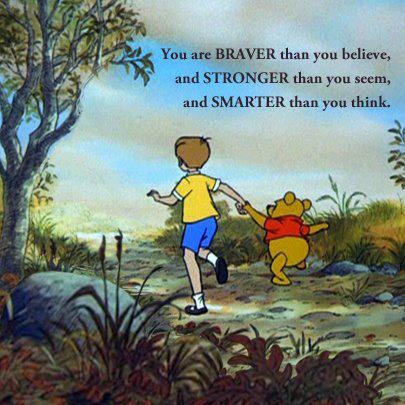
Words for the wise was a product of an incident yesterday. I was left exasperated, exhausted, and feeling somewhat unintelligent. I calmed down and found the wisdom shared by Winnie the Pooh helpful in creating a new lesson plan for today’s poetry time, but, first, let me explain the back story from yesterday.

About two months ago, a student brought their scooter to school and was riding it up and down the sidewalk in front of the building we occupy. Our school is located in what was a commercial building our school division acquired. There is no space to scooter in the front of the building, because there is a sidewalk and a parking lot immediately in front of the building. Usually, both are busy so it is an unsafe pastime. Second, students must wear proper equipment i.e. approved helmet, knee pads, and elbow pads. The young man in question is proficient, or so I have been told, so he took the equipment rule as a problem. Frankly, I would to, if I was any good at riding my scooter.

Yesterday, another student brought their scooter to school. While I was occupied, two students, including the aforementioned young man noted, borrowed the scooter and rode it in the parking lot and on the sidewalk while others watched. I was angry; that is the polite way of putting it. I gave some students credit. They recalled explicit instructions about the conditions a scooter could be used i.e. equipment, supervision, and location. Others had forgotten, but it was more likely a situation they were not listening for any number of reasons. This morning I received an email from the young man’s parent saying he informed her he could ride the scooter out back. I am not sure where out back is, because there is no place to ride out back. He left out the equipment and supervision.

Listening, which I think is essential to being responsible for one’s actions and words, seems limited to what a person wants. We listen when we are motivated by words or sounds that are we want to hear. I think that might be human nature. We lack mindfulness and being in the present moment. As luck would have it, sitting on my desk was a William Stafford poem entitled Listening. We had a great conversation after reading it, reflection time, and sharing in pairs.

Listening

My father could hear a little animal step,

or a moth in the dark against the screen,

and every far sound called the listening out

into places where the rest of us had never been.

More spoke to him from the soft wild night

than came to our porch for us on the wind,

we would watch him look up and his face go keen

till the walls of the world flared, widened.

My father heard so much that we still stand

inviting the quiet by turning the face,

waiting for a time when something in the night

will touch us too from that other place.

Thank you William Stafford. Winnie, I was brave and strong enough to tell my students I was listening, but I cannot always do what they want. I simply do not have the power some days and am smart enough to recognize this.

Words from the Wise

This arrived today. It definitely was not how a felt yesterday or when I first got up this morning. Sometimes our childhood heroes say it best and, as adults, we need to listen with a beginner’s mind.

And today I am off to see the Wizard, the wonderful Wizard of Oz.

Trough by Judy Brown

I spent the past few days examining where I am in my life’s calling as a teacher. I was in a trough for a while and it is nice to start climbing out and see the horizon over the edge of the waves. Personal vision formed around and by named values is essential to fulfillment. I am grateful I had people listen and wait for me to speak. The trough is a quiet place and I was able to gather my thoughts, reflect, and regain some passion through their patience and kindness.

There is a trough in waves,

a low spot

where horizon disappears

and only sky

and water are your company.

And there we lose our way

unless

we rest, knowing the wave will bring us

to its crest again.

There we may drown

if we let fear

hold us within its grip and shake us

side to side,

and leave us flailing, torn, disoriented.

But if we rest there

in the trough,

in silence,

being with the low part of the wave,

keeping

our energy and

noticing the shape of things,

the flow,

then time alone

will bring us to another place

where we can see

horizon, see the land again,

regain our sense

of where

we are,

and where we need to swim.

Several months ago, I posted an entry called the Mindful Teacher. I suggested there was a need for added fuel for the fire that is my vocation and gives me voice through teaching and learning. Since then, I matured and realize the silence is the oxygen that also helps to breathe life into the fire. It serves as the wisdom, compassion, and prudence offsetting my passion. Without the space, the silence, I become a flickering flame burning out before my time.

ivonprefontaine's avatar

I was driving to school this evening and David Francey, a wonderful Canadian singer, was on the I-Pod singing The Waking Hour. Kathy and I have attended several of his concerts. He has a wonderful line in that song: “The heart that’s breaking never makes a sound.” It resonated. I wrote poetry many years ago and, today, I found poetry anew.

Set the backpack down

The mountain is high

The peak obscured

The path terrifying

Share my load

Trust

Be right

Be true

Will they hear?

Without spoken words

Speak my truth

Invite

Carried alone

The backpack is too heavy

Lighten

Strengthen

Back straight,

Shoulders square,

Head held high.

Walk with me

Share my load

Transformation in Daily Life

When Kathy and I were married we chose the Prayer of St. Francis as one of our readings in the ceremony that day. It remains an integral part, albeit sometimes overlooked, part of my daily life. St. Francis spoke in a transformational voice and as a change agent of his time. His message remains as important today as it when it was first presented.

True Transformation

This posting is not an original. Yesterday, I read a chapter in Jesus the Radical by Father John Dear SJ. I thought the list of ways easing human suffering, in some ways updated, was worth repeating.

“If we take time for daily prayer and sit quietly listening, our hearts will be disarmed of our inner violence” (p. 107).

The disarming of inner violence can happen and be heard in

  • in the silence of the ashes of Hiroshima and Nagasaki as we call and act for an end for nuclear proliferation;
  • in the voices of the Hibakushka, the atomic bomb survivors who call for total nuclear disarmament and the abolition of war;
  • in the laughter, longings, and cries of the world’s children, who look to us for peace;
  • in the poor and the marginalized, who suffer the fallout of our six-hundred-billion dollar budget for war. This is now understated. What good could be done with a mere fraction of that money?;
  • in the cry of liberation from the wrongly and unjustly imprisoned, the tortured, the homeless, the hungry, the ill, and the dying;
  • in the dead of Rwanda, Bosnia, Palestine, Iraq, Sudan, Central America, South America, Libya, Syria, China, and our own city streets, who cry out, “Stop the killing, stop the bombings, stop the violence;”
  • in all those who are different from us, who call us beyond the blindness of racism to the vision of a reconciled humanity, the beloved community;
  • in the faithful women of the world, who remain wide awake, announcing a paradigmatic shift, the fall of patriarchy and its hierarchy;
  • in the solitude of creation, from the mountaintops to the oceans; in the gentle rain and the silent breeze that call us to praise a God of peace, a God of Life;
  • in our own hearts, in our breath, in our prayer so we can go down the mountain to our cross or suffering in a spirit of love.

Adapted from Dear, J.  (2000). Jesus the rebel: Bearer of God’s peace and justice. Lanham, MD: Sheed & Ward.

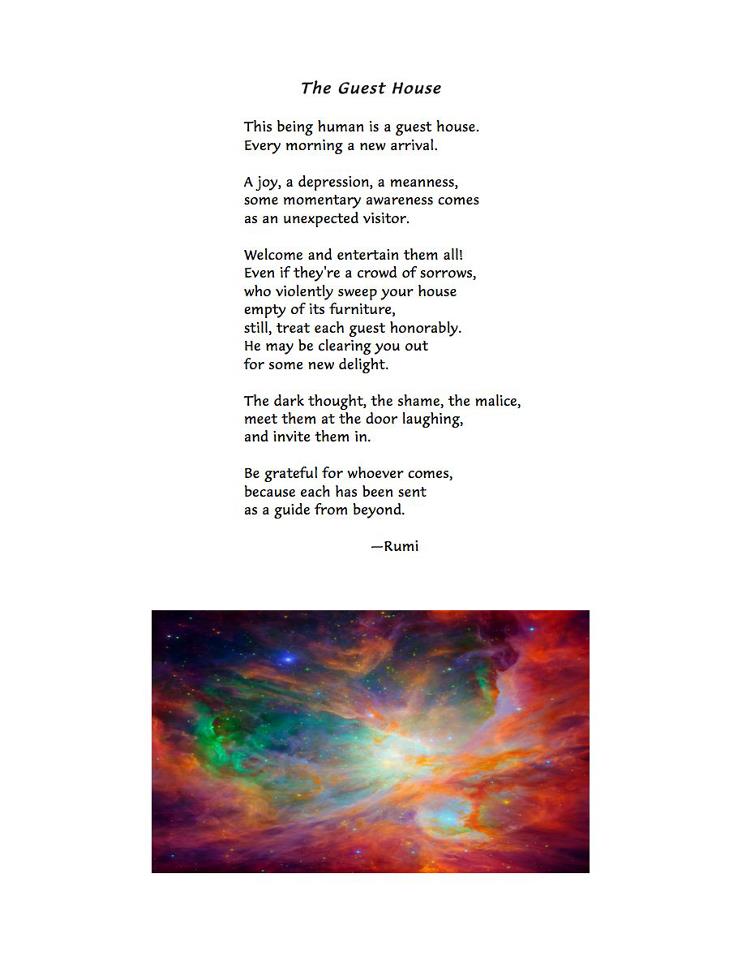
The House Guest by Rumi

I was going through my various accounts and Parker Palmer posted this on Facebook. After a challenging week, I read it and realized this was what my week had been like, very up and down. What do I say to those emotions which temporarily move in and shake my confidence? Or what do I say to those emotions which mislead me with their false promise of all things gold and glittery?

Thank you to Parker Palmer for this sharing.

Do Not Go Gentle Into That Good Night – Dylan Thomas

I sat quietly this morning after another poor night’s sleep. Initially, my ‘monkey mind’ chattered and cast blame to roil the waters and it difficult to find calm. Slowly, my mind became quieter and ideas flowed more easily. First, I asked, “What is causing these uneasy feelings?” I turn to that question more often in times of discomfort and dis-ease and I am often surprised by the answers.

I posted last night about my growing belief a different culture and conversation is needed for educational transformation. We need ‘safe containers’ for conversation about real and lasting change to occur. The change will not duplicate another educational model or be ordered from on high. We serve community needs and needs of children. I am fortunate. I learned and taught in just such a setting alongside colleagues, parents, children, and community members and real change happened through wonderful conversation. The words learned and taught signify a feeling that I rarely felt what we did was work. Life is transient and this place no longer exists except as a cherished memory.

I read a posting through a group I follow on LinkedIn about saying good-bye. The author quoted Dr. Seuss and I know the social commentary this subversive children’s author provided. The message was when the end comes we need to celebrate the accomplishments that led to that ending.  Mark Anielski, an economist, suggested teachers should conduct satisfaction surveys as students graduate, even between grades. When something or someone changes, and this is life, we should celebrate it as a new chapter in life. I can choose the positive over the negative and make a difference in the world I choose as Gen Y Girl suggested. After all, I am not a tree.

Yesterday, a Grade 7 student brought the Dylan Thomas poem in the title to school and asked if I would share it with the class. I asked what it meant to this Grade 7 student, but got no clear answer. I wondered what metaphor of life it offered me? Dylan Thomas wrote it for his dying father, but that is not my case. I sat quietly and the lines “Do not go gentle into that good night” and “Rage, rage against the dying of the light” did offer a life metaphor. When something good changes, my response is critical. Is it one of blame or fault? Was I silenced, or did I choose silence? Did I excommunicate my self. A sad lament of death I see as a request to live my life fully. I lose what I allow to be taken. Is it possible to raise one’s voice in silent protest? I think so, but it is not a silence of retreat, despair, and oppression.

I sat and waited for my inner teacher to share my truth while honouring the truth of others. I leave you with the poem. Choose your metaphor. I choose one of celebration otherwise I live a death, instead of life, due to my choices.

Do not go gentle into that good night,
Old age should burn and rage at close of day;
Rage, rage against the dying of the light.

Though wise men at their end know dark is right,
Because their words had forked no lightning they
Do not go gentle into that good night.

Good men, the last wave by, crying how bright
Their frail deeds might have danced in a green bay,
Rage, rage against the dying of the light.

Wild men who caught and sang the sun in flight,
And learn, too late, they grieved it on its way,
Do not go gentle into that good night.

Grave men, near death, who see with blinding sight
Blind eyes could blaze like meteors and be gay,
Rage, rage against the dying of the light.

And you, my father, there on the sad height,
Curse, bless me now with your fierce tears, I pray.
Do not go gentle into that good night.
Rage, rage against the dying of the light.
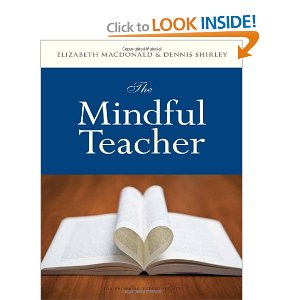
The Mindful Teacher by Elizabeth MacDonald and Dennis Shirley

Last year, I was in a challenging situation and sought a path to continue my teaching and learning journey. Elizabeth MacDonald and Dennis Shirley wrote a book called The Mindful Teacher. I read the book during September 2011.

A thesis was teachers feel alienated working in a system where few “possibilities remain for ethical, caring teachers to hone their craft and to inspire their students with the sheer joy and delight that is found in learning” (p. 2). The authors used teacher stories and personal reflections obtained through The Mindful Teacher Project which involved public school teachers in Boston. MacDonald and Shirley cautioned this was not “a recipe that can be followed, or  a ‘silver bullet’ … it is a form of teaching that is informed by contemplative practices and inquiry that enables teachers to interrupt their harried lifestyles, come to themselves through participation in collegial community of inquiry and practice, and attend to aspects of their classroom instruction and pupils’ learning that ordinarily overlooked in the press of events” (p. 4).

As I read the book, I realized how inattentive I had grown in classroom instruction and about personal growth. Collegial mindfulness has not appeared in a conventional sense, but I discovered alternative spaces i.e. daily meditation, spiritual retreats, World Café Events, and blogging which filled some of the void. I try to pay closer attention to “Who is the self that teaches” advocated by Parker Palmer. I completed a guided study into mindfulness in daily life. Each aspect added mindfulness previously absent in my life.

Amazon Books

Gains: I  have slowed down, reflect more often, and try respond and not react. It is a journey and that is why we call it practice. Each school day, I spend 20-30 minutes meditating. When I am flustered in the classroom, and it happens, I try close my eyes, take a deep breath, and clear my mind before I respond. I refer to those successful moments as the new Ivon. An important gain was teaching is a calling, a vocation. As I read, I was reminded of that.

Questions: What do we do when adults do not trust between one another and that appears irreparable? I assume the authors wrote the book due to a perceived need by the authors. I imagine there are environments lacking trust. What do we do then?

Recommendation: This is short, easy read filled with stories and ideas. From a veteran teacher perspective, it helped me tend to long overdue internal work. A new teacher could use ideas to shape their career. I would recommend it for all teachers and, when done, find a group and have open, joyful, non-judgmental conversations. What brought you to teaching and learning?