Category Archives: Synchronicity

ivonprefontaine's avatar

I was driving to school this evening and David Francey, a wonderful Canadian singer, was on the I-Pod singing The Waking Hour. Kathy and I have attended several of his concerts. He has a wonderful line in that song: “The heart that’s breaking never makes a sound.” It resonated. I wrote poetry many years ago and, today, I found poetry anew.

Set the backpack down

The mountain is high

The peak obscured

The path terrifying

Share my load

Trust

Be right

Be true

Will they hear?

Without spoken words

Speak my truth

Invite

Carried alone

The backpack is too heavy

Lighten

Strengthen

Back straight,

Shoulders square,

Head held high.

Walk with me

Share my load

True Transformation

This posting is not an original. Yesterday, I read a chapter in Jesus the Radical by Father John Dear SJ. I thought the list of ways easing human suffering, in some ways updated, was worth repeating.

“If we take time for daily prayer and sit quietly listening, our hearts will be disarmed of our inner violence” (p. 107).

The disarming of inner violence can happen and be heard in

  • in the silence of the ashes of Hiroshima and Nagasaki as we call and act for an end for nuclear proliferation;
  • in the voices of the Hibakushka, the atomic bomb survivors who call for total nuclear disarmament and the abolition of war;
  • in the laughter, longings, and cries of the world’s children, who look to us for peace;
  • in the poor and the marginalized, who suffer the fallout of our six-hundred-billion dollar budget for war. This is now understated. What good could be done with a mere fraction of that money?;
  • in the cry of liberation from the wrongly and unjustly imprisoned, the tortured, the homeless, the hungry, the ill, and the dying;
  • in the dead of Rwanda, Bosnia, Palestine, Iraq, Sudan, Central America, South America, Libya, Syria, China, and our own city streets, who cry out, “Stop the killing, stop the bombings, stop the violence;”
  • in all those who are different from us, who call us beyond the blindness of racism to the vision of a reconciled humanity, the beloved community;
  • in the faithful women of the world, who remain wide awake, announcing a paradigmatic shift, the fall of patriarchy and its hierarchy;
  • in the solitude of creation, from the mountaintops to the oceans; in the gentle rain and the silent breeze that call us to praise a God of peace, a God of Life;
  • in our own hearts, in our breath, in our prayer so we can go down the mountain to our cross or suffering in a spirit of love.

Adapted from Dear, J.  (2000). Jesus the rebel: Bearer of God’s peace and justice. Lanham, MD: Sheed & Ward.

Do Not Go Gentle Into That Good Night – Dylan Thomas

I sat quietly this morning after another poor night’s sleep. Initially, my ‘monkey mind’ chattered and cast blame to roil the waters and it difficult to find calm. Slowly, my mind became quieter and ideas flowed more easily. First, I asked, “What is causing these uneasy feelings?” I turn to that question more often in times of discomfort and dis-ease and I am often surprised by the answers.

I posted last night about my growing belief a different culture and conversation is needed for educational transformation. We need ‘safe containers’ for conversation about real and lasting change to occur. The change will not duplicate another educational model or be ordered from on high. We serve community needs and needs of children. I am fortunate. I learned and taught in just such a setting alongside colleagues, parents, children, and community members and real change happened through wonderful conversation. The words learned and taught signify a feeling that I rarely felt what we did was work. Life is transient and this place no longer exists except as a cherished memory.

I read a posting through a group I follow on LinkedIn about saying good-bye. The author quoted Dr. Seuss and I know the social commentary this subversive children’s author provided. The message was when the end comes we need to celebrate the accomplishments that led to that ending.  Mark Anielski, an economist, suggested teachers should conduct satisfaction surveys as students graduate, even between grades. When something or someone changes, and this is life, we should celebrate it as a new chapter in life. I can choose the positive over the negative and make a difference in the world I choose as Gen Y Girl suggested. After all, I am not a tree.

Yesterday, a Grade 7 student brought the Dylan Thomas poem in the title to school and asked if I would share it with the class. I asked what it meant to this Grade 7 student, but got no clear answer. I wondered what metaphor of life it offered me? Dylan Thomas wrote it for his dying father, but that is not my case. I sat quietly and the lines “Do not go gentle into that good night” and “Rage, rage against the dying of the light” did offer a life metaphor. When something good changes, my response is critical. Is it one of blame or fault? Was I silenced, or did I choose silence? Did I excommunicate my self. A sad lament of death I see as a request to live my life fully. I lose what I allow to be taken. Is it possible to raise one’s voice in silent protest? I think so, but it is not a silence of retreat, despair, and oppression.

I sat and waited for my inner teacher to share my truth while honouring the truth of others. I leave you with the poem. Choose your metaphor. I choose one of celebration otherwise I live a death, instead of life, due to my choices.

Do not go gentle into that good night,
Old age should burn and rage at close of day;
Rage, rage against the dying of the light.

Though wise men at their end know dark is right,
Because their words had forked no lightning they
Do not go gentle into that good night.

Good men, the last wave by, crying how bright
Their frail deeds might have danced in a green bay,
Rage, rage against the dying of the light.

Wild men who caught and sang the sun in flight,
And learn, too late, they grieved it on its way,
Do not go gentle into that good night.

Grave men, near death, who see with blinding sight
Blind eyes could blaze like meteors and be gay,
Rage, rage against the dying of the light.

And you, my father, there on the sad height,
Curse, bless me now with your fierce tears, I pray.
Do not go gentle into that good night.
Rage, rage against the dying of the light.

Seeing the Ordinary as Extraordinary

During a recent conversation with an acquaintance, we discussed the concept of seeing the ordinary as if it were extraordinary. She commented, “If we could do that, imagine the joyfulness in the world!” I try observing the world through this lens and some days I catch a glimpse of the extraordinary elements of my life. Let me offer examples of this joyousness and its synchronous nature.

I listen to a wonderful little radio station, CKUA. When I get in the car, it is on and I usually pay at least superficial attention to the songs. I love Blues, Soul, and Gospel music and on three particular mornings I was welcomed into my car by great music. On Thursday, Lead Belly sang Grey Goose; on Friday Nina Simone sang Feeling Good; and on Saturday, Commander Cody and the Lost Planet Airmen sang Oh, Mama, Mama. I confess I was not feeling upbeat Friday when Nina Simone came on, but I was aware of the generous message and found space to feel better. Each song appealed to me and seemed to sooth a restless and weary soul.

Saturday morning I met with three friends and, during the conversation, we talked about my blog. One person commented it seemed two different people wrote at times. I pointed out some postings are academic and fit with my doctoral journey. When I write about a need for Eloquent Questions in Education, my voice is, hopefully, more scholarly. When I share about a paralyzing fear of heights in Images to Provoke Thoughts, I try to personalize and humanize the self, Ivon, who writes, but my complexity is revealed. I explained Kathy proofreads and edits many postings. She does an amazing job of cleaning up conventions and keeping the message on track. I am challenged to acknowledge and express my gratefulness, as well as I should.

Frequently, I take for granted both the complexity of my self and who I am, and the important, sustaining relationships in my life, rendering them ordinary. Both are extraordinary and help me observe and understand the self when I contemplate, “Who is the self that teaches?” Parker Palmer offered this question and I try to extend it further to ask, “Who is the self that lives this life?” I think these are critical questions because, without self-awareness, what possibility of transformation exists? I follow Cooperative Catalyst and they posted Why Transformation May Hit a Snag: Observations from the Field. Two questions emerged from the article for me, both about self-awareness. First, what am I doing to transform my self? Second, what values guide this transformational process? Gandhi proposed, “Be the change you want to see in the world.” Being aware and present to my self and those who matter most in my life are essential steps. Some days are better than others and the ordinary becomes extraordinary.

Words to Inspire

I arrived home, tired, and feeling uninspired, unsure what I would write. Several ideas are running around, but they required more percolation time. I broke from routine and checked Facebook first A colleague from the Circle of Trust retreat in Seattle shared an inspiring, heart warming article: “A teacher, a student and a 39-year-long lesson in forgiveness.”

One line that resonated was “the beauty of an apology is that everyone wins because it reveals not only who we are, but who we hope we are.” An apology is transformational rather than transactional. It takes the form of acts and words offered with compassion, care, and integrity.

Please take a moment to read.

A Lovely Sentiment

I am back from Seattle and will post thoughts later about a wonderful experience. I got three hours sleep last night and was wired today at school. Despite that, I felt alive. It was an affirming experience and I hope revitalizes a warrior.

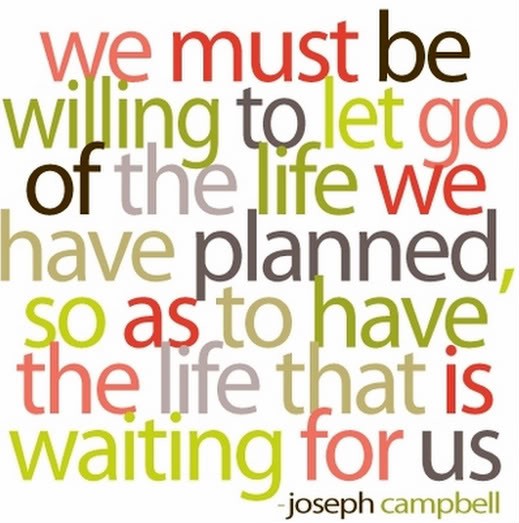
Synchronicity plays a major role in life and being aware helps me to recognize that which I used to miss. Today, on Facebook, a  friend posted this Joseph Campbell quote about the way life should be lived, fully in the moment without reservation.