Tag Archives: Mindful Practice

Do Not Go Gentle Into That Good Night – Dylan Thomas

I sat quietly this morning after another poor night’s sleep. Initially, my ‘monkey mind’ chattered and cast blame to roil the waters and it difficult to find calm. Slowly, my mind became quieter and ideas flowed more easily. First, I asked, “What is causing these uneasy feelings?” I turn to that question more often in times of discomfort and dis-ease and I am often surprised by the answers.

I posted last night about my growing belief a different culture and conversation is needed for educational transformation. We need ‘safe containers’ for conversation about real and lasting change to occur. The change will not duplicate another educational model or be ordered from on high. We serve community needs and needs of children. I am fortunate. I learned and taught in just such a setting alongside colleagues, parents, children, and community members and real change happened through wonderful conversation. The words learned and taught signify a feeling that I rarely felt what we did was work. Life is transient and this place no longer exists except as a cherished memory.

I read a posting through a group I follow on LinkedIn about saying good-bye. The author quoted Dr. Seuss and I know the social commentary this subversive children’s author provided. The message was when the end comes we need to celebrate the accomplishments that led to that ending.  Mark Anielski, an economist, suggested teachers should conduct satisfaction surveys as students graduate, even between grades. When something or someone changes, and this is life, we should celebrate it as a new chapter in life. I can choose the positive over the negative and make a difference in the world I choose as Gen Y Girl suggested. After all, I am not a tree.

Yesterday, a Grade 7 student brought the Dylan Thomas poem in the title to school and asked if I would share it with the class. I asked what it meant to this Grade 7 student, but got no clear answer. I wondered what metaphor of life it offered me? Dylan Thomas wrote it for his dying father, but that is not my case. I sat quietly and the lines “Do not go gentle into that good night” and “Rage, rage against the dying of the light” did offer a life metaphor. When something good changes, my response is critical. Is it one of blame or fault? Was I silenced, or did I choose silence? Did I excommunicate my self. A sad lament of death I see as a request to live my life fully. I lose what I allow to be taken. Is it possible to raise one’s voice in silent protest? I think so, but it is not a silence of retreat, despair, and oppression.

I sat and waited for my inner teacher to share my truth while honouring the truth of others. I leave you with the poem. Choose your metaphor. I choose one of celebration otherwise I live a death, instead of life, due to my choices.

Do not go gentle into that good night,
Old age should burn and rage at close of day;
Rage, rage against the dying of the light.

Though wise men at their end know dark is right,
Because their words had forked no lightning they
Do not go gentle into that good night.

Good men, the last wave by, crying how bright
Their frail deeds might have danced in a green bay,
Rage, rage against the dying of the light.

Wild men who caught and sang the sun in flight,
And learn, too late, they grieved it on its way,
Do not go gentle into that good night.

Grave men, near death, who see with blinding sight
Blind eyes could blaze like meteors and be gay,
Rage, rage against the dying of the light.

And you, my father, there on the sad height,
Curse, bless me now with your fierce tears, I pray.
Do not go gentle into that good night.
Rage, rage against the dying of the light.
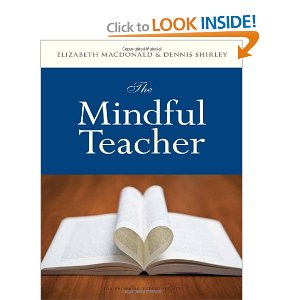
The Mindful Teacher by Elizabeth MacDonald and Dennis Shirley

Last year, I was in a challenging situation and sought a path to continue my teaching and learning journey. Elizabeth MacDonald and Dennis Shirley wrote a book called The Mindful Teacher. I read the book during September 2011.

A thesis was teachers feel alienated working in a system where few “possibilities remain for ethical, caring teachers to hone their craft and to inspire their students with the sheer joy and delight that is found in learning” (p. 2). The authors used teacher stories and personal reflections obtained through The Mindful Teacher Project which involved public school teachers in Boston. MacDonald and Shirley cautioned this was not “a recipe that can be followed, or  a ‘silver bullet’ … it is a form of teaching that is informed by contemplative practices and inquiry that enables teachers to interrupt their harried lifestyles, come to themselves through participation in collegial community of inquiry and practice, and attend to aspects of their classroom instruction and pupils’ learning that ordinarily overlooked in the press of events” (p. 4).

As I read the book, I realized how inattentive I had grown in classroom instruction and about personal growth. Collegial mindfulness has not appeared in a conventional sense, but I discovered alternative spaces i.e. daily meditation, spiritual retreats, World Café Events, and blogging which filled some of the void. I try to pay closer attention to “Who is the self that teaches” advocated by Parker Palmer. I completed a guided study into mindfulness in daily life. Each aspect added mindfulness previously absent in my life.

Amazon Books

Gains: I  have slowed down, reflect more often, and try respond and not react. It is a journey and that is why we call it practice. Each school day, I spend 20-30 minutes meditating. When I am flustered in the classroom, and it happens, I try close my eyes, take a deep breath, and clear my mind before I respond. I refer to those successful moments as the new Ivon. An important gain was teaching is a calling, a vocation. As I read, I was reminded of that.

Questions: What do we do when adults do not trust between one another and that appears irreparable? I assume the authors wrote the book due to a perceived need by the authors. I imagine there are environments lacking trust. What do we do then?

Recommendation: This is short, easy read filled with stories and ideas. From a veteran teacher perspective, it helped me tend to long overdue internal work. A new teacher could use ideas to shape their career. I would recommend it for all teachers and, when done, find a group and have open, joyful, non-judgmental conversations. What brought you to teaching and learning?

For All the Children

Learning, school, education, or life lived; whatever we choose to call the enterprise it is important we live the words of Gary Snyder.

The rising hills, the slopes,

of statistics

lie before us.

the steep climb

of everything, going up,

up, as we all

go down.

In the next century

or the one beyond that,

they say,

are valleys, pastures,

we can meet there in peace

if we make it.

To climb these coming crests

one word to you, to

you and your children:

stay together

learn the flowers

go light

The line which draws my eye and means so much to me, as a teacher and learner, is the one about statistics. Each year, I spend time with the Grade 9 class discussing the average student and the potential absurdity of the concept. Students realize there might, in fact, not be such a person. It might only be the ‘mean of the average.’ In our classroom, is a poster of Einstein. Several years ago, a student asked who the person in the poster was and I answered by saying it was my Dad. I do resemble him, or like to think I do, with the wild hair and idiosyncrasies. We refer to Einstein as Mr. P.’s Dad. His quotes are a marvel and the one I feel fits with the Gary Snyder poem is:

We must take care and insure the stories of each person who lives life is fully heard. We are not numbers. We are the stories come to life. We should always ask, “What makes the number relevant?”

I am following with a wonderful poem that echoes this thought-provoking piece by Francesca.

Francesca Zelnick's avatarWords/Love

I’m not afraid of silence. Some people are, and so they fill the world with superfluous sounds. They look upon silence as an absence, a void. But that’s not what silence is. It is not emptiness.

He told me that he felt badly for the elderly couple sitting a few tables down. They were eating without conversation. “They’ve run out of things to say to each other.” Their silence made him sad.

But I thought it was kind of beautiful, the way comfort made room for quiet. I have felt this a few times in my life. I have sat with so much love and understanding between us that words have been unnecessary. Not everything needs to be said.

Some days I feel stuck in repetition. I have spoken these words before. I will say them all again, over and over, for the rest of my life. If I were…

View original post 416 more words

Seeing the Ordinary as Extraordinary

During a recent conversation with an acquaintance, we discussed the concept of seeing the ordinary as if it were extraordinary. She commented, “If we could do that, imagine the joyfulness in the world!” I try observing the world through this lens and some days I catch a glimpse of the extraordinary elements of my life. Let me offer examples of this joyousness and its synchronous nature.

I listen to a wonderful little radio station, CKUA. When I get in the car, it is on and I usually pay at least superficial attention to the songs. I love Blues, Soul, and Gospel music and on three particular mornings I was welcomed into my car by great music. On Thursday, Lead Belly sang Grey Goose; on Friday Nina Simone sang Feeling Good; and on Saturday, Commander Cody and the Lost Planet Airmen sang Oh, Mama, Mama. I confess I was not feeling upbeat Friday when Nina Simone came on, but I was aware of the generous message and found space to feel better. Each song appealed to me and seemed to sooth a restless and weary soul.

Saturday morning I met with three friends and, during the conversation, we talked about my blog. One person commented it seemed two different people wrote at times. I pointed out some postings are academic and fit with my doctoral journey. When I write about a need for Eloquent Questions in Education, my voice is, hopefully, more scholarly. When I share about a paralyzing fear of heights in Images to Provoke Thoughts, I try to personalize and humanize the self, Ivon, who writes, but my complexity is revealed. I explained Kathy proofreads and edits many postings. She does an amazing job of cleaning up conventions and keeping the message on track. I am challenged to acknowledge and express my gratefulness, as well as I should.

Frequently, I take for granted both the complexity of my self and who I am, and the important, sustaining relationships in my life, rendering them ordinary. Both are extraordinary and help me observe and understand the self when I contemplate, “Who is the self that teaches?” Parker Palmer offered this question and I try to extend it further to ask, “Who is the self that lives this life?” I think these are critical questions because, without self-awareness, what possibility of transformation exists? I follow Cooperative Catalyst and they posted Why Transformation May Hit a Snag: Observations from the Field. Two questions emerged from the article for me, both about self-awareness. First, what am I doing to transform my self? Second, what values guide this transformational process? Gandhi proposed, “Be the change you want to see in the world.” Being aware and present to my self and those who matter most in my life are essential steps. Some days are better than others and the ordinary becomes extraordinary.

Transformation of the Self, Stewardship Reunderstood

This morning, as I sat quietly, the following words came to me and I am hopeful I can begin to live them.

If I am fully present for each moment in a non-judgmental way and transformed the world I live in from ordinary to extraordinary what joy I would give and receive. I fell back into old reactive habits yesterday instead of living into and embracing each moment. Time and space helps point one’s self to the moment and an understanding of those things I control. It requires quieting my ‘monkey mind’ and that was a struggle yesterday.

Transformation is slow, mindful change. It is patient moment-to-moment and incremental change. It is humbling and requires compassion as I tend and nourish an internal garden and attempt to bring the quiet of those moments into the busyness of my life. Each time I sit, I need a quiet mind to reveal the hidden wisdom.  Until this morning, I considered stewardship as caring for something external, but it begins from within.

Words to Inspire

I arrived home, tired, and feeling uninspired, unsure what I would write. Several ideas are running around, but they required more percolation time. I broke from routine and checked Facebook first A colleague from the Circle of Trust retreat in Seattle shared an inspiring, heart warming article: “A teacher, a student and a 39-year-long lesson in forgiveness.”

One line that resonated was “the beauty of an apology is that everyone wins because it reveals not only who we are, but who we hope we are.” An apology is transformational rather than transactional. It takes the form of acts and words offered with compassion, care, and integrity.

Please take a moment to read.

A Lovely Sentiment

I am back from Seattle and will post thoughts later about a wonderful experience. I got three hours sleep last night and was wired today at school. Despite that, I felt alive. It was an affirming experience and I hope revitalizes a warrior.

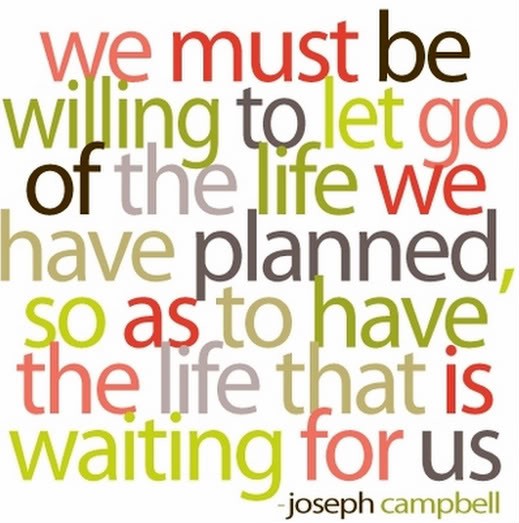
Synchronicity plays a major role in life and being aware helps me to recognize that which I used to miss. Today, on Facebook, a  friend posted this Joseph Campbell quote about the way life should be lived, fully in the moment without reservation.

When I woke up this morning, I was thinking of words of poetry about morning. Words like awake, observed, welcomed and others appeared on my mind’s palette. I opened my blog and found this gift from Thelma that spoke words I was looking for to start the day. It was a totally serendipitous moment after reading Father Richard Rohr’s meditation about being our true, authentic self. At a retreat on Bainbridge Island (what a breath-taking place) with familiar strangers based on some of Parker Palmer’s writing and work, this is an amazing way to begin the day. Thank you.

Author Thelma Cunningham's avatarAuthor Thelma Cunningham

AND NOW IT IS JUST ME

And now, It Is Just Me

I woke up this morning,

I looked all around,

I beheld my environment,

I got out of my bed and bent

my knees to pray,

For you see,

For now, it is just me,

Jesus,

I know that I first should be thankful

about things,

I know that I should start

this communication giving you

thanks and praise,

So help me because,

Now, it is just me,

I do not understand how predicaments

seem to be assigned or some how

unfortunately come to be encountered,

But I know that I have had my share,

And finally,

From them,

I am bewildered,

Tossed,

Lost,

And exhausted,

Let me not forget to admit in

danger and in a state of crisis,

Since it is just me,

I know that you do not mind and

understand my sincere tears and

soul…

View original post 293 more words

What Does it Mean to Be in Control?

I arrived in Seattle today and it is raining. I am attending a Circle of Trust retreat based on the writing and work of Parker Palmer. We share stories and look at the lives we live. Today, I shared a story about my fear of flying and its underlying source. This ends up being a humourous story in the end and revealed something I am only beginning to understand.

Recently, Kathy and I flew from Edmonton to Portland. After arriving in Vancouver late, we rushed across airport and just made the Portland connection. The doors were closed before we had our seat belts fastened. I settled in, we climbed to altitude, the captain came on the intercom and announced words fearful fliers do not want to hear, “Folks there is inclement weather en route and there will be turbulence.” We did hit turbulence. It was not the worst I have experienced, but it was bad enough to create apprehension for me. Kathy calmly explained, “It is similar to a school bus on a gravel road.” I was not impressed and continued to suffer. As the turbulence died down, I reflectively asked a question: “What is causing me to feel this way?” Just as I was beginning to explore this intriguing question, we hit another patch of turbulence. Already engaged in an answer seeking mode, I realized I was moving my feet like I was working the pedals in a car. My fear of flying is largely based on a lack of control. When the flight moved past the turbulence, I mentioned this to Kathy who suggested one of us needed to get a pilot’s license to resolve the problem. We were able to laugh. The good news is today I had a relatively good and relaxed flight to Seattle. Being aware of a potential cause, is important and asking that first question was important.

This is not the first time I used this strategy. Driving to a meeting in November, I did the same thing when I grew anxious about the meeting.  I asked myself what made me feel the way I did and realized a lack of feeling in control of the meeting and its agenda was at the heart of my anxiety. I was able to relax and remain poised during the meeting. The lack of control existed in my mind as an imagined narrative I held to be true. I had not mentally rehearsed or visualized how I would handle what I assumed would be a confrontational situation. This was my normal way of dealing with these situations. The result that day was a quieter, more relaxed mind and body; better prepared actually by not preparing the old-fashioned way. Retreats, like the one I am attending this weekend offer opportunities to explore the internal landscape in a different way than normally done in the busyness of my daily life. From a leadership perspective, if a person is always going off the deep end emotionally, how can that be effective leadership? The time to reflect and spend time attending to one’s inner landscape is an essential, but overlooked aspect of true leadership.