Tag Archives: nature

How to Regain Your Soul

I opened a poetry anthology to the index and this title jumped off the page. It has been an eventful week. I settled into Spokane including a place to lay my head this fall. When I come here, I find I feel I am in community. It was word-of-mouth that led me to the apartment I will have. One person told me to check with another who referred me to another and eventually the circle was complete.

When I am here, I drop some screen time with  no television. I turn my computer on and listen to CKUA the greatest little radio station in the world.

I need to settle into a regime now to tackle the reading, writing, and research that is around the corner. Gonzaga has excellent to a beautiful river walk to the Spokane Falls and Riverfront Park which I visited in its heyday. Spokane hosted the World’s Fair in 1974 and I was in Nelson BC then and came down with friends.

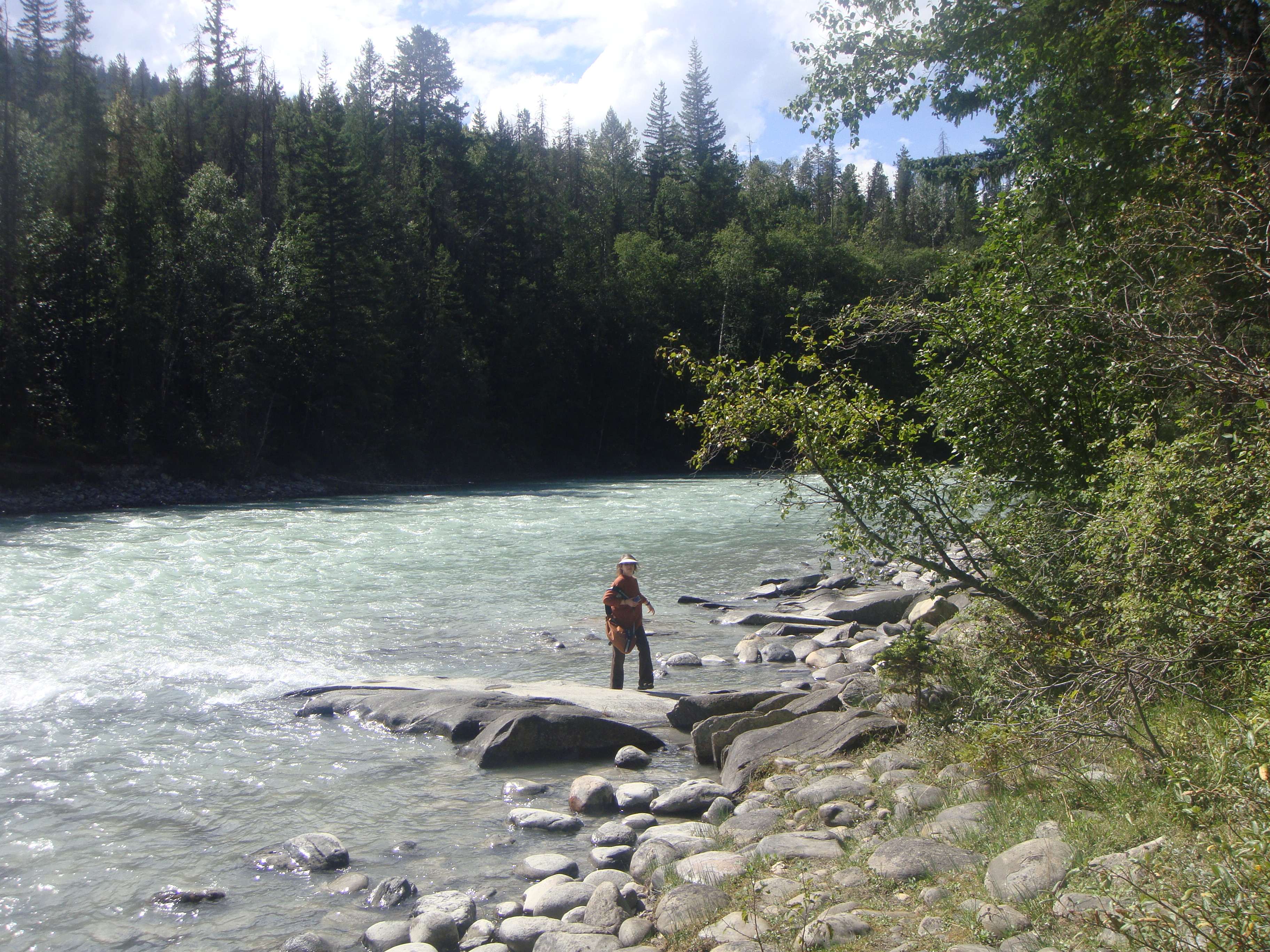
The river walk is a great place to let my brain relax, my mind to expand, and physically be invigorated. Last summer, as I walked, I found my poet’s voice and I am counting on that happening again over the next couple of weeks. I regain my soul in nature as William Stafford so eloquently puts it. When we got to Waterton, it was dragonflies over Red Rock Canyon that were my white butterflies.

Come down Canyon Creek trail on a summer afternoon

that one place where the valley floor opens out. You will see

the white butterflies. Because of the way shadows

come off those vertical rocks in the west, there are

shafts of sunlight hitting the river and

a deep long purple gorge straight ahead. Put down your pack.

Above, air sighs the pines. It was this way

when Rome was clanging, when Troy was being built,

when campfires lighted caves. The white butterflies dance

by the thousands in the still sunshine. Suddenly, anything

could happen to you. Your soul pulls toward the canyon

and then shines back through the white wings to be you again.

Red Rock Canyon

A Healing Place

I have not walked much lately due to time constraints. Nature is a place that allows me to learn about myself and create. Kathy and I spent a lot of time there last spring, summer, and fall. I struggle to write when I am not spending time walking. Today, we had a tornado watch and warning. As I drove home, the sky was dark to the north and east. Lightening flashed across the sky. I was reminded of the power nature holds and, at the same time, its healing touch as a creative source. I am not separate from it. I am a small piece.

This place–

It is a space,

I walk with purpose;

Yet, without purpose

There is no destination here.

The ground uplifts,

The sky shelters,

Breezes cool,

Leaves whisper secrets,

The Sun reveals.

Just be…

Be one;

Not above

Not below

I am integral.

A refuge

Nature`s wisdom shared

I am comforted

I heal

Just be.

The Poet’s Obligation

Pablo Neruda wrote this lovely poem which reminds me of the words I speak or write. They carry messages to others who cannot find their way out to the world. It is the poet’s obligation to observe and record with each sense the world he or she lives in. I think in the busy world we live in it is increasingly important we are each a poet and carry messages to the shrouded heart.

To whoever is not listening to the sea
this Friday morning, to who ever is cooped up
in house or office, factory or woman
or street or mine or dry prison cell,
to him I come, and without speaking or looking
I arrive and open the door of his prison,
and a vibration starts up, vague and insistent,
a long rumble of thunder adds itself
to the weigh of the planet and the foam,
the groaning rivers of the ocean rise,
the star vibrates quickly in its corona
and the sea beats, dies, and goes on beating.

So. Drawn on by my destiny,
I ceaselessly must listen to and keep
the sea’s lamenting in my consciousness,
I must feel the crash of the hard water
and gather it up in a perpetual cup
so that, wherever those in prison may be,
wherever they suffer the sentence of the autumn,
I may be present with an errant wave,
I may move in and out of the windows,
and hearing me, eyes may lift themselves,
asking “How can I reach the sea?”
And I will pass to them, saying nothing,
the starry echoes of the wave,
a breaking up of foam and quicksand,
a rustling of salt withdrawing itself,
the gray cry of sea birds on the coast.

So, though me, freedom and the sea
will call in answer to the shrouded heart.

The Child in Me

What if I could just lay outside with grass as my green carpet and the sky replete with clouds as my ceiling? We leave childhood behind so easily?

I lay on green carpet shaggy–

Enrobed in leaves’ greenery;

Silent words breezily whispered–

Bluest blue ceiling revealed;

Cotton batten shapes dance–

Oh, just for me this day!

Night arrives–

The sky wrapped in ebony–

Distant neon signs wink–

Moon’s maternal smile–

Each welcomes–

Just me, this night!

A child’s heart, a child’s mind;

Paints precious images–

Hold close;

Do not let them fade–

Close eyes:

Priceless memories, just for me!


Wild Geese

I want to let my imagination seek out the world I live in and my place in it. Mary Oliver shared  the wonderful idea that we are but one in the greater world we live in. Take care and enjoy a wonderful Sabbath.

You do not have to be good.
You do not have to walk on your knees
For a hundred miles through the desert, repenting.
You only have to let the soft animal of your body
love what it loves.
Tell me about despair, yours, and I will tell you mine.
Meanwhile the world goes on.
Meanwhile the sun and the clear pebbles of the rain
are moving across the landscapes,
over the prairies and the deep trees,
the mountains and the rivers.
Meanwhile the wild geese, high in the clean blue air,
are heading home again.
Whoever you are, no matter how lonely,
the world offers itself to your imagination,
calls to you like the wild geese, harsh and exciting —
over and over announcing your place
in the family of things.

For the Raindrop, Joy Is Entering the River

It was a long day with lousy weather, but I wore sandals without socks. I was an optimist today and felt the warm weather, just around the corner, will be more joyfully experienced. A student asked why I wore sandals and I answered him that way. I want to be hopeful about what is coming. There is enough unhappiness in the world without adding to the weight of it. Weather is a small thing, but small things add up and I can begin that thinking here. I lighten the weight of the larger things in life. I appreciate the richness of life as Ghalib writes about in this poem.

For the raindrop, joy is in entering the river –
Unbearable pain becomes it’s own cure.

Travel far enough into sorrow,
Tears turn to sighing;
In this way
We can learn how water can die into air.

When, after heavy rain,
The storm clouds disperse,
It is not that they’ve wept themselves
Clear to the end?

If you want to know the miracle,
How wind can polish a mirror,
Look:
The shining grass grows green in spring.

It’s the rose’s unfolding, Ghalib,
The creates the desire to see –
In every color and circumstance,
May the eyes be open for what comes.

Splendor

“More often than not splendor is the star we orbit without a second thought, especially as it arrives and departs.” Thomas Centolella offered that line in the poem Splendor. I stop occasionally and recall what is good about this life; family, a fulfilling vocation, and friends found along the journey. Most days, I travel this orbit rather mindlessly and I need a momentary and mindful pause which brings my world into sharper focus.

Be mindful, weary traveler, be mindful of what you have and hold it close while you can.

DSC00484

One day it’s the clouds,
one day the mountains.
One day the latest bloom
of roses – the pure monochromes,
the dazzling hybrids – inspiration
for the cathedral’s round windows.
Every now and then
there’s the splendor
of thought: the singular
idea and its brilliant retinue –
words, cadence, point of view,
little gold arrows flitting
between the lines.
And too the splendor
of no thought at all:
hands lying calmly
in the lap, or swinging
a six iron with effortless
tempo.  More often than not
splendor is the star we orbit
without a second thought,
especially as it arrives
and departs.  One day
it’s the blue glassy bay,
one day the night
and its array of jewels,
visible and invisible.
Sometimes it’s the warm clarity
of a face that finds your face
and doesn’t turn away.
Sometimes a kindness, unexpected,
that will radiate farther
than you might imagine.
One day it’s the entire day
itself, each hour foregoing
its number and name,
its cumbersome clothes, a day
that says come as you are,
large enough for fear and doubt,
with room to spare: the most secret
wish, the deepest, the darkest,
turned inside out.

There is some of most of what the poet refers to in that picture.

Cloud Painter

I came across this thought-provoking poem that reminded me of a post several days ago, Slowly, Slowly Wisdom Gathers. We to lay on our backs and let clouds above drift across the sky. They paint their pictures in that blue; we remember our stories in them as we close our eyes, and we drift along with them. We know something is beyond the horizon of both the sky and our immediate life. Slowly, it drifts into view and it sharpens with detail as it enters this moment only to drift away. Nothing is permanent. Everything is transient. Jane Flanders wrote this poem as a testament to clouds and life move serenely across the canvases they rest upon.

At first, as you know, the sky is incidental–

a drape, a backdrop for the trees and steeples.
Here an oak clutches a rock (already he works outdoors),
a wall buckles but does not break,
water pearls through a lock, a haywain trembles.

The pleasures of landscape are endless. What we see
around us should be enough.
Horizons are typically high and far away.

Still, clouds let us drift and remember. He is, after all,
a miller’s son, used to trying
to read the future in the sky, seeing instead
ships, hornes, instruments of flight.
Is that his mother’s wash flapping on the line?
His schoolbook, smudged, illegible?

In this period, the sky becomes significant.
Cloud forms are technically correct–mares’ tails
sheep-in-the-meadow, thunderheads.
You can almost tell which scenes have been interrupted
by summer showers.

How his young wife dies.
His landscapes achieve belated success.
His is invited to join the Academy. I forget
whether he accepts or not.

In any case, the literal forms give way
to something spectral, nameless. His palette shrinks
ti gray, blue, white–the colors of charity.
Horizons sink and fade,
trees draw back till they are little more than frames,
then they too disappear.

Finally the canvas itself begins to vibrate
with waning light,
as if the wind could paint.
And we too, at last, stare into a space
which tells us nothing,
except that the world can vanish along with our need for it.

Leaving Home

I posted Taylor Mali’s poem, Undivided Attention, the other day and found my way to his website. He taught for several years in the New York City school system and he has lesson plans on the site. I tried one with the students that examines the difference between the literal and figurative on Thursday.

Mali posed provocative questions and students wrote short paragraphs. Examples of these questions are “What happens to the dreams you don’t remember?”; “Which letter of the alphabet is the most intelligent”; and “Do leaves look forward to falling in autumn? Or do they hand on for dear life?” Students struggled as one of the instructions was to not explicitly name the thing in the question. They were to artfully describe their letter, the leaves, or what happens to dreams and present them in figuratively and not literally. There was a lot of conversation and some writing.

I took matters into my hands and wrote a short paragraph. I wrote on the fly so the language is a bit passive and words i.e. visage were not the right ones. Visage is French for face so would not have glanced around. When I model, I find the students make more progress.

“He frantically clung to life fighting a losing battle against nature and her forces. At wit’s end, he valiantly, vainly hung on not submitting to a cyclical reality. He sensed loneliness and not solitude. Assisted by gentle breezes his discoloured visage glanced furtively around. He was in this alone. His colleagues humbly had moved on ahead of him finding their way to become humus and rebirth in the next spring. What to do now? He realized this was not the end he had planned for and took his leave that autumn day. His job done and he wafted towards his destiny.”

Today, I crafted this into a poem. The language is a little more active and I hid the topic. The answer is in the tags.

Frantically he clings to life,

He wages a futile battle versus Nature,

Against all her marshaled forces.

Valiantly, he struggles,

Unwilling to let go,

He wages this vain battle.

He senses loneliness;

His, a solitary stance–

Sans ally.

Today, a gentle breeze rustles only him;

His discoloured visage turns–

And, he glances furtively about.

Colleagues, long departed

Humbly headed home

They add a new, rich layer.

Silent humus and rebirth whispers,

Come, ready Mother Earth

Help prepare Her new garden.

Not the end he desired,

But, this past season’s calling is complete,

Wisdom speaks and he lets go.

Downward, he gently falls

And, his job is complete

Gracefully, he alights.

Reciprocity

We made home safe and sound. It was tiring, but we visited and shared with family, old friends, and made new friends. I looked through my volumes of poetry books today and came across this one which, for some reason, spoke to me today. I think it was the title. We share our gifts with each other in ways that can help us through each day. We need to be open and heartfelt in giving and receiving.

Nature offers us gifts and when we open our senses and heart we receive them. We saw the first real hints of spring on the drive home, despite the snowfall in places. Yes, it did snow on April 14th. In similar ways we live in relationship with humans, we live in relationship with the world, the universe and their gifts. We learn from the constancy, the peace, and the fortitude of nature. We only need be compassionate and patient.

John Drinkwater wrote this wonderful poem about this constancy, this peace, and this strength that is always around us and with us in the form of the universe, our family, our friends, and a Creator.

I do not think that skies and meadows are

Moral, or that the fixture of a star

Comes of a quiet spirit, or that trees

Have wisdom in their windless silences.

Yet these are things invested in my mood

With constancy, and peace, and fortitude;

That in my troubled season I can cry

Upon the wide composure of the sky,

And envy fields, and wish that I might be

As little daunted as a star or tree.