Tag Archives: poetry

What I Have Learned So Far

I wonder if I do enough. Is there more that I can do? Certainly, I discover the seed Mary Oliver referred to in quiet moments of meditation. What can I do so it grows and I move beyond indolence? Yesterday, a former student visited. He is a success story in my career, a young man who was disengaging from school in late elementary. His parents supported our efforts and the result was a high school graduate, a married man with two children, and he is headed to Africa for work.

He reminded me through his visit that I had done more than talk the good story. We sowed the seed and it flourished.

Meditation is old and honorable, so why should I
not sit, every morning of my life, on the hillside,
looking into the shining world? Because, properly
attended to, delight, as well as havoc, is suggestion.
Can one be passionate about the just, the
ideal, the sublime, and the holy, and yet commit
to no labor in its cause? I don’t think so.

All summations have a beginning, all effect has a
story, all kindness begins with the sown seed.
Thought buds toward radiance. The gospel of
light is the crossroads of — indolence, or action.

Be ignited, or be gone.

For the Raindrop, Joy Is Entering the River

It was a long day with lousy weather, but I wore sandals without socks. I was an optimist today and felt the warm weather, just around the corner, will be more joyfully experienced. A student asked why I wore sandals and I answered him that way. I want to be hopeful about what is coming. There is enough unhappiness in the world without adding to the weight of it. Weather is a small thing, but small things add up and I can begin that thinking here. I lighten the weight of the larger things in life. I appreciate the richness of life as Ghalib writes about in this poem.

For the raindrop, joy is in entering the river –
Unbearable pain becomes it’s own cure.

Travel far enough into sorrow,
Tears turn to sighing;
In this way
We can learn how water can die into air.

When, after heavy rain,
The storm clouds disperse,
It is not that they’ve wept themselves
Clear to the end?

If you want to know the miracle,
How wind can polish a mirror,
Look:
The shining grass grows green in spring.

It’s the rose’s unfolding, Ghalib,
The creates the desire to see –
In every color and circumstance,
May the eyes be open for what comes.

Only on Special Days

We changed the tires on my car today. An acquaintance has a mobile tire service and comes over each season. I opened the big garage door to retrieve the tires. When  I closed the door, Kathy moved a bag out-of-the-way and retrieved a book from it by Leonard Nimoy called Will I Think of You. Nimoy writes poetry and this is one of his books of poetry.

I chose this poem, because it reminded me that each day is special when I am with those who care for and love me. It reminded me that I sometimes take those people for granted, but they make each day special.

Only on special days

Birthdays, Holidays

And other days….

When those who

                Give to each other

                                And live for each other

                                                Travel

                                                                For hours or day

                                                                                Or for an instant

To hold

                                Or dream-hold

Each other

To exchange

                Heart-warmth

                                And body-warmth

When we commemorate

                And celebrate

                                The Special days

                      Of a life of love

                Then and especially then

Because the day is special

                As your glorious being

                                                                Is special

                                                                                I will think of you

                Only when we’re together

And I can think of nothing else

                And everything else

                                Because we together

                                Are everything

And our togetherness is

                                                                All things

                                Then as always

                                                And forever

                                                                I will think of you

Splendor

“More often than not splendor is the star we orbit without a second thought, especially as it arrives and departs.” Thomas Centolella offered that line in the poem Splendor. I stop occasionally and recall what is good about this life; family, a fulfilling vocation, and friends found along the journey. Most days, I travel this orbit rather mindlessly and I need a momentary and mindful pause which brings my world into sharper focus.

Be mindful, weary traveler, be mindful of what you have and hold it close while you can.

DSC00484

One day it’s the clouds,
one day the mountains.
One day the latest bloom
of roses – the pure monochromes,
the dazzling hybrids – inspiration
for the cathedral’s round windows.
Every now and then
there’s the splendor
of thought: the singular
idea and its brilliant retinue –
words, cadence, point of view,
little gold arrows flitting
between the lines.
And too the splendor
of no thought at all:
hands lying calmly
in the lap, or swinging
a six iron with effortless
tempo.  More often than not
splendor is the star we orbit
without a second thought,
especially as it arrives
and departs.  One day
it’s the blue glassy bay,
one day the night
and its array of jewels,
visible and invisible.
Sometimes it’s the warm clarity
of a face that finds your face
and doesn’t turn away.
Sometimes a kindness, unexpected,
that will radiate farther
than you might imagine.
One day it’s the entire day
itself, each hour foregoing
its number and name,
its cumbersome clothes, a day
that says come as you are,
large enough for fear and doubt,
with room to spare: the most secret
wish, the deepest, the darkest,
turned inside out.

There is some of most of what the poet refers to in that picture.

Cloud Painter

I came across this thought-provoking poem that reminded me of a post several days ago, Slowly, Slowly Wisdom Gathers. We to lay on our backs and let clouds above drift across the sky. They paint their pictures in that blue; we remember our stories in them as we close our eyes, and we drift along with them. We know something is beyond the horizon of both the sky and our immediate life. Slowly, it drifts into view and it sharpens with detail as it enters this moment only to drift away. Nothing is permanent. Everything is transient. Jane Flanders wrote this poem as a testament to clouds and life move serenely across the canvases they rest upon.

At first, as you know, the sky is incidental–

a drape, a backdrop for the trees and steeples.
Here an oak clutches a rock (already he works outdoors),
a wall buckles but does not break,
water pearls through a lock, a haywain trembles.

The pleasures of landscape are endless. What we see
around us should be enough.
Horizons are typically high and far away.

Still, clouds let us drift and remember. He is, after all,
a miller’s son, used to trying
to read the future in the sky, seeing instead
ships, hornes, instruments of flight.
Is that his mother’s wash flapping on the line?
His schoolbook, smudged, illegible?

In this period, the sky becomes significant.
Cloud forms are technically correct–mares’ tails
sheep-in-the-meadow, thunderheads.
You can almost tell which scenes have been interrupted
by summer showers.

How his young wife dies.
His landscapes achieve belated success.
His is invited to join the Academy. I forget
whether he accepts or not.

In any case, the literal forms give way
to something spectral, nameless. His palette shrinks
ti gray, blue, white–the colors of charity.
Horizons sink and fade,
trees draw back till they are little more than frames,
then they too disappear.

Finally the canvas itself begins to vibrate
with waning light,
as if the wind could paint.
And we too, at last, stare into a space
which tells us nothing,
except that the world can vanish along with our need for it.

Leaving Home

I posted Taylor Mali’s poem, Undivided Attention, the other day and found my way to his website. He taught for several years in the New York City school system and he has lesson plans on the site. I tried one with the students that examines the difference between the literal and figurative on Thursday.

Mali posed provocative questions and students wrote short paragraphs. Examples of these questions are “What happens to the dreams you don’t remember?”; “Which letter of the alphabet is the most intelligent”; and “Do leaves look forward to falling in autumn? Or do they hand on for dear life?” Students struggled as one of the instructions was to not explicitly name the thing in the question. They were to artfully describe their letter, the leaves, or what happens to dreams and present them in figuratively and not literally. There was a lot of conversation and some writing.

I took matters into my hands and wrote a short paragraph. I wrote on the fly so the language is a bit passive and words i.e. visage were not the right ones. Visage is French for face so would not have glanced around. When I model, I find the students make more progress.

“He frantically clung to life fighting a losing battle against nature and her forces. At wit’s end, he valiantly, vainly hung on not submitting to a cyclical reality. He sensed loneliness and not solitude. Assisted by gentle breezes his discoloured visage glanced furtively around. He was in this alone. His colleagues humbly had moved on ahead of him finding their way to become humus and rebirth in the next spring. What to do now? He realized this was not the end he had planned for and took his leave that autumn day. His job done and he wafted towards his destiny.”

Today, I crafted this into a poem. The language is a little more active and I hid the topic. The answer is in the tags.

Frantically he clings to life,

He wages a futile battle versus Nature,

Against all her marshaled forces.

Valiantly, he struggles,

Unwilling to let go,

He wages this vain battle.

He senses loneliness;

His, a solitary stance–

Sans ally.

Today, a gentle breeze rustles only him;

His discoloured visage turns–

And, he glances furtively about.

Colleagues, long departed

Humbly headed home

They add a new, rich layer.

Silent humus and rebirth whispers,

Come, ready Mother Earth

Help prepare Her new garden.

Not the end he desired,

But, this past season’s calling is complete,

Wisdom speaks and he lets go.

Downward, he gently falls

And, his job is complete

Gracefully, he alights.
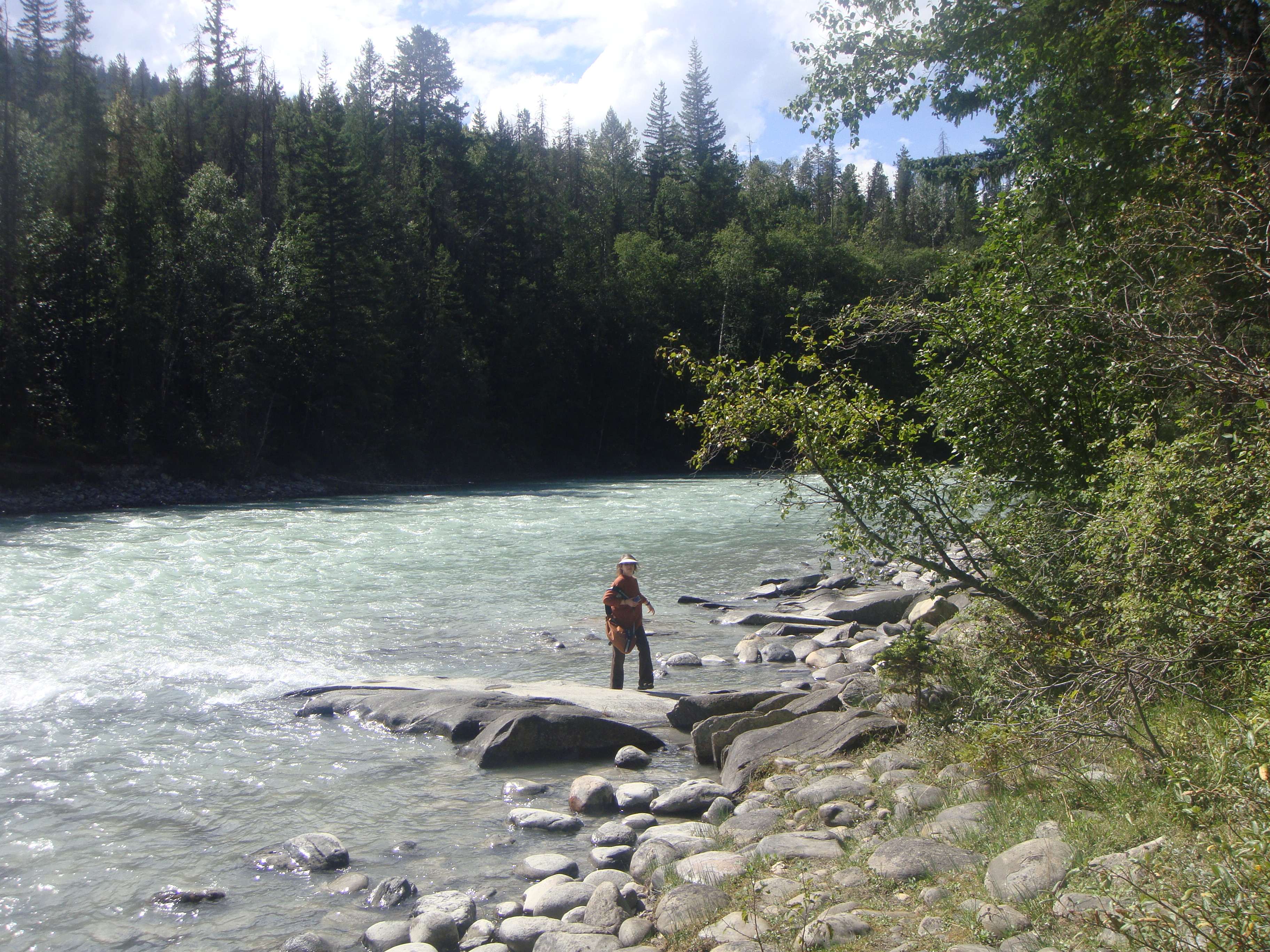
Slowly, Slowly Wisdom Gathers

I would like to lay outside and just let the wisdom of the world and universe gather around me, soak in leisurely. Wisdom takes time to gather and it sometimes seems so fleeting. It is in the slowness that the reward is most valued. It ripens more fully and reaches into all my nooks and crannies.

Mark Van Doren wrote this wonderful poem about the way wisdom seeks us out slowly and it unfolds as part of life’s experience.

Slowly, slowly wisdom gathers:

Golden dust in the afternoon,

Sometimes between the sun and me,

Sometimes so near I can see,

Yet never settling, late or soon.

Would that it did, and a rug of gold

Spread west of me a mile or more;

Not large, but so that I might lie

Face up, between the earth and sky,

And know what none has known before.

Then I would tell as best I could

The secrets of that shining place:

The web of the world, how thick, how thin,

How firm, with all things folded in;

How ancient, and how full of grace.

Reciprocity

We made home safe and sound. It was tiring, but we visited and shared with family, old friends, and made new friends. I looked through my volumes of poetry books today and came across this one which, for some reason, spoke to me today. I think it was the title. We share our gifts with each other in ways that can help us through each day. We need to be open and heartfelt in giving and receiving.

Nature offers us gifts and when we open our senses and heart we receive them. We saw the first real hints of spring on the drive home, despite the snowfall in places. Yes, it did snow on April 14th. In similar ways we live in relationship with humans, we live in relationship with the world, the universe and their gifts. We learn from the constancy, the peace, and the fortitude of nature. We only need be compassionate and patient.

John Drinkwater wrote this wonderful poem about this constancy, this peace, and this strength that is always around us and with us in the form of the universe, our family, our friends, and a Creator.

I do not think that skies and meadows are

Moral, or that the fixture of a star

Comes of a quiet spirit, or that trees

Have wisdom in their windless silences.

Yet these are things invested in my mood

With constancy, and peace, and fortitude;

That in my troubled season I can cry

Upon the wide composure of the sky,

And envy fields, and wish that I might be

As little daunted as a star or tree.

Love After Love

We arrived safe and sound. There was not much traffic and the roads were clear through the mountains. It is a bit tiring with a lot of visiting of family and friends. We are a large family spread out geographically so we do not see each other often. It is different to see each other face-to-face, have conversations, share meals, and reminisce. There is much laughter.

I find it is in these gatherings that I look in. I greet my self through the presence of siblings, parents, nieces, nephews, and a varied assortment of relatives. Who do we resemble inwardly and outwardly? It is not always obvious until we see others who helped form of our lives. It is like meeting yourself on the journey of life. It is in this companionship, with others and eventually our self, we rediscover our self.

Derek Walcott wrote this beautiful poem around that theme, meeting yourself on life’s journey.

The time will come

when, with elation,

you will greet yourself arriving

at your own door, in your mirror,

and each will smile at the other’s welcome,

and say, sit here. Eat.

You will love again the stranger who was your self.

Give wine. Give bread. Give back your heart

to itself, to the stranger who has loved you

all your life, whom you ignored

for another, who knows you by heart.

Take down the love letters from the bookshelf,

the photographs, the desperate notes,

peel your own image from the mirror.

Sit. Feast on your life.

Undivided Attention

We set out tomorrow for a short trip tomorrow through the mountains and, hopefully, no snow. There will be snow. I hope it is not snowing.

A colleague recently introduced me to the poetry of Taylor Mali. He is better known for the poem What Teachers Make. That was a poem I had heard several times before, but could not have attributed it to a poet. Mali has great wit, clarity, and creates powerful imagery through his words. He was a teacher for several years and I think he would have been fantastic in the classroom building relationships with young people. I wrote about Sam Intrator several months ago and I think Taylor Mali is the kind of teacher he was describing in his book, Tuned In and Fired Up.

This poem by Taylor Mali spoke as the day unfolded. I need to be present for my students to learn. I need to give them my undivided attention so they can give their undivided attention to the subject at hand, perhaps that piano hanging eight stories up across the street. What could we learn that day?

A grand piano wrapped in quilted pads by movers,
tied up with canvas straps—like classical music’s
birthday gift to the criminally insane—
is gently nudged without its legs
out an eighth‐floor window on 62nd street.

It dangles in April air from the neck of the movers’ crane,
Chopin-­‐shiny black lacquer squares
and dirty white crisscross patterns hanging like the second‐to­‐last
note of a concerto played on the edge of the seat,
the edge of tears, the edge of eight stories up going over—
it’s a piano being pushed out of a window
and lowered down onto a flatbed truck!—and
I’m trying to teach math in the building across the street.

Who can teach when there are such lessons to be learned?
All the greatest common factors are delivered by
long‐necked cranes and flatbed trucks
or come through everything, even air.
Like snow.

See, snow falls for the first time every year, and every year
my students rush to the window
as if snow were more interesting than math,
which, of course, it is.

So please.

Let me teach like a Steinway,
spinning slowly in April air,
so almost-­‐falling, so hinderingly
dangling from the neck of the movers’ crane.
So on the edge of losing everything.

Let me teach like the first snow, falling.