Tag Archives: poetry

Sabbath – A Poem

Recently, I posted Humility and referenced Wayne Muller’s book Sabbath: Restoring the Sacred Rhythm of Rest. He suggested we all need to take time, disconnect, and do those things and be with those people in our immediate lives which bring us moments of quiet and refuge. He has offered a new awareness for me of what was missing in my life, a calm, tranquil, restful time I share with those immediately around me and my self. I am disconnected for the next 36 hours. I will just be.

I leave with a found poem of sorts. I chose words from the book that exemplified my understanding of Sabbath. I look forward to comments and likes when I return on Monday morning.

Shine the light

Reveal a next step

On the journey.

Moments of remembrance

Blessing gifts received

Delight in life

Reflect in wonder.

Uplift the spirit

Care for the body

Rest your soul

Take refuge

Take sanctuary

In the moment

Hibernate, lie fallow.

Insight, wisdom, compassion

Arise from stillness

A bell chimes

Time transformed

Mindfulness consecrates the day

Timeless words revere the day.

Bring forward

Right speech, right action, right effort

Break bread

Companionship

Refuge.

Heal, liberate, surrender

Receive and give

Lovingkindness

In each breath

An inner light attracts

Leads home

In each breath

The rhythms of life, earth, action, rest

The Sabbath arrives.
In Those Years by Adrienne Rich

As I posted the last two or three blogs, I realized sometimes how little we think of we and we individually think of I. I am often guilty of this. Life experienced is a relational enterprise. I think it does start with the I, but moves out to embrace the Thou in the way writers such as Martin Buber meant. We experience life through relational experiences of I and Thou.

Adrienne Rich provided us with poetry as a daily reminder of “no man being an island.”

In those years, people will say, we lost track

of the meaning of we, of you

we found ourselves

reduced to I

and the whole thing became

silly, ironic, terrible:

we were trying to live a personal life

and, yes, that was the only life we could bear witness to

But the dark birds of history screamed and plunged

into our personal weather

They were headed somewhere else but their beaks and pinions drove

along the shore, through the rags of fog

where we stood, saying I

Take care with those who you are we with and enjoy them today. Have a good 7th of July.

Are You Okay, God?

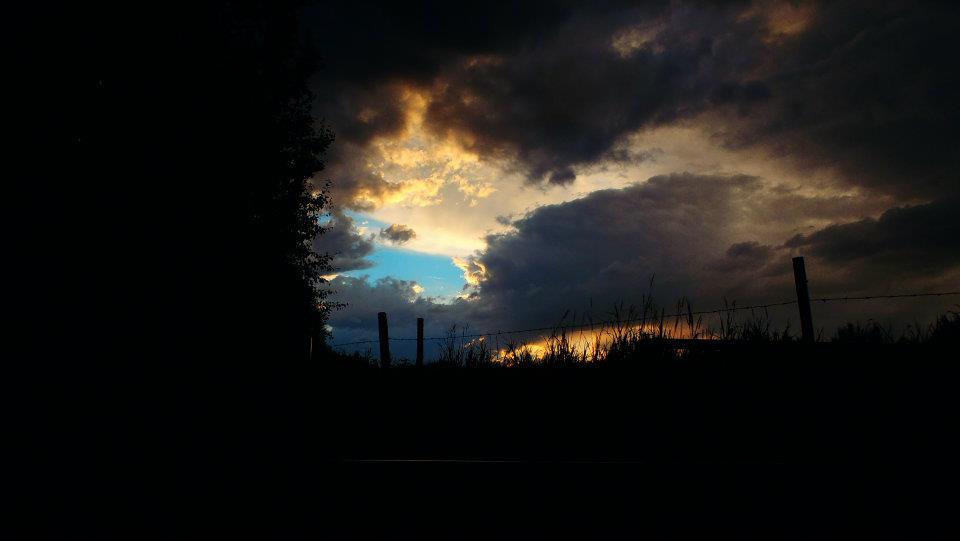
I read Seven Lessons of Chaos by John Briggs and David Peat last summer. They used a koan about a ‘hole in the whole’ describing what we do when we analyze things and lose the mystery of the wholeness in life. We break life and its events down, analyze them, and forget to put all the pieces back and lose something vital in the connectedness to the world, leaving a “hole in the whole.” Humans attempt to explain the mystery of life and not embrace it and the richness of our existence. Mystery and spirituality work together. We cannot intellectually explain the fullness and mystery of life. Thomas Merton and Shunryu Suzuki spoke of this attempt as human arrogance.

A former student took this picture, again with pretty straightforward phone technology, and the beauty, the richness, and the wholeness it conveyed is powerful. It reminded me of the song we learned as children There is a Hole in My Bucket. The hole in the clouds or bucket could be there for a reason we do not understand. Despite the potential arrogance, I wrote a short poem that might explain the hole.

Sprinting, scrambling, scurrying

Hoping, praying

Feeling hard, cold raindrops

Burning through my clothes

Smelling rain and fear.

Suddenly, blue and gold in the blackness

A light shone

A candle gently flickering.

I whispered, “Thank God!”

I am startled by a voice

“Are you OK, Ivon?”

“I think so.”

“Is that you God?”

“Is the hole to find my way?”

“By the way, thanks for asking. Are you OK?”

A pause

I thought a heard a smile

A sigh for sure, before

“I am now.”

Silence returned

Not falling, just silent

Embracing, reassuring, supporting,

Opening my eyes,

I looked up

I was home

A light shone through the window,

A second haven

Warm, well-lit, welcoming

With voices asking, “Are you OK?”

Saying, “We were worried.”

I wonder if we ever wonder if God is OK?

We should ask every now, and

Listen quietly in the storm for an answer,

It is there.

The 4th of July – An Outsider’s Perspective

Kathy and I spend part of our summers in Spokane and other places south of the US-Canada border. The first time we experienced the Fourth of July, the celebration, camaraderie, and heart-felt patriotism readily evident amazed me.Whatever differences Americans have with each other, are set aside for this day and more. The 4th begins several days before and lasts several days after the 4th. I use the code. One doesn’t say the phrase; saying the 4th is enough. Have a Good 4th means something more than just have a good day.

One summer, in Portland, celebrations continued for several days after the 4th with fireworks displays in the river valley. Another year, we met a family in Yellowstone who had just left Mount Rushmore where about 250, 000 people gathered for the 4th. In Canada, that requires every member of some provinces or territory gather and, sometimes, more invitations need to be sent out to reach that number.

I glanced through Parker Palmer’s latest book, Healing the Heart of Democracy, and found a passage from Leonard Cohen’s song, Democracy. I have listened to this song many times, but re-seeing the words made rethink their meaning, with a beginner’s mind. I often wondered if Cohen portrayed American democracy in a negative light, but seeing the words again I saw something different. It is a hopeful message acknowledging the messiness and awkwardness of democracy at work and that America is a place where the democratic experiment is still happening. America is a place where family exists in the broadest sense and the heart is full and open to democracy.

Imagine if you could make the 4th an every day event, engage everyone, and export the message of hopefulness, patriotism, and democracy well and fully lived, based on the model of the 4th? What a world we would live in!

It’s coming to America first,

the cradle of the best and the worst.

It’s here they got the range

and the machinery for change

and it’s here they got the spiritual thirst.

It’s here the family’s broken

and it’s here the lonely say

that the heart has got to open

in a fundamental way:

Democracy is coming to the U.S.A

This is a picture of some early fireworks we took on the 3rd, 2012.

Have a great 4th

Happy Haiku

I am taking a class on personal ethics and a central theme is the role happiness plays, if at all, in ethics. I don’t think writing a haiku is important for a strict moral perspective, but I feel good when I do.

writing a haiku

words select me carefully

a written picture.

poetry written

a feeling of happiness

emerging gently.

Humility

I am reading Wayne Muller‘s Sabbath: Restoring the Sacred Rhythm of Rest. He shared the following: “The word humility, like the word human, comes from humus, or earth. We are most human when we do no great things. … We are simply dust and spirit–at best loving midwives, participants in a process much larger than we. … We are granted the tremendous blessing of knowing that we do very little at all by ourselves” (p. 176).

He closed that chapter with a short, tongue-in-cheek poem by Robert Aitken Roshi who examined more closely humility and the role of soil in the human condition:

When people praise me for something

I vow with all being

to return to my vegetable garden

and give credit where credit is due.

Butterfly

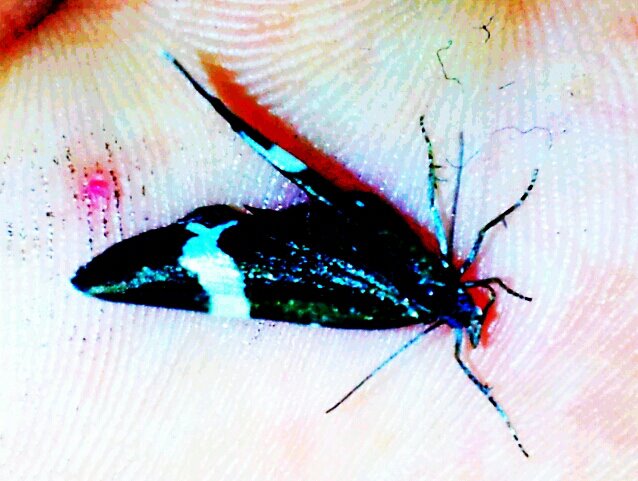
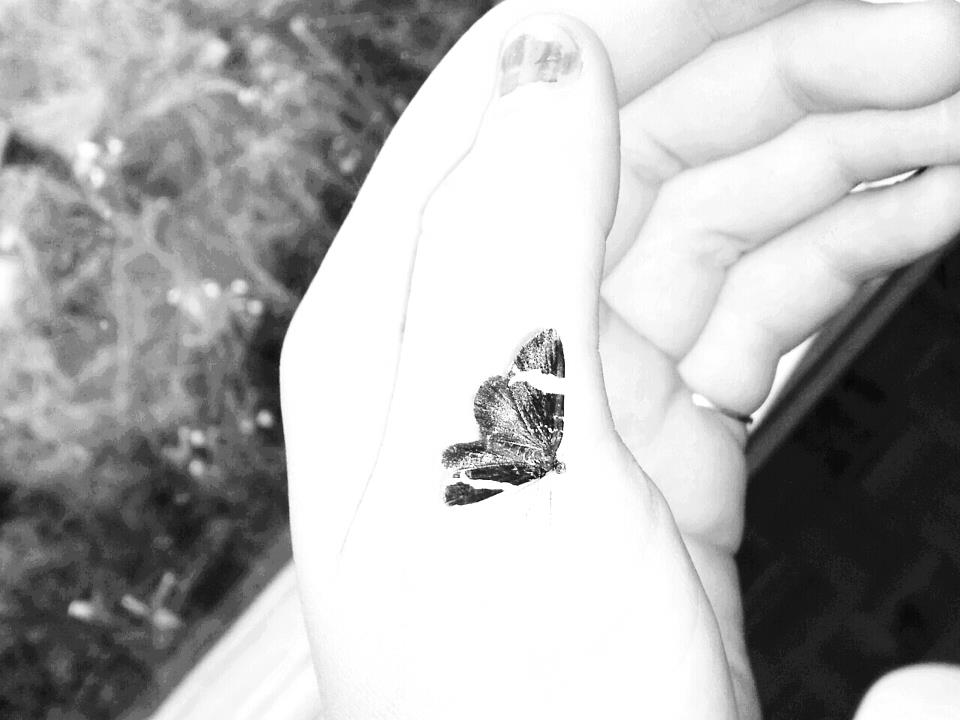
One of my students took these pictures and allowed me the privilege of posting them along with a Haiku. She is using her new phone and this butterfly felt drawn to her finger and hand.

Rest on my finger

Unifying quietly

The peaceful soul rests.

stop on the way home

butterfly rests on human

pause on the journey.

I Want to Write Something So Simply by Mary Oliver

Some days, when I sit to write, I find it hard to start and this poem by Mary Oliver came to me this morning.

I want to write something

so simply

about love

or about pain

that even

as you are reading

you feel it

and as you read

you keep feeling it

and though it be my story

it will be common,

though it be singular

it will be known to you

so that by the end

you will think–

no, you will realize–

that it was all the while

yourself arranging the words,

that it was all the time

words that you yourself,

out of your own heart

had been saying.

Thank you for sharing your thoughts through comments and making my words more than just my words.

Touching Mountains

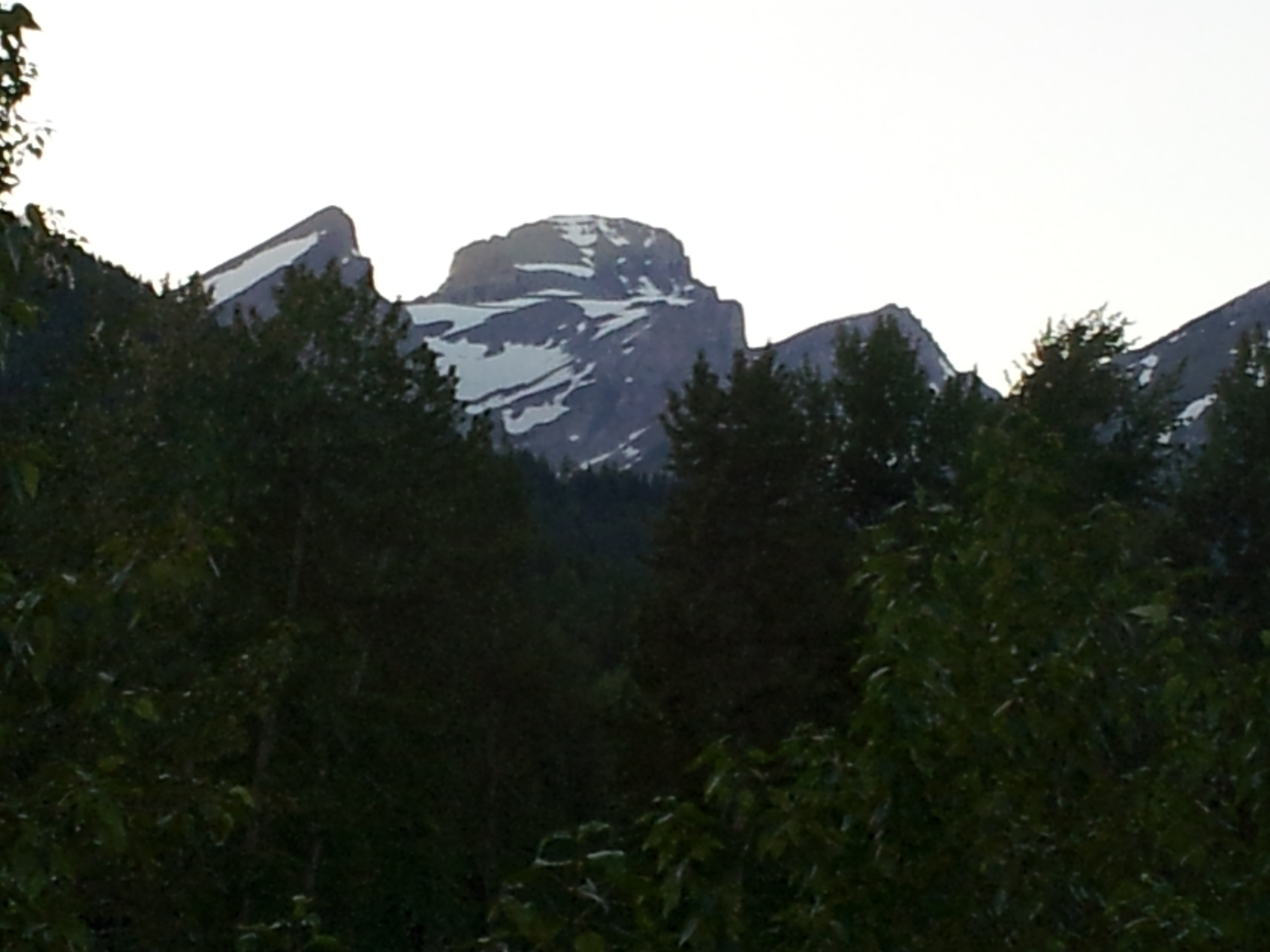
We are traveling to Spokane this weekend so I can continue the doctoral journey. We go through Fernie British Columbia which is a small town in the mountains.

These were not my best pictures, but they resonated with me on another level.


Touch the evening sky

Two shades of grey become one

Slowly day joins night.

the last gold flecks dance

bidding farewell to daylight

night gently arrives.

Love After Love by Derek Walcott

Here are a couple of poems. The first is by Derek Walcott and speaks to the relational nature of being with our self. The second is a haiku I wrote yesterday about the need to live in relationship starting with one’s self and extending out to beloved others.
The time will come
when, with elation
you will greet yourself arriving
at your own door, in your own mirror
and each will smile at the other’s welcome,

and say, sit here. Eat.
You will love again the stranger who was your self.
Give wine. Give bread. Give back your heart
to itself, to the stranger who has loved you

all your life, whom you ignored
for another, who knows you by heart.
Take down the love letters from the bookshelf,

the photographs, the desperate notes,
peel your own image from the mirror.
Sit. Feast on your life.

Sitting in circles
Revealing our inner most thoughts
A covenant grows