This is not about whales per se. Several years ago, my Grade 8 class struggled with the simple machines unit in Science. I proposed an alternative assessment route. Instead of writing a test, they could apply their learning and build a complex machine. They were all over it, but I had to come up with something and began a search of the Internet. I found an idea called Whales Forever and modified it to fit my needs. It has been a success ever since.
1. Whales become stranded on beaches around the world and Whales Forever is concerned with the survival rate of beached whales. This environmental organization rescues whales and returns them to open water quickly so they will not perish. Whales Forever announced a contest for Grade 8 students to create a prototype machine which would safely lift a stranded whale onto a hover craft so it could be transported back to open water as it receives medical treatment.
2. Students design and build a machine which with a minimum mechanical advantage (MA) of 4. The machine consists of at least two simple machines. Mechanical advantage is calculated output force divided by the input force.
3. The machine will lift the whale a height of 10 cm and lower it 5 cm onto the simulated hovercraft. The whale is simulated by a resealable plastic bag filled with marbles or sand. Students can hand position the ‘whale’ in a harness which is part of the system to begin the lifting process.
4. Students sketch exploratory labelled diagrams of their chosen design including measurements indicating critical components i.e. simple machines used, gears, and drive trains. They provide mechanical advantage calculations.
5. Students use available materials i.e. desks, stools, tables, retort stands. Last year, a student used a Meccano set and this year students used K’Nex. They are not allowed to use a motorized system. They use planes, levers, pulleys, screws, wheel and axles, and perhaps a wedge.
6. Students give a written reflection outlining the strengths and weaknesses of their design including written suggestions for improvement.
7. Students make a 4 minute presentation to the board of directors of Whales Forever.
I use a rubric and assess the design including diagrams, the effectiveness of the prototype, the reflection, and the presentation.
Here are some examples of this year’s products.
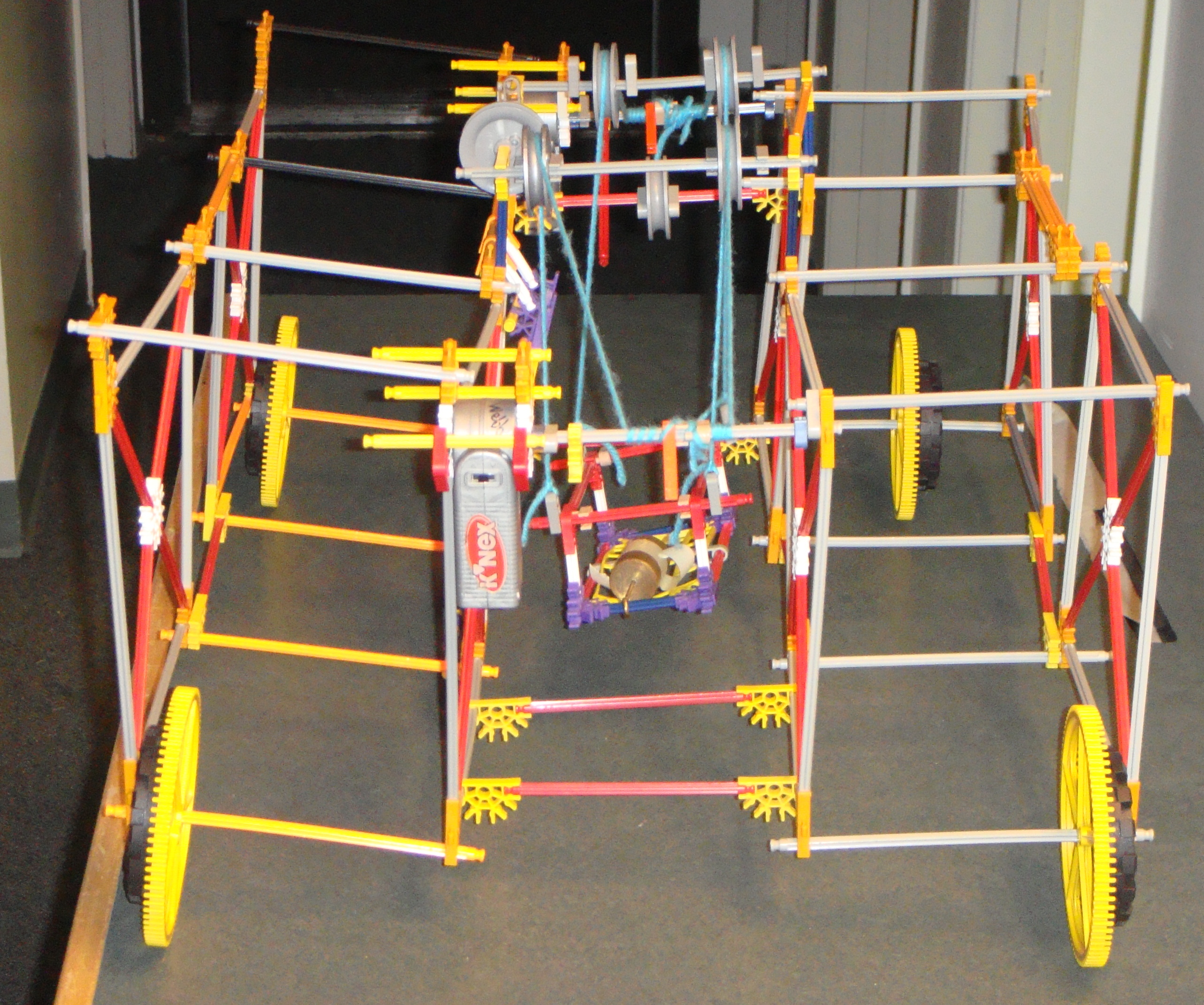
Whale Saver constructed from K’Nex. You can see the harness on this one. It had a mechanical advantage of about 15. The one challenge with the K’Nex is hooking up the scale. It took some maneuvering.
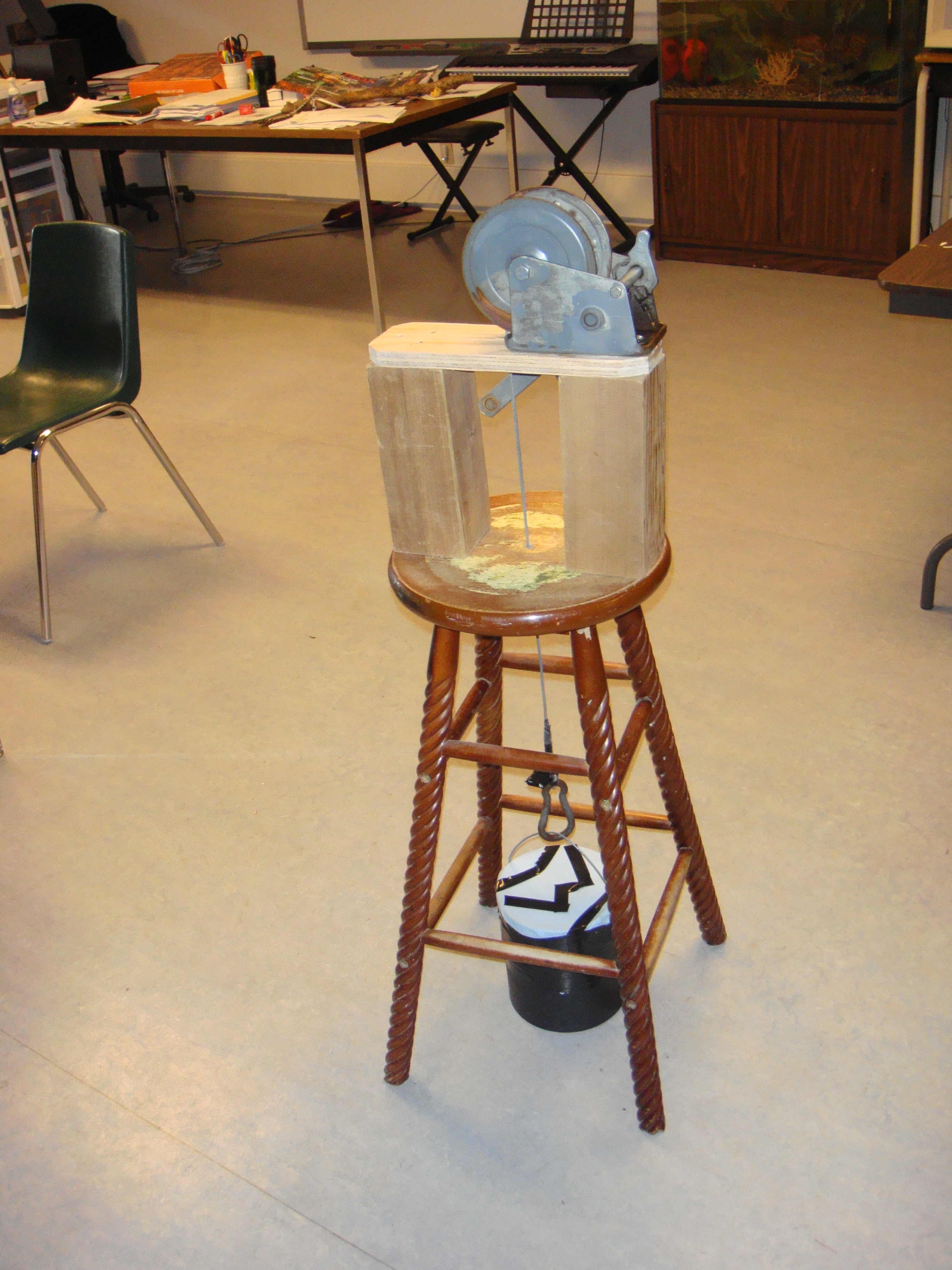
This one was homemade. It had a mechanical advantage of 20.
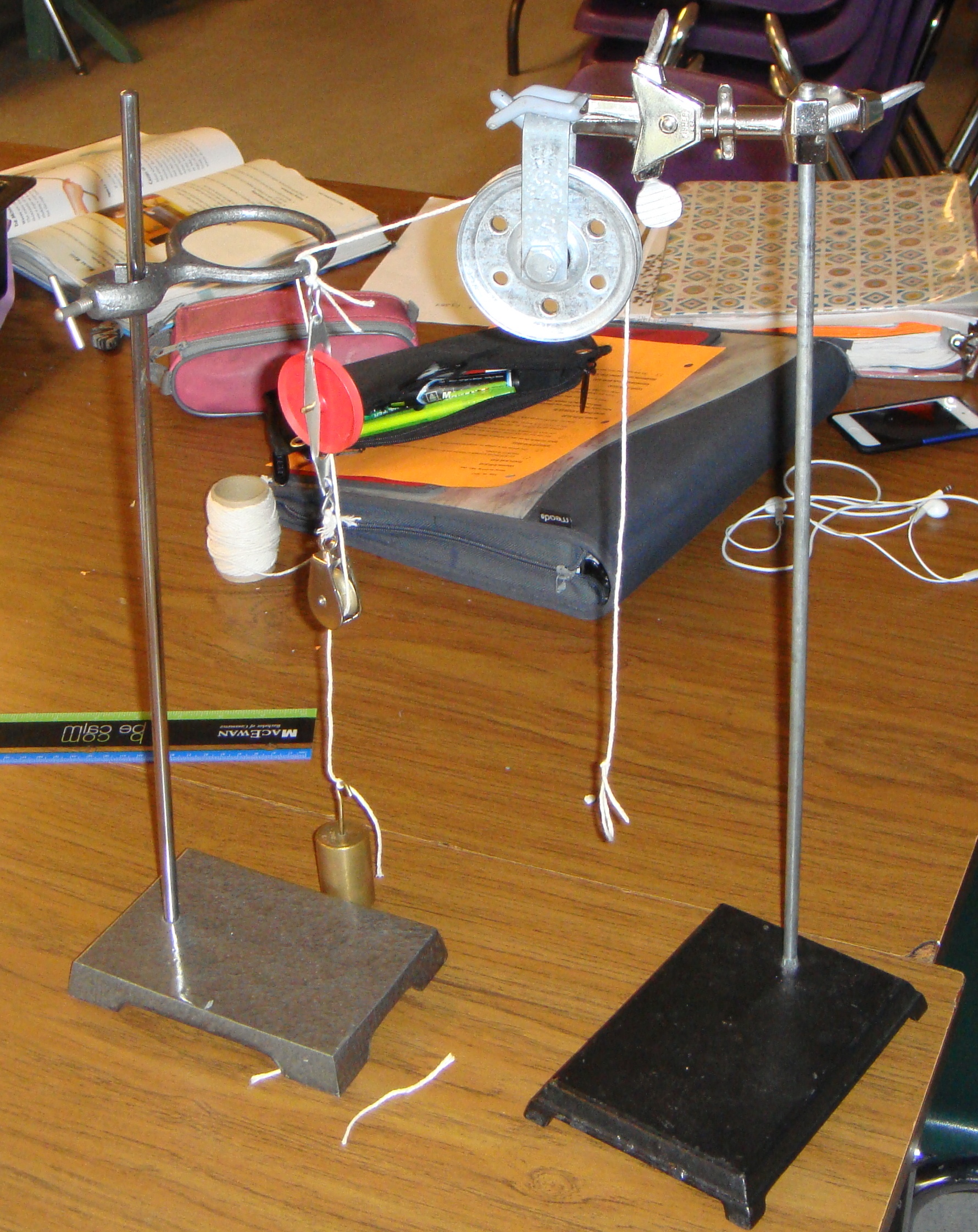
These students used materials from the classroom primarily. It had a mechanical advantage of about 8 or 9.
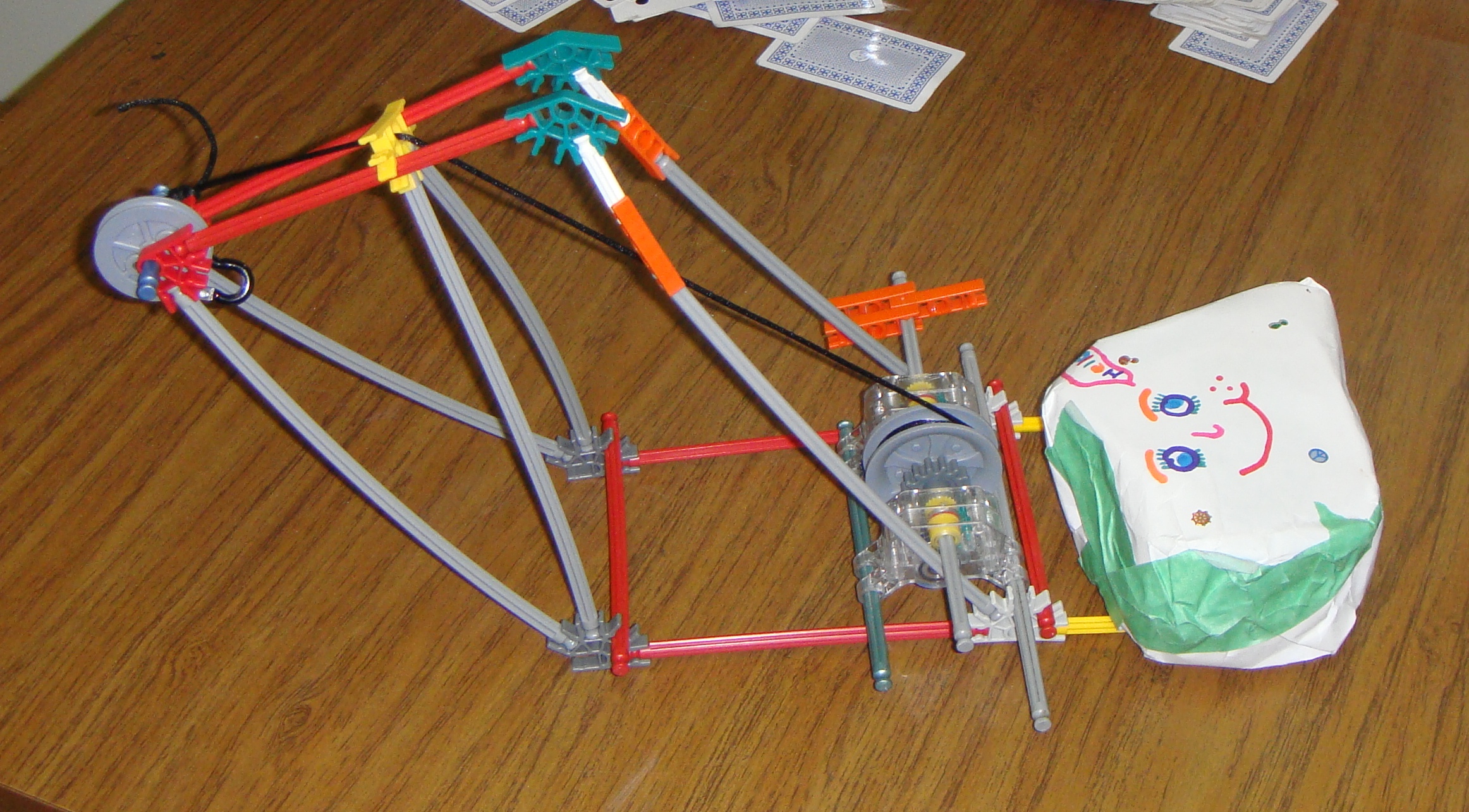
This was another K’Nex design. The thing on the right is a rock wrapped in paper with a face on it. The rock countered the weight of the whale as it was lifted. This machine had a mechanical advantage of about 10.


 ivonprefontaine
 Teacher as Transformer