Tag Archives: spirituality

Elegy in the Classroom

Anne Sexton wrote this wonderfully provocative poem. I am unsure of her context for the poem, but an elegy is a lament or a mourning for something past. As with anything, when we grow past the love and passion for what we do and the compassion for the people we do it with it is time to take our leave. I want to be remembered as ‘gracefully insane’ or eccentric. I love learning with my students and their families the second greatest reward I can receive. The first is learning with my family. I think, in both cases, I could be called somewhat ‘disarranged’.

Teaching is a place of great creative for me and fills a whole in the hole of my soul.

Oh my, Anne Sexton discovered and chose great words for teachers.

In the thin classroom, where your face
was noble and your words were all things,
I find this boily creature in your place;

find you disarranged, squatting on the window sill,
irrefutably placed up there,
like a hunk of some big frog
watching us through the V
of your woolen legs.

Even so, I must admire your skill.
You are so gracefully insane.
We fidget in our plain chairs
and pretend to catalogue
our facts for your burly sorcery

or ignore your fat blind eyes
or the prince you ate yesterday
who was wise, wise, wise.
Directions

Several years ago, I was in a small city Medicine Hat, Alberta. I was lost and stopped several people for directions. The second half of this poem by Connie Wanek reminded me of some of the directions I received. I eventually found my way.

Today, as a I read this poem, I wondered if the second half of the poem’s directions were not the ones I need some days. Occasionally, t is nice to wander. A river that winds its way through the landscape meanders. I wonder why we don’t do that more as humans? When I got to the last line about approaching the horizon on my knees it reminded me of the things I take for granted and do not take time to just meander towards.

First you’ll come to the end of the freeway.
Then it’s not so much north on Woodland Avenue
as it is a feeling that the pines are taller and weigh more,
and the road, you’ll notice,
is older with faded lines and unmown shoulders.
You’ll see a cemetery on your right
and another later on your left.
Sobered, drive on.
Drive on for miles
if the fields are full of hawkweed and daisies.
Sometimes a spotted horse
will gallop along the fence. Sometimes you’ll see
a hawk circling, sometimes a vulture.
You’ll cross the river many times
over smaller and smaller bridges.
You’ll know when you’re close;
people always say they have a sudden sensation
that the horizon, which was always far ahead,
is now directly behind them.
At this point you may want to park
and proceed on foot, or even
on your knees.

Equality

Maya Angelou wrote this lovely poem. I think there are several ways to interpret the poem’s message. It could be a love poem, a poem written from the perspective of an oppressed people, or the way we see each other in daily life. I wonder, “What would it be like if we found ways to be equal, in our workplaces, families, communities, and the many other places humans gather? Could we each be free?”

I am reminded of Martin Luther King’s famous line: “Free at last, Free at last, Thank God Almighty we are free at last!” and Maria Montessori’s quote: Children are human beings to whom respect is due, superior to us by reason of their innocence and of the greater possibilities of their future.”

Can I help lift the yoke that keeps others down in some small way each day, each moment? We each need moments of uplifting and the respect that flows from it.

You declare you see me dimly
through a glass which will not shine,
though I stand before you boldly,
trim in rank and making time.

You do own to hear me faintly
as a whisper out of range,
while my drums beat out the message
and the rhythms never change.

Equality, and I will be free.

You announce my ways are wanton,
that I fly from man to man,
but if I’m just a shadow to you,
could you ever understand?

We have lived a painful history,
we know the shameful past,
but I keep on marching forward,
and you keep on coming last.

Equality, and I will be free.

Take the blinders from your vision,
take the padding from your ears,
and confess you’ve heard me crying,
and admit you’ve seen my tears.

Hear the tempo so compelling,
hear the blood throb through my veins.
Yes, my drums are beating nightly,
and the rhythms never change.

Equality, and I will be free.

Oh, my friend

Spring has sprung the last couple of days. I reminded myself about paying attention to the little things in life. About this time last year, I was discouraged and it was paying attention to small things, things I take for granted like brushing my teeth. I simply began to say, “Take a moment and do this.” It worked, as slowly I found myself seeing the extraordinary and underlying beauty of life. I turned in and found words which sounded like majestic melodies. Sufi poet Ezzeddin Nasafi wrote this poem about building bridges with love. I discovered this begins inside me and moves outwards, a flow and gift from me to the world.

Oh, my friend:
Love makes the world of creation a
possibility
and the ecstasy of ascension a will.
Look around yourself and see a universe
saturated by the fragrance of love.

If there was no loge and the endurance for
such longing, then who could
beautify words
into majestic melodies?

If there was no breeze to gracefully
caress the
hair of the beloved, then how could
the lover
see the revealing face of the beloved?
Such longing is to gracefully return to the
Provider, in the state of perfection.

Oh, my friend:
do not become a slave of worship, but
understand the meaning of worship;
understand the meaning of Divine, Allah,
and practice to be pious and peaceful;
become a true human being, as becoming a
true human being is the key to salvation.

Oh, my friend:
if you have chosen an inner path,
remember
that we all are travelers, our moments are
passing and we are passing with them.

Your wealth will not remain forever
and your
pain will not last, so do not become a
slave to
your wealth nor to your pain.

If you are a person of an inner path,
then you
are a person of peace, so make peace with
yourself and your surroundings.

Splendor

“More often than not splendor is the star we orbit without a second thought, especially as it arrives and departs.” Thomas Centolella offered that line in the poem Splendor. I stop occasionally and recall what is good about this life; family, a fulfilling vocation, and friends found along the journey. Most days, I travel this orbit rather mindlessly and I need a momentary and mindful pause which brings my world into sharper focus.

Be mindful, weary traveler, be mindful of what you have and hold it close while you can.

DSC00484

One day it’s the clouds,
one day the mountains.
One day the latest bloom
of roses – the pure monochromes,
the dazzling hybrids – inspiration
for the cathedral’s round windows.
Every now and then
there’s the splendor
of thought: the singular
idea and its brilliant retinue –
words, cadence, point of view,
little gold arrows flitting
between the lines.
And too the splendor
of no thought at all:
hands lying calmly
in the lap, or swinging
a six iron with effortless
tempo.  More often than not
splendor is the star we orbit
without a second thought,
especially as it arrives
and departs.  One day
it’s the blue glassy bay,
one day the night
and its array of jewels,
visible and invisible.
Sometimes it’s the warm clarity
of a face that finds your face
and doesn’t turn away.
Sometimes a kindness, unexpected,
that will radiate farther
than you might imagine.
One day it’s the entire day
itself, each hour foregoing
its number and name,
its cumbersome clothes, a day
that says come as you are,
large enough for fear and doubt,
with room to spare: the most secret
wish, the deepest, the darkest,
turned inside out.

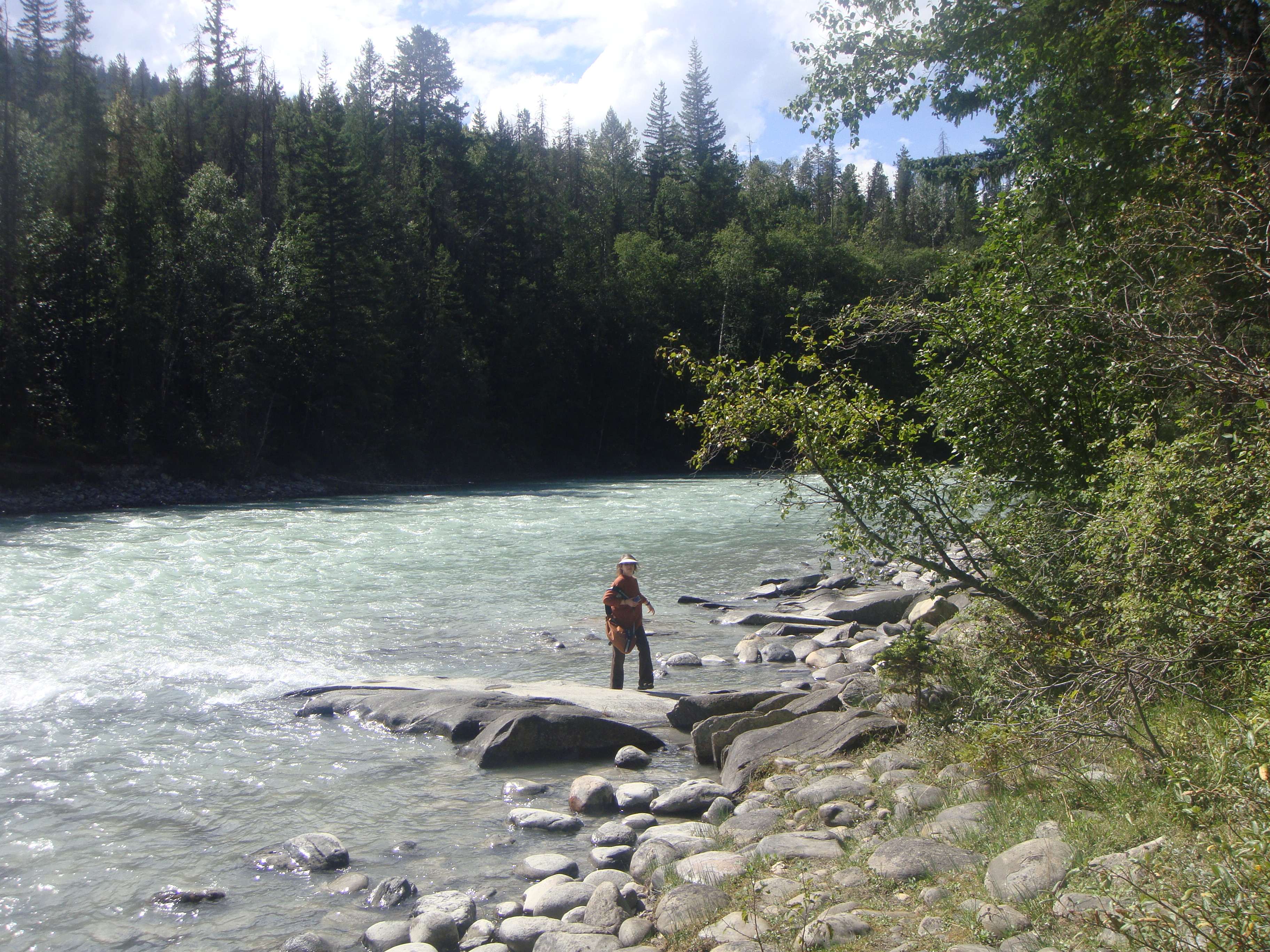
There is some of most of what the poet refers to in that picture.

Cloud Painter

I came across this thought-provoking poem that reminded me of a post several days ago, Slowly, Slowly Wisdom Gathers. We to lay on our backs and let clouds above drift across the sky. They paint their pictures in that blue; we remember our stories in them as we close our eyes, and we drift along with them. We know something is beyond the horizon of both the sky and our immediate life. Slowly, it drifts into view and it sharpens with detail as it enters this moment only to drift away. Nothing is permanent. Everything is transient. Jane Flanders wrote this poem as a testament to clouds and life move serenely across the canvases they rest upon.

At first, as you know, the sky is incidental–

a drape, a backdrop for the trees and steeples.
Here an oak clutches a rock (already he works outdoors),
a wall buckles but does not break,
water pearls through a lock, a haywain trembles.

The pleasures of landscape are endless. What we see
around us should be enough.
Horizons are typically high and far away.

Still, clouds let us drift and remember. He is, after all,
a miller’s son, used to trying
to read the future in the sky, seeing instead
ships, hornes, instruments of flight.
Is that his mother’s wash flapping on the line?
His schoolbook, smudged, illegible?

In this period, the sky becomes significant.
Cloud forms are technically correct–mares’ tails
sheep-in-the-meadow, thunderheads.
You can almost tell which scenes have been interrupted
by summer showers.

How his young wife dies.
His landscapes achieve belated success.
His is invited to join the Academy. I forget
whether he accepts or not.

In any case, the literal forms give way
to something spectral, nameless. His palette shrinks
ti gray, blue, white–the colors of charity.
Horizons sink and fade,
trees draw back till they are little more than frames,
then they too disappear.

Finally the canvas itself begins to vibrate
with waning light,
as if the wind could paint.
And we too, at last, stare into a space
which tells us nothing,
except that the world can vanish along with our need for it.

As Kingfishers Catch Fire

I was reading blogs and came across a quote which, in turn, led me to this beautiful poem by Gerard Manley Hopkins. I enjoy the mystery of the universe around me. Part of that mystery is the role we play and how we come to learn it or, for that matter, accept it. Thomas Merton, the Trappist Monk, in No Man is an Island, wrote some people are called and hear their call clearly. We are this person, this being, and are called to serve the world in these roles. He quipped for some the calling is to search and never find a calling. Hopkins and Merton were influenced by various schools of mysticism and this takes me back to the mystery of life as I head off on my digital sabbath.

As kingfishers catch fire, dragonflies draw flame;

As tumbled over rim in roundy wells

Stones ring; like each tucked string tells, each hung bell’s

Bow swung finds tongue to fling out broad its name;

Each mortal thing does one thing and the same:

Deals out that being indoors each one dwells;

Selves — goes itself; myself it speaks and spells,

Crying Whát I dó is me: for that I came.

I say móre: the just man justices;

Keeps grace: thát keeps all his goings graces;

Acts in God’s eye what in God’s eye he is —

Chríst — for Christ plays in ten thousand places,

Lovely in limbs, and lovely in eyes not his

To the Father through the features of men’s faces.

Slowly, Slowly Wisdom Gathers

I would like to lay outside and just let the wisdom of the world and universe gather around me, soak in leisurely. Wisdom takes time to gather and it sometimes seems so fleeting. It is in the slowness that the reward is most valued. It ripens more fully and reaches into all my nooks and crannies.

Mark Van Doren wrote this wonderful poem about the way wisdom seeks us out slowly and it unfolds as part of life’s experience.

Slowly, slowly wisdom gathers:

Golden dust in the afternoon,

Sometimes between the sun and me,

Sometimes so near I can see,

Yet never settling, late or soon.

Would that it did, and a rug of gold

Spread west of me a mile or more;

Not large, but so that I might lie

Face up, between the earth and sky,

And know what none has known before.

Then I would tell as best I could

The secrets of that shining place:

The web of the world, how thick, how thin,

How firm, with all things folded in;

How ancient, and how full of grace.

Reciprocity

We made home safe and sound. It was tiring, but we visited and shared with family, old friends, and made new friends. I looked through my volumes of poetry books today and came across this one which, for some reason, spoke to me today. I think it was the title. We share our gifts with each other in ways that can help us through each day. We need to be open and heartfelt in giving and receiving.

Nature offers us gifts and when we open our senses and heart we receive them. We saw the first real hints of spring on the drive home, despite the snowfall in places. Yes, it did snow on April 14th. In similar ways we live in relationship with humans, we live in relationship with the world, the universe and their gifts. We learn from the constancy, the peace, and the fortitude of nature. We only need be compassionate and patient.

John Drinkwater wrote this wonderful poem about this constancy, this peace, and this strength that is always around us and with us in the form of the universe, our family, our friends, and a Creator.

I do not think that skies and meadows are

Moral, or that the fixture of a star

Comes of a quiet spirit, or that trees

Have wisdom in their windless silences.

Yet these are things invested in my mood

With constancy, and peace, and fortitude;

That in my troubled season I can cry

Upon the wide composure of the sky,

And envy fields, and wish that I might be

As little daunted as a star or tree.

Reach into the Heart

I arrive at the end of another busy, fruitful week. I begin the digital sabbath and spend time looking in, reading quietly, writing, and reflect on what is revealed. What is my heart’s purpose?

I gently reach into my heart,

A space not easily entered–

It resists busyness–

Asks for something different.

Here, at heart’s door

I listen carefully,

Patiently,

Then, a faint whisper.

Tenderly emerges…

Here, in delicate quietness;

Here, in exquisite solitude;

Here, in rich frailty;

Here, in soft strength

But, only when I listen

My inner teacher speaks.

What do I hear?

I am uncertain–

It is the soul that speaks

It speaks differently–

Not in human terms–

In spiritual terms.

Wisdom discerned…

Revealed slowly…

In that patience and calmness…

Life animated…

This way

Life’s fruit borne.