To parents who follow my blog, this is a great place for ideas on books and Math lesson plans. Darlena has spaced out ideas throughout her blog and it is worth exploring for ideas which support your child’s learning at home. In our unique environment, the LA and Math ideas will be helpful
Tag Archives: transformative education
I enjoyed this critique of Daniel Pink’s book and will read the book. Earlier. Another blog suggested the work emanating from another book by this author, A Whole New Mind, was important to educators and thinkers. Bear in mind, Daniel Pink is not an educator and his last real job, from his website, was as a political speechwriter.
I agree Alfie Kohn, who taught school, or Carol Dweck, a psychologist focusing on motivation, and her book Mindset: The New Psychology of Success, are invaluable resources for educators.
I think a different understanding unschooling movement is extreme home schooling. Deb Meier acknowledged, in an interview, home schooled children are some of the best socialized children she has met. I think unschooling is an unfortunate descriptor and natural learning, experience-based learning, or independent learning might be less misleading. Instead of discarding the concept, consider questions about education and school’s purpose in the 21st Century. I think there is room for reasonable alternative models in a progressive and increasingly diverse world.
The Real Leadership Lessons of Steve Jobs – Harvard Business Review
The Real Leadership Lessons of Steve Jobs – Harvard Business Review.
Here is a great article written by Walter Isaacson. We often overlook the less obvious influences of people such as Steve Jobs.
Seeing the Ordinary as Extraordinary
During a recent conversation with an acquaintance, we discussed the concept of seeing the ordinary as if it were extraordinary. She commented, “If we could do that, imagine the joyfulness in the world!” I try observing the world through this lens and some days I catch a glimpse of the extraordinary elements of my life. Let me offer examples of this joyousness and its synchronous nature.
I listen to a wonderful little radio station, CKUA. When I get in the car, it is on and I usually pay at least superficial attention to the songs. I love Blues, Soul, and Gospel music and on three particular mornings I was welcomed into my car by great music. On Thursday, Lead Belly sang Grey Goose; on Friday Nina Simone sang Feeling Good; and on Saturday, Commander Cody and the Lost Planet Airmen sang Oh, Mama, Mama. I confess I was not feeling upbeat Friday when Nina Simone came on, but I was aware of the generous message and found space to feel better. Each song appealed to me and seemed to sooth a restless and weary soul.
Saturday morning I met with three friends and, during the conversation, we talked about my blog. One person commented it seemed two different people wrote at times. I pointed out some postings are academic and fit with my doctoral journey. When I write about a need for Eloquent Questions in Education, my voice is, hopefully, more scholarly. When I share about a paralyzing fear of heights in Images to Provoke Thoughts, I try to personalize and humanize the self, Ivon, who writes, but my complexity is revealed. I explained Kathy proofreads and edits many postings. She does an amazing job of cleaning up conventions and keeping the message on track. I am challenged to acknowledge and express my gratefulness, as well as I should.
Frequently, I take for granted both the complexity of my self and who I am, and the important, sustaining relationships in my life, rendering them ordinary. Both are extraordinary and help me observe and understand the self when I contemplate, “Who is the self that teaches?” Parker Palmer offered this question and I try to extend it further to ask, “Who is the self that lives this life?” I think these are critical questions because, without self-awareness, what possibility of transformation exists? I follow Cooperative Catalyst and they posted Why Transformation May Hit a Snag: Observations from the Field. Two questions emerged from the article for me, both about self-awareness. First, what am I doing to transform my self? Second, what values guide this transformational process? Gandhi proposed, “Be the change you want to see in the world.” Being aware and present to my self and those who matter most in my life are essential steps. Some days are better than others and the ordinary becomes extraordinary.
I thought some of the people who read my blog might enjoy reading this posting from an excellent blog contributed to by a variety of educators. It fits with recent conversations and the World Cafe Conversations.
Jerry Garcia Comparisons
When I was in Seattle, several people mentioned I looked like Jerry Garcia. This was a first and might be a Canadian thing. Does Jerry Garcia and the Grateful Dead have the following here as in the US. I told my students about the comparison and within minutes they had gone on the Internet and found images of Jerry Garcia to compare. Today, I played some Grateful Dead and students watched videos. I mentioned, “I don’t see the similarity,” but several students disagreed.
I will leave it to you to offer a definitive answer. Here is an image of Jerry Garcia and the other of me. The Garcia image came from a Forbes article comparing the leadership of Steve Jobs and Jerry Garcia and the article is a good read.
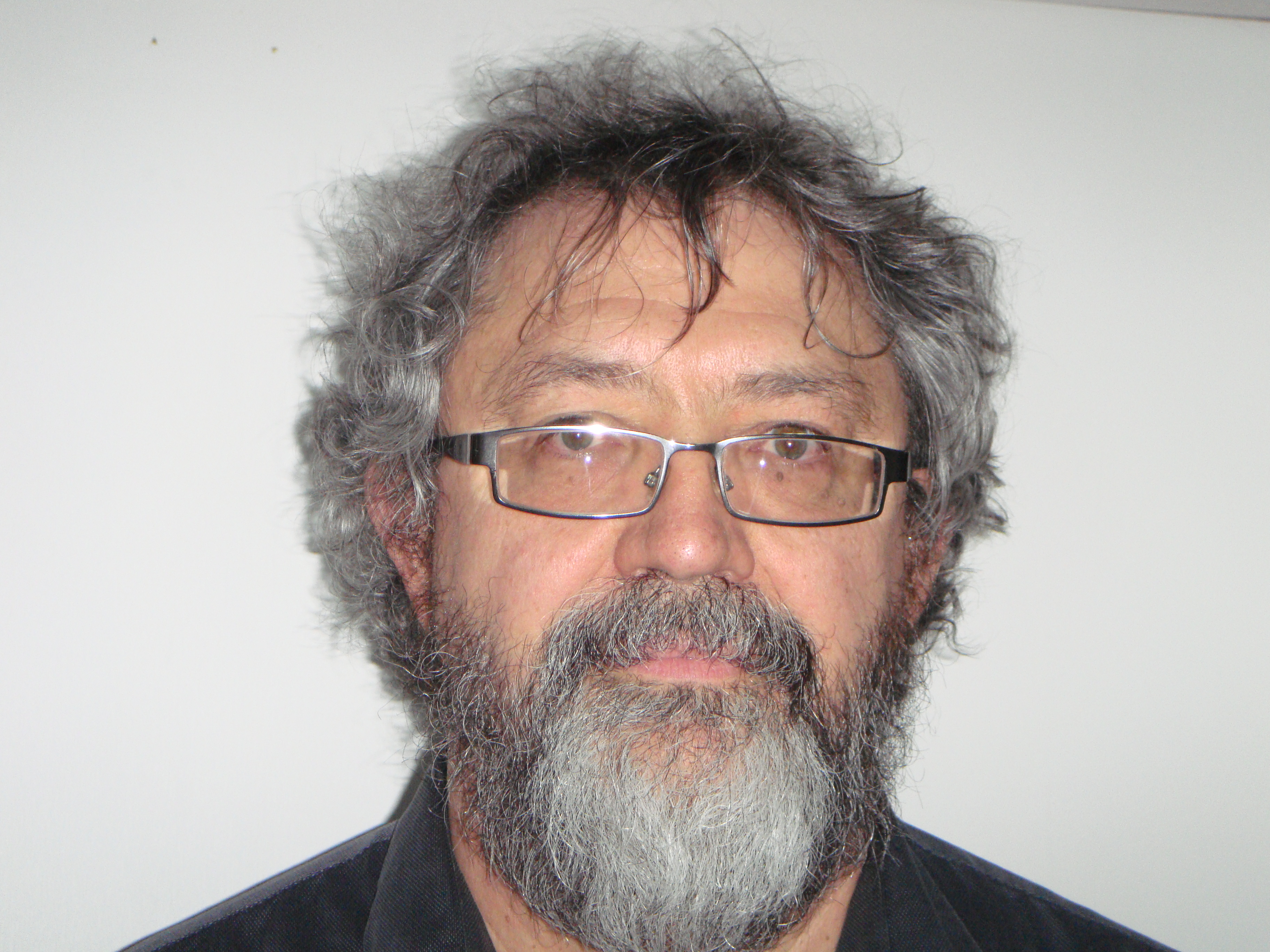

Personally, I don’t see it.
21st Century Renaissance in Education
Will we be 21st Century Renaissance people? This question emerged from a recent conversation with a Grade 8 Social Studies class. We discussed a broad, nuanced, and emergent worldview.
Specialization and expertise are not the calling cards of success. Adaptation and transformation are at the heart of contemporary education. Transformation is not just a synonym for change and is reflective of dramatic and systemic change. I understand transformation as a mindful, incremental process producing real change over time framed around evolving eloquent questions. What change do we need? New conversations about reimagining education producing compassionate leaders for a 21st Century Renaissance. What role will education play in helping young people become the leaders of this Renaissance? Is public education capable of transformation? Are there leaders capable of bringing forth tomorrow’s leadership? What will education of this nature look like?
Renaissance is rebirth and a time of metamorphosis and transformation. What emerges from the chrysalis stage? Ideas mature and become capable of further adaptation. Human endeavour requires rich, inclusive conversations for profound change to occur instead of superficial patching what the outdated models that exist. We need to prepare the soil for transformative conversations focused on eloquent questions where answers are not assumed before the conversation and invite diverse views during the course of the conversational journey.
Subversive Seuss?
Fact is stranger than fiction. Charles Adler, in an op-ed column “We don’t need no ‘educrats'”, pointed out the sometimes subversive nature of Dr. Seuss. There is more to the story than Mr. Adler revealed in his article and a more detailed account is at “Yertle the Turtle Deemed ‘Too Political’ for Fragile Canadian Children.”
I am impressed with the dedicated bureaucratic representative of Prince Rupert [British Columbia] School District who acted to make sure susceptible elementary students were not corrupted by the seditious literature of a beloved, albeit radical, children’s author. After all, those small, impressionable beings will enroll in university level classes to learn about Paulo Freire‘s critical theory or Leonardo Boff‘s liberation theology and we could have a more just, humane world to live in. When I grow up, can I be paid to sit in an ivory tower and be out of touch with the real world? The jurisdiction representative stated “It’s a good use of my time if it serves the purpose of shielding the children from political messaging.” Oh my God, political messaging; what next? What is he talking about?
There is a larger context. The British Columbia Teacher’s Federation and the province of British Columbia are involved in a bitter labour dispute. The teacher was not reading a book to students in the classroom, but the quote was taken by a teacher to a meeting with management.
If there is a political statement being made here, it is in the impact on children’s learning. The book’s line “I know up on top you are seeing great sights, but down here on the bottom, we too should have rights” points to those with the least. Dr. Seuss spoke to the greatest measure of servant-leadership. What growth do we see in those with the greatest needs? When will someone speak for the children and serve and lead at the same time? Will adults need to grow up first so that growth can be fulfilled and measured? Neither side gets a pass here.
Part of the problem for children’s learning is the use of polarizing language in the dispute. Do the children care if there is a management side or teacher side? Are adults locked in a political game replete with childish behaviours to gain real or imagined political advantage while using children as pawns? This suggests questions, not answers. Are these not someone’s children? What are parents doing? What does this say about the state of public education? We talk a good story in education and say all the right things, but I am embarrassed and angry, as an educator and as a citizen in a purportedly democratic country, when I read articles of this nature. What drew us to this vocation? Or is it just a job now? What are the qualities exemplified by great teachers: compassion, caring, collaboration, etc? Are we living up to those when we talk and act this way?
Mr. Adler has this mostly right. What is missing is the following question, “When was the last time some people were in a classroom, rolled up sleeves, and taught children?”
Educational Theory in Practice
Where I work is a place that can bring me great joy. The word work is the wrong word actually. Since beginning this ‘gig’ 12 years ago, I refer to it as the place I teach and learn. I had two chances to interview for this role. Most of us only get one chance. I made the most of the second chance and the rest has been history.
What do I do? I teach and learn in a small school setting combining a traditional attendance model and home schooling. It was the ‘brain child’ of several families almost 20 year ago. They believed there was something of worth to take from both models and they helped to build a hybrid school.
I teach multi-grade junior high students three core subjects: English Language Arts, Social Studies, and Science while students attend each Tuesday and Thursday plus every other Monday. We provide complementary programming i.e. curling, food sciences, and archery. Students learn Math at home guided by their parents and with help from the teacher, in this case me. The home school component occurs on the non-attendance days and the teacher conducts regular home visits on those days, as well. Home visits help the child and/or parent with contentious Math concepts and build relationships with families.
This community uses a three-legged stool approach. Students, parents, and educators are all important contributors to the success and quality of learning and we all are learners on a journey together. Parents learn curriculum and teaching strategies assisting the learning of their children. They assist in the classroom on a regularly scheduled basis. Students grow to accept the learning journey belongs to them. They are companions in the learning enterprise and learning is with them. Teachers learn about the children and their families through open, honest conversation. What does each child need is a central question to the conversation. Most of all, the support needed for children’s success is in a community environment where we are partners and not adversaries. This is a relationship grounded in covenant as opposed to one centered on transactional contracts. We all commit and invest in something we dearly and deeply value.
I wanted to share this because we are an innovative educational project and some upcoming postings will share some of my experiences in this community of practice or learning organization.
Paradox of Community
Several themes emerged in the World Cafe conversations about learning and an important one was community. The group used various connotations for community and qualities to describe community, but this theme resonated throughout the mindful and reflective conversations.
The concept of team often served as a corollary for community. Teams strive towards common goals in sports, business, or education. A component of successful teams is ‘shared vision.’ Rather than leadership being vested in a person or a small group of people in a hierarchical structure, successful teams have the anchor of a vision and share the values that support the vision. A critical first question in a learning environment would be “What vision and values energize learning?” The common goal and energy bring to life the acronym: Together Everyone Achieves More [TEAM]!
Humans share. It reveals who we are and what is important to us individually and allowing us to connect to the collective. We are affirmed as others listen. The World Cafe group suggested sharing was central to learning by revealing what is important and what is learned. The sharing may reveal gaps in learning or reveal more than one way to solve a problem and learn. Sharing in a safe environment, or community, focuses learning past the expert knowledge of one person, the teacher, and shifts it to the broader collective. Risks are more readily undertaken because there is support, and everyone can both teach and learn. We live in an increasingly complex world where the paradox of teacher and learner calls strongly for sharing.
The idea of connectivity arose several times. A complexity of today’s world is a burgeoning need to connect with others in both new and traditional ways. We face paradox as we seek community. Community is no longer defined solely by where we live, as in a digital world, connections are made across the globe and communities shaped in radical ways. This encourages different and emerging views of community: where we live, where we work, and, how we connect.
Community suggests paradox. The World Cafe group felt being face-to-face with others was essential at times, but suggested face-to-face might include digital platforms such as video conferencing or Skype. A benefit of on-line instruction is the ability to pause a video or audio file, reflect on material, take notes, and return to earlier points in the file. We cannot pause teachers in real-time to repeat exactly what was said, but we can in the digital world. Wise, prudent, and mindful use of technology serves learning if safely implemented. How do we use technology in traditional classrooms? What role can it or should it play in moving learning beyond the walls of the traditional and sometimes outmoded classroom?
Healthy, vibrant, and safe communities give time and space for solitude. A common criticism of school and classroom scheduling is the lack of reflection time for teachers and students. Busyness is the order of the day in schools and classrooms. Time is necessary for learners to process the reams of available information to connect it to subject matter and make it meaningful. We observed this in the four World Cafe sessions; there were times when the room was quiet, as people processed and reflected on the questions or comments. Community brings us together and, at the same time, paradoxically allows personal space and time.


 ivonprefontaine
 Teacher as Transformer