This is an interesting, albeit American-based view of the charter system and the overall fragmentation issue of public education. I am not an advocate of reform. That tends to tinker at the edges. I advocate transformation. This requires new conversations at the grassroots. What does public education mean to you, your family, and the community you live in?
Category Archives: Learning Organizations
Leadership Is a Conversation – Harvard Business Review
Leadership Is a Conversation – Harvard Business Review. Here is an excellent article form Harvard Business Review. Leading is about a conversation. Leaders need to recognize the importance of listening mindfully and attentively otherwise their role is one of management.
Are educators ready for this? Conversations are much harder work than using glib commentary.
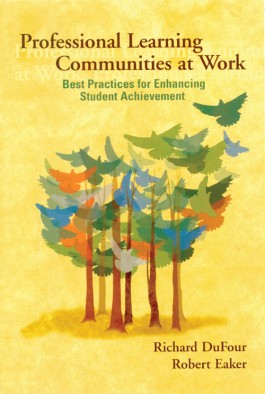
Professional Learning Communities at Work by Dufour and Eaker
I read Professional Learning Communities by Richard Dufour and Robert Eaker several years ago and attended conferences about the concept. We implemented Professional Learning Communities (PLC) in our school with early, but unsustainable success.
Thesis: The authors proposed “the most promising strategy for sustained, substantive school improvement is developing the ability of school personnel to function as professional learning communities” (p. xi). Professionally, educators need awareness of emerging research to fuel personal learning and support student learning. Communities form and they foster “mutual cooperation, emotional support, and personal growth as [people] work together to achieve what they cannot accomplish alone” (p. xii). Teachers safely move from isolation and risks are taken extending personal and collective learning when a PLC is effectively implemented, integrated, and supported in a school.
Characteristics: This is an annotated version, but successful and sustainable PLCs have six characteristics:
- Shared mission or purpose, shared vision or what we hope to become, and shared values guiding the process. Shared mission advertises purpose outward. Shared vision energizes staff. Values are personal and community attitudes, behaviours, and commitments which are normalized over time.
- Collective inquiry fuels the process. What do we want to change? What ways are things as they are challenged? There is collective conversation and personal reflection. The latter is the oxygen that breathes new life into the dialogue and provides fuel through new questions.
- Collaborative teams provide renewal. Collaboration acknowledges the dysfunctional nature of communities. What do we do when there are dissenting voices and disagreement? What value will we name here?
- Action and experimentation are always in evidence. “Even seemingly chaotic activity is preferred to orderly, passive inaction” (p. 27). Teachers experiment with emergent ideas making innovation essential in a PLC.
- Everyone commits to continuous improvement. Questions emerge and are actively sought out, but there are touchstones principles such as “What is our fundamental purpose?”
- With continuous improvement and action orientation there is an iterative process in the form of quantitative, qualitative, or mixed research. The object is to shake up the status quo and find new ways of safely supporting both staff and students. What are we doing that we want to change? (pp. 25-29)
Questions: Who has had success in implementing a PLC in their school or jurisdiction? What were the important takeaways including what worked and what did not work? What did you do to overcome the bumps along the way? What can a school starting or restarting the process do to sustain energy and get early work done successfully while recognizing the achievements even when they are small?
Recommendation: The book is about 300 pages, but is an easy read. The authors synthesized leadership literature inside education i.e. Lezotte, Sergiovanni, and Fullan and outside education i.e. Bennis, Senge, and Deal and Kennedy and saved some reading.
I recommend the book for those ready, willing, and patient enough for a transformative journey. The process requires time and immediate classroom benefits to sustain it. Cultural change is messy and requires leadership, perhaps previously untapped in education. Effective support and communication are required for sustainable, successful results to emerge. Early conversations focused on mission, vision, values and normative behaviours are uncomfortable, but necessary. My questions attempt to flesh out these concerns, as we are embarking on this journey again.
I know schools in Canada, the USA, and internationally have successfully implemented PLCs and I want to draw on the experience and wisdom already in place. I am looking for process and product, but not a cookie cutter formula per se. I look forward to hearing from many of you.
Dufour, R. and Eaker, R. (1998). Professional learning communities at work: Best practices for enhancing student achievement. Bloomington IN: National Educational Services.
Responsibility
I wrote about requiring a new culture in education which can lead to a new structure. I created a link to an article in that post and part of the article was an interview with Pasi Sahlberg.
Sahlberg stated, “There’s no word for accountability in Finnish. … Accountability is something that is left when responsibility has been subtracted.”
I understand responsibility as internalized and roles or tasks are conscientiously attended to and accountability is external and forced into place leading to feelings oppressed or alienated. Responsibility is personal or professional competency gained through maturity in a role. Accountability is personal or professional incompetency and immaturity which can potentially be a result of change or newness in a role. Responsibility emerges in an organization when there is trust and a belief people can grow into and learn their roles. People become responsible because they are supported and cared for while they learn. A collaborative, compassionate culture emerges and subsequently a new structure for relationships to exist emerges.
The Space Should Be Bounded and Open
I believe paradox is essential for educational transformation. Parker Palmer described paradox as a creative tension or “a way of holding opposites together that creates an electric charge that keeps us awake” in his book The Courage to Teach. He argued “the poles of a paradox are like the poles of a battery: hold them together, and they generate the energy of life, pull them apart, and the current stops flowing…and we become lifeless.” I elaborated on paradox in my posts Abundant Community and Paradox of Community. I propose paradox be used to revitalize the institution we call school and the conversations about this necessary enterprise.
Parker Palmer in The Courage to Teach presented six paradoxes and identified ways in which they could serve us in the classroom through pedagogical design. I believe they serve educators and their communities as foundations for conversations and a long overdue transformation.
The first paradox is “the space should be bounded and open.” School cannot be a one size fits all approach, but it cannot be a chaotic, wide-open system. There are many ways to understand school from home schooling to traditional. In between, there is diversity. Is school a building? Could it be a virtual gathering? Could it be a combination? Rigid boundaries should be replaced by flexible boundaries. If they do, then we can ask, “What serves the child?” What serves the community?”
Over the next while, I will look at each paradox, and explore how they lead conversations towards transformation.
I enjoyed this critique of Daniel Pink’s book and will read the book. Earlier. Another blog suggested the work emanating from another book by this author, A Whole New Mind, was important to educators and thinkers. Bear in mind, Daniel Pink is not an educator and his last real job, from his website, was as a political speechwriter.
I agree Alfie Kohn, who taught school, or Carol Dweck, a psychologist focusing on motivation, and her book Mindset: The New Psychology of Success, are invaluable resources for educators.
I think a different understanding unschooling movement is extreme home schooling. Deb Meier acknowledged, in an interview, home schooled children are some of the best socialized children she has met. I think unschooling is an unfortunate descriptor and natural learning, experience-based learning, or independent learning might be less misleading. Instead of discarding the concept, consider questions about education and school’s purpose in the 21st Century. I think there is room for reasonable alternative models in a progressive and increasingly diverse world.
I thought some of the people who read my blog might enjoy reading this posting from an excellent blog contributed to by a variety of educators. It fits with recent conversations and the World Cafe Conversations.
Learning Trajectories, Adult Learning, and Blogs
Last week, I spoke to a colleague about blogging and a professional development project she is undertaking. She is to blog between learning sessions, but she finds this difficult. She feels she is putting herself out there and prefers to write well and coherently with a fully edited product to publish at then end. She is concerned less is expected in the digital world when it comes to adult learning and is uncomfortable with the public exposure of her work under the new norms.
Etienne Wenger wrote about learning trajectories and adult learning in Communities of Practice: Learning, Meaning, and Identity. He proposed newcomers in organizations require time to learn on the job and essentially make mistakes on an “inbound trajectory.” I would extend this to learning in the rapidly changing digital era we live and work in. Inbound learning trajectories also affect veteran, savvy teachers just beginning their use of social media. Wenger alluded to learning as a series of social activities that included support found in and through friendship, intimacy, families, gaming, creative production, and work. My friend pointed out “Old habits die hard. What about spelling? What about grammar? What about the coherency of the message?”
Adults require safe environments for learning, particularly in times of rapid and unabated change. John Murray in Supporting Effective Teacher Learning in American Schools suggested externally driven forms of professional development currently used in schools need change. Mentors that offer time and non-judgmental support for teachers in applying new technologies are an important step in the delivery and acceptance of embedded professional development in schools. Dovetailing this thinking with inbound learning trajectories is logical in creating safe, supportive adult learning communities.
The etymological roots of technology includes words such as art, craft, and technique and referred specifically to grammar. The writing of blogs is an art and craft. I advised my colleague to hone her craft, perfect the technique, and be an artisan, and actively read, follow, and respond to blogs. Turn to people she trusts whether they are physically or digitally present. Stay true to what you value i.e. good grammar, good spelling, and coherent messages. I use these principles and feel I am slowly moving forward. The blogs I follow, including those on my Blogroll, are well done and professional. It is not enough to just be “out there” for me. I am doing it my way and finding others publishing similarly.
21st Century Renaissance in Education
Will we be 21st Century Renaissance people? This question emerged from a recent conversation with a Grade 8 Social Studies class. We discussed a broad, nuanced, and emergent worldview.
Specialization and expertise are not the calling cards of success. Adaptation and transformation are at the heart of contemporary education. Transformation is not just a synonym for change and is reflective of dramatic and systemic change. I understand transformation as a mindful, incremental process producing real change over time framed around evolving eloquent questions. What change do we need? New conversations about reimagining education producing compassionate leaders for a 21st Century Renaissance. What role will education play in helping young people become the leaders of this Renaissance? Is public education capable of transformation? Are there leaders capable of bringing forth tomorrow’s leadership? What will education of this nature look like?
Renaissance is rebirth and a time of metamorphosis and transformation. What emerges from the chrysalis stage? Ideas mature and become capable of further adaptation. Human endeavour requires rich, inclusive conversations for profound change to occur instead of superficial patching what the outdated models that exist. We need to prepare the soil for transformative conversations focused on eloquent questions where answers are not assumed before the conversation and invite diverse views during the course of the conversational journey.
Educational Theory in Practice
Where I work is a place that can bring me great joy. The word work is the wrong word actually. Since beginning this ‘gig’ 12 years ago, I refer to it as the place I teach and learn. I had two chances to interview for this role. Most of us only get one chance. I made the most of the second chance and the rest has been history.
What do I do? I teach and learn in a small school setting combining a traditional attendance model and home schooling. It was the ‘brain child’ of several families almost 20 year ago. They believed there was something of worth to take from both models and they helped to build a hybrid school.
I teach multi-grade junior high students three core subjects: English Language Arts, Social Studies, and Science while students attend each Tuesday and Thursday plus every other Monday. We provide complementary programming i.e. curling, food sciences, and archery. Students learn Math at home guided by their parents and with help from the teacher, in this case me. The home school component occurs on the non-attendance days and the teacher conducts regular home visits on those days, as well. Home visits help the child and/or parent with contentious Math concepts and build relationships with families.
This community uses a three-legged stool approach. Students, parents, and educators are all important contributors to the success and quality of learning and we all are learners on a journey together. Parents learn curriculum and teaching strategies assisting the learning of their children. They assist in the classroom on a regularly scheduled basis. Students grow to accept the learning journey belongs to them. They are companions in the learning enterprise and learning is with them. Teachers learn about the children and their families through open, honest conversation. What does each child need is a central question to the conversation. Most of all, the support needed for children’s success is in a community environment where we are partners and not adversaries. This is a relationship grounded in covenant as opposed to one centered on transactional contracts. We all commit and invest in something we dearly and deeply value.
I wanted to share this because we are an innovative educational project and some upcoming postings will share some of my experiences in this community of practice or learning organization.


 Teacher as Transformer