Several people reached out asking about the outcome of my presentation at the International Peace Research Association Conference (IPRA) in Ngāmotu, Aotearoa (New Plymouth, New Zealand). The title of the presentation was entitled Re-imagining Teacher Education: An Andragogy of Hope, Peace, and Nonviolence. There was 20-30 people in the room and I received positive feedback at the end of my presentation, during meals, and since the conference. People asked for the slide show and we talked about changes they might make in their teaching. For example, one instructor in an education program said they would try to have students, after degree and post-graduate, sit in dialogic circles with the subject in the middle. For those familiar with my posts, I take this from Parker Palmer. Parker proposes this as a way to have the disciplines, which he refers to as big stories, guide each of our little stories. As a result the subject, nonviolence education, comes alive. The person suggested this was a small change. I understand it as transforming what they and their students are doing. It runs against the grain in education, including at the post-secondary level.
As I reflected, I realized I was preaching to the choir. In that room, we are all reading out of the same hymnal. The excitement in those rooms and in conversations is challenging to replicate outside the rooms when I engage with others, particularly gatekeepers in teacher education. My “intellectual interests” are known by these people, yet there is no attempt to ask me to prepare syllabi for a full-blown course or a mini-syllabi to integrate into a co-taught a methods class e.g. Social Studies. Essentially, it is important for me to enter a liminal space between the theoretical, abstract work I have done for the past few years and prepare syllabi to present to gatekeepers. It is the transition from preaching to the choir and making myself vulnerable to people saying no to what I propose.
On the surface, this looks like an easy proposition. Who doesn’t think nonviolence education is a good idea? Despite thinking it fits well, people’s understanding of schools and what they are for are entrenched in a neo-liberal, capitalist world. My first published article used systems thinking by Peter Senge. One of the five disciplines is mental models, which are closely held beliefs that form one’s worldview of how they understand reality. Mental models are shared by groups of people. Schools are largely unchanged from when I attended. The mental models of what school is and is for are entrenched. People push back when I say this, but change is superficial e.g. projectors and screens as opposed to blackboards (shows you how old I am), hardly transformational. Teachers prescribe the layout of the classroom and who sits where and how seating is configured. This extends from K-12 and beyond. There are pockets where things are done differently, but they are isolated and treated as one offs. Without going into this, I speak from experience.
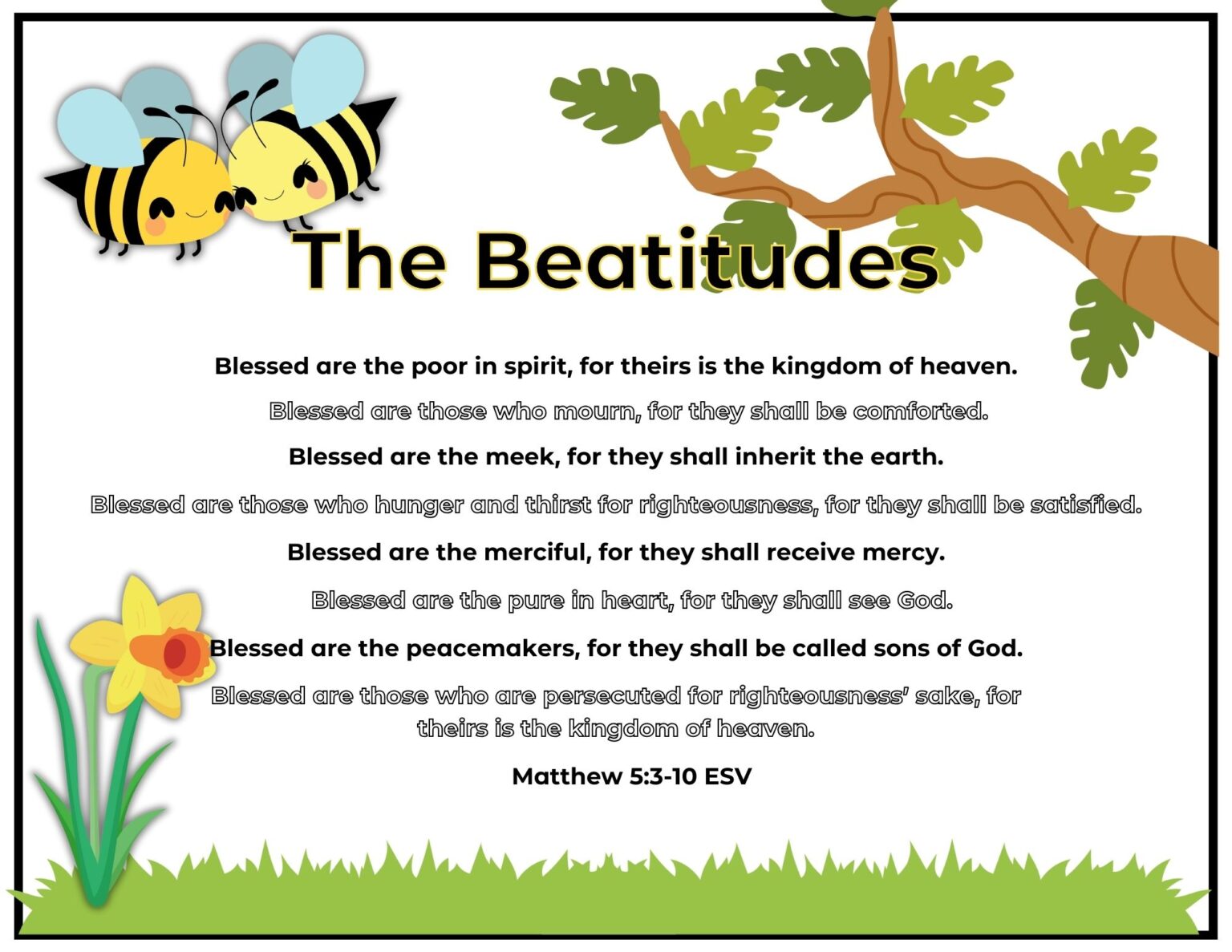
The university I contract to (I am not tenure track and never will be) is a private, Christian school. Again, on the surface, it would look promising in terms of a viable partnership. They share posters with Faculty and administration are aware of my intellectual interests, yet they have made no offers to bring me on board to see how we might integrate this with current curricula in the Faculty of Education. Part of my efforts is grounded in my Catholic faith, including from the Sermon on the Mount giving rise to the Beatitudes. When I walk around the campus, I observe posters sharing the Beatitudes. How does this inform my next step as I try to convince people not in the choir that this is worthwhile and timely?
I intend to prepare several syllabi for different contexts. One will be for the university I currently contract to, based on its Christian ethos. Another will be for a small, private university with Lutheran roots that promotes itself as nondenominational. A third will be for the University of Alberta, a large publicly funded secular university. They do have an Anglican and Catholic college attached to the University of Alberta. If there is anyone out there who has ideas and connections to tap into, let me know. I need all the help I can get.
Below is a video by Maria Muldaur called Yes, We Can! A number of other female artists accompany her e.g. Joan Baez. The song has a twofold purpose for me. First, it is about making a change for a better world. To resist oppression in all its forms: poverty, war, climate injustice, etc. Second, it is about me having faith that somehow I can do this.


 ivonprefontaine
 Teacher as Transformer