Category Archives: Uncategorized

Jasper Park Maligne Canyon

The cow elk picture posted yesterday was at the end of our trip to Maligne Canyon. It a challenge for me along the canyon rim with a drop of up to 50 metres. The canyon was an issue for explorers finding their way downstream to the Athabasca River.
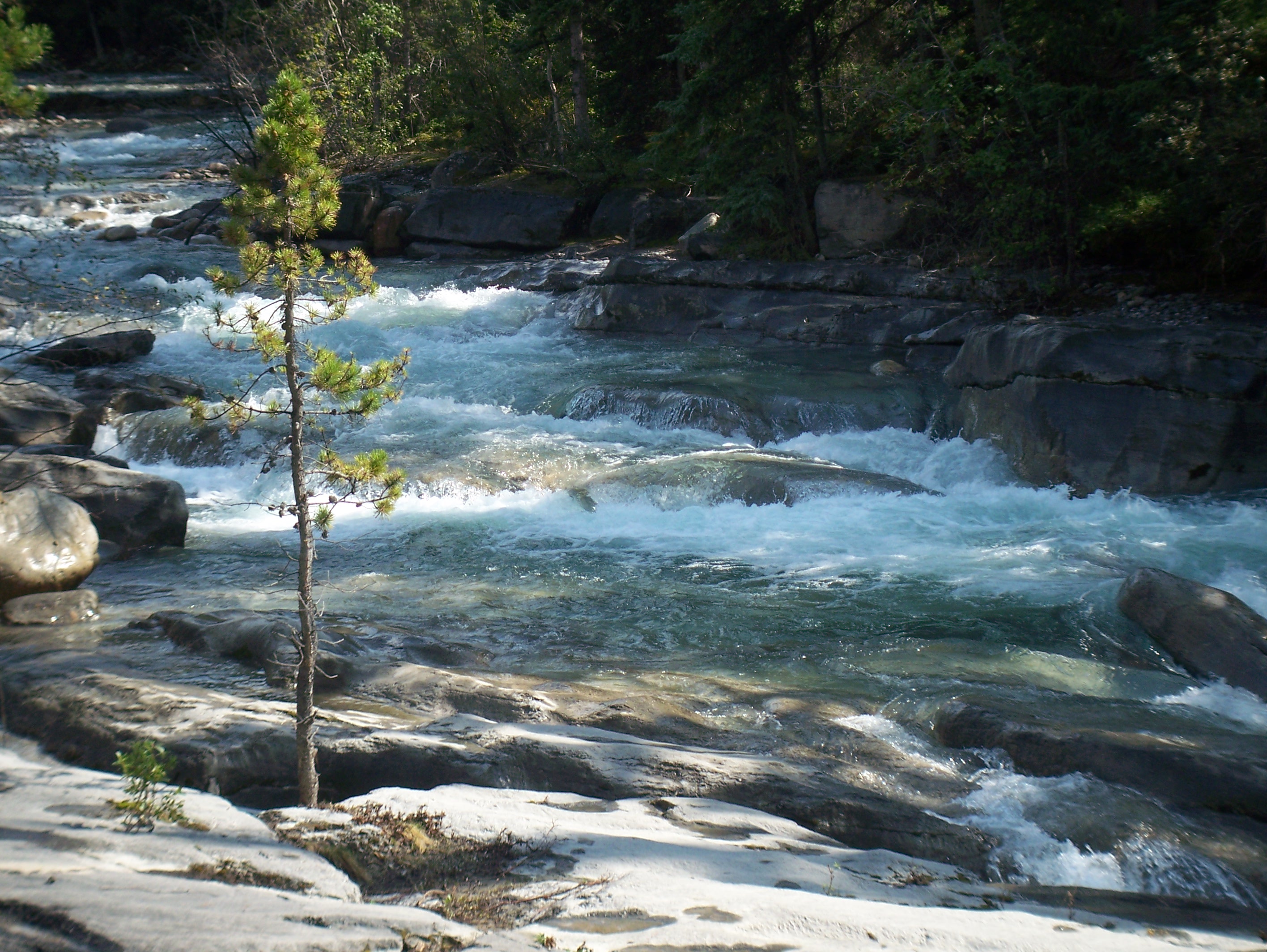
This is immediately above the drop into the canyon and the river shows its turbulence already.

The river drops suddenly and its power is obvious. The holes are a product of the swirling water over time.
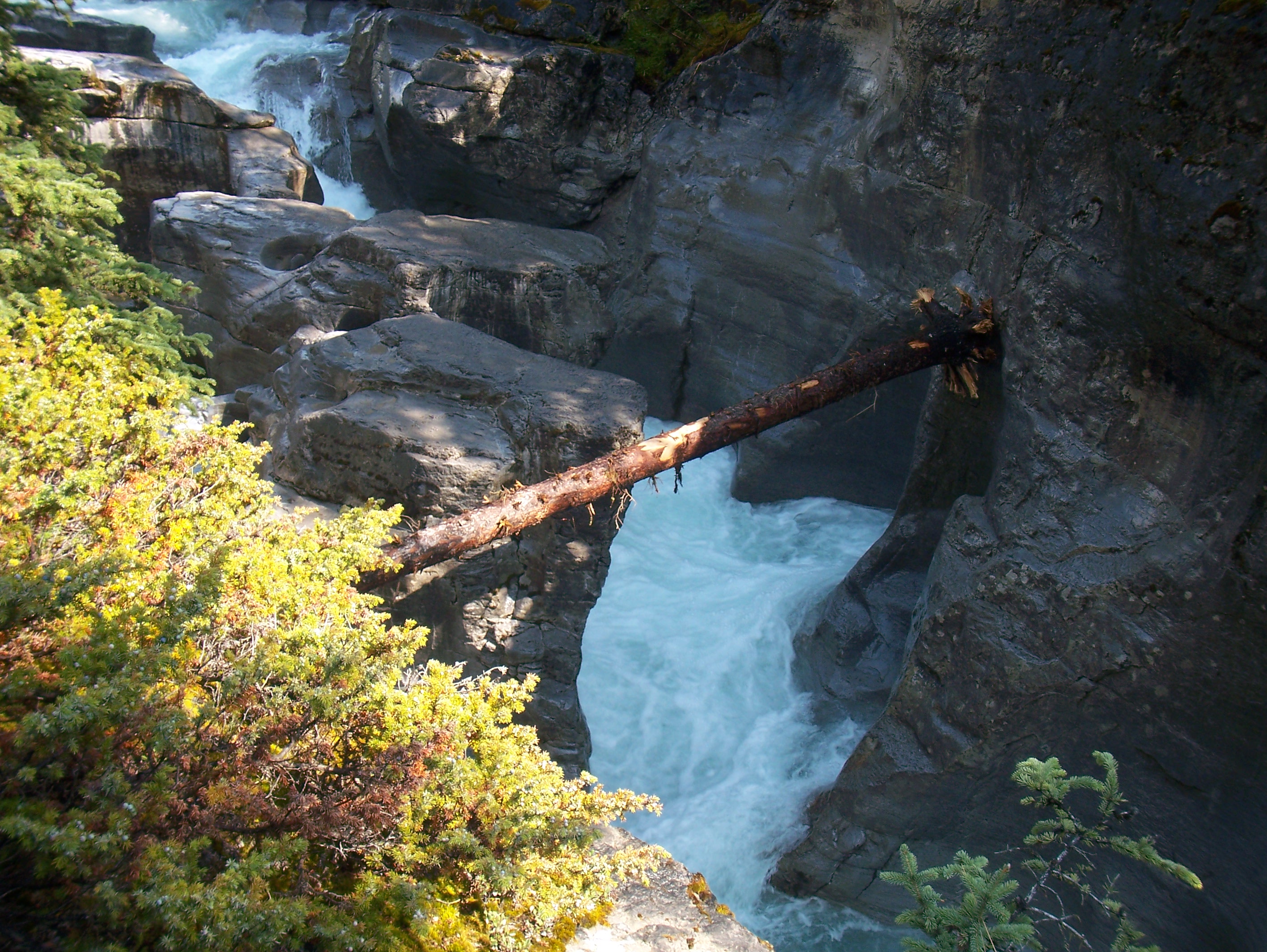
This is the first part of the canyon and the holes are visible in the top left hand corner of the picture.
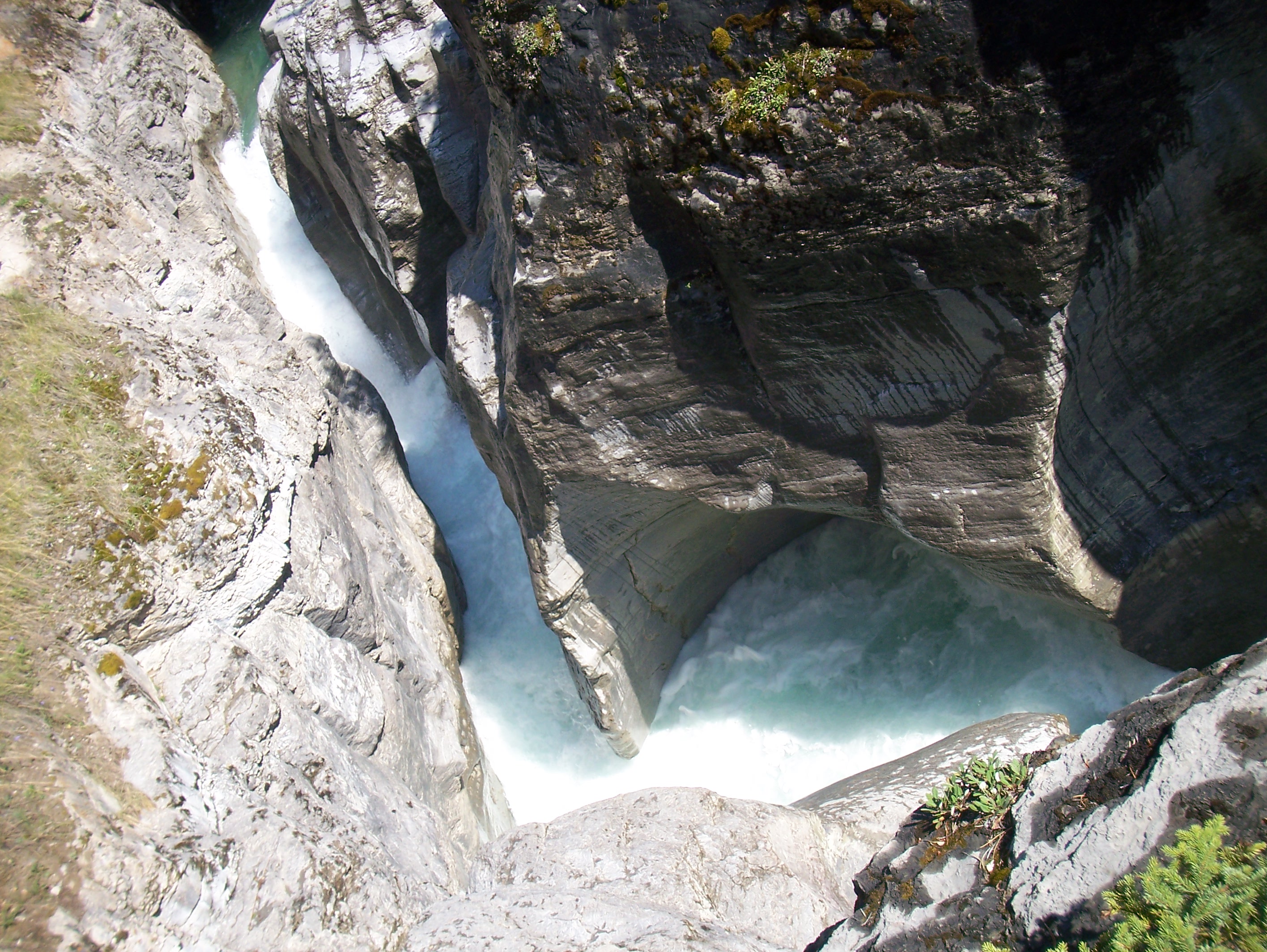
The river turns 900 and hollows out the rock wall into a cylinder-like churning machine before roaring down the canyon.
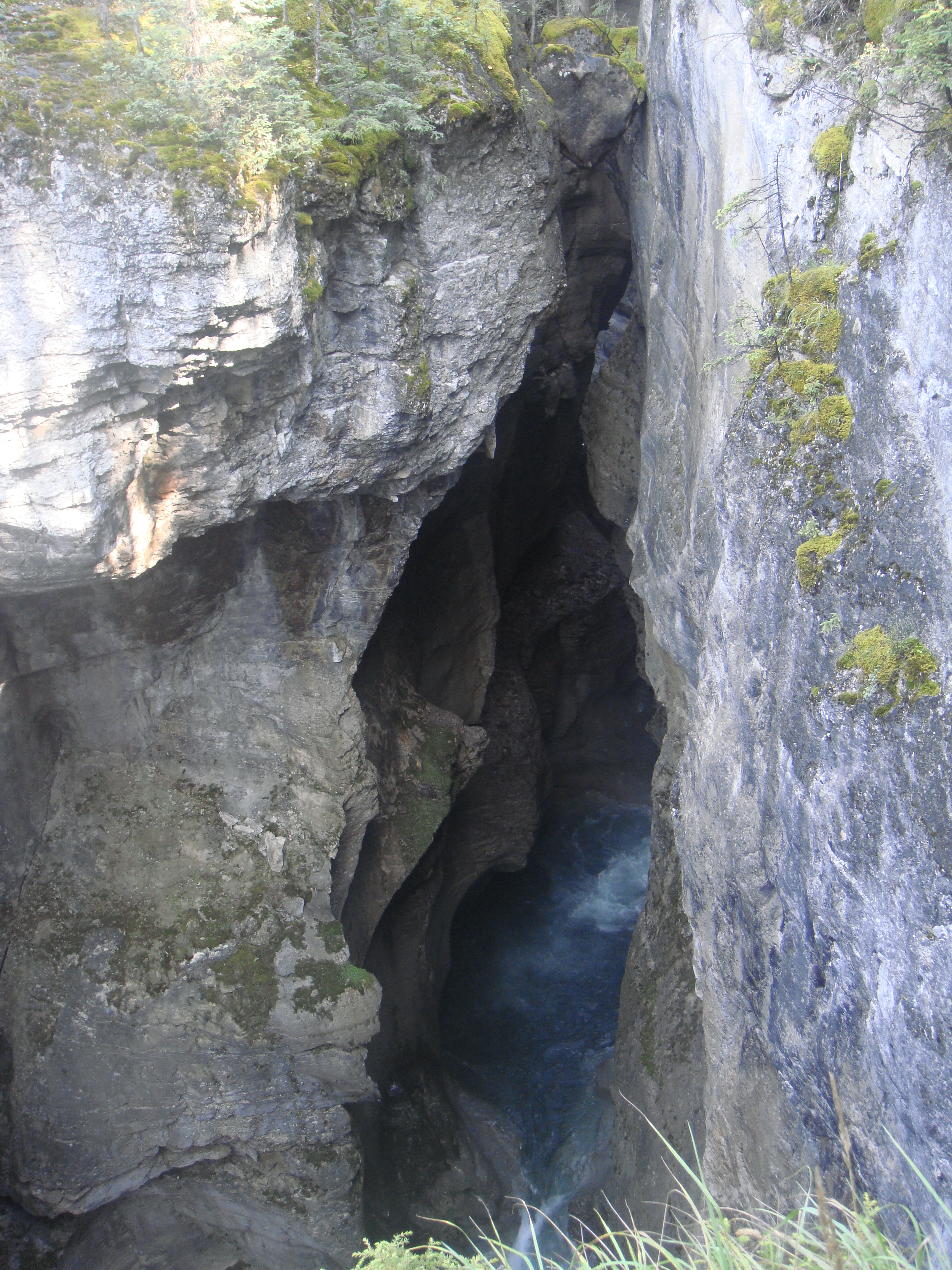
The canyon has six bridges at various locations along the canyon and beyond. Bridge 5 is currently out of commission due to high water. Kathy took this picture from Bridge 1 looking back upstream.
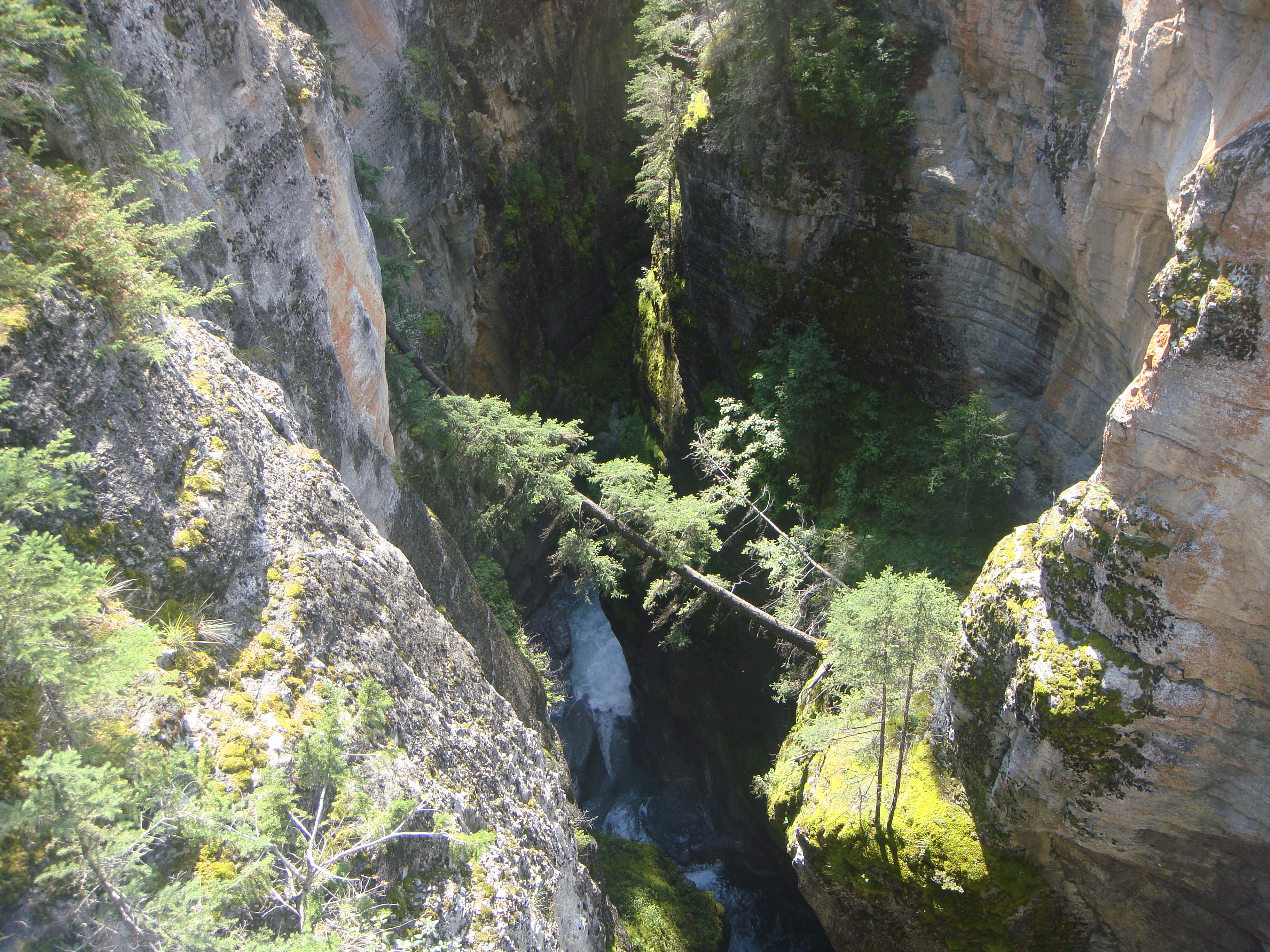
After crossing the bridge, Kathy took this picture. In a particularly harsh environment, the trees are exceptional survivors in places as demonstrated here. This place is probably close to the 50 metres.
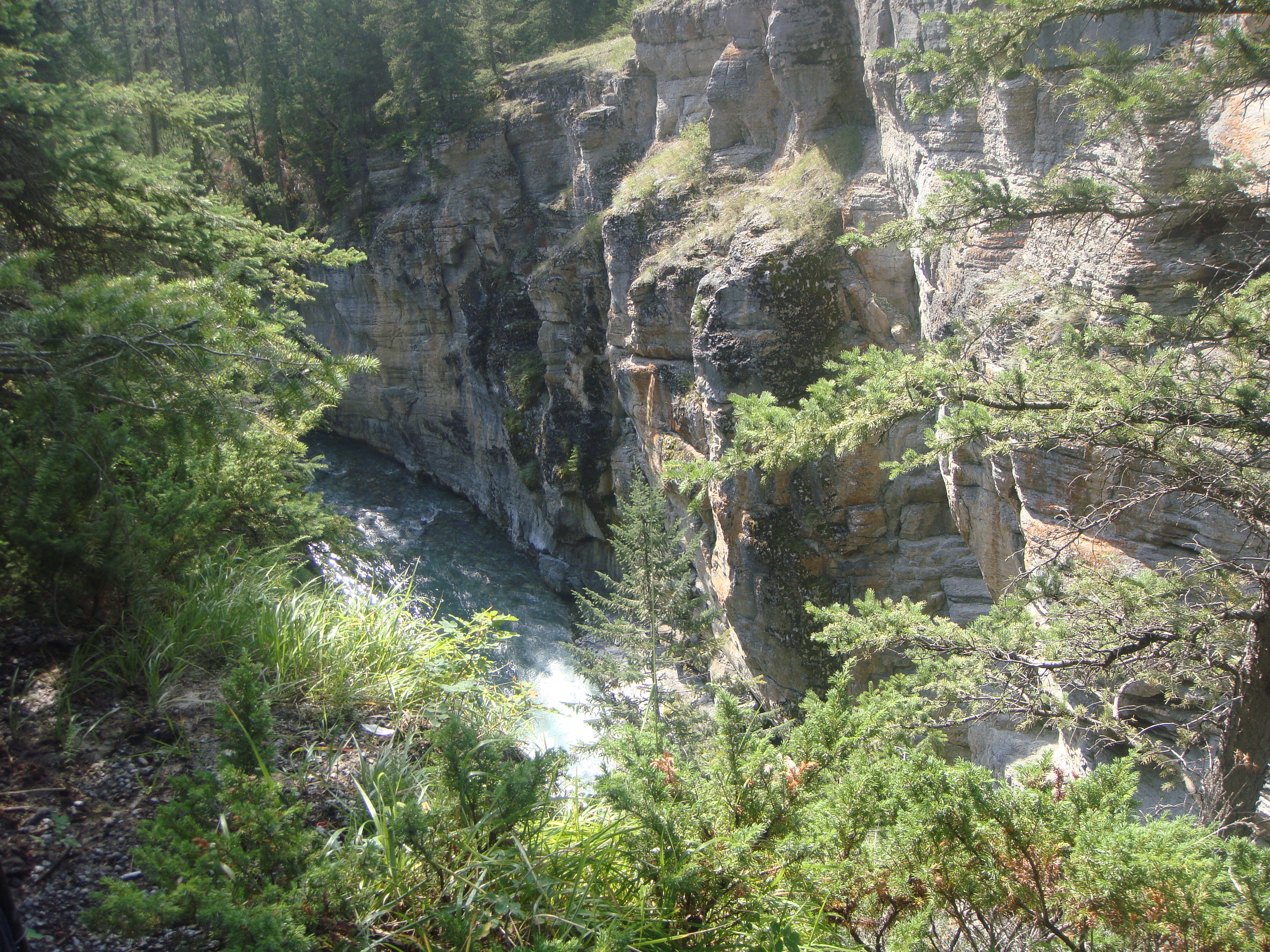
As we descended into the canyon, the river began to run slower, but there is evidence of the power of nature over the centuries.

Kathy took this from the 3rd Bridge where our hike ended. The gorge drops again and the river plummets one more time over and around the rocks in its pathway.
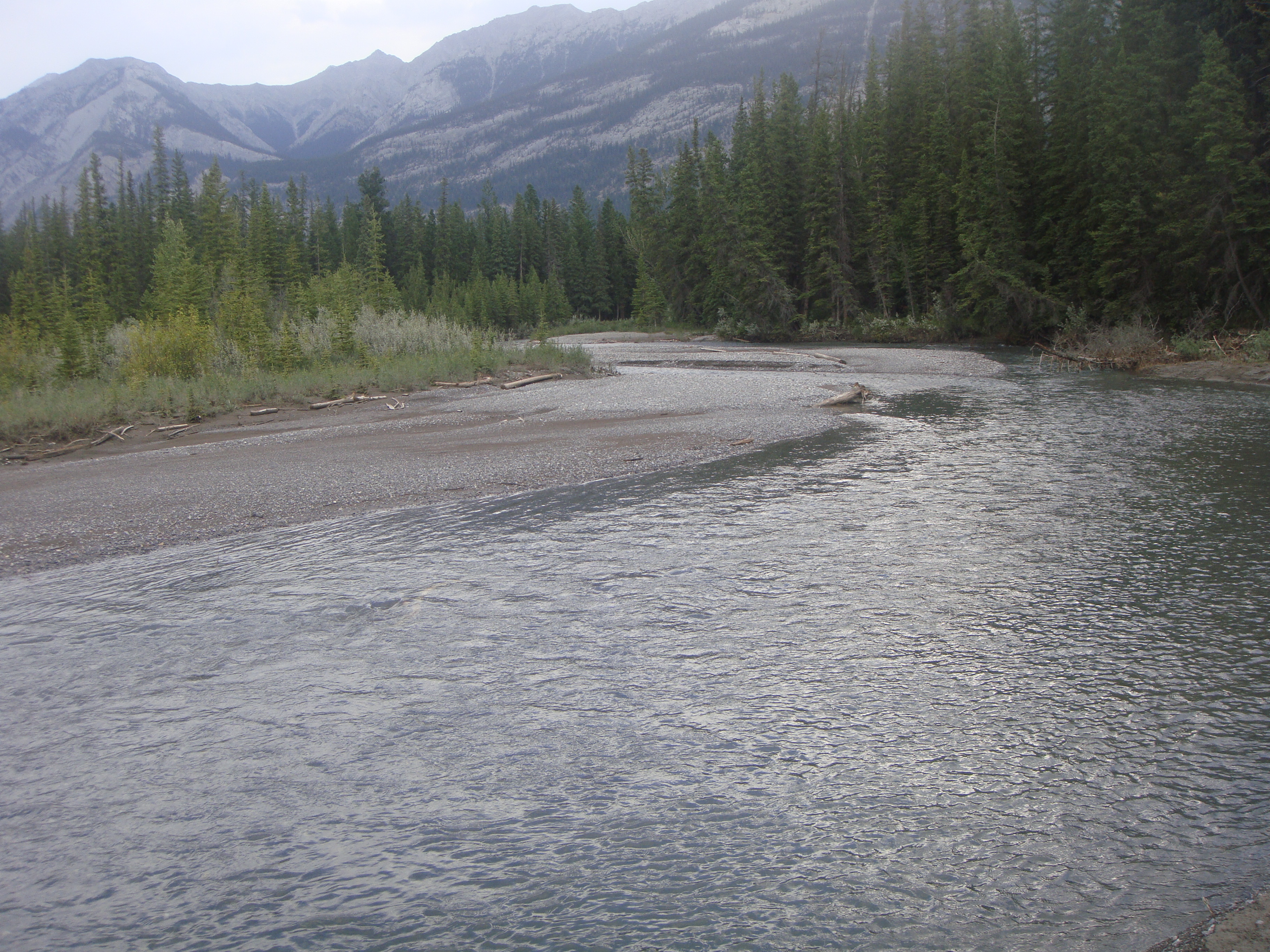
The Maligne River flows into the Athabasca below the 6th Bridge. We drove to this bridge and walked to where the rivers converge. We opted to skip the 4th Bridge because we would have turned back due to the closure of some of the trail.

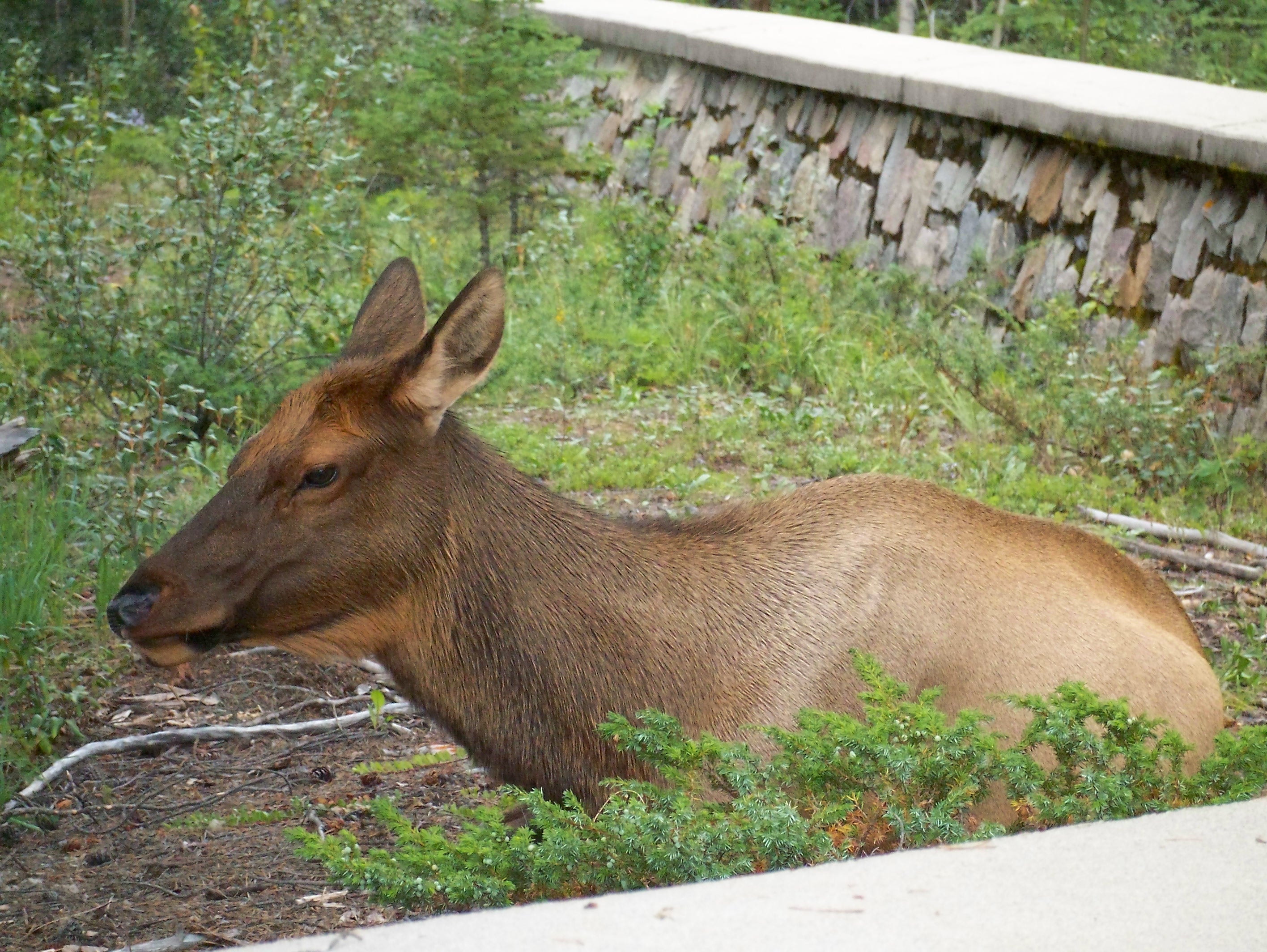
On our way back into Jasper, we made a stop at an overview of the Maligne Canyon. Initially, there was not much to see and we were disappointed. As I walked to the other end of the walled parking lot, this lovely young elk caught my eye.

It took us about five minutes or more to walk carefully closer and not startle this animal. This is her home.
Jasper and Its Surprises

It was a perfect day. We wandered in Jasper, enjoyed great scenery, and I was with my favourite person.

We found the best at the end of the day. I posted a picture of a bull elk on Yellowstone 2005 in May. I took the picture from about 15-20 metres. Today, Kathy duplicated this with a picture of a cow elk chewing her cud. She seemed aware of our presence, but we were quiet and as others joined us in a secluded area she posed. The wall is about 1 metre thick wall and a similar height.

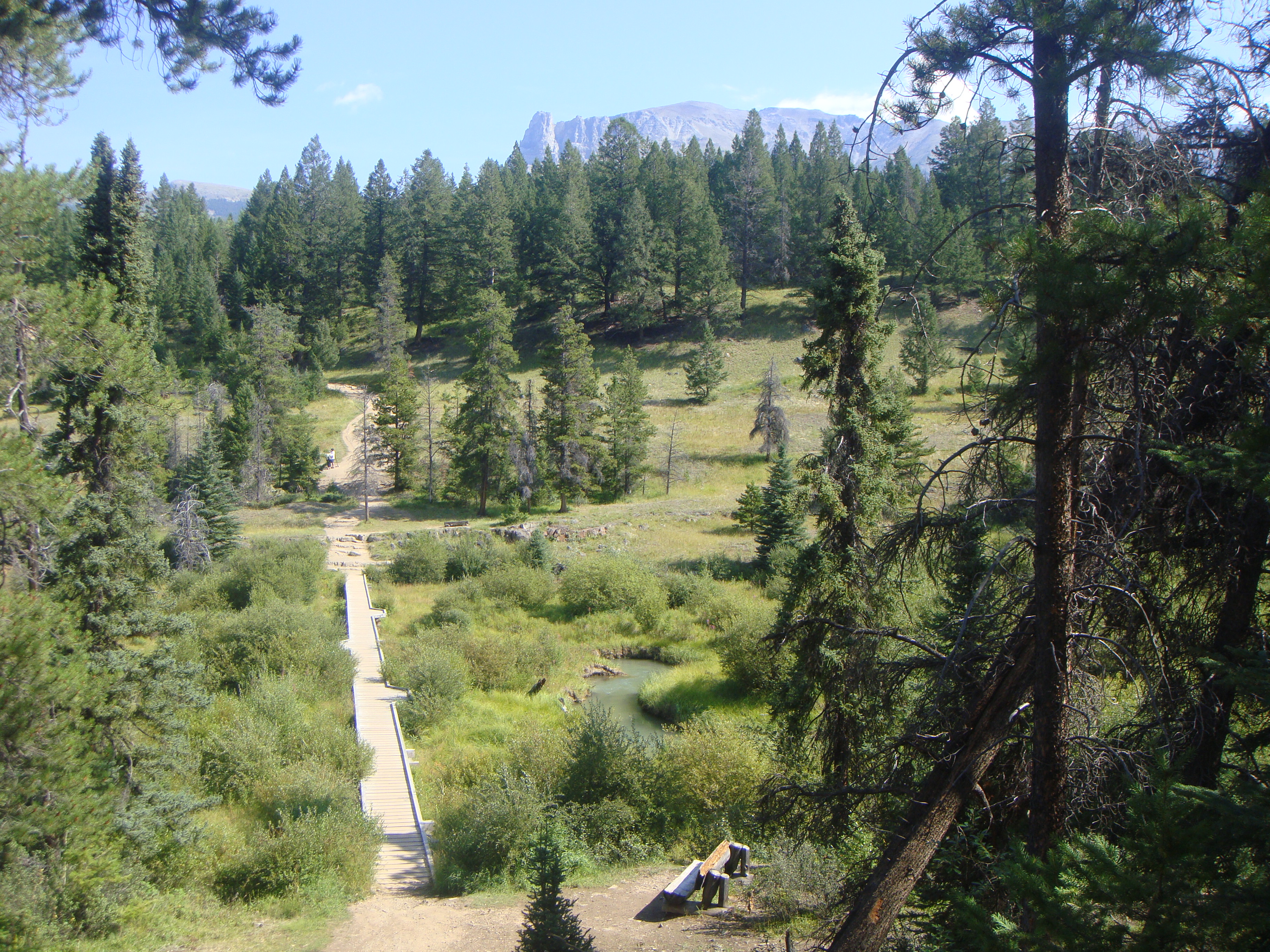
We hiked for two hours in the Valley of Five Lakes and could have spent more time exploring the small lakes. We crossed the Wabasso Creek and its valley before beginning our ascent. What is surprising about this hiking area, is it is only about 10 minutes from the town site.

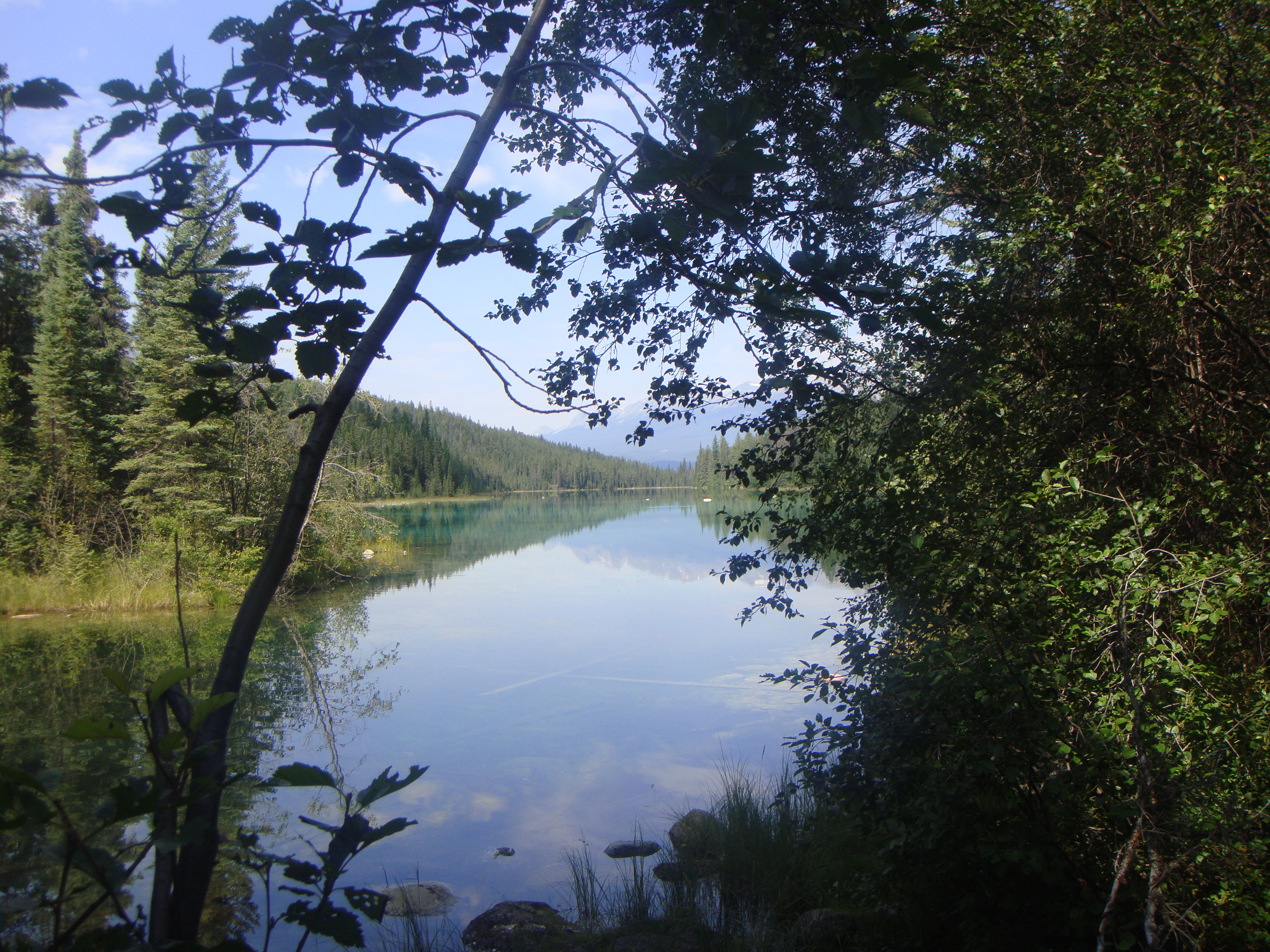
We had no easy access to the first lake (they are unnamed), but I used the trees to frame the lake and its prettiness. One of the things we noted about all the lakes was the way they mirrored their surroundings.

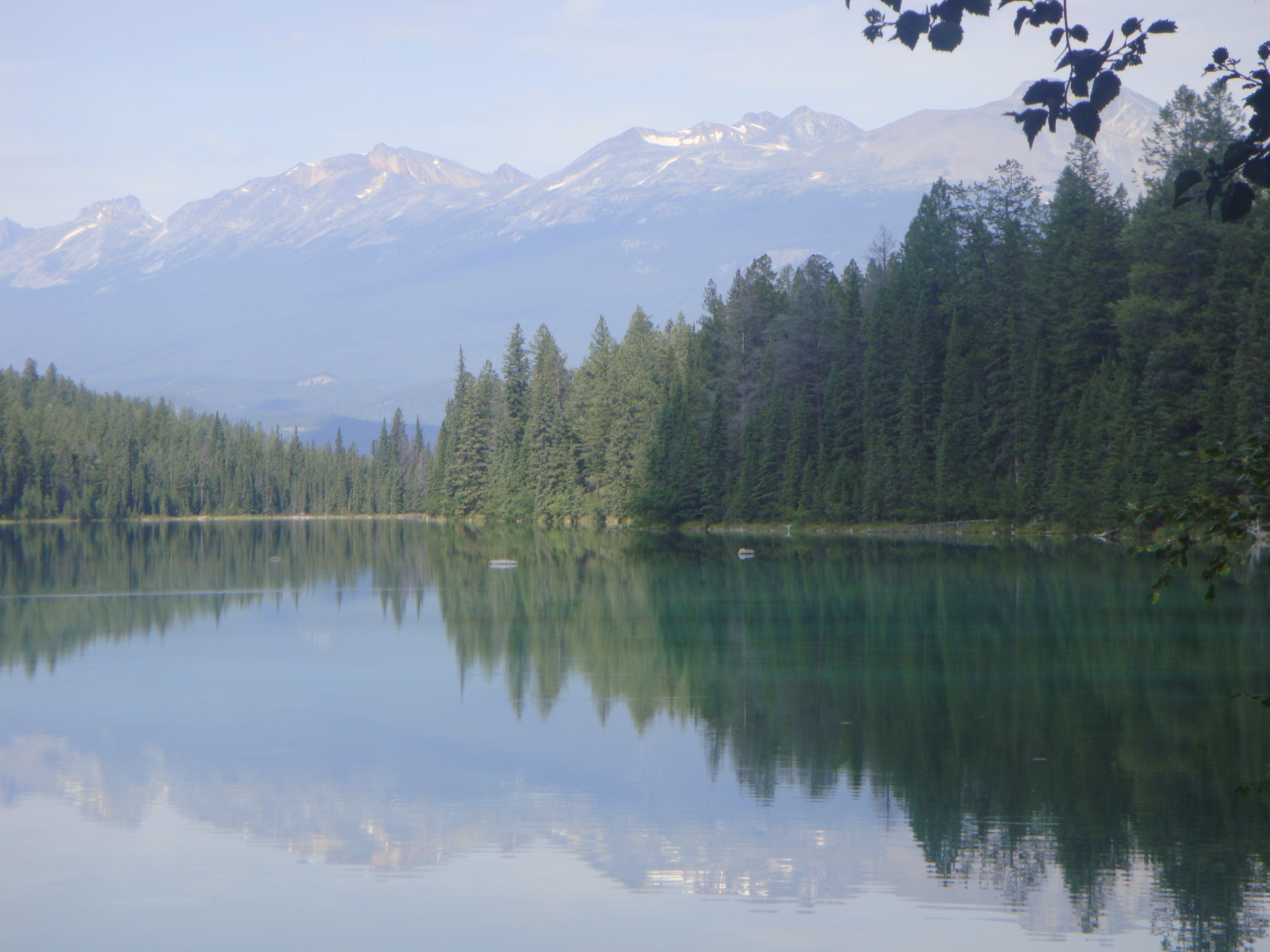
The second lake mirrors the mountains and trees vividly in shimmering waters below.

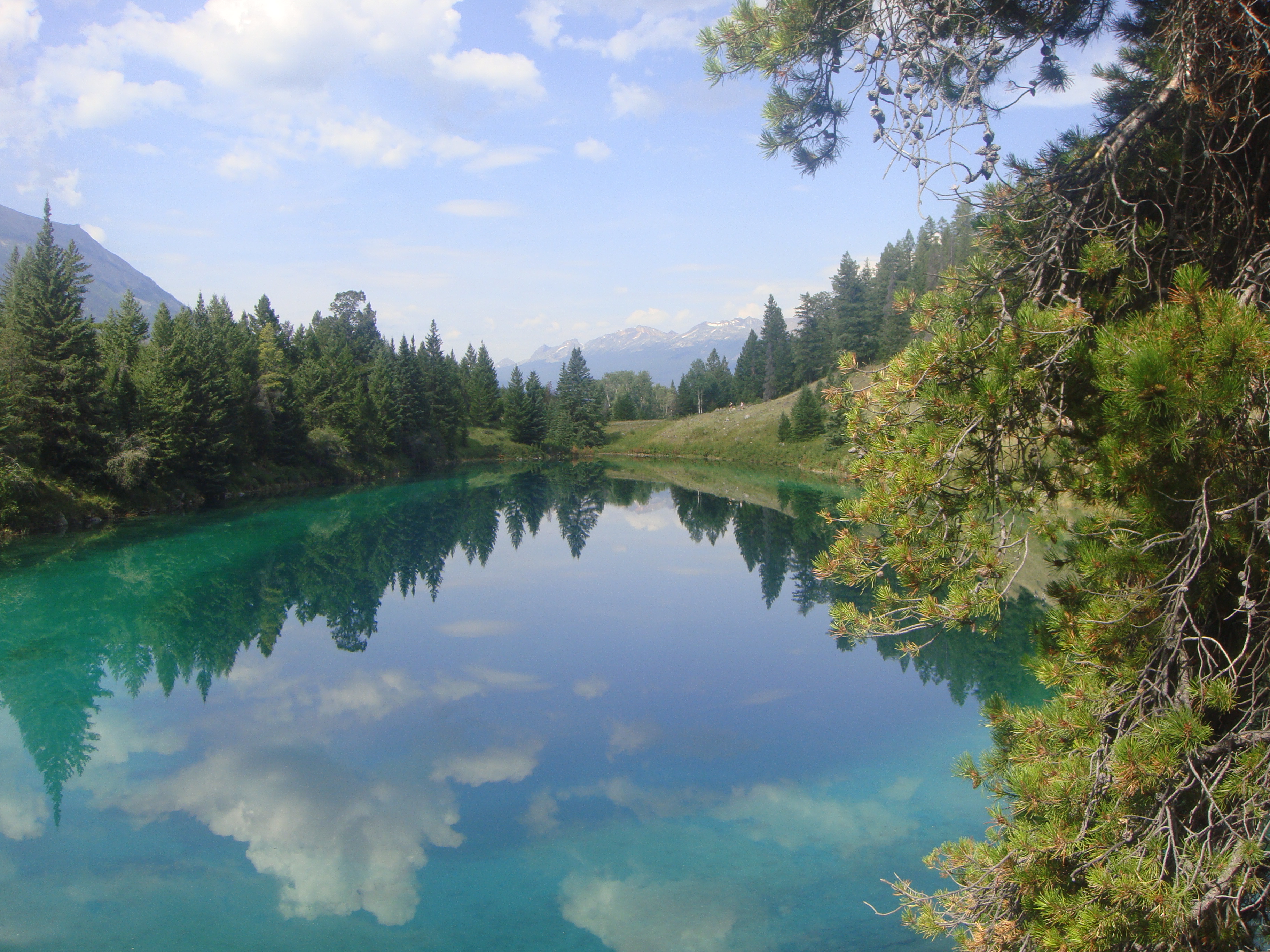
The third lake is a deep green and is very deep in the middle. This lake reflected clouds and trees. The green appeared to be algal growth and not from the source of the water.

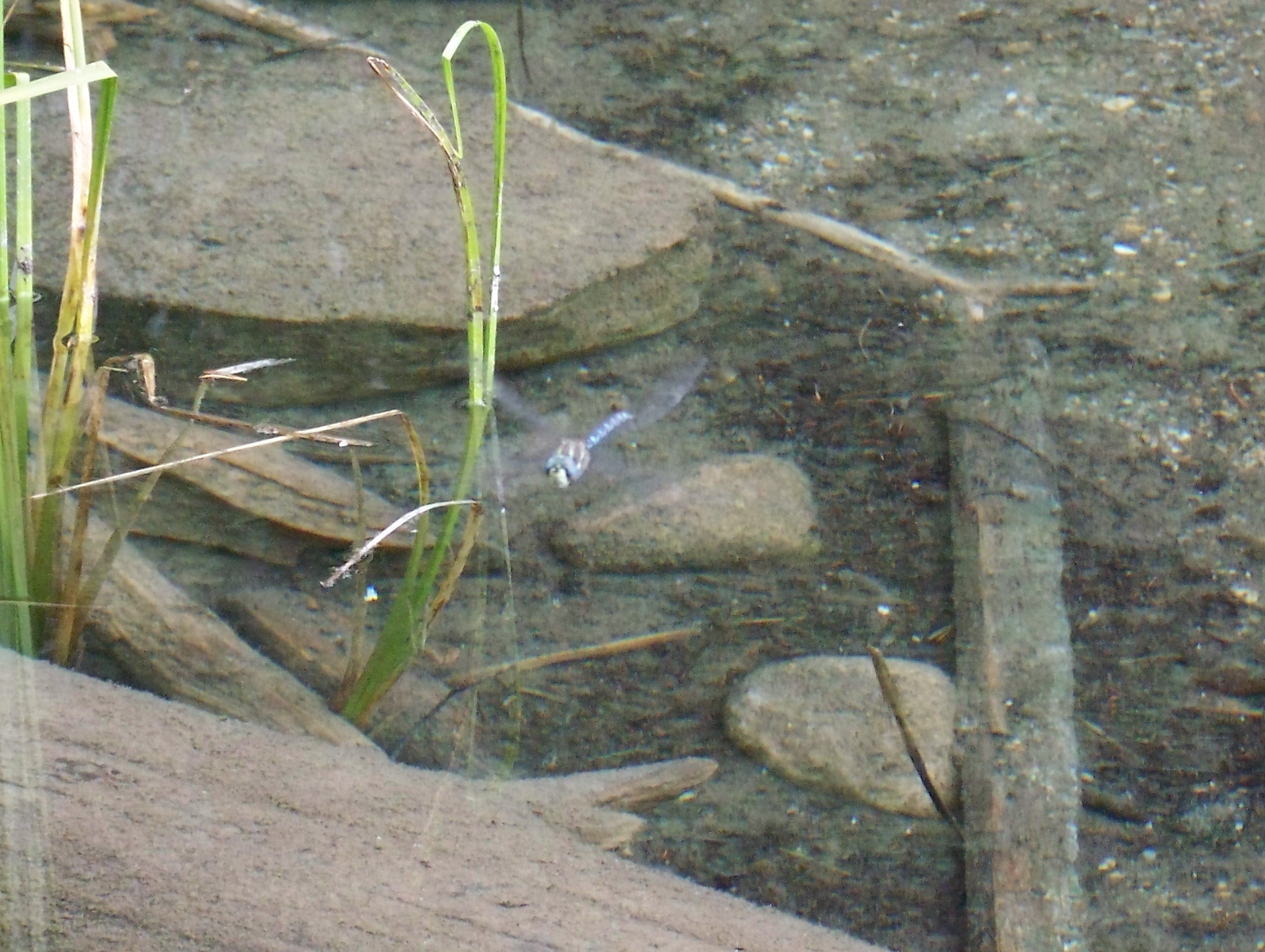
We could not get a good angle for pictures of the fourth lake, but it was the home of frolicking dragonflies. Kathy captured this one with amazing patience.

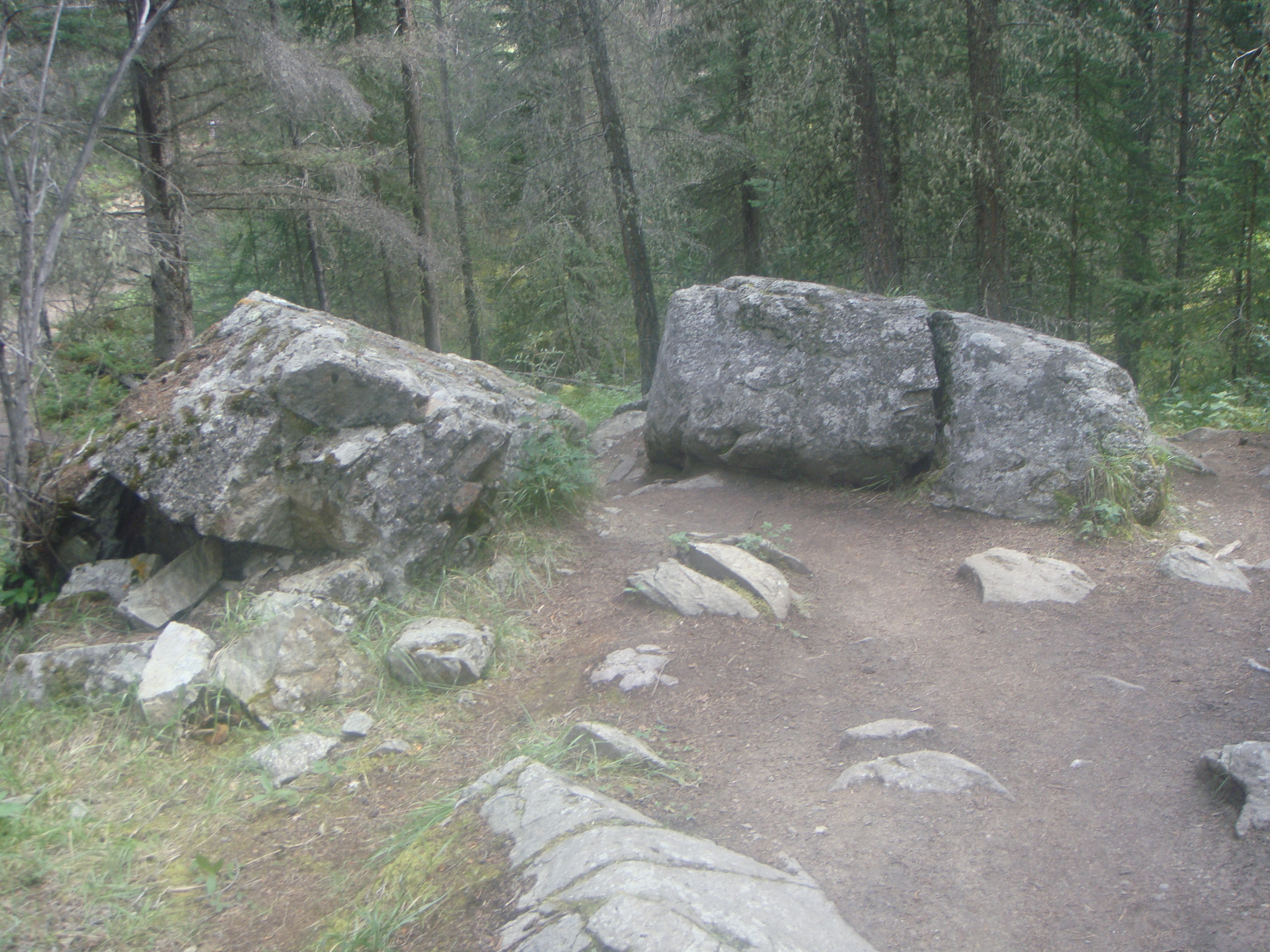
We only got glimpses of the fifth lake. Thick foliage and steep banks surrounded it. We tried several different paths but to no avail. One thing along the paths was the frequency of large rocks left by glaciers which formed this valley and its small lakes.

I enjoy Robert Frost’s The Road Less Traveled. As we began our hike, we saw this path and wondered where it went, but stayed on the main path. As we climbed back out of the Valley of Five Lakes we had a choice: go right or go left. We chose right and found ourselves on the path we wondered about almost two hours before. We took the road less traveled. It was a challenging part of the trip physically.

And, at the end,

We emerged at the beginning

At the trail head,

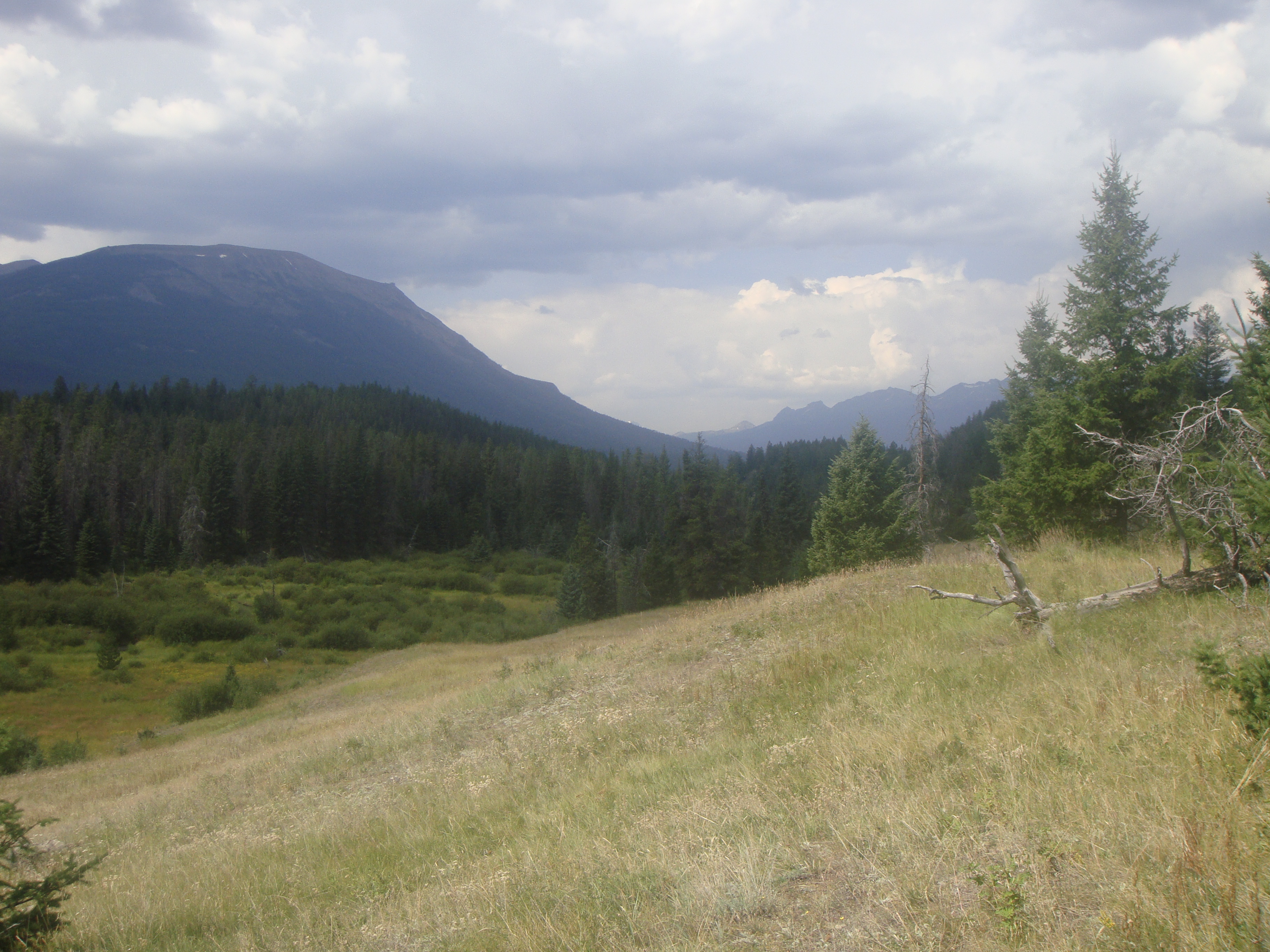
Mountains rediscovered

Blue skies gone

Clouds not only threatened;

They delivered a promise

Like our day.

Jasper National Park Day 1

Kathy and I are in Jasper for a couple of days. It was a great way to spend the Sabbath.

I find it deceptively spectacular here. In Waterton, did a lot in three days, but here you have to choose; there are so many places to go. It is a larger park with a much longer connected set of trails.

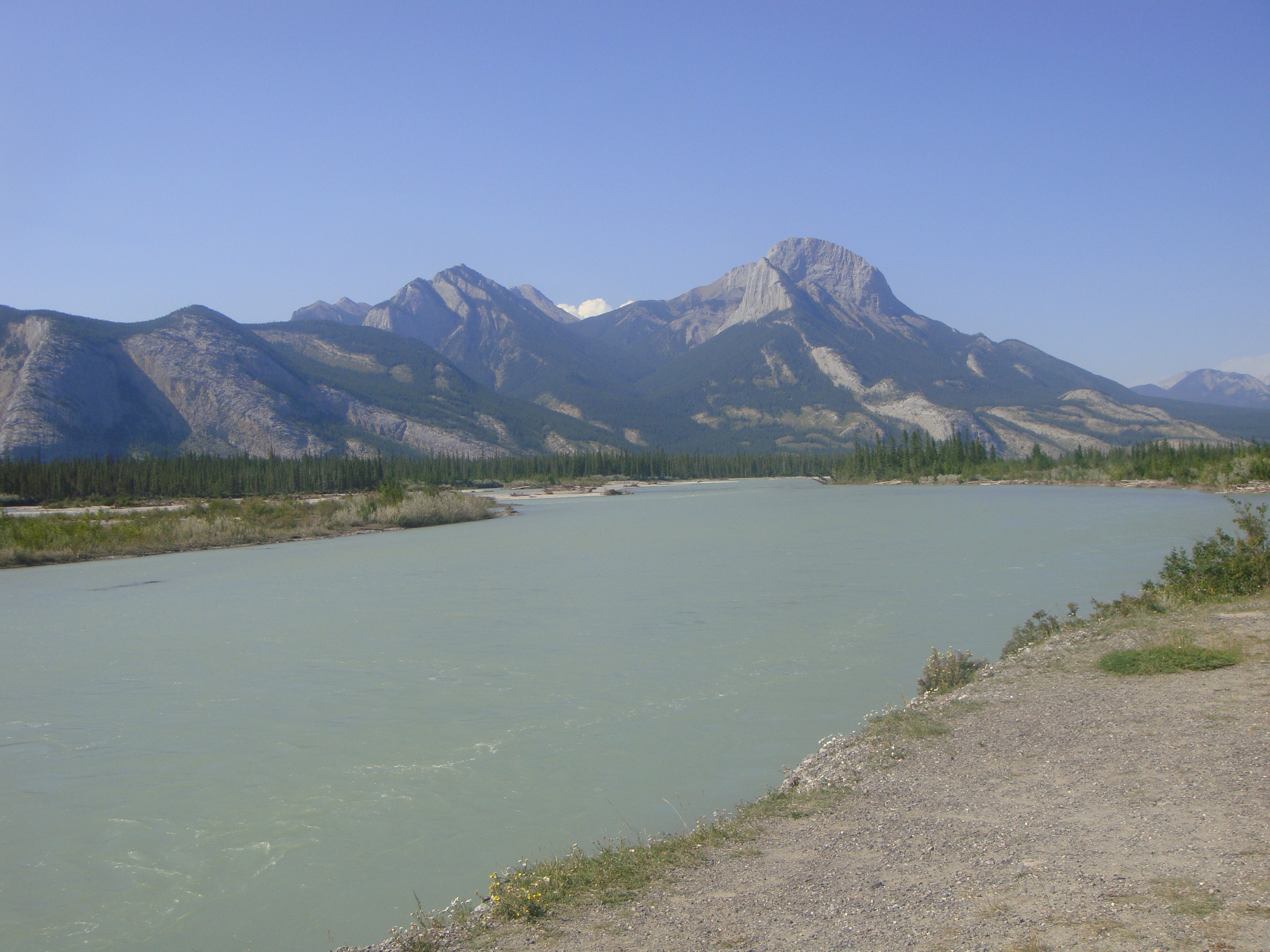
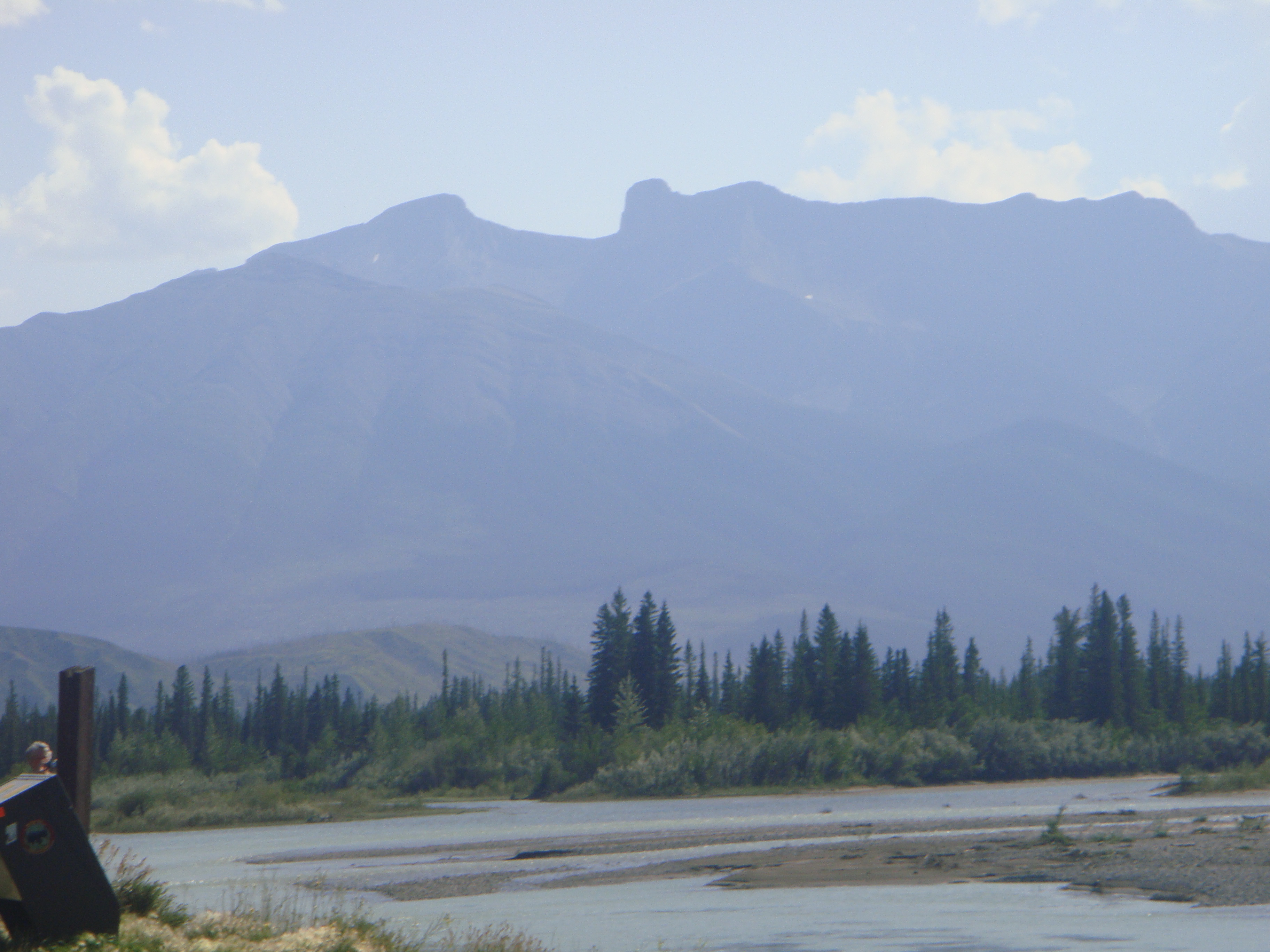
We took the first pictures a few kilometres inside the park. This is looking east and downstream on the Athabasca River. The Athabasca originates at the foot of the Columbia Icefield. It joins the Peace River and forms the Slave River, which flows into the Great Slave Lake where the Mackenzie River discharges and flows to the Arctic Ocean. From the source of the Athabasca a drop of water flows about 6200 km.

This is an upstream view of the Athabasca River. What looks like a ‘saddle’ on the mountain in the middle, is actually two mountain peaks. As we drove closer to town, the angle shifted and the distinct shape of both mountains became visible. Further upstream, people wade a 100 metres out into the river and, depending on snow melt, there is sometimes only the main channel of the river. Today, it is running high.

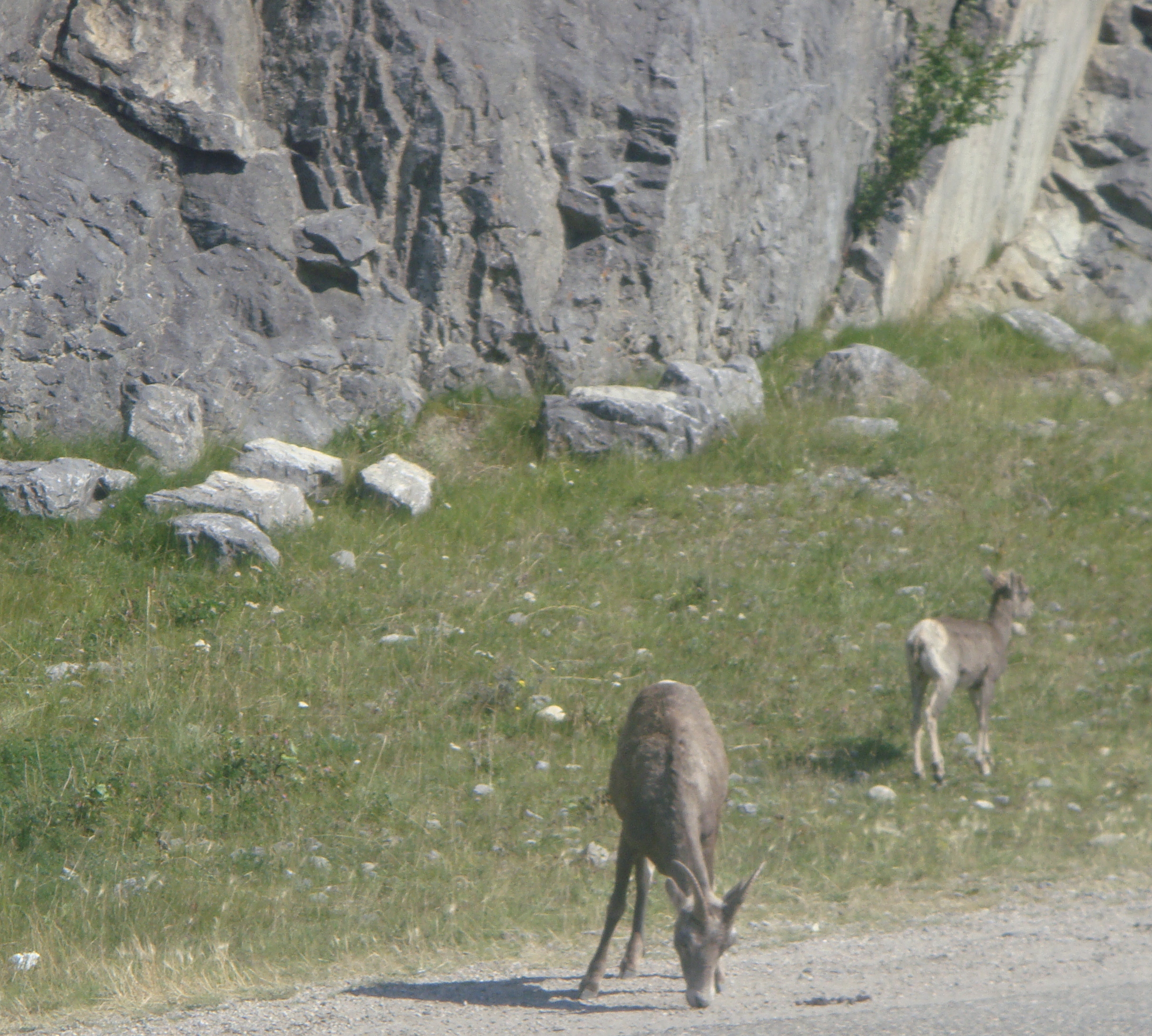
We don’t stop very often for mountain sheep. They are fairly common along the roadside, but we don’t often get an opportunity for a picture of a ewe and lamb.

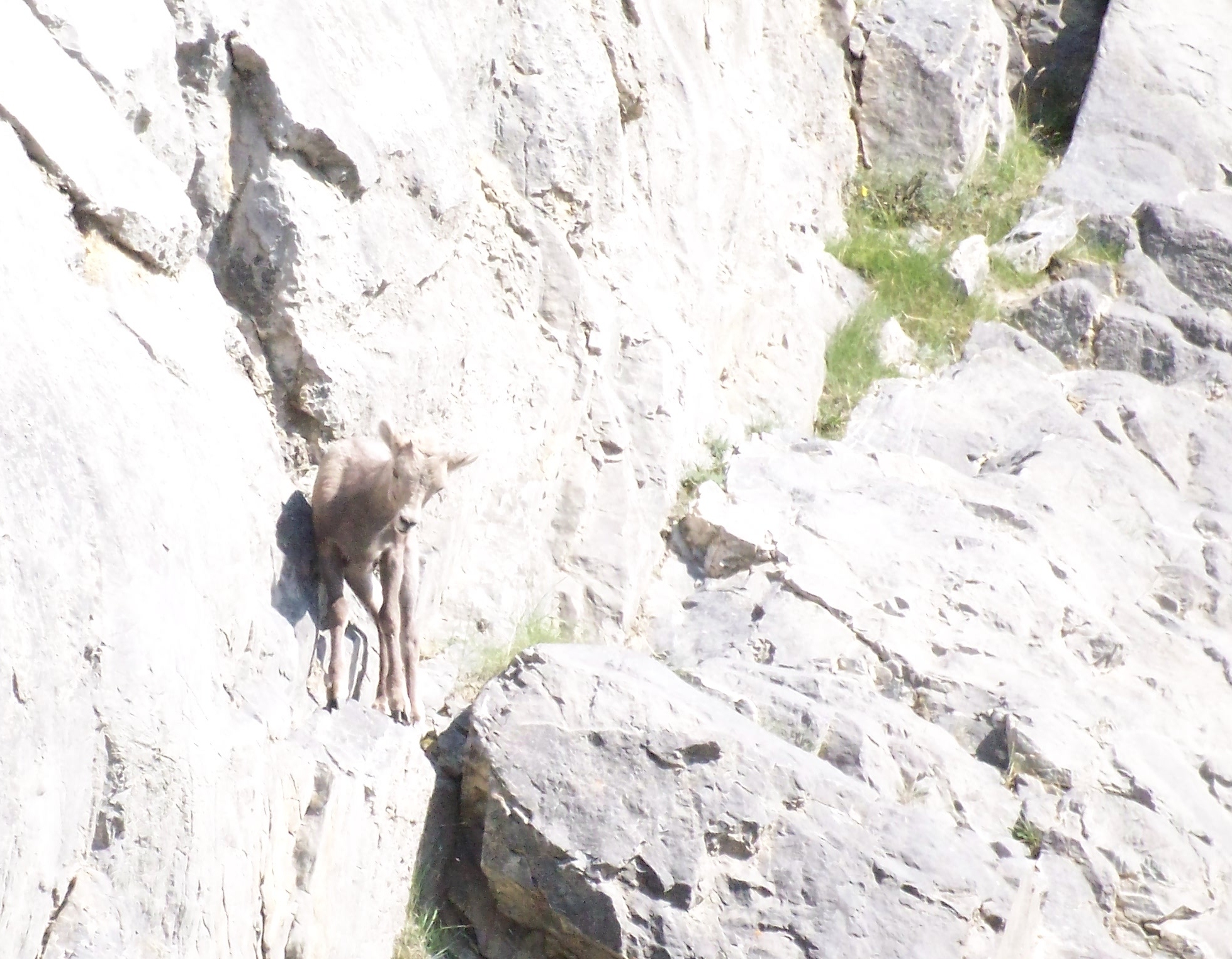
We don’t often get this chance either. It appeared as though the little ones were learning climbing skills. This one stopped and posed; looking straight into the camera.

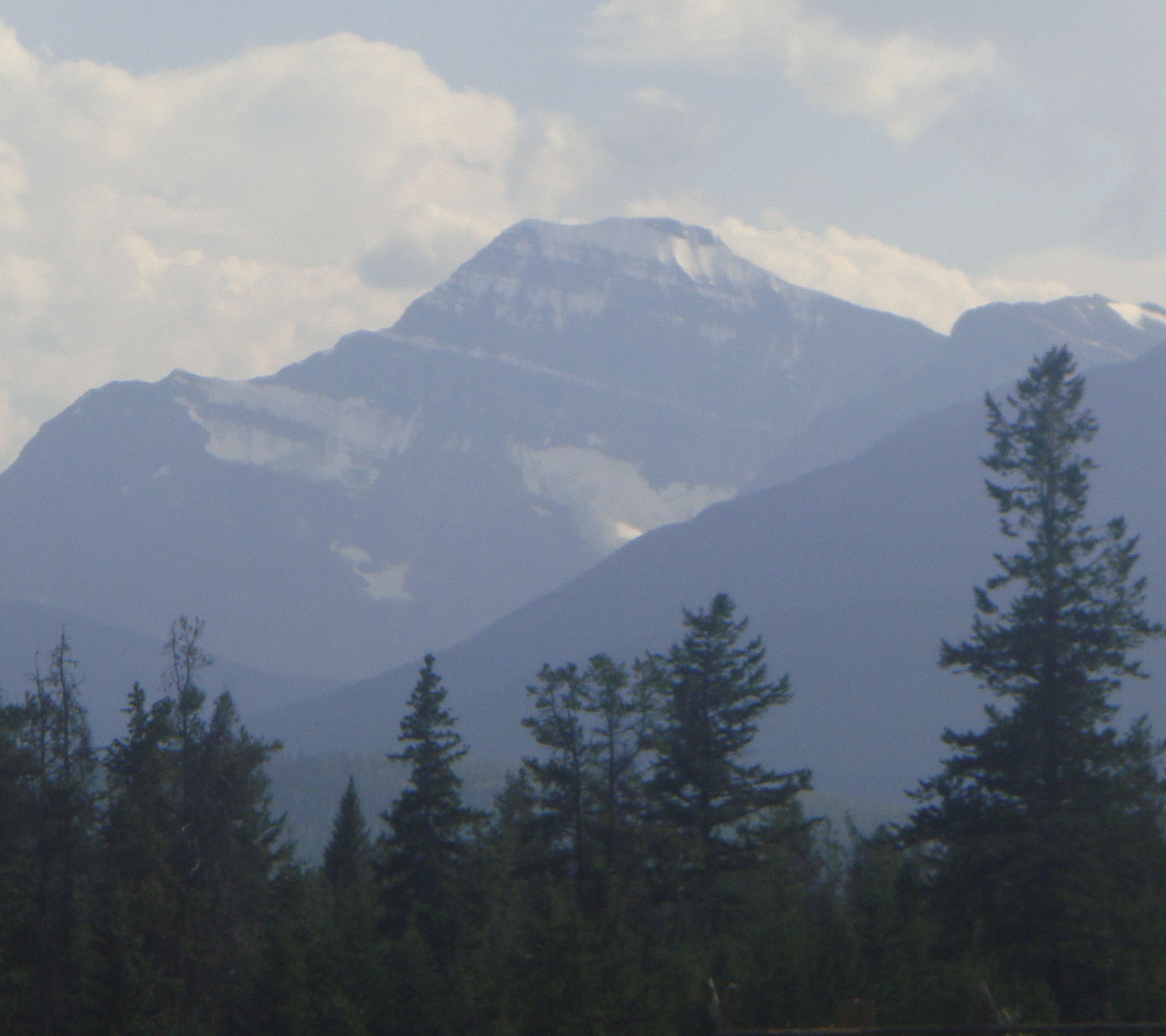
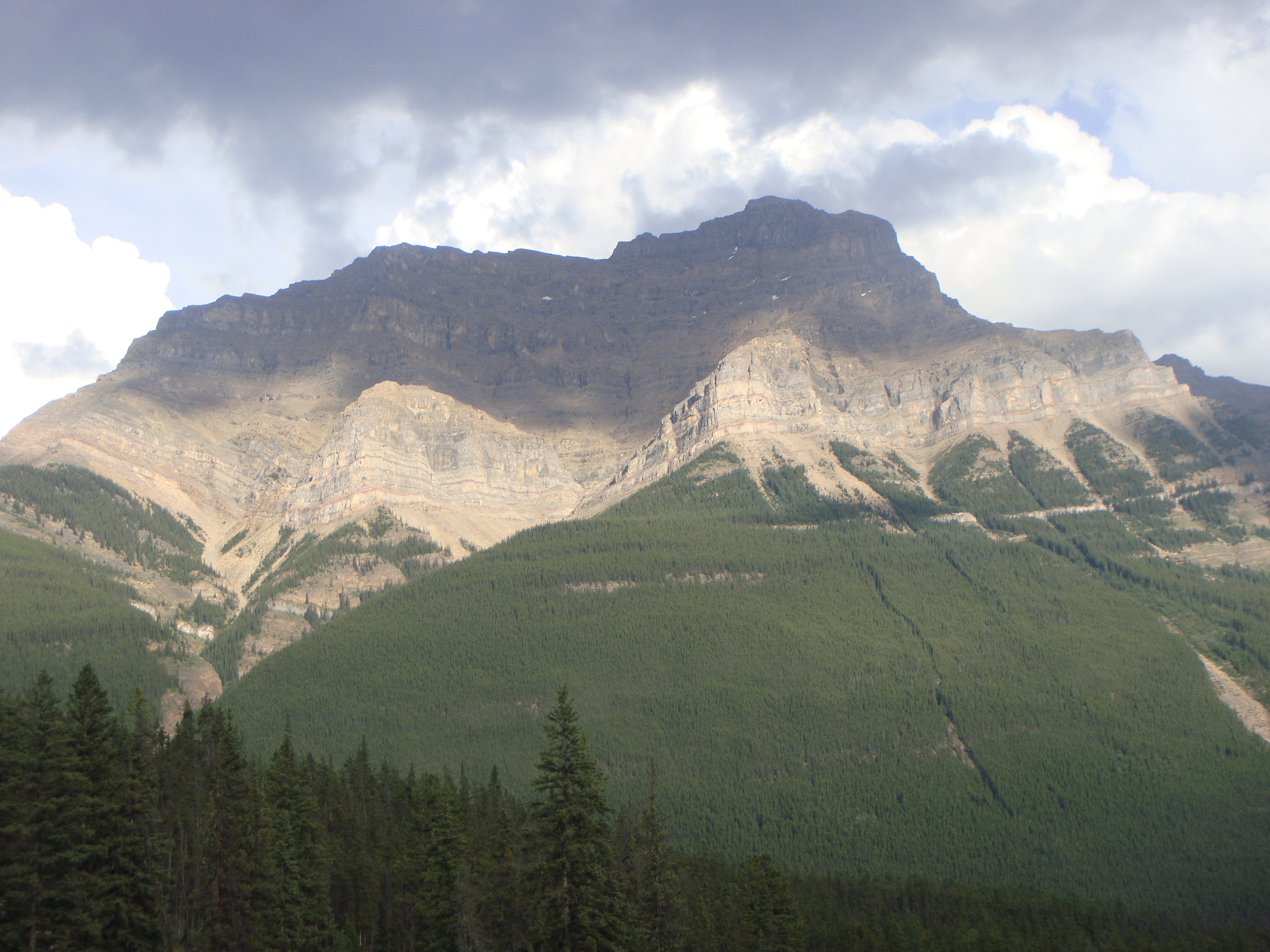
Mount Edith Cavell is a prominent feature in the Park. It is visible from a variety of locations and has many hiking trails. Park officials closed the mountain to hiking due to a recent ‘avalanche.’ The dark spot between the two large white areas was a large block of glacier which recently collapsed. We took the picture on Highway 93 (Icefields Parkway) which is the highway to Banff.

This is Mount Kerkeslin which is on the opposite side of the Highway 93. We took this picture later in the day with shadows and it had become overcast with rain showers popping in and out of the area.

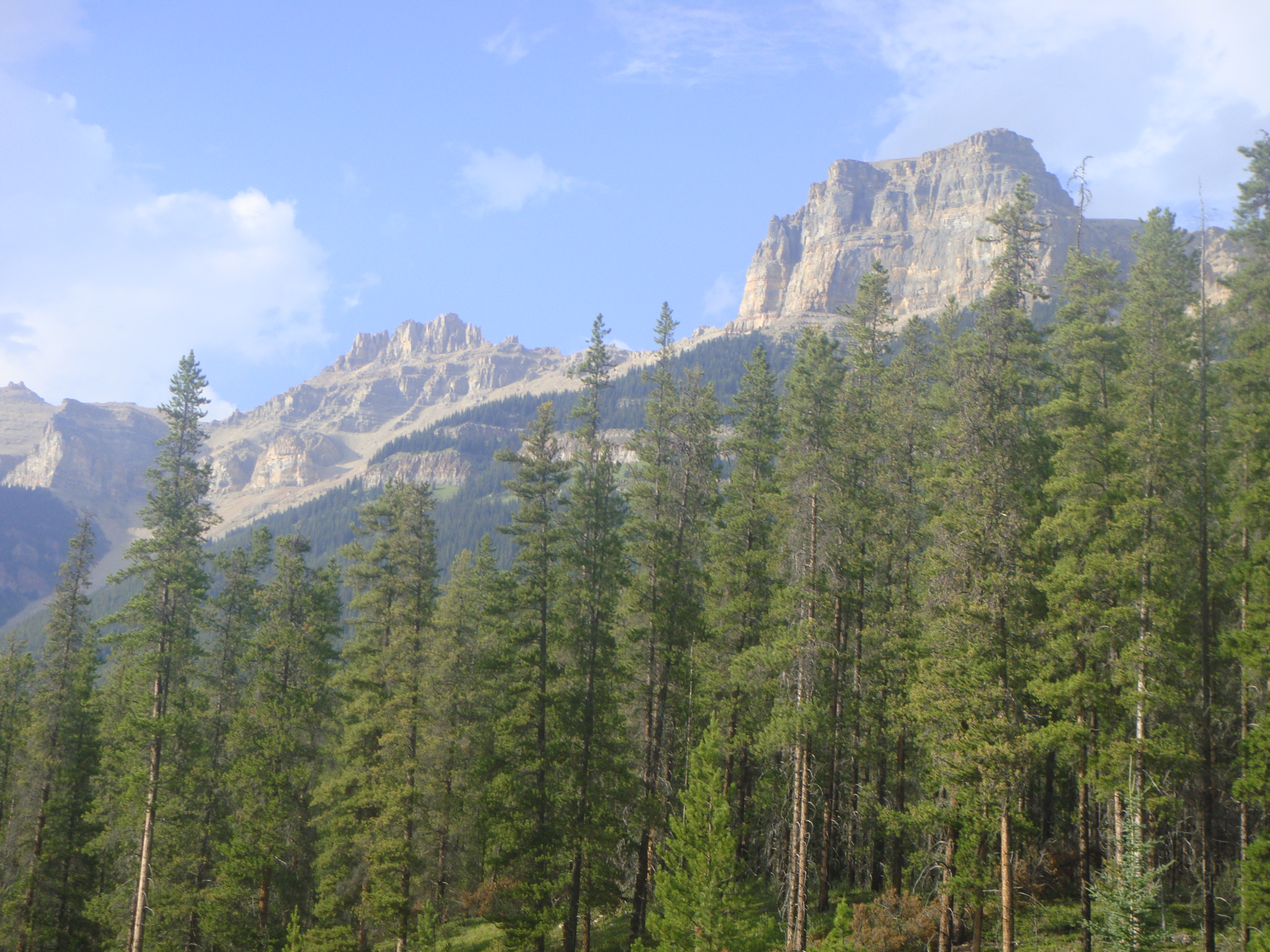
These are some palisades that tower over the valley a little further south of Mount Kerkeslin.

Today, we are off to do some hiking and sightseeing in Maligne Canyon and the Valley Five Lakes Loop.

Fireweed

I am off for my Sabbath and perhaps an extra day. Kathy and I are going to British Columbia via Jasper National Park and Mount Robson Provincial Park. I suspect there will be some pictures forthcoming. My mother celebrates her 88th birthday and it is an important event each year. She is the last of her generation in our family.

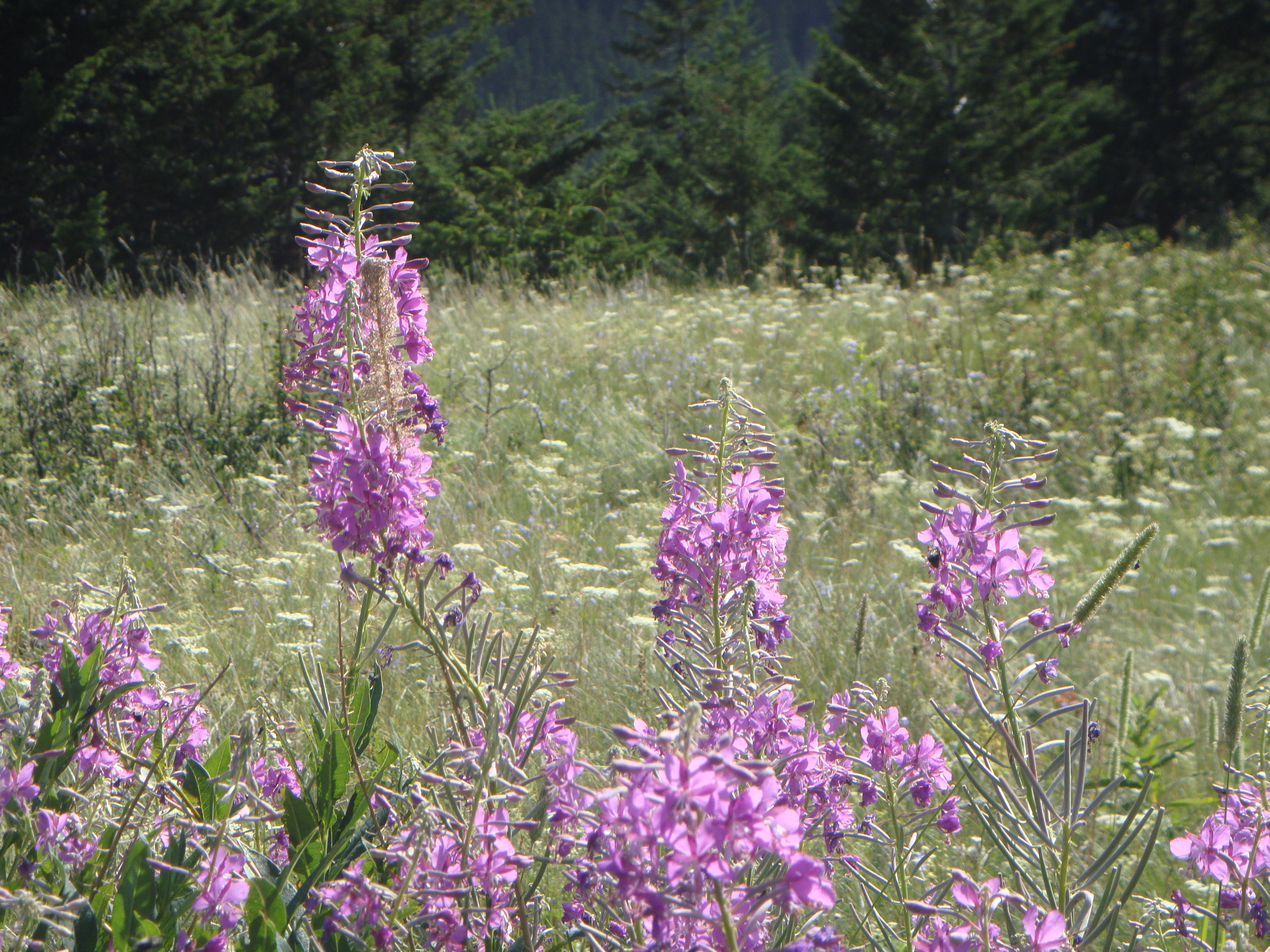
Fireweed is a common plant which grows in temperate areas of North America. It is hardy and is often planted in areas which are disturbed i.e. fire or oil spills. I am using it to carry me into my Sabbath and help heal the spirit.

It’s common enough

Beside paths I traverse

Lights the path homeward.

Sabbath and Haiku Haven

I am unsure whether I will be back today. We are sorting out our home Internet issues. We think the router blew up in a recent storm. This was good, because it was an unplanned daily Sabbath for me.

On a routine morning drive, I observed the sun rising in my rear view mirror with the moon still visible. It was early in the school year and I had just returned from BC. I began that morning’s haiku class with poems which described phenomena I took for granted most days. I try to emphasize for students poetry is the routinely observed. Poetry lifts it to the extraordinary nature of things often taken for granted. I try model this through poetry chosen and shared i.e. Pablo Neruda and Mary Oliver and I write poetry on what I observe in life.

Majestically,

Touching endless sky above

Roots firmly grounded.

Greeting and adieu

Sun and moon share the one sky

Guide our daily drive.

Waterton Lakes National Park Day 2

We are back from day 2 of our Waterton Lakes National Park adventures. Yesterday, I commented on International Peace Park that within reason animals are right there and pose for you.  We were unable to post our one bear sighting. Despite poor vision, bears hear very well our sighting was from the boat. As we moved closer, the bear heard us and headed for cover. We only took pictures of his rear end from a distance. Today we had two bear sightings.

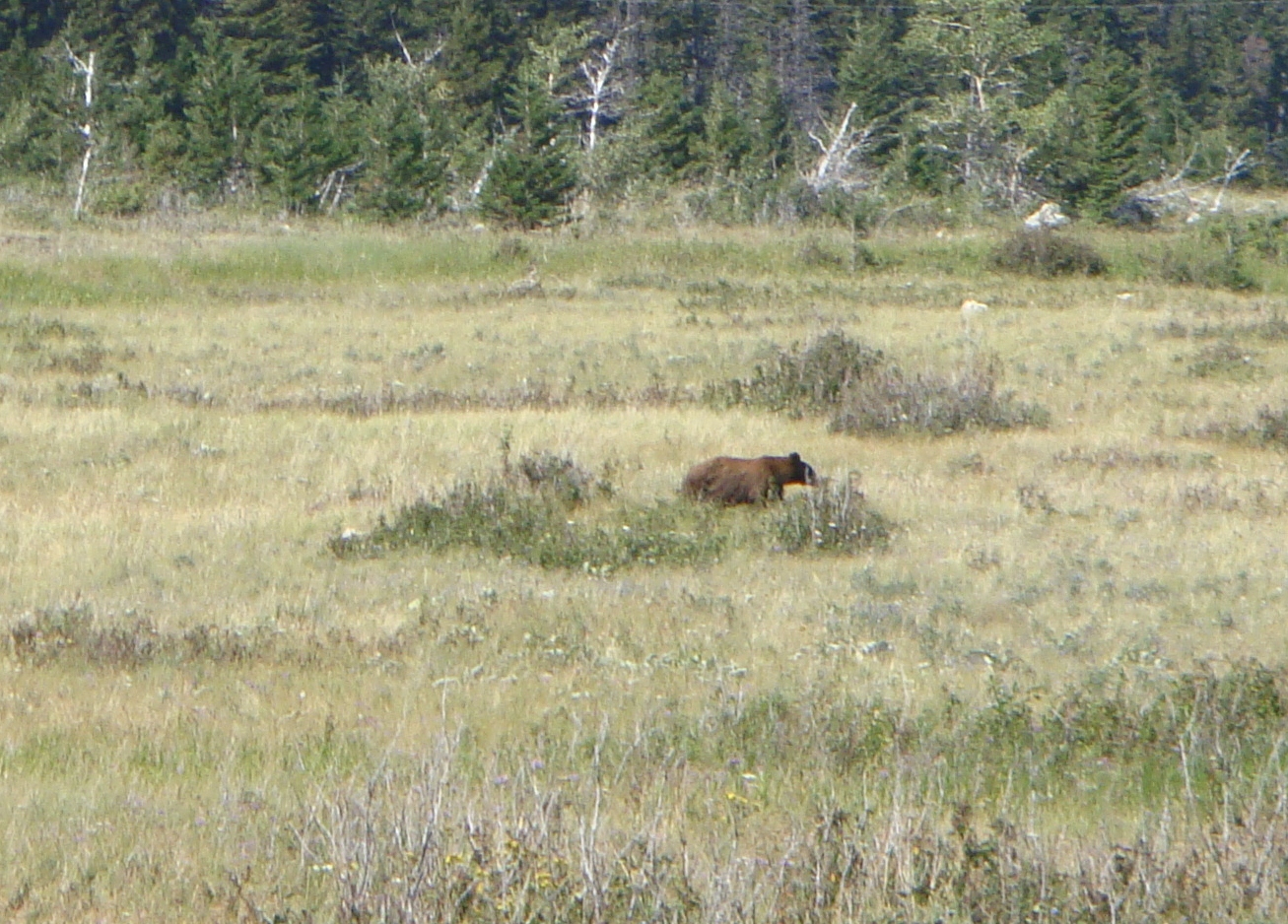
This was our first sighting. This bear was about 100 metres away on a hillside as we left town. It is a fair-sized and is brown, but is likely a black bear and not a grizzly. What we could see of the snout and head does not look quite right and it is missing the hump on the back. Here is another view.

Grizzly bear are generally solitary and do not like humans around them where black bear are more likely to approach areas with humans around.

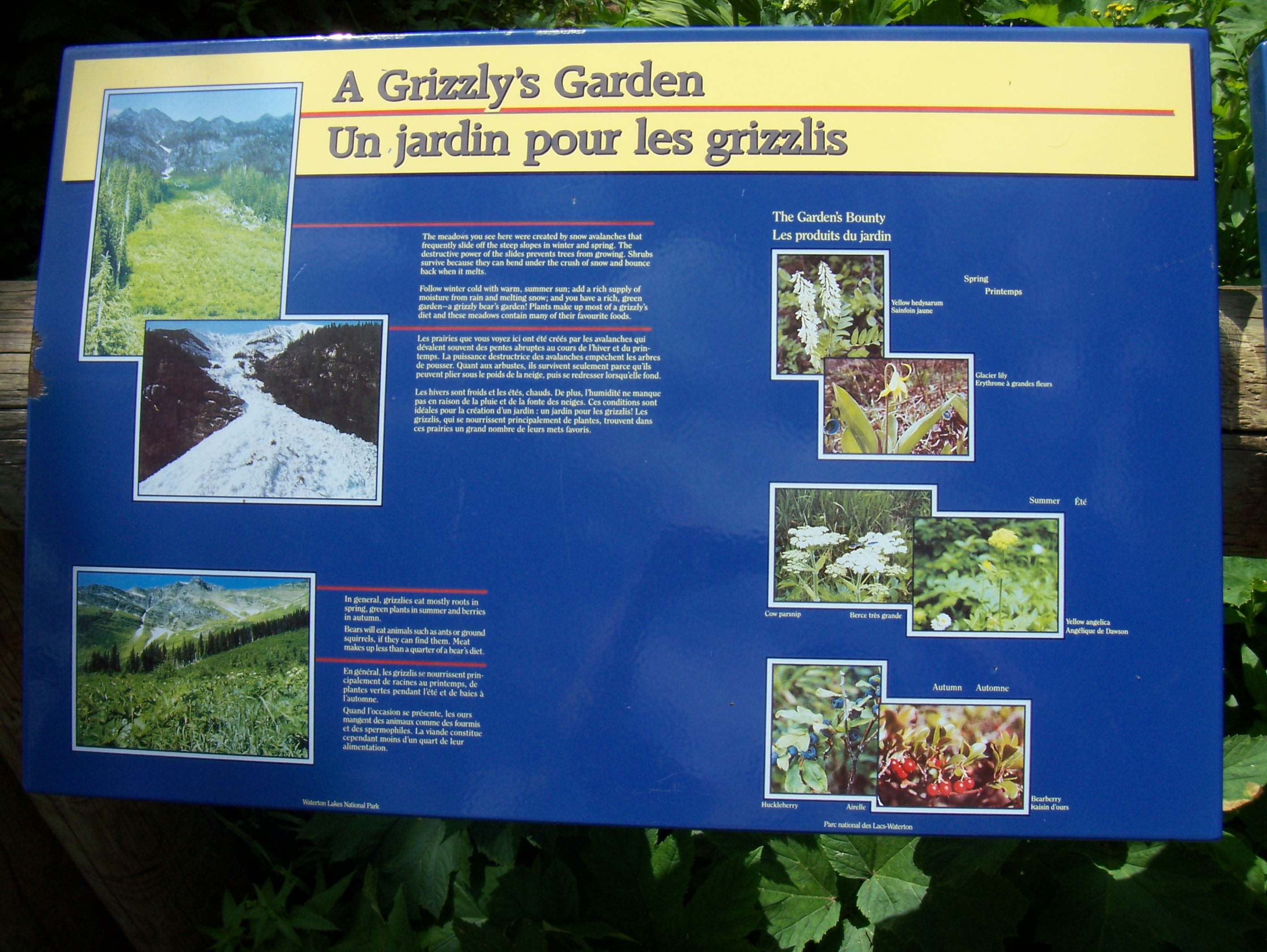
This sign is at the Cameron Lake trail and refers to the area beyond as a ‘grizzly’s garden’ and care is needed beyond this point.

Here is a haiku for grizzly bear we did not see, but we know is out there.

Grizzly’s home and garden

Tread gently and carefully

Grizzly habitat.

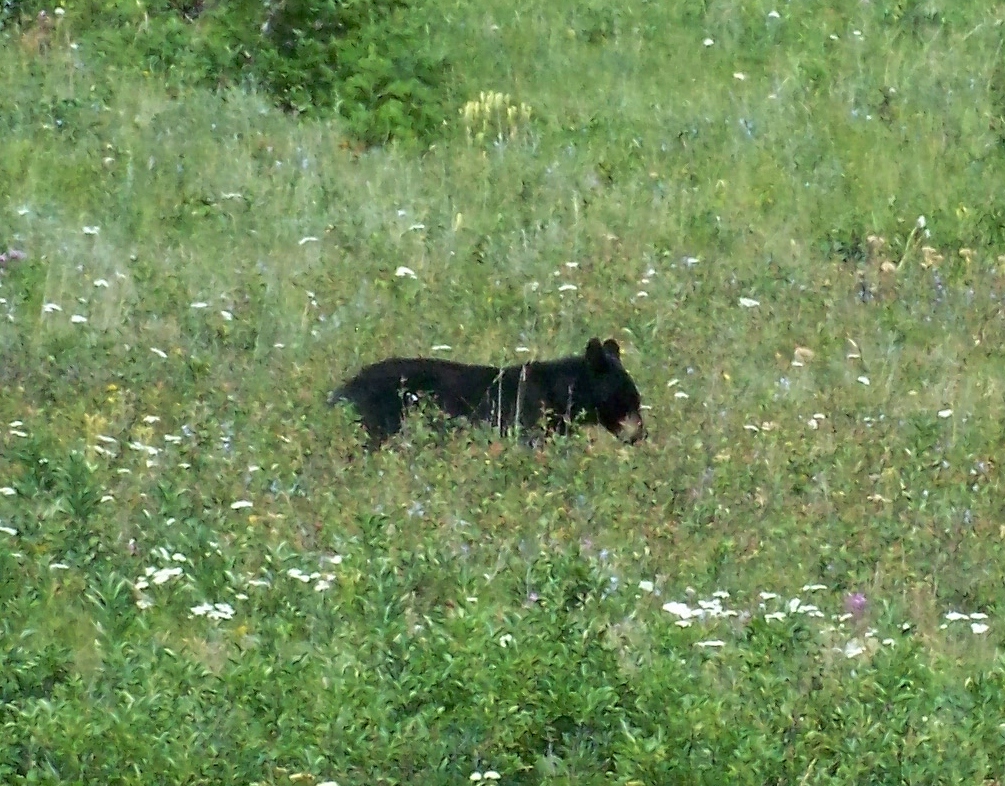
Our good fortune was not done. We spotted another black bear on another hillside on our way back from Red Rock Canyon. This one is younger and smaller and is definitely a black bear. I would guess it was born a year ago this past spring.

You can see the snout and the ‘piggy eyes’ of the bear. They are members of the same family as the pig. The ears stick up more and the grizzly would have ears that are ‘teddy bear like’ and stick out from the side of a very large head.

Not all animals we met were as intimidating.

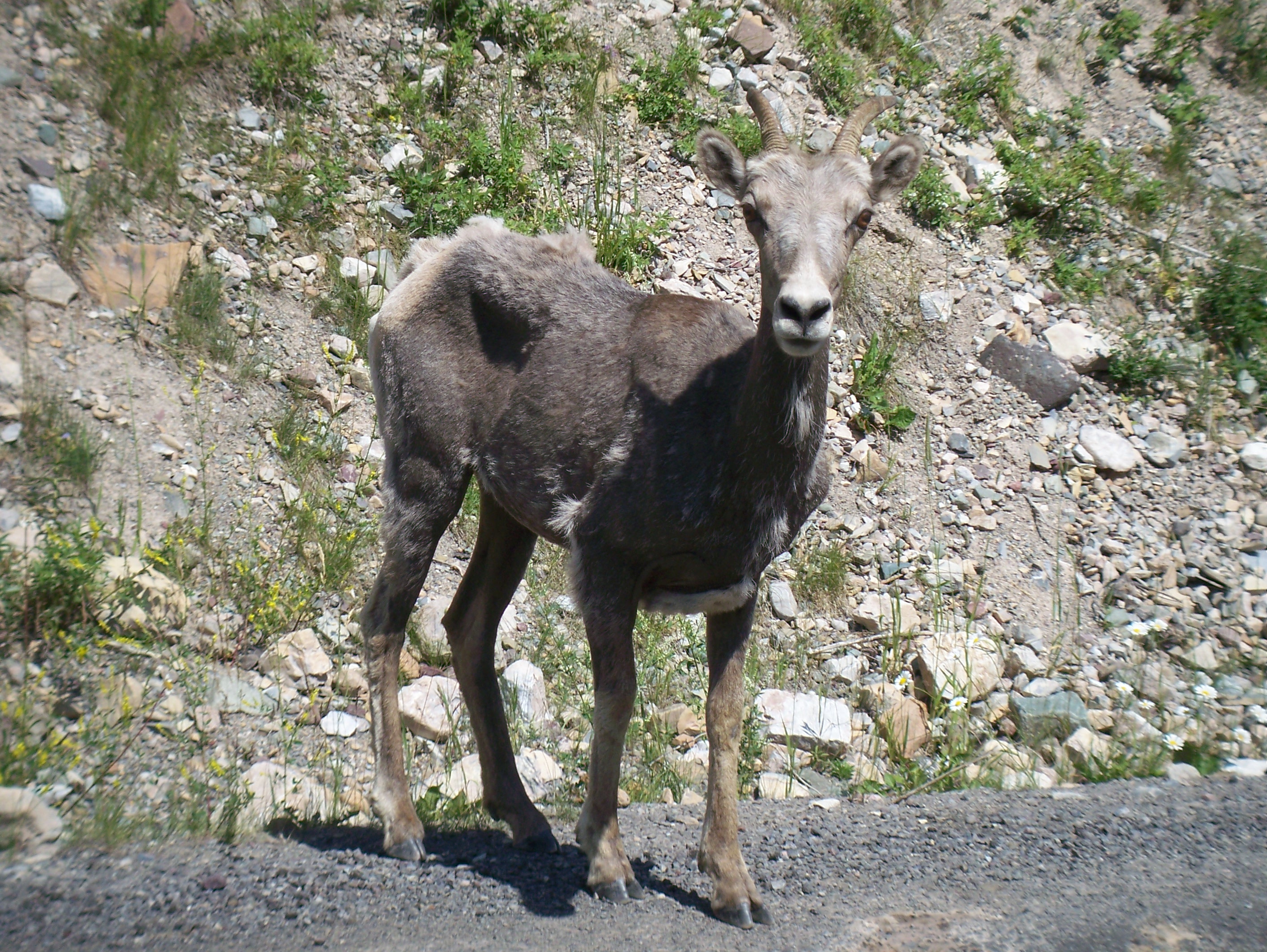
This sheep was about 2 metres from the car and just looked up to have its picture taken.

Sabbath in Waterton Lakes National Park

Shimon who posts at The Human Picture left a comment on my post Sabbath’s Circle. I am grateful for his explanation of the roots of the word ‘sabbath’ which indicates sitting. It is always good to know what the roots of words are so when we use them we understand them more fully and, when I sit with something in quiet time, it finds its way into my practice.

Kathy and I will drive to Waterton Lakes National Park and I will enjoy my day of disconnecting in a place that is important to us. We spent part of our honeymoon there and it is a special place for us. I am looking forward to spending time in a special place full of God’s many gifts. We are not sure what we will do, but the next 3 days we will just let intuition guide us.

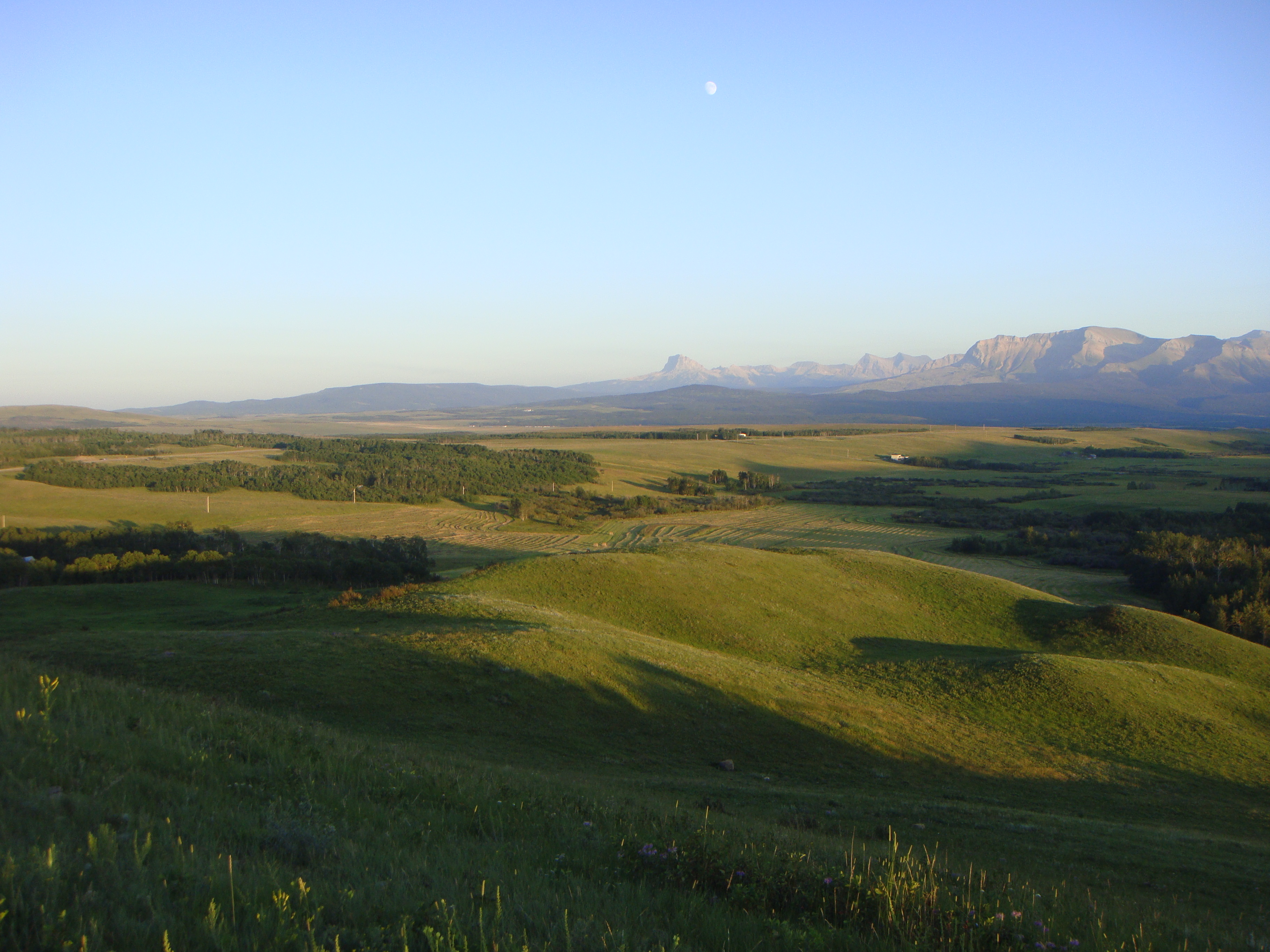
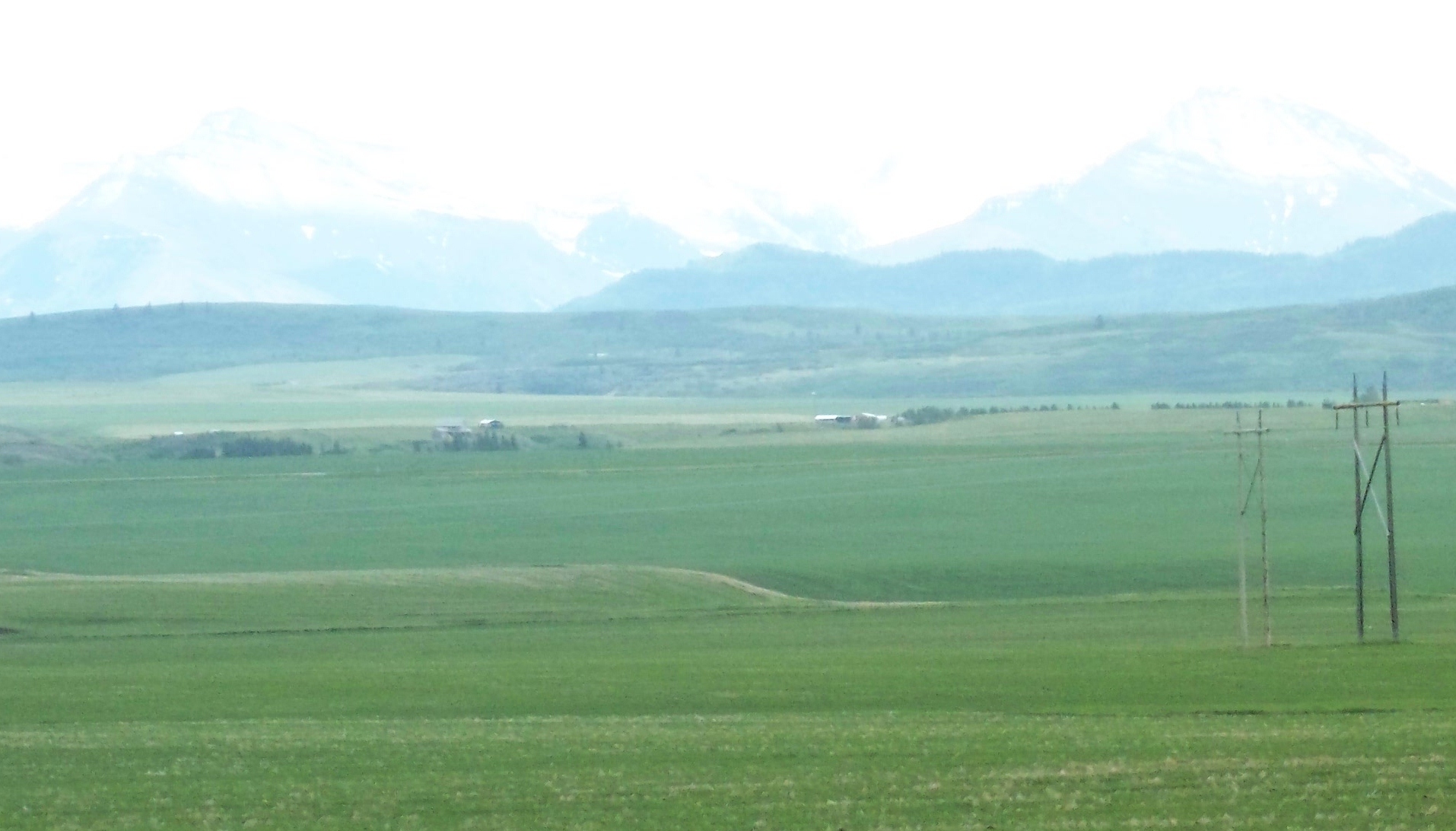
This is a view from about 50 km (30 miles) away from what we will be re-exploring.


I will have more to post when I return on Monday.

Captains of Society

I mentioned when I posted Angry Young Poet there was a second poem I shared from my youth with my students. I softened this one a bit, as it had an angry voice. I know this version sounds pretty harsh, but it is gentler. A recent conversation reminded me how I marginalize voices of those already marginalized. A professor commented he was told by an affluent person that another less fortunate person was a non-entity and the worth of human was measured in material worth. I know this might be isolated, but it troubling and I was reminded of this poem.

Captains of Society

Shallow, superficial, arrogant

Single ambition

Greatness in the eyes of others

Only those with resources can apply

The rest

Forgotten

Pay a high price, but…

It’s their fault

They own their misery.

A cheque to charity

Assuages my conscience

What about the despair?

Don’t care

I claim I do

Donations in good faith, but

It’s a tax receipt

I can really claim, but…

Done on the backs of others

Get the staff to donate time

Not mine.

Increase taxes

Not mine!

No way!

It’s wrong!

Tax others!

What is work?

I create jobs

It’s a spectator sport

This work, which

I manage from afar.

Drive luxury wheels

Shout

Curse

What’s the hold up?

Who’s blocking my way?

The ‘75 Ford station wagon

Engine shot

Dead broke!

Is it their home?

 Throw a party

Drink

Eat

Be merry

No concern for homeless

A romantic notion this ‘hobo jungle’

Not my world

What’s wrong?

It’s not my fault

I gave at the office.

After all.

Throw money at problems

It might help

Don’t

Stop, see, care

If it really helps

Denying, refusing, unfeeling

I pay for a clear conscience

After all.

 The misery

In surround sound…

Is out of sight;

Out of mind

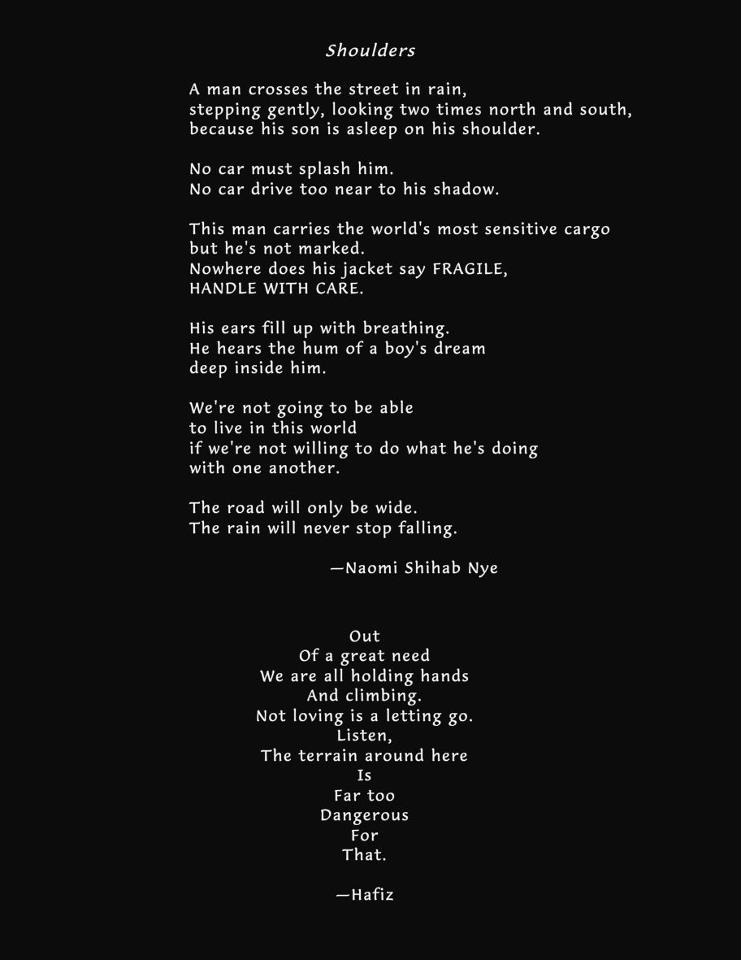
Shoulders by Naomi Shihab Nye and Out of Great Need by Hafiz

I finished reading Healing the Heart of Democracy by Parker Palmer. It is a wonderful book and, even though he wrote it from an American perspective, it has many universal messages. These poems focus on a message we are in life together-we share, reciprocate, appreciate.

I am reaching the point of settling into the dissertation process. My theme is technology, its implications in learning, mindful practices, and the role of leadership in the use of technology. Today, the responses I received from yesterday’s post, Inspiring Blog Award, was evidence that various social media offer opportunities to build digital community. Gonzaga has a journal club for its doctoral students. We find research articles, read them and summarize key points, and present our understanding as they relate to leadership. I presented one about Virtual Communities of Practice today. A key point is reciprocity or the giving and receiving of gifts. This is not a material gift, but one demonstrated through appreciation for the other when they post or say something online. I was able to share I saw the reciprocity and appreciation fully today. You are part of an emerging phenomenological study.

These poems are for you.

Tuned In and Fired Up

I mentioned this book in Culture of Peace and Angry Young Poet. It was worth a read. I start with a haiku which emerged from the book.


Who stretches the teacher?

Journey into their essence

Reveal the learner.

I read Tuned In and Fired Up by Sam Intrator for two reasons: as a teacher and as a graduate student preparing for the dissertation process. Sam contributes to the work of the Centre for Courage and Renewal which based on Parker Palmer’s writings and thinking.

The book is enjoyable, informative, and motivating. Teachers need to take time and pause, reflect upon, and recall the reasons they were called to teaching. There are alchemical moments of discovery we artfully use and define teacher, students, and subject. It is surreal and its magic can never be underestimated as the three blends into a single whole and respects individual integrity.

Part of the magic in this book is Mr. Quinn, the teacher. He took risks and students tuned in and fired up to his genuine presence. Parker Palmer, in The Courage to Teach, suggested “teaching is always done at the most dangerous intersection of personal and private life” (p. 18). Mr. Quinn’s teaching was learning and realized he could wrong. The magical aspect takes a teacher onto the boundary and, then, into uncharted waters. Good teachers take that risk and students sense it.

Towards the end Sam cited William Ayers: “Since teaching is always a search for better teaching, I am still in a fundamental sense becoming a teacher. I am stretching, searching, and reaching toward teaching” (p. 134). This is a virtuous cycle of learning-teaching-learning to infinity.

Sam leaves the reader with an incredible list of those things teachers can reflect upon and use according to their setting. Many are well-known: cultivate rapport with students, compete tenaciously for their attention, and spark their desire to create. Others were ones I felt were lesser known: embrace your role as a performer, tap into their senses, and acknowledge boring. That last one is challenging. At the adolescent level, treat them like they are becoming adults.

Questions: A concern expressed by Sam was a need for genuine collaboration. What practices do you use in your workplace or learning that foster collaboration between adults? If you teach, what ways do you include students?

Recommendation: I loved the book and let me leave you with just two ways. It was easy to read without losing meaning. Sam used simplexity and achieved his aims. Second, he left a thorough recipe without the quantities. I need to figure those out with students and subject.

Intrator, S. M. (2003). Tune in and fired up: How teaching can inspire real learning in the classroom. New Haven, CT: Yale University Press.

Palmer, P. J. (2007). The courage to teach: Exploring the inner landscape of a teacher’s life. San Francisco: Jossey-Bass.