Very Inspiring Blogger Award

I received a nomination for a Very Inspiring Blogger Award from Ricardo at Film Photography is not Dead.

I am learning about virtual communities and their formation. It is about learning and not predetermined outcomes.

Virtual communities emphasize reciprocal practices which include a sense of trust that someone views and validates our contributions. We measure practices with followers, likes, and regular comments which resemble conversations. Since July 14, 2012, this blog went from 500 to 1000 likes, gained 75 followers, and has daily, running commentary.

We are involved and remained in virtual communities as a result of an ethic of relationship and this makes returning a conscious choice and mindful. Active participation is receiving and giving gifts thus has emotional and personal components.

An aspect of my gratitude is the face-to-face conversations Kathy and I have. She contributes to all the posts in many ways: takes pictures, edits, and questions purpose in a post. I am grateful to her and others who valorize what I am doing each day.

The rules are:

  1. Link back to the person who nominated you
  2. Post the award image to your page
  3. Tell seven facts about yourself
  4. Nominate 15 other blogs
  5. Let them know they are nominated

1. Thank you Ricardo for nominating me, it’s an honour and privilege. Check out his blog called Film Photography is not Dead for insightful ideas about photography and great pictures.

2.

3. 7 facts about me

  1. I love nature.
  2. I am a collector of many things.
  3. I am a very nervous flyer.
  4. I am completing a PhD in Leadership Studies.
  5. I love brewed ice tea.
  6. I listen to the Old Radio Shows.
  7. My favourite fictional genre is westerns.

4. This section is challenging. I follow many blogs and feel guilty each time I do this, because I know I miss some great blogs.

My nominated blogs:
  1. Meanwhile Melody Muses
  2. Mike’s Look at Life
  3. Words/Love
  4. Colour the Day
  5. The Jog
  6. Waiting for the Karma Truck
  7. Nonoy Manga
  8. Brian Gaynor Photography
  9. Seedmind
  10. Fun and Fabulousness
  11. Thinking is Write
  12. Simply Jan
  13. Live. Learn. Lead.
  14. ABC of Spirit Talk
  15. Valerie Davies

Pensive Pirate

Several months ago, Francesca at Words/Love provided advice for aspiring writers. She advised other writers to keep pen and paper close at hand. More and more, I do this. This morning, about 6:00, I woke up with poetry on my mind. I scrambled, grabbed writing gear, and jotted ideas down. I hope I can flesh the ideas out over the next few days.

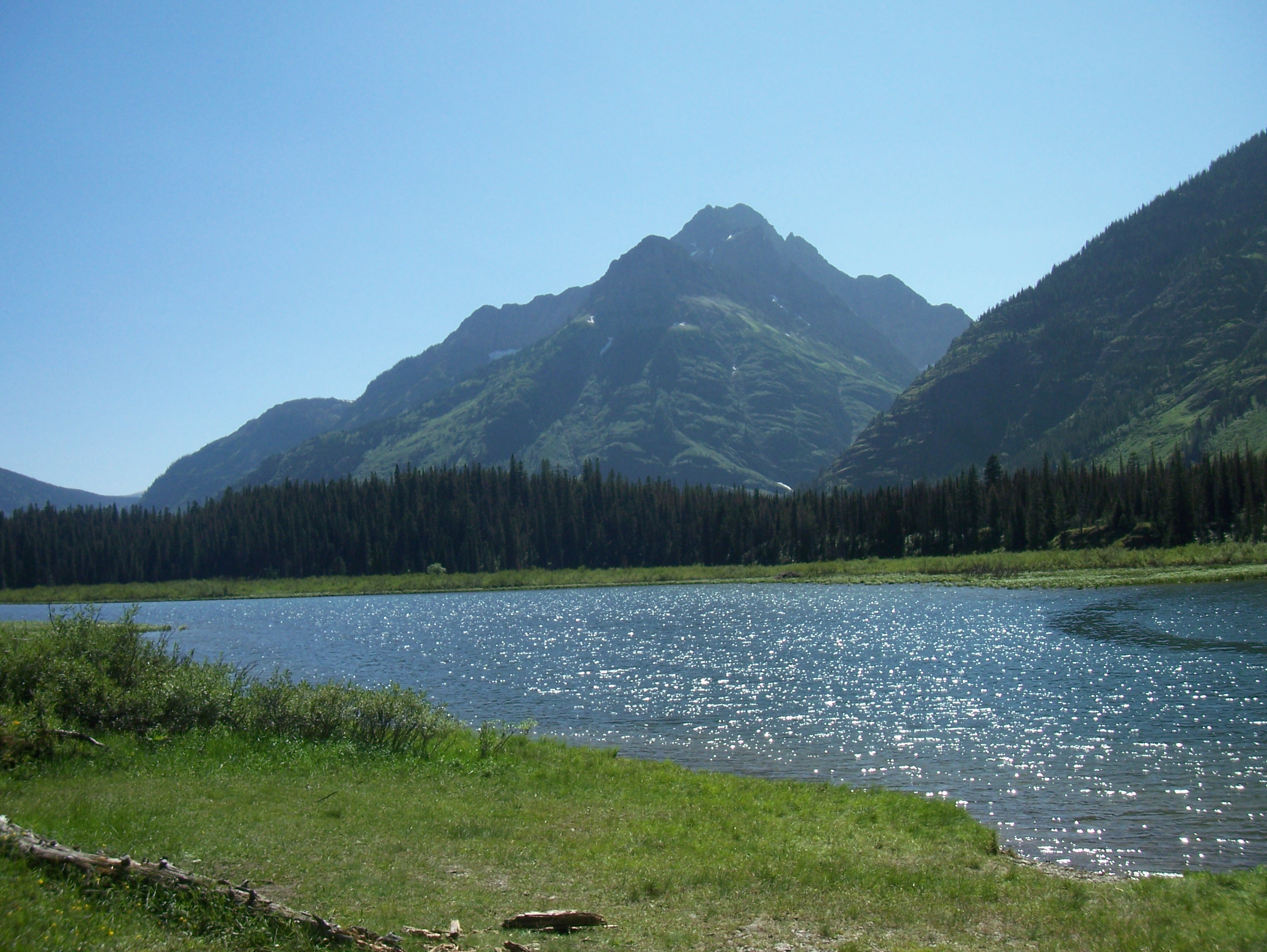
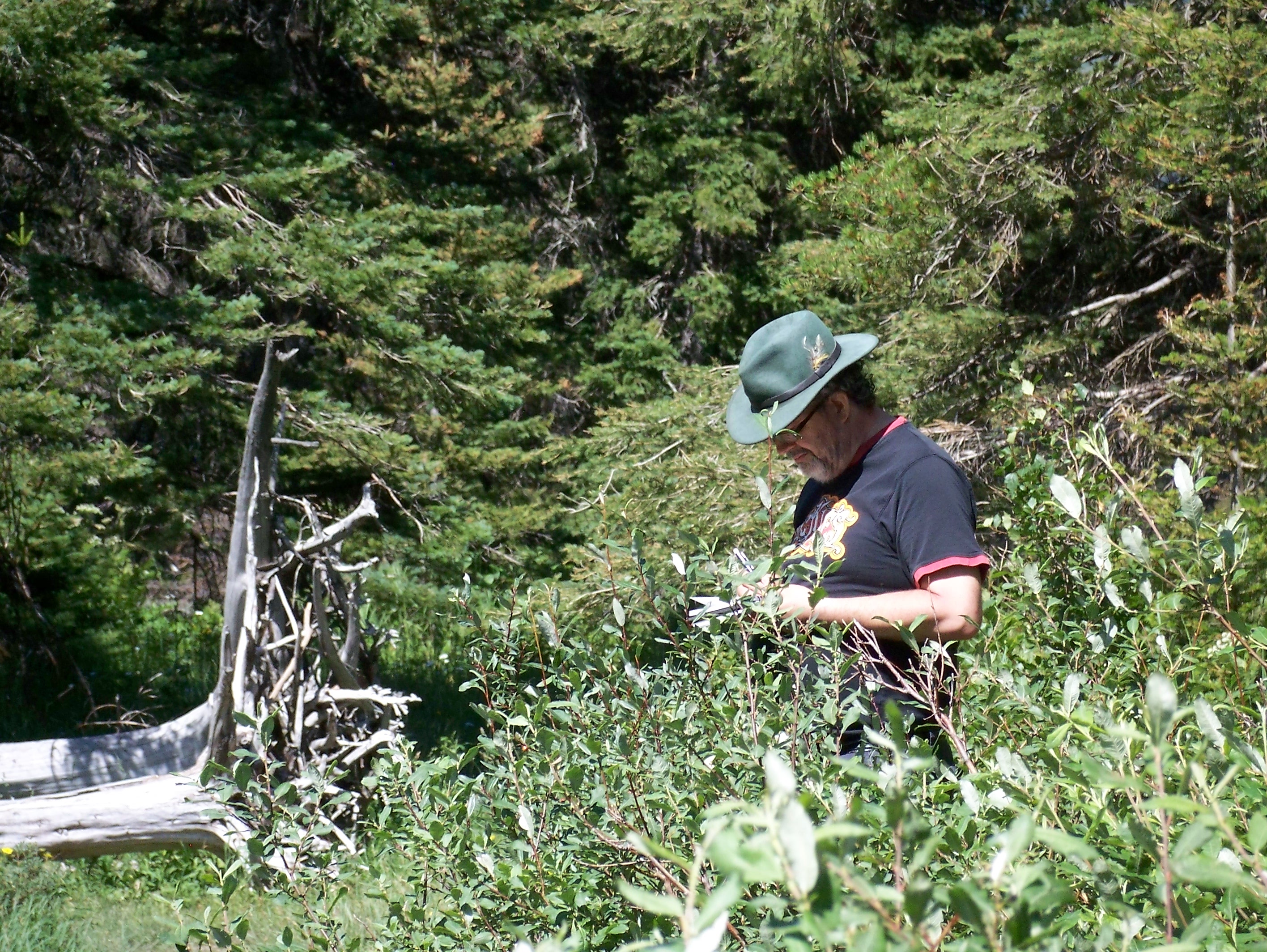
It is during unexpected times or quiet moments I find creativity. Kathy surreptitiously took this picture at Kootenai Lake in Glacier National Park. I was feverishly scribbling ideas that had popped up during the hike. It was easy in those surroundings. I hope to continue now that we are home.

Pensive pirate pauses

Revitalize one’s spirit

Serenity sought.

I will see you on Monday; oki until then.

Oki from Crowsnest Pass

Oki is the Niitsítapi word that approximates hello. It recognizes the humanness of each other in greeting and is like Ubuntu used in several African languages.

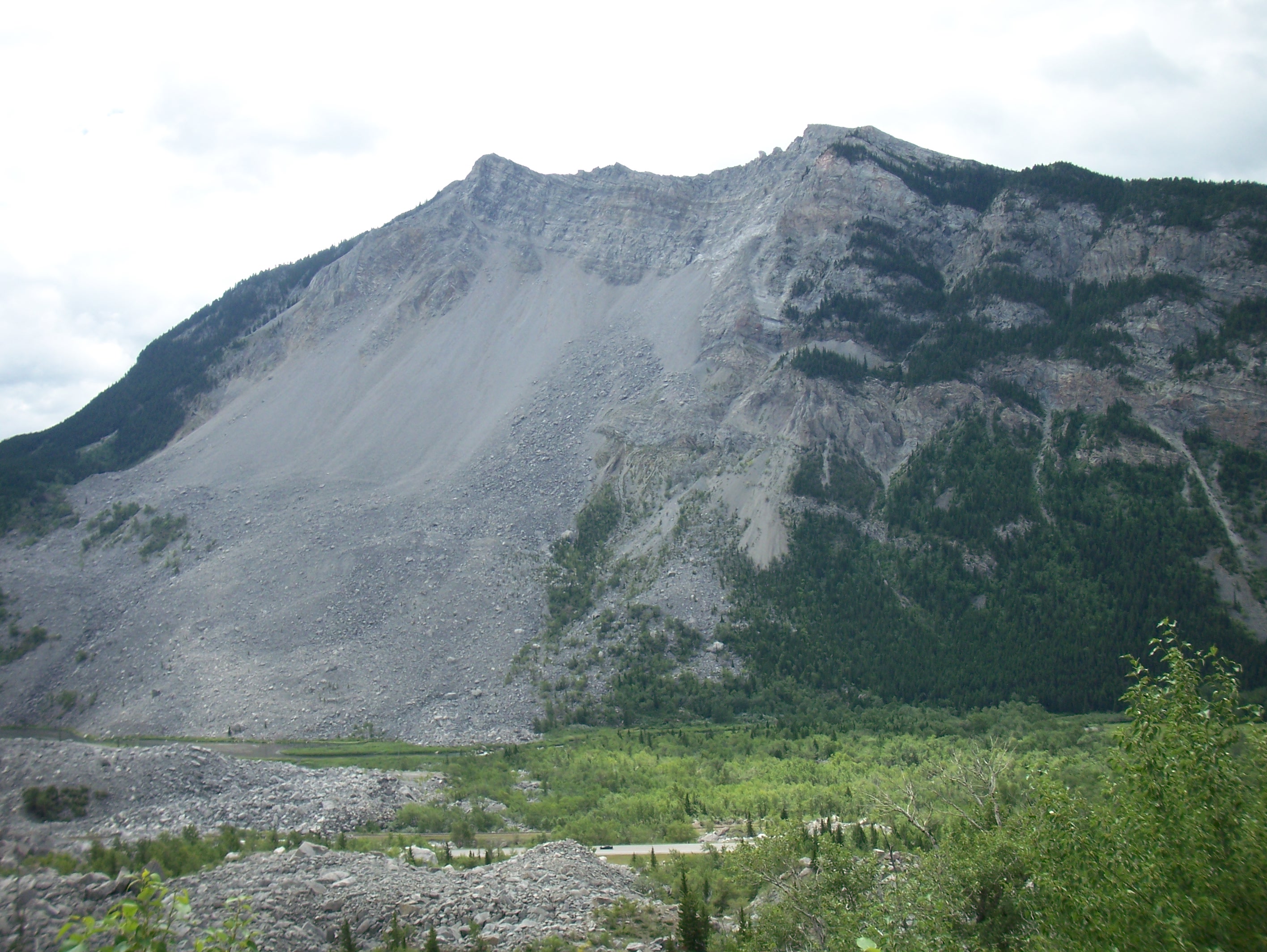
Yesterday, we headed back to the Crowsnest Pass and revisited the Frank Slide Interpretive Centre. We were there Thursday, but soggy weather and low clouds prevented a hike through the slide area and good picture-taking of Turtle Mountain. The weather was better and we joined a group tour led by a geologist, Dr. Wilhelm, who brought the hike to life. We hiked for almost 2.5 hours instead of the hour the hike normally takes

This is Turtle Mountain’s north face where the 1903 slide occurred. The resulting slide is the deadliest rock slide in Canadian history with over 82 million tonnes of rock burying part of the town of Frank and killing over 100 people.  The mountain is still unstable and the question is not if there will be another slide but when.

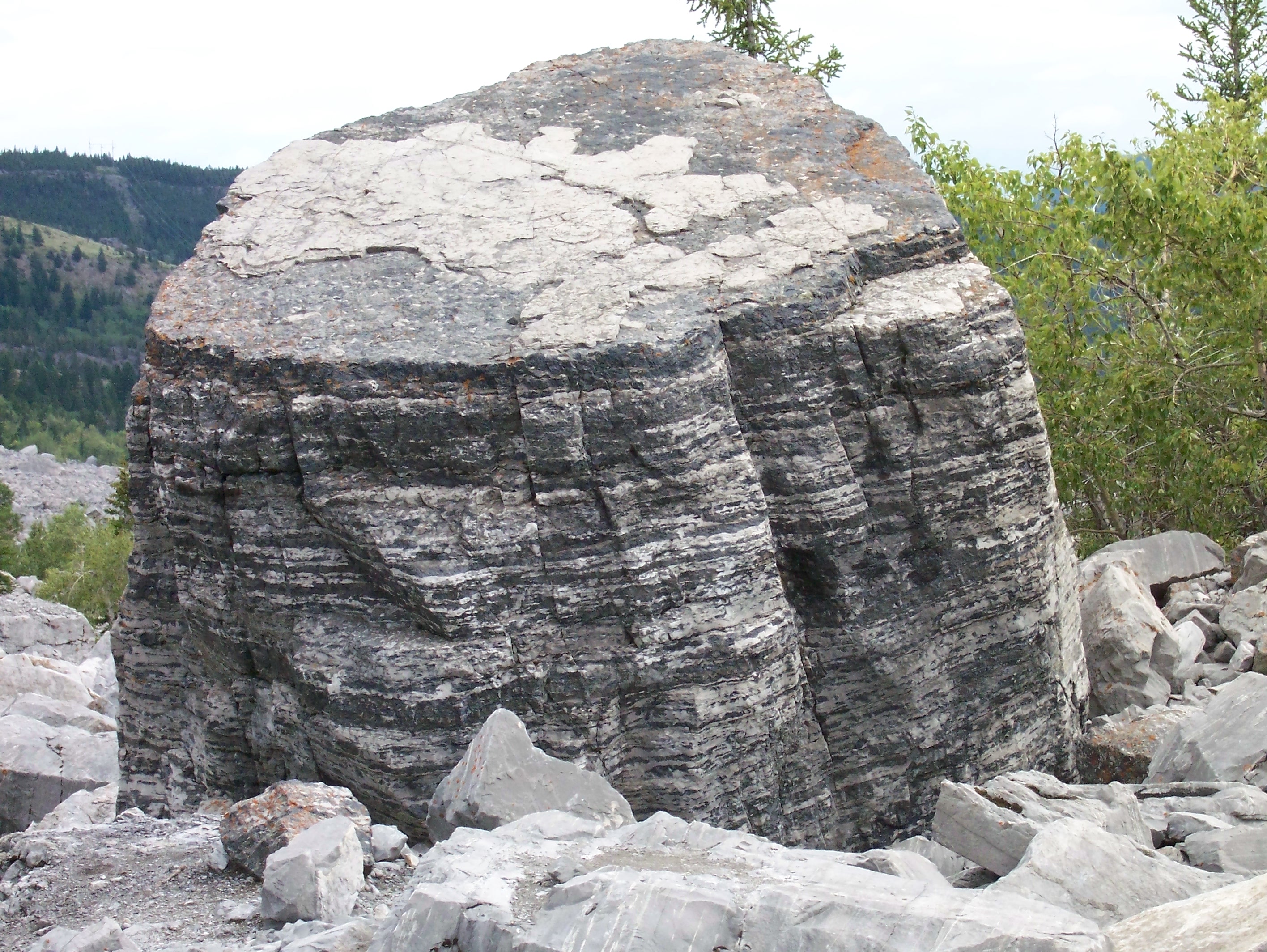
We saw this rock during the 1.5 km walk through the slide area. It is about the size of the cab of semi-truck. Most of the rock in the area is limestone, but there is also granite, feldspar, and quartz.

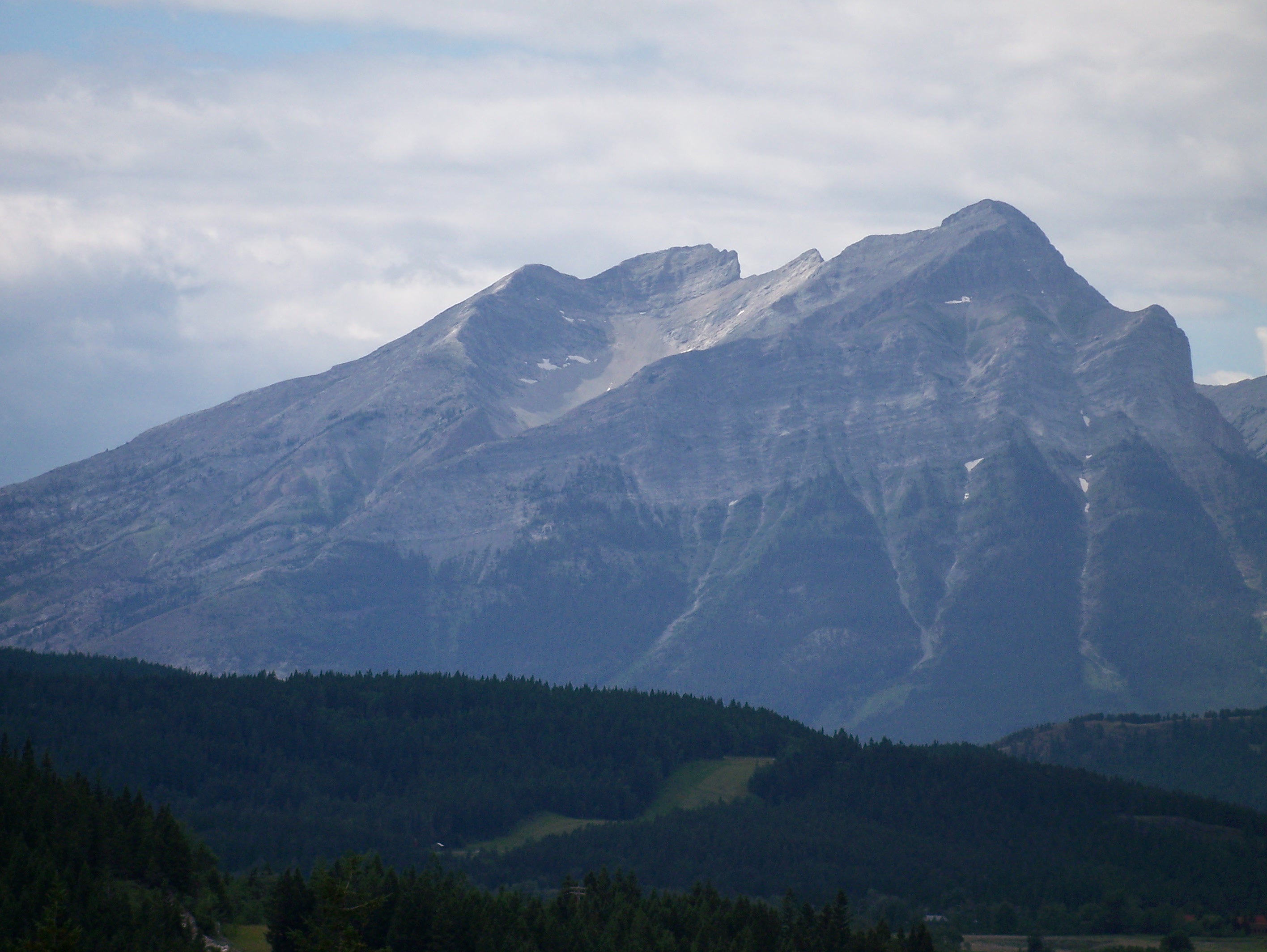
We had a great view to the west through the pass part way through the walk. This is Mount Tecumseh.

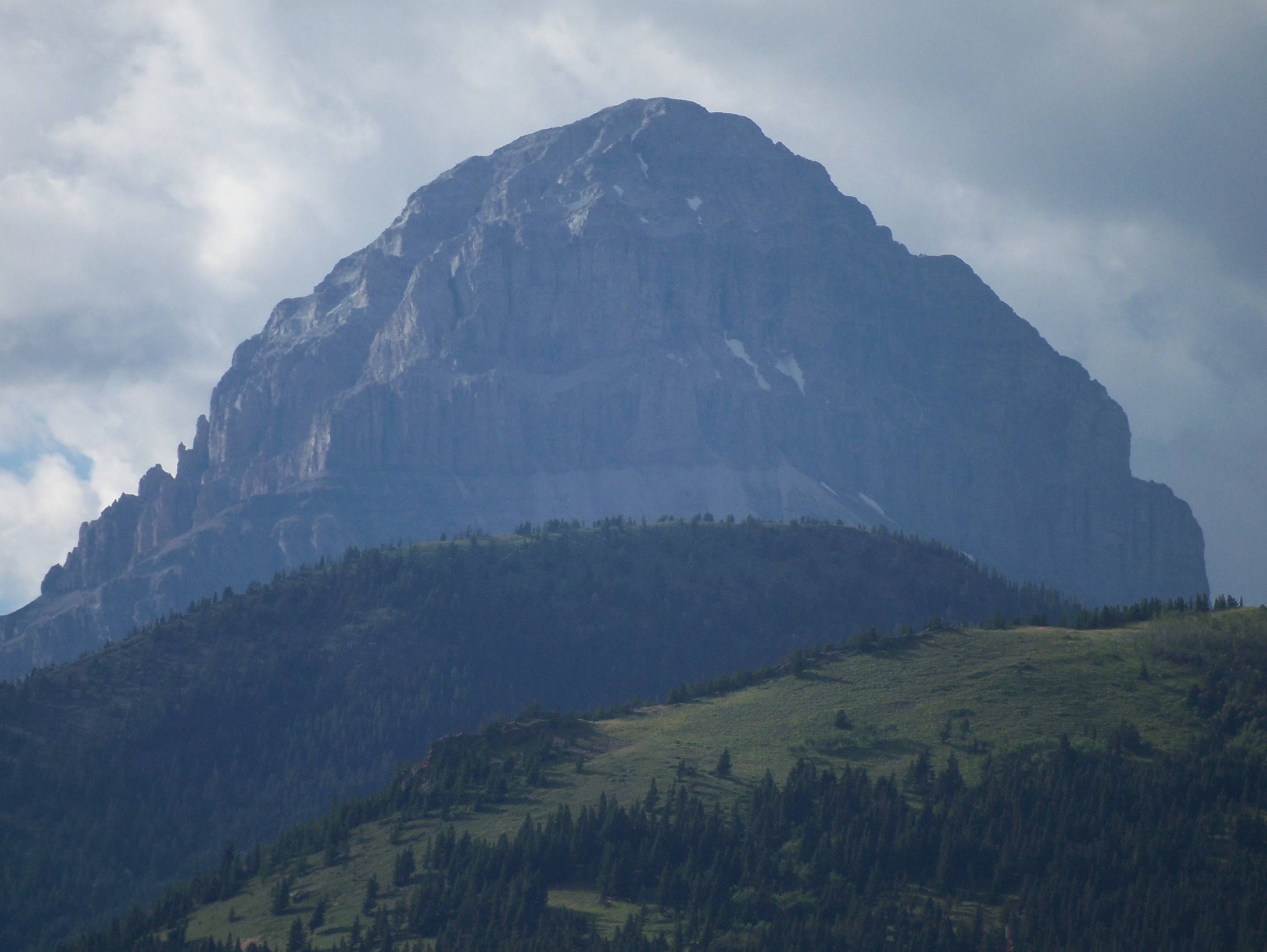
This picture is Crowsnest Mountain as you look west through the pass.

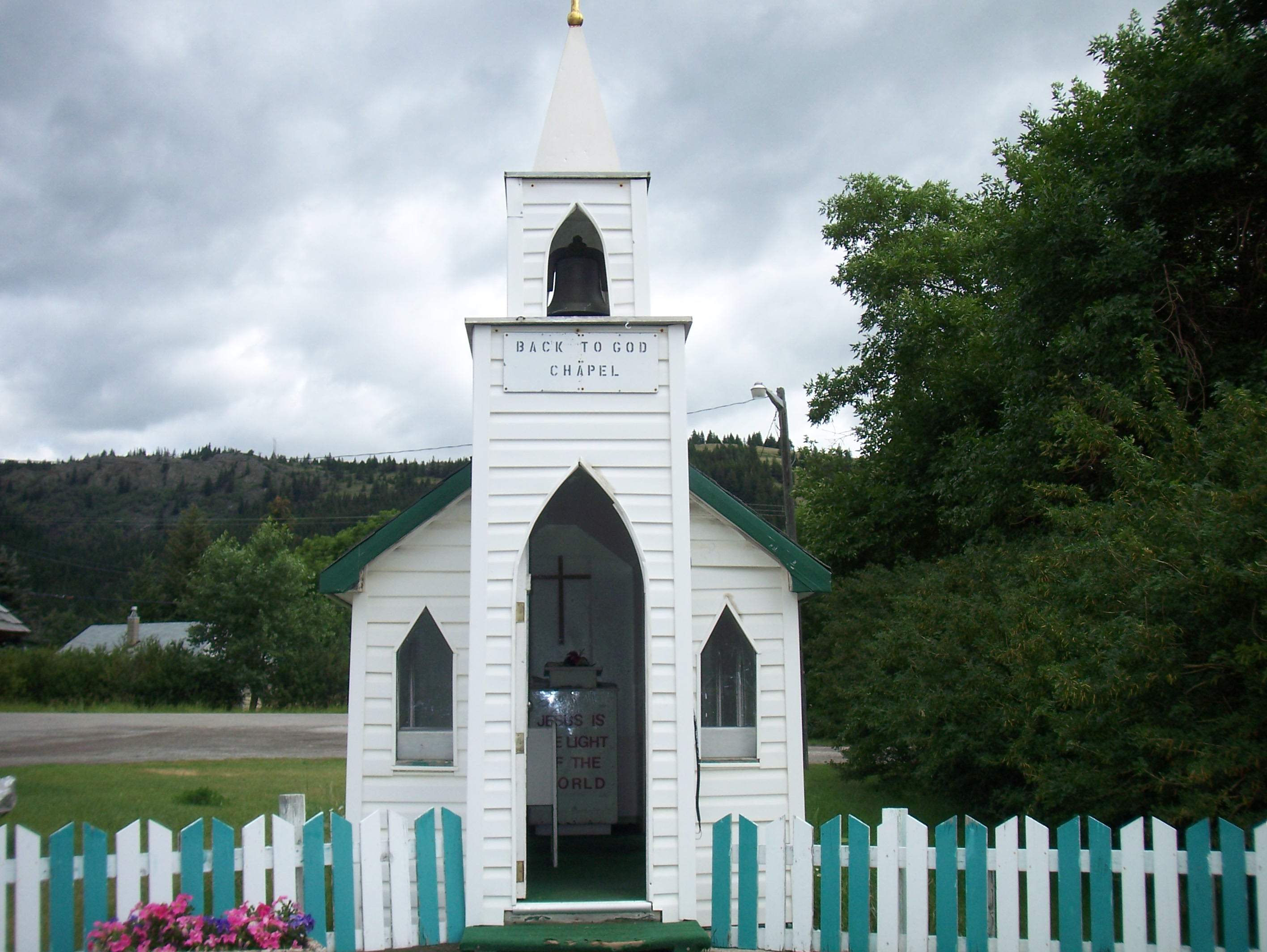
This is the Back to God Chapel and seats about 12 people.

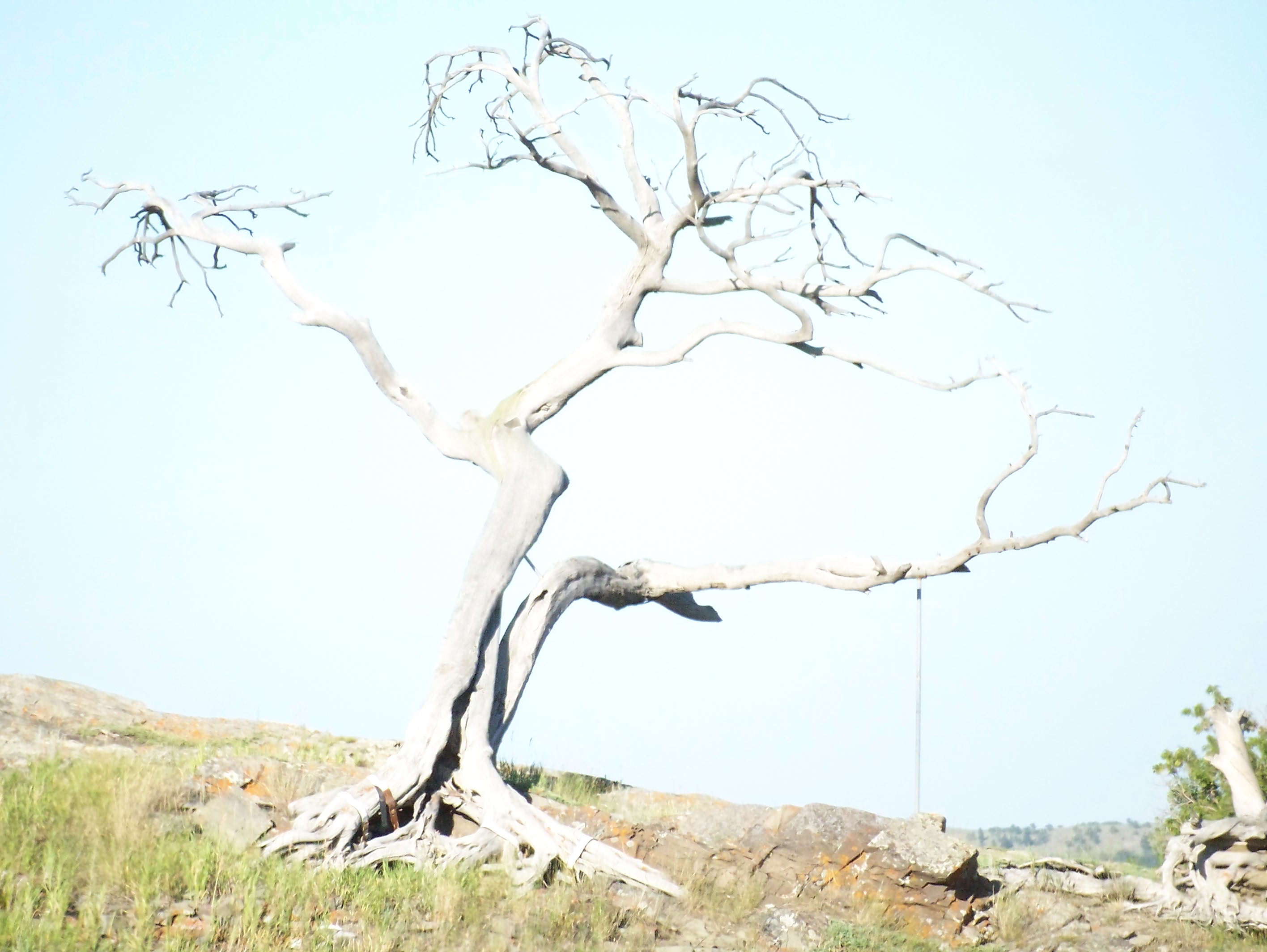
This is the Burmis Tree and is the most photographed tree in Alberta. It is at the east entrance to the Crowsnest Pass. It is a Limber Pine which died in about 1978 and it was 300 to 700 years old when it died. The town of Burmis, like the tree, is dead. It was a coal town and, when the coal expired, so did the town.

Waterfalls! Waterfalls!

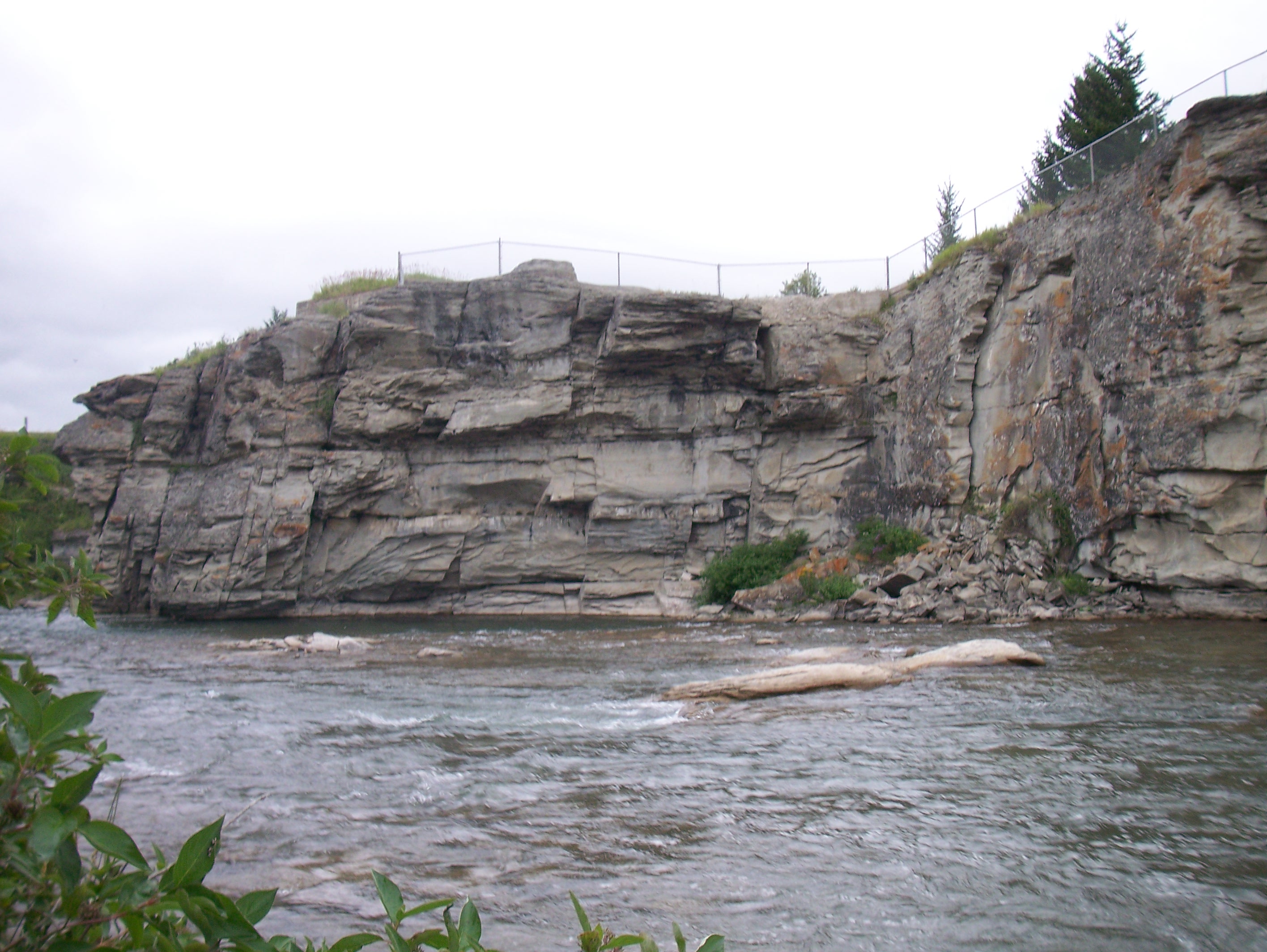
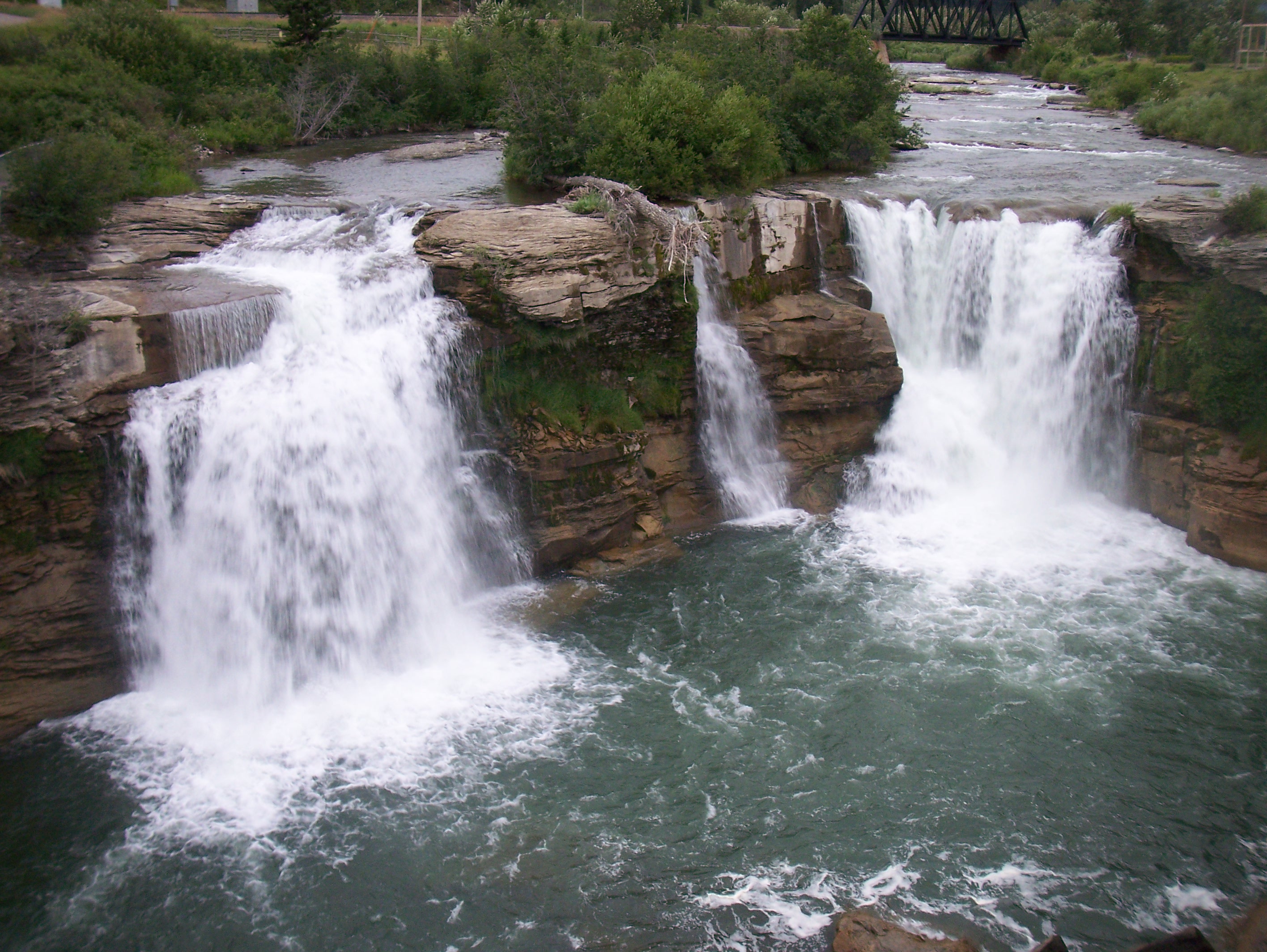
I disconnected yesterday as the Internet was unavailable. It was a dreary day, but we toured parts of the Crowsnest Pass. One stop was Lundbreck Falls. It is a stop you can easily miss, even though it is just off the main highway and visible from the secondary road. I liked it because I was able to get up, close and, personal. My fear of heights did not intervene too much.

This is a spectacular sight, but within 50 metres there is a pool at the base of the rock cliff where fly casting is possible.

Kathy took this shot from above the falls. I did not go on the overview platform.

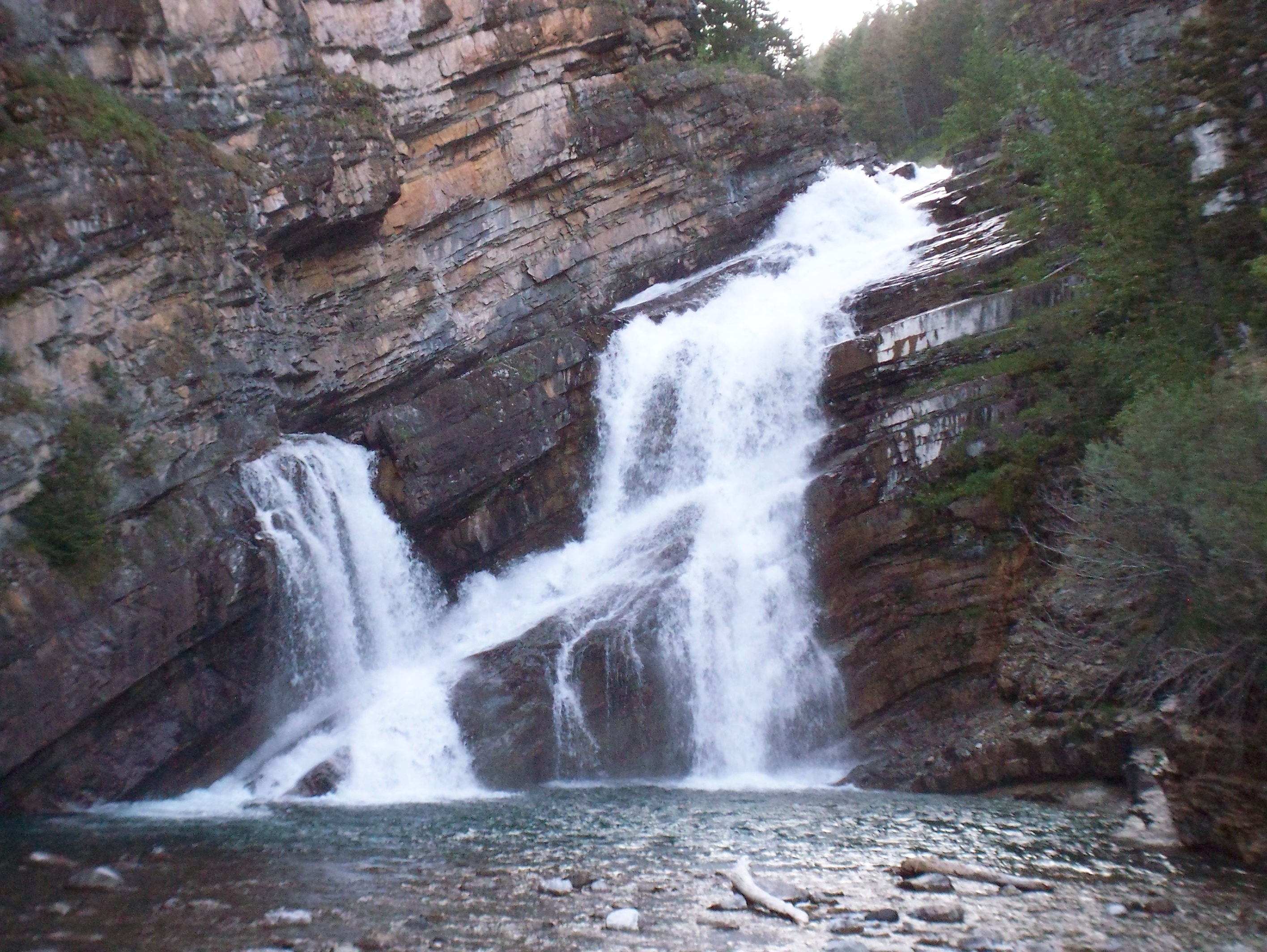
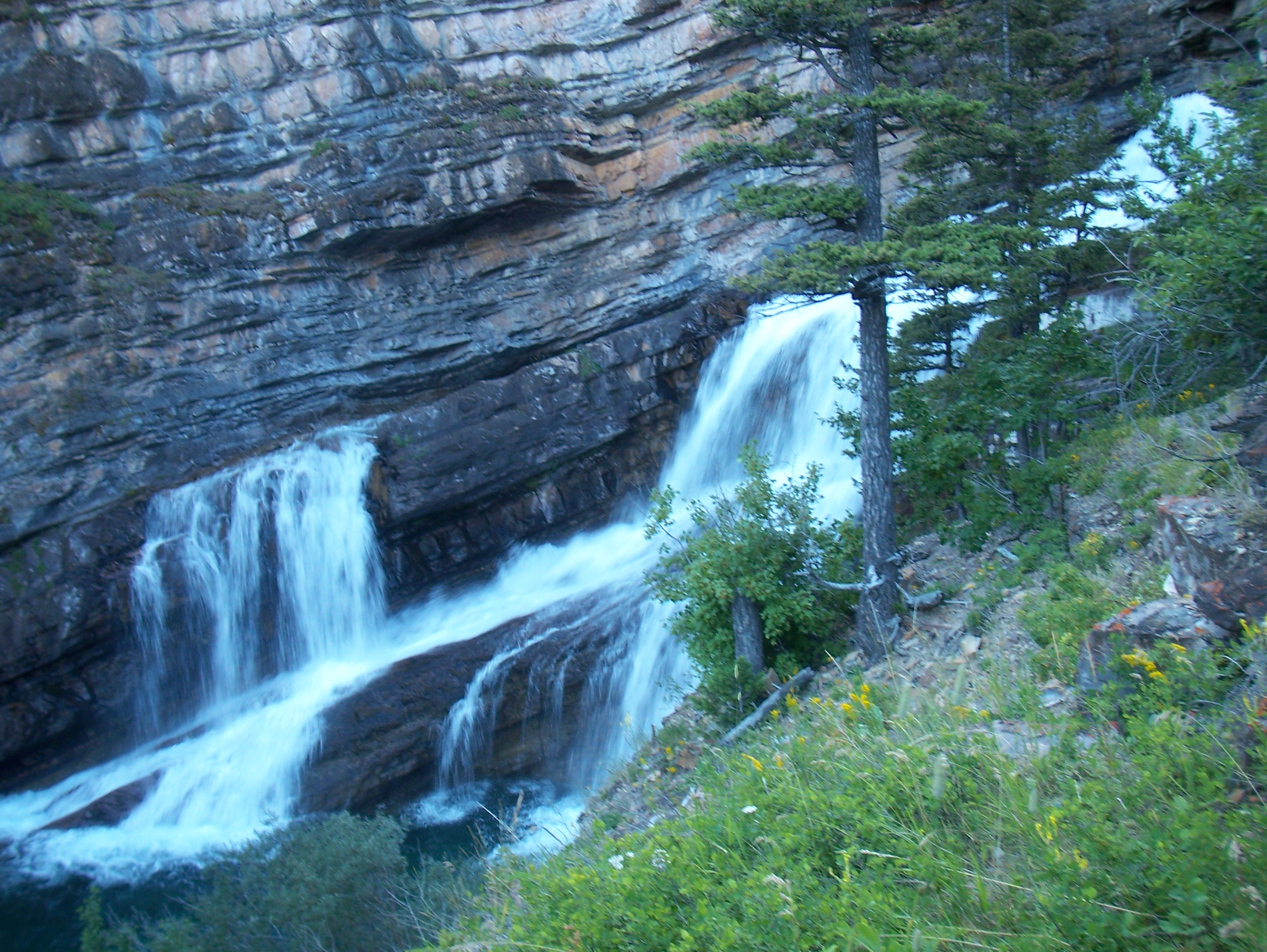
Waterton has many waterfalls. Cameron Falls is on the outskirts of the town site and I was able to see it from below and climbed a bit to see it from above.

The red in the rock is from iron oxide deposits. The view below is from a stairway that goes up the hill along the falls.

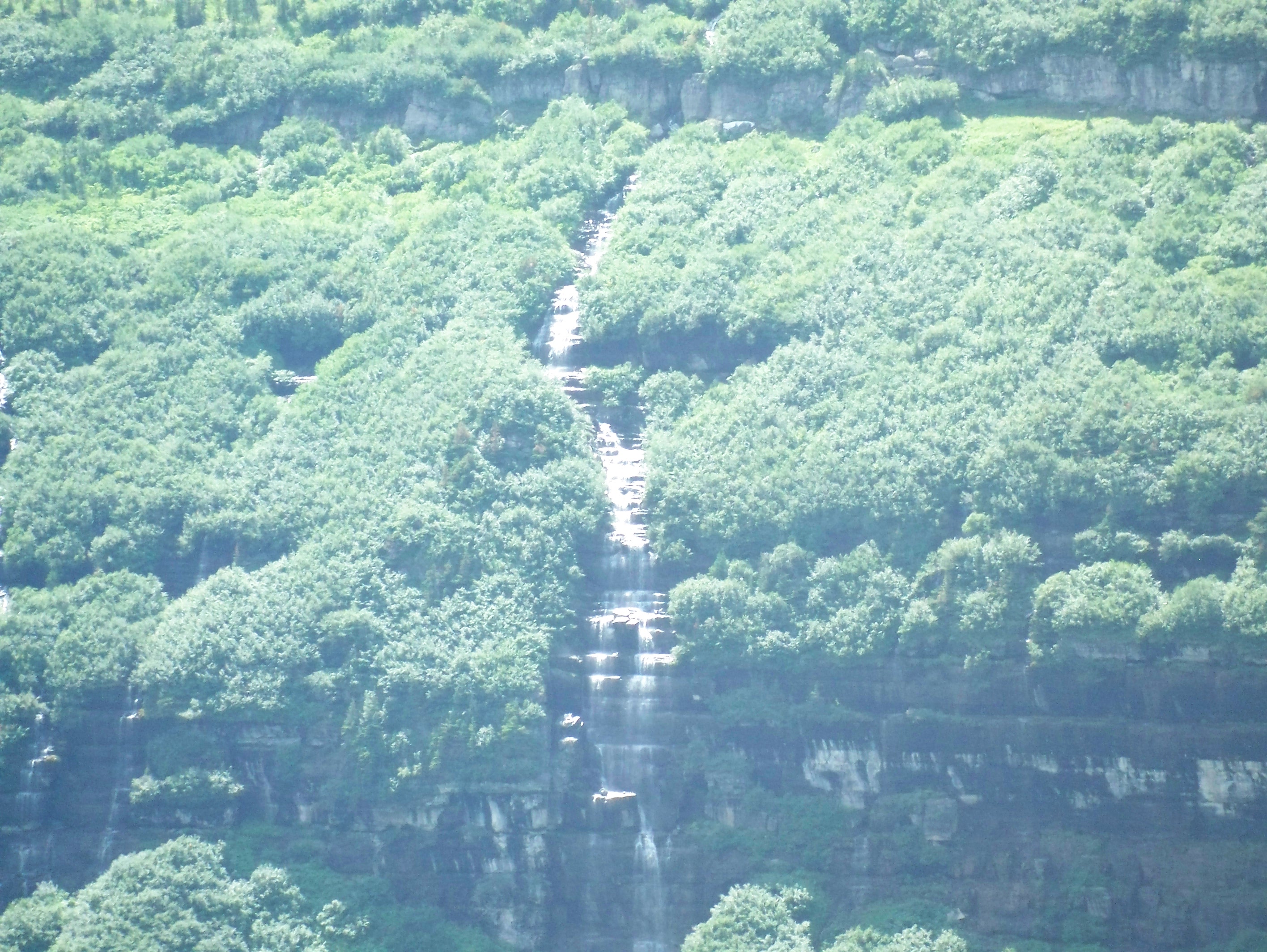
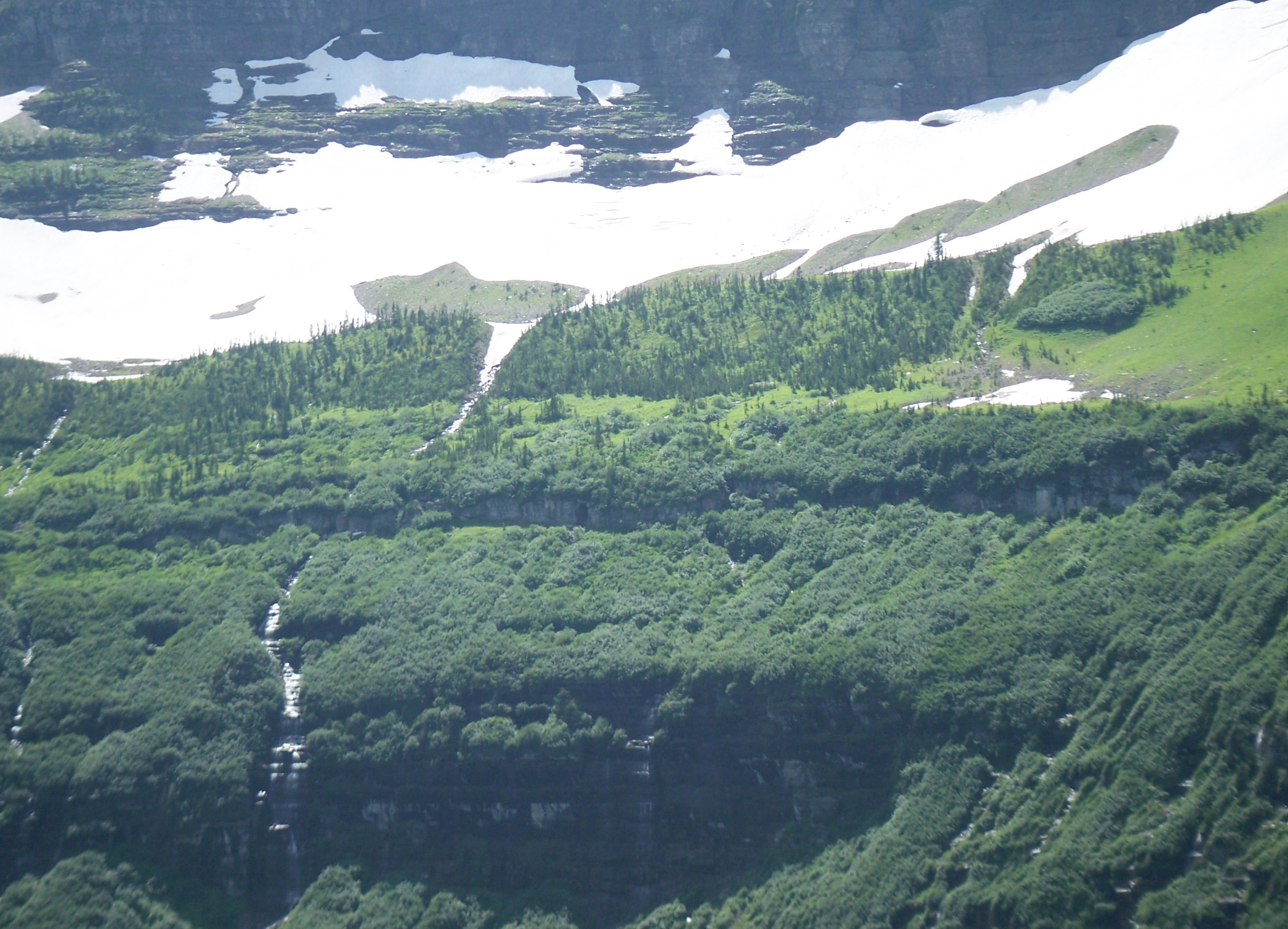
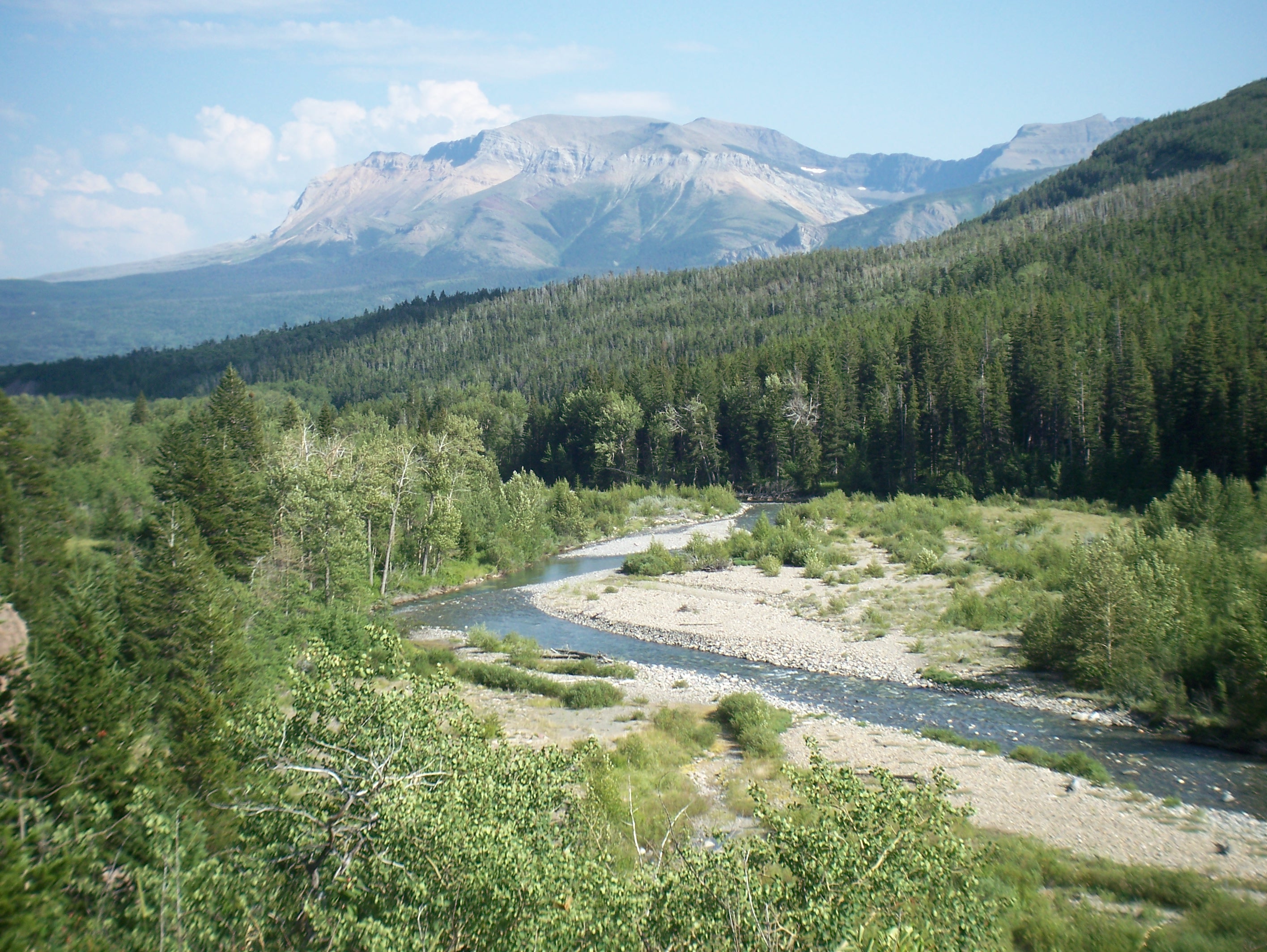
Some waterfalls in Waterton are less accessible. Kathy took these pictures on the walk around Cameron Lake. The mountain, on the Montana side of the lake, is Mount Custer. It is named for a surveyor, Henry Custer, who worked in the area.

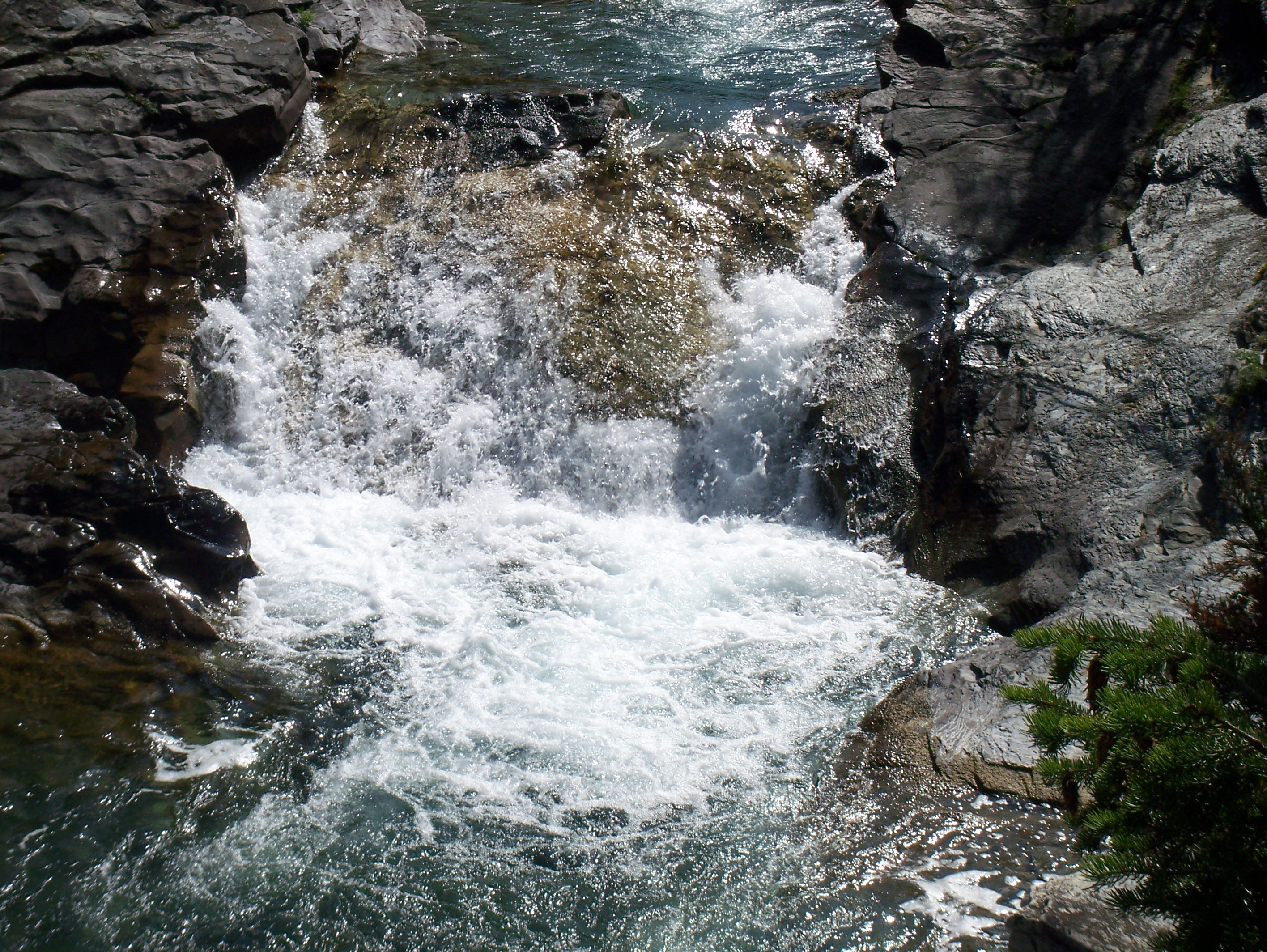
The source of the waterfalls is the snow pack on the mountain.

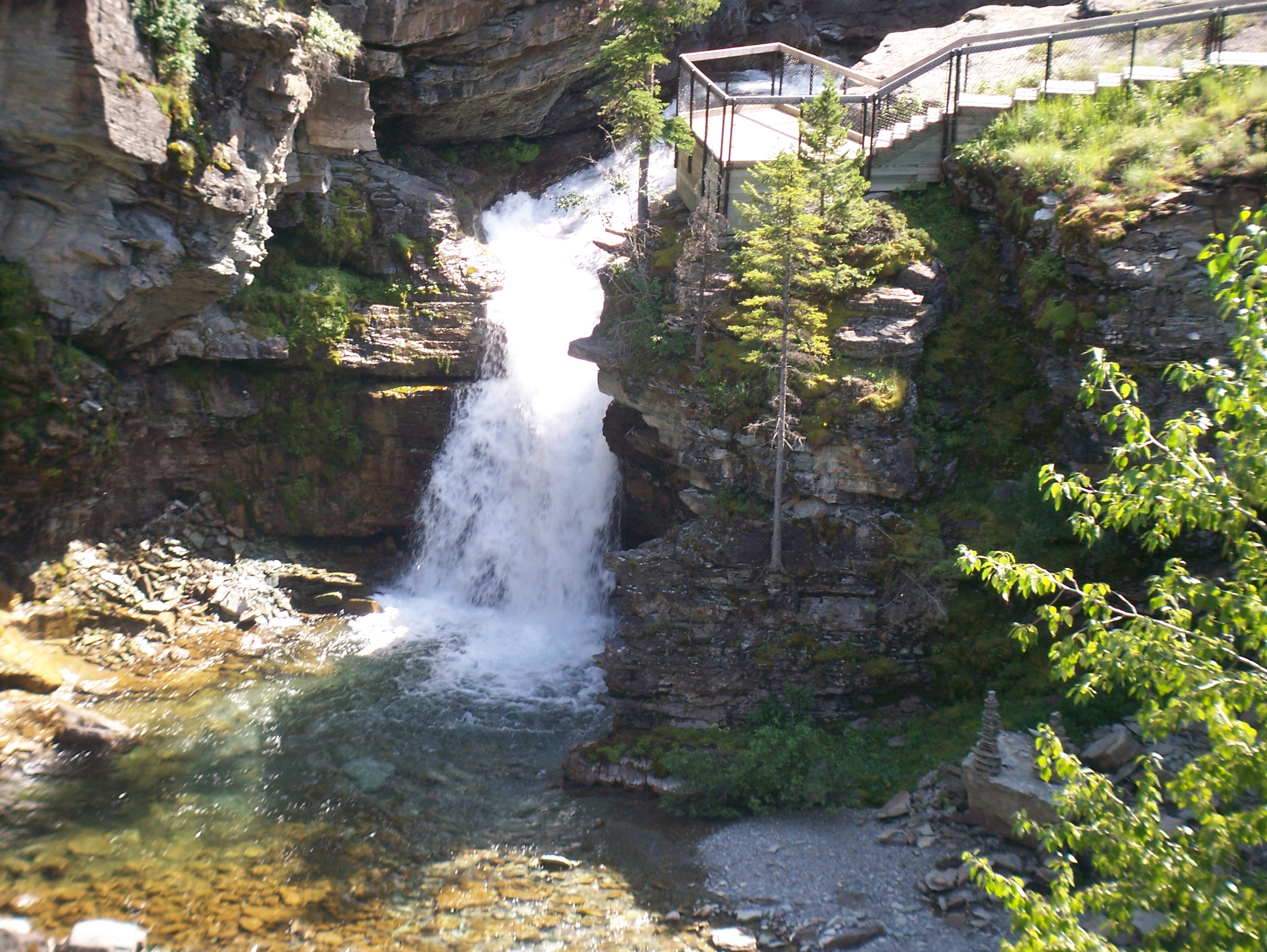
We hiked into Blakiston Falls which are bridal veil falls as they resemble a bride’s veil. I saw the falls from a distance and Kathy, the mountain goat she is, was able to get closer. This was my view and I was sitting on the ground.

Kathy took this picture from the platform almost directly above the falls.

Platform at bridal falls

The terror drains energy

View through others eyes.

Have a great August 3 wherever you are.

Head-Smashed-In Buffalo Jump

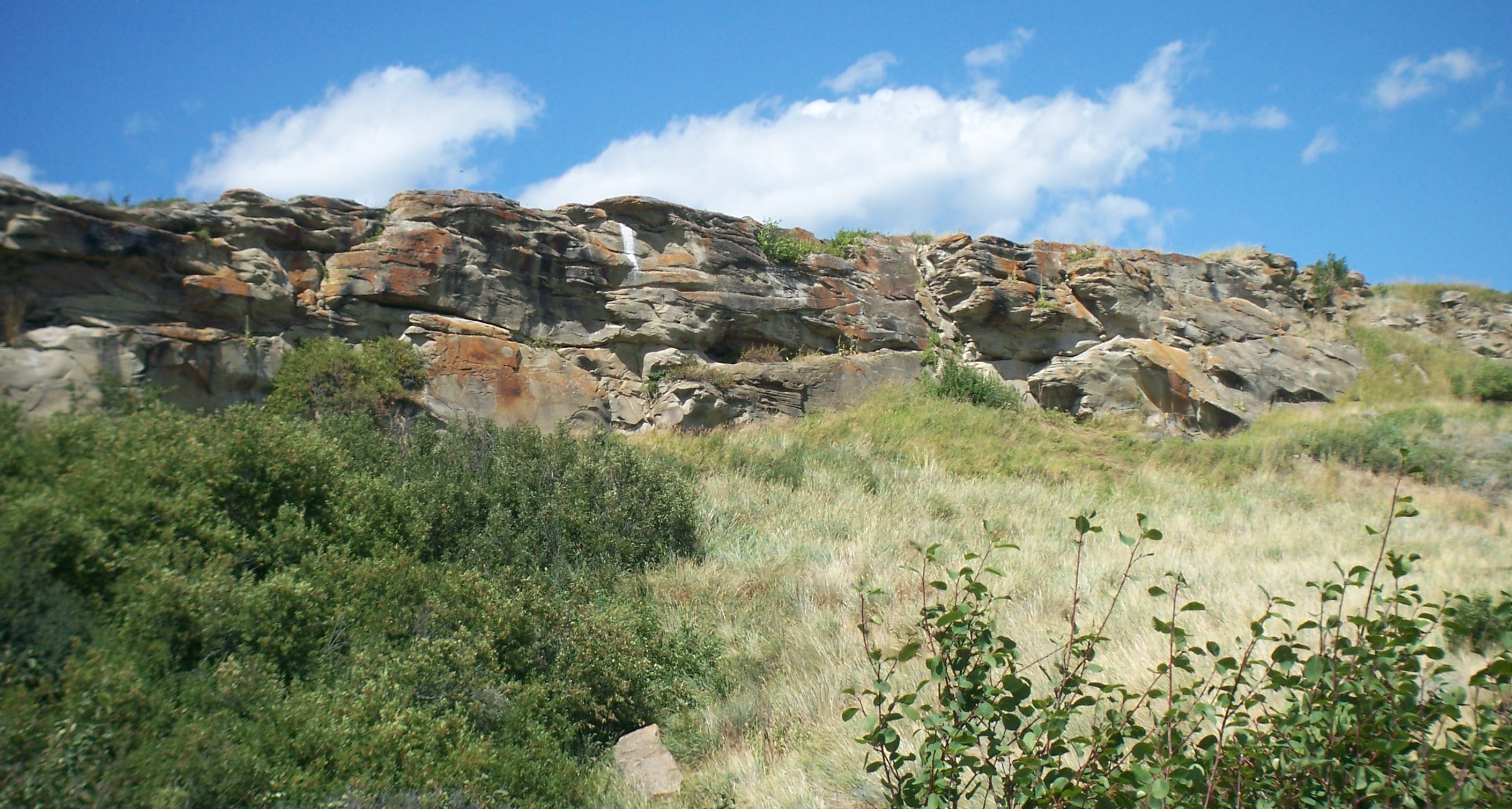
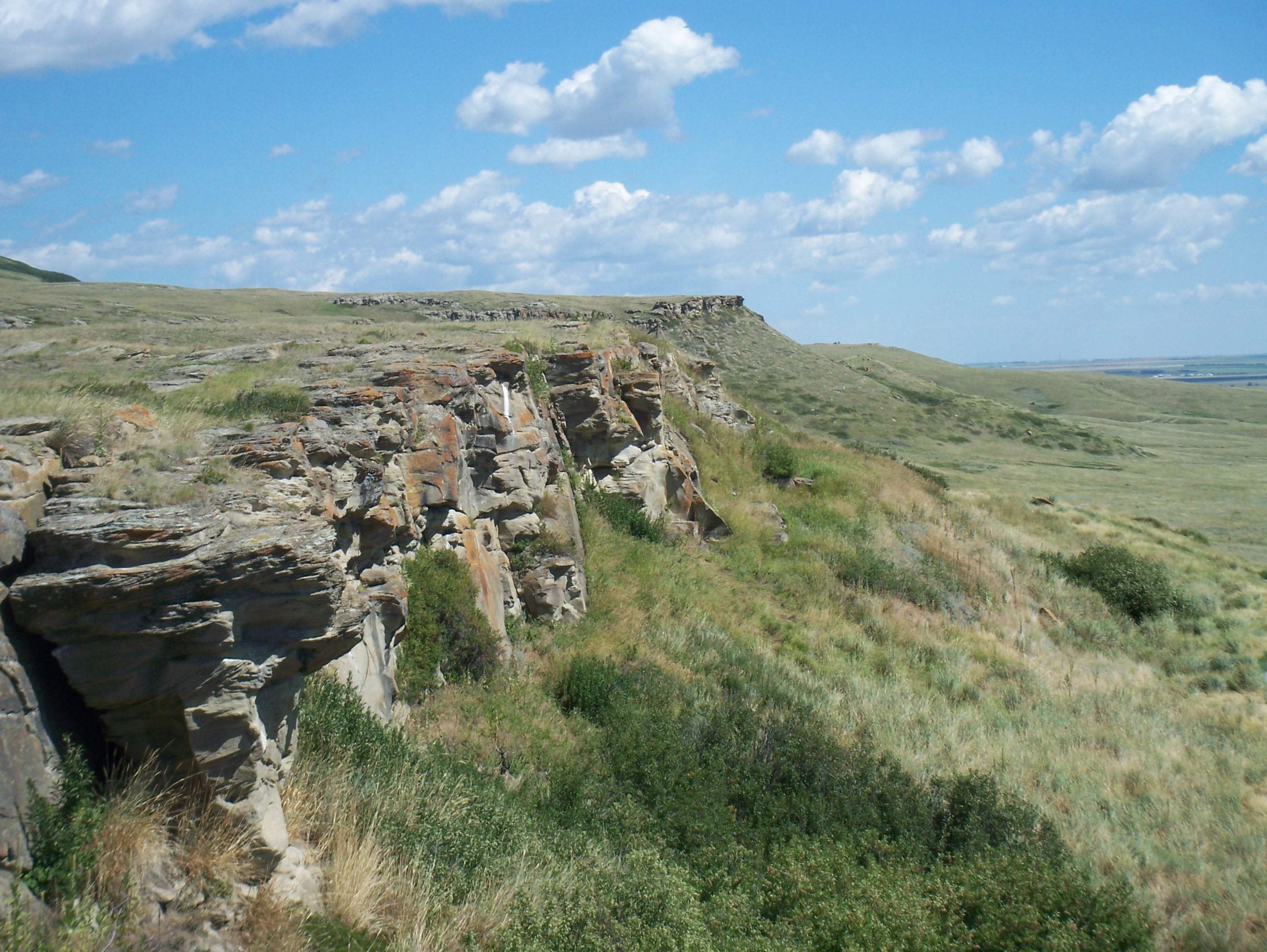
We went to Head-Smashed-In Buffalo Jump Interpretive Centre a UNESCO World Heritage Site about 50 km from Pincher Creek and with Waterton’s majestic skyline.

This area is the traditional home of the Niitsítapi (Blackfoot Confederacy) which means ‘original people.’ The Piikáni (North Piegan), a member of the confederacy, traveled to Waterton’s Blakiston Valley and gathered at Akaitapi (good campsite). The area was also used by the Ktunaxa (Kootenay or Kootenai) who came from the west and provided food, water, and shelter.

The Niitsítapi gathered at Head-Smashed-In Buffalo Jump and used innovative strategies to hunt the plains bison. Legend has it the name comes from an unfortunate incident when a young man wanted a closer view of the action. He waited at the base of the cliff, but the hunt was extremely successful and, when he was found, he had sustained a broken skull and died.

Archaeologists discovered evidence that this site was on a migratory path for indigenous people at least 5500 years ago. A buffalo jump or ‘pishkun’ in Niitsítapi used drive lanes marked by rock cairns. The buffalo ran in the drive lanes and, as they approached the cliff, the last part of the drive lane sloped up and the jump was not noticeable. The process required perfect human timing and was extremely dangerous.

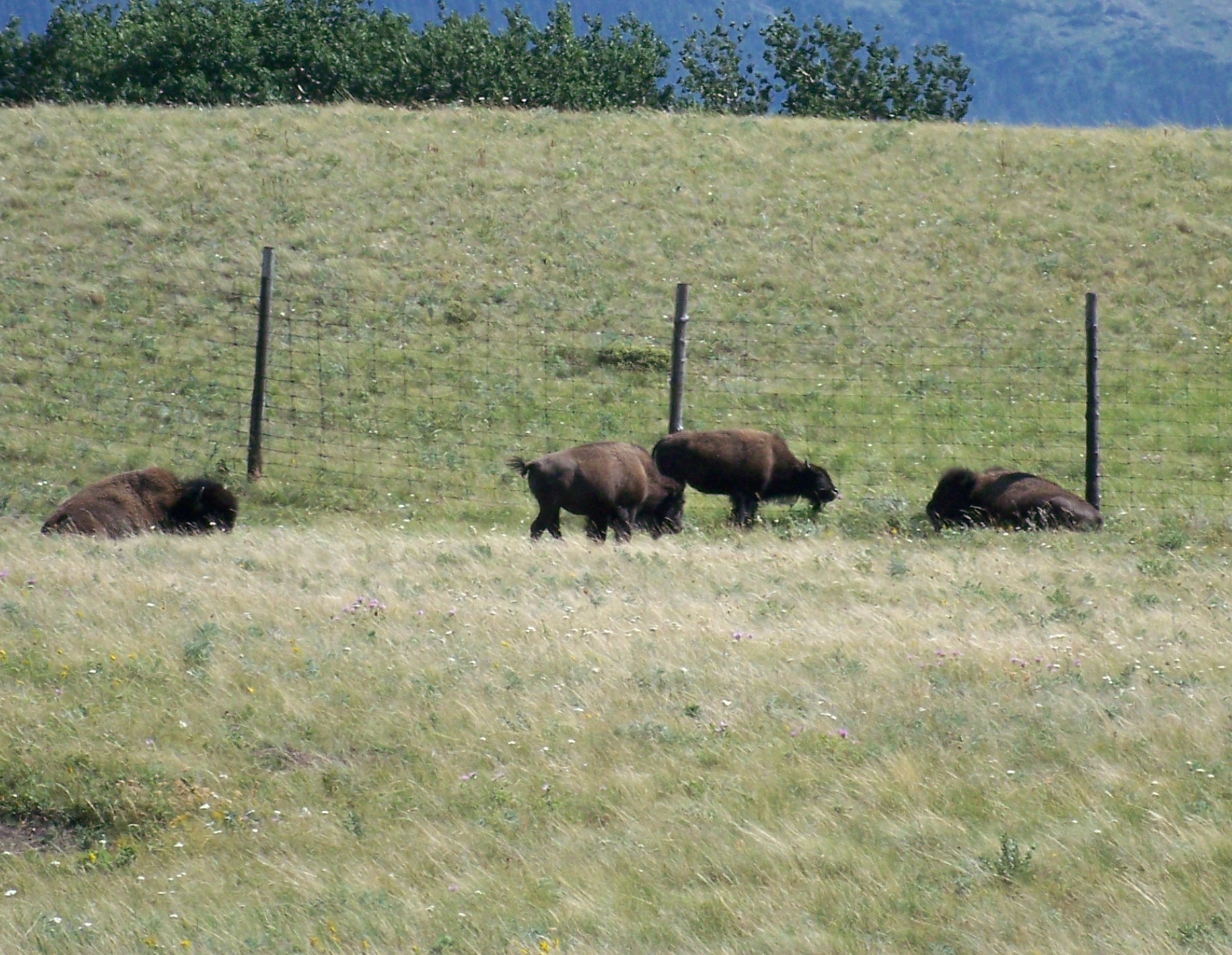
A small herd of bison live in a paddock at Waterton, but at one time these animals covered the Great Plains of North America. The bison is often called a ‘walking supermarket’ as almost all its body parts were usable and often harvested.

Super store on legs

Symbolic prairie icon

A sideshow item.

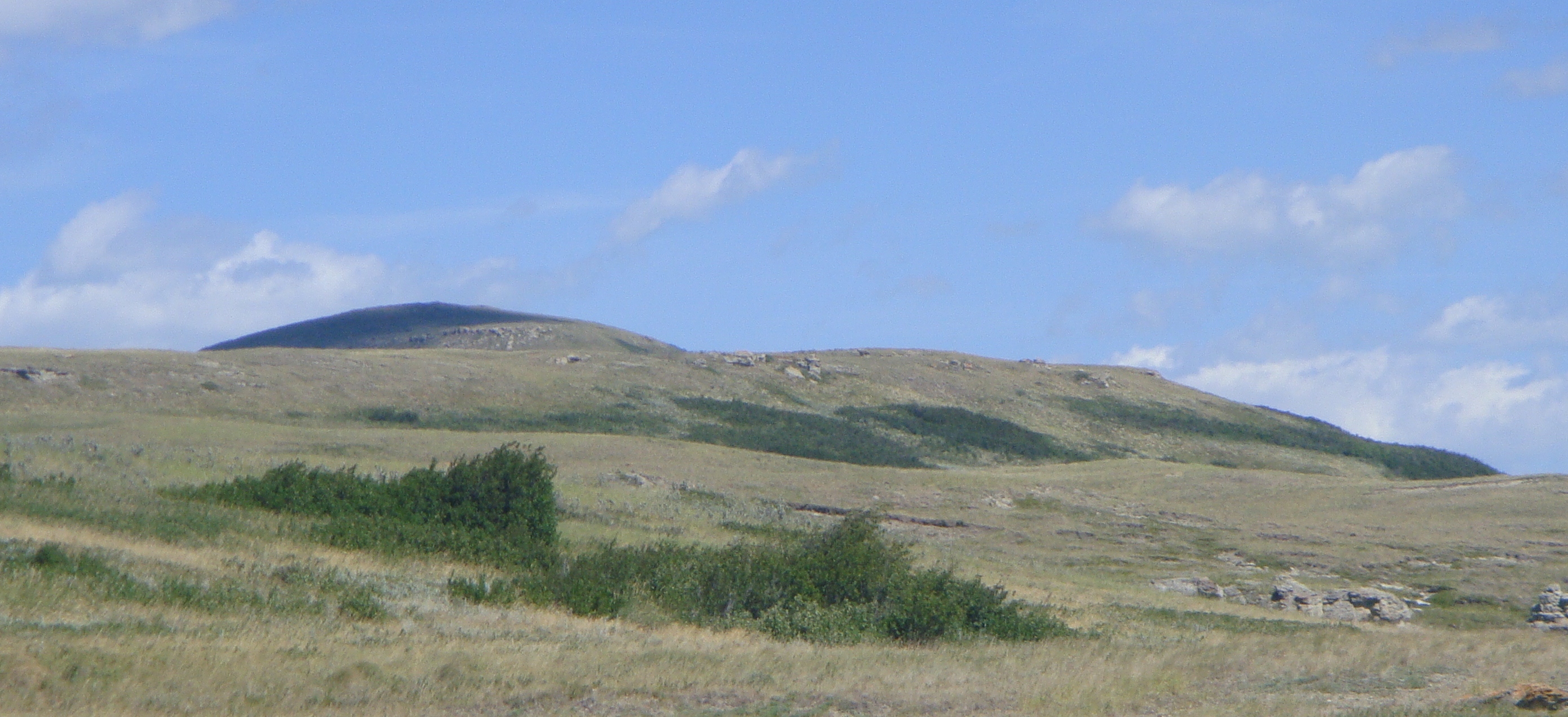
Head-Smashed-In Buffalo Jump is at the confluence of three geological formations. The Rocky Mountains and the Great Plains are well-known. The picture below is the rise into the Porcupine Hills. In the foreground is a hill where young Niitsítapi men transitioned to manhood through a vision quest. The hill, due to its spiritual significance to the Niitsítapi people, does not have public access.

Young person’s journey

Discover one’s inner self

Quest into adulthood.

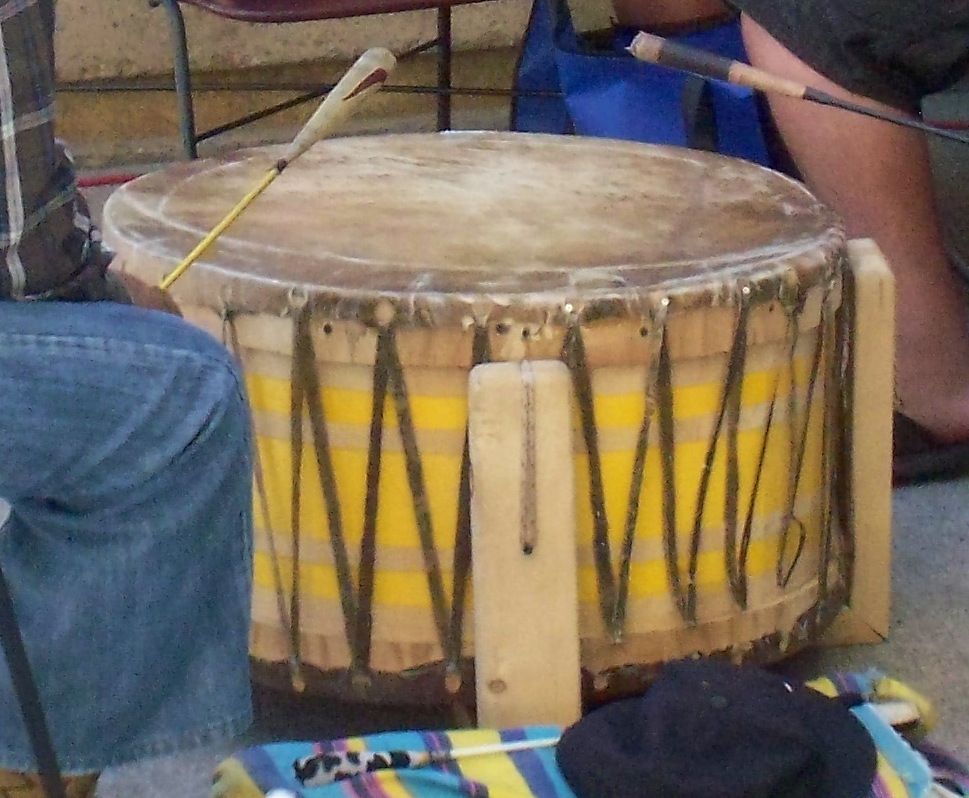
We watched traditional dancing and heard traditional drumming and singing at the interpretive centre . The drum is symbolic of Mother Earth’s heartbeat  in Niitsítapi tradition.

Drum reverberates

Symbol of Mother Earth’s heart

We are one with Her.

Another Day in Paradise

It was a less eventful day today with no bear sightings. We saw some deer late in the day, but they were in a hurry to get somewhere so did stop for pictures. What I have are some pictures of the natural beauty of Waterton Lakes National Park.

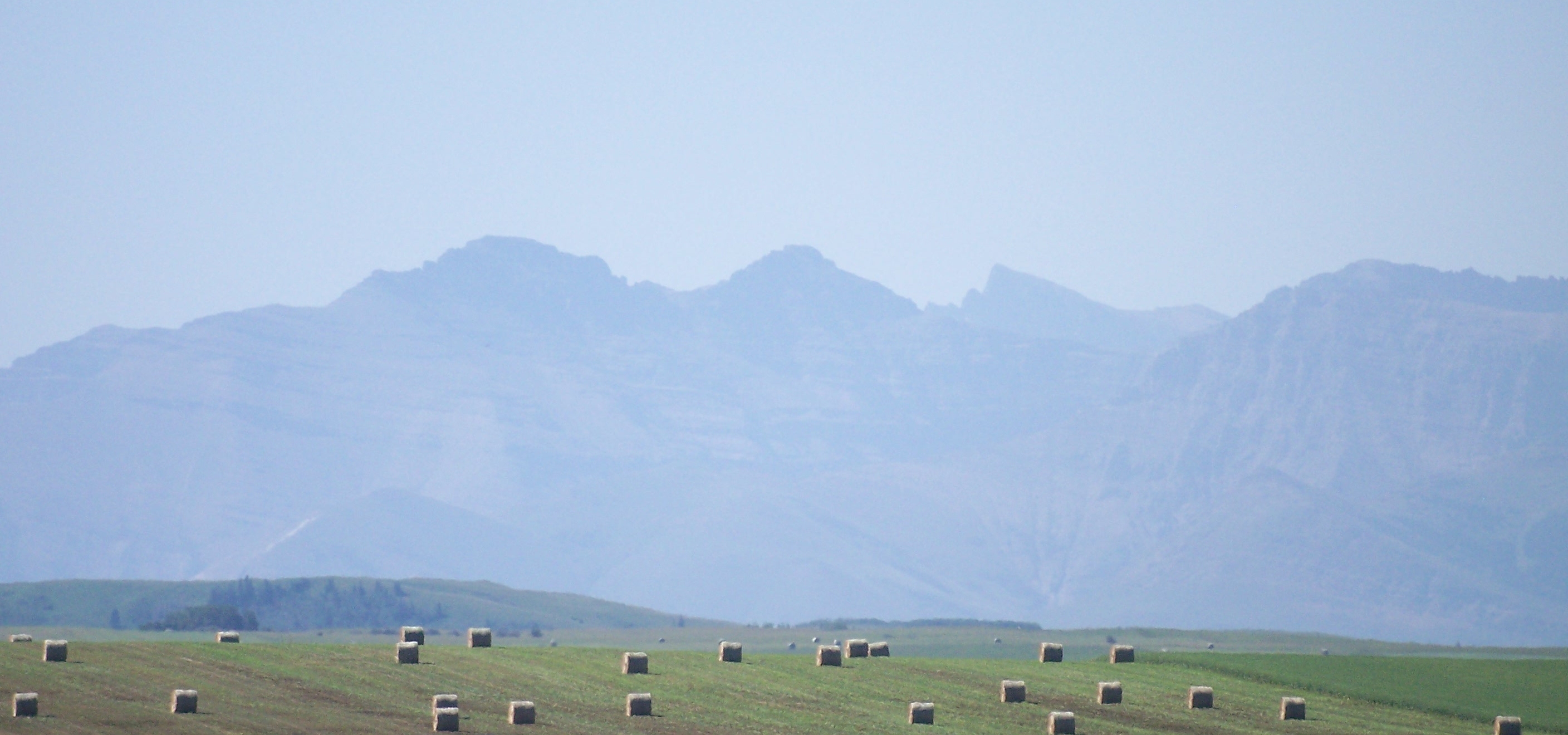
As we drove south from Pincher Creek, this is the view of the mountains before a person drives into them. The sign says, “Where prairie meets the mountains” and they do.


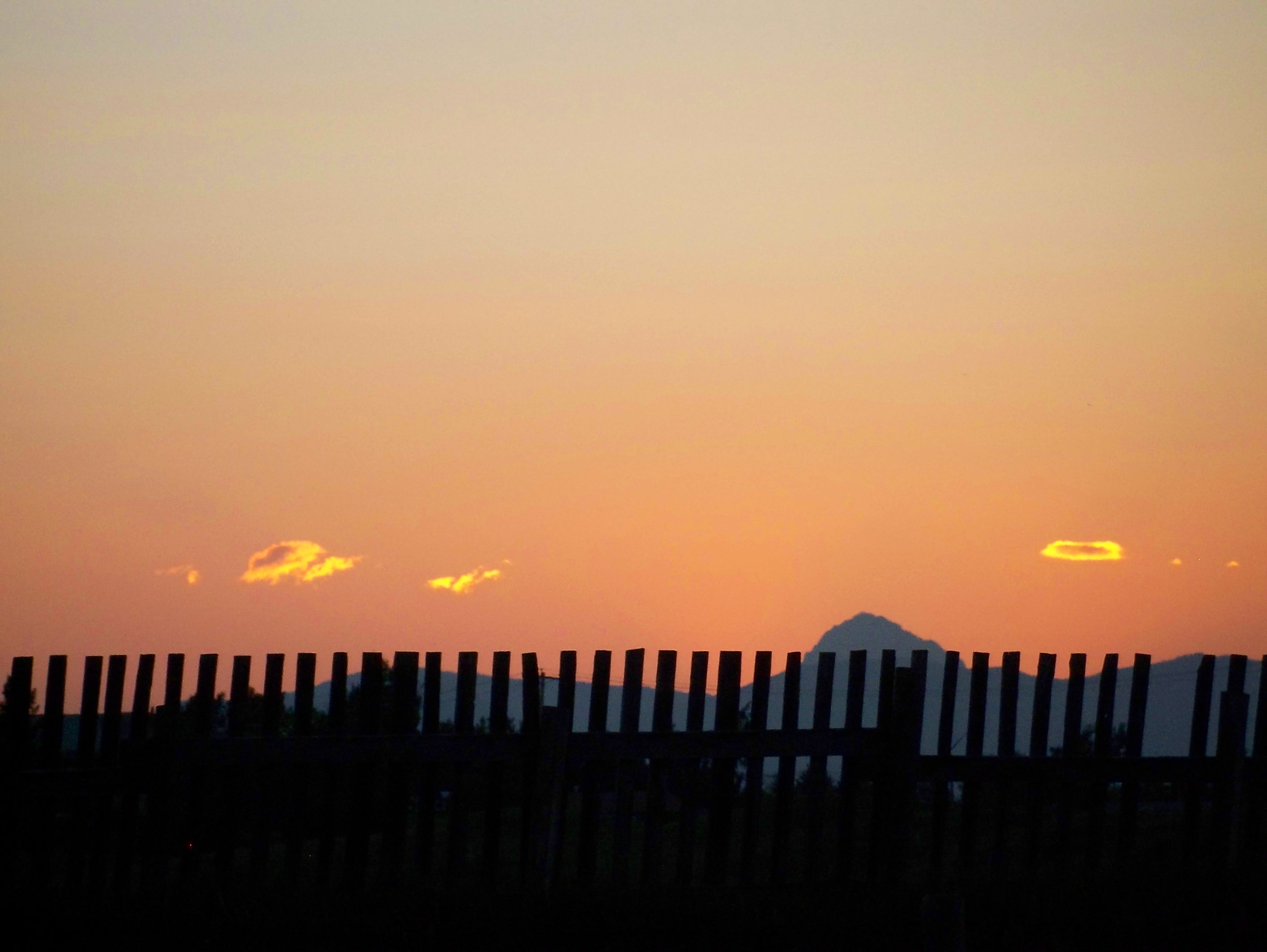
This was a similar view, without the bales, later the same day just before sunset.

And, if you give it a few minutes, this is what it looks like.

Sun embraces mountains

The sky in peaceful fury

Signals the day’s end.

This is the view from the beach at the town site of Mount Vimy. Can you imagine waking up to this every day? It would be pretty intense, but 88 people do everyday. According to Stats Can that is the official year round population of Waterton.

This is a view from the boat of the approach to the American side of Waterton Lake.

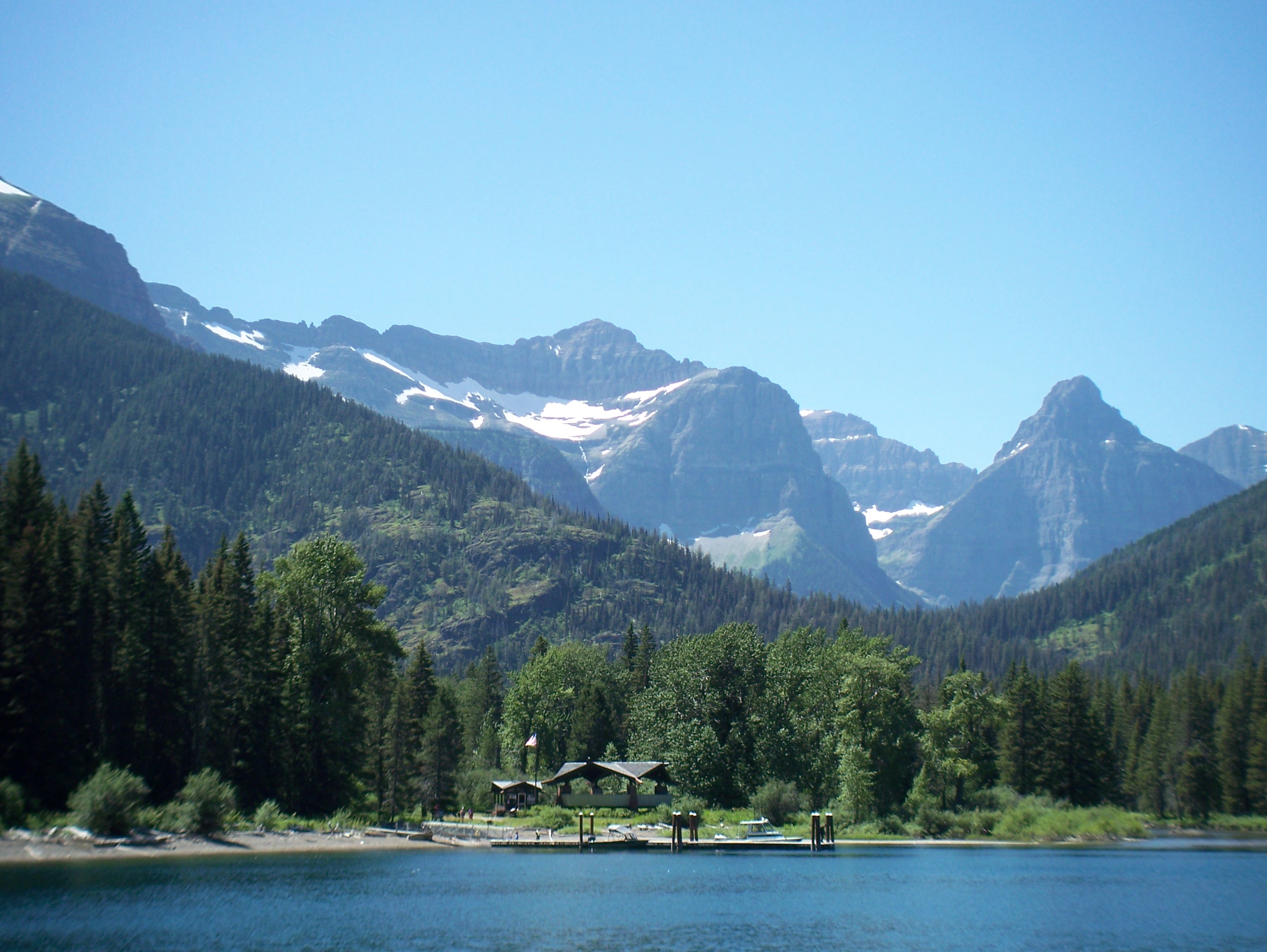
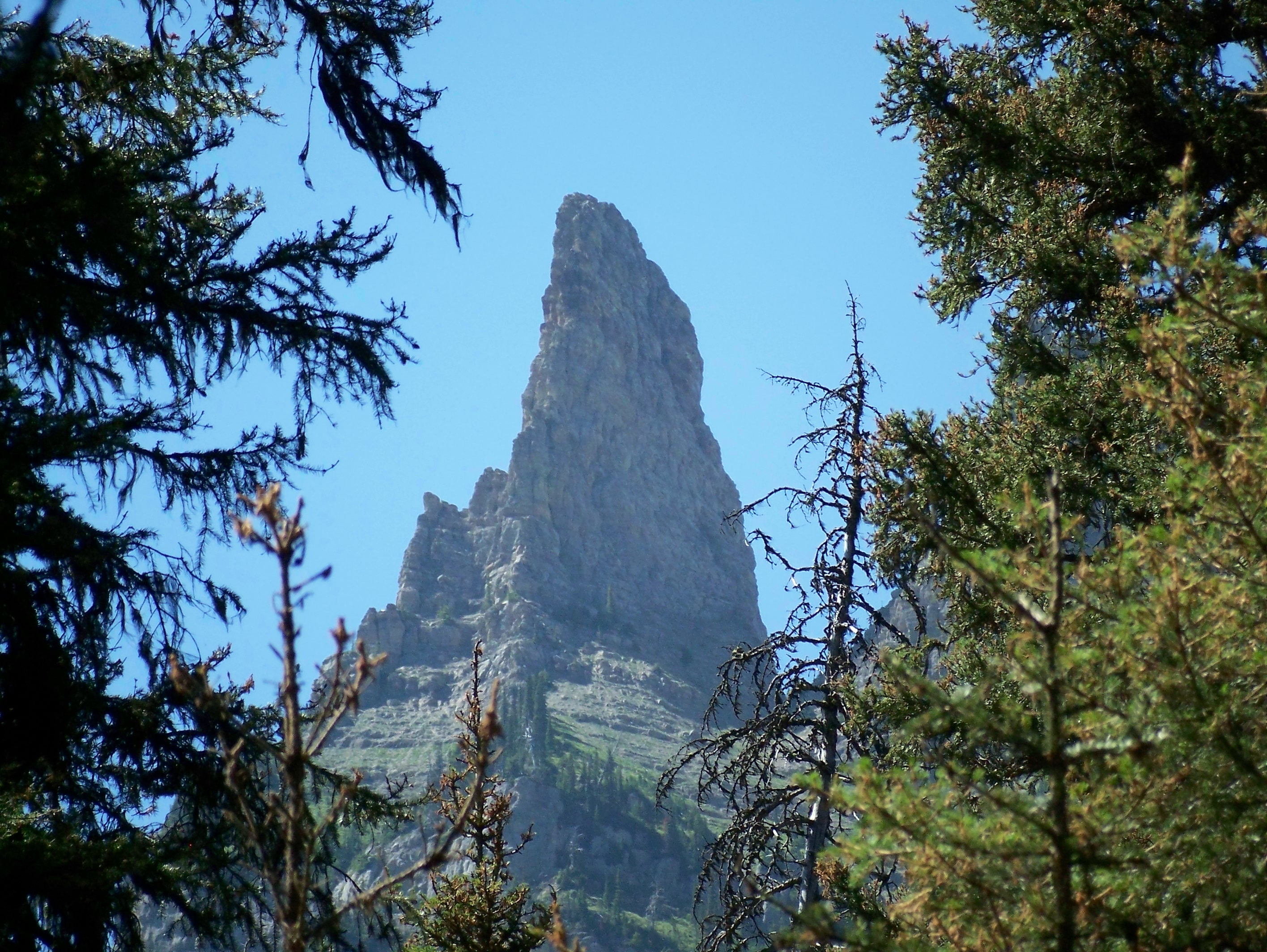
This is at Kootenai Lake which was at the end of our hike into Glacier National. The ramparts are spectacular.

Rise above it all

Magnificent natural ramparts

We feel safe below.

This is across Kootenai Lake. We waited but the moose did not show himself. He was there five minutes before we arrived.

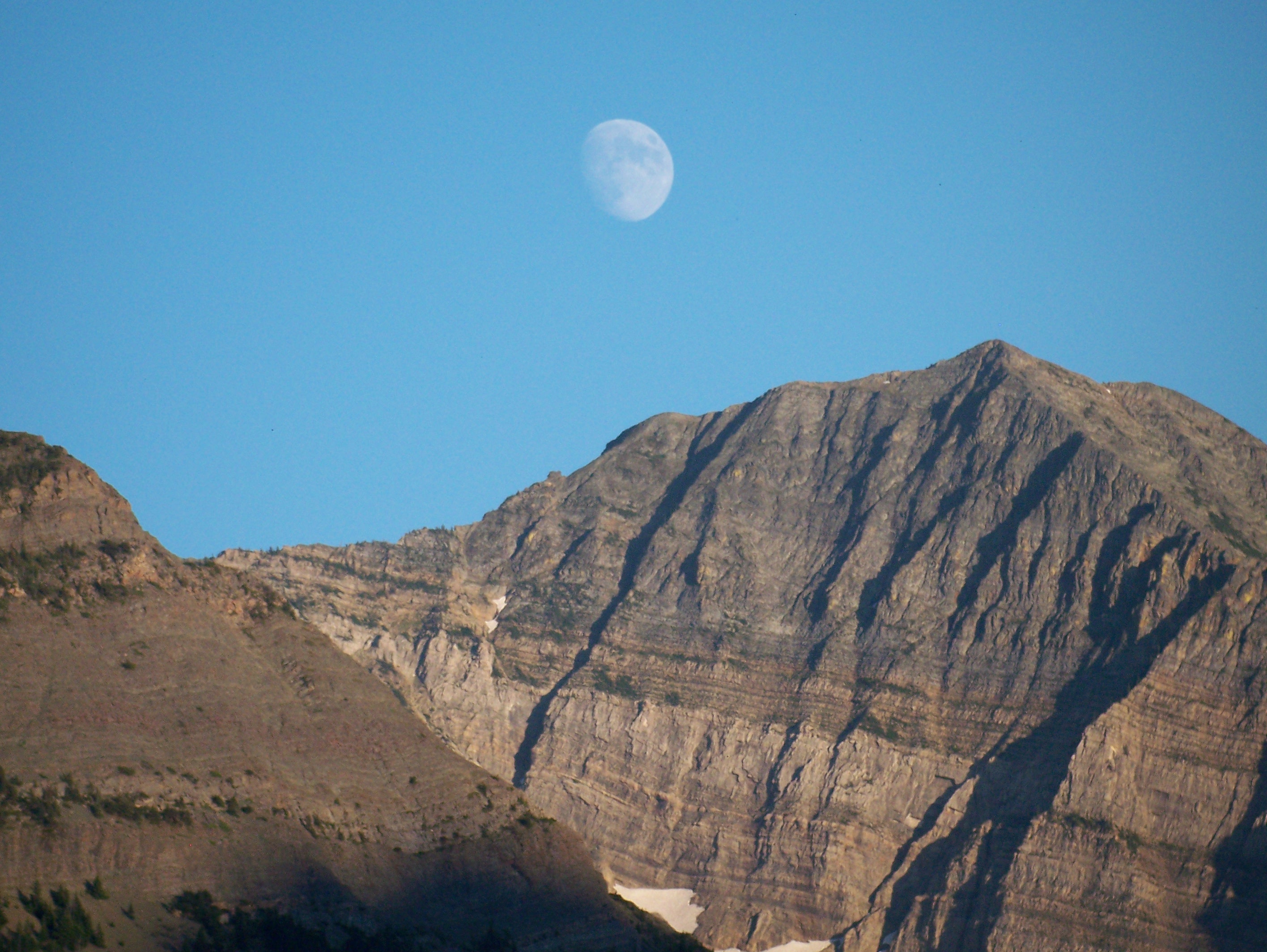
At the end of the day, just before we left the town site, the moon appeared above Vimy.

Fair maiden appears

Light for evening’s journey

Keep us safe til morn.

Have a great August 1.

Appreciate Neighbours

The Internet is slow particularly when uploading images. I may need to wait until tomorrow morning and post early before we head off for the day. In the meantime, I jotted this as we walked to Kootenai Lake.

Neighbours near,

Some visible

Ducks laugh and swim

Distract us, grouse–

Protect family and spouse

Woodpecker’s fly by lunch

Delectable larvae, I’m sure.

Others less evident

A fish plays–

Teases with hide and seek

Loon momentarily there

Beaver away from lake house

A moose–

Tracks and droppings

Insects whir in the stillness

Butterflies flit and feed

And move seed

A phantom breeze brushes floor

A solitary leaf responds,

And waves

Up high

Trees sigh.

What watches me?

I am not sure

Neighbours present,

A community–

Puzzles pieced together

Each a part

Seamless, yet not form fitting.

We are part of communities and this past few months I feel more of that; at Gonzaga, with my blog, and on nature walks with Kathy. I appreciate being one small part of communities made up of many parts.

Waterton Lakes National Park Day 2

We are back from day 2 of our Waterton Lakes National Park adventures. Yesterday, I commented on International Peace Park that within reason animals are right there and pose for you.  We were unable to post our one bear sighting. Despite poor vision, bears hear very well our sighting was from the boat. As we moved closer, the bear heard us and headed for cover. We only took pictures of his rear end from a distance. Today we had two bear sightings.

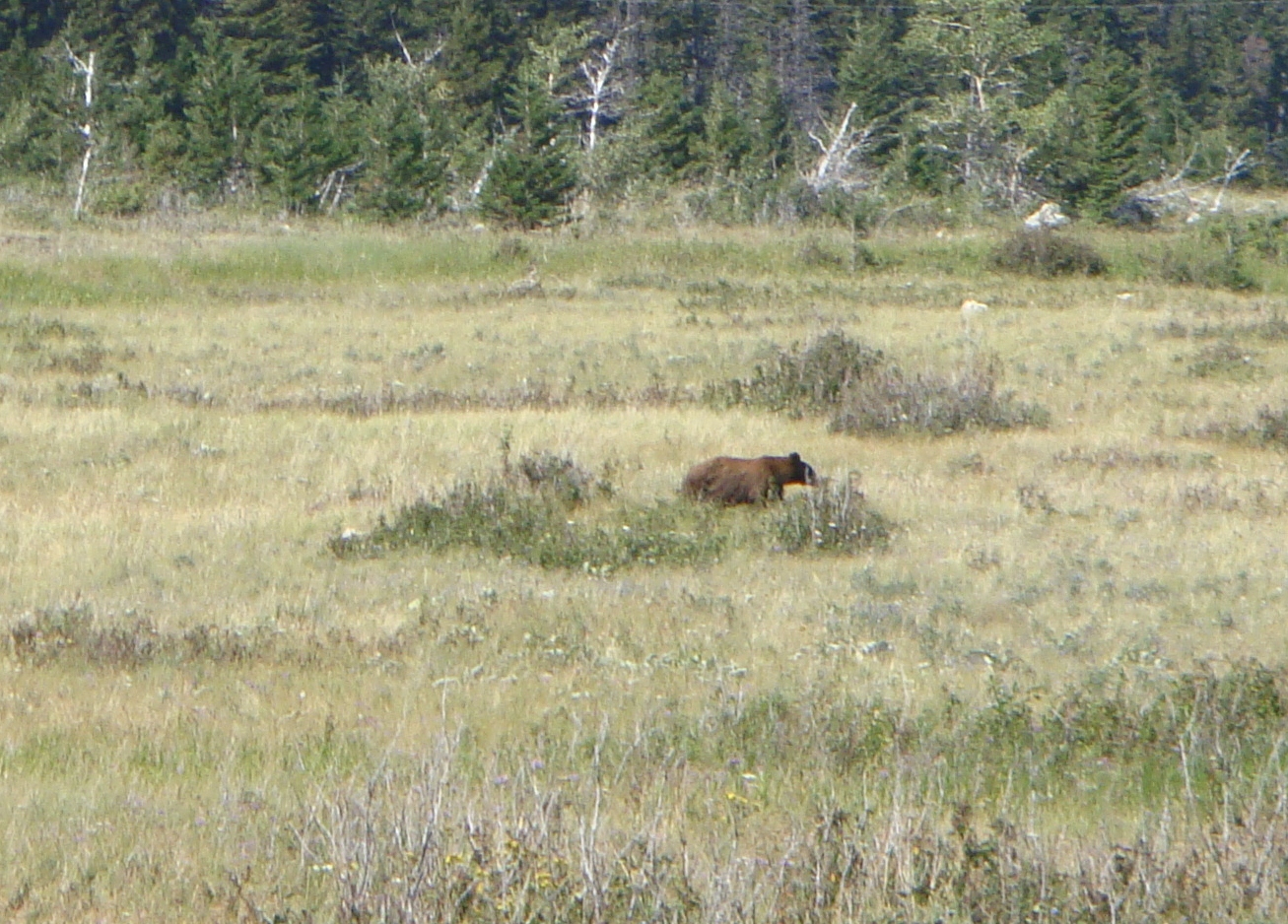
This was our first sighting. This bear was about 100 metres away on a hillside as we left town. It is a fair-sized and is brown, but is likely a black bear and not a grizzly. What we could see of the snout and head does not look quite right and it is missing the hump on the back. Here is another view.

Grizzly bear are generally solitary and do not like humans around them where black bear are more likely to approach areas with humans around.

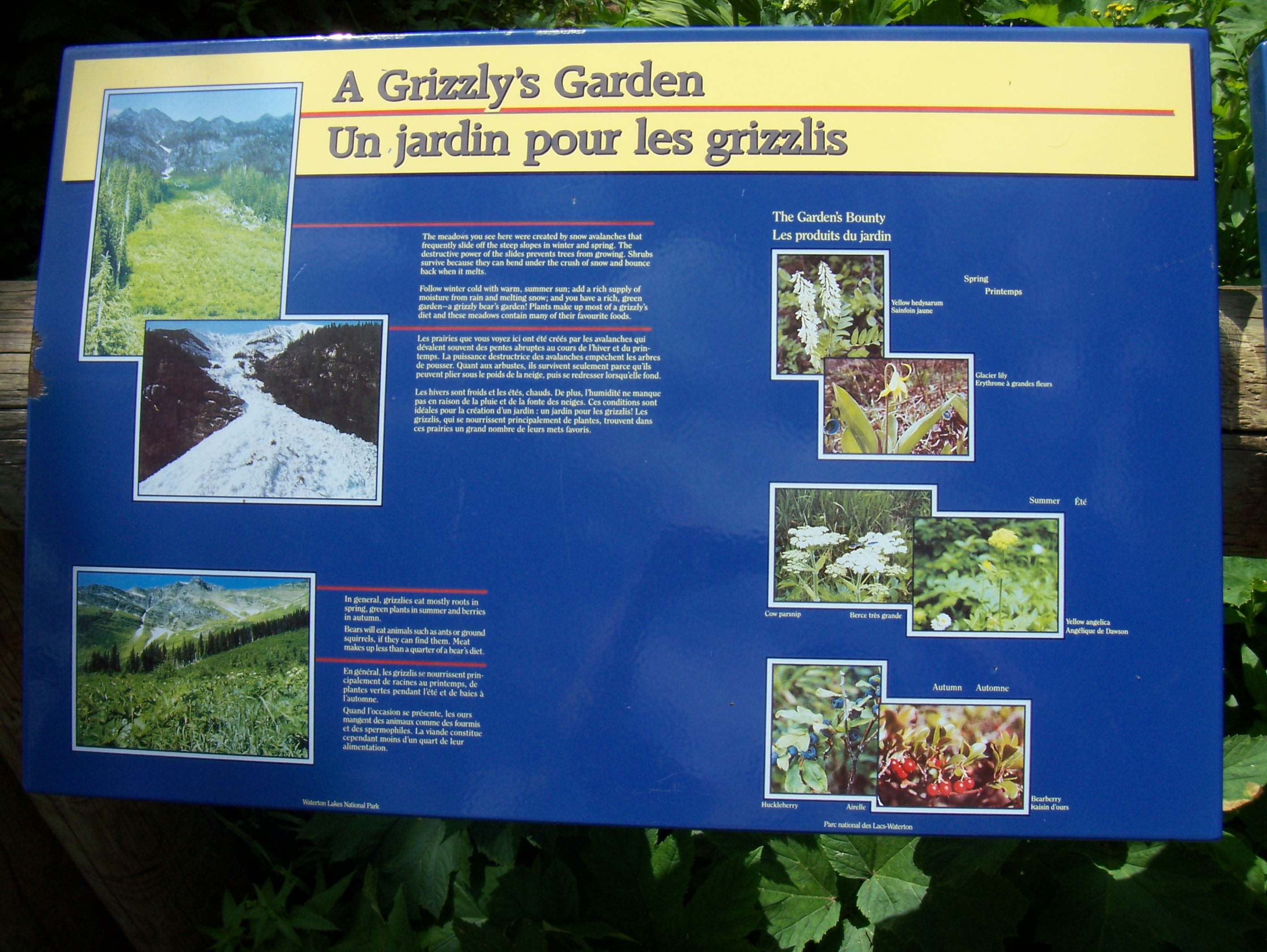
This sign is at the Cameron Lake trail and refers to the area beyond as a ‘grizzly’s garden’ and care is needed beyond this point.

Here is a haiku for grizzly bear we did not see, but we know is out there.

Grizzly’s home and garden

Tread gently and carefully

Grizzly habitat.

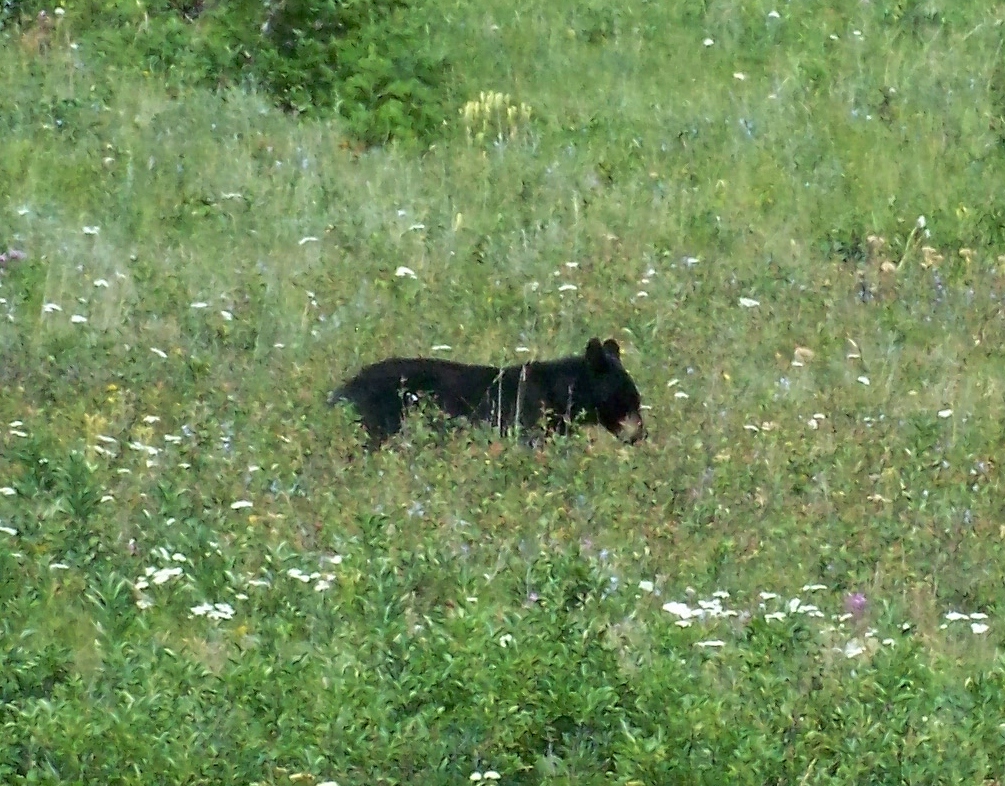
Our good fortune was not done. We spotted another black bear on another hillside on our way back from Red Rock Canyon. This one is younger and smaller and is definitely a black bear. I would guess it was born a year ago this past spring.

You can see the snout and the ‘piggy eyes’ of the bear. They are members of the same family as the pig. The ears stick up more and the grizzly would have ears that are ‘teddy bear like’ and stick out from the side of a very large head.

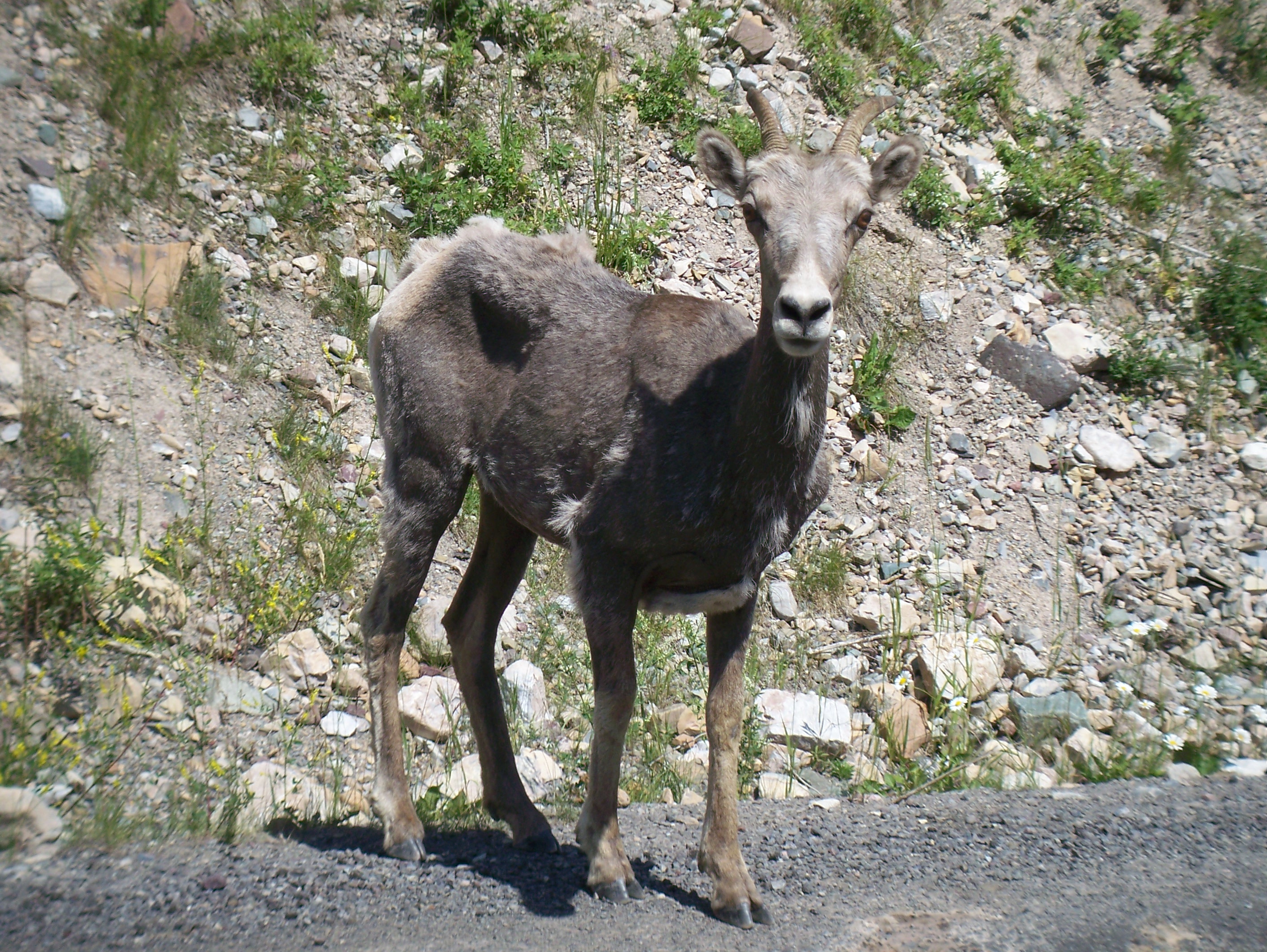
Not all animals we met were as intimidating.

This sheep was about 2 metres from the car and just looked up to have its picture taken.

International Peace Park

Kathy and I wanted to travel down to Glacier National Park, Montana, but the logistics were challenging. We put this on the back burner this year and traveled to Waterton Lakes National Park in the southwest corner of Alberta. The two parks combine and form the first International Peace Park and are often called the Crown of the Continent, but there is no easy way to see both without a lot of traveling or so we thought. Luck intervened and we found our way down to Glacier National Park.

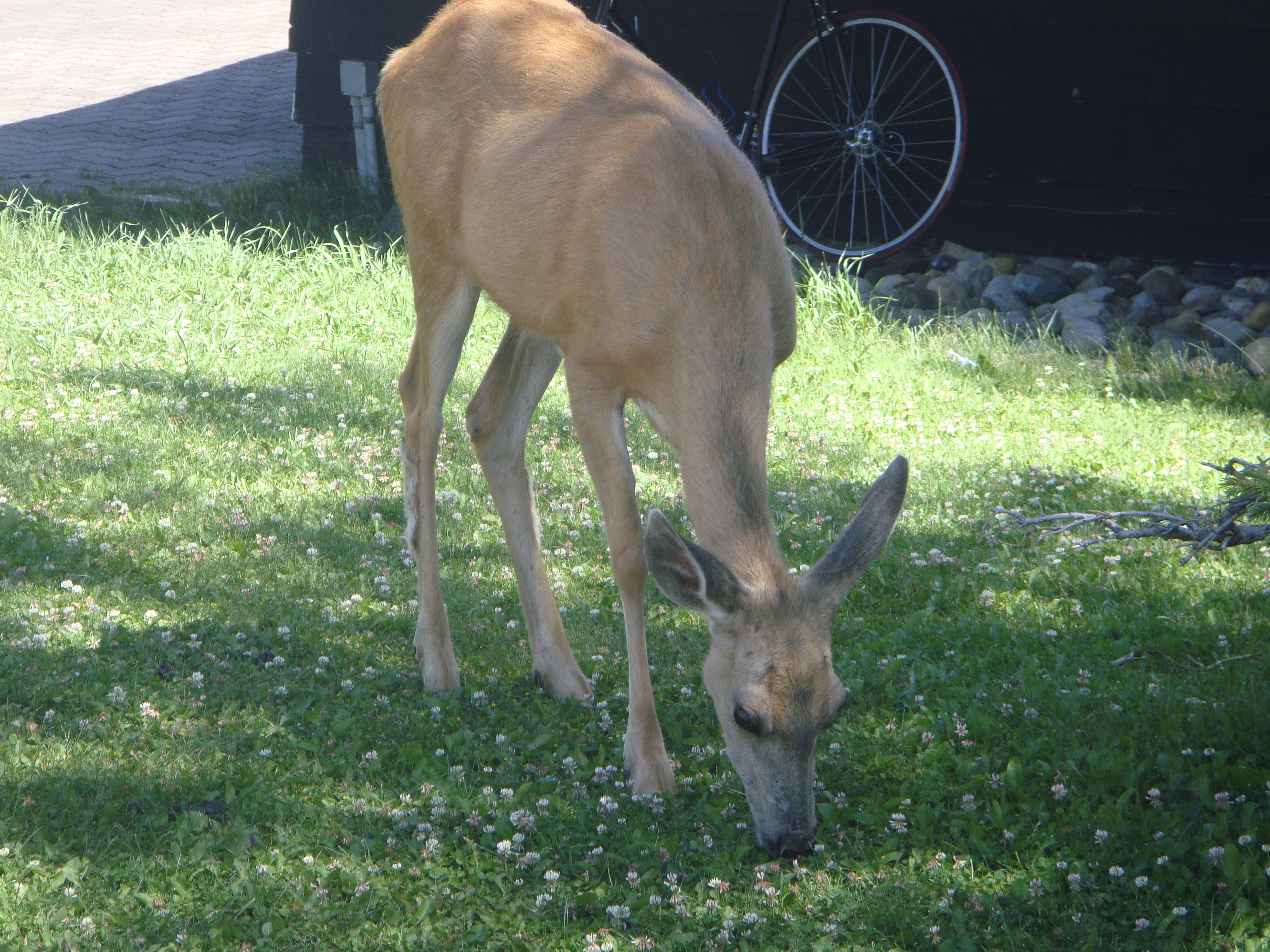
In national parks you can get up close and personal with the wildlife. They are still wild and skittish, but as long as you are careful they stay and. I took this picture just outside the ticket offices for the boat tours. She grazed, let several of us take pictures, and we were within a couple of metres (five or six feet) of her.

Oh my dear, it’s a deer.

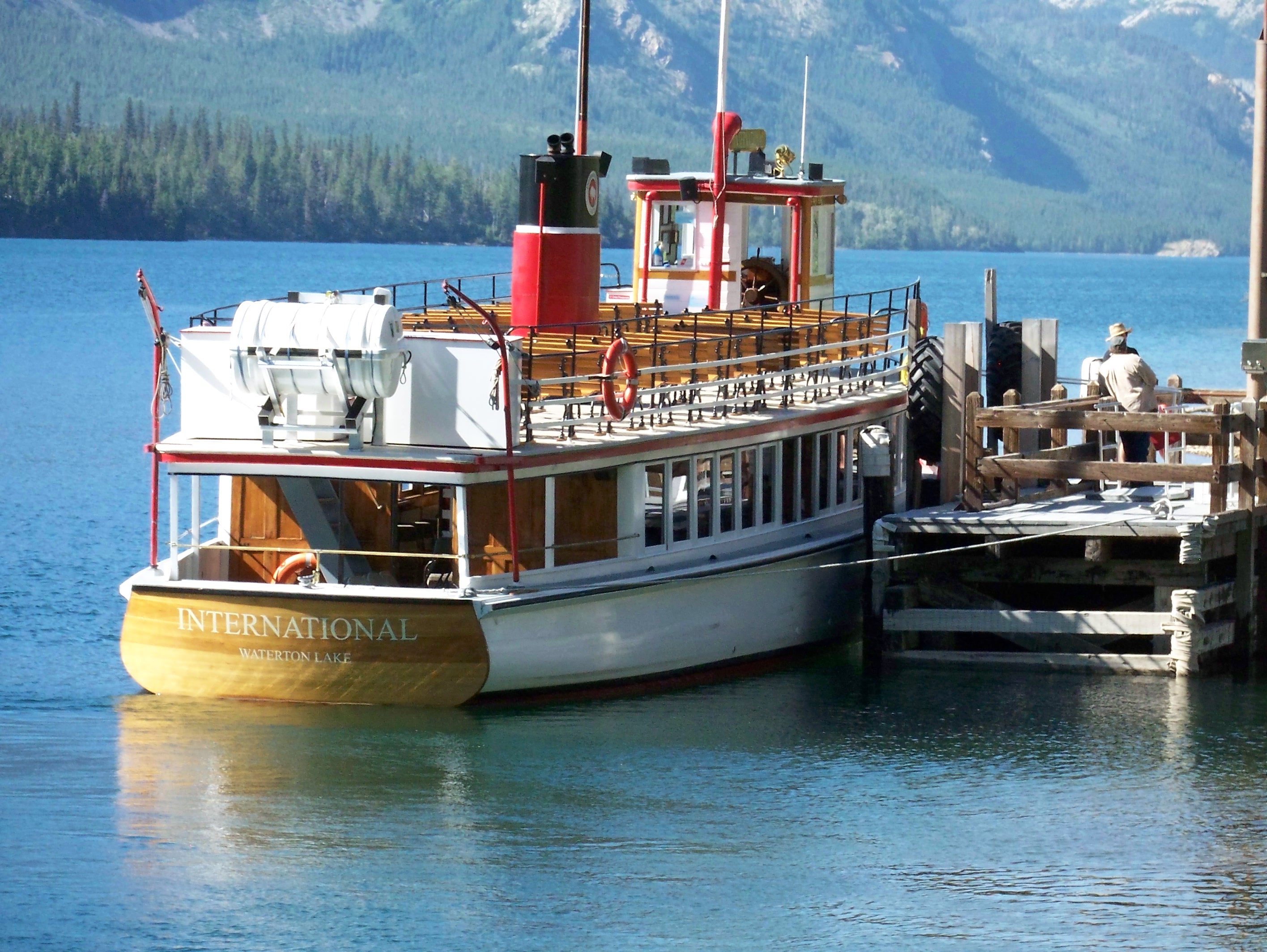
We were able to travel to Glacier via an alternate mode of transportation: a boat. This is the US International, an 85-year-old boat, that makes four round trips on Waterton Lake to the south end. Part way through the trip, we crossed into the US and Kathy and I chose to stay for a couple of hours to do some hiking.
An icon of Waterton is the Prince of Wales Hotel. It was built in 1927 and overlooks the lake. It is open from mid-June until mid-September. We have missed it on other trips due to traveling in the off-season, but this year we are stopping for ‘high tea.’ This is a view from the boat.

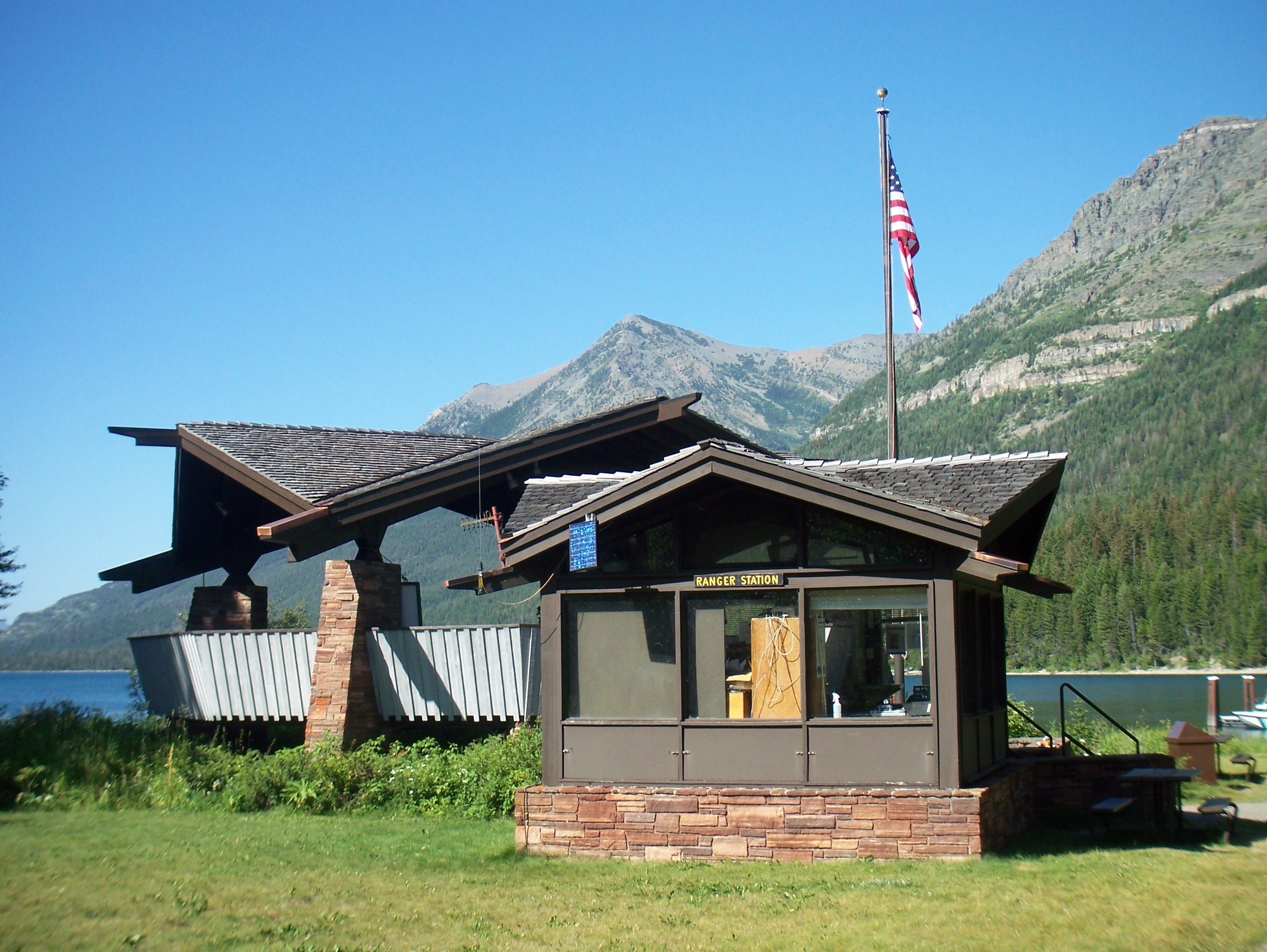
When Kathy and I got to the US port of entry at Goat’s Haunt, we stayed and hiked into a small alpine lake called Kootenai. It is about an 8 km walk (5 miles) and took about 2.5 hours. This is the ranger station and border crossing. We showed passports and answered routine questions.

This is a view from the path along the way.

Nature’s cathedral

Light dances with shadows below

A benediction.

This was a small stream we passed over twice. The flow of water has worn the rock flat. Nature is rich with paradox.

Life’ rapid current

Smoothing and shining rough edges

Until next rough spot.

We are off for another day of adventure.

Sabbath in Waterton Lakes National Park

Shimon who posts at The Human Picture left a comment on my post Sabbath’s Circle. I am grateful for his explanation of the roots of the word ‘sabbath’ which indicates sitting. It is always good to know what the roots of words are so when we use them we understand them more fully and, when I sit with something in quiet time, it finds its way into my practice.

Kathy and I will drive to Waterton Lakes National Park and I will enjoy my day of disconnecting in a place that is important to us. We spent part of our honeymoon there and it is a special place for us. I am looking forward to spending time in a special place full of God’s many gifts. We are not sure what we will do, but the next 3 days we will just let intuition guide us.

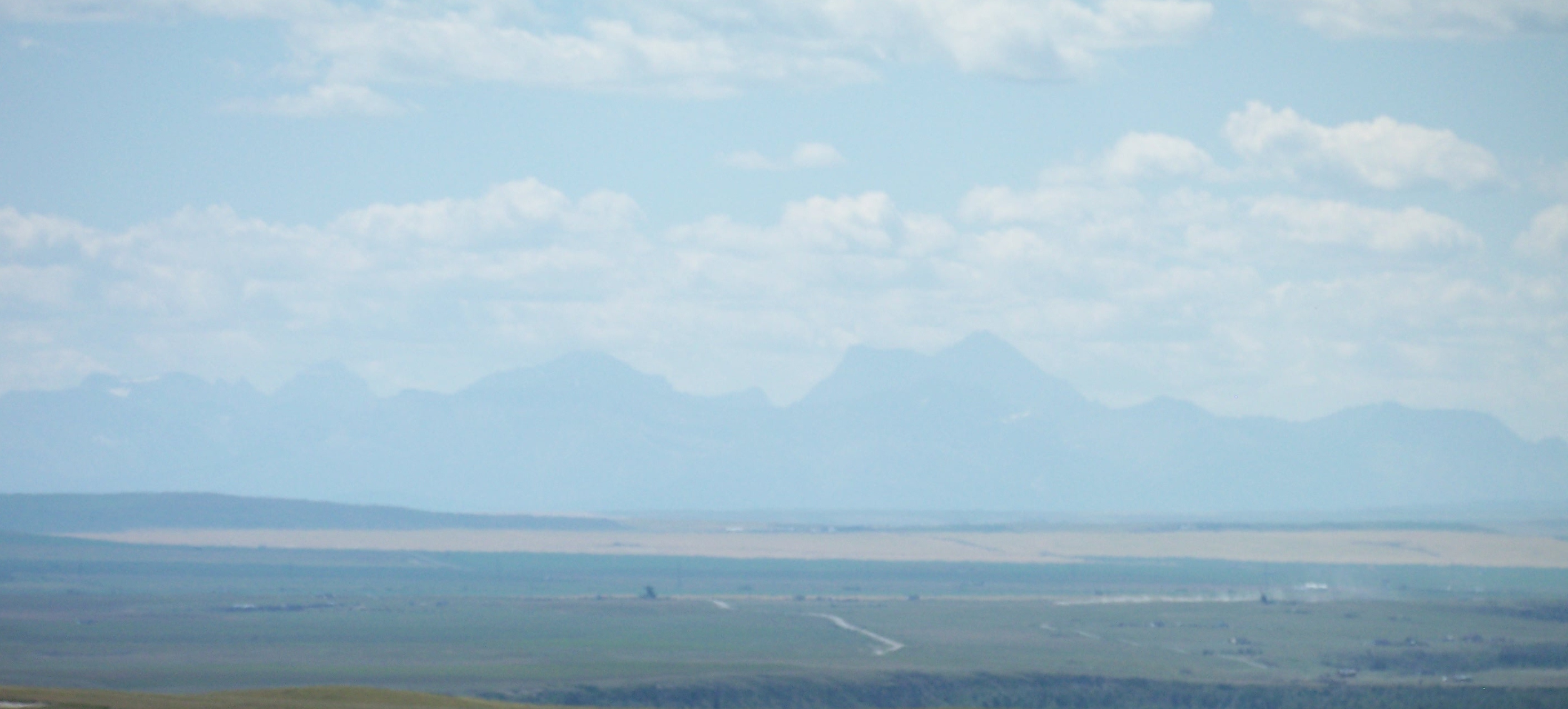
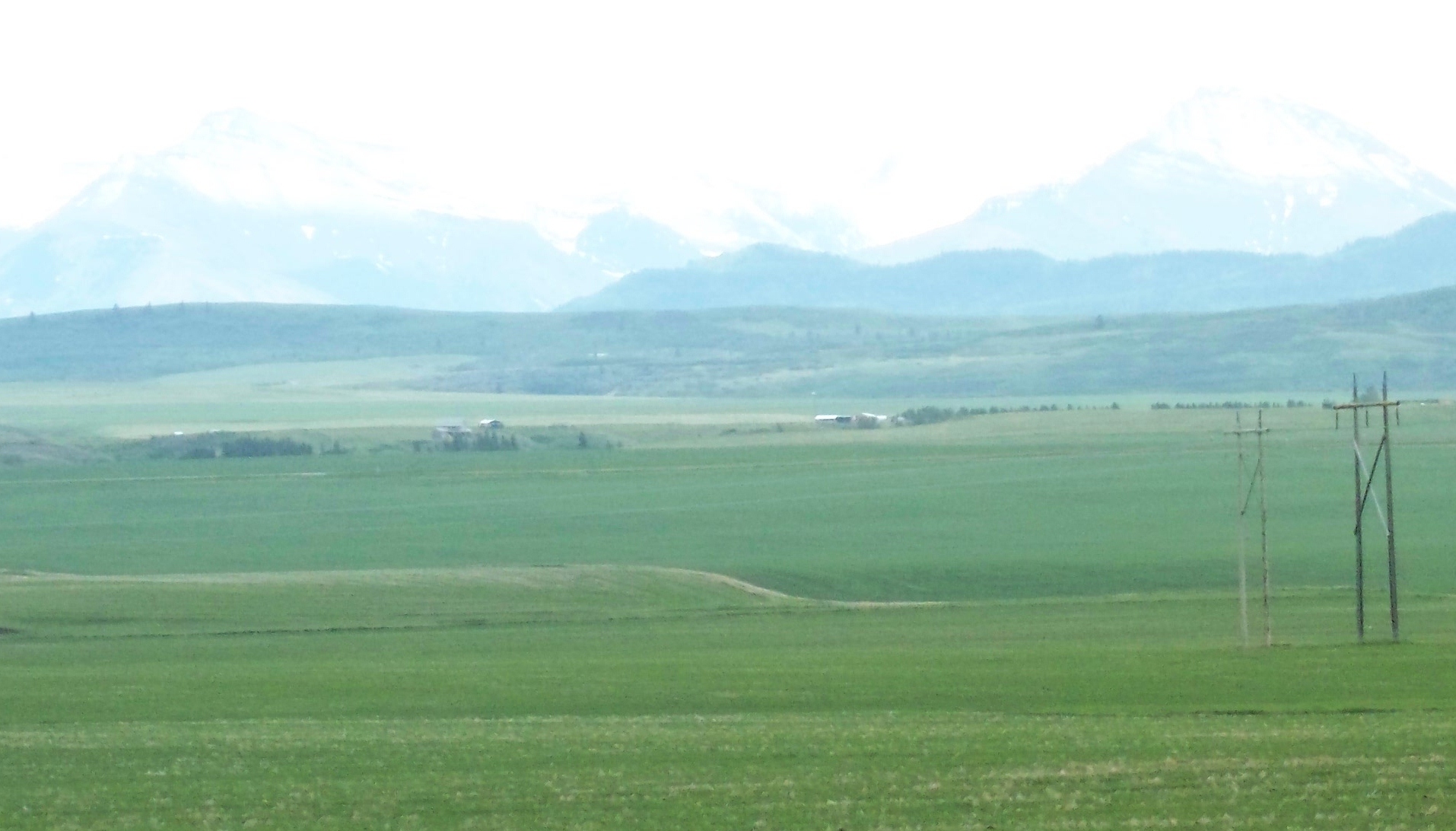
This is a view from about 50 km (30 miles) away from what we will be re-exploring.


I will have more to post when I return on Monday.