An Angry Young Poet

Each year, I spend time on poetry with the students. Two years ago, a student asked if I wrote poetry in junior high school and I was able to say, “Yes!”. He asked me to share with them. I found them in a small lock box I keep at home and shared several with the class.

I mentioned in Culture of Peace Sam Intrator. He suggested teachers expose adolescent students complex, existential questions of life as they move through those formative years. I wrote my poems in about 1969. It was a time when identity was increasingly rooted in the global nature of the world, not just immediate community and family. War, even in Canada, entered our homes via television. I found voice in poetry and expressed an abhorrence to institutional and government approved murder. What set me apart from my peers, was I took no sides. Each was equally wrong in my mind. Mr. McKenzie, an innovative English teacher, encouraged that in us-find our voices.

I shared the following poem with my students. I concede it is not exactly the original, as it was pretty angry. I hope the original message is still there. Students asked for more poems and I complied. These past few months I rediscovered my poet’s voice. It is a gentler voice, I hope.

Win or Lose: What Difference Does it Make?

 One game

If it is one

No fun to lose

No great thing to win.

War!

Hollow

Men, women, children gone

In no time

Woe! The vanquished losers;

No winner

Each, vanquished in every sense.

Divided

In ruins

Rebuilding

On countless graves

Rudderless.

Without pride

Beggaring citizens

Values of others

Resenting conquerors

What does war bring?

No jobs

No hospitals

No schools

No homes, but the streets

Destruction everywhere.

What does war bring?

Death of innocence

Loss even in victory

Comrades fallen

But see an enemy vanquished.

Killing

Proving nothing

What fools

Going on forever

Will we learn?

We must

I pray

For human survival.

Take care and have a great 20th of July, 2012.

Canadians Enjoying the American Pastime

We have not been to a baseball game for several years. Edmonton lost its AAA team, The Trappers, several years ago. They won a Pacific Coast League championship one season. A friend invited us to a game between the Spokane Indians and the Yakima Bears. The teams play in the Single A Northwest League. Both teams are affiliated to major league teams-the Indians to the Texas Rangers and the Bears to the Arizona Diamondbacks.  The crowd was about 7, 000. I thought it would be much smaller at this level of ball, but the stadium was full and the crowd cheered despite the home team falling 4-1 on the scoreboard. Here are some pictures to share.

This is what we go to the games for. Right? This is the real full meal deal.

The Indians have three mascots and her name is Doris.

Look I think the ump needs help with his vision. Do you have anything bigger?

If you look really close, you will see the baseball is by the K on the yellow sign. The runner was out on the play with a great pick off.

Did you ever wonder what these guys talk about? I do. I doubt it is even about baseball. #45 has a picture of his little boy or girl out and he is showing it to the rest of the guys. Or the ump just told a joke. #12 (I think that is his number) is laughing, “Good one, Blue! Listen, I got a better one!”

This is Otto. He was the original mascot.

Take care and have a great 18th of July.

Culture of Peace

Each child has a voice

In a secure space

Voices are revealed.

I am reading Tuned in and fired up: How teaching can inspire real learning in the classroom by Sam Intrator. It is the published version of his doctoral dissertation so I read it out of a twofold interest: as a teacher and as someone getting ready for the dissertation process. Sam asks teachers to consider the following question: “What engages children in learning?” That was the focus of his study and he found an innovative teacher, Mr. Quinn, who lived up to the challenge.

Mr. Quinn was studying Cannery Row by John Steinbeck, but found the students were not enjoying the early part of the book. He took them outside to the ball diamond, had them select a small patch of ground, and spread out from their classmates. Mr. Quinn asked students to observe, collect data, and write about a 1 foot by 1 foot (30 cm by 30 cm) patch of grass. They were to try see the world as a poet-scientist and find their way to describe their small ecosystem. Despite initial grumbling, the students became engaged and wrote poetry, reflective journals, and connected that patch to their lives in many ways. For many, it was the highlight of their learning that year.

In Grade 8 Social Studies, I found an activity in the Teacher Resource Manual called A Culture of Peace. This activity engages students and brings out even the voice of those who generally choose not speak up. This is one of those activities with no right or wrong answer.

First we discuss a Culture of War, which by the standards of the day should be easy to do, but an interesting thing happens. About 10-15 minutes into this discussion, students run out of descriptors for a culture of war or they repeat what has already been said. I record comments on the whiteboard and say, “It is time for a change of pace. What are some descriptors for a Culture of Peace?” I fill up a whiteboard with student responses. They are so engaged they know when they are duplicating previous responses. They are listening intently to each other. The shy, reluctant students engage in the conversation, because they feel no risk of being wrong.

The first time we did this we had to stop after an hour because we were borrowing another classroom and the teacher needed it back. When we walked out of the classroom to return to our classroom, one of the boys turned to a friend and said, “I could do this all day.” As a teacher, I felt like I was on Cloud 9. I look forward to this activity each year. The students and I become engaged in our learning.

Question: What was one learning experience that engaged you fully and made learning worthwhile and so memorable to be vividly recalled years later?

One Lovely Blog Award

I was nominated for a One Lovely Blog Award today by The Blazing Trail. to whom I say Thank you and appreciate the recognition.

I need to share 7 things about myself that you still may not know about me:

1. I played college ice hockey.

2. I attended university four times at four different universities.

3. I have 6 siblings-a sister and five brothers.

4. I visited the World Fair in Spokane Washington in 1974.

5. I was a banker for almost 15 years before leaving and going back to university.

6. I am 22nd generation Canadian or thereabouts.

7. I collect stamps.

I am nominating 15 bloggers:

Nominate 15 bloggers.

Cathy’s Voice Now

Meanwhile Melody Muses

RC Gale

Mike’s Look at Life

Brian Gaynor’s Photography

Coco J Ginger Says

RodPosse

Clotilda Jam Cracker

Elizabeth’s Ramblings

Simon Marsh

iamzion

Wallpaper-Tadaka

lijiun

slappsshotblog

Doli Photo

I’m Tired, I’m Whipped by Nevin Compton Trammell

I spent a great day on Sunday. I read, had a major nap which caused me to struggle sleeping last night, and spent time with friends doing pizza. I was completely disconnected. It is in these moments I find my voice.

I’m tired

I’m whipped

too dumb to quit

too smart

to let life go by

I’m working hard

to find truth

in my own backyard

I’ve done everything

but die

Took the long way around

on a short ride to town

found a pass

where few have been

Gained a love

lost a friend

scraped my knees

learning to please

started out

with no choice

somewhere

somehow

found my

voice.

It is a journey; not a destination. Take care and have a great 17th of July.

In My Haste to Post I Forgot the Title

It was an interesting day. In the midst of it, Parker Palmer posted a poem by Wendell Berry on Facebook. It is a special day when Parker posts a poem by Wendell Berry, Mary Oliver, or himself. The poem was How to Be a Poet (to remind myself). Wendell Berry is low tech and uses a typewriter to craft his words. Parker pointed to an aspect of the poem’s message: “Shun electric wire/Communicate slowly/Live a three-dimensional life.”The slow of life is worth something. It lets us be the person we are most fully.

Later, I began to think about two songs by two artists I enjoy and have seen multiple times live. Guy Clark sings The Carpenter and John Wort Hannam sings With the Grain. Both songs are rich with the metaphors of living a three-dimensional life. It is no coincidence the topic is that of a carpenter in both cases. It is about true to one’s self and living a life with value.

Sabbath

Silence, solitude, sacred

A mountain’s strength

The sky’s expanse

A lake mirrors

Words of wisdom

Spoken so softly.

Disconnect to reconnect

Listen that silent sacred space

The inner teacher beckons

Be present

Wisdom revealed

Let it heal, repair

A single thread at a time

The web of life so fragile.

Questions emerge

Hold gently

Live their mystery

They answer only when ready

Until then they lie dormant

Ready when ready

Embrace life as it is.

I salute you and take my leave for a few hours. Have a wonderful 16th of July.

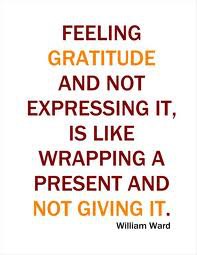
Gratitude

The last few days I passed 500 likes, 250 follows, and am approaching 200 posts. It is hard to believe. In March I had a handful of likes, about 10 followers, and posted intermittently. Blogging is a virtuous circle. It is humbling. Is anyone reading? It is statistically irrelevant. But, once you get into a rhythm it is uplifting and life honouring.

Part of my growth was and remains a supportive community, but we do not see each other face-to-face. Community involves sharing in ways that show the soul of people. I am grateful to find a place where I can do just that

I thank each of you who takes time, reads, and responds. You helped bring transformation in my life as a blogger, learner, and a person.

Seasons of Clouds

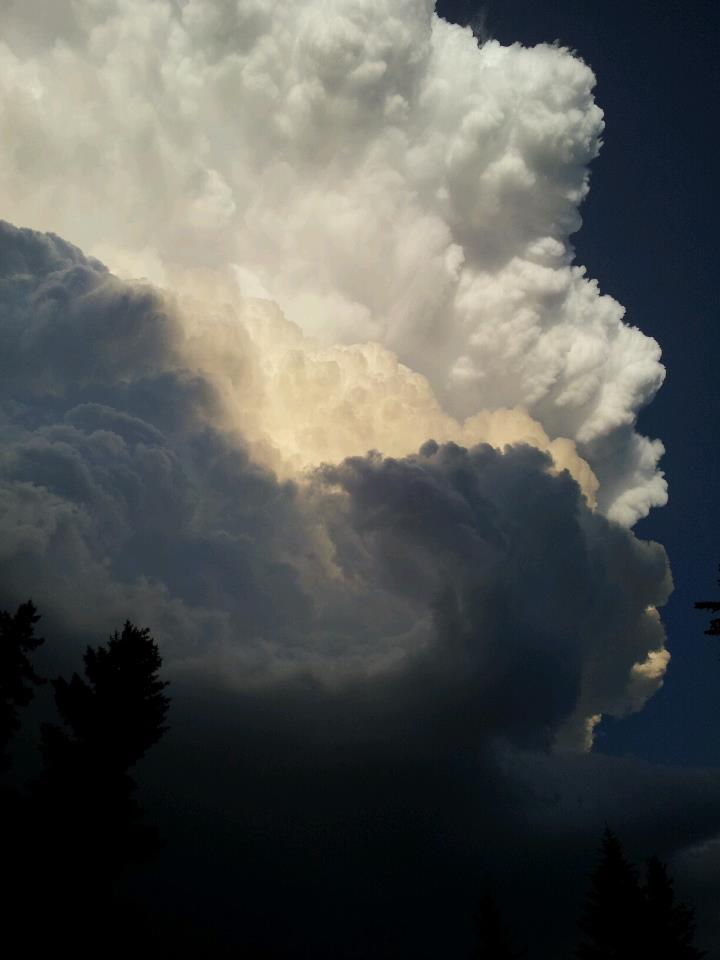
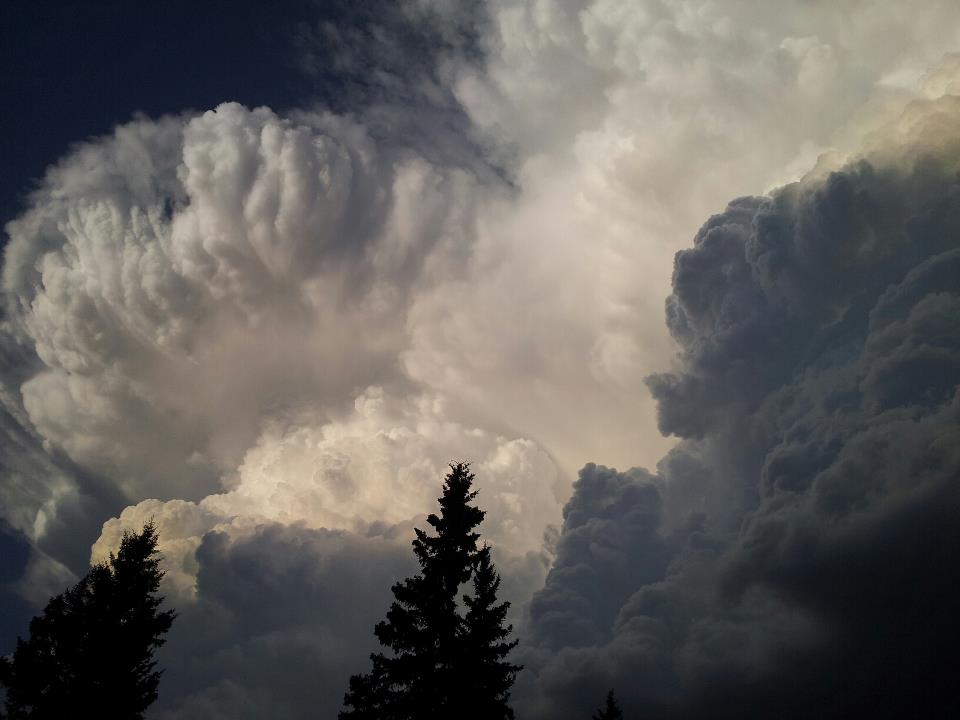
Kathy’s niece took these pictures of boomers the other night west of Edmonton. Kathy and I talked about what we saw in the clouds. There is a lot in there and yesterday, as I walked, I understood clouds meaning something different during different seasons of life.

The spring of childhood,

Clouds were homes

Where

My imagined friends

Came to life

Nursery rhymes, fairy tale, cartoons

People lived there.

A voice called: “Hurry home before it rains.”

Spring met summer

Romance arrived

A single rain drop touched us

We scrambled

Holding hands

We discovered shelter

In each other

And laughed: “Let it rain.”

The dog days of summer arrived

I looked up

Storm clouds overhead

Ominous

Please, I need to finish the lawn

Or there goes the BBQ tonight

I hear my voice: “Hurry home before it rains; so much to do.”

In autumn

A safe distance

We view

But, don’t hurry

Clouds

Real places in our imagination

Together, we share

God’s chair, a child’s face, google eyes

It may rain tonight

I hear my voice: “I am here again.”

Ode to Teachers

I wanted to blog and post pictures of some great cloud formations around Edmonton last night, but I received an email and there was an idea I could not resist. We each had teachers, and I use the word in its broadest definition, who made an impact on our lives. Ruth is someone I taught with for 12 years.  I use the word taught guardedly and refuse to use the work word to describe our relationship. We learned together. Learning is different and is relational. In her email, she described a visit with a parent of a former student and shared this phrase, ‘child whisperer.’

Each of us, had or have people in our lives in many forms who fit the phrase. They remind us of what the root word of educate is–educare. Even the Latin word speaks of care, which I think is vital to the relational nature of learning.

I can think of many who filled the role. Sister Phillips was my first grade teacher. She was a member of the Catholic order the Sisters of Service and it was special in her class. Later, in high school, I had Ms. Lyford, a short, stocky Australian woman who loved Shakespeare. She once said, “Ivon, if you only tried you would be an A student.” She did it loving and in a caring way, I think. I was good with a B and explained that to her.

Outside school it was my grandmother and mother. I still learn from them although the former is long past away and my mother lives 8 hours away. I learned from my father-in-law and mother-in-law and, needless to say, I learn from the daughter I married. I learn from our boys and my students in many ways. This list is incomplete, but the point is : Great teachers are great not because they tell you do something, but because they lead you to want to do it and ignite your imagination and spirit for learning in a magical way .”

Blend compassion and passion

Bring out the best in each child

Walk with them

Open your heart

Greet them

With your story

Receive their stories gently

Reveal vulnerability

Be a guide they need

In each moment

Learn, share, create

Listen and hear

And speak in a voice

Only a child whisperer can.

Take a moment, tell us about a teacher or teachers who made a difference for you, who whispered at the right moment and spoke the right words lighting a fire in your spirit.

ElkeTeaches brought this to my attention and I thought I would share. Public education needs to become public. What this means will require a grand conversation led by courageous people and eloquent questions. It is of concern when you hear that public schools in Michigan are sold to private interests or when Canadian politicians send their children to elite private schools. What are public schools not good enough? If not, what will you do to change that? Fortunately, we do have leaders, not manages, bureaucrats, technocrats, and autocrats, but real leaders who are finding their voices.

dianeravitch's avatarDiane Ravitch's blog

In response to today’s ongoing discussion about teaching and specifically what kind of teaching is right for urban students, this comment came from Ira Shor. Shor teaches at the City University of New York. He has written extensively about critical pedagogy. Our discussion began with the proposition that poor kids need a tightly disciplined environment, some would say a “boot camp” or “no-excuses” pedagogy. Others disagreed. Shor gives his view here:

Many thanks to Diane for for so decently inviting discussion on conundrums of teaching. Conditions for teaching/learning are outcomes of educ and social policy, though not reducible to these enormous factors. In terms of high expectations for kids of all colors and classes regardless of home address, I’d propose that all lessons in all classrooms should be designed for and with the students who are there. The local conditions, language use, cultural themes should be the starting point for…

View original post 199 more words