Wild Geese

Mary Oliver is one of my favourite poets. I find her poems call me to spend time, reflect quietly, and read them anew many times. I think what I consistently get out of her poetry is that we are not alone in the world.

We live together, but it is not just a human world. It is a world full of other beings, objects, and roles that shape our lives and we, in turn, shape the world. Most of the time, our relationships with the world, others, and things is unconscious. The world exists out there somewhere in taken-for-granted ways.

When we are mindfull and present, we notice the world. Mary Oliver uses the words harsh and exciting, but we are not accustomed to the novelty that continuously emerges and, when it calls, it seems harsh. As we live more fully, the world calls to us and we hear it. The harsh sounds help us remain attuned to the world.

The world excites us with its refreshing newness. We discover the extraordinary in the ordinary; what we have taken-for-granted.

You do not have to be good.

You do not have to walk on your knees

For a hundred miles through the desert, repenting.

You only have to let the soft animal of your body

love what it loves.

Tell me about despair, yours, and I will tell you mine.

Meanwhile the world goes on.

Meanwhile the sun and the clear pebbles of the rain

are moving across the landscapes,

over the prairies and the deep trees,

the mountains and the rivers.

Meanwhile the wild geese, high in the clean blue air,

are heading home again.

Whoever you are, no matter how lonely,

the world offers itself to your imagination,

calls to you like the wild geese, harsh and exciting . . .

over and over announcing your place

in the family of things.

Freedom to choose

Between stimulus and response there is a space. In that space there is our power to choose our response. In our response lies our growth and freedom. ~Viktor Frankl Sometimes we make decisions in t…

Source: Freedom to choose

Viktor Frankl was a psychiatrist and neurologist who developed a school of psychiatry called logotherapy which is the search for meaning in life. He used his experiences as a Holocaust survivor to help inform his findings.

Humans choose their responses and seek life’s meaning. When we lose our meaning in life, we drift, feeling rudderless and without mooring. What keeps us grounded is the choices we make in life and the meaning we find in life. For example, becoming a teacher, a farmer, a parent, etc. gives life purpose and calls us to take action.

We express who we are through responding to the continuous calling, the vocation, that we find through various meaningful roles. When and if we find our life’s meaning, it allows us to make a difference in the world, for other sentient beings, and for the non-sentient elements of the world. We care for all aspects of the world and feel connected to it

Thomas Merton suggested some humans find there calling and others search throughout life, unable to find it. Perhaps, it is they do not hear what calls them and are unable to respond. Mindfulness and silence open spaces to hear the calls that give our lives meaning and make living meaningful.

Kindness: The Time For It Is NOW

“Do your little bit of good where you are; it’s those little bits of good put together that overwhelm the world.”~Desmond Tutu Yesterday, as I was ordering a coffee, an older lady came into t…

Source: Kindness: The Time For It Is NOW

Sirena bracketed her post with a Desmond Tutu quote and one by Ralph Waldo Emerson reminding us kindness is a powerful antidote for many of the challenges we face in the world. A kind heart allows us to put the human face on others and see them as people.

Several years ago during a particularly cold winter, Kathy and I boosted people’s batteries several times. We did it because it was the right thing to do without consideration as to what we might receive back.

One day, on the way home from a hockey game in rural Alberta, I lost control of the car and we ended up stuck on the edge of the ditch. It was cold, we were on a narrow piece of road at the top of a hill, and there was truck traffic. The first vehicle by had a chain and two-way radio to let truckers know we were there and got us out.

As we drove on, we noted that the earlier acts of helping people with dead batteries had somehow come around and, in our moment of need, someone acted kindly towards us.

When we are mindful, we recall that others need our kindness and that the kind acts echo through time and space.


A Light Breather

Theodore Roethke wrote poems that attempted to connect the inner and outer worlds we inhabit simultaneously. While exploring the outer world, it is important we find quiet in the inner world. In those quiet moments, moving back and forth we find ourselves staying.

The metaphor comparing this movement to that of a snail challenges me to think deeply about what living and breathing mindfully is. What do I notice? And, who and what notices me? As I move, am I sensitive to the world that I move through? Or, do I walk heavily chasing those who which to join me away?

The spirit moves,
Yet stays:
Stirs as a blossom stirs,
Still wet from its bud-sheath,
Slowly unfolding,
Turning in the light with its tendrils;
Plays as a minnow plays,
Tethered to a limp weed, swinging,
Tail around, nosing in and out of the current,
Its shadows loose, a watery finger;
Moves, like the snail,
Still inward,
Taking and embracing its surroundings,
Never wishing itself away,
Unafraid of what it is,
A music in a hood,
A small thing,
Singing.

We dance for…

Photo post by @jamesscarberry.

Source: We dance for…

Albert Einstein is one of my favorite sources for quotes. What do we dance for today? Dancing is a creative movement that signals powerful human emotions are at play in a particular event.

Natalie shared a quote that reminds us humans dance in sad moments, as well. On a day, when a few attacked, killed, and injured their fellow humans, our dance should dance away the fears and tears and create dreams filled with hope. It is important to remember hateful words and actions against others is wrong.

Dancing is an integral part of human life. Even Friedrich Nietzsche,who was not considered a happy person and religious person, reminded us that “we should consider every day lost on which we have not danced at least once.” In fact, he argued he “would only believe in a god who could dance.”

I believe that a God we all believe in is one who joins the human community in dance in moments such as today. Thich Nhat Hanh suggested “the pain of one part of humankind is the pain of the whole of humankind.”


Spring is coming

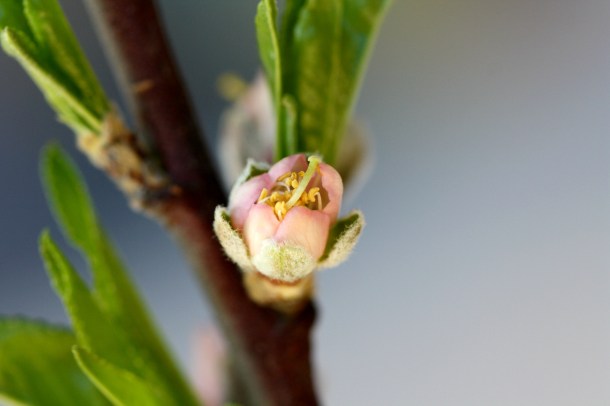
The message and image are inspiritational. Patience is a virtue. Sometimes what we think we want is not what is good for us. The waiting for what is good is mixed with mystery and inevitably reward.

Leyla's avatarI lost my lens cap..

spring is coming

Never cut a tree down in the wintertime. Never make a negative decision in the low time. Never make your most important decisions when you are in your worst moods. Wait. Be patient. The storm will pass. The spring will come.

~Robert H. Schuller

View original post

lunes – Good morning everyone!!!

Are you ready for the start of another week?    My wonderful friend Mollie ( co-minister at the Baptist church in a community near here), has been  happily posting in a shared file we have .. IR…

Source: lunes – Good morning everyone!!!

This is a great link. I love the unique take on See No Evil, Hear No Evil, and Speak No Evil. When we speak words of kindness and act in kind ways towards others, we accomplish so much more. It takes time, but it is worth the wait.

As a teacher, I love to hear from students. They surprise me sometimes, as I do not remember them. However, they take the time to come over in an airport, a crowded grocery store, and a parking lot in a distant town. It reminds me that it takes time for those words and actions to resonate across time.

When we speak and act kindly, those words and acts resonate beyond the immediate moment and place we co-inhabit. It is a reminder of the impression we leave on the world when we take care.

The Invitation

I am not familiar with Oriah Mountain Dreamer’s poetry, but, when I found this poem, it reached out and called me.

What questions do I ask myself, that I cannot answer. There is an eloquence in those questions that leads me to new questions, without knowing the answers. When I sense the world in one way or another, I am unable to sense it in any other way.

What if I live the wildness of life and I allow myself some abandon, not carelessness? I can dance with that wildness and not care about what others may think, hopefully making the world a better place.

When we open our hearts to the other, their standing in life is about who they are as a person rather than what identifies them: their job, their age, where they live, etc. When we open our hears to the other, it is an invitation to be human and humane with them.

It doesn’t interest me what you do for a living.

I want to know what you ache for and if you dare to dream of meeting your heart’s longing.

It doesn’t interest me how old you are.

I want to know if you will risk looking like a fool for love, for your dream, for the adventure of being alive.

It doesn’t interest me what planets are squaring your moon.

I want to know if you have touched the centre of your own sorrow, if you have been opened by life’s betrayals or have become shriveled and closed from fear of further pain.

I want to know if you can sit with pain, mine or your own, without moving to hide it, or fade it, or fix it.

I want to know if you can be with joy, mine or your own; if you can dance with wildness and let the ecstasy fill you to the tips of your fingers and toes without cautioning us to be careful, be realistic, remember the limitations of being human.

It doesn’t interest me if the story you are telling me is true.

I want to know if you can disappoint another to be true to yourself. If you can bear the accusation of betrayal and not betray your own soul.

I want to know if you can see beauty even when it is not pretty every day.

And if you can source your own life from its presence.

I want to know if you can live with failure, yours and mine, and still stand at the edge of the lake and shout to the silver of the full moon,

“Yes!”

It doesn’t interest me to know where you live or how much money you have.

I want to know if you can get up after the night of grief and despair, weary and bruised to the bone and do what needs to be done to feed the children.

It doesn’t interest me who you know or how you came to be here.

I want to know if you will stand in the centre of the fire with me and not shrink back.

It doesn’t interest me where or what or with whom you have studied.

I want to know what sustains you from the inside when all else falls away.

I want to know if you can be alone with yourself and if you truly like the company you keep in the empty moments.


Love After Love

Derek Walcott wrote this poem that describes how, when mindful, we experience the fullness and richness of life. Perhaps it is only, when we older, that we have wisdom to sit, take it all in, and just be good with what life is.

Who is the person, the self, that looks back from the mirror? Or, greets me at the door? The answers are only questions in a new form, as the answers cannot be fully formed.

When we engage in conversation with ourself, we must be present to the person we speak and listen to. When we ask eloquent questions that cannot be answered, we allow those questions to remain unanswered and guide the conversation.

The time will come

When, with elation,

You will greet yourself arriving

At your own door, in your own mirror,

And each will smile at the other’s welcome,

And say, sit here, Eat.

You will love again the stranger who was your self.

Give wine. Give bread. Give back your heart

To itself, to the stranger who has loved you

All your life, whom you ignored

For another, who knows you by heart.

Take down the love letters from the bookshelf,

The photographs, the desperate notes,

Peel your image from the mirror.

Sit. Feast on your life.


Patience: Darkness and light, conscious and unconscious

Night after night, darkness enters the face of the lily which, lightly, closes its five walls around itself, and its purse of honey, and its fragrance, and is content to stand there in the garden, …

Source: Patience: Darkness and light, conscious and unconscious

The link includes a lovely picture of lily accompanied by a Mary Oliver poem, The Lily. The poem reminds me of the passage from Luke describing the lilies and wild flower, just being and growing.

Nature is what it is. There is a mindfulness in its creation and how it dresses. The lilies wait in their splendor for us to notice them and realize how they are always present. Nature and lilies teach us. To paraphrase Confucius, they open the door and we enter when we are ready.