In Silence

Thomas Merton was a Trappist monk known for essays, letters, and writing books. He was an artist and poet, as well.

Sabbath is a retreat from the busyness encountered in daily life. It is less about separation from the world and more about finding bridges linking us with the world and others in the world. The word treat suggests healing and making whole.

We seek bridges allowing us to let go of baggage we carry and skeletons we dance with. Parker Palmer used Thomas Merton’s writing explaining the need for peace, solitude, and silence in life. This is not a withdrawal, but a different way of encountering the world and hearing the words it speaks more clearly.

Part of Taoism is seeking principled paths and ways forward. Parker Palmer and Thomas Merton drew on this thinking in expressing a need for silence in life otherwise the noise of daily life is deafening.

Be still.
Listen to the stones of the wall.
Be silent, they try
to speak your

name.
Listen
to the living walls.

Who are you?
Who
are you? Whose
silence are you?

Who (be quiet)
are you (as these stones
are quiet). Do not
think of what you are
still less of
what you may one day be.

Rather
be what you are (but who?)
be the unthinkable one
you do not know.

O be still, while
you are still alive,
and all things live around you

speaking (I do not hear)
to your own being,
speaking by the unknown
that is in you and in themselves.

“I will try, like them
to be my own silence:
and this is difficult. The whole
world is secretly on fire. The stones
burn, even the stones they burn me.
How can a man be still or
listen to all things burning?
How can he dare to sit with them
when all their silence is on fire?”

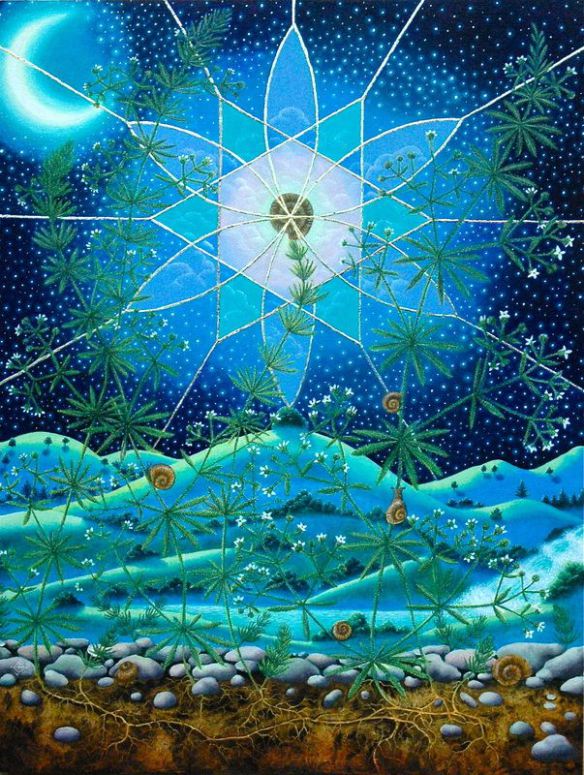
in the roots…

Sometimes we look up when we should look down and perhaps scratch below the surface searching for what is hidden from sight. The branches provide the leaves which draw in the sun’s lights and make food, but the roots bring in the water, minerals, and other nutrients which combine with the photo-synthetic work done in the leaves. It is not alone things are done. It is in a holistic way we become whole and replenished.

Ganesh's avatarKnown is a drop, Unknown is an Ocean

searching something

Maybe You Are Searching Among The Branches,
For What Only Appears In The Roots…

~ Rumi

View original post

Be As You Appear

Be As You Appear

Rumi’s poetry resonates through the centuries. Often it is a simple and complex message about turning inwards to find what we seek. It is as suggested in this poem being and becoming who we are rather than what someone else wants us to be.

Tiny's avatarTINY LESSONS BLOG

“Be like the sun for grace and mercy.

Be like the night to cover others’ faults.

Be like running water for generosity.

Be like death for rage and anger.

Be like the Earth for modesty.

Appear as you are.

Be as you appear.”

– Rumi

View original post

Throw Yourself Like Seed

This poem is interesting and that begins with the title. It is not a particular or the seed. It is seed. We cast our spirit and who we are like seed and it finds fertile ground in living in abundant ways. It is us who must be fertile in our interactions with the world we live in. I think that is what the poet Miguel de Unamuno is suggesting.

We tend the soil through mindful attentiveness revealing what is good in our work and in the world. Our work is a gift to the world when it is done this way. Work helps define living. When embedded in something we love, it shows and is revealed easily. We speak to the world through the voice our work does. In a way, work is the serious work of playfulness.

In casting seed, we make the world a better place when it is done mindfully and with care. When done that way, the harvest is rich and abundant.

Shake off this sadness, and recover your spirit;
Sluggish you will never see the wheel of fate
That brushes your heel as it turns going by,
The man who wants to live is the man in whom life is abundant.

Now you are only giving food to that final pain
Which is slowly winding you in the nets of death,
But to live is to work, and the only thing which lasts
Is the work; start there, turn to the work.

Throw yourself like seed as you walk, and into your own field,
Don’t turn your face for that would be to turn it to death,
And do not let the past weigh down your motion.

Leave what’s alive in the furrow, what’s dead in yourself,
For life does not move in the same way as a group of clouds;
From your work you will be able one day to gather yourself.

What the Deer and Antelopes Heard When they went out to Play

So, it was not all perfect in the home where deer and antelope played. Here is a little humour to begin the day and allow me to think about bumps on the road.

russtowne's avatarRuss Towne's A Grateful Man

Buffalo securedownload

With Love,
Russ

View original post

Quote of the day – Indian Proverb

If tigers had wings, they would be even more formidable. We are all part of a world and universe where each part takes on particular meaning and provides something important to the world.

Newbloggycat's avatarNew Bloggy Cat [NBC]

IMG-20140816-00663

“Do not blame God for having created the tiger, but thank him for not having given it wings.”

– Indian Proverb

View original post

Getting There

I wrote about unburdening one’s self in Dancing With Your Skeletons. David Wagoner suggests something similar in this poem. Being present means being in the here and now and we are always a getting there and arriving. In getting there, it is important to keep the backpack light and dance with skeletons.

Somewhere in our journey, we lose the serious childlike playfulness we had when we were young. It is in being adults we journey with regret. The word journey is from the French journée which is less about the measure of time and about events contained in the day/jour. Adding née at the end makes jour into a gerund continuously recurring. It is a never-ending and unfolding, impossible to make sense of in the moment. Its time is immeasurable, only livable.

Née is being born as and in the living undertaken we are continuously being born in each event and each moment. In mindfulness, we  journey without regret. The there we want is the next moment which continuously unfolds. Living is  creating and becoming with welcome uncertainty and we only know we arrive when we arrive. It is unexpected.

You take a final step and, look, suddenly
You’re there. You’ve arrived
At the one place all your drudgery was aimed for:
This common ground
Where you stretch out, pressing your cheek to sandstone.
What did you want
To be? You’ll remember soon. You feel like tinder
Under a burning glass,
A luminous point of change. The sky is pulsing
Against the cracked horizon,
Holding it firm till the arrival of stars
In time with your heartbeats.
Like wind etching rock, you’ve made a lasting impression
On the self you were
By having come all this way through all this welter
Under your own power,
Though your traces on a map would make an unpromising
Meandering lifeline.
What have you learned so far? You’ll find out later,
Telling it haltingly
Like a dream, that lost traveler’s dream
Under the last hill
Where through the night you’ll take your time out of mind
To unburden yourself
Of elements along elementary paths
By the break of morning.
You’ve earned this worn-down, hard, incredible sight
Called Here and Now.
Now, what you make of it means everything,
Means starting over:
The life in your hands is neither here nor there
But getting there,
So you’re standing again and breathing, beginning another
Journey without regret
Forever, being your own unpeaceable kingdom,
The end of endings.

Song Of The Rain

Khalil Gibran’s poetry continues to resonate over the years. His messages about love were and remain important.

Ese' s Voice's avatarEse' s Voice

song_of_rain_photo

A Lebanese artist, poet and writerKahlil Gibran(Arabic: جبران خليل جبران) has been among my favourite ones for quite some time. And thoughThe Prophetand “Sand And Foam” will always be the number ones from his works for me, I have the feeling today the poem “Song Of The Rain” fits the mood well.  At least in these latitudes.

I am dotted silver threads dropped from heaven
By the gods. Nature then takes me, to adorn
Her fields and valleys.

I am beautiful pearls, plucked from the
Crown of Ishtar by the daughter of Dawn
To embellish the gardens.

When I cry the hills laugh;
When I humble myself the flowers rejoice;
When I bow, all things are elated.

The field and the cloud are lovers
And between them I am a messenger of mercy.
I quench the thirst of one;
I cure the…

View original post 165 more words

Dancing With Your Skeletons

Dancing With Your Skeletons.

Yesterday, I made a short presentation about mindfulness in daily life at a small church 2 hours west of Edmonton. The pastor spoke about lightening our burden and not carrying the weight of the world in our backpacks. It is important to lighten the load.

Dyan makes  a similar point using the metaphors of dancing with skeletons. The Marianne Williamson provided a more Jungian approach in the quote about shadows.

There are reasons we are called and given voice in our lives. Sometimes, we do not see the reasons easily and we need to examine the weight in our backpack, dance with our skeletons, and know our shadow side. Being mindful is about knowing what to discard, what to retain, and making sense of it as we take the next step. I spent 20 years teaching and it was challenging at times, but I know those challenges were worthwhile and meant something. I was not always sure of the meaning, but I danced with the tunes being played in the shadows and my skeletons learned to dance as they came out of the closet.

Untitled (Where are you going)

We flew across Canada today, returning from holidays. We spent time in nature and exploring historical roots in Nova Scotia, Prince Edward Island, New Brunswick, and Maine but is nice to be going home.

We discussed that this is the first time we went on an extended holiday in many years. We spent over two weeks on the road and it is tiring. The days we stayed put and did not move from one place to another allowed us to recoup.

This poem reminded me of home’s importance. When we stop and take a moment to see the place we call home through new eyes, we see and feel its heart, the rhythm of what home means. Peter Levitt concluded it is in extraordinary moments  we find the place closest to our hearts.

I am reading James Hillman and he suggested we sometimes limit our thinking about the heart to a physiological pump. The heart serves a greater purpose in that we find our purpose within it and have courage to follow those purposes. It is being in the moment we find courage and confidence to feel at home in each moment. The heart is a rhythmic source for our moment-to-moment journeying. We are always going somewhere and it is important to be at home wherever we end up.

Where you are going

and the place you stay

come to the same thing.

What you long for

and what you have left behind

are as useless as your name.

Just one time, walk out

into the field and look

at that towering oak—

an acorn still beating at its heart.