Wind, Water, Stone

We continuously act on the world and it acts on us. There is a constant interacting shaping us and the world. Sabbath represents a space when we take time, a few moments, an entire day, and try meet the world more fully. We step beyond the busyness and entering a welcoming spaciousness that holds us.

Octavio Paz provided a beautiful metaphor that brings the continuous interacting to life. Humans, similar to water, wind, stone, hollow spaces, disperse their gifts, and provide shelter for each other. We act in ways offering uplifting opportunities to others . As we step into Sabbath’s spaciousness, we encounter the sculptures, the holding spaces, and the transforming that is always happening around us and in us. We take time and sing, whisper, and find stillness in those spaces.

The water hollowed the stone,
the wind dispersed the water,
the stone stopped the wind.
Water and wind and stone.

The wind sculpted the stone,
the stone is a cup of water,
The water runs off and is wind.
Stone and wind and water.

The wind sings in its turnings,
the water murmurs as it goes,
the motionless stone is quiet.
Wind and water and stone.

One is the other and is neither:
among their empty names
they pass and disappear,
water and stone and wind.
A Tree

Today, is Maya Angelou’s memorial and this seemed like an appropriate good morning poem.

Being Open To The Seeds Of Life

Thomas Merton was a prolific writer in the mid-20th Century. In many ways, his writing was ahead of his times questioning the burgeoning consumerism and an increased need for spirituality. Here he speaks of the need for readiness when we receive the seeds we plant each day. Mindfulness is important as we examine what life brings us in each moment.

Praise Your Life

Andrea Potos wrote this poem which I suspect has many different meanings. It will read differently tomorrow and the next day. Something new will appear as it finds space in my life.

When I found this poem, the opening lines resonated. It rained hard last night and is a cool day today. I don’t drink coffee, but my tea was the best this side of an oriental tea shop.

The poem impressed upon me the way life unfolds, much like a good book being read and re-read. We take time and find spaces where we can just be and enjoy what that book, that life means. We are called to this particular life, but it is not a given. We live it and interact with the world and its inhabitants in various ways. As a result, we change and the world changes in this living. Each time we read this book, it takes on a newer meaning, but reminds us of the past which is not simply discarded.

When on a June morning heavy with rain,
you can taste the best cappuccino
this side of Rome, in a cafe
with scarred maplewood tables,
a book of Caravaggio splayed open:
The Calling of St. Matthew
that could be set in a tavern,
a gambling den, a dank office where
tax collectors are counting their day’s work,
while in the top right of the frame, a gold-
seared light slices in, and with it,
the figure of a god made man—
a bolt of radiance shoots through
his finger, pointed as if to say: You,
it is you, I have called to this life.

Barbed Wire

Barbed Wire

Nature’s boundaries are subtle, often changing cyclically and rhythmically. Humans tend to enclose and separate. My mother-in-law used to complain about the deer in the garden. We would tell her put up a fence and she would say that was worse. We co-inhabit spaces with sentient and non-sentient phenomena. We really cannot fence ourselves outside of the infinite relationships present to us in the universe.

Silent Sentinel

The imagery in the picture and poetry reminds us that we assume the centre is the place to be. In some recent reading, one author (bell hooks) proposed the margins give us a wider view of the world we live in. We are on the boundaries seeing the centre and looking outwards to newness that people caught in the middle are not able to see easily.

Make the Earth Your Companion

Nature teaches and is always present for us to learn. When we pause and are present with the universe, we can learn. J. Patrick Lewis wrote this poem as a reminder of lessons available when we take time and make the Earth our companion.

We do not live separate from the Earth and its inhabitants, sentient and non-sentient. We live in relationship with the Earth. This suggests the companionship is direct and active, dynamic and energetic. Companionship is about breaking bread with another. When we journey as companions, we are in communion calls on us to be stewards and serving the Earth and the relationships we live in. Communion is  fellowship and mutual participation, an exchange of energy which is life-giving and affirming.

Make the Earth your companion.

Walk lightly on it, as other creatures do.

Let the Sky paint her beauty- she is always

           watching over you.

Learn from the Sea how to face harsh forces.

Let the River remind you that everything will pass.

Let the Lake instruct you in stillness.

Let the Mountain teach you grandeur.

Make the Woodland your house of peace.

Make the Rainforest your house of hope.

Meet the Wetland on twilight ground.

Save some small piece of Grassland for a red kite

on a windy day.

Watch the Icecaps glisten with crystal majesty.

Hear the Desert whisper hush to eternity.

Let the Town weave a small basket of togetherness,.

Make the Earth your companion.

Walk lightly on it, as other creatures do.

Photo Shorts: I Wish I was Sailing Again

When I was working in banking many years ago, we were doing home renovations. I would work in the basement and have Jimmy Buffett on listening to his “pirate music.” I got a lot done and the music always helped me get where I wanted to go in my work. It reminded me it was OK to have dreams and be a pirate at times.

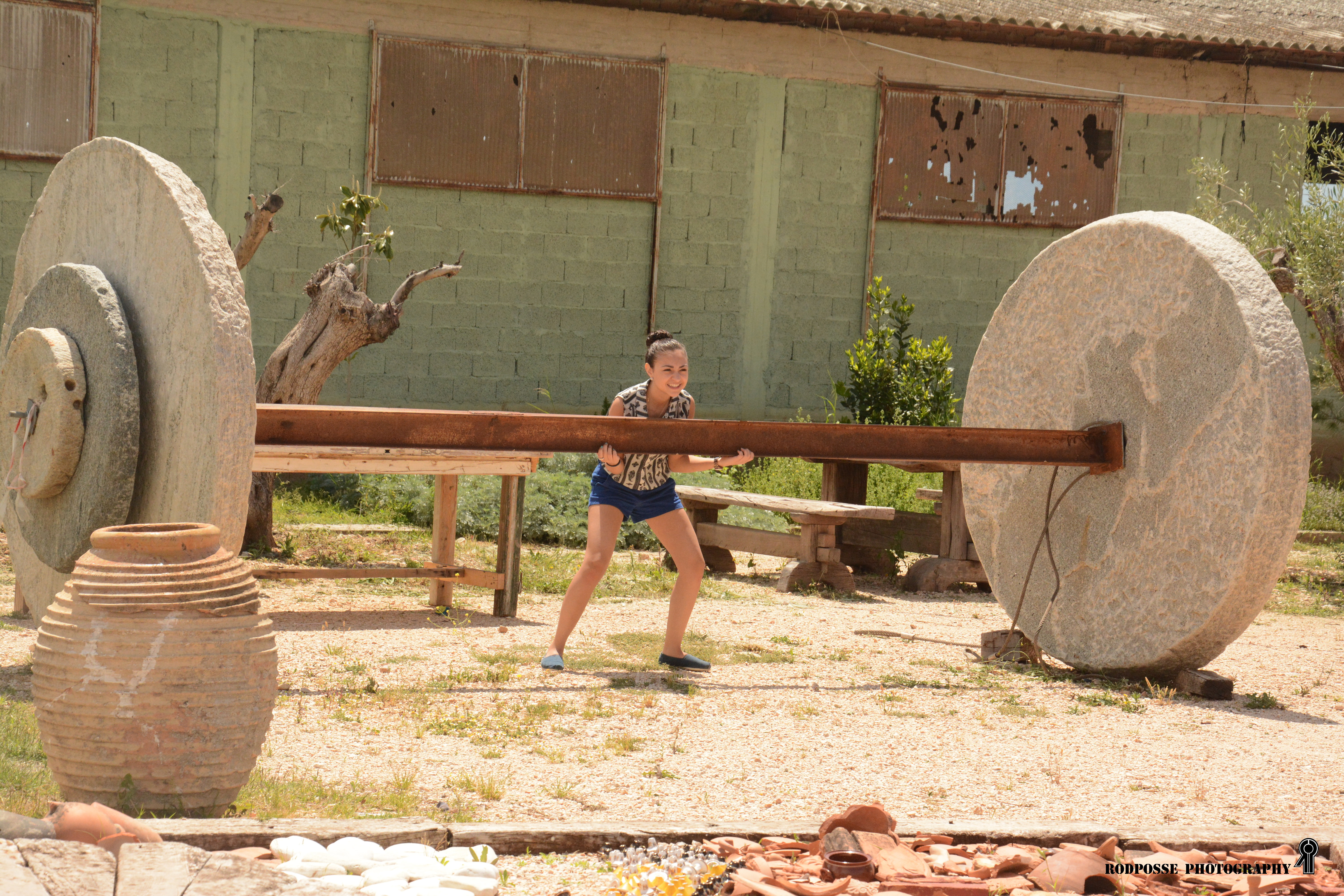
Lifting weights

This is a little Monday humour. Can you imagine the muscles we might develop if we lifted weights like this?

pause's avatarRodposse.

RDP_8031

View original post

Not dawdling

Sabbath activities are crossroads where we bump into wonder when we are awake, aware, and attentive. We can walk with clarity and keep a sharp eye. It is in the attentiveness we gain insight, let go, and become enlightened. The wonder is two-fold. It uplifts ordinary acts/events we pass over often and they become extraordinary.  As well, we take time and check those things that are different. It is not in sameness we find freedom. It is in opening up and accepting difference that we free ourselves from impenetrable prejudice, prejudgment.

James Broughton used wonderful metaphors and imagery. In letting go, we become intrepid, bold, and fearless explorers. We cut though strings binding us to the familiar and step towards lucent surprises which are always there, but paradoxically block our vision and hide from us.

A paraphrase of St. Benedict suggests we listen with the ear and see with the eye of our heart. In this we elevate the invisible and unheard in Sabbath moments.

Not dawdling
not doubting
intrepid all the way
walk toward clarity
with sharp eye
With sharpened sword
clear cut the path
to the lucent surprise
of enlightenment
At every crossroad
be prepared to bump into wonder