Tag Archives: learning

Conversation Circles

In our classroom, we use a conversation circle. I use it as a time to clarify things from my perspective and allow students to speak about what they would like to do. At other times, we talk about upcoming events. Today in the conversation circle, each student introduced themselves to the group, which seems like a small thing, but sometimes goes unattended in classrooms.   I also asked the students about what they want for complementary courses. This is an outgrowth of the conversation circles we held last year. Students want a voice in their learning.

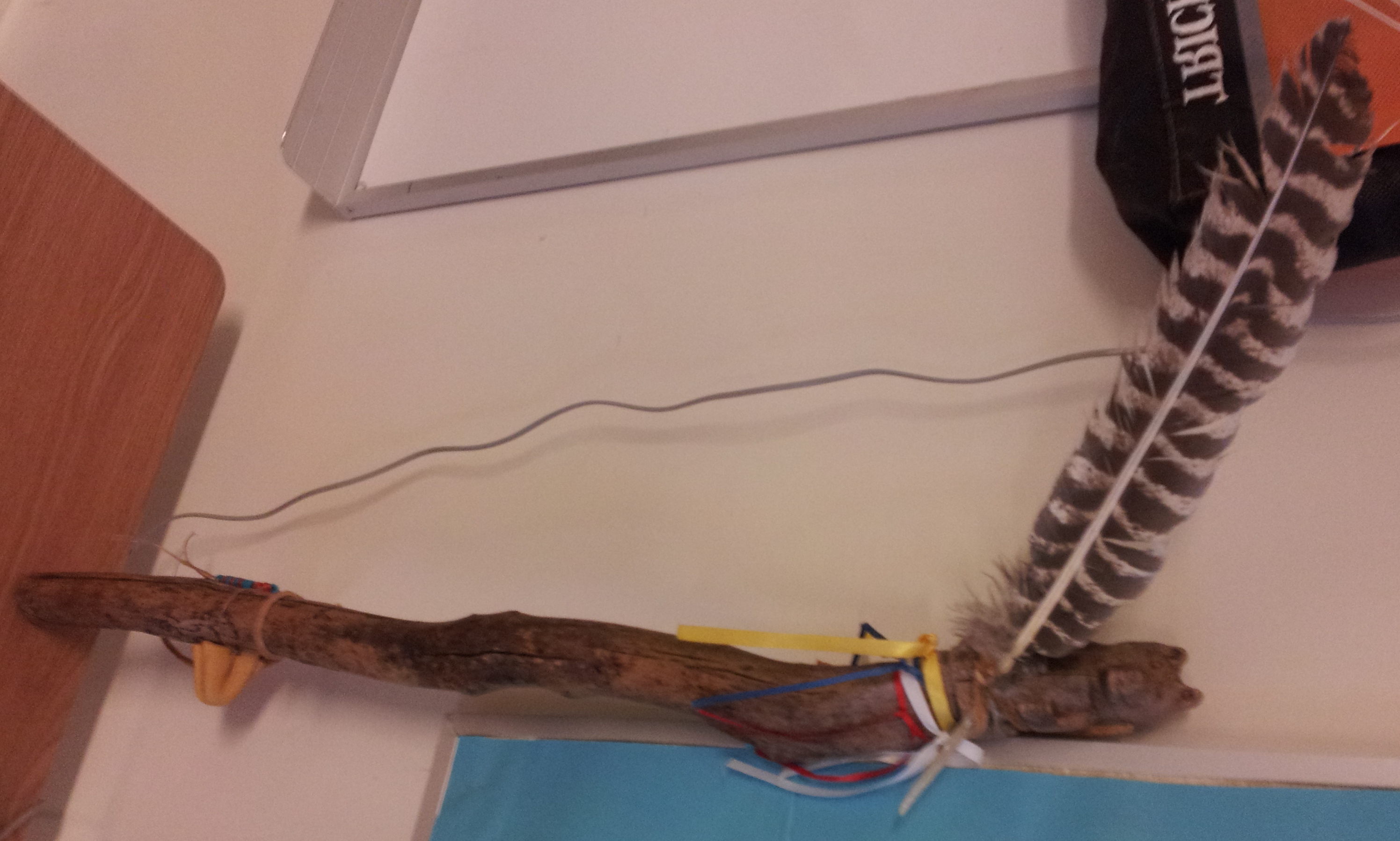
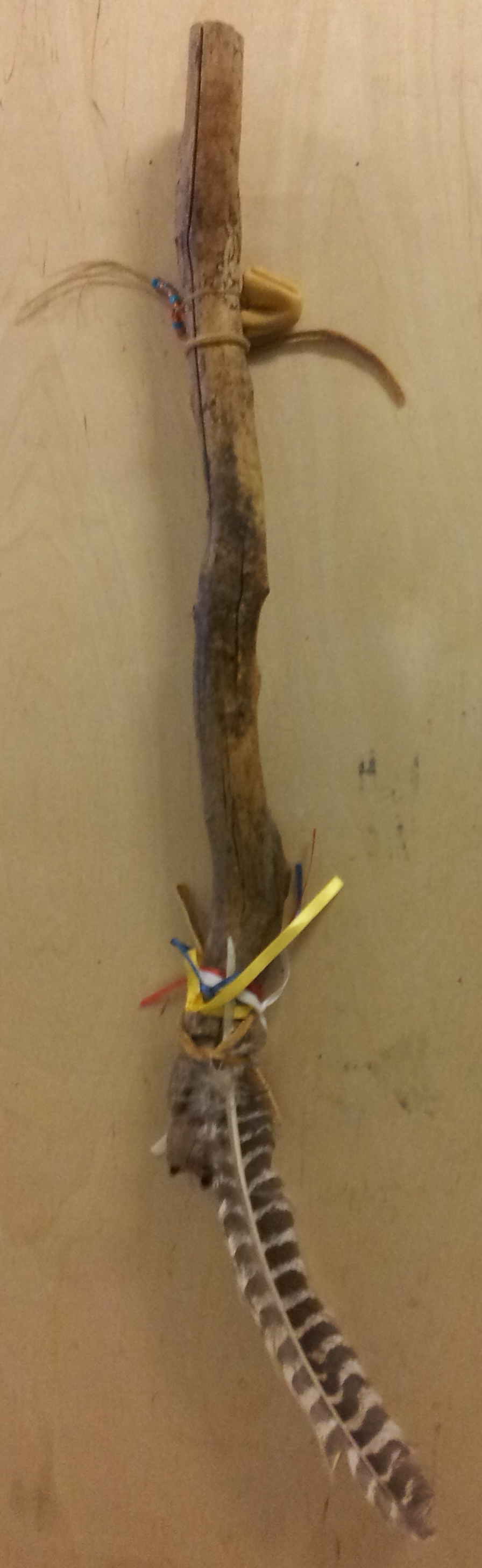
We use a ‘talking stick.’ The person with the ‘talking stick’ is the speaker and others listen. In an era of digital technologies, the stick reinforces a protocol of face-to-face conversation which we increasingly need in our world. The ‘talking stick’ was a gift from a parent last year. She is a member of a First Nation so it has some traditional meaning attached to its design.

The wood is driftwood which came from a local lake and reflects nature’s contributions to the circle. Someone carved a bear head into the top of the stick. In some traditions, the bear symbolizes courage, freedom, and power. The feather is from a hawk. Hawks are visionary and guide the person. The coloured ribbons represent the four directions in the circle. The parent attached a medicine bag. The medicine bag heals, guides and protects, and has materials or objects of value to its carrier.

Gratitude

The last few days I passed 500 likes, 250 follows, and am approaching 200 posts. It is hard to believe. In March I had a handful of likes, about 10 followers, and posted intermittently. Blogging is a virtuous circle. It is humbling. Is anyone reading? It is statistically irrelevant. But, once you get into a rhythm it is uplifting and life honouring.

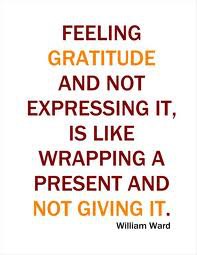
Part of my growth was and remains a supportive community, but we do not see each other face-to-face. Community involves sharing in ways that show the soul of people. I am grateful to find a place where I can do just that

I thank each of you who takes time, reads, and responds. You helped bring transformation in my life as a blogger, learner, and a person.

Companions – by Ivon

I occasionally forget what got me where I am today. I follow a blog called Slappshot and its author poses questions. Recently, he asked, “What’s your line of work and if you could choose another career…what would it be?

I responded, “I would not want to change anything, but, if I could keep everything else in tact, I want to be a professional hockey player.” You see what I have is very good. Yes, I struggle with things each day, but around me there are people who care and this poem is for them. I am learning to focus on the positive in life instead of the negative.

 Each morning

Awaken

Tentatively step forward

Discover voice

Discover meaning

That which nourishes, waters, and heals the soul

With those who stand with you

For you

By you

Share the journey

Break bread

Mutual, Reciprocal, Companionship

A refuge in each other

Speak mindfully, heartfully, graciously

Hear mindfully, heartfully, graciously

Your self and the other present.


Teachers as Storytellers

Think of the people we call teachers, not just in classrooms but in every facet of our lives. A quality they share is storytelling. They connect with our hearts and minds. We laugh, cry, yell, and carry on in every imaginable way with them. We remember them not because of what they taught us, but what they revealed about themselves and helped us discover about our self.

The best teachers are the best storytellers. We learn in the form of stories.

~Frank Smith

Santiago by David Whyte

The road seen, then not seen, the hillside
hiding then revealing the way you should take,
the road dropping away from you as if leaving you
to walk on thin air, then catching you, holding you up,
when you thought you would fall,
all the way forward always in the end
the way that you followed, the way that carried you
into your future, that brought you to this place […]
David Whyte
from “Pilgrim”

Ode to Grandma’s Socks

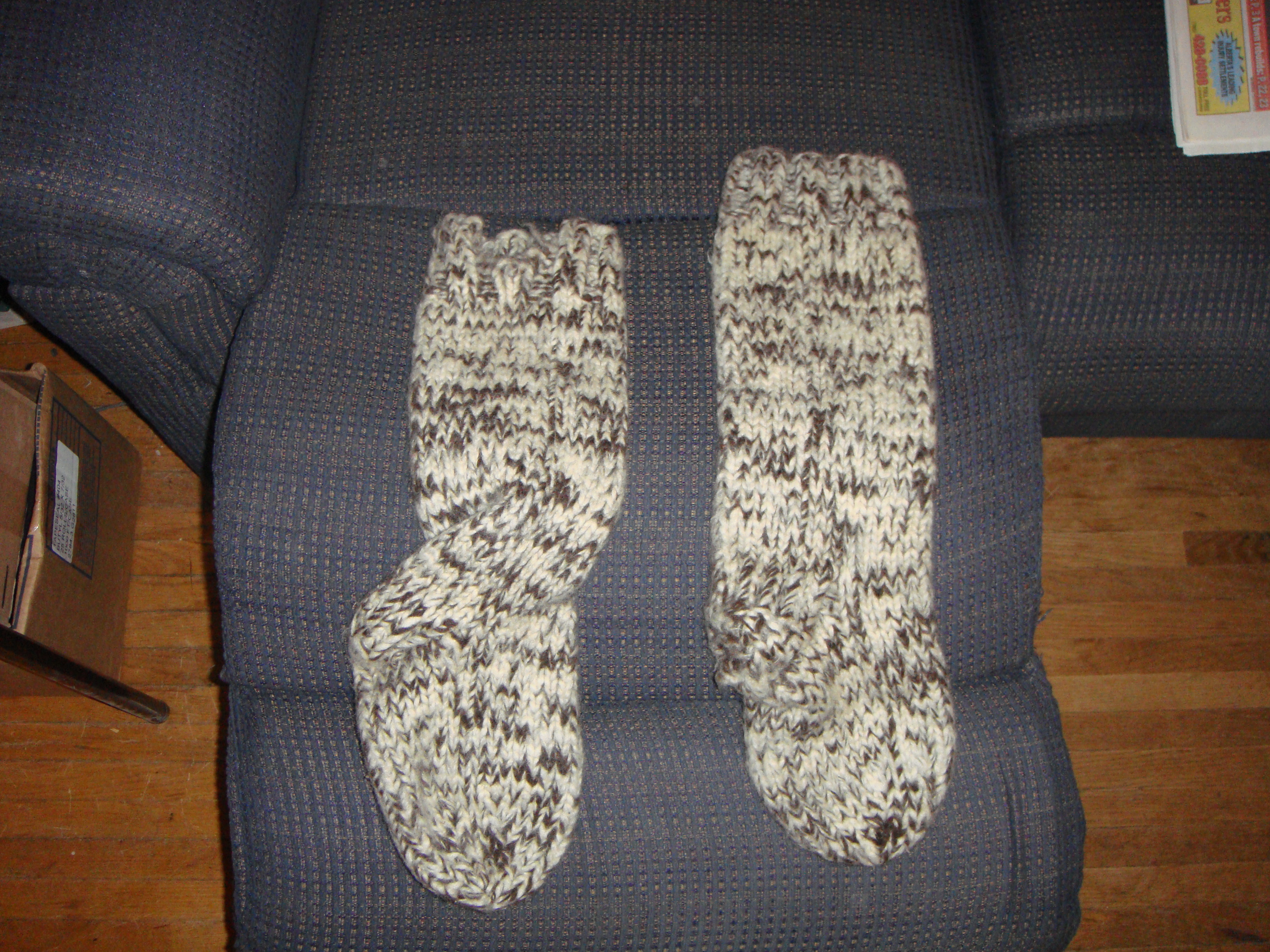
They are really my socks. They do not fit inside of any shoes or boots I own, so, technically, they might not qualify as socks, but as slippers. On cold winter mornings, I wear them around the house. What makes them interesting? I am glad you asked.

These were Christmas gifts. Kathy’s grandmother made them for us. We always knew after the first person opened their gift from Grandma what we were each receiving that year. That part never changed. What made each year’s gift deserving of an ode, was the time and generosity sewn, crafted, or knitted into the gifts. We also wanted to know what package our gift came in that year.

Grandma was a thrifty, frugal woman, not cheap. She lived and raised children in cabins almost her entire adult life. Their isolated homestead was on the McLeod River south and west of Edson, Alberta. She worked a trap line into her 80’s with the help of children and grandchildren. She worked hard and had little in terms of material wealth, but she gave gifts made by hand and given from the heart. Part of her thrift was the packaging of each gift. I think, after several years, it became part of a game, too. She packed gifts in macaroni, spaghetti, and cereal boxes. Even the adults thrived on this part of the gift-giving. What was our gift packed in that year?
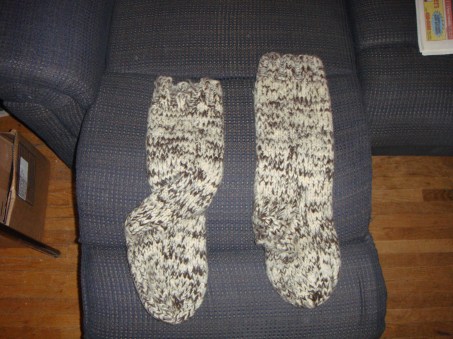
When I share Pablo Neruda’s Ode to My Socks with students, I tell this story. Children and adolescents need the figurative message made concrete. This poem is about moving life’s supposedly ordinary events to the extraordinary. Students often recount a gift given or received from the heart after my story. It moves the context of daily life forward from the ordinary, and makes it rich. Beauty is twice beauty, after all.

Ode to My Socks

Mara Mori brought me
a pair of socks
which she knitted herself
with her sheepherder’s hands,
two socks as soft as rabbits.
I slipped my feet into them
as if they were two cases
knitted with threads of twilight and goatskin,
Violent socks,
my feet were two fish made of wool,
two long sharks
sea blue, shot through
by one golden thread,
two immense blackbirds,
two cannons,
my feet were honored in this way
by these heavenly socks.
They were so handsome for the first time
my feet seemed to me unacceptable
like two decrepit firemen,
firemen unworthy of that woven fire,
of those glowing socks.

Nevertheless, I resisted the sharp temptation
to save them somewhere as schoolboys
keep fireflies,
as learned men collect
sacred texts,
I resisted the mad impulse to put them
in a golden cage and each day give them
birdseed and pieces of pink melon.
Like explorers in the jungle
who hand over the very rare green deer
to the spit and eat it with remorse,
I stretched out my feet and pulled on
the magnificent socks and then my shoes.

The moral of my ode is this:
beauty is twice beauty
and what is good is doubly good
when it is a matter of two socks
made of wool in winter.

Pablo Neruda
Lessons Learned

I  discovered quickly teaching was about learning more than it was about teaching. Teaching and learning form a paradox. I taught a Grade 4 class for the first four months of my teaching career. What did I learn in those four months?

Students want adults to care about them. This came about in an odd fashion. I wanted students to learn and insisted they complete homework. One particular student rarely did. The result was he stayed after school for a 1/2 hour for help. It only took a few minutes and he would ask for help. He would stand by the desk where he remained for the duration. Once there, he rarely needed my help. What he seemed to need was the feeling an adult cared enough to take time, help him, and, more importantly, be there specifically for him.

Students want adults to know them and eagerly share their stories. When I told them I coached and played various sports, they seized the opportunity and recounted their exploits and activities. I listened during lunch, at recess on the playground, and during class while they shared about their lives. I learned about their families, vacations, and pets. Part of caring was letting them tell me their stories knowing they were heard.

Students wanted to know who I was. My father-in-law passed away that year after a long illness. When I knew I would be away, I sat down with the students, told them about my loss, and I would be away, but I was coming back. The last point was important to them. I was someone important to them, they wanted to know I was coming back, and that I was OK. They wanted to care about adults too, and my story helped made that possible.

Students want to have fun. One day I noticed two large rocks on a classroom counter and asked what they were doing there. A student informed me they were for the rocks and minerals unit in the Science. I returned to my instruction, but after a few minutes, I paused and asked, “Has anyone seen the Rolling Stones?” No one had, but I insisted I had and could produce them live at that very moment. The students doubted me. I picked up the rocks, rolled them across the floor, and proudly proclaimed, “There are the Rolling Stones!”  Every  time an adult came in the room, the students insisted I produce the Rolling Stones for our visitors. They loved coming to school. It was fun.

I wonder how often teachers sit down and recall the ways children taught them? I try now and then. I come away feeling good about what we can learn from the ones we teach.

Subversive Seuss?

Fact is stranger than fiction. Charles Adler, in an op-ed column “We don’t need no ‘educrats'”, pointed out the sometimes subversive nature of Dr. Seuss. There is more to the story than Mr. Adler revealed in his article and a more detailed account is at “Yertle the Turtle Deemed ‘Too Political’ for Fragile Canadian Children.”

I am impressed with the dedicated bureaucratic representative of Prince Rupert [British Columbia] School District who acted to make sure susceptible elementary students were not corrupted by the seditious literature of a beloved, albeit radical, children’s author. After all, those small, impressionable beings will enroll in university level classes to learn about Paulo Freire‘s critical theory or Leonardo Boff‘s liberation theology and we could have a more just, humane world to live in. When I grow up, can I be paid to sit in an ivory tower and be out of touch with the real world? The jurisdiction representative stated “It’s a good use of my time if it serves the purpose of shielding the children from political messaging.” Oh my God, political messaging; what next? What is he talking about?

There is a larger context. The British Columbia Teacher’s Federation and the province of British Columbia are involved in a bitter labour dispute. The teacher was not reading a book to students in the classroom, but the quote was taken by a teacher to a meeting with management.

If there is a political statement being made here, it is in the impact on children’s learning. The book’s line “I know up on top you are seeing great sights, but down here on the bottom, we too should have rights” points to those with the least. Dr. Seuss spoke to the greatest measure of servant-leadership. What growth do we see in those with the greatest needs? When will someone speak for the children and serve and lead at the same time? Will adults need to grow up first so that growth can be fulfilled and measured? Neither side gets a pass here.

Part of the problem for children’s learning is the use of polarizing language in the dispute. Do the children care if there is a management side or teacher side? Are adults locked in a political game replete with childish behaviours to gain real or imagined political advantage while using children as pawns? This suggests questions, not answers. Are these not someone’s children? What are parents doing? What does this say about the state of public education? We talk a good story in education and say all the right things, but I am embarrassed and angry, as an educator and as a citizen in a purportedly democratic country, when I read articles of this nature. What drew us to this vocation? Or is it just a job now? What are the qualities exemplified by great teachers: compassion, caring, collaboration, etc? Are we living up to those when we talk and act this way?

Mr. Adler has this mostly right. What is missing is the following question, “When was the last time some people were in a classroom, rolled up sleeves, and taught children?”

The Heart of a Teacher

A colleague from Gonzaga sent me this video and fit the World Cafe conversations about learning, the best environment for learning to occur within, and the changing face of education in the 21st Century.

The video is Heart of a Teacher. I apologize for using a link and not the video upload, but I did not have the latter uploaded yet and wanted to get this out there.

I need to add this is another first; there are three postings today.

Images to Provoke Thought

I am doing two things with this posting. First, this is the first time I am posting twice on the same day. Second, it is the first time I am posting something other than a professional reflection. These images do reflect learning. I am terrified of heights. Even when I sit in the car, with my eyes closed at the Grand Canyon, I am aware I am at the edge of an abyss. This fear is both irrational and ironic. As an ice hockey player, I play goal and have faced shots of approximately 90 miles an hour. It could be argued this is foolish and I must be afraid. The irrational nature of fear and non-fear allows me to say, “I am not afraid.” If I could explain what draws me play goal, I would probably not do it. What I have concluded is I feel in control when I play goal, but do not when I fly, sit at the edge of the Grand Canyon, or climb a ladder and, as a result, suffer. Richard Rohr, a Franciscan priest, shared this about suffering in a recent posting: “Suffering of some sort seems to be the only thing strong enough to destabilize our arrogance and our ignorance. I would define suffering very simply as ‘whenever you are not in control’.”

Fortunately, Kathy comes to my rescue in moments of suffering and takes great pictures to share her experience. In that way, it is a shared experience and, for that, I am grateful. I see and experience these moments through her eyes.

Image

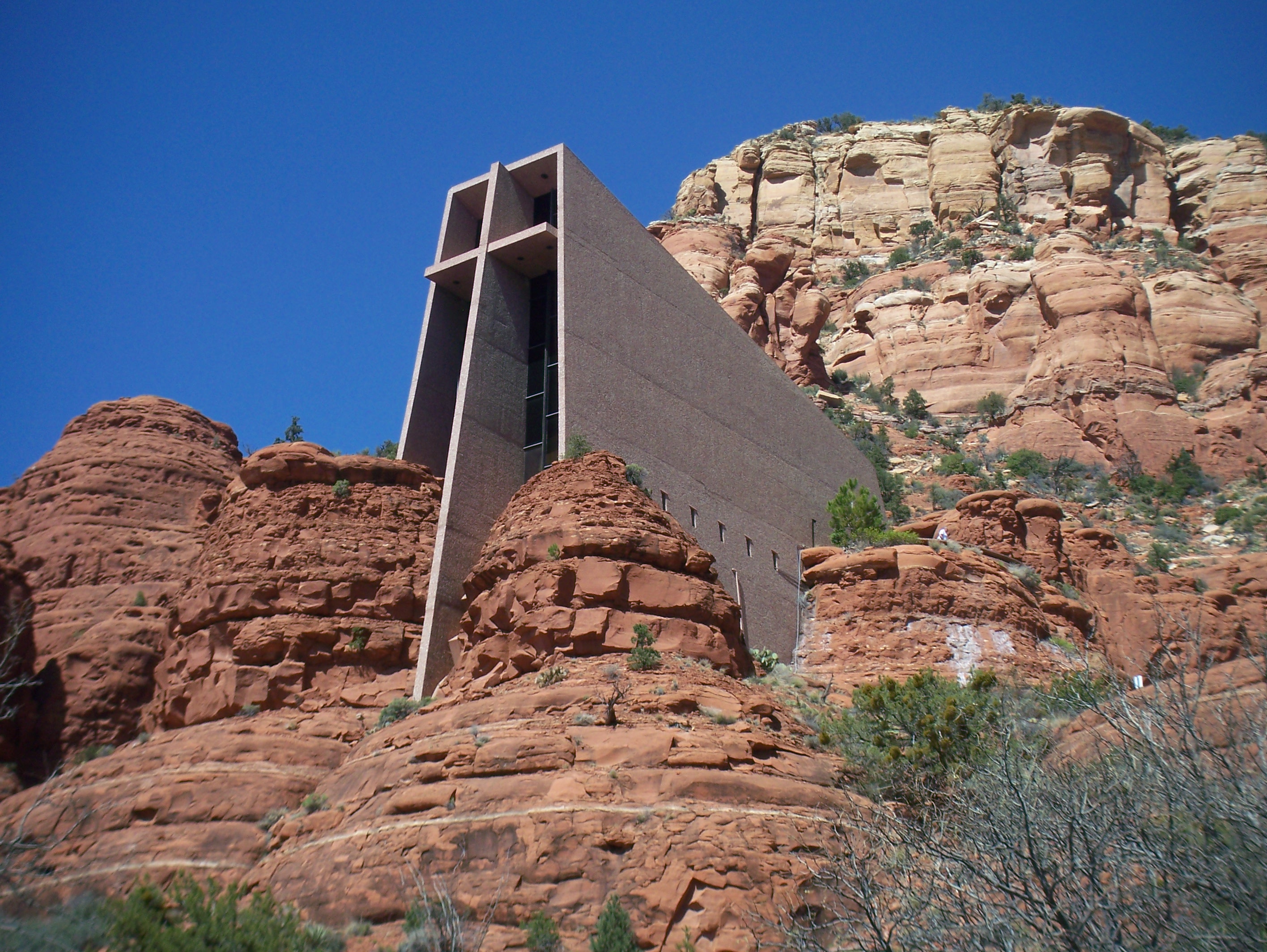
This is the Chapel of the Holy Cross built into the wall of the canyon overlooking Sedona, Arizona.

Image

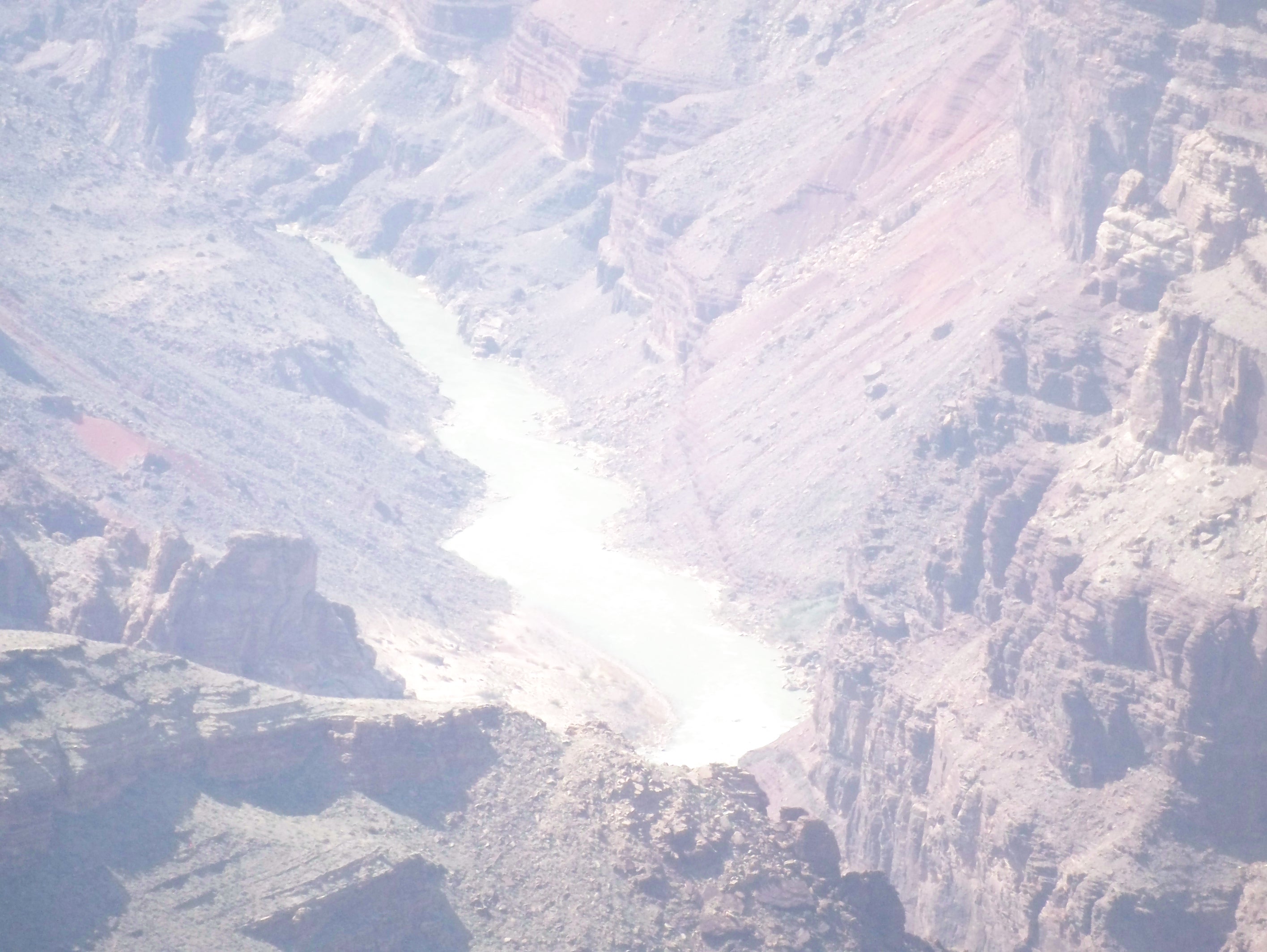
This is the Grand Canyon at Desert View which is the beginning of the trip along the North Rim of the Canyon. At the bottom of the several thousand foot drop, you catch a glimpse of the Colorado River.

Image

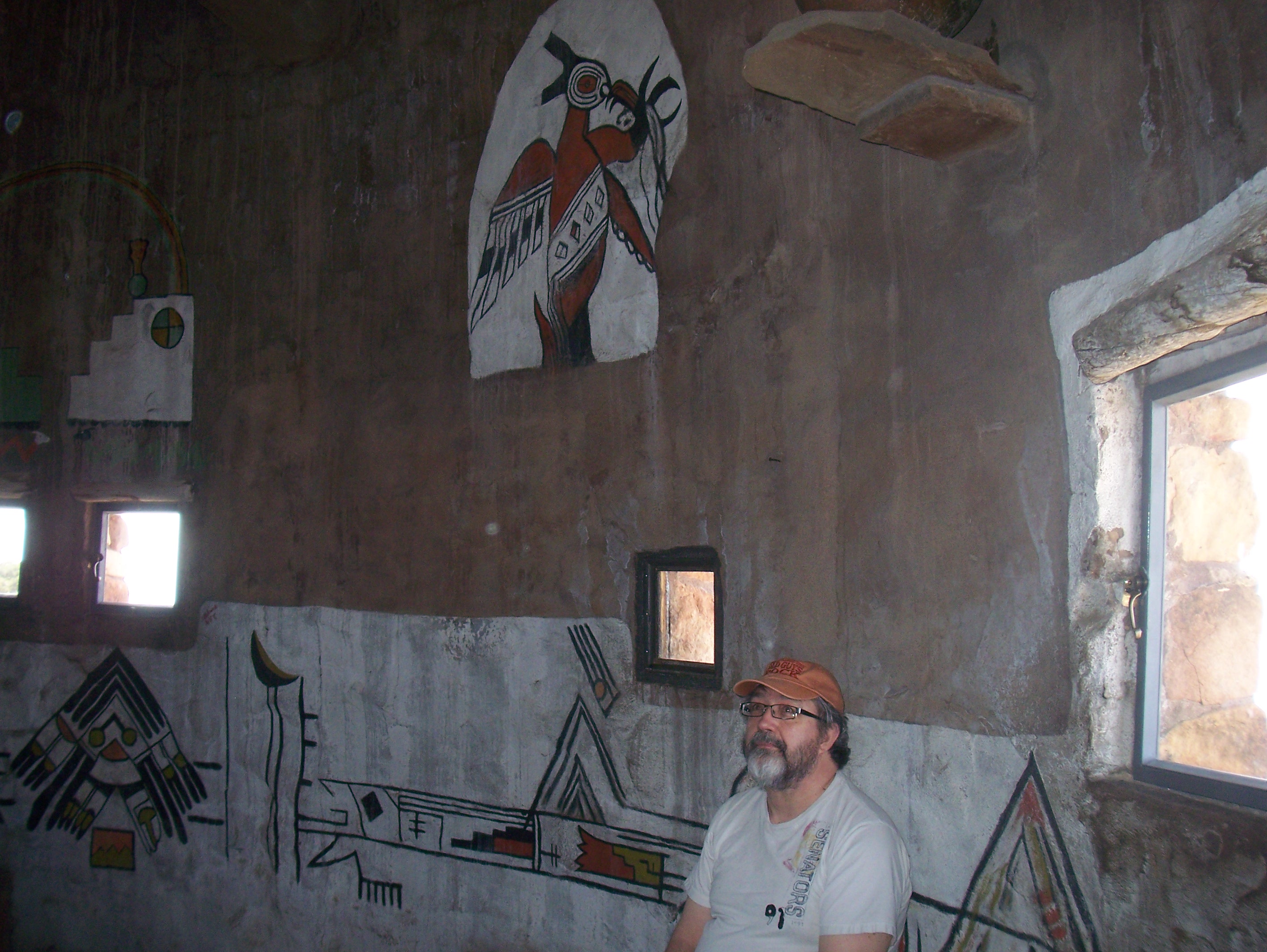
This is the watchtower where the previous photo was taken. I did make it inside and felt somewhat secure in the idea that I would not fall to the bottom of the canyon. I did look out the windows. The watchtower is an amazing, contemporary acknowledgement of the history and nature of the region as evidenced by the art work on the walls.

Image

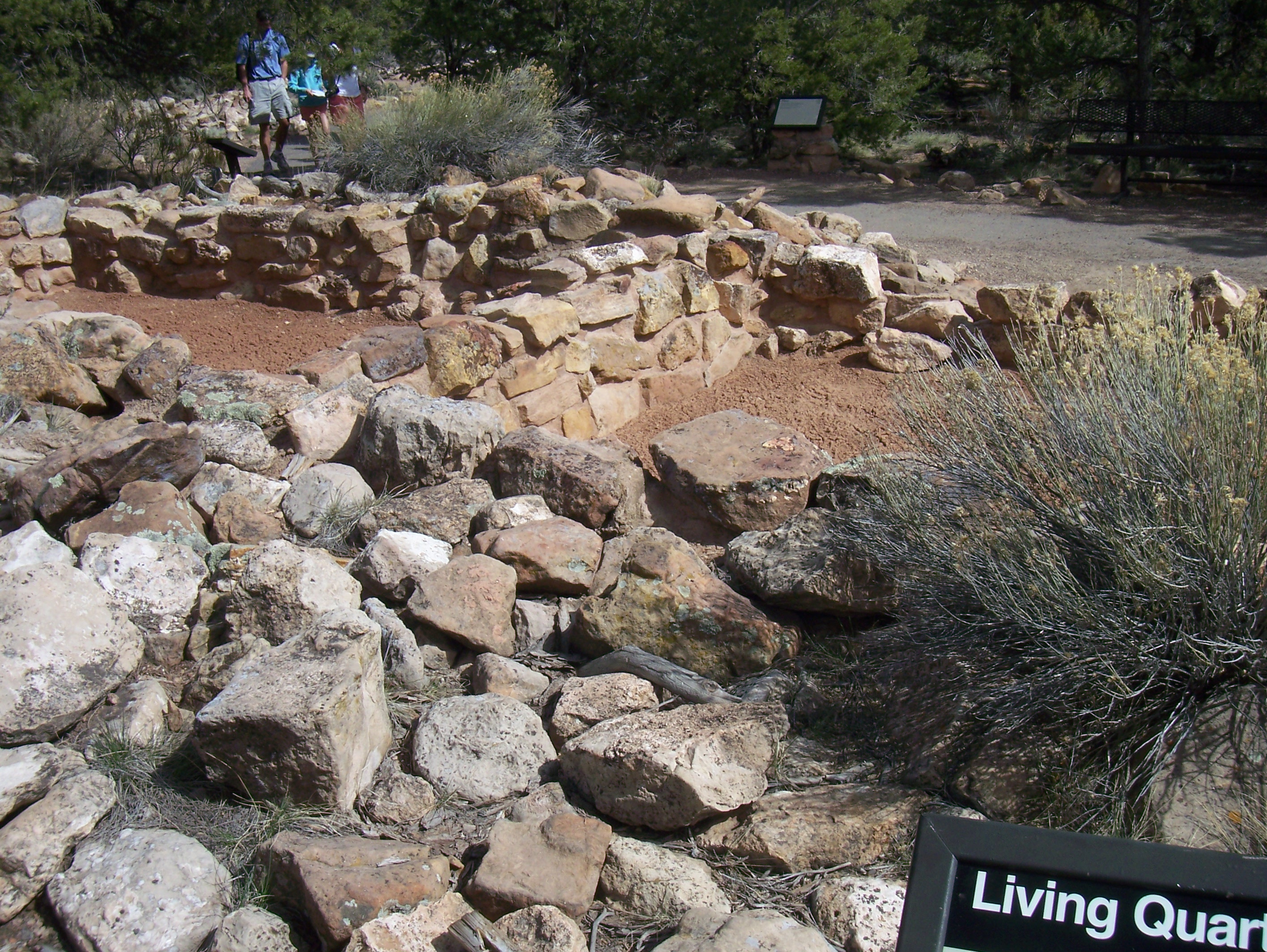
These are the remnants of living quarters of a group of people who lived in the Grand Canyon area about 800-900 years ago. It is part of what is called the Tusayan Ruins. I was able to get out of the car as this was on the other side of the highway from the Grand Canyon. The people who lived here were small and did not grow to more than 5 feet in height, so the living quarters were quite small. What caused them to leave? That is an eloquent question open to discussion.

Image

This is a picture of Kathy and I at Tusayan. You can see I am still concerned about the idea we are 7000 feet above sea level. Only a small smile sneaks out. If you squint, the snow-covered peaks of the San Francisco mountain range are in the background. This weekend concluded the Arizona ski season. The highest peak is 12,000 plus feet and several peaks remain snow covered year round.

This is a tiny sampling of pictures taken over the past week. Kathy takes pictures to overcome my fear of heights while visiting  places like the Grand Canyon, Jasper, and Yellowstone.