Tag Archives: Mindful Practice

Glacier Wildlife

Kathy and I went through Glacier National Park in Montana on our way home. Kathy traveled the route on her way to Spokane. Americans seem to build mountain national parks around the geography which means we saw little wildlife, but we did see some we don’t in Canadian mountain parks. This was clear on the Going to the Sun Road where we saw mountain goats. When we travel through Canadian mountain parks, we see mountain sheep which come down into the valleys during the summer. Goats stay high up where it is cooler. Unless a person hikes the back country, Waterton Lakes National Park, which borders on Glacier, does not have the goats for people to see easily.

This one was on the patch of glacier on the side of the road where it was able to stay cool.

Goat 1

This one posed. You can see they are somewhat comfortable with humans being around, but I still think of them as wildlife. It almost looked a statue.
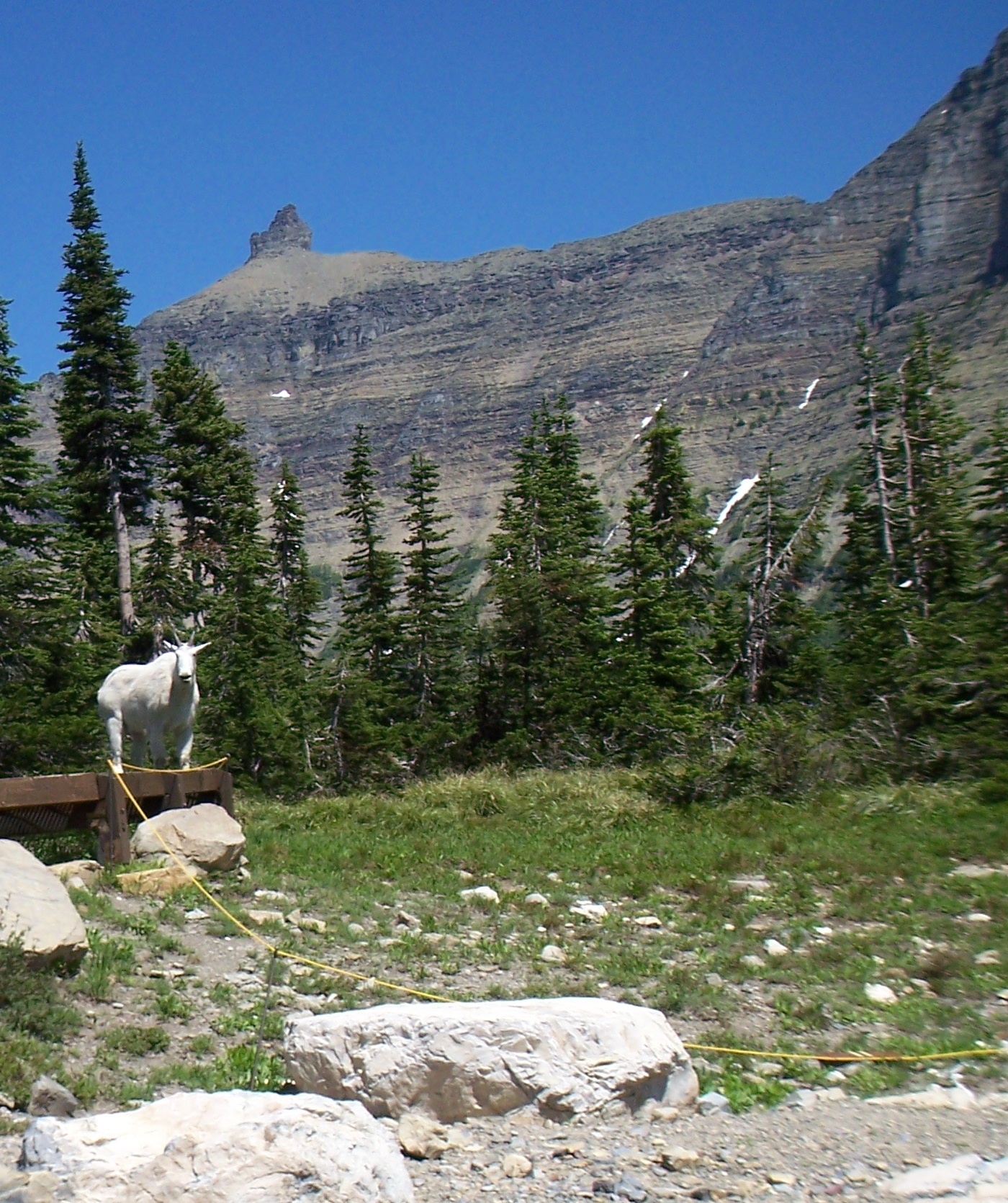
Goat 3

As we hiked, I came around a corner and this spring’s fawn was separated from its mother and twin. I don’t know who was more surprised: him/her or me. Initially, we were 4 or 5 feet apart. Kathy had her camera and got great pictures. The background is part of an amphitheater and the deer were grazing around it.
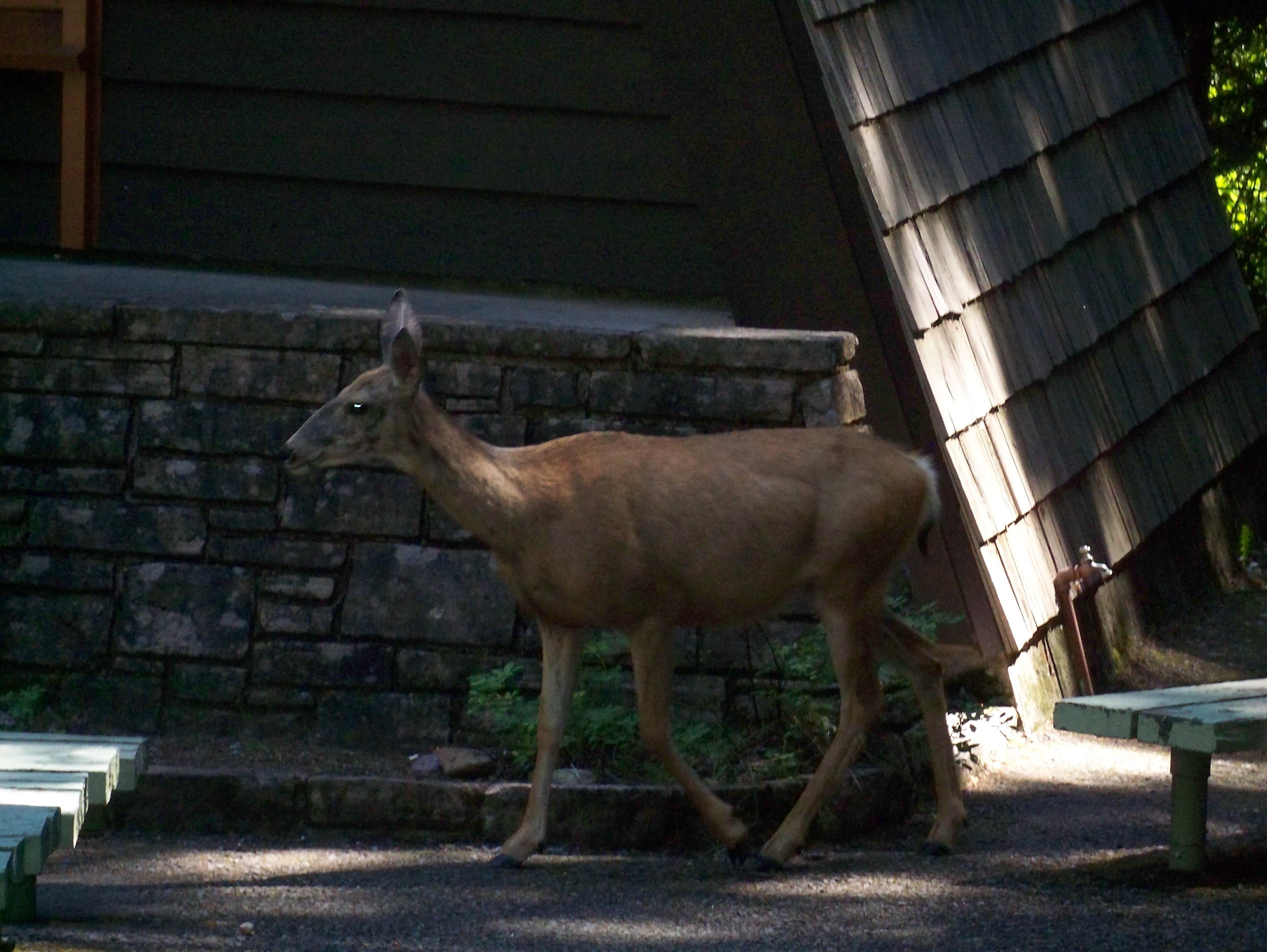
Deer 1

The doe and another fawn were across the amphitheater, but I had inadvertently blocked the path for the first fawn to rejoin them. They made a kind of whistling sound to each other and the doe never appeared overly concerned. She actually grazed on the trees and waited patiently.

Deer 2

The separated fawn took off along a path that was across the clearing.
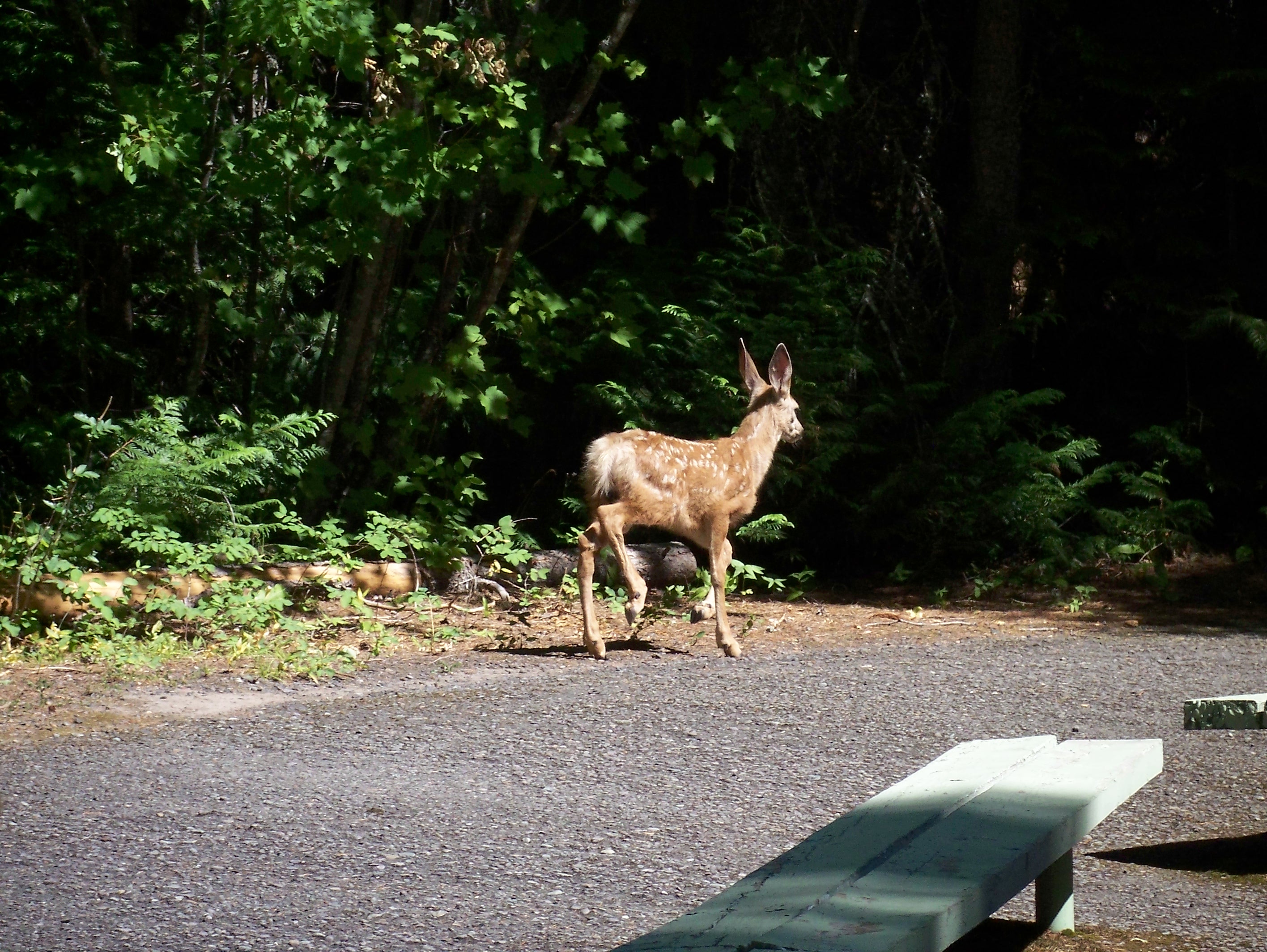
Deer 3

The fawn re-appeared across the amphitheater and they went off. It seemed like it was all in day’s work for them.
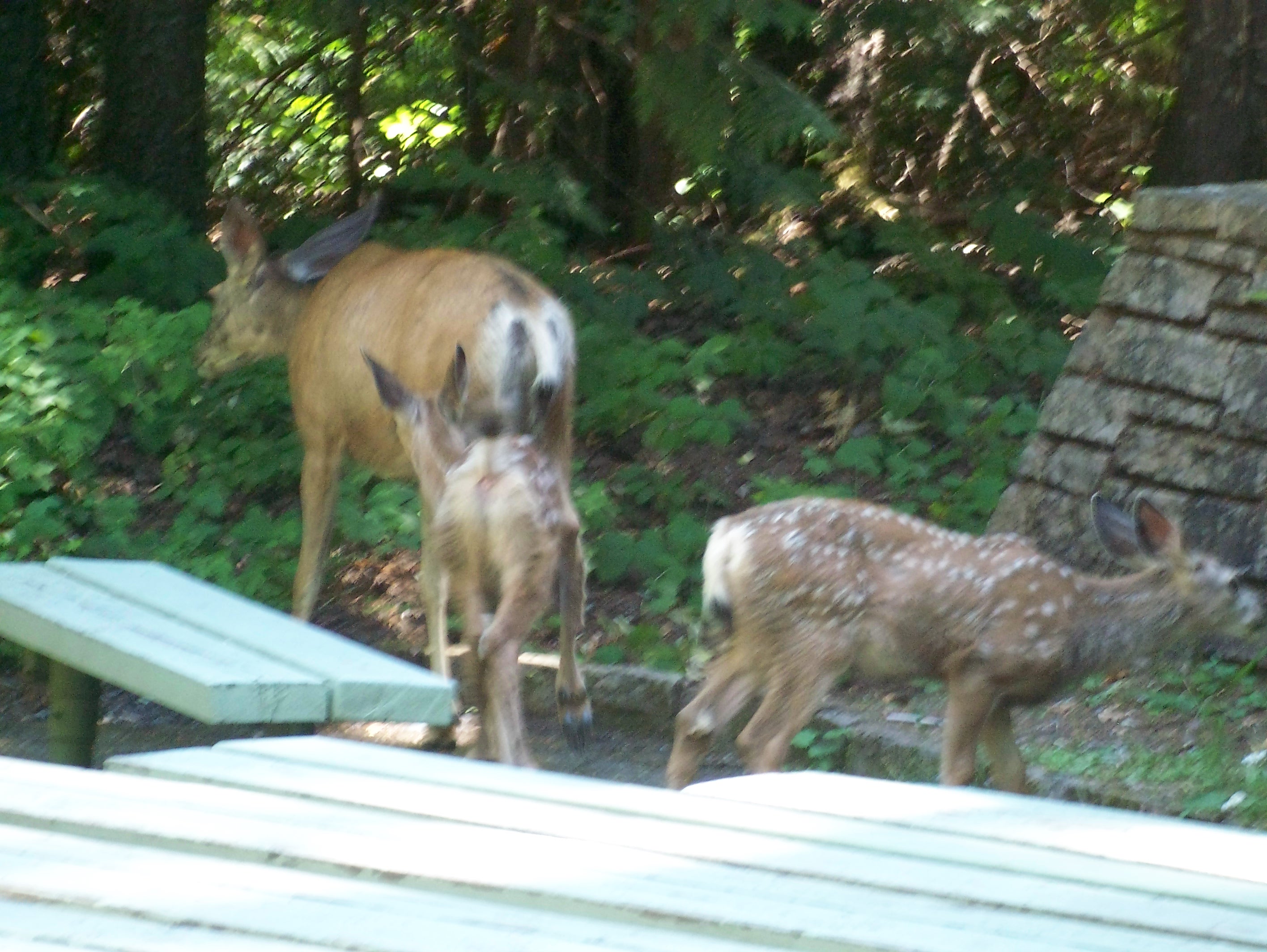
Deer 5

The Seven of Pentacles

Marge Piercy wrote of the time it takes to create what is good in life. In a fast-paced, hectic world, it is nice to view life as an ecosystem. Good things in life, those things I cherish, were nurtured and took time to appear. They depend upon many things to grow.

In the rich ecosystem, there is mystery and wonder. I ask, “What happened” and expect no definitive answers. I grow to accept it is good and healthy there are no answers and questions lead me forward, slowly and gently into the newness of each moment.

I took the picture at the farm earlier this spring. The tree in the centre is a woodpecker’s roost and, when I look, I see holes in the tree. A trail wanders through the underbrush. I ask who or what else uses the path? Who or what else lives close by? What are the connections? The lifeless tree sustains the ecosystem. Everything is important. I only have to let it be so. When I slow down, questions emerge and sometimes answers, but only occasionally.

Under a sky the color of pea soup

she is looking at her work growing away there

actively, thickly like grapevines or pole beans

as things grow in the real world, slowly enough.

If you tend to them properly, if you mulch, if you water,

if you provide birds that eat the insects a home and winter food,

if the sun shines and you pick off caterpillars,

if the praying mantis comes and the ladybugs and bees,

then the plants flourish, but at their own internal clock.

Connections are made slowly. sometimes they grow underground.

You cannot tell always by looking what is happening.

More than a half a tree is spread out in the soil under your feet.

Penetrate quietly as the earthworms that blows no trumpet.

Fight persistently as the creeper that brings down the tree.

Spread like squash plant that overruns the garden.

Gnaw in the dark and use the sun to make sugar.

Weave real connections, create real nodes, build real houses.

Live a life you can endure: make love that is loving.

Keep tangling and interweaving and taking more in,

a thicket and bramble wilderness to the outside but to us

interconnected with rabbit runs and burrows and lairs.

Live as if you liked yourself, and it may happen:

reach out, keep reaching out, keep bringing in.

This is how we are going to live for a long time: not always,

for every gardener knows that after the digging, after

the planting,

after the long season of tending and growth, the harvest comes.

Summer 2013

Those Images

Kathy went shopping and bought a book. It sounds mundane, but, when she opened the book, she found a small piece of paper with this Yeats‘ poem written on it. We are headed home tomorrow. We will take a few days, travel into Montana, across Glacier National Park, and head north. We will see some of the wild on that trip. I doubt lions will appear but a mountain lion might show up and maybe an eagle on the wing. Certainly, we find better exercise in sunlight and wind.

On the back or it might be the front of the slip, someone wrote the Gandhi quote: “Be the change you wish to see in the world and PEACE”.

What if I bade you leave

The cavern of the mind?

There’s better exercise

In the sunlight and wind.

I never bade you go

To Moscow or Rome.

Renounce that drudgery,

Call the Muses home.

Seek those images

That constitute the wild.

The lion and the virgin,

The harlot and the child.

Find in middle air

An eagle on the wing.

Recognize the five

That make the Muses sing.

The Niagra River

Gary sent me to this poem after I posted Test by Kay Ryan. I seek meaning in my life for those things around me. Other times I don’t pay enough attention, take things for granted, and do not realize the substance of what is there. Even something as large as the Niagara River can go unnoticed and blur into the background. When I pull it forward, its meaning is there, not explainable, but there. I am reminded that meaning exists even when I cannot explain it.

For those who have not visited Gary, you will enjoy his poetry. I do.

Normal
0

false
false
false

EN-CA
X-NONE
X-NONE

/* Style Definitions */
table.MsoNormalTable
{mso-style-name:”Table Normal”;
mso-tstyle-rowband-size:0;
mso-tstyle-colband-size:0;
mso-style-noshow:yes;
mso-style-priority:99;
mso-style-parent:””;
mso-padding-alt:0cm 5.4pt 0cm 5.4pt;
mso-para-margin-top:0cm;
mso-para-margin-right:0cm;
mso-para-margin-bottom:10.0pt;
mso-para-margin-left:0cm;
line-height:115%;
mso-pagination:widow-orphan;
font-size:11.0pt;
font-family:”Calibri”,”sans-serif”;
mso-ascii-font-family:Calibri;
mso-ascii-theme-font:minor-latin;
mso-hansi-font-family:Calibri;
mso-hansi-theme-font:minor-latin;
mso-fareast-language:EN-US;}

As though

the river were

a floor, we position

our table and chairs

upon it, eat, and

have conversation.

As it moves along,

we notice—as

calmly as though

dining room paintings

were being replaced—

the changing scenes

along the shore. We

do know, we do

know this is the

Niagara River, but

it is hard to remember

what that means.


Test

Test

Kay Ryan wrote this deeply spiritual and moving poem. It has a Zen, mystical quality. I am sure there is Something or Someone holding everything together. When something disrupts the ocean of universal consciousness and it goes a little off course or yaws, we feel only the slightest pull. A larger energy field absorbs the drops and warps. The adjustments occur in ways so we are not tested beyond our limits and find a path to walk.

Imagine a surface

so still and vast

that it could test

exactly what

it set in motion

when a single stone

is cast into its ocean.

Possessed of a calm

so far superior

to people’s, it alone

could be assessed

ideally irascible.

In such a case,

if ripples yawed

or circles wobbled

in their orbits

like spun plates

it would be the law

and not so personal

that what drops warps

what warps dissipates.

Harrowing

Parker Palmer wrote this poem with double-meaning in the title. I can live life as a process which ravages, furrows, and scars m face. Living in the past does this. Life is harrowing that way. Or, I leave the travails of yesterday as humis or humility as a foundation for a new crop. I can turn soil, make it richer, and create a greener world.

The poem reminded me of Gadamer‘s concept of fused horizons which is emerging as a central concept in my journey. We can build on the past by using it, good and bad, as a way of making the future a better place. Today’s view; this moment is the place we find our way from.

The plow has savaged this sweet field

Misshapen clods of earth kicked up

Rocks and twisted roots exposed to view

Last year’s growth demolished by the blade.

I have plowed my life this way

Turned over a whole history

Looking for the roots of what went wrong

Until my face is ravaged, furrowed, scarred.

Enough. This job is done.

Whatever’s been uprooted, let it be.

Seedbed for the growing that’s to come.

I plowed to unearth last year’s reasons—

The farmer plows to plant a greening season.

Ars Poetica

My writing is one-dimensional now. I wrote a lot this week. I spend 15-30 minutes everyday free-writing and do more formal writing for classes and dissertation. Nothing has popped up for new poetry, but I feel that will change over the next week or two. Slowly, I am finding that creative, meditative space that poetry occupies and speaks when I am quiet enough to hear.

I read earlier today and came across this poem by Archibald MacLeish. I am unfamiliar with the poet or poem, but the lines about poems being silent and wordless make sense. It is sometimes in the spaces between words that we find the greatest meaning. Here I find my soul. In those moments of silence, regardless their length I am present and attentive.

A poem should be palpable and mute

As a globed fruit;

Dumb

As old medallion to the thumb;

Silent as the sleeve-worn stone

Of casement ledges where the moss has grown–

A poem should be wordless

As the flight of birds.

A poem should be motionless in time

As the moon climbs;

Leaving, as the moon releases

Twig by twig the night-entangled trees–

Leaving, as the moon behind the winter leaves,

Memory by memory of the mind.

A poem should be motionless in time

As the moon climbs.

A poem should be to:

Not true.

For all the history of grief

An empty doorway and a maple leaf;

For love

The leaning grasses and two lights above the sea–

A poem should not mean;

But be.

Mindful

I struggled for a few days with the overwhelming job, or so it seemed, of beginning to craft a purpose statement for the dissertation topic. Thankfully, my advisor told me to read and read and read the classics in education and the not so classic. I immersed myself in John Dewey, who I have read before, Alfred North Whitehead, who I had not read, and Ivan Illich, who worked with Paulo Freire. I am going to re-read Freire.

Last night, I fell asleep thinking about these people and woke up still thinking about them. As I got mobile, it dawned on me what happened and I recalled Mary Oliver’s beautiful poem. I don’t hold answers. I hold questions. Their eloquence lead me into life daily and the answers are often in the things I take for granted. I posted a re-worked purpose statement, based on just letting things percolate and doing some free writing, and one of my colleagues commented back that it was making more sense. Be mindful scholar.

Every day

I see or I hear

something

that more or less

kills me

with delight

that leaves me

like a needle

in the haystack

of light.

It is what I was born for–

to look, to listen,

to lose myself

inside this soft world–

to instruct myself

over and over

in joy,

and acclamation.

Nor am I talking

about the exceptional,

the fearful, the dreadful–

but of the ordinary,

the common, the very drab,

the daily presentations.

Oh, good scholar,

I say to myself,

how can you help

but grow wise

with such teachings

as these–

the untrimmable light

of the world,

the ocean’s shine,

the prayers that are made

out of grass?

Ode on a Grecian Urn

When I am at Gonzaga, I attend what we call Journal Club once a week. We read, analyze, and share articles, book chapters, or books we have read recently. Once we have shared, we spend time in an open forum discussion based on the presentations. Today, one of the participants brought up this poem by John Keats to help describe the difference between rational thought and faith-based thought. Some things cannot be explained. Words fail me at those times to describe something like love, a piece of art, and any other form of beauty in life. Another person pointed out, when words fail, we are left with the mystery of some thing or concept. I am left with the mystery that certain questions offer.

Thou still unravish’d bride of quietness,

Thou foster-child of silence and slow time,

Sylvan historian, who canst thus express

A flowery tale more sweetly than our rhyme:

What leaf-fring’d legend haunts about thy shape

Of deities or mortals, or of both,

In Tempe or the dales of Arcady?

What men or gods are these? What maidens loth?

What mad pursuit? What struggle to escape?

What pipes and timbrels? What wild ecstasy?

Heard melodies are sweet, but those unheard

Are sweeter; therefore, ye soft pipes, play on;

Not to the sensual ear, but, more endear’d,

Pipe to the spirit ditties of no tone:

Fair youth, beneath the trees, thou canst not leave

Thy song, nor ever can those trees be bare;

Bold Lover, never, never canst thou kiss,

Though winning near the goal yet, do not grieve;

She cannot fade, though thou hast not thy bliss,

For ever wilt thou love, and she be fair!

Ah, happy, happy boughs! that cannot shed

Your leaves, nor ever bid the Spring adieu;

And, happy melodist, unwearied,

For ever piping songs for ever new;

More happy love! more happy, happy love!

For ever warm and still to be enjoy’d,

For ever panting, and for ever young;

All breathing human passion far above,

That leaves a heart high-sorrowful and cloy’d,

A burning forehead, and a parching tongue.

Who are these coming to the sacrifice?

To what green altar, O mysterious priest,

Lead’st thou that heifer lowing at the skies,

And all her silken flanks with garlands drest?

What little town by river or sea shore,

Or mountain-built with peaceful citadel,

Is emptied of this folk, this pious morn?

And, little town, thy streets for evermore

Will silent be; and not a soul to tell

Why thou art desolate, can e’er return.

O Attic shape! Fair attitude! with brede

Of marble men and maidens overwrought,

With forest branches and the trodden weed;

Thou, silent form, dost tease us out of thought

As doth eternity: Cold Pastoral!

When old age shall this generation waste,

Thou shalt remain, in midst of other woe

Than ours, a friend to man, to whom thou say’st,

“Beauty is truth, truth beauty,—that is all

Ye know on earth, and all ye need to know.”

How to Regain Your Soul

I opened a poetry anthology to the index and this title jumped off the page. It has been an eventful week. I settled into Spokane including a place to lay my head this fall. When I come here, I find I feel I am in community. It was word-of-mouth that led me to the apartment I will have. One person told me to check with another who referred me to another and eventually the circle was complete.

When I am here, I drop some screen time with  no television. I turn my computer on and listen to CKUA the greatest little radio station in the world.

I need to settle into a regime now to tackle the reading, writing, and research that is around the corner. Gonzaga has excellent to a beautiful river walk to the Spokane Falls and Riverfront Park which I visited in its heyday. Spokane hosted the World’s Fair in 1974 and I was in Nelson BC then and came down with friends.

The river walk is a great place to let my brain relax, my mind to expand, and physically be invigorated. Last summer, as I walked, I found my poet’s voice and I am counting on that happening again over the next couple of weeks. I regain my soul in nature as William Stafford so eloquently puts it. When we got to Waterton, it was dragonflies over Red Rock Canyon that were my white butterflies.

Come down Canyon Creek trail on a summer afternoon

that one place where the valley floor opens out. You will see

the white butterflies. Because of the way shadows

come off those vertical rocks in the west, there are

shafts of sunlight hitting the river and

a deep long purple gorge straight ahead. Put down your pack.

Above, air sighs the pines. It was this way

when Rome was clanging, when Troy was being built,

when campfires lighted caves. The white butterflies dance

by the thousands in the still sunshine. Suddenly, anything

could happen to you. Your soul pulls toward the canyon

and then shines back through the white wings to be you again.

Red Rock Canyon