Tag Archives: mindfulness

Advice From Ivon

There was an image here and some of you responded. I appreciated your comments and left them in place. Apparently, I infringed on a copyright of a group that sells the postcard I posted. I leave you with this.

What advice can I give?

Stand firmly rooted to the Earth.

Reach and touch the sky.

Take risks.

Trust those closest to you.

Love those closest to you.

Find your voice.

Speak right.

Act right.

Apologize sincerely when it is right do so.

And wonder in awe when it is time do so.

About the rights of nature and humans.

Take care.

I humbly apologize for using an image posted in various other places. I meant no harm … Here is what I am legally obliged to present for making a human error:

The Advice from a Tree image and words previously posted were an infringement of the copyrights of Ilan Shamir and Your True Nature and has been shared around the Internet. I am reposting the correct version of this and encourage you to visit the Advice from Nature website at http://www.yourtruenature.com for Advice from a Tree and over 100 other advice bookmarks, posters, journals, tshirts and other eco products.                                                                                    copyright 1993-2012 YTN

Again, enjoy.

ivonprefontaine's avatar

Father Day’s

I subscribe to a daily meditation written by Father Richard Rohr. a Franciscan priest.I talk and write about the concept of common sense, which I understand as local and global. Father Rohr cast it from a theological perspective, I think the explanation provides an insight gained without reading Gadamer’s Truth and Method. I believe there is a universal truth or common sense (Vico called this sensus communis), something that makes us all brothers and sisters bringing us together in community. I think Father Rohr offers an explanation though his meditation on Father’s Day helping us to live in community each day. Certainly, Rilke does.

“It is this sense that founds community” (Gadamer, 1989, p. 19).

Gadamer, H-G. (1989). Truth and method. (J. Weinsheimer & D. G. Marshall, Trans.).  New York: Continuum.

Catch only what you’ve thrown yourself, all is

mere skill and little gain;

but when you’re suddenly the catcher of a ball

thrown by an eternal partner

with accurate and measured swing

towards you, to your center, in an arch

from the great bridgebuilding of God;

why catching then becomes a power–

not yours, a world’s.

–Rainier Maria Rilke

Santiago by David Whyte

The road seen, then not seen, the hillside
hiding then revealing the way you should take,
the road dropping away from you as if leaving you
to walk on thin air, then catching you, holding you up,
when you thought you would fall,
all the way forward always in the end
the way that you followed, the way that carried you
into your future, that brought you to this place […]
David Whyte
from “Pilgrim”

Dance Like No One is Watching

Children do this so well; adults, not so much. Enjoy your day.

I hear conflicting stories about who to attribute this quote. Somewhere I heard or read that Satchel Paige, the Hall of Fame pitcher, said this in response to questions about his phenomenal longevity in the game.

You gotta do what you gotta do to be what you are!

Beginning of the Year Poetry

I wanted something a little different for the beginning of the year. We had new students and sometimes new students find it difficult those first few days to introduce themselves and share something about themselves with others who are better established. We are an alternative school environment. Some students have been with us since Grade 1 and are now in junior high. Without realizing it, returnees form groups and new students are slightly intimidated by the tightness that has formed despite everyone’s best efforts. I tried a poetry activity and it worked very well.

1. I used a Kahlil Gibran quote from The Prophet:

“Say not, “I have found the truth,” but rather, “I have found a truth.”
Say not, “I have found the path of the soul.” Say rather, “I have met the soul walking upon my path.”
For the soul walks upon all paths.
The soul walks not upon a line, neither does it grow like a reed.
The soul unfolds itself like a lotus of countless petals.”

The quote served as a conversational anchor. I read it out loud a couple of times. Students re-read it, highlighted words or questions that emerged, discussed their reflective findings in pairs, and finally we shared with the group. What did this passage mean? What was the theme? We talked about self-knowledge and truths. I refer to Parker Palmer in my classroom so students had discussed the idea of holding one’s own truth while respecting the truths of others.

2. Students prepared a small poster. I asked them to include two poems, some pictures of activities they enjoyed, some quotes they thought helped describe who they were, and their name proudly displayed in the centre of the poster.

3. Initially, I wanted a free verse poem and a cinquain poem. The former was too abstract for some students so changed allowing some flexibility with another formula poem i.e cinquain, diamond, or acrostic. This helped considerably. Even though I teach in a multi-grade setting, with three junior high grades, this struggle with abstraction was not based on grade level only. There were some older children who struggle with the free verse and younger children who did not.

4. Each child put their poster about who they were on the bulletin board and it has remained there all year. An interesting note is, when corners of posters have come loose on the bulletin board, students take time to tack them back up carefully even if it is not their poster.

For those unfamiliar with the pattern poems I referenced above, here are some instructions and examples.

How to Write a Cinquain

There are two methods:

Line 1 – a one word title
Line 2 – a 2 word phrase that describes your title or you can just use two words
Line 3 – a 3 word phrase that describes an action about your title or just actions words
Line 4 – a 4 word phrase that describes a feeling about your topic or just feeling words
Line 5 – one word that refers back to your title

Line 1 – two syllables
Line 2 – four syllables
Line 3 – six syllables
Line 4 – eight syllables
Line 5 – two syllables

Example

Ivon

Mr. P

teach, learn, enjoy

It is my calling

Teacher

How to Write a Diamond Poem

Method

Line 1 – a one word noun
Line 2 – 2 adjectives that describe the noun
Line 3 – 3 verbs that the noun does
Line 4 – 4 things (nouns) that the top noun and the bottom noun has
Line 5 – 3 verbs that the bottom noun does
Line 6 – 2 adjectives that the describes the bottom noun
Line 7 – a one word noun that is opposite the top noun

Example

cat
furry, silky
sleeping, purring, meowing
tail,   fur,    tongue,   collar
barking, playing, licking
friendly, big
dog

How to Write Acrostic Poems?

Acrostic is an easy poetry formats to use with young writers.

It can be about any subject, written in different ways, but the simplest form is to put the letters that spell your subject down the side of your page. When you have done this then you go back to each letter and think of a word , phrase or sentence that starts with that letter and describes your subject, and give out your hidden message that’s contained in this format, that can run forwards, or backwards.

Example

I ngenious

V irtue

O mniscient (or so students think)

N octurnal

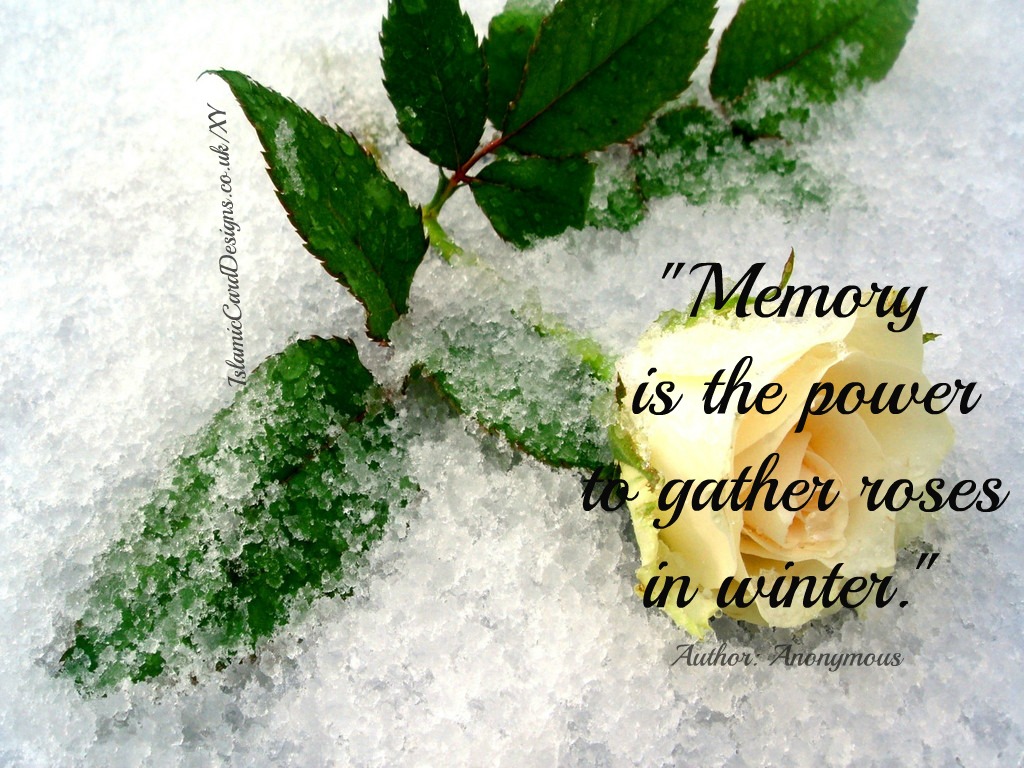
Memories

Here is a nice thought for the evening and beyond. I am sure we can relate to this many days. What do we remember about someone or something long past? Personally, I give it a lot of thought. It is so interesting what quiet time conjures up and who it conjures up.

John Lennon’s Advice on Education

I wonder what education might look like if we followed this simple advice each day for every person who walked in the door’s of our schools?

Imagine a world where we could be happy, responsible, and not deny others their opportunities?

Truths

I woke this morning

to several truths;

honouring

respecting

diversity

in wholeness

in parts

healing

wisdom

meaning

makes us stronger

me stronger

without weakening.

Community

thrives

each person

and truths

named

nurtured

watered

fed

valued

appreciated

strengthened

in healthy diversity.

with healthy diversity.

In Praise of Slow

In a world full of busyness and artificial flavouring for the day, this is a solid message of what brings peace to each of our lives. Slow down, you move to0 fast. Sounds like a song I heard somewhere.

Poetry Arises

To begin the day in a quieter, peaceful, and wiser place, I meditate each morning. .Elizabeth Myhr commented about creativity in her writing. She “does not jump into creativity. Creativity bumps into her on its way through the world.” As I sat, I realized I was writing poetry in my mind. Words, phrases, and images were floating in a stream. I recognized I felt calmer and quieter in those moments.

Francesca Zelnick offered advice in a recent post. She suggested, when ideas emerge or bump up against me as I move through life, write them down. I did and edited later. Here is the product.

Sit quietly,

5:30

AM.

Can’t sleep

wait

listen

pay attention

be patient

meditate

contemplate

focus on breath.

Gently return

to a quiet space

solitude

like a river

single words

phrases form

metaphors arise

images appear

in the current.

Discover a gentle smile

on the corners of lips

face softens.

Fresh day

creates space

for voice

words observed

soul speaks

asks to be heard.

Tranquil,

bump into creative moment

Poetry written.

Enjoy!