Tag Archives: poetry

The Grasp of Your Hand

I injured my hand years ago playing hockey and later a dog bit it badly causing even more damage. It is badly bent and scarred. We walked as a family weekend mornings when our sons boys were young. One son would check my hands and quickly change sides if he had not chosen the ‘gnarled one.’

What made him choose that one? One person suggested it was to touch the hand in a way that offered a healing touch. We each need this whether it comes from those close to us or from a divine source. We need the comfort of being cared for in ways that heal.

Rabindranath Tagore wrote this beautiful poem which described the need for the intimate touch of loved ones when we stumble which I do on life’s journey. I am not alone on this journey.

Let me not pray to be sheltered from dangers,
but to be fearless in facing them.
Let me not beg for the stilling of my pain, but
for the heart to conquer it.
Let me not crave in anxious fear to be saved,
but hope for the patience to win my freedom.
Grant me that I may not be a coward, feeling
Your mercy in my success alone; but let me find
the grasp of Your hand in my failure.
The Truly Great

Spring is near and should arrive in a few days. This March was reminiscent of last March with lots of snow. Last year, we had a tragedy as a young woman died in a car accident during the worst storm. She was an older sibling of former students and, although she was not a parent, she subbed for her mom as a classroom helper. I was apprehensive the first time, but it was an incredible and indelible experience. She made such an impact on the students and left me comfortable with the idea older siblings had much to offer.

Thich Nhat Hanh spoke about when people they leave their mark. When I pay attention, I can recognize this young lady’s greatness in our classroom. Stephen Spender wrote a lovely poem that reminds me of the greatness people leave. I pause and can how “these names fêted” by many of nature’s gifts. I smile having witnessed this greatness.

I think continually of those who were truly great.
Who, from the womb, remembered the soul’s history
Through corridors of light, where the hours are suns,
Endless and singing. Whose lovely ambition
Was that their lips, still touched with fire,
Should tell of the Spirit, clothed from head to foot in song.
And who hoarded from the Spring branches
The desires falling across their bodies like blossoms.
What is precious, is never to forget
The essential delight of the blood drawn from ageless springs
Breaking through rocks in worlds before our earth.
Never to deny its pleasure in the morning simple light
Nor its grave evening demand for love.
Never to allow gradually the traffic to smother
With noise and fog, the flowering of the spirit.
Near the snow, near the sun, in the highest fields,
See how these names are fêted by the waving grass
And by the streamers of white cloud
And whispers of wind in the listening sky.
The names of those who in their lives fought for life,
Who wore at their hearts the fire’s centre.
Born of the sun, they travelled a short while toward the sun
And left the vivid air signed with their honour.


The Opening of Eyes

I arrive at the end of another week. It was a quiet week in many ways. Next week includes parent-teacher interviews and will be more hectic. When I reflected, I thought of the Marcel Proust quote: “The real voyage of discovery consists not in seeking new landscapes, but in having new eyes.” I need the quiet and the solitude which allows me to achieve one glimpse at a time.

I found my way to this David Whyte poem which proposed a similar message. The poet echoed Proust in the second stanza. As I open my eyes, my heart and mind open in astonishment as the wonder of silence finds a new world that was always there, a paradox.

That day I saw beneath dark clouds
the passing light over the water
and I heard the voice of the world speak out,
I knew then, as I had before
life is no passing memory of what has been
nor the remaining pages in a great book
waiting to be read.

It is the opening of eyes long closed.
It is the vision of far off things
seen for the silence they hold.
It is the heart after years
of secret conversing
speaking out loud in the clear air.

It is Moses in the desert
fallen to his knees before the lit bush.
It is the man throwing away his shoes
as if to enter heaven
and finding himself astonished,
opened at last,
fallen in love with solid ground.

Haiku Sampling

I have not posted haiku for a while. We wrote haiku as our last activity of the poetry unit. Whenever we write poems, I roam the classroom with a marker in hand. There are four whiteboards in the room and I write randomly as thoughts come. It helps students on two levels. I write poetry and it is not just them being told to do it. As well, I offer exemplars, some good and some less so. Here is a haiku sampling.

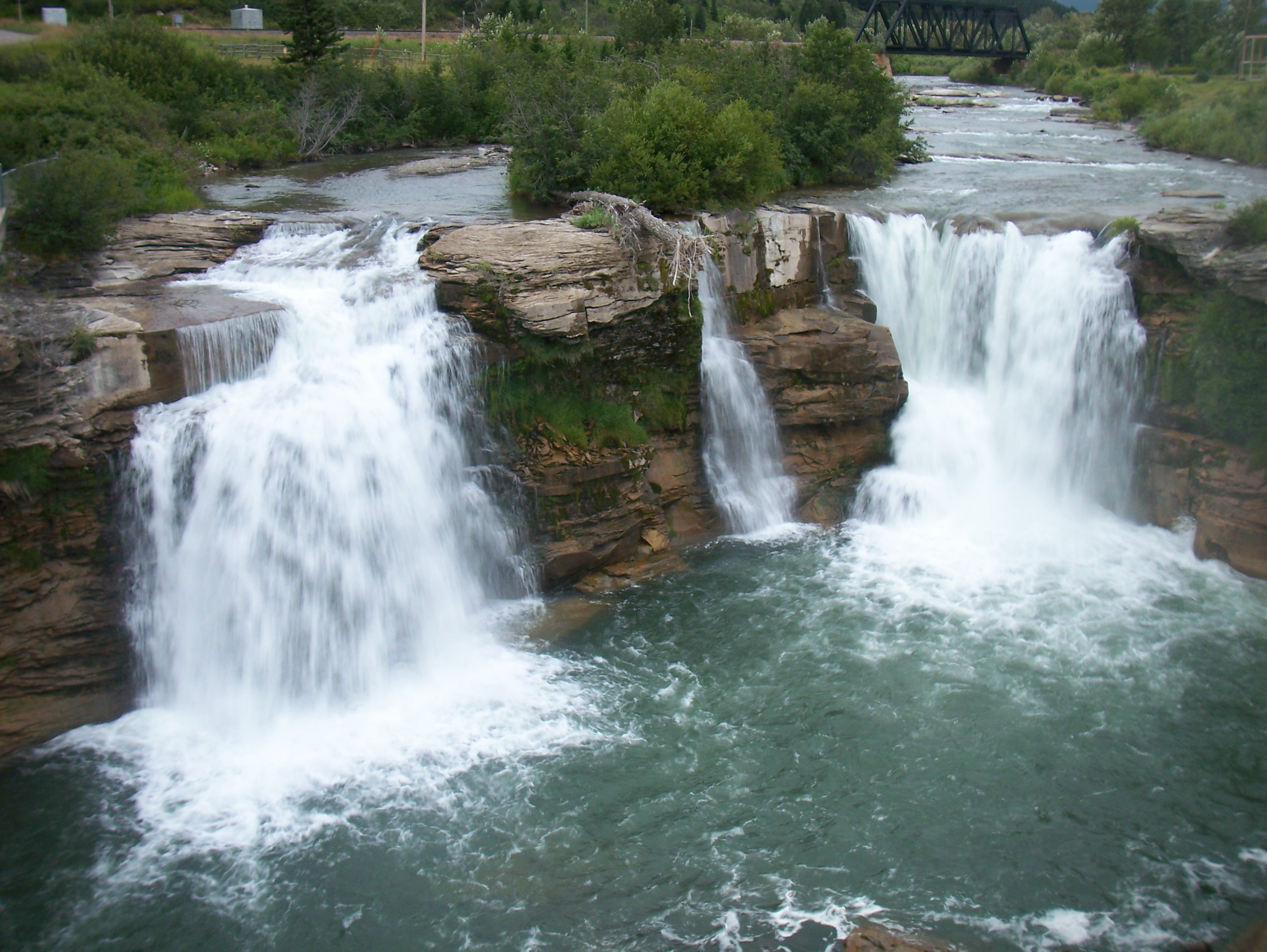
Water seeks freedom

Released from lethargy

Water plunges, plummets.

100_4206

Fry it in a pan

Friends for eggs and potatoes

Pig meat, oh soooo good!

Did I mention some were not great?

Fedora wearing

The coolest Rat Pack member

Sinatra maybe.

One student wears a fedora. I mentioned that it reminded me of the Rat Pack. He had no idea what that was or who Frank Sinatra was, but I told him it was cool to be compared to Frank Sinatra.

I pastori (The Shepherds)

I might have posted this lovely poem by Gabrielle D’Annunzio in September as I began school, but it speaks to me. Perhaps, I am better off to read it at other times than the beginning.

I recalled the poem, when I heard of the election of the Pope, Francis I. I thought it was a fitting name for the person who would be a shepherd. I hope he fulfills his Jesuit tradition of social justice and teaching.

When I heard the name he chose, it reminded of St. Francis of Assisi. Kathy and I used the Prayer of St. Francis as part of our wedding ceremony and hangs on our bedroom wall.

September, let’s go. It’s time to migrate.

Now in the land of Abruzzi my shepherds

leave the folds and go towards the sea:

they go down to the wild Adriatic

that is green like mountain pastures.

They’ve drunk deeply from the Alpine fonts,

so that the taste of their native water

may stay in their exiled hearts for comfort

to deceive their thirst along the way.

They’ve renewed their hazelnut sticks.

And they go along the ancient bridleway,

that is almost like a silent grassy river

in the traces of the ancient ancestors.

Oh voice of the one who first

discerns the shimmering of the sea!

Now along this coast moves the flock.

Without movement is the air.

The sun bleaches the living wool so that

it almost blends into the sand.

Swishing, stamping, sweet sounds.

Ah why am I not with my shepherds?

Sonnets to Orpheus II, 29

I am often challenged to see life’s challenges as ways to grow; to turn the bitter into wine. It has become easier with age, maturity, and perhaps wisdom. It is easier to embrace change as inevitable and life is a transient journey I am on. Nothing remains constant and static. It becomes easier to reclaim my voice with an attitude of resilience. I stand in ways that allow me to move back and forth into the pain and breathe. Rilke spoke of this so well in this wonderful poem.

Quiet friend who has come so far,

feel how your breathing makes more space around you.

Let this darkness be a bell tower and you the bell.

As you ring, what batters you becomes your strength.

Move back and forth into the change.

What is it like, such intensity of pain?

If the drink is bitter, turn yourself to wine.

In this uncontainable night, be the mystery at the crossroads of your senses,

the meaning discovered there.

And if the world has ceased to hear you, say to the silent earth: I flow.

To the rushing water, speak: I am.

Of Mere Being

Wallace Stevens wrote this beautiful reminder that we each have work to do. I recall something Jon Kabat-Zinn said: “Find a Job with a capital J. Stop doing someone else’s work. Find work that makes you complete.” I paraphrase here. It is easier to be fully present as fulfilled persons.

Thomas Merton and Parker Palmer wrote about the common roots of voice and vocation. I find meaning and completion in the work I do. Somehow, I make the world a better place. As I find my voice, my being made whole and any holes in that being filled. I understand the meaning  of my life’s song  with perhaps no clear meaning to anyone else.

The palm at the end of the mind,
Beyond the last thought, rises
In the bronze distance.

A gold-feathered bird
Sings in the palm, without human meaning,
Without human feeling, a foreign song.

You know then that it is not the reason
That makes us happy or unhappy.
The bird sings. Its feathers shine.

The palm stands on the edge of space.
The wind moves slowly in the branches.
The bird’s fire-fangled feathers dangle down.

The Donkey

I was not sure I would post tonight, but as I read comments left on don’t worry, be happy I came across one from Valerie. Valerie suggested a poem by G. K. Chesterton. We regard the donkey as a beast of burden, but it serves a literal and figurative purpose in the Christian world and perhaps beyond.

Literally, the donkey, that simple beast of burden, carried Jesus into Jerusalem on Palm Sunday. This simple animal symbolically in the Middle East of Jesus’ time was an animal of peace. Today, figuratively we recall Jesus used this beast of burden as his mode of transport elevating it.

When fishes flew and forests walked
   And figs grew upon thorn,
Some moment when the moon was blood
   Then surely I was born.
With monstrous head and sickening cry
   And ears like errant wings,
The devil’s walking parody
   On all four-footed things.
The tattered outlaw of the earth,
   Of ancient crooked will;
Starve, scourge, deride me: I am dumb,
   I keep my secret still.
Fools! For I also had my hour;
   One far fierce hour and sweet:
There was a shout about my ears,
   And palms before my feet.

Why I Wake Early

Mary Oliver wrote this poem about being an early riser and what it can mean. I used to fight the alarm clock, turn over several times, and hit the snooze button. With age, I realized that 5:00 or 5:30 AM was the time my body wanted my mind to join it and begin the day. I eat breakfast quietly, go for a cup of tea, and reflect. I do all of this in solitude. Even the busiest Starbucks at 6:00 AM, is quiet. I find many of the things that make the day worth facing in that quiet and solitude. I find creative space there.

Hello, sun in my face.

Hello, you who made the morning

and spread it over the fields

and into the faces of the tulips

and the nodding morning glories,

and into the windows of, even, the

miserable and the crotchety –

best preacher that ever was,

dear star, that just happens

to be where you are in the universe

to keep us from ever-darkness,

to ease us with warm touching,

to hold us in the great hands of light –

good morning, good morning, good morning.


Watch, now, how I start the day

in happiness, in kindness.

You Reading This, Be Ready

Recently, I attended a presentation and the person commented, “The only now we have is this one right here.” I began to use this with students. In the busyness of life, what do I want to remember? If I am present, right here, now, I can see the extraordinary aspects of the world I live in the now. I bring my mind into the room and it joins the shell, my body. William Stafford shared this Zen-like view of the world in this poem.

Starting here, what do you want to remember?
How sunlight creeps along a shining floor?
What scent of old wood hovers, what softened
sound from outside fills the air?

 Will you ever bring a better gift for the world
than the breathing respect that you carry
wherever you go right now? Are you waiting
for time to show you some better thoughts?
When you turn around, starting here, lift this
new glimpse that you found; carry into evening
all that you want from this day. This interval you spent
reading or hearing this, keep it for life –
What can anyone give you greater than now,
starting here, right in this room, when you turn around?