Tag Archives: servant-leadership

Set the Backpack Down

Several years ago, I was in the midst of professional struggles and wrote this poem while attending a retreat based on Parker Palmer‘s work. At the time, I was reading his book, The Heart of Democracy. In the book, I came across the following quote:

“Suffering breaks our hearts, but the heart [that is] supple … breaks open, not apart, [and] can grow into greater capacity for the many forms of love. Only the supple heart can hold suffering in a way that opens to new life.”

Joanna Macy has a similar quote: “The heart that breaks open can contain the whole universe.” If my memory is accurate it is this quote that informed Parker’s writing at the time. It is about hopefulness. Hopefulness is not going it alone. It is walking up the mountain together, with those who we can share the burdens of our mutual journey together. Companionship is about sharing bread along the journey, not hoarding it. This is an apt metaphor. What does bread mean in our daily lives?

Parker reminded me passion is not just about love that comes easily. Passion is love has moments of suffering, sometimes long moments. We can each grow through these moments or wallow in self-pity. The other part of suffering is I was not in it alone. Whether it was a colleague who listened, parents who came to check in with me every few days, or Kathy giving me space to make career decisions, I was not in these moments alone.

At the time, I was writing poetry for the first time in years and it was a healing space; a space where I tried to become whole. An essential part of becoming whole is speaking from the heart, which may not mean speaking out loud. In speaking to one another this way, I must listen more closely.

Weighing us down;

We set backpacks down,

Without companions,

The path terrifying,

The mountain is high,

Its peak obscured.

Sharing one’s load;

Trusting,

Settng one’s course right,

Being true to one’s heart,

Only other hearts hear,

Will others hear?

Speaking one’s truth;

Inviting,

Sharing

Lightening loads;

Strengthening our resolve,

Straighening backs,

Squaring shoulders,

Holding heads high.

Will we walk together?

Will we share our loads?

Will we lighten the journey?

I leave you with a wonderful short video from a Canadian performer, David Francey called Morning Train.


Happy Birthday Dr. Seuss

Regardless of where I am, I am in relationship with other humans and the world we share. It is easy to take these relationships for granted. Over the years, I discovered, children and youth embrace differences more readily than adults.

Through the use of satire, made up words, and unusual characters, Theodor Geisel, better known to us as Dr. Seuss, took a stand against bullies, hypocrites, and demagogues. In this way, I think his characters depict pluralism we live in. Yes, there is no Lorax, Yertle the Turtle, or Cat in the Hat, but we can learn to appreciate and defer to their beautiful differences. Even within  differences, I find more similarities and common ground with others, a sense of community of humans.

We need this in the world we co-inhabit with other sentient and non-sentient beings. Too often, people who masquerade as leaders tell us to see difference as a problem, to exploit Nature, and to separate ourselves from our better angels. Perhaps our better angels are Thing 1 and Thing 2.

298x322 Unique Dr Seuss Images Ideas Dr Seuss Art, Dr

I retrieved the Thing 1 and Thing 2 image from Clip Art Mag.

I took this picture Sunday at the Japanese Friendship Garden. Even in the midst of an urban setting, like Phoenix, we discover spots where nature and humans co-exist in almost perfect harmony. In truth, we are never separate from nature and humans. It is only in our thoughts we are separate, somehow superior. When we are present and mindful, we recognize there are no boundaries.

Here are four of my favourite Dr. Seuss quotes:

Today you are You, that is truer than true.
There is no one alive who is Youer than You.

Don’t cry because it’s over. Smile because it happened.
Unless someone like you cares a whole awful lot, nothing is going to get better. It’s not.

So be sure when you step, step with care and great tact.
And remember that life’s A Great Balancing Act.

A spiritual reflection on the Centenary of Thomas Merton – Part 1

via A spiritual reflection on the Centenary of Thomas Merton – Part 1

Bruce posts wonderful text, accompanied by exceptional images. This post caught my eye as I looked through Bruce’s blog. It is about Thomas Merton and his enduring work as a pacifist, activist and support of inter-faith dialogue.

I read Merton and book about his writings frequently. I grew up in the shadow of Vatican II, which promoted inter-faith dialogue and Merton, Brother David Steindel-Rast, Karen Armstrong, Thich Nhat Hanh, etc. attract me to their work.

I find them to be prophetic and mystical, often signaling challenges we will face long before they are evident to most of us. For example, Bruce included a wonderful quote from a letter Merton wrote to Rachel Carson after reading Silent Spring. Both offered prophetic views, as mystics, of a world to come and challenges we faced in the 1950’s.

I leave you with this quote from Thomas Merton and wish each of you the best. However, we each celebrate we need to share our love for each other and the world we share with each other.

The beginning of love
is the will to let those we love
be perfectly themselves,
the resolution not to twist them
to fit our own image.”
~Thomas Merton

Daffodils, Lake, and Mountain in Glacier

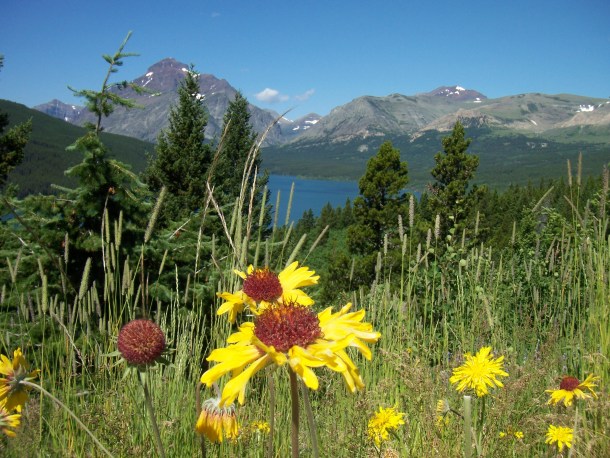
I share this image often. Kathy took it in Glacier National Park. She shared it with me out of love and I share it with my love for the people who will see it and nature we are stewards of, echoing Wendell Berry when we say: We Do Not Inherit the Earth from Our Ancestors; We Borrow It from Our Children

Gift

I began reading a book called Thomas Merton—Evil and Why We Suffer: From Purified Soul Theodicy to Zen. The author, David Oberson, explores the evolution of Merton’s view of good and evil throughout his adult life, framed, first, through a mystical and monastic Christian view and, then, a growing interest in Zen Buddhism towards the end of his life.

I have always been fascinated with Merton’s wide ranging relationships, nurtured through letter writing. Some I knew about from previous readings e.g., Thich Nhat Hanh, Dororthy Day, Martin Luther King, Jr., etc. Today, I found another one of his relationships; this one with the poet Czeslaw Milosz who lived under Nazi and  Soviet oppressors in Poland before moving to the US. Merton and Milosz shared concerns about totaliarianism, scientism, racism, etc., which I can only imagine would be intensified in today’s global climate.

Milosz wrote a beautiful poem called Gift to remind me suffering that emerges from life is impermanent. In this poem, he reminds me their is always something beautiful and good, as he alludes to nature and creation that emerges to replace the suffering.

A day so happy.
Fog lifted early, I worked in the garden.
Hummingbirds were stopping over honeysuckle flowers.
There was no thing on earth I wanted to possess.
I knew no one worth my envying him.
Whatever evil I had suffered, I forgot.
To think that once I was the same man did not embarrass me.
In my body I felt no pain.
When straightening up, I saw the blue sea and sails.

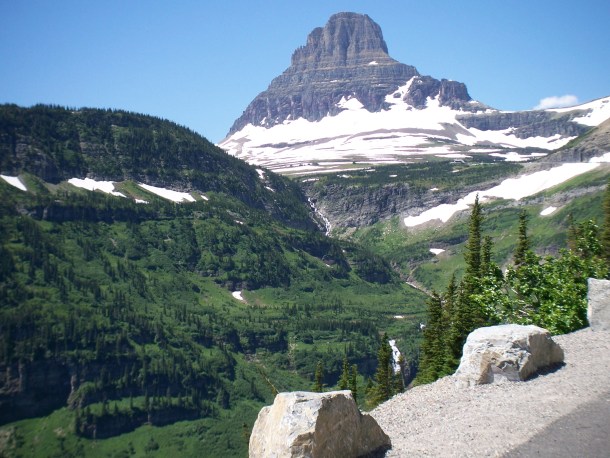
I took this picture in BC about two years ago. As I walked on this morning, I reached a higher spot on the path and saw the lake in the distance fog covered. Like the fog, the suffering lifts with time and a warming sun. I let go of the envy, anger, grasping to be present when I work in the garden that is nature.

Dr. Seuss

via Dr. Seuss

Heather offers three Dr. Seuss quotes. I am particularly taken by the third one, which calls on me to step with care and tact.

Regardless of where I am, I am with people, in the world, and in relationships. It is easy to take these for granted. Often, children and youth embrace differences more readily than adults.

Through the use of satire, made up words, and unusual characters, Theodor Geisel took a stand against bullies, hypocrites, and demagogues. I think his characters depict pluralism we live in. Yes, there is no Lorax, Yertle the Turtle, or Cat in the Hat, but we can appreciate and defer to the beauty of their differences. Even within  differences, I find more similarities and common ground with others.

We need this in the world we co-inhabit with other beings, sentient and non-sentient. Too often, people who masquerade as leaders tell us to see difference as problematic, to see Nature as something to exploit, and to separate ourselves from our better angels. Perhaps our better angels are Thing 1 and Thing 2.

298x322 Unique Dr Seuss Images Ideas Dr Seuss Art, Dr

I retrieved this image from Clip Art Mag.

Behind your image…

via Behind your image…

Natalie‘s beautiful image and John O’Donohue‘s wonderful blessings serve as reminders that life is to be lived in extra-sensory ways. It is about the mystery we cannot see, touch, and feel about how a flower simply exists to be a flower..

When I have faith in more than what I experience and the mysteries of what that means in life, I feel free to live life and embrace the mysteries of living. Sometimes, it is the simplest forms that escape our attention. It reminds me of the following quote from Meister Eckhardt, which can mean more in a person’s than I can ever know.

“If the only prayer you said was thank you, that would be enough.”

Thanking others as part of being alive and aware of their presence is a simple and profound prayer.

Love says, there is a way..

Source: Love says, there is a way..

Karen‘s post included quote from two of my favourite poets: Hafiz and Rumi. Love is the essential idea behind the quotes.

The second Hafiz quote says fear is the cheapest room in the house. As we lift each other up with our love, we expand the rooms in the house we can each live in. Loving each other is a gift and a serving of each other. It can make people and the world whole again.

Sand Castles

Children live in each moment. Their inexperience allows them to be in a world that seems novel. They build sand castles in those moments. As adults we think we lose that ability to build our sand castles.

Being mindful and present to the world and others is a way of building sand castles, perhaps in some metaphoric way. How can I think about this person and that thing differently? How do I bring less suffering and pain to the world in understanding “differences make a difference?” Unlike children, adults often understand differences as threats.

It reminds me of Tolstoy‘s quote: “if you want to be happy, be.”

A child, playing in sand,

Building sand castles,

Absorbed in that moment.

The world is immediate,

Demanding one be present,

To embedded in this very moment.

As a child,

We know nothing different,

Our castles are real and momentous.

To outgrow our castles,

That is a tragedy,

To lose being mind(ful).

Let me return to that world,

To build castles in the sand,

As only a child can.

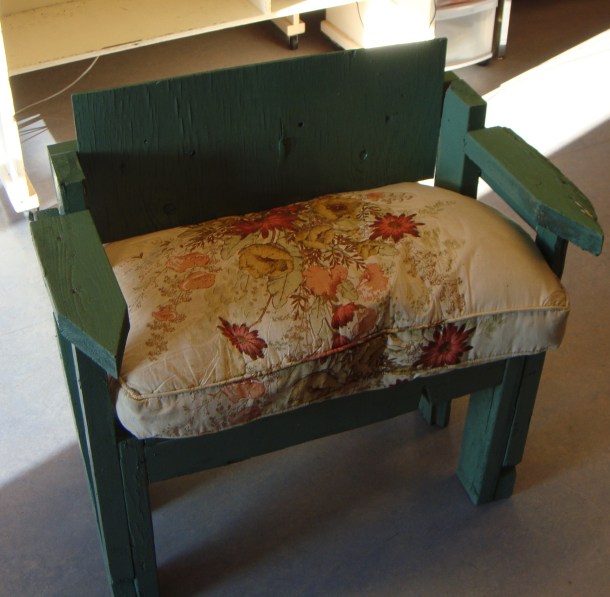
When I taught, the Grade 7 students built chairs for Science class. A criterion was they had to use recycled materials. They always built terrific chairs with little help from adults.

Think Different

This poem, writen by Rob Siltanen, was part of an early Apple advertising campaign. He was a creative director for the company.

It stands out for me, because it echoed a phrase that emerged from my dissertation: “Differences make a difference.” It is in difference we discover what makes us each exceptional. Without the differences, we blend into an indistinguishable mass mere copies of one another. Worse yet, we might only copy the worst of the people we see succeeding.

The poem reminds of the Michelangelo quote: “Every block of stone has a statue inside it and it is the task of the sculptor to discover it.”

To be a teacher, is to inspire and allow each student to discover who they are. It is to be mindful and sensitive to what makes each of them different. It is to both serve and lead at the same time. It is to be different one’s self, as a teacher. How else could a teacher inspire?

The misfits.

The rebels.

The troublemakers.

The round pegs in the square holes.

The ones who see things differently.

They’re not fond of rules.

And they have no respect for the status quo.

You can praise them, disagree with them, quote them,

glorify or vilify them.

About the only thing you can’t do is ignore them.

Because they change things.

They invent. They imagine. They heal.

They explore. They create. They inspire.

They push the human race forward.

Maybe they have to be crazy.

How else can you stare at an empty canvas and see a work of art?

Or sit in silence and hear a song that’s never been written?

Or gaze at a red planet and see a laboratory on wheels?

And while some may see them as the crazy ones,

While we see genius.

Because the people who are crazy enough to think

they can change the world, are the ones who do.”


Silver Star

When I looked for a poem, this one by William Stafford found me. Mountains appear to be immovable and unchangeable, yet as people do they do so without immediate notice. Yet, when we revisit them, we realize the changes that occurred.

In the case of teachers, Parker Palmer speaks about asking the question “who is the self who teaches?” We are each teachers in our own particular ways, so asking this question is essential. We often overlook this question in pursuit of easier to answer questions about the what, when, where, why, and how.

When we ask who we are, we explore the values that anchor us in living life. In times of crisis, those values guide us and help us through those tough times. Attending to them in mindful ways each day as a gardener would her/his garden grounds us in them in times of real need. They have spiritual meaning that come to life in living and expressing them daily through who we are as a human being.

If we serve our values well, “we will hear the world say, ‘Well done.'” The patience of living a good life, which in Aristotle‘s terms, is indefinable will be the reward. Like a mountain guiding us on our journey, the values we live and express guide us and others on a shared journey.

To be a mountain you have to climb alone

and accept all that rain and snow. You have to look

far away, when evening comes. If a forest

grows, you care; you stand there leaning against

the wind, waiting for someone with faith enough

to ask you to move. Great stones will tumble

against each other and gouge your sides. A storm

will live somewhere in your canyons hoarding its lightning.

If you are lucky, people will give you a dignified

name and bring crowds to admire how sturdy you are,

how long you can hold still for the camera. And some time,

they say, if you last long enough you will hear God;

a voice will roll down from the sky and all your patience

will be rewarded. The whole world will hear it: “Well done.”