This fell into my world yesterday and I thought it might be a good share. It is certainly something to reflect on as we begin each day in our various roles of learning and teaching.
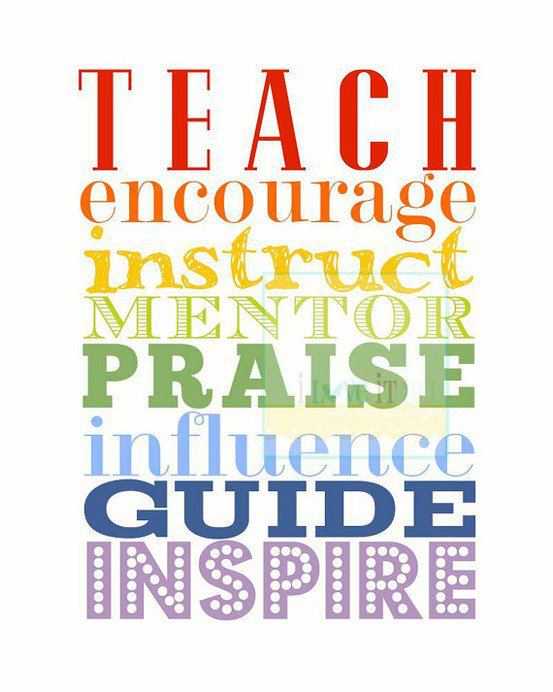
This fell into my world yesterday and I thought it might be a good share. It is certainly something to reflect on as we begin each day in our various roles of learning and teaching.
Nothing worth its salt comes easy. I enjoy Wendell Berry and his reminders that the world is a better place if we live in it fully in the moment and mindful of this very moment and place.
If we will have the wisdom to survive,
to stand like slow-growing trees
on a ruined place, renewing, enriching it,
if we make our seasons welcome here,
asking not too much of earth or heaven,
then a long time after we are dead
the lives our lives prepare will live
here, their houses strongly placed
upon the valley sides, fields and gardens
rich in the windows. The river will run
clear, as we will never know it,
and over it, birdsong like a canopy.
On the levels of the hills will be
green meadows, stock bells in noon shade.
On the steeps where greed and ignorance
cut down
the old forest, an old forest will stand,
its rich leaf-fall drifting its roots.
The veins of forgotten springs will have
opened..
Families will be singing in their fields.
In the voices they will hear a music
risen out of the ground. They will take
nothing from the ground they will not
return,
whatever the grief at parting. Memory,
native to this valley, will spread over it
like a grove, and memory will grow
into a legend, legend into song, song
into sacrament. The abundance of this
place,
the songs of its people and its birds,
will be health and wisdom and indwelling
light. This is no paradisal dream.
Its hardship is its possibilities.
─Wendell Berry
When we discussed this poem, students understood that success is not always an easy journey. Some important aspects are the hard work and disappointments along the way. The word and phrase that caught their attention was “This is no paradisal dream. Its hardship is its possibilities.
Observational Poems : Touching the World : Deep Underground Poetry Community.
I was just surfing and came across this poem. Mindfulness is a universal concept and is not the sole domain of Buddhists or mystics. I find it ironic that the wave of scientific theory which pushed mindfulness out of the western practice was called the Enlightenment. Who or What did it enlighten? Mindfulness and scientific thought are complementary practices which make each other whole.
This morning, as I sat quietly, the following words came to me and I am hopeful I can begin to live them.
If I am fully present for each moment in a non-judgmental way and transformed the world I live in from ordinary to extraordinary what joy I would give and receive. I fell back into old reactive habits yesterday instead of living into and embracing each moment. Time and space helps point one’s self to the moment and an understanding of those things I control. It requires quieting my ‘monkey mind’ and that was a struggle yesterday.
Transformation is slow, mindful change. It is patient moment-to-moment and incremental change. It is humbling and requires compassion as I tend and nourish an internal garden and attempt to bring the quiet of those moments into the busyness of my life. Each time I sit, I need a quiet mind to reveal the hidden wisdom. Until this morning, I considered stewardship as caring for something external, but it begins from within.
We talked about community today. Community is organic. Through and in it, we tell stories revealing relationships. It grows around what is held in common. We communicate what is held in common, valued, and shared. Community is breaking bread and being true companions with those who join us. We hold and share vision denoting our shared nature within community and exist in paradox. It is what is today, the present, and what was, a historical memorial.
The poet David Whyte wrote “What we hold in community is loved, because it is offered from the heart; a place of love.” Because it is a place of love, it is a place of abundance. Even in crisis, members of a community find ways to heal and regain wholeness through resiliency. Its members know there are others to turn to and seek help from. We do not have to ask; it is given instinctively and intuitively. It is the right thing to do and not the easy or expedient thing to do.
Community is a place we identify with and it signals we are entitled to membership. It is a safe place to be and someone wants us there. It is a sacred place; hallowed ground. We share and expose personal vulnerabilities, because those around us love us unconditionally. Community is a place of discovery. We are nourished and nurtured and grow. It is a place of invitation and opportunity due to its abundance. A wonderful metaphor emerged. A community is a garden. You plant a seed and it prospers in the abundance of the place we name home and community.
I am reading a book called The Radical Christian Life by Joan Chittister. A line that stood out was “spend our time well, to contemplate the divine in the human, to treat everything in the world as sacred. We need the wisdom of stewardship.” I recalled the Buddhist concept of the extraordinary explained by Thich Nhat Hanh. A story he recounted was about an oak tree at Plum Village. Attendees stop and literally become tree huggers as they hug that tree and admire its splendour. With small actions, humans move from seeing themselves as part of the world not separate and superior to the world we share with all of Creation. There are things and times I take for granted.
We regularly drive the Yellowhead Highway between Prince George and Edmonton. Recently, I realized it is extraordinary. Each trip we pass Mount Robson. Sometimes it is shrouded in clouds. Other times, it looks like this. It is always spectacular.

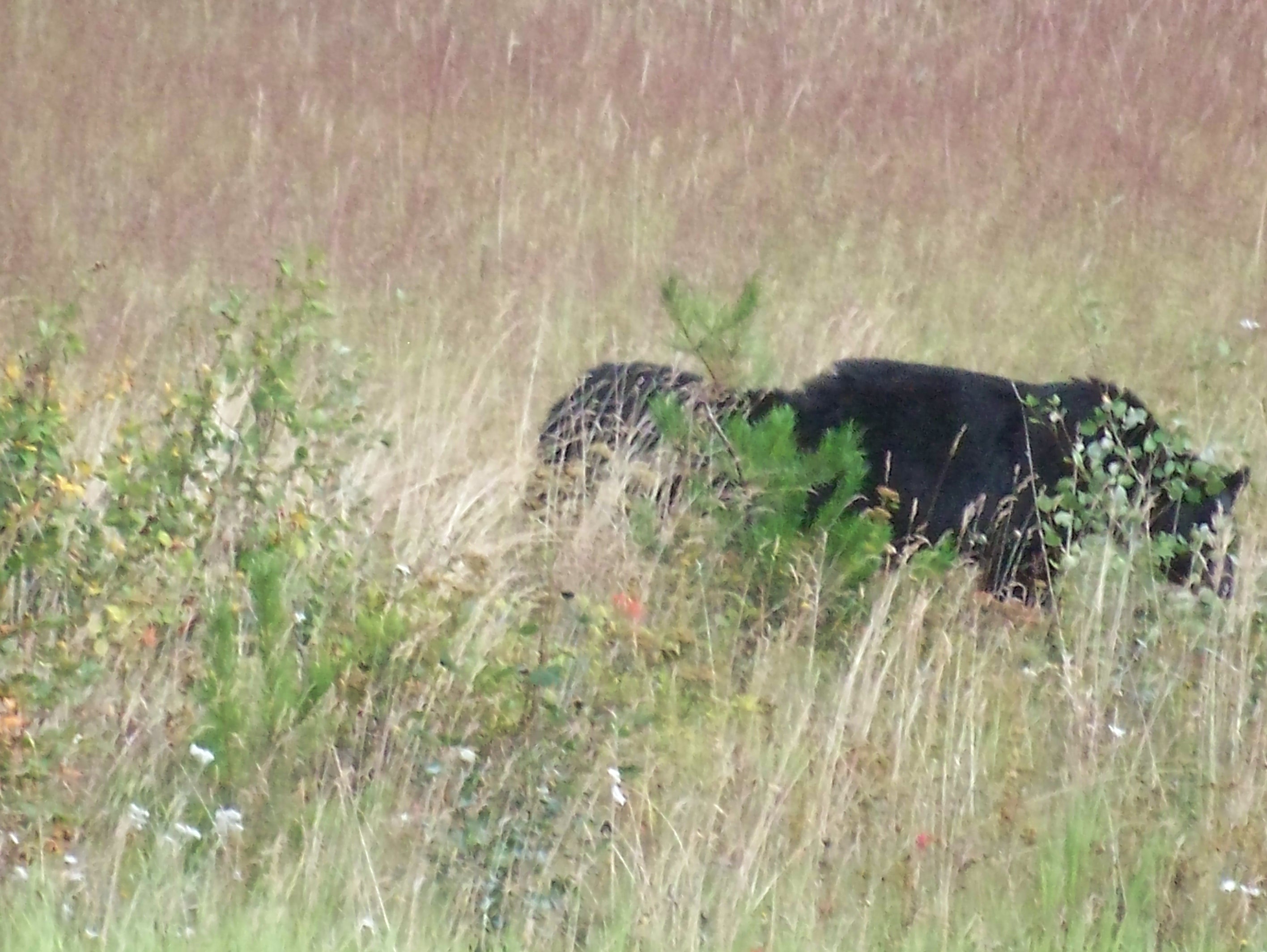
We observe wildlife: bear, elk, deer, goats, bald eagle etc. Last summer, I took a picture of two black bear feeding along the side of the road. They seemed quite unaware of my presence.
We took a picture of an Inukshuk in Jasper National Park. An Inukshuk is an Inuit symbol reminding us others were there before or that we are on the right path. It is an excellent reminder of the need to stop, reflect on the world, and take stock of our role in the world. It is an extraordinary place.

I was reminded of the extraordinary nature of the world as I read Malou’s blog entry. She wrote about tulips in Holland. Tulips might seem ordinary to people who see them everyday just like driving through the Rocky Mountains has been to me. When I mindfully, attentively observe the world and become aware of it, its breathtaking beauty is readily revealed.
Leadership came up several times in the first three World Cafe events including an explicit reference to servant-leadership which I feel it is a concept worth exploring. Serving and opening a path to leadership should have merit in education and I want to expand on the characteristics used to describe the servant-leader. I drew extensively from an article written by Larry Spears (2004) called Practicing Servant Leadership. Spears was the CEO at the Robert K. Greenleaf Center for Servant-Leadership. Its namesake, Robert Greenleaf, was the person responsible for developing and articulating servant-leadership.
A definition cited by Spears was servant-leadership “begins with the natural feeling that one wants to serve, to serve first. Then conscious choice brings one to aspire to lead. The difference manifests itself in the care taken by the servant–first to make sure that other people’s highest priority needs are being served.” Making sure people’s highest priority needs are served came up several times in our conversations. Words such as community, safe, listening, empathy, and compassion are a small sampler of descriptors provided in conversations. The following represent 10 characteristics attributed to a servant-leader, drawn from Greenleaf’s writings.
1. Listening: This can be broken into two parts. There is a deep listening to others, but also quiet reflection. Listening deeply to others represents compassion and quiet.regular reflection reveals wisdom.
2. Empathy: Through listening to others to understand, the servant-leader seeks empathy to accept and recognize special and unique spirits of those he/she listens to. Empathy calls for appropriate behaviour or acceptable performance from those being led.
3. Healing: The relationship between the servant and others carries an implicit message. There is a search for wholeness, integrity and completeness of the person. To be whole, one must feel listened to and served.
4. Awareness: Awareness is a disturber and awakener. The servant-leader is aware of both internal and external landscapes allowing for an integrated, holistic person to emerge. This awareness is a seeking to understand issues related to values and ethics.
5. Persuasion: This refers to the servant-leader using persuasive rather than positional power to make organizational decisions. Persuasion acts to build consensus rather than using coercion, manipulation, or power.
6. Conceptualization: This is the ability to balance the need to ‘dream great dreams’ and simultaneously remain focused on day-to-day functions of an organization.
7. Foresight: Allows the servant leader to learn lessons from the past, the immediate realities of the moment, and potential consequences that might arise in the future.
8. Stewardship: The rubric of servant-leadership is one in which all CEO’s, staff, and trustees act as stewards holding something in trust for the greater good of society. Stewardship is based on openness and persuasion rather than power and control.
9. Commitment to the growth of people: This is the responsibility to nurture the growth of each individual in a community. Members are allowed to reveal their gifts and, in turn, serve.
10. Building community: The servant-leader is aware of a shift from local community to large institutions to global networks as the primary shaper of human lives. This awareness calls the servant-leader to search for and identify various means to build and sustain community.
Greenleaf proposed the best test of the servant-leader is to ask, “Do those served grow as people? Do they, while being served, become healthier, wiser, freer, more autonomous, more likely themselves to become servants? What is the effect on the least privileged in society? Will they benefit or at least not be further deprived?”
When I consider the best test, I am inclined to further wonder, “Is the role of a teacher ideal to serve? Is the role of teachers, in whatever capacity, best defined by asking: do children in their care become healthier, wiser, freer, more autonomous, and more likely to become servants?” I include a vast grouping of people as teachers because many are called to serve and teach in various capacities. Parents and family members want their children to grow just as teachers in schools want their students to grow.


 ivonprefontaine
 Teacher as Transformer