Tag Archives: teacher as transformer

Fluent

I am on the road the next two days so I am tired at the end of relatively long day. John O’ Donohue‘s poetry has a light feel to it, much like a small river that flows easily along its way.

He often wrote blessings and a blessing is something that catches us by surprise. It unfolds in surprising ways, never taking the same path twice. Like the river and, as expressed by Heraclitus in his quote: “No man ever steps in the same river twice, for it’s not the same river and he’s not the same man.”

We cannot live the same moment twice, because we cannot return to it and, even if we could, we would not be the same person. We would return with an understanding of what it meant to step in the river in the first place.

The beauty of living is filled with the richness of uncertainty and complexity. The best we can expect is to be mindful of each moment as we live in it and as it unfolds.

I would love to live

Like a river flows,

Carried by the surprise

Of its own unfolding.
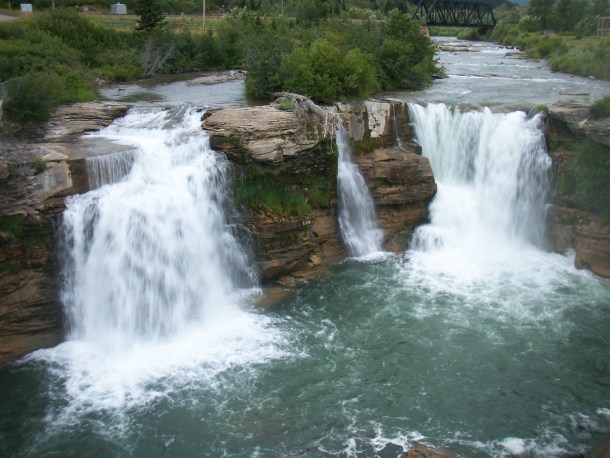
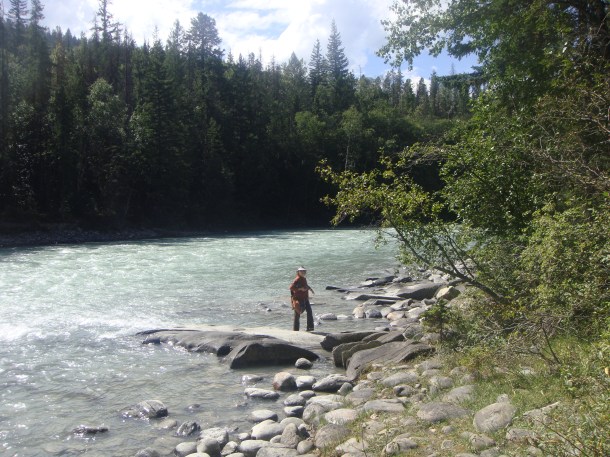
We took this picture several years at Lundbreck Falls. Today, I drove past them and, like me, the river has changed.
For the Children

Gary Snyder wrote this beautiful poem about children being adult’s saving grace in the world. What is new fascinates and they wonder about the newness. For a small child, most of what they encounter is new and calls out to the child to explore and wonder over it.

There is zen and mystical quality to the poem with a reference to meeting in peace somewhere in the future. The essential part of peace is staying together, learning the flowers, and going lightly.

It is not learning about flowers, but learning flowers and going lightly, which I think will take a different way of teaching. This is not a new way of teaching. Instead, it is more likely we have forgotten it, being together and living gently in a world that only has so much to offer us.

The rising hills, the slopes,
of statistics
lie before us,
the steep climb
of everything, going up,
up, as we all
go down.

In the next century
or the one beyond that,
they say,
are valleys, pastures,
we can meet there in peace
if we make it.

To climb these coming crests
one word to you, to
you and your children:

stay together
learn the flowers
go light.

“Natural objects should be sought and seen as they are, not to suit observers, but respectfully as if they were divine beings.” — Goethe

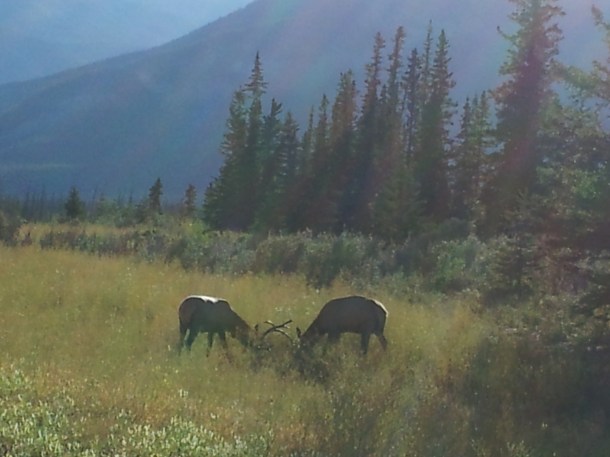
I took this picture several years ago as I drove through Jasper National Park. It was late August before the rutting began, but the bulls were trying to assert dominance. Despite this, people ran into the ditch and talking loudly. I kept my distance and got some great shots from about 100 feet away. As Gary Snyder counseled, I went light.

Drinking with a Hermit Friend in the Mountains

Li Po wrote this short poem about companionship. To be a companion is to literally share one’s bread people journey together. In this case, it is water they are sharing, although it could be something stronger.

When we travel with each other, it is a time to share: converse, drink, food, and nourish each other. We see the other person as a person with flaws and beauty. It is in those moments we are mindful of the other and who they are as a person. Perhaps in their imperfections we discover perfection.

Kathy and I joke with each other as we eat. We offer each other extra napkins and say, “I’ve seen you eat before.”

Together, we drink: two mountain flowers,
opening.
A cup, a cup, and then, to begin again at the
beginning, another cup!
I’m drunk, would sleep . . . you’d better go.
Tomorrow, come again, with your lute, if you
will.
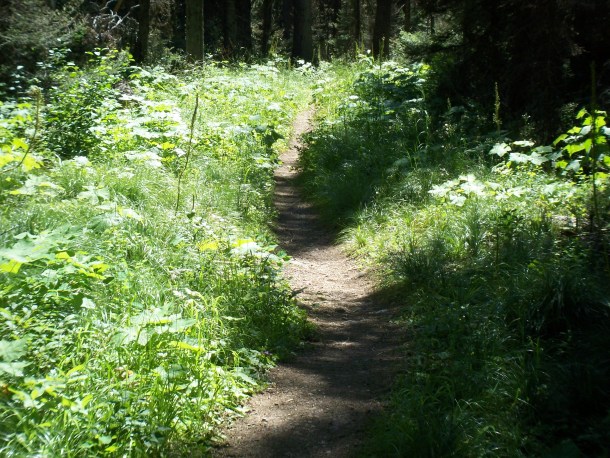
This was a path Kathy and I walked in Glacier National Park. We took a boat down the lake, crossed into Montana, and, because we had our passports, hiked into a lake several miles from the boat launch.

“CO-EXISTING”

Source: “CO-EXISTING”

After I posted There was a time I would reject those, Jonathan wrote this poem and shared a similar view of the world that Ibn ‘Arabi presented in his poem.

Jonathan is a prolific blogger who has re-blogged many posts of other bloggers. I was happy he wrote this poem, because it gave me an opportunity to return his kindness.

When I am aware of and accept differences around me, the possibilities of violence diminish. I do not control the other and their actions, but turning swords into ploughshares (Isiah 2:4) can reduce the possibilities.

Living in community means to reach out to one another in good and bad times. Each person is called on to lead in their particular way. They are mindful and attentive to the other person and communicate with them in meaningful, thoughtful ways.

Miracles

Again, today I jotted some notes in a small coffee shop while sipping tea. I thought how  counsels that each moment reveals the extraordinary. When we are mindful and sensitive to those moments we lift them up and they are miracles happening around us all the time.

I taught a student who had Fetal Alcohol Syndrome. He was a sweet young man and I made sure I was at school to greet him each morning as he got off the bus. One morning, he got off the bus and was wearing a fedora. I greeted by saying “hi boss!” I told him looked like Frank Sinatra. He had no idea who that was, so I found videos and played Frank Sinatra. Whenever that student wore his fedora, I greeted him as the boss. He smiled as it seemed to mean something more than ordinary.

When I am not attentive and mindful, I miss many opportunities. It reminds me of Maya Angelou‘s quote: “A friend may be waiting behind a stranger’s face.”

What do I walk past?

It seems ordinary in passing;

Yet, looking deeper

I see it:

The (extra)ordinary.

The ordinary unfolds

Revealing its extra-ness

Its depth and breadth

Richness hiding in plain sight.

A moment holds miracles

Waiting to show themselves off

Asking to be seen with new eyes

Sharing their more-ness.

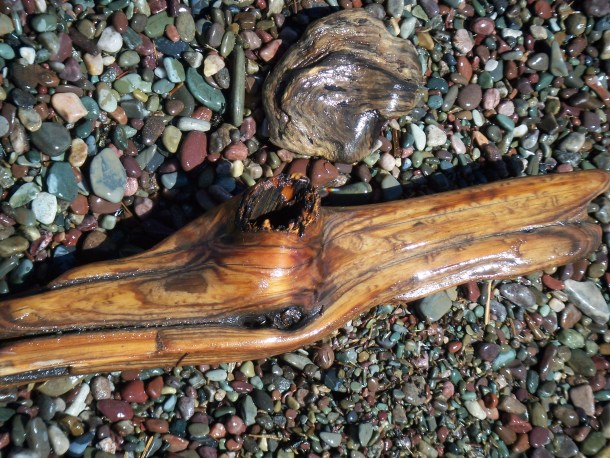
I took this picture in Glacier National Park. The driftwood was polished and on the beach of the lake we were hiking around. What do I not see and hear? It is in the story of how this driftwood ended up here.

Character of Teaching

While having tea in a small coffee shop I inhabit, I jotted down the beginnings of a poem.

A phrase that repeated itself in my dissertation and the interviews was “differences make a difference.” When I began teaching, people asked “what made me go into teaching, particularly at 32 years of age.” It was the sentiment that I might make a difference, maybe not for every student, but for some. It reminds me of the Crosby, Stills, and Nash song: Teach Your Children Well, but it is more than teaching. It is serving them and whatever I do well.

Someday, whether we are teachers or not, we feel a desire to be lost. Responsibilities weigh on us whether we are parents, at our work, partners in a relationship, etc. In our relationships with the weight of responsibilities, something calls us each back. It is more of a whisper. It can only belong to each of us. Teaching was this way for me.

I experience a desire to be lost,

Weighing down on me,

Responsibilities cloak me like a vapour

Covering me with their many coats,

They arrive without being asked.

From the multitude, one desire arises;

A clarion call from the cosmos,

It carresses my soul;

It whispers “be useful and kind.”

A flower sharing its pollen,

Spread on the wings of others;

Teach what is possible–

What is possible of each of us?

Save them from glory seekers and profiteers;

Gently, send them away

Pollinating a new generation,

Flowering anew with compassion,

Rejoice as they float around the corner,

Knowing not what they will sow,

Trusting your character.

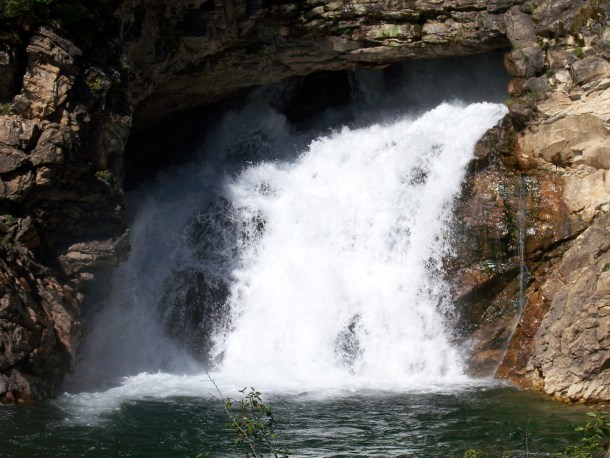
I took this picture on the upper reaches of the Fraser River. Around the corner from Kathy, the river narrows quickly and there is a waterfall.

There was a time I would reject those

Ibn ‘Arabi wrote “My religion is love. Whichever the route love’s caravan shall take, That shall be the path of my faith.” He speaks of a journey and shared path.

I recalled the statement attributed to the German Lutheran pastor Martin Niemöller:

First they came for the Socialists, and I did not speak out—
Because I was not a Socialist.

Then they came for the Trade Unionists, and I did not speak out—
Because I was not a Trade Unionist.

Then they came for the Jews, and I did not speak out—
Because I was not a Jew.

Then they came for me—and there was no one left to speak for me.

When we reject others because of ethnicity, religion, skin colour, politics, gender, etc, we lose sight of what makes us human, our common humanity. This humanity is deeper than any of the markers we have that identify and group us.

Shunryu Suzuki compared mindfulness to a compassionate space that expands and contracts depending on the needs of the moment and the people we share that space. When we reach out to others, we acknowledge we are pilgrims on a shared journey where we speak for and on behalf of each other.

There was a time I would reject those
who were not my faith.
But now, my heart has grown capable
of taking on all forms.
It is a pasture for gazelles,
An abbey for monks.
A table for the Torah.
Kaaba for the pilgrim.
My religion is love.
Whichever the route love’s caravan shall take,
That shall be the path of my faith.

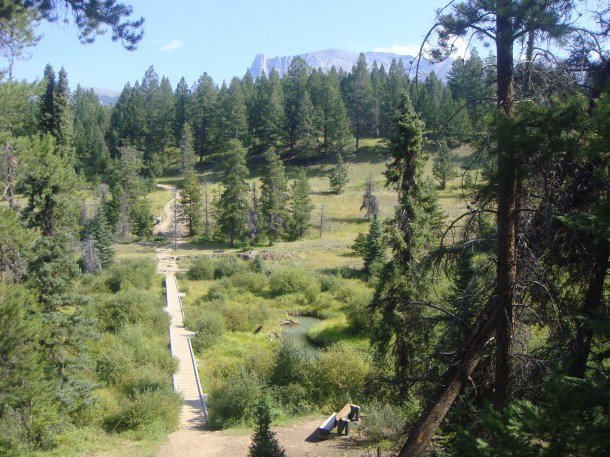
I took this picture in Jasper National Park. Kathy and I walked for several hours on this path just enjoying being there.

i thank You God for this most amazing

When I taught, I used e. e. cummings not just during poetry lessons, but to point out to students we did not always have to follow rules when writing. Following Cummings’ writing, I told students to get thoughts down on paper and we could edit later.

Cummings did not break rules of writing in his poetry. As we see in the first line of this poem, he capitalized two words.

I took the message as opening my eyes and ears to the world around me. As I walked this morning, I noticed birds chirping. One scrambled to hide under a truck parked along the street. In another place, there was a smell of something rotting, maybe someone fertilizing. The wind was chilly, but, when the sun emerged from hiding, i warmed me.

The sounds, sights, smells, touches of the world awaken my senses on those walks. They are like the flow of water I hear from a distance as I approach the river that tumbles over the edge. When I am mindful, I sense nature in a fuller way.

i thank You God for most this amazing
day:for the leaping greenly spirits of trees
and a blue true dream of sky; and for everything
which is natural which is infinite which is yes

(i who have died am alive again today,
and this is the sun’s birthday; this is the birth
day of life and of love and wings: and of the gay
great happening illimitably earth)

how should tasting touching hearing seeing
breathing any–lifted from the no
of all nothing–human merely being
doubt unimaginable You?

(now the ears of my ears awake and
now the eyes of my eyes are opened)

We took this picture in Yellowstone.

The Opening of Eyes

“Look deep into nature, and then you will understand everything better” — Einstein

Several years ago, Kathy and I were in Jasper National Park. We had gone for a drive and stopped at an overview of a valley. The rest area was quite large and we walked around it trying to get different views of the valley.

We noticed something at the far end of the area just on the other side of the low stone wall. We moved quietly towards it and realized it was a young elk, probably a cow. She sat almost perfectly still, posing for the camera.

David Whyte wrote this lovely poem about the opening of eyes. That evening, if our eyes had not been open, we would not have seen the elk quietly laying there with only her head showing above the wall. It begs the question: How much do I miss even with my eyes open? What solid ground do I miss as a I move through life with closed eyes?

The elk would have known we were there, but we took precautions to be still and quiet so to not stress her. The attention to quiet in a quiet place by a wild animal reminded me of opening my eyes to experience the world more fully.

That day I saw beneath dark clouds
the passing light over the water
and I heard the voice of the world speak out,
I knew then, as I had before
life is no passing memory of what has been
nor the remaining pages in a great book
waiting to be read.
It is the opening of eyes long closed.
It is the vision of far off things
seen for the silence they hold.
It is the heart after years
of secret conversing
speaking out loud in the clear air.

It is Moses in the desert
fallen to his knees before the lit bush.
It is the man throwing away his shoes
as if to enter heaven
and finding himself astonished,
opened at last,
fallen in love with solid ground.


Stones of Time

Source: Stones of Time

Olga provided great pictures of water and stones along with a haiku and two quotes. Today, I had a conversation about how do we change the world. I commented that we can only live in the here and now.

Confucius reminds us to do any change we begin with small tasks. When we are mindful and present living in the here and now, we understand the small tasks that call for our attention.

Pericles counsels us that others see and understand the imprint of our living in our actions. Our deeds reflect who we are to children, students, co-workers, neighbours, etc. That was part of our conversation today, as well.

What is most indelible are not our words, but our actions. Who am I as a person is a strong message.