Tag Archives: teacher as transformer

Thank You, A Simple Word

Yesterday, was a great day. We hung out, but, when I checked email, I found one that made my day. I submitted an article for publication several months ago and received notification yesterday it is going to be published. I am not sure of details such as the when, but, because it is peer-reviewed, it is important for my scholarly journey.

Yesterday, a radio interview I did several months ago as part of a series about servant-leadership, mindfulness, and their potential in education was broadcast. The interview is at Blog Radio. It is long, so do not feel obligated.

Sylvia Chidi wrote this poem about a word I occasionally forget to use, thank you. She described it as “a simple word that feels new.” When I wrote the article, it was a particularly difficult process, but many encouraged me and more will I am sure as I move forward. Kathy was essential to the process. She edits my work, but the article was in such disarray, I had to use a professional editor for the first time. Those advising me kept telling me I needed a softer voice in the article. I was not happy with all that, but the feedback received from the reviewers suggests a softer voice and professional help worked. I am grateful and it moves me along the road.

For all those who have encouraged me and those who are yet to.

Thank you, Thank you
A simple word that still feels new

All I want to hear from you is
Thank you, Thank you
Thank you for been so true
Thank you for kindness
Thank you for your love
Thank you for friendship
Thank you for loyalty
Thank you for humour
Thank you for ideas
Thank you for showing care

All I want to say to you is
Thank you, Thank you
A simple word that still feels new

Thank you for reading my works
Thank you for your encouragement
Thank you for your comments
Thank you for showing excitement
Thank you for your strength
Thank you for your votes
Thank you for influencing my growth
Thank you for been there in the morning
Thank you for been there at night
Thank you for believing in me.
The House Was Quiet and the World Was Calm

I slowed down since we arrived in Phoenix. I feel like this when I travel to Spokane. It takes a few days, but eventually I move slower, take time to look around, and smell the proverbial roses.

I read Nicholas Carr‘s The Shallows: What the Internet is Doing to our Brains and found unexpected inspiration. I chose the book as part of the course and dissertation preparation. Carr used poetry to support some of his ideas. He included Wallace Stevens’ poem about immersing one’s self into reading, the solitude found there, and the world that emerges. The author speaks to me as I find calm and solitude.

People commented on the re-blog, Solitude, about a concern for children and an inability to disconnect from digital technologies. I agree and it is partly what motivates me in my dissertation path. Where I teach and learn, I see readers. It is a pastime supported by many families and embraced by many children. Many families limit technology use and television viewing in their homes. Many students play musical instruments, join choirs, and enjoy the arts. It is a concern, but there are examples of children and families mindfully using technology.

The house was quiet and the world was calm.
The reader became the book; and summer night

Was like the conscious being of the book.
The house was quiet and the world was calm.

The words were spoken as if there was no book,
Except that the reader leaned above the page,

Wanted to lean, wanted much most to be
The scholar to whom his book is true, to whom

The summer night is like a perfection of thought.
The house was quiet because it had to be.

The quiet was part of the meaning, part of the mind:
The access of perfection to the page.

The world was calm. The truth in a calm world,
In which there is no other meaning, itself

Is calm, itself is summer and night, itself
Is the reader leaning late and reading there.

The Journey

I am not sure what my schedule is like for the rest of the afternoon, so I will post earlier than I normally do. I read quite a bit yesterday and one of the books I finished was by a friend, Deb E. Berg and is called Ja-Mya and the Journey. I taught two members of the Berg family and Deb was a founding member of our small school. Much of the underlying philosophy that led to this group of parents approaching educators with their idea of a different way of imagining a school and children’s learning is reflected in this book.

The book weaves story-telling reminiscent of classics such as The Chronicles of Narnia, Peter Pan, The Wizard of Oz, and many others. The two main characters, Teagen and Andrew, search for life’s meaning as two adolescents who embark on their summer vacation with their uncle. They search for their Heart’s Desire, explore deep and timeless questions adolescents ask, and enter a fourth dimension where time is not as we understand it. They witness two opposing worldviews: one of abundance and stewardship; the other of scarcity and depletion. They learn their greatest strengths are often their greatest weaknesses. The reader embarks on a journey with Teagen and Andrew as they learn about nature, connect to a new world through their imagination, and find wisdom. In a single afternoon, Andrew “fought a war, rode a dragon, wrote and performed a song while learning about my Heart’s desire.”

This book is about finding and integrating the contemporary with the traditional. It is about a real need to see legacy not through the eyes of adults, but through the eyes of children. What world do we choose to leave for them? What is our gift to them?

I leave you with the song Andrew wrote and performed at the end of the book:

Life begins, life ends,

Struggles come and go

What the Journey holds for each

Is something we cannot know.

Friends along the way,

Providing what we need

In companionship and wisdom

With varied type of deed.

One’s Heart’s Desire can only be found

When walking the road of life

No matter what we find it is

The awareness will bring less strife.

Emotion also finds its place

Along the Journey’s way

With welcoming and firm embrace

Wisdom will guide today.

Value, meaning, the hope of life

Shows in the time we take

To listen to a kinder voice

Love’s words to never forsake.

Life begins, life ends,

Struggles come and go

What the Journey holds for each

Is something we cannot know.

I would love to use this book in the form of a novel study or a reading project with junior high students.

Fluent

Kathy and I made it to Phoenix, but it was quite a day. The flight was delayed for four hours due to mechanical problems. Considering the alternative, I am grateful, but it made for an incredibly long day including a time change. I leave you with a short, poignant John O’Donohue poem which echoes Life is a River.

I would love to live
Like a river flows,
Carried by the surprise
Of its own unfolding.
It was a day full of surprise. I look forward to my weekly digital sabbatical and the unfolding that I will witness.

Life is a River

Kathy and I head to Phoenix tomorrow. The contrast in weather is sharp. It is -60 C with lots of snow here and +280 C in Phoenix, but apparently they are ‘suffering’ through a heat wave. I considered a poem about a phoenix rising from ashes, but opted for one that percolated for a while.

I began to think about this topic as we wrote life metaphors. There is no shortage of ways of seeing life, but a constant theme, for me, is a journey. I voyage into the unknown, but I still see what slowly disappears around river bends or as the river drops. There is no preset map, but it is the letting go of certainty that I welcome.

A journey from headwaters

Self-discovery;

Always seek the hidden

Evident truths.

Turbulent rapids

Still waters;

A visible contrast

An invisible path.

Fight the currents

Chaos gives way;

Languish in mysterious pools–

Life`s depth revealed.

New, unknown shorelines–

Welcome them;

Familiar sights fade, yet remain;

Both are navigational instruments.

Safe passage

Without false certainty;

Sets life`s course–

The course of a life well-lived.

The Grasp of Your Hand

I injured my hand years ago playing hockey and later a dog bit it badly causing even more damage. It is badly bent and scarred. We walked as a family weekend mornings when our sons boys were young. One son would check my hands and quickly change sides if he had not chosen the ‘gnarled one.’

What made him choose that one? One person suggested it was to touch the hand in a way that offered a healing touch. We each need this whether it comes from those close to us or from a divine source. We need the comfort of being cared for in ways that heal.

Rabindranath Tagore wrote this beautiful poem which described the need for the intimate touch of loved ones when we stumble which I do on life’s journey. I am not alone on this journey.

Let me not pray to be sheltered from dangers,
but to be fearless in facing them.
Let me not beg for the stilling of my pain, but
for the heart to conquer it.
Let me not crave in anxious fear to be saved,
but hope for the patience to win my freedom.
Grant me that I may not be a coward, feeling
Your mercy in my success alone; but let me find
the grasp of Your hand in my failure.

The Truly Great

Spring is near and should arrive in a few days. This March was reminiscent of last March with lots of snow. Last year, we had a tragedy as a young woman died in a car accident during the worst storm. She was an older sibling of former students and, although she was not a parent, she subbed for her mom as a classroom helper. I was apprehensive the first time, but it was an incredible and indelible experience. She made such an impact on the students and left me comfortable with the idea older siblings had much to offer.

Thich Nhat Hanh spoke about when people they leave their mark. When I pay attention, I can recognize this young lady’s greatness in our classroom. Stephen Spender wrote a lovely poem that reminds me of the greatness people leave. I pause and can how “these names fêted” by many of nature’s gifts. I smile having witnessed this greatness.

I think continually of those who were truly great.
Who, from the womb, remembered the soul’s history
Through corridors of light, where the hours are suns,
Endless and singing. Whose lovely ambition
Was that their lips, still touched with fire,
Should tell of the Spirit, clothed from head to foot in song.
And who hoarded from the Spring branches
The desires falling across their bodies like blossoms.
What is precious, is never to forget
The essential delight of the blood drawn from ageless springs
Breaking through rocks in worlds before our earth.
Never to deny its pleasure in the morning simple light
Nor its grave evening demand for love.
Never to allow gradually the traffic to smother
With noise and fog, the flowering of the spirit.
Near the snow, near the sun, in the highest fields,
See how these names are fêted by the waving grass
And by the streamers of white cloud
And whispers of wind in the listening sky.
The names of those who in their lives fought for life,
Who wore at their hearts the fire’s centre.
Born of the sun, they travelled a short while toward the sun
And left the vivid air signed with their honour.


The Opening of Eyes

I arrive at the end of another week. It was a quiet week in many ways. Next week includes parent-teacher interviews and will be more hectic. When I reflected, I thought of the Marcel Proust quote: “The real voyage of discovery consists not in seeking new landscapes, but in having new eyes.” I need the quiet and the solitude which allows me to achieve one glimpse at a time.

I found my way to this David Whyte poem which proposed a similar message. The poet echoed Proust in the second stanza. As I open my eyes, my heart and mind open in astonishment as the wonder of silence finds a new world that was always there, a paradox.

That day I saw beneath dark clouds
the passing light over the water
and I heard the voice of the world speak out,
I knew then, as I had before
life is no passing memory of what has been
nor the remaining pages in a great book
waiting to be read.

It is the opening of eyes long closed.
It is the vision of far off things
seen for the silence they hold.
It is the heart after years
of secret conversing
speaking out loud in the clear air.

It is Moses in the desert
fallen to his knees before the lit bush.
It is the man throwing away his shoes
as if to enter heaven
and finding himself astonished,
opened at last,
fallen in love with solid ground.

Haiku Sampling

I have not posted haiku for a while. We wrote haiku as our last activity of the poetry unit. Whenever we write poems, I roam the classroom with a marker in hand. There are four whiteboards in the room and I write randomly as thoughts come. It helps students on two levels. I write poetry and it is not just them being told to do it. As well, I offer exemplars, some good and some less so. Here is a haiku sampling.

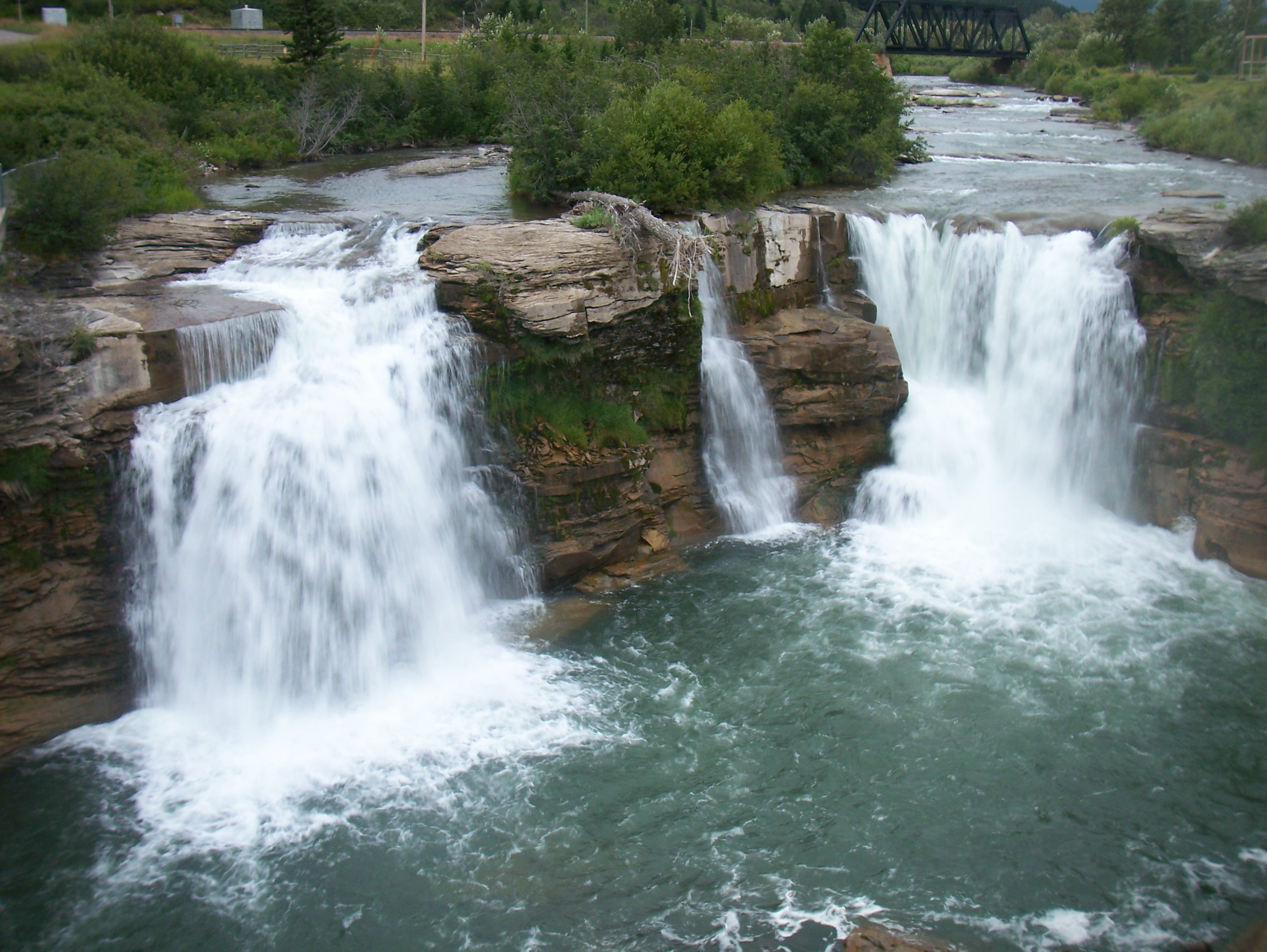
Water seeks freedom

Released from lethargy

Water plunges, plummets.

100_4206

Fry it in a pan

Friends for eggs and potatoes

Pig meat, oh soooo good!

Did I mention some were not great?

Fedora wearing

The coolest Rat Pack member

Sinatra maybe.

One student wears a fedora. I mentioned that it reminded me of the Rat Pack. He had no idea what that was or who Frank Sinatra was, but I told him it was cool to be compared to Frank Sinatra.

I pastori (The Shepherds)

I might have posted this lovely poem by Gabrielle D’Annunzio in September as I began school, but it speaks to me. Perhaps, I am better off to read it at other times than the beginning.

I recalled the poem, when I heard of the election of the Pope, Francis I. I thought it was a fitting name for the person who would be a shepherd. I hope he fulfills his Jesuit tradition of social justice and teaching.

When I heard the name he chose, it reminded of St. Francis of Assisi. Kathy and I used the Prayer of St. Francis as part of our wedding ceremony and hangs on our bedroom wall.

September, let’s go. It’s time to migrate.

Now in the land of Abruzzi my shepherds

leave the folds and go towards the sea:

they go down to the wild Adriatic

that is green like mountain pastures.

They’ve drunk deeply from the Alpine fonts,

so that the taste of their native water

may stay in their exiled hearts for comfort

to deceive their thirst along the way.

They’ve renewed their hazelnut sticks.

And they go along the ancient bridleway,

that is almost like a silent grassy river

in the traces of the ancient ancestors.

Oh voice of the one who first

discerns the shimmering of the sea!

Now along this coast moves the flock.

Without movement is the air.

The sun bleaches the living wool so that

it almost blends into the sand.

Swishing, stamping, sweet sounds.

Ah why am I not with my shepherds?