Tag Archives: teacher as transformer

Observational Poems : Touching the World : Deep Underground Poetry Community

Observational Poems : Touching the World : Deep Underground Poetry Community.

I was just surfing and came across this poem. Mindfulness is a universal concept and is not the sole domain of Buddhists or mystics. I find it ironic that the wave of scientific theory which pushed mindfulness out of the western practice was called the Enlightenment. Who or What did it enlighten? Mindfulness and scientific thought are complementary practices which make each other whole.

Innovation – A Poem by Ivon

As I drove to work this morning, I considered the phrase “thinking outside the box.” I wonder, “Is the most apt description for innovative or creative thinking?”

When I am inside the box can I really see outside and look around effectively? I could just be hanging on for dear life. Or, when I am outside the box, can I see inside? When I wrote my candidacy paper, I interviewed the first principal of our unique, alternative school and he provided an appropriate metaphor for innovative and creative organizations-a corral fence. I wrote the following poem and tried to capture what I think he meant.

Innovate

A fence

with railings

see in or out

allow perspective.

Flow and rhythm

information in; information out

nourish

enrich

affirm

recycle

breathe and flex.

Part of a whole

complex, yet simple

reach beyond my world

one piece of a puzzle.

Present

to our self

to the world.

Never box me in.

This fit with a song I heard by Ben Harper called With my Own Two Hands. He used to front a band called the Innocent Criminals and that drew me to his music. Enjoy this creative artist.

Words for the Wise – Partie Deux

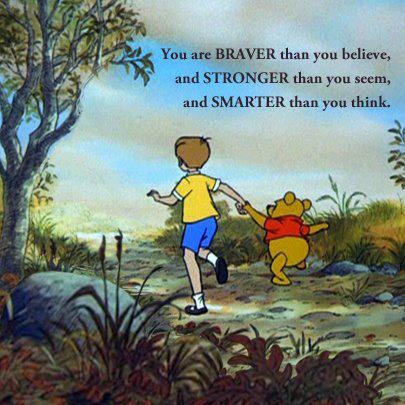
Words for the wise was a product of an incident yesterday. I was left exasperated, exhausted, and feeling somewhat unintelligent. I calmed down and found the wisdom shared by Winnie the Pooh helpful in creating a new lesson plan for today’s poetry time, but, first, let me explain the back story from yesterday.

About two months ago, a student brought their scooter to school and was riding it up and down the sidewalk in front of the building we occupy. Our school is located in what was a commercial building our school division acquired. There is no space to scooter in the front of the building, because there is a sidewalk and a parking lot immediately in front of the building. Usually, both are busy so it is an unsafe pastime. Second, students must wear proper equipment i.e. approved helmet, knee pads, and elbow pads. The young man in question is proficient, or so I have been told, so he took the equipment rule as a problem. Frankly, I would to, if I was any good at riding my scooter.

Yesterday, another student brought their scooter to school. While I was occupied, two students, including the aforementioned young man noted, borrowed the scooter and rode it in the parking lot and on the sidewalk while others watched. I was angry; that is the polite way of putting it. I gave some students credit. They recalled explicit instructions about the conditions a scooter could be used i.e. equipment, supervision, and location. Others had forgotten, but it was more likely a situation they were not listening for any number of reasons. This morning I received an email from the young man’s parent saying he informed her he could ride the scooter out back. I am not sure where out back is, because there is no place to ride out back. He left out the equipment and supervision.

Listening, which I think is essential to being responsible for one’s actions and words, seems limited to what a person wants. We listen when we are motivated by words or sounds that are we want to hear. I think that might be human nature. We lack mindfulness and being in the present moment. As luck would have it, sitting on my desk was a William Stafford poem entitled Listening. We had a great conversation after reading it, reflection time, and sharing in pairs.

Listening

My father could hear a little animal step,

or a moth in the dark against the screen,

and every far sound called the listening out

into places where the rest of us had never been.

More spoke to him from the soft wild night

than came to our porch for us on the wind,

we would watch him look up and his face go keen

till the walls of the world flared, widened.

My father heard so much that we still stand

inviting the quiet by turning the face,

waiting for a time when something in the night

will touch us too from that other place.

Thank you William Stafford. Winnie, I was brave and strong enough to tell my students I was listening, but I cannot always do what they want. I simply do not have the power some days and am smart enough to recognize this.
Words from the Wise

This arrived today. It definitely was not how a felt yesterday or when I first got up this morning. Sometimes our childhood heroes say it best and, as adults, we need to listen with a beginner’s mind.

And today I am off to see the Wizard, the wonderful Wizard of Oz.

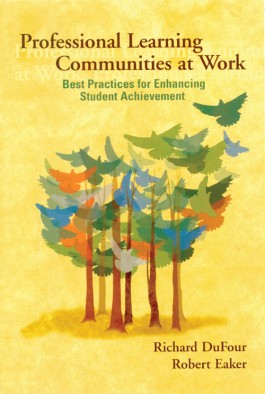
Professional Learning Communities at Work by Dufour and Eaker

I read Professional Learning Communities by Richard Dufour and Robert Eaker several years ago and attended conferences about the concept. We implemented Professional Learning Communities (PLC) in our school with early, but unsustainable success.

Thesis: The authors proposed “the most promising strategy for sustained, substantive school improvement is developing the ability of school personnel to function as professional learning communities” (p. xi).  Professionally, educators need awareness of emerging research to fuel personal learning and support student learning. Communities form and they foster “mutual cooperation, emotional support, and personal growth as [people] work together to achieve what they cannot accomplish alone” (p. xii). Teachers safely move from isolation and risks are taken extending personal and collective learning when a PLC is effectively implemented, integrated, and supported in a school.

CharacteristicsThis is an annotated version, but successful and sustainable PLCs have six characteristics:

  • Shared mission or purpose, shared vision or what we hope to become, and shared values guiding the process. Shared mission advertises purpose outward. Shared vision energizes staff. Values are personal and community attitudes, behaviours, and commitments which are normalized over time.
  • Collective inquiry fuels the process. What do we want to change? What ways are things as they are challenged? There is collective conversation and personal reflection. The latter is the oxygen that breathes new life into the dialogue and provides fuel through new questions.
  • Collaborative teams provide renewal. Collaboration acknowledges the dysfunctional nature of communities. What do we do when there are dissenting voices and disagreement? What value will we name here?
  • Action and experimentation are always in evidence. “Even seemingly chaotic activity is preferred to orderly, passive inaction” (p. 27). Teachers experiment with emergent ideas making innovation essential in a PLC.
  • Everyone commits to continuous improvement. Questions emerge and are actively sought out, but there are touchstones principles such as “What is our fundamental purpose?”
  • With continuous improvement and action orientation there is an iterative process in the form of quantitative, qualitative, or mixed research. The object is to shake up the status quo and find new ways of safely supporting both staff and students. What are we doing that we want to change? (pp. 25-29)

Questions: Who has had success in implementing a PLC in their school or jurisdiction? What were the important takeaways including what worked and what did not work? What did you do to overcome the bumps along the way? What can a school starting or restarting the process do to sustain energy and get early work done successfully while recognizing the achievements even when they are small?

Recommendation: The book is about 300 pages, but is an easy read. The authors synthesized leadership literature inside education i.e. Lezotte, Sergiovanni, and Fullan and outside education i.e. Bennis, Senge, and Deal and Kennedy and saved some reading.

I recommend the book for those ready, willing, and patient enough for a transformative journey. The process requires time and immediate classroom benefits to sustain it. Cultural change is messy and requires leadership, perhaps previously untapped in education. Effective support and communication are required for sustainable, successful results to emerge. Early conversations focused on mission, vision, values and normative behaviours are uncomfortable, but necessary. My questions attempt to flesh out these concerns, as we are embarking on this journey again.

I know schools in Canada, the USA, and internationally have successfully implemented PLCs and I want to draw on the experience and wisdom already in place. I am looking for process and product, but not a cookie cutter formula per se. I look forward to hearing from many of you.

Dufour, R. and Eaker, R. (1998). Professional learning communities at work: Best practices for enhancing student achievement. Bloomington IN: National Educational Services.

Trough by Judy Brown

I spent the past few days examining where I am in my life’s calling as a teacher. I was in a trough for a while and it is nice to start climbing out and see the horizon over the edge of the waves. Personal vision formed around and by named values is essential to fulfillment. I am grateful I had people listen and wait for me to speak. The trough is a quiet place and I was able to gather my thoughts, reflect, and regain some passion through their patience and kindness.

There is a trough in waves,

a low spot

where horizon disappears

and only sky

and water are your company.

And there we lose our way

unless

we rest, knowing the wave will bring us

to its crest again.

There we may drown

if we let fear

hold us within its grip and shake us

side to side,

and leave us flailing, torn, disoriented.

But if we rest there

in the trough,

in silence,

being with the low part of the wave,

keeping

our energy and

noticing the shape of things,

the flow,

then time alone

will bring us to another place

where we can see

horizon, see the land again,

regain our sense

of where

we are,

and where we need to swim.

Several months ago, I posted an entry called the Mindful Teacher. I suggested there was a need for added fuel for the fire that is my vocation and gives me voice through teaching and learning. Since then, I matured and realize the silence is the oxygen that also helps to breathe life into the fire. It serves as the wisdom, compassion, and prudence offsetting my passion. Without the space, the silence, I become a flickering flame burning out before my time.

ivonprefontaine's avatar

I was driving to school this evening and David Francey, a wonderful Canadian singer, was on the I-Pod singing The Waking Hour. Kathy and I have attended several of his concerts. He has a wonderful line in that song: “The heart that’s breaking never makes a sound.” It resonated. I wrote poetry many years ago and, today, I found poetry anew.

Set the backpack down

The mountain is high

The peak obscured

The path terrifying

Share my load

Trust

Be right

Be true

Will they hear?

Without spoken words

Speak my truth

Invite

Carried alone

The backpack is too heavy

Lighten

Strengthen

Back straight,

Shoulders square,

Head held high.

Walk with me

Share my load

True Transformation

This posting is not an original. Yesterday, I read a chapter in Jesus the Radical by Father John Dear SJ. I thought the list of ways easing human suffering, in some ways updated, was worth repeating.

“If we take time for daily prayer and sit quietly listening, our hearts will be disarmed of our inner violence” (p. 107).

The disarming of inner violence can happen and be heard in

  • in the silence of the ashes of Hiroshima and Nagasaki as we call and act for an end for nuclear proliferation;
  • in the voices of the Hibakushka, the atomic bomb survivors who call for total nuclear disarmament and the abolition of war;
  • in the laughter, longings, and cries of the world’s children, who look to us for peace;
  • in the poor and the marginalized, who suffer the fallout of our six-hundred-billion dollar budget for war. This is now understated. What good could be done with a mere fraction of that money?;
  • in the cry of liberation from the wrongly and unjustly imprisoned, the tortured, the homeless, the hungry, the ill, and the dying;
  • in the dead of Rwanda, Bosnia, Palestine, Iraq, Sudan, Central America, South America, Libya, Syria, China, and our own city streets, who cry out, “Stop the killing, stop the bombings, stop the violence;”
  • in all those who are different from us, who call us beyond the blindness of racism to the vision of a reconciled humanity, the beloved community;
  • in the faithful women of the world, who remain wide awake, announcing a paradigmatic shift, the fall of patriarchy and its hierarchy;
  • in the solitude of creation, from the mountaintops to the oceans; in the gentle rain and the silent breeze that call us to praise a God of peace, a God of Life;
  • in our own hearts, in our breath, in our prayer so we can go down the mountain to our cross or suffering in a spirit of love.

Adapted from Dear, J.  (2000). Jesus the rebel: Bearer of God’s peace and justice. Lanham, MD: Sheed & Ward.

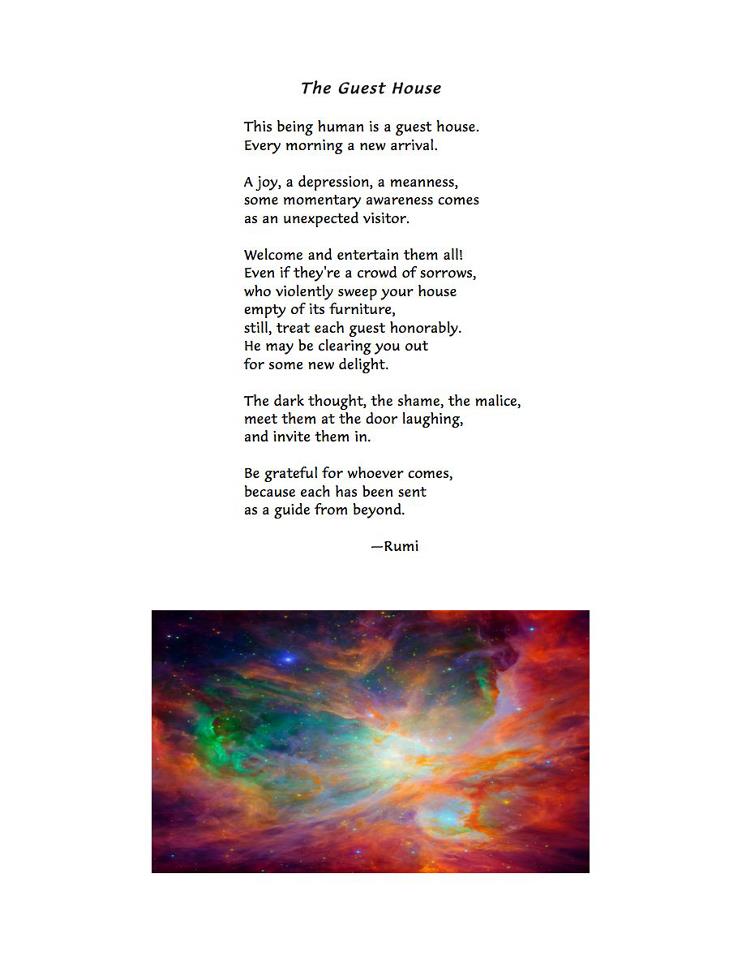
The House Guest by Rumi

I was going through my various accounts and Parker Palmer posted this on Facebook. After a challenging week, I read it and realized this was what my week had been like, very up and down. What do I say to those emotions which temporarily move in and shake my confidence? Or what do I say to those emotions which mislead me with their false promise of all things gold and glittery?

Thank you to Parker Palmer for this sharing.

Responsibility

I wrote about requiring a new culture in education which can lead to a new structure. I created a link to an article in that post and part of the article was an interview with Pasi Sahlberg.

Sahlberg stated, “There’s no word for accountability in Finnish. … Accountability is something that is left when responsibility has been subtracted.”

I understand responsibility as internalized and roles or tasks are conscientiously attended to and accountability is external and forced into place leading to feelings oppressed or alienated. Responsibility is personal or professional competency gained through maturity in a role. Accountability is personal or professional incompetency and immaturity which can  potentially be a result of change or newness in a role. Responsibility emerges in an organization when there is trust and a belief people can grow into and learn their roles. People become responsible because they are supported and cared for while they learn. A collaborative, compassionate culture emerges and subsequently a new structure for relationships to exist emerges.