Daily Archives: June 2, 2012

Diane Ravitch is a leading American educator. Although what happens south of the border is not important to us, this article poses a great question. Who is advantaged; those with resources or those without resources? Servant-leadership, which is lost in education, asks the leader to serve those around him or her and help them grow. That focus increases for the most disadvantaged. When will politicians, bureaucrats, and technocrats allow teachers in the classroom to become leaders who serve students and the community?

dianeravitch's avatarDiane Ravitch's blog

Mitt Romney launched his foray into education by visiting the Universal Bluford charter school in West Philadelphia, an impoverished, largely African-American neighborhood. He went to tout his plan for vouchers and charters as the new civil rights crusade of our era.

While there, thinking he was in friendly territory, he made some unfortunate remarks. First, he asserted that class size wasn’t important. That is no doubt the advice he had received from his advisors, who like to claim that having a “great teacher” is far more important than class size reduction. Then, he advised his listeners that one of the keys to education success is to be a child of a two-parent family. He got called out on both comments.

A music teacher rebuked him on the class size issue, saying: “I can’t think of any teacher in the whole time I’ve been teaching, over 10 years — 13 years —…

View original post 292 more words

There are excellent points in this article, but some areas of concern. The role of students, educators, and school provided insight into a different way of thinking about education. I disagree with the premise that administrators are a separate group, although they seem to be. Are administrators not educators themselves? I once met a retired educator who when I was introduced as a teacher and had something in common with her, she responded, “Oh, I was a principal” making it sound like I was inferior by remaining a classroom teacher. In recent years, I have witnessed this desire among many teachers to escape the classroom. We are teachers first.  If not educators, what is our role? What about children who needs help? What do we do to raise them up? I think this article is a starting point for a conversation.

Jabreel Chisley's avatarCooperative Catalyst

Education is something that is vital to the existence of a country where financial prosperity is something that is universally longed for. This is because that in order to reach financial prosperity one must reach a level of knowledgeable prosperity that unlocks the true innovator within them. However, if our countries goal is to allow for everyone to reach a level of financial prosperity then its time for us to sit down and come up with a dedicated pathway to delivering education with equality, equity, loyalty, and dignified passion in mind. If this is our goal then it is time for us to do away with the days where our educational system is balanced on the practice of every child left behind and every teacher for themselves. The time has come where we must push forward, with dignified loyalty, professional reservation, and universal respect for the student, the classroom, and…

View original post 933 more words

Observational Poems : Touching the World : Deep Underground Poetry Community

Observational Poems : Touching the World : Deep Underground Poetry Community.

I was just surfing and came across this poem. Mindfulness is a universal concept and is not the sole domain of Buddhists or mystics. I find it ironic that the wave of scientific theory which pushed mindfulness out of the western practice was called the Enlightenment. Who or What did it enlighten? Mindfulness and scientific thought are complementary practices which make each other whole.

Water, Snow, and Ice

insignificant

countless gathering form one

majestic power

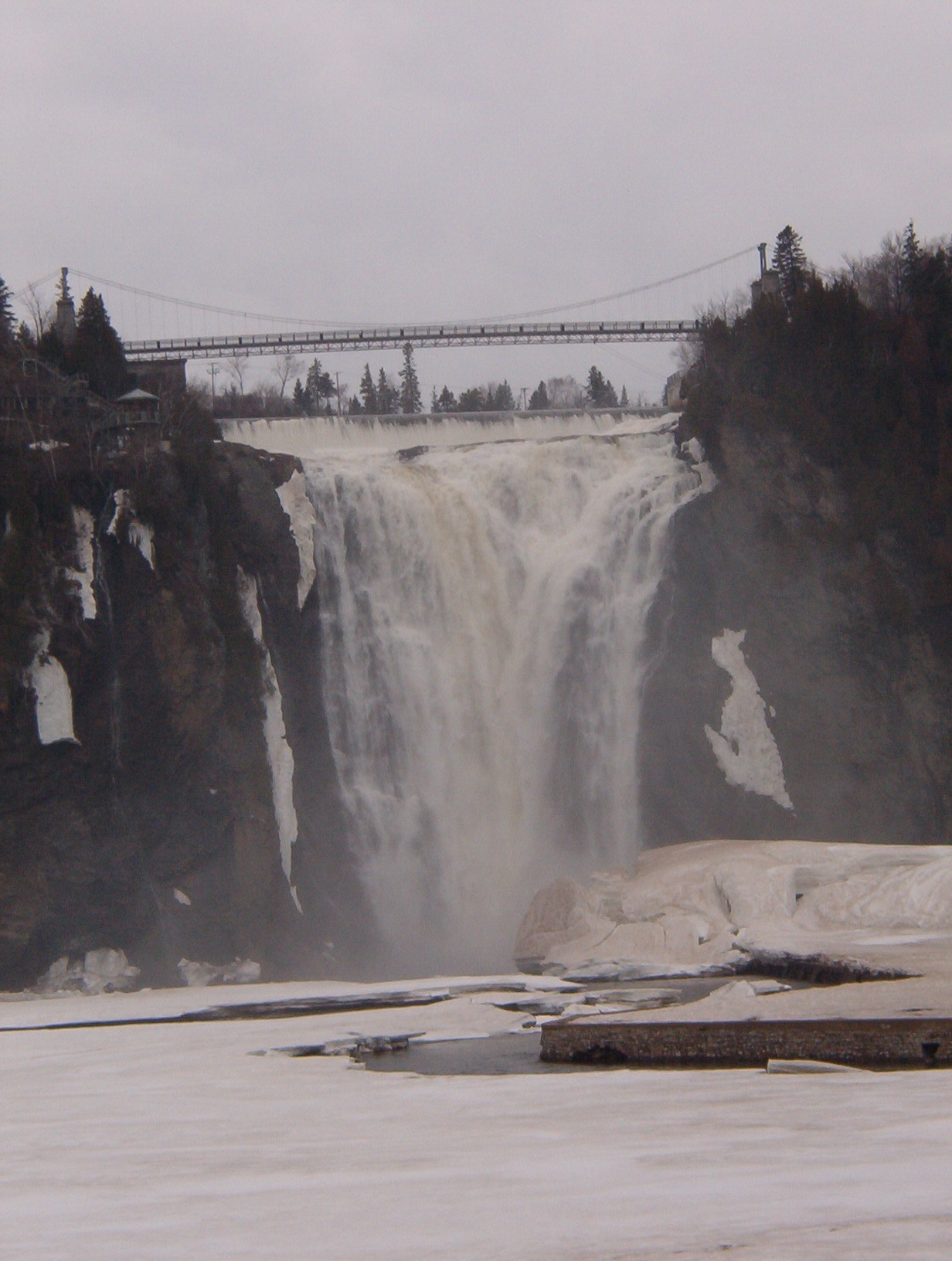
This is  a winter picture of La Chute (waterfall in English) Montmorency just outside Quebec City. At the base of the falls, around the open water, fly fishermen will be out during the summer. What you see a the top is a walkway across the falls and there is a tram just to the right of this picture. The St. Lawrence River is only a few hundred metres from the base of the falls.

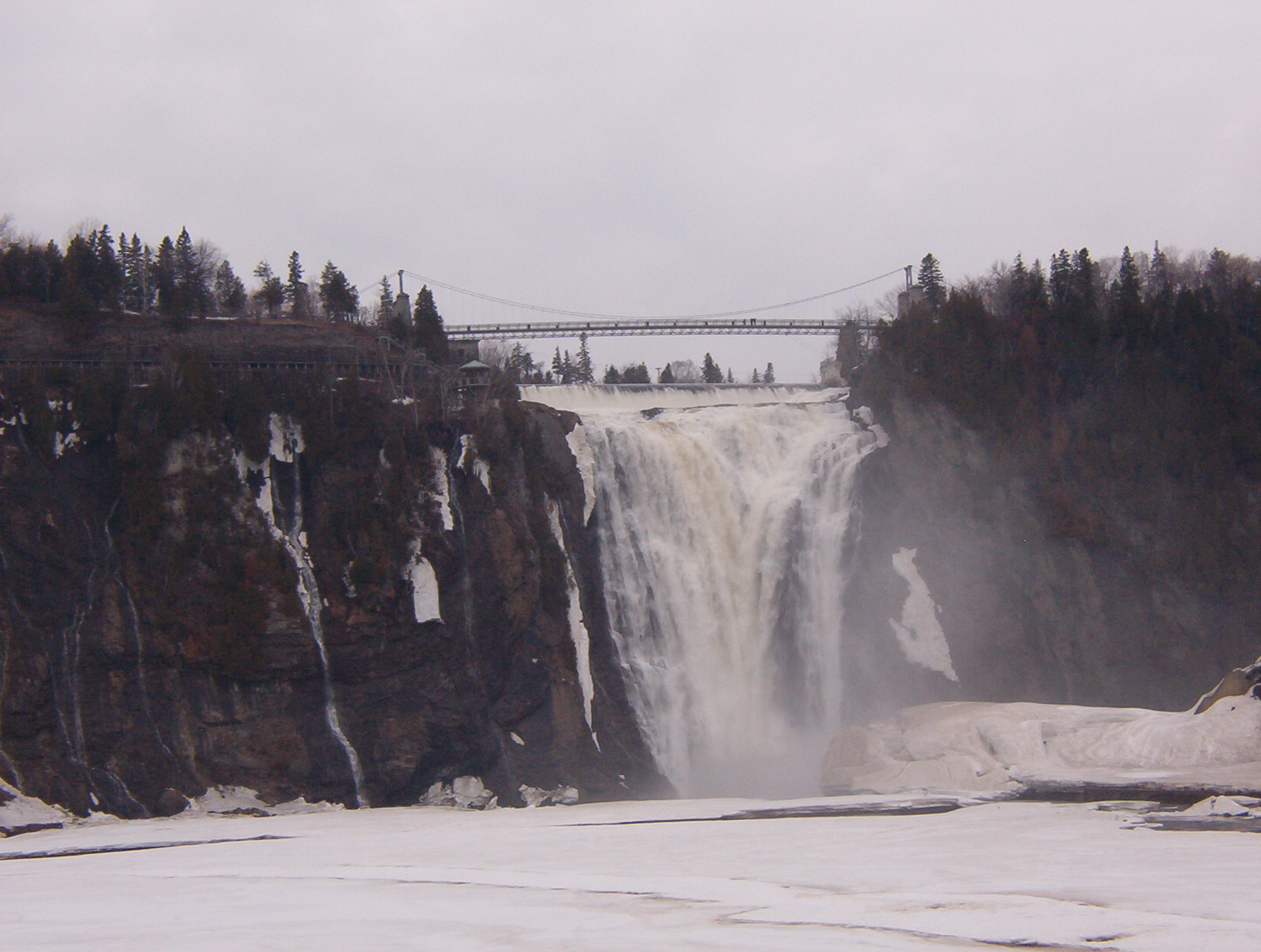
Here is a second picture of the falls. When Kathy and I were determined to see these falls. The pictures do not do them justice, but, as you can tell even in winter, they are spectacular. While driving across Le Pont Pierre-Laporte my fear of heights kicked in when I realized how far above the St. Lawrence we were. I needed to be in the right lane, but there was no way I was getting that close to the edge and it took creative driving on the far side of the bridge to get to the falls.

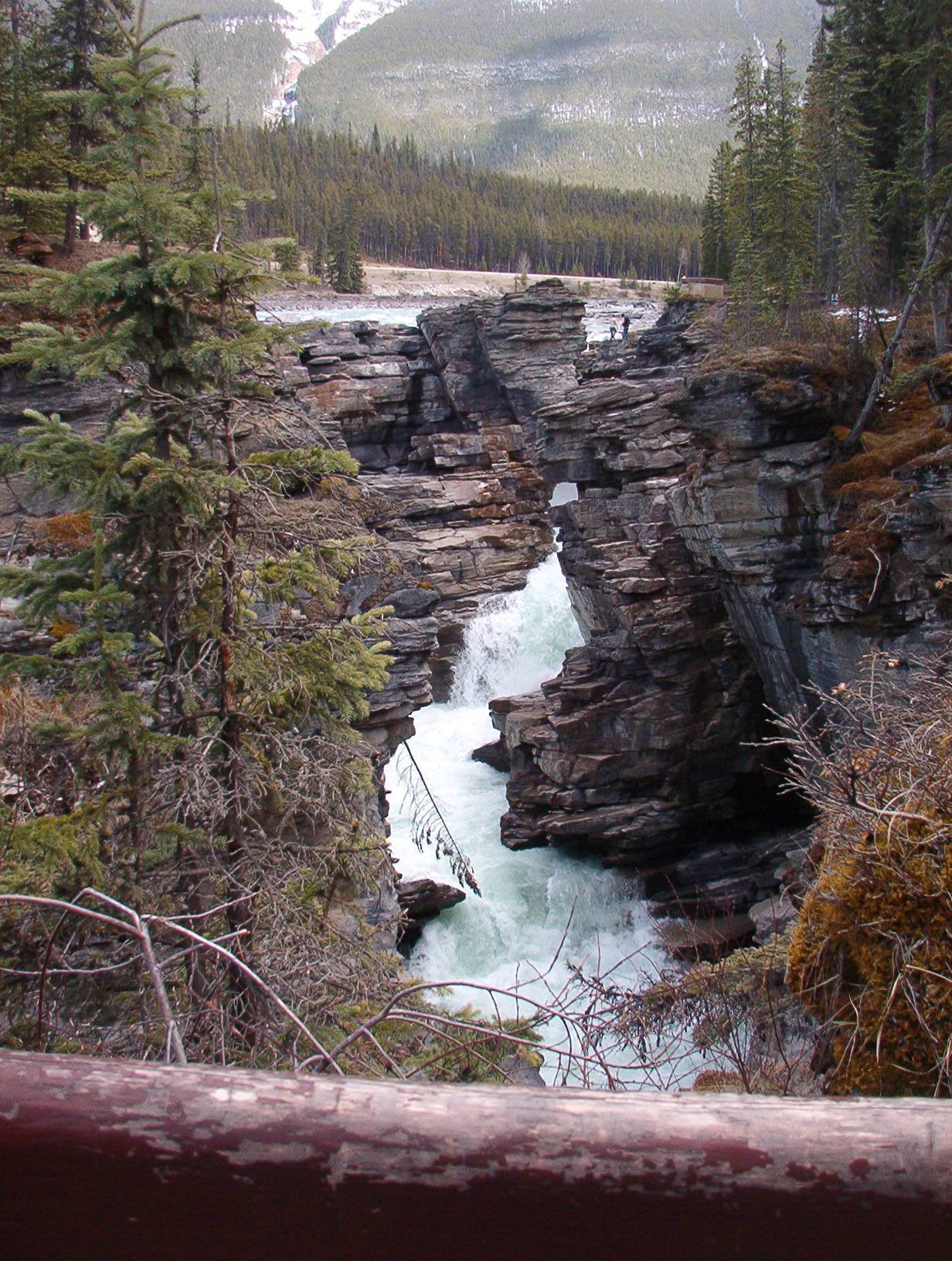
This is Athabasca Falls in Jasper National Park. You can see the Athabasca River in the background. Even in the park, it is a wide river at this point and it narrows quickly to shoot through the gorge. Kathy took this picture from the small wooden bridge that goes over the falls. You can just see the railing in the foreground. When you cross the bridge, you can walk up-stream along the river for several kilometres.

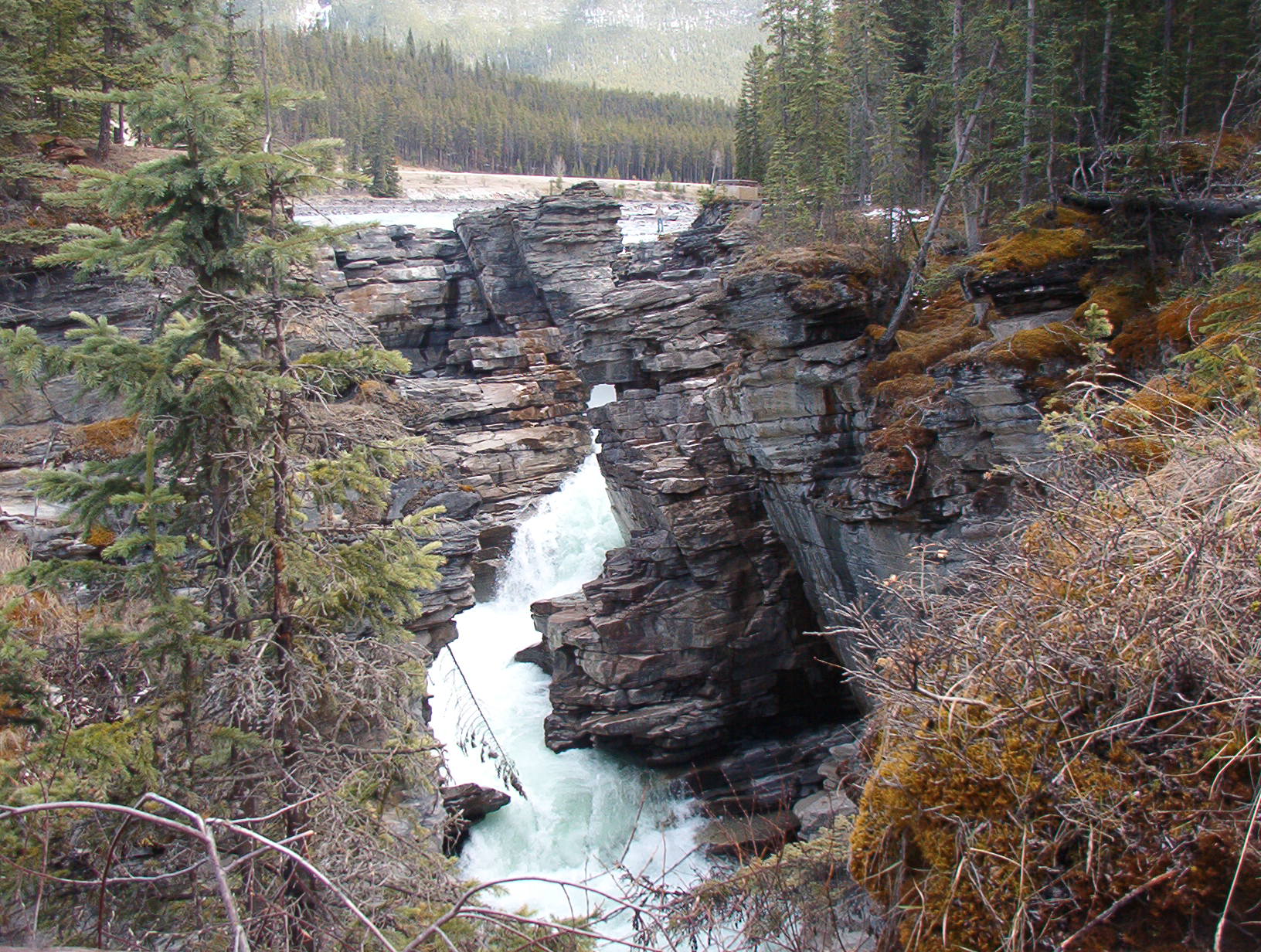
This is a slightly different view of the falls. The force of the water passing through the gorge has created a new stream bed. The water cut through solid granite. Below, you see one of the many mountains along Highway 93 between Jasper and  Banff.

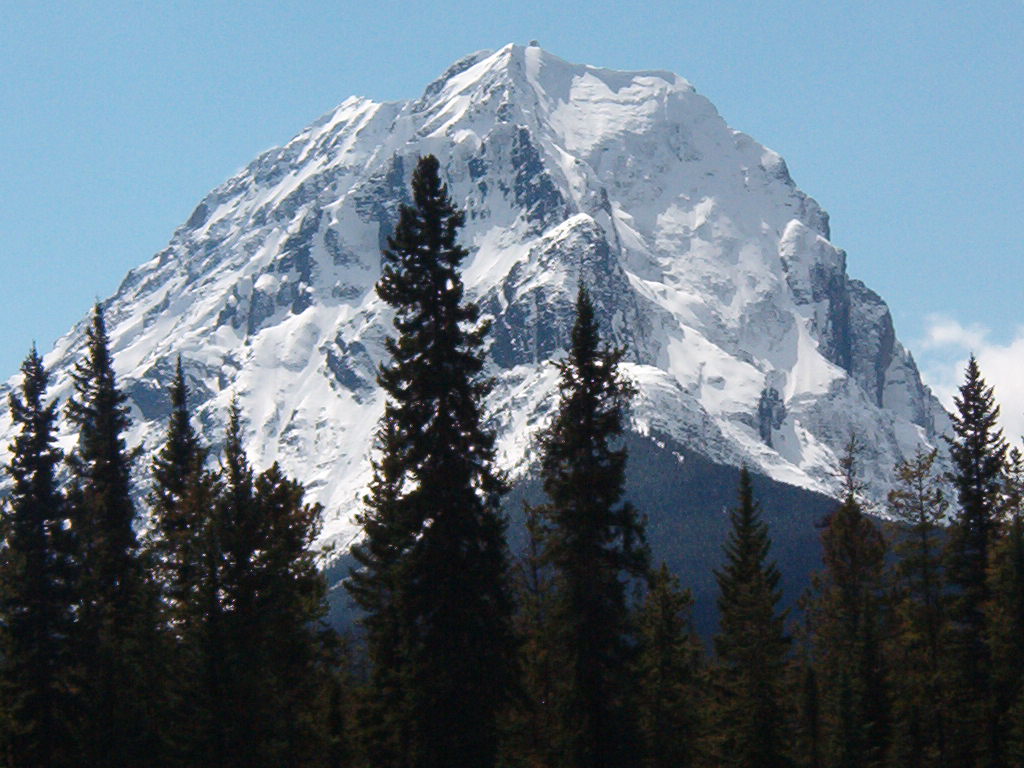
This is a view of one of the many mountains along Highway 93 between Banff and Jasper and is not far from Athabasca Falls.

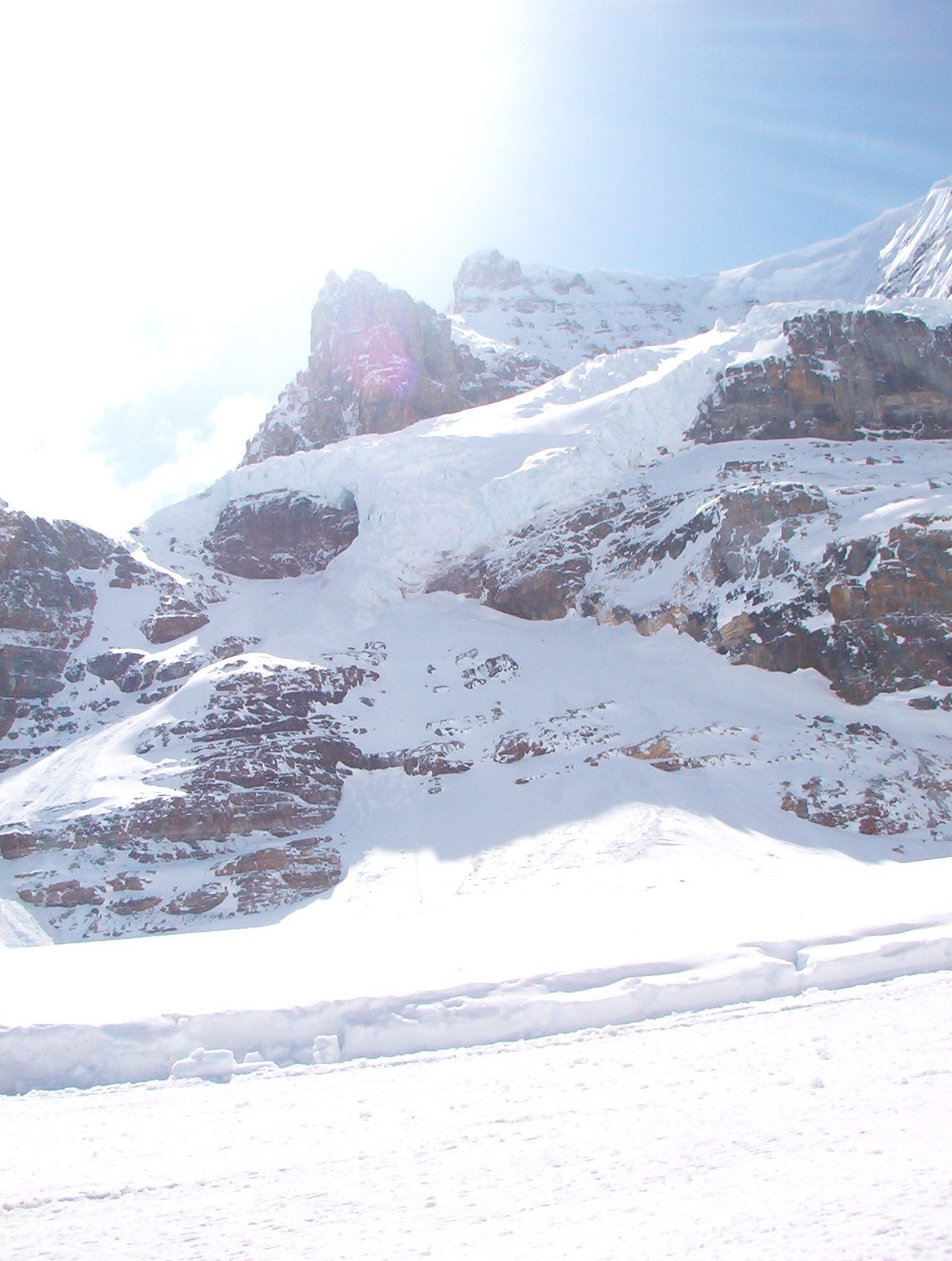
This is the Columbia Icefield looking back towards the source of the glacier and mountains. This is at the headwaters of the Athabasca River.

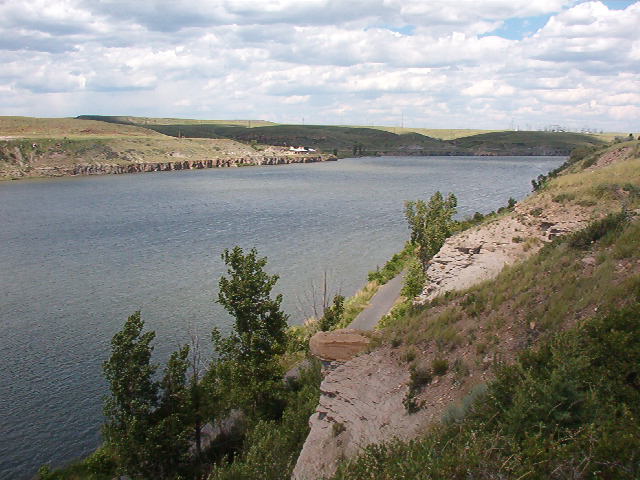
This is the Columbia River in Oregon. Although it is a spectacular view, I wonder what price we pay for progress:? Under that water, lies a spectacular river with rapids and waterfalls. Also hidden from view is a way of life of people who settled along this magnificent river. What a loss!

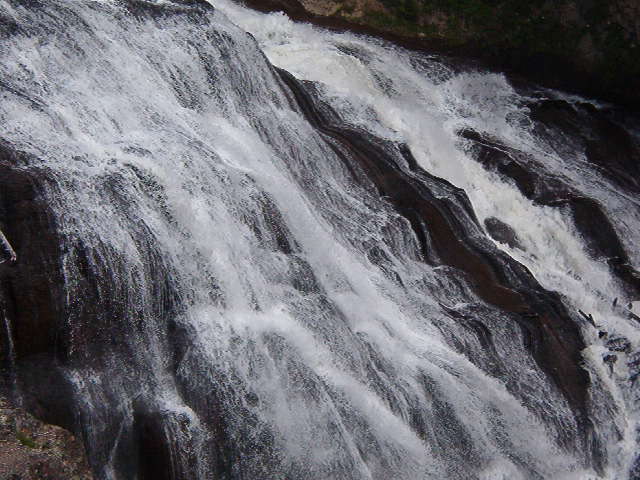
This was a small waterfall along the Continental Divide in Yellowstone.