Category Archives: Community

Character of Teaching

While having tea in a small coffee shop I inhabit, I jotted down the beginnings of a poem.

A phrase that repeated itself in my dissertation and the interviews was “differences make a difference.” When I began teaching, people asked “what made me go into teaching, particularly at 32 years of age.” It was the sentiment that I might make a difference, maybe not for every student, but for some. It reminds me of the Crosby, Stills, and Nash song: Teach Your Children Well, but it is more than teaching. It is serving them and whatever I do well.

Someday, whether we are teachers or not, we feel a desire to be lost. Responsibilities weigh on us whether we are parents, at our work, partners in a relationship, etc. In our relationships with the weight of responsibilities, something calls us each back. It is more of a whisper. It can only belong to each of us. Teaching was this way for me.

I experience a desire to be lost,

Weighing down on me,

Responsibilities cloak me like a vapour

Covering me with their many coats,

They arrive without being asked.

From the multitude, one desire arises;

A clarion call from the cosmos,

It carresses my soul;

It whispers “be useful and kind.”

A flower sharing its pollen,

Spread on the wings of others;

Teach what is possible–

What is possible of each of us?

Save them from glory seekers and profiteers;

Gently, send them away

Pollinating a new generation,

Flowering anew with compassion,

Rejoice as they float around the corner,

Knowing not what they will sow,

Trusting your character.
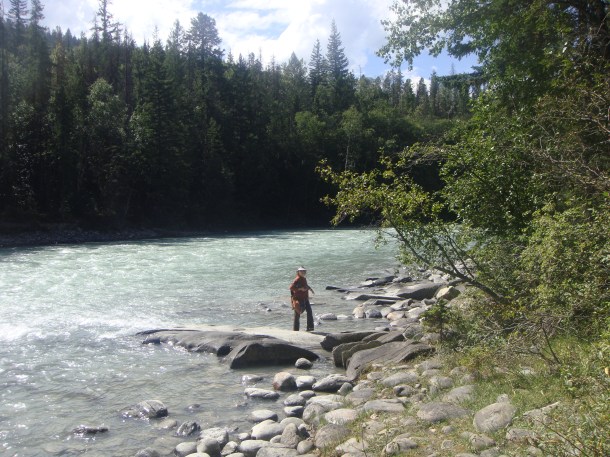
I took this picture on the upper reaches of the Fraser River. Around the corner from Kathy, the river narrows quickly and there is a waterfall.
There was a time I would reject those

Ibn ‘Arabi wrote “My religion is love. Whichever the route love’s caravan shall take, That shall be the path of my faith.” He speaks of a journey and shared path.

I recalled the statement attributed to the German Lutheran pastor Martin Niemöller:

First they came for the Socialists, and I did not speak out—
Because I was not a Socialist.

Then they came for the Trade Unionists, and I did not speak out—
Because I was not a Trade Unionist.

Then they came for the Jews, and I did not speak out—
Because I was not a Jew.

Then they came for me—and there was no one left to speak for me.

When we reject others because of ethnicity, religion, skin colour, politics, gender, etc, we lose sight of what makes us human, our common humanity. This humanity is deeper than any of the markers we have that identify and group us.

Shunryu Suzuki compared mindfulness to a compassionate space that expands and contracts depending on the needs of the moment and the people we share that space. When we reach out to others, we acknowledge we are pilgrims on a shared journey where we speak for and on behalf of each other.

There was a time I would reject those
who were not my faith.
But now, my heart has grown capable
of taking on all forms.
It is a pasture for gazelles,
An abbey for monks.
A table for the Torah.
Kaaba for the pilgrim.
My religion is love.
Whichever the route love’s caravan shall take,
That shall be the path of my faith.

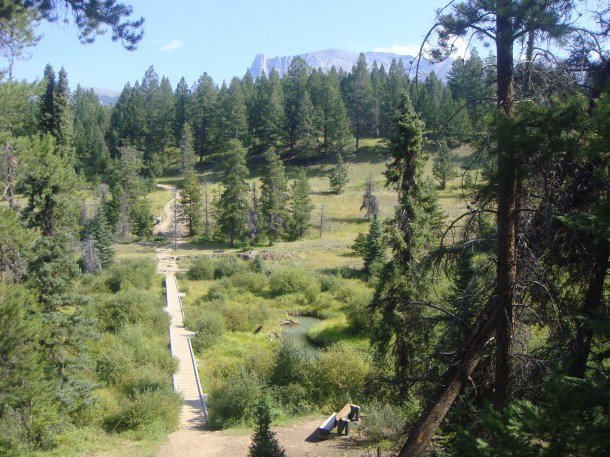
I took this picture in Jasper National Park. Kathy and I walked for several hours on this path just enjoying being there.

Stones of Time

Source: Stones of Time

Olga provided great pictures of water and stones along with a haiku and two quotes. Today, I had a conversation about how do we change the world. I commented that we can only live in the here and now.

Confucius reminds us to do any change we begin with small tasks. When we are mindful and present living in the here and now, we understand the small tasks that call for our attention.

Pericles counsels us that others see and understand the imprint of our living in our actions. Our deeds reflect who we are to children, students, co-workers, neighbours, etc. That was part of our conversation today, as well.

What is most indelible are not our words, but our actions. Who am I as a person is a strong message.


The Difference Between Judging and Discerning

Source: The Difference Between Judging and Discerning

I am on the road for a couple of days, so I am not sure what I can post in terms of original material. I turn to pressing some great posts from others.

Val‘s post resonated with me, because judging and discerning were part of my dissertation. Hans-Georg Gadamer used these concepts in Truth and Method and they formed a significant part of my conceptual framework, literature review, and conclusions.

Gadamer proposed humans judge the world, ideas, and people as they encounter them. He used the term prejudice, which is a way of prejudging the world as we engage with it and others. In effect, there is a right or wrong way to engage. I used parentheses, because it has a negative connotation and to slow the pace of reading. It became (pre)judge and (pre)judice, which annoyed two of my committee members.

When we take more time to read text and (con)text, that which encircles us, we can (dis)cern and (in)form ourselves as we realize the world and people are complex. WE ask eloquent questions that do not have predetermined answers. We let the question frame dialogue with the world and others.

Val said “when we detach [ourselves] from the belief of good or bad, and discern life’s multicolors and shades, we find freedom beyond the rules and conditioning of the mind.” We let go of judgements of a world that is cast in binary choices of black or white, moving to complex (con)textual understandings (sub)ject to discerning and seeking new and continuous understandings. Ted Aoki contended “and” means more than the binary nature of “or.”

Our True Heritage

I am reading The Art of Communicating by Thich Nhat Hanh to remind myself of to listen mindfully to others. When I am fully present to the other, I show compassion and understanding for their suffering.

Thich Nhat Hanh writes beautiful poetry, which reminds me to see the extraordinary in the ordinary. This poem reminds me that, when I am present, I experience the cosmos and its precious gems with all my senses.

In the busyness of living, I miss hearing birds singing, the pines chanting, and smiles of those around me. When I am happy, I share that with the world.

The cosmos is filled with precious gems.

I want to offer a handful of them to you this morning.

Each moment you are alive is a gem,

shining through and containing earth and sky,

water and clouds.

It needs you to breathe gently

for the miracles to be displayed.

Suddenly you hear the birds singing,

the pines chanting,

see the flowers blooming,

the blue sky,

the white clouds,

the smile and the marvelous look

of your beloved.

You, the richest person on Earth,

who have been going around begging for a living,

stop being the destitute child.

Come back and claim your heritage.

We should enjoy our happiness

and offer it to everyone.

Cherish this very moment.

Let go of the stream of distress

and embrace life fully in your arms.

Breath, You Invisible Poem

Rainer Maria Rilke compared a poem to living and who we are each becoming as a person. We each experience continuous and invisible interchange between who we are and the world beyond our seeing.

Parker Palmer compared this interchange to a Möbius strip and, when we place our fingers on the strip, we slide them in and out without lifting them. There is a rhythm to this movement, like a tide moving in and out from the beach continuously shifting the sands.

Each of our place in the cosmos is small, but I think essential to the cosmos. It is in the mindful interchange with the cosmos, being present to one another, imprinting ourself on the cosmos in a unique way that makes us each irreplaceable. We cannot see what that will mean, only experiencing it by being present and attentive to each breath we take.

Breath, you invisible poem!

A constant interchange between our clear being

and the world space beyond our seeing

in which I rhythmically become.

Solitary wave whose

gradual sea I am.

Of all possible seas you are parsimonious,

winning the cosmos, with me one gram

in it. How many realms of space have been

inside me already! The multiple wind

is like my son.

Air, do you know me? You are full of places

once mine. A uniquely smooth rind,

a leaf of my words among roundnesses.

Work Around Your Abyss

Henri Nouwen wrote about the essential nature of being present, attentive, and mindful to our needs. Like Thomas Merton, he cautioned against being caught up in the quick fixes and materialism of contemporary society to heal the wounds we have.

When we feel pain and are suffering, it is essential to come close to those the wound, working around it until it heals. Unlike contemporary organizations, which are often described as teams, this is the work of community. Frequently, we share pain and woundswith others and it is in sharing our journey we discover solace and healing, making us each whole again.

There is a deep hole in your being, like an abyss. You will never succeed in filling that hole, because your needs are inexhaustible. You have to work around it so that gradually the abyss closes.

Since the hole is so enormous and your anguish so deep, you will always be tempted to flee from it. There are two extremes to avoid: being completely absorbed in your pain and being distracted by so many things that you stay far away from the wound you want to heal.

How Poetry Comes to Me

Gary Snyder wrote this short, accurate description of how poetry comes to a person. It is not an easy process.

It comes blundering over the
Boulders at night, it stays
Frightened outside the
Range of my campfire
I go to meet it at the
Edge of the light.

Snyder spent time in Japan where he immersed himself in Zen Buddhism and poetry, some of which he translated and used to guide his writing. One of the poets he studied was Han Shan who wrote the following poem called LX.

I see similarities between the two poems. Snyder wrote about how poems wait for us at the edge of the just out of range of our campfire. Han Shan suggests, if we move during sunny times, we might not move at all. Like moving to the edge of the light, we move timidly to find what awaits us and searches for us. It takes being present and mindful to our world and others.

Han Shan has so many strange, well-hidden sights,

Every climber climbs a little timidly . . .

Moon shines in the dripping water;

wind brings the very grass alive.

Freezing trees flower with snow,

dead, bare trees leafed out in cloud.

Gored by cold rain, the liveliest soul turns away.

Unless it stays sunny, you’ll never get through.

Hope

This Emily Dickinson poem reminds me of Langston HughesDreams. There are  direct and indirect metaphors to birds and a sense hope and dreams feed to lighten one’s spirit.

Being mindful of one’s dreams can give a person hope and something to look forward to. It is not to say we lose ourselves in our dreams, living in a fantasy. Our dreams nourish a hope essential to sustain our spirit and who we are becoming as a person.

Dreams call to us, even in challenging times. We share them with others and they bring hope, not to one person, but to a larger collective. Dreams and hope exist as questions, which we can reflect on alone and together.

Hope is the thing with feathers
That perches in the soul,
And sings the tune without the words,
And never stops at all,
And sweetest in the gale is heard;
And sore must be the storm
That could abash the little bird
That kept so many warm.
I’ve heard it in the chillest land,
And on the strangest sea;
Yet, never, in extremity,
It asked a crumb of me.
Here is the Langston Hughes poem.

Hold fast to dreams
For if dreams die
Life is a broken-winged bird
That cannot fly.
Hold fast to dreams
For when dreams go
Life is a barren field
Frozen with snow.

From the Book of the Samurai

When one writes, mindfulness and attention to the choice of words. Tsunetomo Yamomoto offered the following advice in the Book of the Samurai. He quoted the Zen priest Ryōzan, concluding the result of a well-written letter, even a short one, would lead to the recipient making “it into a hanging scroll.”

Mindfulness and attention are used in all facets of one’s life. Living mindfully is celebrating one’s life fully, living each moment to the fullest.

“Practice in letter writing goes to the extent of taking care in even one-line letters. It is good if all the above contain a quiet strength. Moreover, according to what the priest Ryōzan heard when he was in the Kamigata area, when one is writing a letter, he should think that the recipient will make it into a hanging scroll.”