Category Archives: Leadership

this…is who we are

via this…is who we are

I read this post the other day on the blog Lead Our lives. It resonated with me.

When I see myself as somehow separate and distinct from the universe that envelops me, I mistake my place in the universe as that of an outsider, a visitor, and spectator.

When I think of myself in that way, I allow myself to believe and shape a universe I can somehow master. This is unrealistic and sets me up for failure.

Alan Watts and Parker Palmer write about faith and fidelity as opposed to belief. When I have faith and trust in what is to come, I set aside the idea that life is plannable. Yes, I need plans, but they are in flux, open to improvisation in each ensuing moment. When I form a rigid set of beliefs, I end up in a binary and polarizing place, where only my answers are right and certain. When I am follow with faith and fidelity, I seek answers in the diversity and flux of the universe.

In the post, there is a reference to Father Richard Rohr who used the quote from Rabbi Rami Shapiro in one of his daily meditations, which I also receive. Whatever I call God, it is intriguing how much diversity and beauty in that name.

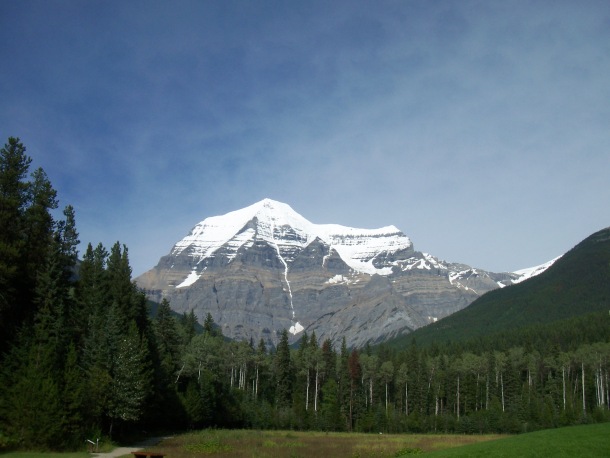
Mount Robson is a place I drive by frequently on trips to and from British Columbia. It is magnificent and is a symbol of uncertainty. As often as I drive by it, I cannot know it completely. It stands as a deep mystery. Having said this, I have faith each time I drive in this direction it will be there. Its majesty is grounded in both mystery and certainty that come together.
Robson

Wednesday – native prayer

via Wednesday – native prayer

Dymoon shared a beautiful indigenous prayer attributed to Chief Dan George (born Geswanouth Slahoot) who was an actor, author, and activist. He did not become an actor until he was 60 and worked as a longshoreman, logger, and musician, as well as being chief of the Tsleil-Waututh Nation in British Columbia.

The prayer reminds me that nature is a place to be. We are not separate from it, but live in nature’s midst. Nature’s gifts, including silence, are a rich bounty we cannot live without.Gulls at Neurotsis Inlet

I took this picture several years ago walking along the North Saskatchewan River, which runs through Edmonton. Nature is always with me.

Monday Morning Wake-Up Call

via Monday Morning Wake-Up Call

David shared a wonderful poem by Mark Nepo. It reminds us life is not something to plan. Life is something we live. We exist in a state of flux and float in the breeze like a bird trusting the currents of the stream.

We took these pictures in Glacier National Park. It reminds me how nature just exists. There are no plan as such and no purpose than to be in a paricular moment. The waterfall does not care that we build roads and drive on them. It just flows.

Doors

The other night, we watched a re-run of the Montana episode of Parts Unknown hosted by the late Anthony Bourdain. I enjoy watching the series and this episdoe about Montana drew to it as we have visited Montana several times.

Bourdain ate with a poet I had not heard of before: Jim Harrison. He spoke about being part of nature and how he feels small under the big sky of Montana. I looked him up and felt I should have heard of him before. He was a celebrated and well-published poet.

I chose this poem as it speaks to how we create binary choices in a complex world and universe filled with a myriad of choices that we follow depending on the spirit. For example, we often think we have to separate the economy and the environment.

The etymology of economy is from the Greek, oikos, meaning household and suggests keeping a good house. We only have to think about animals and how they do not soil their living quarters to understand how economy and ecology are related.

Harrison created wonderful imagery about the sky being a door never closed, but the sun and moon are not doorknobs. He lived in Montana for years where the sky is big and stretches on, as does the land.

I had to look up Dersu Uzala. It was a movie made about a man who lived his life integrated with nature and the universe, who dies when he moves inside.

I’m trying to create an option for all
these doors in life. You’re inside
or out, outside or in. Of late, doors
have failed us more than the two-party system
or marriages comprising only one person.
We’ve been fooled into thousands of dualisms
which the Buddha says is a bad idea.
Nature has portals rather than doors.
There are two vast cottonwoods near a creek
and when I walk between them I shiver.
Winding through my field of seventy-seven
large white pine stumps from about 1903
I take various paths depending on spirit.
The sky is a door never closed to us.
The sun and moon aren’t doorknobs.
Dersu Uzala slept outside for forty-five years.
When he finally moved inside he died.

I took this picture several years ago as I looked from Alberta towards Montana across the field, with fresh bales of hay in the forefront and the mountains and sky forming the backdrop.

What Have I Learned so Far?

I enjoy Mary Oliver and questions she asks in her poems. Living is a question, as I am uncertain what will happen, even in the next second, and how I will respond/react.

How we each live is the answer to a Mary Oliver question from The Summer Day: Tell me, what is it you plan to do with your one wild and precious life? Do I sow seeds of kindness? Do I somehow make the world a better place, without understanding what that means in advance, perhaps ever?

As I rise from meditation and prayer, I do I move in a mindful way, more attentive to my words and acts. Meditation and prayer help make the world holy, more whole as I attend to it. We each live Living in our particular concrete and real world of human relationships with each other and the world.

Meditation is old and honorable, so why should I
not sit, every morning of my life, on the hillside,
looking into the shining world? Because, properly
attended to, delight, as well as havoc, is suggestion.
Can one be passionate about the just, the
ideal, the sublime, and the holy, and yet commit
to no labor in its cause? I don’t think so.

All summations have a beginning, all effect has a
story, all kindness begins with the sown seed.
Thought buds toward radiance. The gospel of
light is the crossroads of — indolence, or action.

Be ignited, or be gone.

Silently Blooming

via Silently Blooming

Shobna provides a beautiful images and Thich Nhat Hanh‘s quote about silence. Parker Palmer says that community and solitude form a paradox. They do not exist without one another.

It is in moments of solitude I find meaning in living in community. What I share in common with others far outweighs what makes me different although the differences are essential to what makes each of us unique beings.

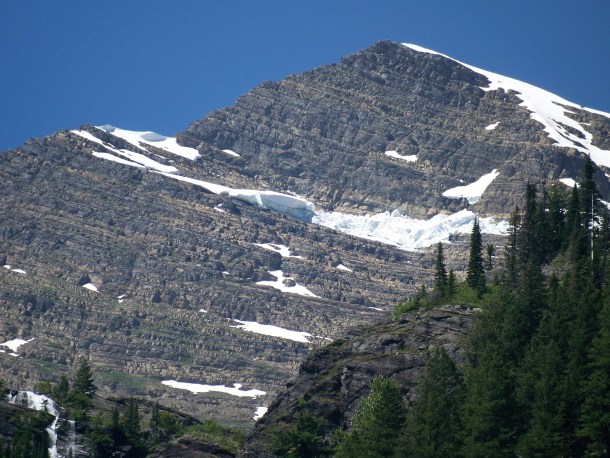
It is in moments of silence I look at my life as if it were a mountain revealing its story through the striations it formed throughout its existence. In silence, my life takes on meaning. It is there that my relationships take form and mean more than they did in the busyness of the day.

Mountain's Layers

I Have Realities in My Past

via I Have Realities In My Past

One of the first classes I took in my doctoral journey introduced me to Viktor Frankl‘s work and finding meaning in one’s life, which is the primary reason we live.

In his post, Kevin shares a quote from “Man’s Search for Meaning.” We search for and discover meaning in ways unique to each of us. That search/quest is not someone else’s, even though there may be shared characteristics.

Frankl survived the horrors of Auschwitz believing his wife was alive, often hearing her speak to him. As it turned out, she died during her internment, but it was her daemon nature that gave him reasons to live and press on. Many of us would say our spouse/partner gives us reasons to live and that would be true, but it is in different ways than Frankl and others.

Differences make a difference.

A Book Lover’s Tag

via A BOOK LOVER’S TAG 

Diana passed on a tag and posed 13 questions to her followers with this re-blog. The best part of the her post was the John O’Donohue blessing about how our words make the invisible visible through our personal artistry and creativity.

  1. Do you have a favourite place to read? No, I read everywhere but in vehicles.
  2. Do you use bookmarks or random pieces of paper? I use both and more. I turn corners, highlight, and use sticky notes with notes.
  3. Do you eat or drink while you read? I drink tea, but rarely ever eat while I read.
  4. Do you listen to music or watch TV? There always seems to be music playing, but I find the TV distracting. Music fades into the background.
  5. Do you read one book or several at a time? I do both. I find reading one book helps me focus, but I cannot help reading more books.
  6. Do you prefer reading at home or elsewhere? There is a small coffee shop a few minutes from the house. The baristas and owners welcome me almost each day.
  7. Do you read silently or out loud? I read silently most of the time, but, when I read something of particular interest, I read it to Kathy. I enjoy reading to our grandson when we visit with him.
  8. Do you read ahead or skip about? I skip about. I like to read the index in a book and see who references are if it is a book I use for my writing. I cheat and read ahead in non-fiction.
  9. Do you break the spine or treat it like new? I buy many of my books used, so they come well used. If I get a new book, I mark it up inside, but treat it like new.
  10. Do you write in books? I mark them up with a felt marker and make notes for future reference. The exception is when I read non-fiction and poetry.
  11. What books are you reading now? I am reading The Company of Strangers by Parker Palmer.
  12. What is your childhood favourite book? I don’t have one, but I remember reading Little Golden Books and having them read to me as a special part of my early reading.
  13. What is your favourite book of all time? That is like choosing who my favourite child is. I think it depends on mood and time. I enjoy great poetry i.e. Mary Oliver and Wendell Berry. I read books about spirituality i.e. Parker Palmer. I read about education i.e. William Pinar, John Dewey, and Madeline Grumet. I read about philosophy i.e. Aristotle, Hannah Arendt, and Paul Ricoeur. My favourite fiction writers are John D. MacDonald and Paulo Coehlo.


How Quotes Enoble Us

via How Quotations Ennoble Us

I love quotes. They make me reflect about meanings that are not clear. They raise eloquent questions that have no pat answers. They inspire me. Balroop provided three quotes that underscore these points.

Poetry is like quotes and I find many quotes from poems and poets. There are spaces between words, lines, and stanzas I can stand in and wonder.

I leave you with quotes that inspire me to think deeply and ask questions about the meaning of my life.

The first two are from Mary Oliver.

“Tell me, what is it you plan to do with your one wild and precious life?”

“Said the river: imagine everything you can imagine, then keep on going.”

The following is from Wendell Berry.

When despair for the world grows in me
and I wake in the night at the least sound…
I come into the peace of wild things
who do not tax their lives with forethought
of grief. I come into the presence of still water.
And I feel above me the day-blind stars
waiting with their light. For a time
I rest in the grace of the world, and am free.


Take Sides

Source: Take Sides

The link is to a quote by Elie Wiesel, a Holocaust survivor and Nobel Peace Prize winner. He is not referring to taking sides over a game. Instead, he speaks to taking sides when we witness wrong-doing and immoral acts. His book Night is a worthwhile reading.

I remind other Christians Jesus reached out to those who were most in need, living on the margins of society. He ate with sinners and tax collectors and stood up against the Pharisees and scribes (Luke 15:1–4) and (Romans 3:23).

We each have to decide what we is immoral and moral. It is not upholding abstract laws and rules, but the spirit of doing what is proper. I did not use the word right or correct . When I do, I fall into a trap of checking a binary box of right or wrong. Instead, I ask “is this proper?” In French, this is a matter of comportment and conduct.

I think the last sentence in the quote are important, worthwhile repeating. It is worth spending time whiling and linger over the words and the depth of their meaning, from a person who suffered and witnessed unthinkable human tragedy perpretrated by other people. “Whereever men and women are persecuted because of their race, religion, or political views, that place must — at that moment — become the center of the universe.”

I am not a big believer in thinking about my legacy, whatever that might be, but I want to be remembered as someone who stood up and spoke out against the wrong done to other people.