Category Archives: Poetry

Thought and Haiku for Saturday

Last night, just before I went to bed, I was watching the news from one of the Spokane TV stations. Washington State completed an audit for public education. One of the conclusions was that simply moving 1%of funding from central offices and administration would add about 1000 classroom teachers states-wide. I am not suggesting this could be done across the board in every jurisdiction but it is food for thought. What if we moved 10% from school administration and central office administration? What would the benefits be? Right off the top of my head I thought of additional classroom teachers and effective professional learning could be undertaken.

Will this even be considered or are we merely protecting an antiquated and bloated status quo?

I am working on the World Cafe summaries from several months ago trying to find software to organize, analyze, and present the data in a meaningful way. The March 17, 2012 event yielded what was very close to a haiku. I massaged it a bit this morning and came up with the following:

schooling as a place

can just be interrupting

learning for children.

It sounds a bit like Mark Twain.
A Vision By Wendell Berry

Nothing worth its salt comes easy. I enjoy Wendell Berry and his reminders that the world is a better place if we live in it fully in the moment and mindful of this very moment and place.

If we will have the wisdom to survive,

to stand like slow-growing trees

on a ruined place, renewing, enriching it,

if we make our seasons welcome here,

asking not too much of earth or heaven,

then a long time after we are dead

the lives our lives prepare will live

here, their houses strongly placed

upon the valley sides, fields and gardens

rich in the windows. The river will run

clear, as we will never know it,

and over it, birdsong like a canopy.

On the levels of the hills will be

green meadows, stock bells in noon shade.

On the steeps where greed and ignorance

            cut down

the old forest, an old forest will stand,

its rich leaf-fall drifting its roots.

The veins of forgotten springs will have

            opened..

Families will be singing in their fields.

In the voices they will hear a music

risen out of the ground. They will take

nothing from the ground they will not

            return,

whatever the grief at parting. Memory,

native to this valley, will spread over it

like a grove, and memory will grow

into a legend, legend into song, song

into sacrament. The abundance of this

            place,

the songs of its people and its birds,

will be health and wisdom and indwelling

light. This is no paradisal dream.

Its hardship is its possibilities.

                                    ─Wendell Berry


When we discussed this poem, students understood that success is not always an easy journey. Some important aspects are the hard work and disappointments along the way. The word and phrase that caught their attention was “This is no paradisal dream. Its hardship is its possibilities.

Truths

I woke this morning

to several truths;

honouring

respecting

diversity

in wholeness

in parts

healing

wisdom

meaning

makes us stronger

me stronger

without weakening.

Community

thrives

each person

and truths

named

nurtured

watered

fed

valued

appreciated

strengthened

in healthy diversity.

with healthy diversity.

Poetry Arises

To begin the day in a quieter, peaceful, and wiser place, I meditate each morning. .Elizabeth Myhr commented about creativity in her writing. She “does not jump into creativity. Creativity bumps into her on its way through the world.” As I sat, I realized I was writing poetry in my mind. Words, phrases, and images were floating in a stream. I recognized I felt calmer and quieter in those moments.

Francesca Zelnick offered advice in a recent post. She suggested, when ideas emerge or bump up against me as I move through life, write them down. I did and edited later. Here is the product.

Sit quietly,

5:30

AM.

Can’t sleep

wait

listen

pay attention

be patient

meditate

contemplate

focus on breath.

Gently return

to a quiet space

solitude

like a river

single words

phrases form

metaphors arise

images appear

in the current.

Discover a gentle smile

on the corners of lips

face softens.

Fresh day

creates space

for voice

words observed

soul speaks

asks to be heard.

Tranquil,

bump into creative moment

Poetry written.

Enjoy!

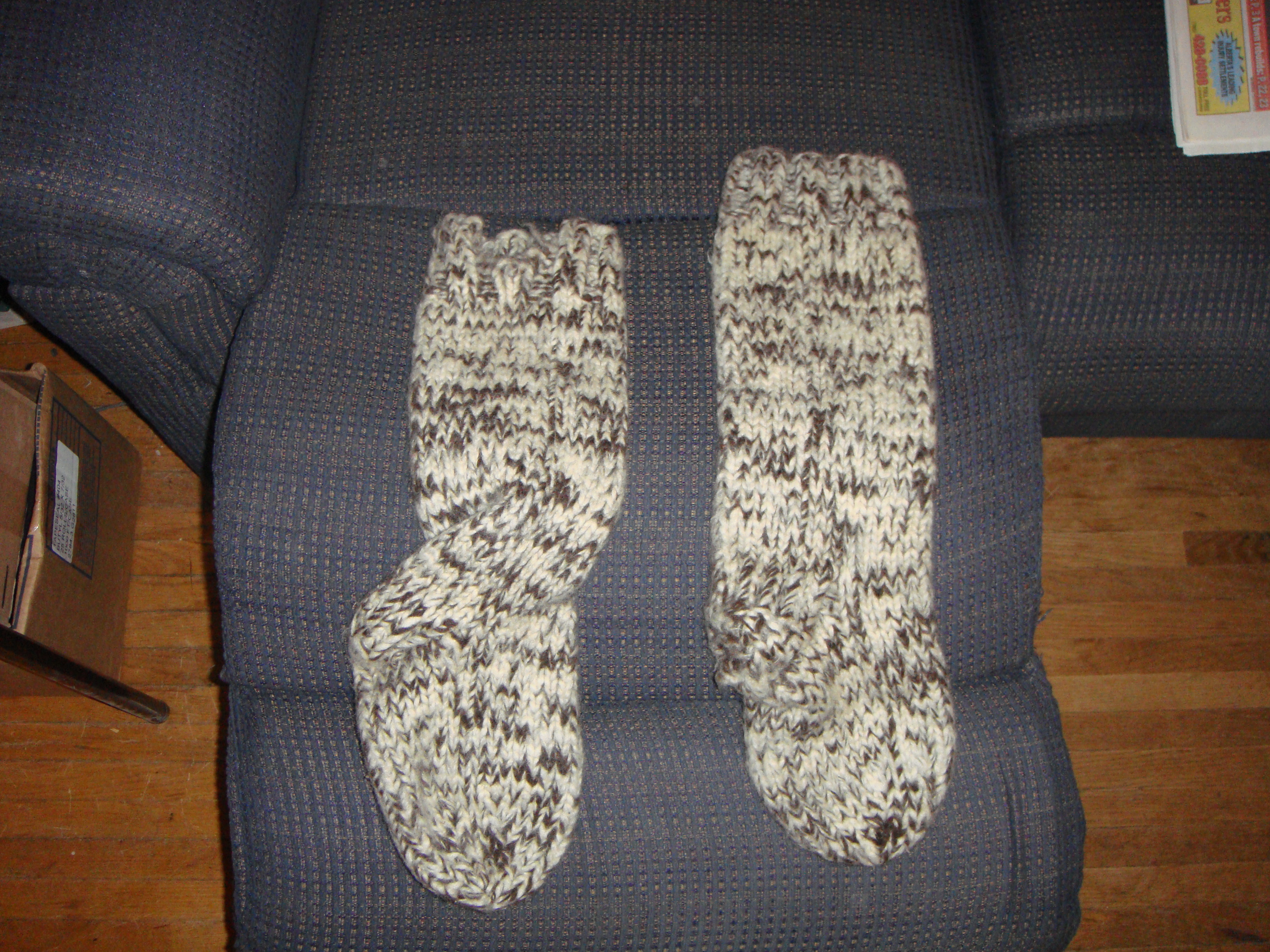
Ode to Grandma’s Socks

They are really my socks. They do not fit inside of any shoes or boots I own, so, technically, they might not qualify as socks, but as slippers. On cold winter mornings, I wear them around the house. What makes them interesting? I am glad you asked.

These were Christmas gifts. Kathy’s grandmother made them for us. We always knew after the first person opened their gift from Grandma what we were each receiving that year. That part never changed. What made each year’s gift deserving of an ode, was the time and generosity sewn, crafted, or knitted into the gifts. We also wanted to know what package our gift came in that year.

Grandma was a thrifty, frugal woman, not cheap. She lived and raised children in cabins almost her entire adult life. Their isolated homestead was on the McLeod River south and west of Edson, Alberta. She worked a trap line into her 80’s with the help of children and grandchildren. She worked hard and had little in terms of material wealth, but she gave gifts made by hand and given from the heart. Part of her thrift was the packaging of each gift. I think, after several years, it became part of a game, too. She packed gifts in macaroni, spaghetti, and cereal boxes. Even the adults thrived on this part of the gift-giving. What was our gift packed in that year?

When I share Pablo Neruda’s Ode to My Socks with students, I tell this story. Children and adolescents need the figurative message made concrete. This poem is about moving life’s supposedly ordinary events to the extraordinary. Students often recount a gift given or received from the heart after my story. It moves the context of daily life forward from the ordinary, and makes it rich. Beauty is twice beauty, after all.

Ode to My Socks

Mara Mori brought me
a pair of socks
which she knitted herself
with her sheepherder’s hands,
two socks as soft as rabbits.
I slipped my feet into them
as if they were two cases
knitted with threads of twilight and goatskin,
Violent socks,
my feet were two fish made of wool,
two long sharks
sea blue, shot through
by one golden thread,
two immense blackbirds,
two cannons,
my feet were honored in this way
by these heavenly socks.
They were so handsome for the first time
my feet seemed to me unacceptable
like two decrepit firemen,
firemen unworthy of that woven fire,
of those glowing socks.

Nevertheless, I resisted the sharp temptation
to save them somewhere as schoolboys
keep fireflies,
as learned men collect
sacred texts,
I resisted the mad impulse to put them
in a golden cage and each day give them
birdseed and pieces of pink melon.
Like explorers in the jungle
who hand over the very rare green deer
to the spit and eat it with remorse,
I stretched out my feet and pulled on
the magnificent socks and then my shoes.

The moral of my ode is this:
beauty is twice beauty
and what is good is doubly good
when it is a matter of two socks
made of wool in winter.

Pablo Neruda

Observational Poems : Touching the World : Deep Underground Poetry Community

Observational Poems : Touching the World : Deep Underground Poetry Community.

I was just surfing and came across this poem. Mindfulness is a universal concept and is not the sole domain of Buddhists or mystics. I find it ironic that the wave of scientific theory which pushed mindfulness out of the western practice was called the Enlightenment. Who or What did it enlighten? Mindfulness and scientific thought are complementary practices which make each other whole.

Water, Snow, and Ice

insignificant

countless gathering form one

majestic power

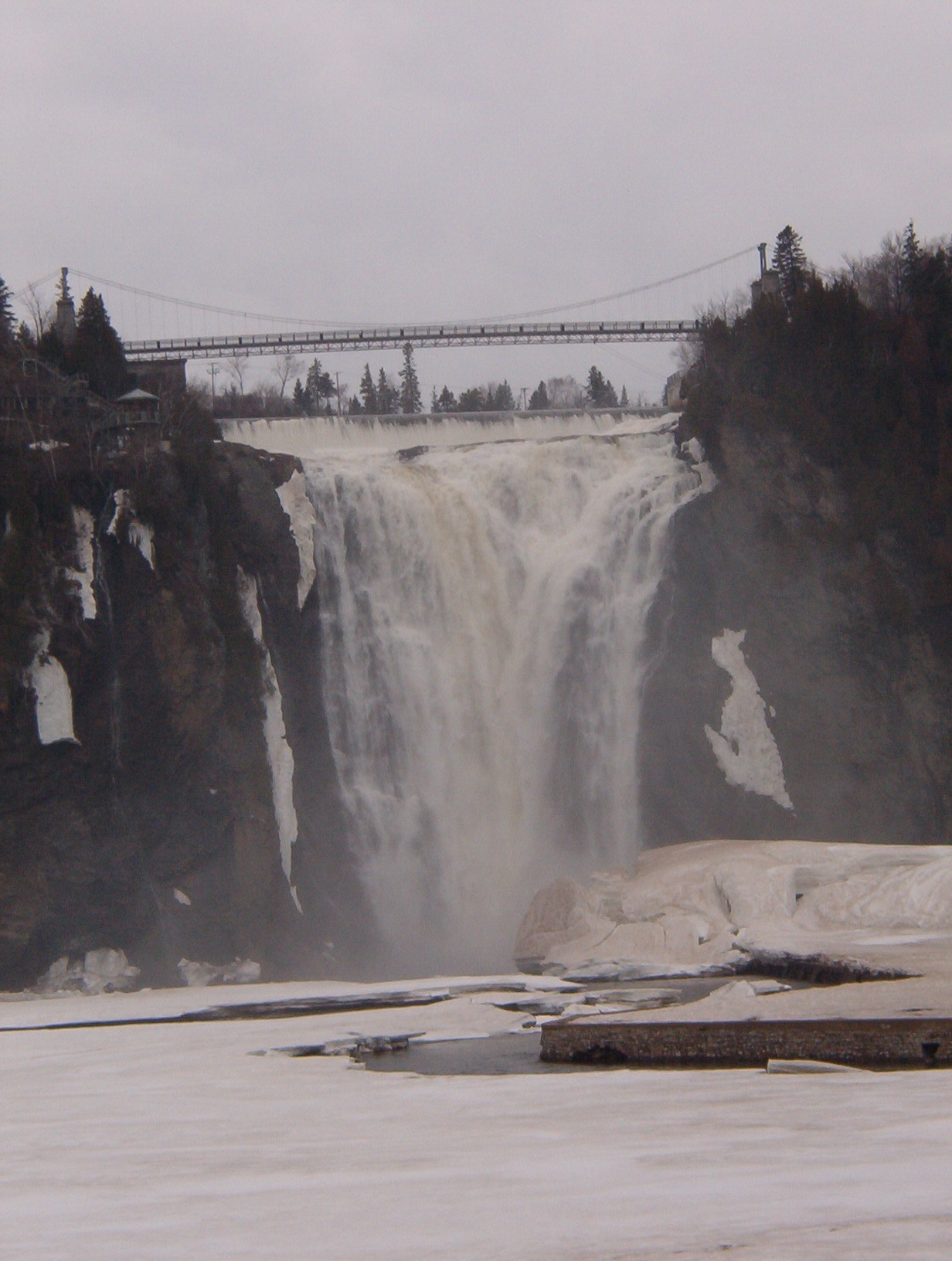
This is  a winter picture of La Chute (waterfall in English) Montmorency just outside Quebec City. At the base of the falls, around the open water, fly fishermen will be out during the summer. What you see a the top is a walkway across the falls and there is a tram just to the right of this picture. The St. Lawrence River is only a few hundred metres from the base of the falls.

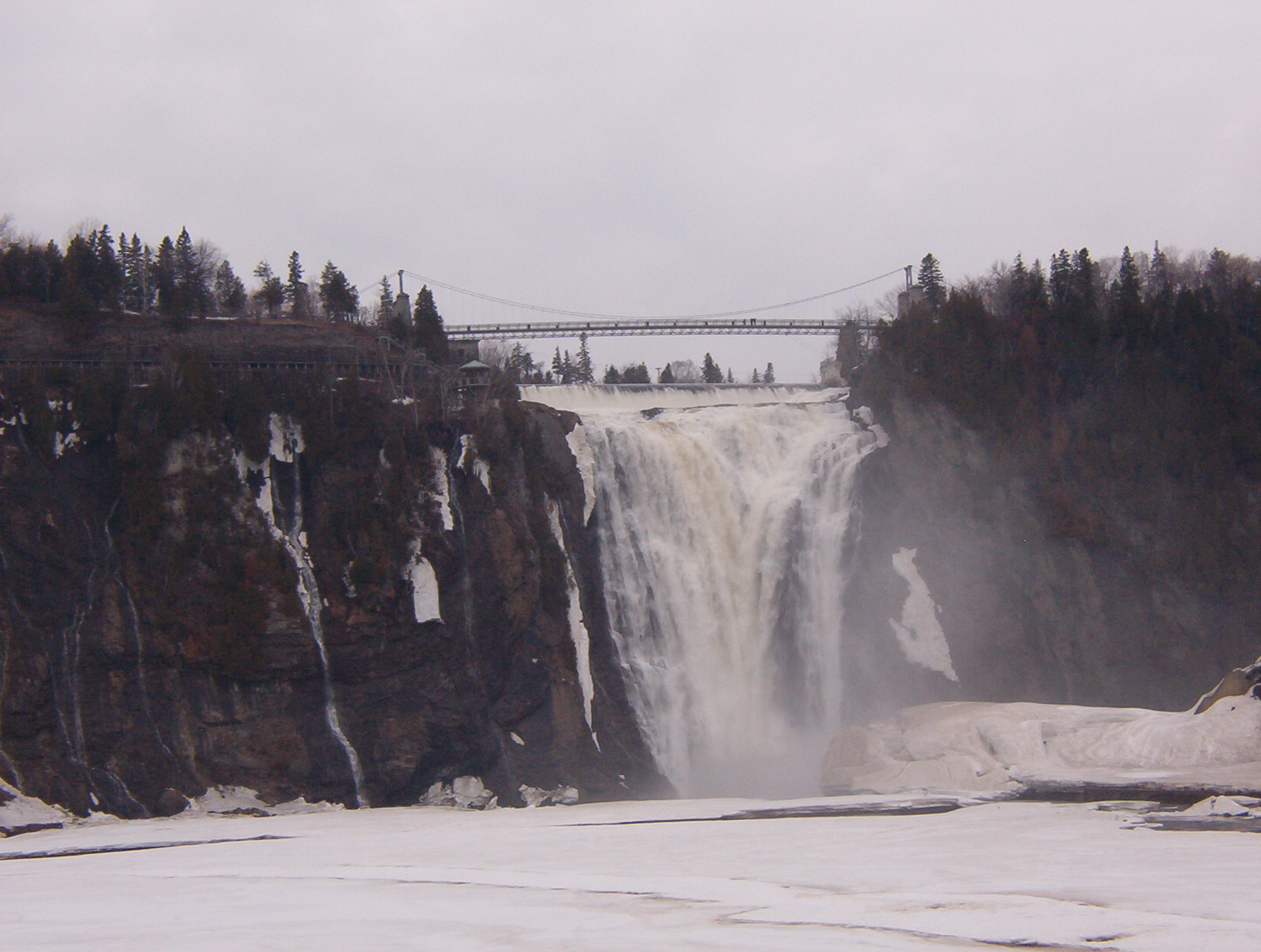
Here is a second picture of the falls. When Kathy and I were determined to see these falls. The pictures do not do them justice, but, as you can tell even in winter, they are spectacular. While driving across Le Pont Pierre-Laporte my fear of heights kicked in when I realized how far above the St. Lawrence we were. I needed to be in the right lane, but there was no way I was getting that close to the edge and it took creative driving on the far side of the bridge to get to the falls.

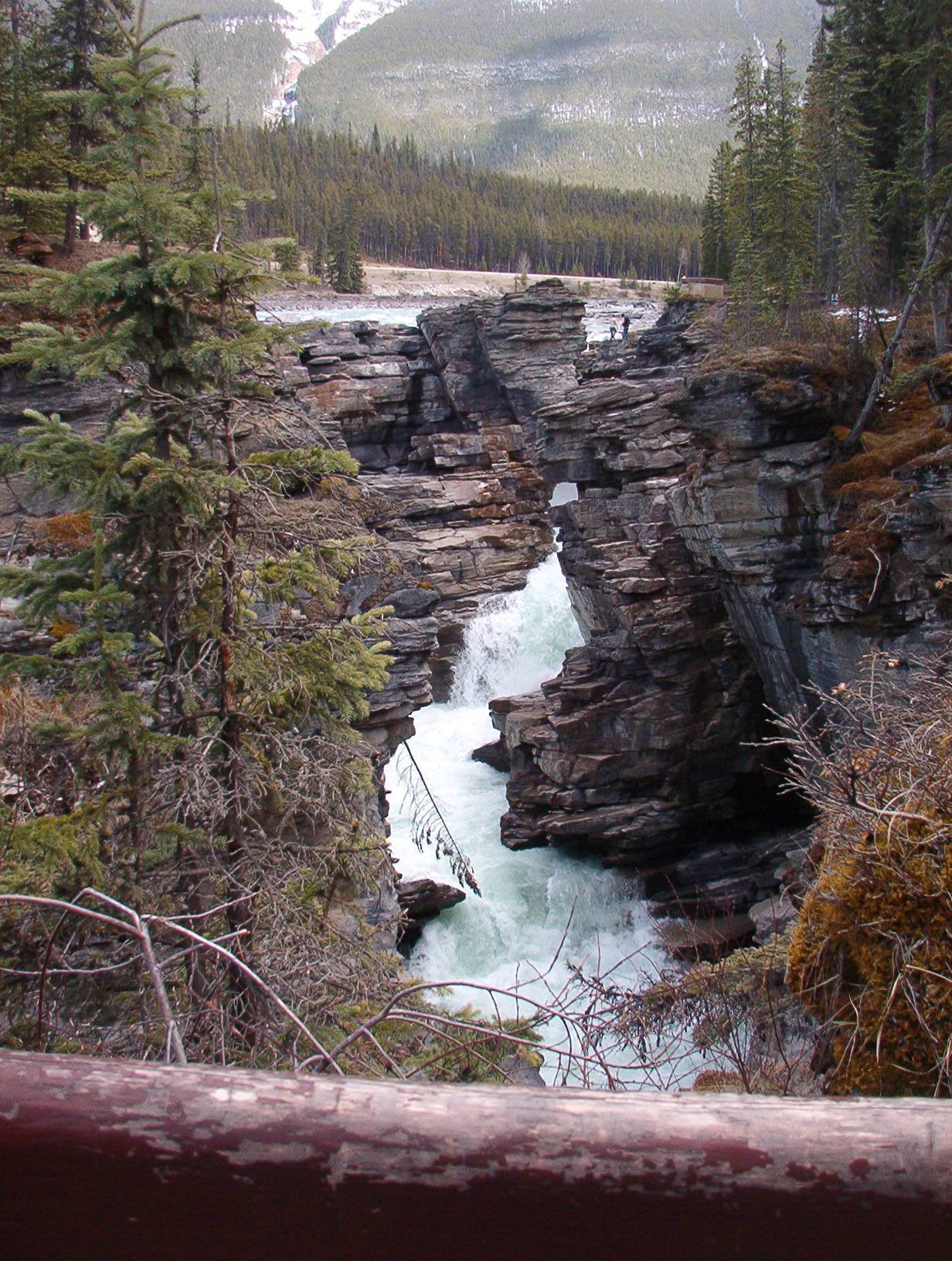
This is Athabasca Falls in Jasper National Park. You can see the Athabasca River in the background. Even in the park, it is a wide river at this point and it narrows quickly to shoot through the gorge. Kathy took this picture from the small wooden bridge that goes over the falls. You can just see the railing in the foreground. When you cross the bridge, you can walk up-stream along the river for several kilometres.

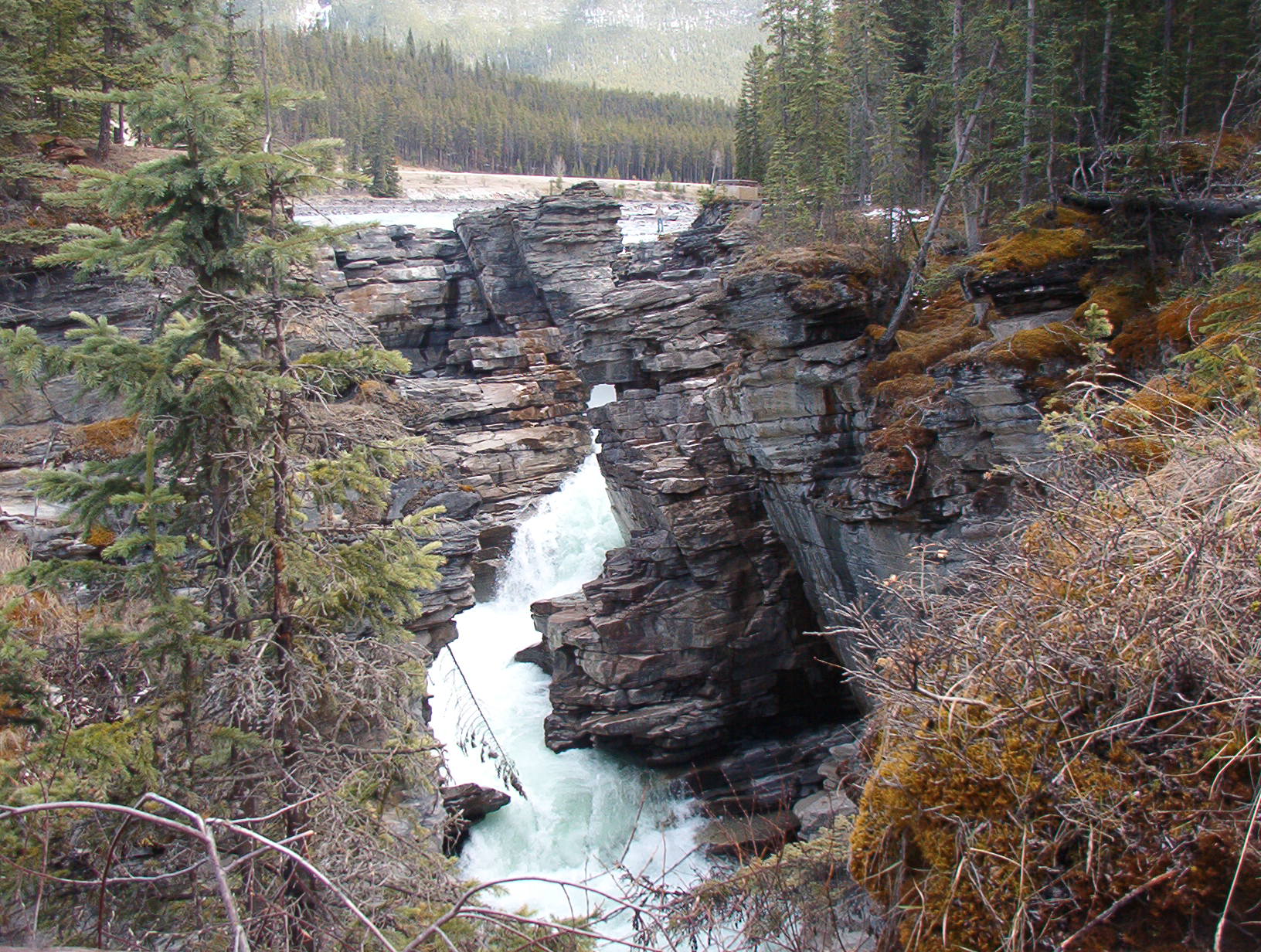
This is a slightly different view of the falls. The force of the water passing through the gorge has created a new stream bed. The water cut through solid granite. Below, you see one of the many mountains along Highway 93 between Jasper and  Banff.

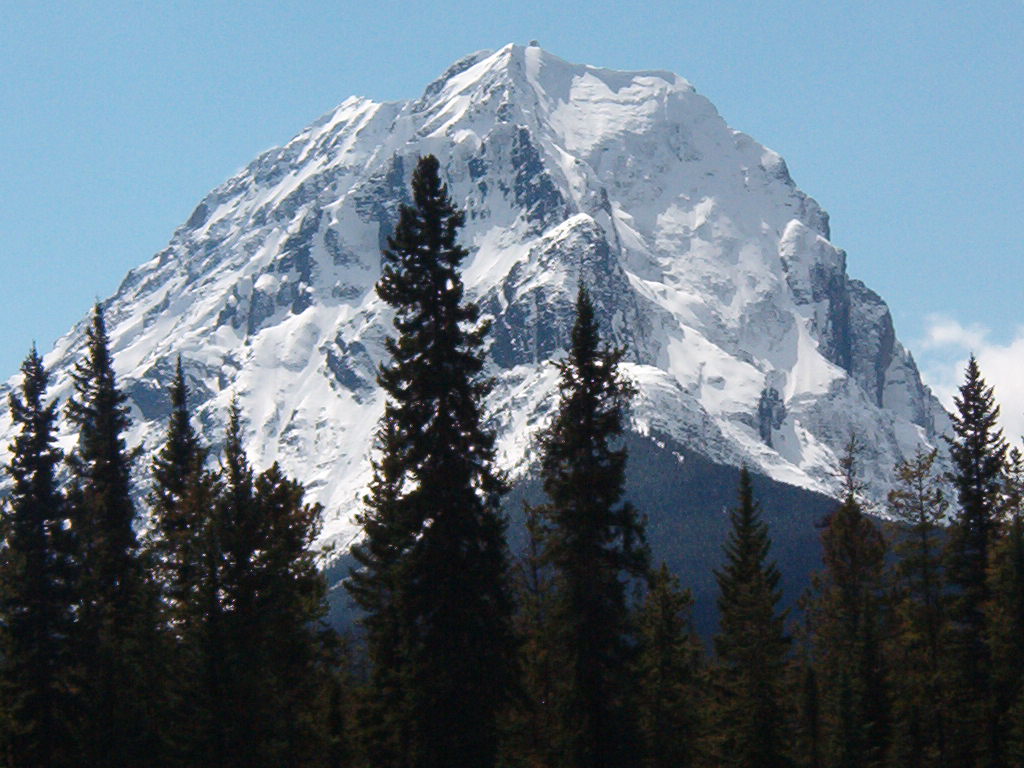
This is a view of one of the many mountains along Highway 93 between Banff and Jasper and is not far from Athabasca Falls.

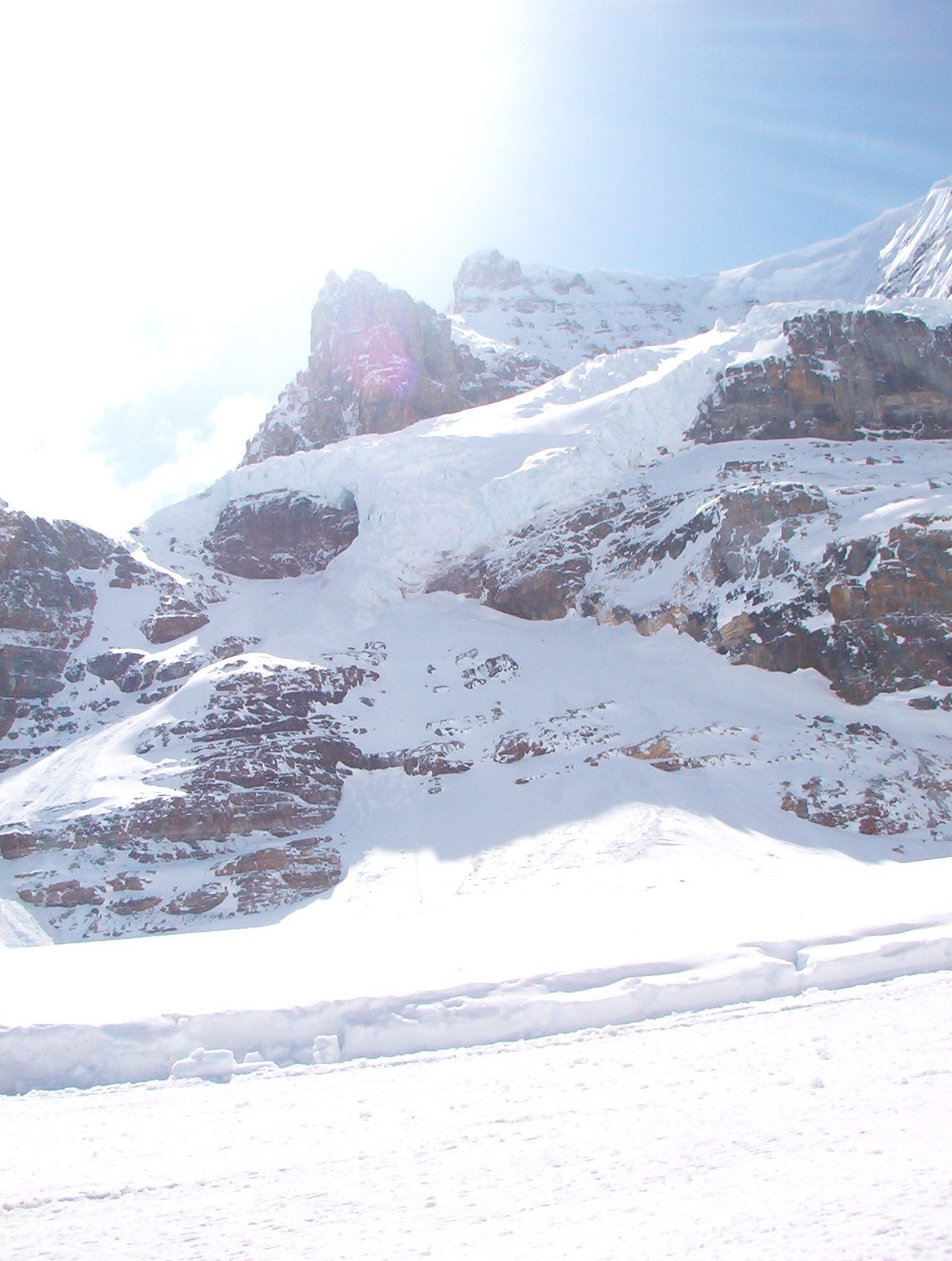
This is the Columbia Icefield looking back towards the source of the glacier and mountains. This is at the headwaters of the Athabasca River.

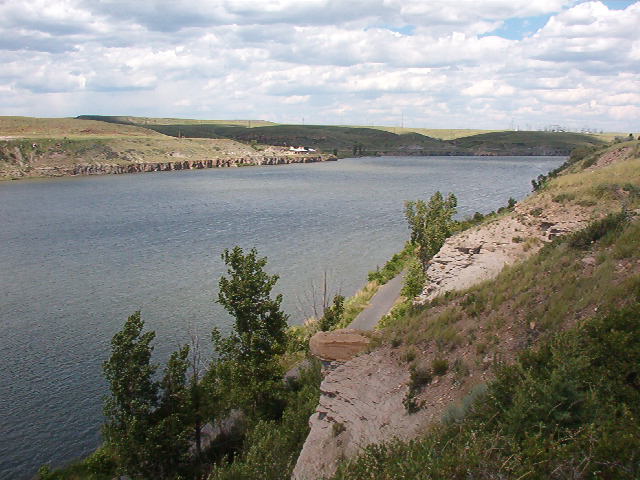
This is the Columbia River in Oregon. Although it is a spectacular view, I wonder what price we pay for progress:? Under that water, lies a spectacular river with rapids and waterfalls. Also hidden from view is a way of life of people who settled along this magnificent river. What a loss!

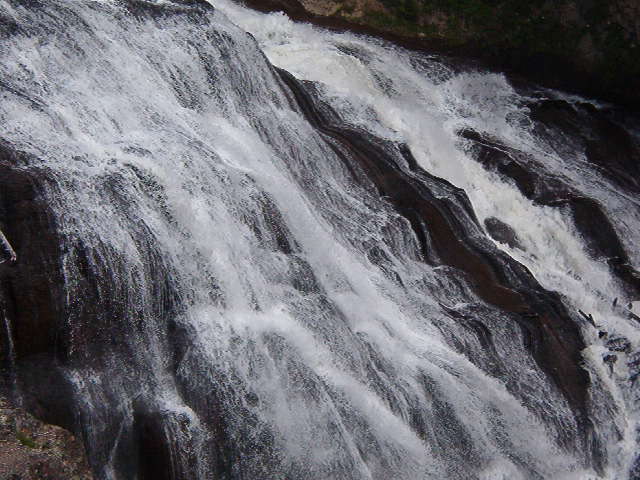
This was a small waterfall along the Continental Divide in Yellowstone.

Innovation – A Poem by Ivon

As I drove to work this morning, I considered the phrase “thinking outside the box.” I wonder, “Is the most apt description for innovative or creative thinking?”

When I am inside the box can I really see outside and look around effectively? I could just be hanging on for dear life. Or, when I am outside the box, can I see inside? When I wrote my candidacy paper, I interviewed the first principal of our unique, alternative school and he provided an appropriate metaphor for innovative and creative organizations-a corral fence. I wrote the following poem and tried to capture what I think he meant.

Innovate

A fence

with railings

see in or out

allow perspective.

Flow and rhythm

information in; information out

nourish

enrich

affirm

recycle

breathe and flex.

Part of a whole

complex, yet simple

reach beyond my world

one piece of a puzzle.

Present

to our self

to the world.

Never box me in.

This fit with a song I heard by Ben Harper called With my Own Two Hands. He used to front a band called the Innocent Criminals and that drew me to his music. Enjoy this creative artist.

Words for the Wise – Partie Deux

Words for the wise was a product of an incident yesterday. I was left exasperated, exhausted, and feeling somewhat unintelligent. I calmed down and found the wisdom shared by Winnie the Pooh helpful in creating a new lesson plan for today’s poetry time, but, first, let me explain the back story from yesterday.

About two months ago, a student brought their scooter to school and was riding it up and down the sidewalk in front of the building we occupy. Our school is located in what was a commercial building our school division acquired. There is no space to scooter in the front of the building, because there is a sidewalk and a parking lot immediately in front of the building. Usually, both are busy so it is an unsafe pastime. Second, students must wear proper equipment i.e. approved helmet, knee pads, and elbow pads. The young man in question is proficient, or so I have been told, so he took the equipment rule as a problem. Frankly, I would to, if I was any good at riding my scooter.

Yesterday, another student brought their scooter to school. While I was occupied, two students, including the aforementioned young man noted, borrowed the scooter and rode it in the parking lot and on the sidewalk while others watched. I was angry; that is the polite way of putting it. I gave some students credit. They recalled explicit instructions about the conditions a scooter could be used i.e. equipment, supervision, and location. Others had forgotten, but it was more likely a situation they were not listening for any number of reasons. This morning I received an email from the young man’s parent saying he informed her he could ride the scooter out back. I am not sure where out back is, because there is no place to ride out back. He left out the equipment and supervision.

Listening, which I think is essential to being responsible for one’s actions and words, seems limited to what a person wants. We listen when we are motivated by words or sounds that are we want to hear. I think that might be human nature. We lack mindfulness and being in the present moment. As luck would have it, sitting on my desk was a William Stafford poem entitled Listening. We had a great conversation after reading it, reflection time, and sharing in pairs.

Listening

My father could hear a little animal step,

or a moth in the dark against the screen,

and every far sound called the listening out

into places where the rest of us had never been.

More spoke to him from the soft wild night

than came to our porch for us on the wind,

we would watch him look up and his face go keen

till the walls of the world flared, widened.

My father heard so much that we still stand

inviting the quiet by turning the face,

waiting for a time when something in the night

will touch us too from that other place.

Thank you William Stafford. Winnie, I was brave and strong enough to tell my students I was listening, but I cannot always do what they want. I simply do not have the power some days and am smart enough to recognize this.

Daily Poetry Lesson Idea

I set aside 30 minutes each day for poetry. A typical lesson plan for junior high or middle school might be as follows:

  • Read the poem and have the students follow along as they listen to it for the first time.
  • Read or ask students to read the poem a second time. Students listen for words, phrases, or elements which catch their ear.
  • Students quietly take a few minutes to highlight or underline key words, phrases, or literary elements.
  • Students quietly share the key words, phrases, or literary elements with one or two classmates. Did they enjoy the poem? Why or why not? I ask them for specific responses. It sucks or was interesting needs support.
  • We come together and share. What stood out? What literary elements did the poet use and what did they add to the poem?
  • What were the literal and figurative messages of the poem?

Students are invited to share their favourite poems.  One student shared Do Not Go Gentle into that Good Night by Dylan Thomas and another Mr. Nobody by Walter de la Mare. I used the latter poem for a conversation about responsibility.

Students sometimes are reluctant to write poetry. I use Pablo Neruda’s Ode to My Socks as an example of a poem about a mundane object, a pair of socks, and how this poem transforms the socks with rich and vibrant language, similes, and metaphors into something quite extraordinary. A person needs to read or be read this poem to appreciate what makes socks worthy of an ode by a Nobel Prize winner and how everyday objects become subjects for poetry.

When we read The Road not Taken by Robert Frost, the students worked in triads and created collages about the themes they found in this classic poem. The end products were well thought out.