Category Archives: Sabbath

Tomorrow’s Child

I will change my routine week and post less often. I need to work on my dissertation topic. I want to enroll in the proposal seminar in June. If not, it will be next fall. I need to begin to set the table for the next part of life’s journey.

Today, I commented in an online forum about the state of public education. Another commentator asked, “Is there no hope for real change in the schools of America?” I am not American and cannot answer that specific question from where I sit. Instead, I answered, “I do have hope and, more importantly, I have faith that we can make the necessary changes despite the obstacles. What do we want for our children and grandchildren? This seems like the question we need to ask. Does change offer a sustainable future, not for me, but for future generations in an unimaginable, complex, and chaotic world? This need for real, flexible, and sustainable change reminded me of Margaret Mead: “Never doubt that a small group of thoughtful, committed citizens can change the world; indeed, it’s the only thing that ever has.”

I found this beautiful poem by Brazilian poet Rubin Alves. He spoke of hope, but not hope as a soft and gentle aspect of life, but hope matched with suffering and resiliency which gives rise change and the hoped. I particularly enjoyed: “So let us plant dates/even though we who plant them will never eat them./We must live by the love of what we will never see.”

What is hope?
It is the pre-sentiment that imagination
is more real and reality is less real than it looks.
It is the hunch that the overwhelming brutality
of facts that oppress and repress us
is not the last word.
It is the suspicion that reality is more complex
than the realists want us to believe.
That the frontiers of the possible are not
determined by the limits of the actual;
and in a miraculous and unexplained way
life is opening up creative events
which will open the way to freedom and resurrection –
but the two – suffering and hope
must live from each other.
Suffering without hope produces resentment and despair.
But, hope without suffering creates illusions, naïveté
and drunkenness.
So let us plant dates
even though we who plant them will never eat them.
We must live by the love of what we will never see.
That is the secret discipline.
It is the refusal to let our creative act
be dissolved away by our need for immediate sense experience
and is a struggled commitment to the future of our grandchildren.
Such disciplined hope is what has given prophets, revolutionaries and saints,
the courage to die for the future they envisage.
They make their own bodies the seed of their highest hopes.
Where I’m Headed

It was an excellent first part to the retreat. We have a short session on Sunday, but already I feel replenished. I take prodigious notes at these events and do very little talking. I figure I talk enough in the classroom that this is a time to step back. I always have multiple notebooks on the go and the one I grabbed was quite well used. I glanced through it and found this from several months ago. It hibernated and is out for an early spring, I guess.

Where I’m headed

No planned routes

Markers do not set out a path

My GPS is non-digital.

This is adventure

Being lost has panache

A flair

It exhilarates.

I discover wonder

The I don’t knows fill life

They summon me

They make me whole.

Stone

I spent today catching up. Most of it was digital. It is interesting how much email built up, but I was productive today. This poem by Charles Simic spoke to me. Children wonder and hold the world in awe. Adults lose track of the beauty of mystery. I am not sure what next week holds. Perhaps, I will write poetry. Although I relied on the words of others, noted that many of these poets were new to me and that was transformative. I spent time wisely.

Go inside a stone
That would be my way.
Let somebody else become a dove
Or gnash with a tiger’s tooth.
I am happy to be a stone.
From the outside the stone is a riddle:
No one knows how to answer it.
Yet within, it must be cool and quiet
Even though a cow steps on it full weight,
Even though a child throws it in a river;
The stone sinks, slow, unperturbed
To the river bottom
Where the fishes come to knock on it
And listen.
I have seen sparks fly out
When two stones are rubbed,
So perhaps it is not dark inside after all;
Perhaps there is a moon shining
From somewhere, as though behind a hill—
Just enough light to make out
The strange writings, the star-charts
On the inner walls.

We Prepare for the Messiah

I leave you with this and hope, whatever your faith and beliefs are, you enjoy your holiday at or close to this time of the year. Take care, enjoy those closest to you, and together we make the world a better place.

O Wisdom,
O holy Word of God,
you govern all creation with your strong yet tender care:
Come.

 O Sacred Lord of ancient Israel,
you showed yourself to Moses in the burning bush
and you gave the holy law on Mount Sinai:
Come.

 O Flower of Jesse’s stem,
you have been raised up as a sign for all people;
kings stand silent in your presence;
the nations bow down in worship before you:
Come.

 O Key of David, O royal Power of Israel,
you [not the systems of this world] control

at your will the gate of heaven:
Come break down the prison walls of death.

 O Radiant Dawn,
splendor of eternal light, sun of justice:
Come shine on those who dwell in darkness

and the shadow of death.

 O, King of all the nations,
the only joy of every human heart;
O Keystone of the mighty arch of humankind:
Come and save these creatures you fashioned from the dust.

 O, Emmanuel,
God-With-Us, king and lawgiver,
desire of the nations, Savior of all people:
Come and set us free. d
The Spirit and the bride say, “Come.”

 Amen.

Father Richard Rohr is a leading ecumenical teacher who transcends religious and spiritual boundaries.

Stay human my friends.

What Can I Do?

It has been an extraordinarily sad day and that was clear in the blogs I follow. A profound sense of sorrow and loss echoed through the digital world. What was extraordinary was the sense what has happened in Connecticut needs to end. This centred on the question: “What can I do?” I think we can do much, but the change begins with us and moves out. As I take my weekly pause, I want to give some thought to what can I do?

On a sombre day–

Grief and sorrow the order,

A message heard:

Change begins in me.

I am a catalyst

I look inside:

Call forth a gentle spirit–

Give it voice.

In light, love happens–

Resonates,

Reaches out its hand

Beckons others join.

Rings on clearest pond,

Ripples of love touch,

Right cascades forth,

Good people meet.

Good touches good,

Prayer meets prayer,

Love conquers hate

Join together.

Good people summoned–

Their tears catalyze,

Grieve and heal as one,

We are change.

Be a community–

It is not a distant loss:

It is our loss–

Feel it.

Small change is ours–

We each contribute,

Love multiplies:

Heals the world.


Lost

David Wagoner wrote this poem. It reminds me, as I enter Sabbath, there is a need to be still, to be quiet, and listen attentively. It is in the quiet I hear answers and sometimes those are new questions without the certainty of a ready answer I sought. Those answers sought are often formed before the question is posed.

Stand still. The trees ahead and bushes beside you
Are not lost. Wherever you are is called Here,
And you must treat it as a powerful stranger,
Must ask permission to know it and be known.
The forest breathes. Listen. It answers,
I have made this place around you,
If you leave it you may come back again, saying Here.
No two trees are the same to Raven.
No two branches are the same to Wren.
If what a tree or a bush does is lost on you,
You are surely lost. Stand still. The forest knows
Where you are. You must let it find you.

Winter Nights

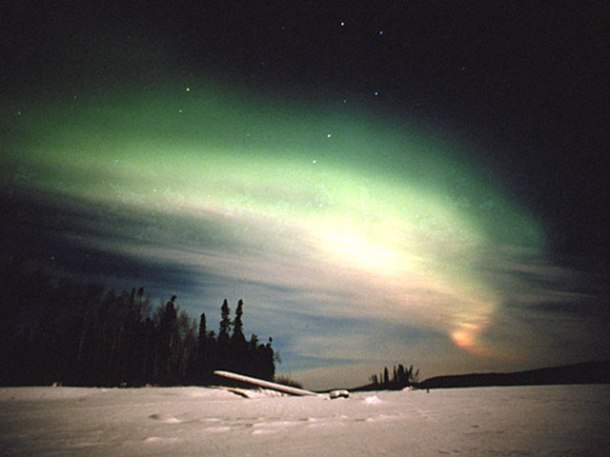
It is December 1 and Christmas is just around the corner. The last few days I recalled what it was like in rural northern Alberta at this time of the year. We used to sit upstairs and look out the window on cold, cold nights shimmering with white. What caught my eye and ear was the magic provided by the Northern Lights or Aurora Borealis. They don’t appear in Edmonton as I recall them from my childhood memories. What message was in those celestial colours and sounds?

Small children–

Breathlessly wait,

Peer through frosted window

Soak it in.

Heavens ripple–

Lights undulated;

A celebratory fury

An indisputable guide.

This old house speaks;

Nature answers–

Crackles from the heavens

Sweet symphonic sounds.

Earth’s floor–

Blanketed in white

Celestial colours shimmer

Captures young eyes.

A vivid winter scene,

A sensual, sensory palette,

Reminds me–

Christ’s Mass draws near.

pic_wonder_northern_lights_lg

The photo came from Seven Wonders of Canada.

A Stranger’s Voice

When Monday rolls around and I spent Sunday disconnected, I find things quite loud and hectic. I even find my voice loud and my mind hurried and harried, but I do find I am increasingly able to recognize this is the case in that moment.

I heard a voice–

At once, both

Familiar yet unfamiliar.

This voice–

Somehow too loud

Intruded upon the day.

Tried to lean in

Attempted to recognize

Where had I heard this stranger?

Suddenly,

Without warning

I recognized it!

It was mine–

Out of place

After a spacious silence.

How do I listen?

I commented on a re-blog, Here’s an Idea that Mimi‘s post coincided a PBS show about a branch of neuroscience called Contemplative Mindfulness. Rudolph Tanzi is central in this work which has grown from other recent research by Richard Davidson, Ellen Langer, and Jon Kabat-Zinn. Mindful practices have been with us for centuries and are found in Christ’s, the Buddha’s and Mohammed’s teachings. Mindful listening begins with me, moves outward, and is eloquently described by Hafiz, a Sufi poet. Mindful listening requires humility those teachers emulated in their lived practice as the servant as leader.

How

Do I

Listen to others?

As if everyone were my Master

Speaking to me

His

Cherished

Last

Words.

Stay human friends.

Warrior’s Quest

I sat today and was going to post a Lao Tzu poem, The Uses of Not. I typed a short preamble and realized it was a Sabbath poem. Sometimes it is in paradox I find the most sense. It is in questions that I deepen conversations. I am in service of the questions. Earlier this week, I said I spent much of my life chasing answers. This is an echo of Father Richard Rohr who says  maturity leads us to stop chasing certainty. I seek eloquent questions with no ready answers: and invite others into conversations. I might have used pirate, but I began reading Shambhala:The Path of the Sacred Warrior by Chögyam Trungpa recently and it offered a new understanding, for me, of the word warrior.

Paradox–

Seemingly incompatible tempest

Space invites space

Forms a spacious meadow.

Deepen conversations–

Without ready answers;

But, eloquent questions

Be open, surprised.

A warrior’s quest–

Lighten the load

Be grateful and receive the gifts

Serve the journey.

Shape paths–

Ready each step

Because it is right

And not fully known.