Category Archives: Sabbath

The Guest House

I know I have posted this poem before, but it has a beautiful message. Rumi reminds me I cannot accept only the good that comes into my life. When the darker emotions show themselves at the door of my life, I should welcome them and accept them as a guide from beyond.

Like my delightful emotions, the darker ones are fleeting and temporary. While they are with me, the metaphor of a guesthouse allows me to experience them more fully and be mindful to what they mean at that point in my life.

In those moments, those closest to me help me understand what each arrival may mean. We can ask questions without presuming the answers in advance.

This being human is a guest house.
Every morning a new arrival.

A joy, a depression, a meanness,
some momentary awareness comes
as an unexpected visitor.

Welcome and entertain them all!
Even if they are a crowd of sorrows,
who violently sweep your house
empty of its furniture,
still, treat each guest honorably.
He may be clearing you out
for some new delight.

The dark thought, the shame, the malice.
meet them at the door laughing and invite them in.

Be grateful for whatever comes.
because each has been sent
as a guide from beyond.
The Wisdom of Buddha

If you light a lamp for somebody,  it will also brighten your path. Buddha. It is during our darkest moments that we must focus to see the light.

When we show the way for others, we show the way for ourselves.

Source: The Wisdom of Buddha

The Buddha left many thoughts for us to explore and understand in our lives. The link to Lara and Tina‘s post shares several quotes and pictures, underscoring how love and care for others begins with love and care for ourselves.

When we are mindful and attentive to our self, we shine a light for others and we can be mindful and attentive to them.

The Real Work

I found it interesting that as I searched for a poem I typed in the words The Real Work by Wendell Berry. As Google anticipated, another search emerged: The Real Work by Gary Snyder. This book of essays emerged from a series of interviews and talks Snyder conducted over several years.

Wendell Berry and Gary Snyder are writers, environmentalists and farmers who live in Kentucky and California respectively. Together, they wrote a book called Distant Neighbours and shared their views about the real work they undertook as writers, environmentalists, and farmers. How each of them understood and wrote about real work echoed the other.

Real work happens not when we find ourselves going through the work aimlessly and mindlessly. It emerges when obstacles arise and we are mindful and attentive in our work. It holds our interest through baffling us and our being unsure of what to do next. As we work thoughtfully and our mind is employed in meaningful acts, our work sings like an impeded stream and makes us whole. It is like we our speaking through our work and its meaning to us.

It may be that when we no longer know what to do
we have come our real work,

and that when we no longer know which way to go
we have come to our real journey.

The mind that is not baffled is not employed.

The impeded stream is the one that sings.

The Shadow

Last night, as I posted, the words of a paragraph began to take shape as a poem and Mary Oliver’s words echoed for me.

Today, I took those words and echoes and finished the poem. It has been some time since I wrote a poem. Perhaps, without the urgency of writing a dissertation, this just happened. As well, the break without a need to read and write may have helped and freshened my desire to write differently.

There is no sense of urgency.

Here, I am in the shadow of nature

It uplifts, holding me close.

Nature reminds of less mechanical ways and times;

Of just being and living in the moment.

Pelicans dive bomb the surf in an instinctive search,

Oblivious to me, they bob on the waves.

At night, stars fill darkness and stillness,

They wait to be touched.

Oxen pull a plow across the hardpan soil,

They follow a deep-rooted instinct lost on me

The horse trotts a path, familiar to it

I sway, recalling greater comfort the last time I rode.

I recall days past.

I unsmother moments, days and experiences

My dreams call out to me;

They breathe life into my being.

Here, I sense what it might mean to live and just be.

Without urgency, there is a lightness in my gait.

The Poet Dreams of the Mountain

Kathy and I were in Cuba for a week. I think I am back on track with the blog. As well, I submitted a draft of my dissertation to the committee and am waiting to hear back from them.

It was nice to go and just be for a few days. Sometimes, we need to just look back and contemplate, without anything other than being present and in the moment. I think that is what Mary Oliver is getting at in this poem. I found that reading, writing, re-reading, and re-writing consumed my days.

For few days, I found there was no urgency. It was peaceful to walk on the beach, watching pelicans dive bomb into the surf. It was inspiring to look up at night and see the heavens filled with stars, only occasionally disrupted by a distant light house beacon. It was enjoyable to be behind an ox and plow for a few minutes. When I rode a horse, I remembered days past. We need to unsmother those moments, those days and experiences so our dreams come back to us and breathe life into our souls.

Sometimes I grow weary of the days, with all their fits and starts.
I want to climb some old gray mountains, slowly, taking
The rest of my lifetime to do it, resting often, sleeping
Under the pines or, above them, on the unclothed rocks.
I want to see how many stars are still in the sky
That we have smothered for years now, a century at least.
I want to look back at everything, forgiving it all,
And peaceful, knowing the last thing there is to know.
All that urgency! Not what the earth is about!
How silent the trees, their poetry being of themselves only.
I want to take slow steps, and think appropriate thoughts.
In ten thousand years, maybe, a piece of the mountain will fall.

Merry Christmas Everyone

You already possess everything necessary to become great. source: Crow image: Eddie’s Image Collection editor’s note: this is a repost from ETH December 2015 “Happy Holiday Everyo…

Source: Merry Christmas Everyone

When I saw the picture and quote in this post, they reminded me how much we have in common with each other. Instead of a politics of fear and division, can we can live in peace and harmony as stewards who care for each other, the world, and the future generations we live that world to?

Merry Christmas

I grew up in Northern Alberta and Christmas was a special time of the year. I recall cold winter nights. I mean they were cold–almost minus 40 at night. Our windows upstairs were partly frosted over and on moonlit nights the light kept me awake or that is what I told others.

During Advent, my mom and older brothers walked across the street for evening Mass. The younger ones, including me, went to bed. I did not fall asleep right away and would watch out the window for them to come home. I thought no one saw me, but my Mom would come up and tell me to go to bed.

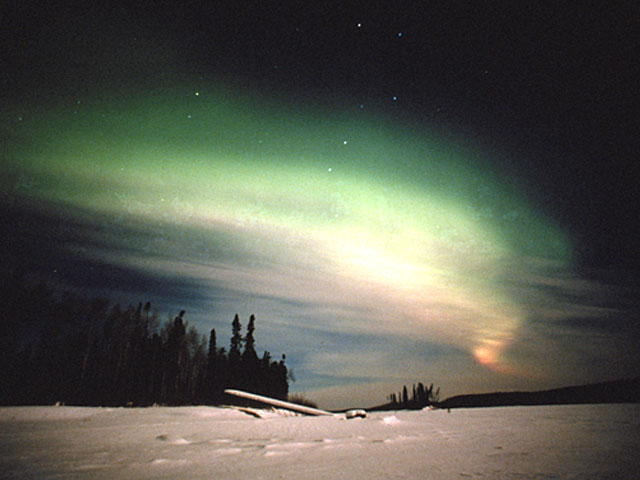
The other experience I recall is the Northern Lights and how you could hear them as they lit up the sky. We don’t see them very often in Edmonton with the urban light. When we spent time at the farm at Christmas, we heard and saw them there. Again, on cold nights we heard the train (about a mile away) and it sounded like it was coming right through the house.

I wrote this poem several years ago about the magic provided by the Northern Lights (Aurora Borealis) and Christmas. What message was in those celestial colours and sounds? As a child, I thought the sky talked to me and told me a creation story.

Small children–

Breathlessly wait,

Peer through frosted window

Soak it in.

Heavens ripple–

Lights undulate;

A celebratory fury

An indisputable guide.

This old house speaks;

Nature answers–

The heavens crackle

Sweet symphonic sounds shimmer.

Earth’s floor–

Blanketed in white

Celestial colours speak to me

Captures young senses.

A vivid winter scene,

A sensual, sensory palette,

Reminds me–

Christ’s Mass is here.

pic_wonder_northern_lights_lg

Prayer of St. Francis

Kathy and I celebrate our 40th anniversary this weekend and we are on our way to Alaska. We used The Prayer of St. Francis (Peace Prayer) as a reading for our wedding mass. As well, we have an inexpensive plaque that sits on a dresser in our bedroom. My mother gave it to us many years ago. When we celebrated my mother’s funeral mass a year ago, we read the prayer, as well.

When I was in Spokane for extended periods, I posted a copy of the prayer on my bedroom wall. It serves as a daily reminder of what we are capable of as humans in relationship with one another. the world, and God in our moment-to-moment living.

The prayer is about the travails and their rewards that we undertake. When I think about love, I recall Thomas Merton‘s saying we call it falling in love for a reason. We open ourselves, risk being hurt, and the rewards are worthwhile. We mind, care, and attend to people and things.

Lord, make me an instrument of Thy peace;
Where there is hatred, let me sow love;
Where there is injury, pardon;
Where there is error, the truth;
Where there is doubt, the faith;
Where there is despair, hope;
Where there is darkness, light;
And where there is sadness, joy.

O Divine Master,
Grant that I may not so much seek
To be consoled, as to console;
To be understood, as to understand;
To be loved as to love.

For it is in giving that we receive;
It is in pardoning that we are pardoned;
And it is in dying that we are born to eternal life. Amen.

I am unsure what access to the Internet is like on a cruise ship. I heard it is not good. That means I might be off-line for a week or so.

Rivertalk

Wendell Berry wrote that “there is a great restfulness in the sounds small rivers make.” When we mindfully stand and listen and perhaps close our eyes, we hear the restful sounds more clearly. We discover being rooted to a particular place, at least for the moment.

Those small rivers invite us to jump in and paddle as a child might. What the child adds to those sounds and waves are sounds of pleasure. There is no enjoyment while standing on shore, unless we close our eyes and listen closely. Besides the child, we might hear nature speak to us as it hums gently and touches us unexpectedly.

Jeanne Lohmann counsels us to be less serious and not to look for problems to fix as we move through life. The river serves as a wonderful metaphor and life calls to us to be present in each moment and to be fully present.

is whatever comes along,
practice always here while we

keep on shore, all the time
saying we want to get wet.

But the river has ways
of sound and light, ripples

and waves that tell us:
don’t be so serious, rumble in

where nothing is finished or broken
and nothing asks to be fixed.


Traveling at Home

Wendell Berry advises we do not experience the same route twice even in a country we know by heart. I wonder if we can know a country by heart? The chances change and make a new way.

We used to whitewater raft when the boys were younger. The mountain-fed river changed by the minute in June with the heat of the day and increased flow with melting snow. The rocks revealed themselves differently at various times of the day. In the morning, the river was lower and we could see the rocks, but with more water they became submerged. With time and experience, we could sense the differences in the river. Our vision was no longer the only way to know the river.

Heraclitus‘ quote about never stepping in the same river twice because it is changing complements the part about the person changing. We experience the world, its inhabitants, and ourselves as continuously changing. This calls us to be mindful and attentive to the living and the relationships we experience, seen and unseen.

Even in a country you know by heart
it’s hard to go the same way twice.
The life of the going changes.
The chances change and make a new way.
Any tree or stone or bird
can be the bud of a new direction. The
natural correction is to make intent
of accident. To get back before dark
is the art of going.