Category Archives: Uncategorized

Sabbath’s Circle

Have a great 23rd of July, 2012.

A virtuous circle

Begins at the end

Ends at the beginning.

A source of refuge

Moments of discovery within

No urgency

Besides just breathing.

Just be

With all nature’s cycles

Brings wholeness

Sabbath liberates.

I find life events are increasingly filled with synchronicity. When I posted the poem Auditory Illusion, I had listened to a thunderstorm chase itself in and out of the Spokane area. It thundered overhead, moved off, and returned several times circling in and out of the area for about an hour. After the post, I reflected on life’s circularity as it is and scribbled some thoughts down before going to bed last night.

I heard the rain differently than it was. It sounded like the storm was over, yet, when I got up, it was raining hard. The eaves of the building had tempered the sound. Today, in Wayne Muller’s Sabbath, he wrote about the etymological roots of the words absurd and obedient. Absurd is from the Latin surdus which means deaf and obedient from the Latin to listen. Yesterday, listening or mislistening to the storm and its intensity reminded me of the frequency I misunderstand parts of life and its relationships. Wayne Muller was friend of Henri Nouwen and said he was “a fiercely astute observer of our worried, overfilled lives [and that] … the noise of our lives made us deaf, unable to hear when we are called, or from which direction” (p. 84). I am commited to daily moments of silence and a weekly Sabbath to help me listen when called.

Wayne Muller concludes each short chapter with a brief reflection for Sabbath. The chapter Let it Be is also the title of my favourite Beatles’ songs. Today, the reflection was from Brother David Steindl-Rast an Austrian monk.

“Let the silence drop like a pebble right into the middle of the day and send its ripples out over its surface in ever-widening circles” (p. 86).

Muller, W. (1999). Sabbath: Restoring the sacred rhythm of rest. New York: Bantam Books.

An Angry Young Poet

Each year, I spend time on poetry with the students. Two years ago, a student asked if I wrote poetry in junior high school and I was able to say, “Yes!”. He asked me to share with them. I found them in a small lock box I keep at home and shared several with the class.

I mentioned in Culture of Peace Sam Intrator. He suggested teachers expose adolescent students complex, existential questions of life as they move through those formative years. I wrote my poems in about 1969. It was a time when identity was increasingly rooted in the global nature of the world, not just immediate community and family. War, even in Canada, entered our homes via television. I found voice in poetry and expressed an abhorrence to institutional and government approved murder. What set me apart from my peers, was I took no sides. Each was equally wrong in my mind. Mr. McKenzie, an innovative English teacher, encouraged that in us-find our voices.

I shared the following poem with my students. I concede it is not exactly the original, as it was pretty angry. I hope the original message is still there. Students asked for more poems and I complied. These past few months I rediscovered my poet’s voice. It is a gentler voice, I hope.

Win or Lose: What Difference Does it Make?

 One game

If it is one

No fun to lose

No great thing to win.

War!

Hollow

Men, women, children gone

In no time

Woe! The vanquished losers;

No winner

Each, vanquished in every sense.

Divided

In ruins

Rebuilding

On countless graves

Rudderless.

Without pride

Beggaring citizens

Values of others

Resenting conquerors

What does war bring?

No jobs

No hospitals

No schools

No homes, but the streets

Destruction everywhere.

What does war bring?

Death of innocence

Loss even in victory

Comrades fallen

But see an enemy vanquished.

Killing

Proving nothing

What fools

Going on forever

Will we learn?

We must

I pray

For human survival.

Take care and have a great 20th of July, 2012.

In My Haste to Post I Forgot the Title

It was an interesting day. In the midst of it, Parker Palmer posted a poem by Wendell Berry on Facebook. It is a special day when Parker posts a poem by Wendell Berry, Mary Oliver, or himself. The poem was How to Be a Poet (to remind myself). Wendell Berry is low tech and uses a typewriter to craft his words. Parker pointed to an aspect of the poem’s message: “Shun electric wire/Communicate slowly/Live a three-dimensional life.”The slow of life is worth something. It lets us be the person we are most fully.

Later, I began to think about two songs by two artists I enjoy and have seen multiple times live. Guy Clark sings The Carpenter and John Wort Hannam sings With the Grain. Both songs are rich with the metaphors of living a three-dimensional life. It is no coincidence the topic is that of a carpenter in both cases. It is about true to one’s self and living a life with value.

Sabbath

Silence, solitude, sacred

A mountain’s strength

The sky’s expanse

A lake mirrors

Words of wisdom

Spoken so softly.

Disconnect to reconnect

Listen that silent sacred space

The inner teacher beckons

Be present

Wisdom revealed

Let it heal, repair

A single thread at a time

The web of life so fragile.

Questions emerge

Hold gently

Live their mystery

They answer only when ready

Until then they lie dormant

Ready when ready

Embrace life as it is.

I salute you and take my leave for a few hours. Have a wonderful 16th of July.

ElkeTeaches brought this to my attention and I thought I would share. Public education needs to become public. What this means will require a grand conversation led by courageous people and eloquent questions. It is of concern when you hear that public schools in Michigan are sold to private interests or when Canadian politicians send their children to elite private schools. What are public schools not good enough? If not, what will you do to change that? Fortunately, we do have leaders, not manages, bureaucrats, technocrats, and autocrats, but real leaders who are finding their voices.

dianeravitch's avatarDiane Ravitch's blog

In response to today’s ongoing discussion about teaching and specifically what kind of teaching is right for urban students, this comment came from Ira Shor. Shor teaches at the City University of New York. He has written extensively about critical pedagogy. Our discussion began with the proposition that poor kids need a tightly disciplined environment, some would say a “boot camp” or “no-excuses” pedagogy. Others disagreed. Shor gives his view here:

Many thanks to Diane for for so decently inviting discussion on conundrums of teaching. Conditions for teaching/learning are outcomes of educ and social policy, though not reducible to these enormous factors. In terms of high expectations for kids of all colors and classes regardless of home address, I’d propose that all lessons in all classrooms should be designed for and with the students who are there. The local conditions, language use, cultural themes should be the starting point for…

View original post 199 more words

This is a very interesting and innovative video that Elke, an Australian teacher, has shared with her followers. It was a nice first post after an absence. Welcome back Elke.
If any of my students follow me or the families watch this. Can we do something similar in our classroom? Who else could we do a video about?

elketeaches's avatarelketeaches

“Steve Jobs” by SangHee (Grade 11) – the Samsung Superhero Winter 2012 Winner

Great video. I am sharing this here because I think this is just another great way to learn. Creating videos on a topic for a group project or an individual assignment is an ideal way to learn. I like it because it promotes authentic learning, obviously includes ICTs and allows for creativity.

View original post

This is wonderful poem with a great picture. Do we learn to fly or clip the wings of those trying?

melodylowes's avatarMeanwhile, Melody Muses...

You hold yourself aloft,

You breathe a higher air;

The lessons learned in hard knocks class

Have earned you points to spare.

The troubles of the plebians

Down where the lowly lie

Don’t touch you now, you’re too highbrow,

You’re learning how to fly…

View original post

Sabbath – A Poem

Recently, I posted Humility and referenced Wayne Muller’s book Sabbath: Restoring the Sacred Rhythm of Rest. He suggested we all need to take time, disconnect, and do those things and be with those people in our immediate lives which bring us moments of quiet and refuge. He has offered a new awareness for me of what was missing in my life, a calm, tranquil, restful time I share with those immediately around me and my self. I am disconnected for the next 36 hours. I will just be.

I leave with a found poem of sorts. I chose words from the book that exemplified my understanding of Sabbath. I look forward to comments and likes when I return on Monday morning.

Shine the light

Reveal a next step

On the journey.

Moments of remembrance

Blessing gifts received

Delight in life

Reflect in wonder.

Uplift the spirit

Care for the body

Rest your soul

Take refuge

Take sanctuary

In the moment

Hibernate, lie fallow.

Insight, wisdom, compassion

Arise from stillness

A bell chimes

Time transformed

Mindfulness consecrates the day

Timeless words revere the day.

Bring forward

Right speech, right action, right effort

Break bread

Companionship

Refuge.

Heal, liberate, surrender

Receive and give

Lovingkindness

In each breath

An inner light attracts

Leads home

In each breath

The rhythms of life, earth, action, rest

The Sabbath arrives.

Haiku Haven

I had some thoughts come to me while sitting quietly and wanted to share them in the form of a haiku.

ebbing and flowing

each moment’s uniqueness

a tended garden.

Melody Lowes inspired the second poem. She is a wonderful poet, photographer, and gardener. She posted a poem called Baby Steps.

 slow is freedom’s flight

a question to live into

gifts of poetry.

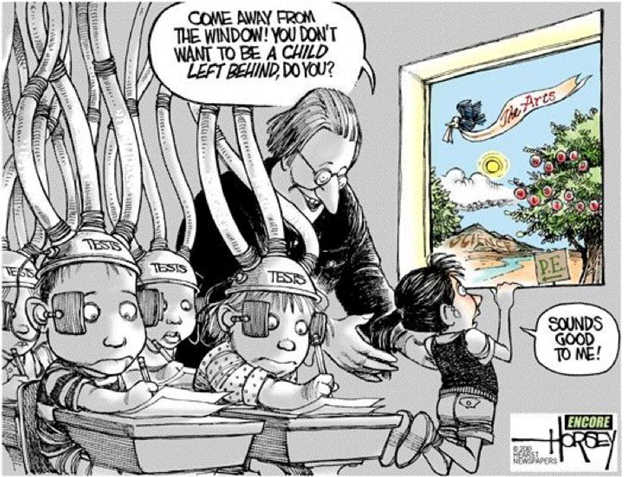
Cartoon Time along with an Ivon Rant

Another Alberta-based educator at The Love of Learning posted this. It reminded me of a Ken Robinson video The Educational Revolution…Why? Because Schools Kill Creativity posted by Gen Y Girl. The video is worth watching several times. The first time I watched the video several years ago an administrator informed me the message was a need to add layers of technology on top of what we are doing.

I am not a neo-Luddite. The original Luddites were not opposed to technology. They opposed potentially catastrophic outcomes blind, thoughtless implementation of technology might have on British society of the time. A message I gleaned was a positive correlation between ADHD/ADD diagnosis and an increase in various forms of imposed, standardized, high stakes testing.

The second message is statistical evidence the highest levels of creativity in school are at the kindergarten levels. After that, it is all down hill.

These are not technology issues, but simply change for the sake of change.

Technology is the artful use of the tools available to us.

Questions: What changes would you suggest for education to make it more child-friendly and child-focused? What can we do to increase the creativity for children in classrooms?

A bit of an American slant to it, but where do Canadian educational systems take their lead from? Is this what we want?

Two Wolves Inside Me Movie – Which Values Will You Feed?

A colleague passed this link on to me and asked I share it. It resonated as I recently posted Naming Values which is similar in theme.

I’m sure you’ve heard it before, but I couldn’t agree more; Life is merely a series of choices. Where you are now can all be linked back to every choice that you’ve made in your life to date. Every day we all make countless choices and each one counts. This is what this short movie is all about via Two Wolves Inside Me Movie.

Enjoy and share.