Tag Archives: conversational journey

The Invitation

I am not familiar with Oriah Mountain Dreamer’s poetry, but, when I found this poem, it reached out and called me.

What questions do I ask myself, that I cannot answer. There is an eloquence in those questions that leads me to new questions, without knowing the answers. When I sense the world in one way or another, I am unable to sense it in any other way.

What if I live the wildness of life and I allow myself some abandon, not carelessness? I can dance with that wildness and not care about what others may think, hopefully making the world a better place.

When we open our hearts to the other, their standing in life is about who they are as a person rather than what identifies them: their job, their age, where they live, etc. When we open our hears to the other, it is an invitation to be human and humane with them.

It doesn’t interest me what you do for a living.

I want to know what you ache for and if you dare to dream of meeting your heart’s longing.

It doesn’t interest me how old you are.

I want to know if you will risk looking like a fool for love, for your dream, for the adventure of being alive.

It doesn’t interest me what planets are squaring your moon.

I want to know if you have touched the centre of your own sorrow, if you have been opened by life’s betrayals or have become shriveled and closed from fear of further pain.

I want to know if you can sit with pain, mine or your own, without moving to hide it, or fade it, or fix it.

I want to know if you can be with joy, mine or your own; if you can dance with wildness and let the ecstasy fill you to the tips of your fingers and toes without cautioning us to be careful, be realistic, remember the limitations of being human.

It doesn’t interest me if the story you are telling me is true.

I want to know if you can disappoint another to be true to yourself. If you can bear the accusation of betrayal and not betray your own soul.

I want to know if you can see beauty even when it is not pretty every day.

And if you can source your own life from its presence.

I want to know if you can live with failure, yours and mine, and still stand at the edge of the lake and shout to the silver of the full moon,

“Yes!”

It doesn’t interest me to know where you live or how much money you have.

I want to know if you can get up after the night of grief and despair, weary and bruised to the bone and do what needs to be done to feed the children.

It doesn’t interest me who you know or how you came to be here.

I want to know if you will stand in the centre of the fire with me and not shrink back.

It doesn’t interest me where or what or with whom you have studied.

I want to know what sustains you from the inside when all else falls away.

I want to know if you can be alone with yourself and if you truly like the company you keep in the empty moments.


Love After Love

Derek Walcott wrote this poem that describes how, when mindful, we experience the fullness and richness of life. Perhaps it is only, when we older, that we have wisdom to sit, take it all in, and just be good with what life is.

Who is the person, the self, that looks back from the mirror? Or, greets me at the door? The answers are only questions in a new form, as the answers cannot be fully formed.

When we engage in conversation with ourself, we must be present to the person we speak and listen to. When we ask eloquent questions that cannot be answered, we allow those questions to remain unanswered and guide the conversation.

The time will come

When, with elation,

You will greet yourself arriving

At your own door, in your own mirror,

And each will smile at the other’s welcome,

And say, sit here, Eat.

You will love again the stranger who was your self.

Give wine. Give bread. Give back your heart

To itself, to the stranger who has loved you

All your life, whom you ignored

For another, who knows you by heart.

Take down the love letters from the bookshelf,

The photographs, the desperate notes,

Peel your image from the mirror.

Sit. Feast on your life.


Spring

Source: Spring

Mary Oliver is one of my favourite poets. There is something deeply spiritual about her poetry that finds its way into my heart.

I was not familiar with this poem. Poetry allows us to imagine that we have wings. With those wings. we tap our experiences more fully as we fly with others who join us. When we share the journey with others, it becomes much richer. It is not only our journey.

nature is never finished. – robert smithson

out walking with the kinders we happened upon a white swan happy and in between seasons. the same as us.

Source: nature is never finished. – robert smithson

When I saw the title of Beth‘s post and read her poem, I thought what a profound moment. Nature has many stories to tell us and many ways of telling them that leave a mystery in each story. We are always between the moments and seasons that desribe the beauty of nature and who we are becoming.

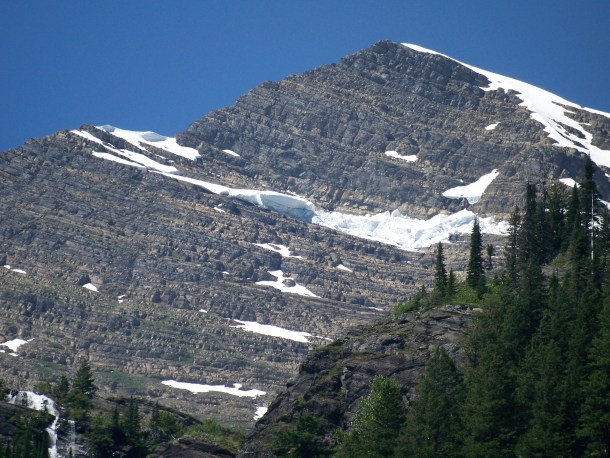
Several years ago, I took a picture of a mountain face. I did not have any idea why I took. It just spoke to me, like the swan in Beth’s poem. I used the picture in a presentation about eco-ethics, after I read an article about geologists who use the striations of a mountain to allow it to tell them its story, knowing it can never be completely told.

When I look at that picture, the mountain tells an even less complete story. The mystery in the story is what draws me back to the picture and maybe is what drew me, without knowing that, when I took the picture.

Mountain's Layers

Smart Cookie

Richard Schiffman counsels that when we are hunting for something, whether it is a cookie or wisdom, it is harder to find it. What we look for can sometimes be right there in front of us, but, in looking for it, we cannot find it. In fact, what we are looking for can end up in the most unexpected places: in a jar in Tennessee.

It is in mindful, sensitive being in the present moment that what we look for finds us. When we apply this to leadership and education, it is about listening to the world and others.

What we each seek is unique to each of us. When we tell the stories and speak the poems about what we seek, we do so finding the words that suit our stories and our poems. Leaders sense this and offer others space to find the words for their stories and poems. In finding and choosing our paths and our words, we can become the smart cookies we seek.

The fortune that you seek is in another cookie,

was my fortune. So I’ll be equally frank—the wisdom

that you covet is in another poem. The life that you desire

is in a different universe. The cookie you are craving

is in another jar. The jar is buried somewhere in Tennessee.

Don’t even think of searching for it. If you found that jar,

everything would go kerflooey for a thousand miles around.

It is the jar of your fate in an alternate reality. Don’t even

think of living that life. Don’t even think of eating that cookie.

Be a smart cookie—eat what’s on your plate, not in some jar

in Tennessee. That’s my wisdom for today, though I know

it’s not what you were looking for.

Prayer to Mansur Al-Hallaj

Source: Prayer to Mansur Al-Hallaj

Prayer is about listening to the world and is part of an internal conversation. The Sufi prayer is about listening closely. Each stanza of the poem begins with a word that entreats God guide me in sensing the world more deeply, not as something I hear, but as something all my senses are able to engage with.

We think of leadership as action and speech, but it is about sensing the world in a sensitive and mindful manner. Leadership is about a conversation and the questions we ask. It opens up space where there are no preconceived answers and followers can be part of conversation and lead, as well. Leadership and its communication is about community, a gathering of people who do not always agree, but hold something in common.

Living Things

Anne Porter used poetry to describe how text becomes a living thing, always seeking new meaning from readers and listeners. As we read and listen, we find new meaning in the words, the spaces, and the punctuation.

Text is not only about the words, but about the context (who, where, and when), pretext (previous meanings), and subtext (what is hidden from sight). As we read and listen, we ask questions that cannot be fully answered.

Our poems
Are like the wart-hogs
In the zoo
It’s hard to say
Why there should be such creatures

But once our life gets into them
As sometimes happens
Our poems
Turn into living things
And there’s no arguing
With living things
They are
The way they are

Our poems
May be rough
Or delicate
Little
Or great

But always
They have inside them
A confluence of cries
And secret languages

And always
They are improvident
And free
They keep
A kind of Sabbath

They play
On sooty fire escapes
And window ledges

They wander in and out
Of jails and gardens
They sparkle
In the deep mines
They sing
In breaking waves
And rock like wooden cradles.

Live

Notes: Full poem here: a blind flaneur. Poem Source: quotes from books

Source: Live

David posted this wonderful Mary Oliver quote. We can embrace the world as a place that amazes us and not merely one we visit in passing. I love the paradox of simultaneously being bride and bridegroom embracing and being amazed.

When we live fully, we engage in a conversation full of questions that can never be fully answered, but that guide us in our journey. This life is not about a planned legacy, but one that emerges in the memories we leave for others.


Rumi on the law of attraction

Rumi wrote magnificent poetry that resonates through the ages. Patience is a virtue. When I sit in my place of patience, others, the world, and myself speak to me and I can listen.

Parker Palmer says the soul is like a wild animal. When I trample around and make noise, I scare it away and it is unable to come out of hiding. In a world that is already busy and noisy, I can not hear my heart speak to me, let alone the world and others

In mindful moments, I pause and what I chase after comes to me, relieving me of the stress and anxiety my chasing brings. There is attraction between what I wait for and I find with patience it wants me, as well.

When I run after what I think I want,
my days are a furnace of stress and anxiety;
if I sit in my own place of patience,
what I need flows to me, and without pain.
From this I understand that
what I want also wants me,
is looking for me and attracting me.
There is a great secret here
for anyone who can grasp it.

When the Shoe Fits

The Trappist Monk Thomas Merton is better known for his spiritual prose, but he was an artist and poet, as well. Eastern philosophies, including Buddhism and Taoism, inspired his writing, including his poetry, and his theology.

When we are at ease with our actions and speech, we work with remarkable dexterity. We understand technology as tools, however the etymology includes techne which is art and craft and logos has to do with speaking, discourse, and the rules that guide that speaking. Craftspeople and artists take time, gather their thoughts (become full of thought), and speak with and through their tools in creating artifacts which in turn call us to gather our thoughts in their use.

Merton’s poem speaks of the ease and knowing one’s craft so well that conversations with and through tools feel right as the craftsperson experiences tools and creating intimately. The human and their tools form a mindful and caring relationship. John Dewey proposed that mind was a verb. We mind, care for, appreciate, and attend to our tools and they respond to this mindfulness.

From the Chinese of Chuang Tzu

Ch’ui the draftsman
Could draw more perfect circles freehand
Than with a compass.

His fingers brought forth
Spontaneous forms from nowhere. His mind
Was meanwhile free and without concern
With what he was doing.

No application was needed
His mind was perfectly simple
And knew no obstacle.

So, when the shoe fits
The foot is forgotten,
When the belt fits
The belly is forgotten,
When the heart is right
“For” and “against” are forgotten.

No drives, no compulsions,
No needs, no attractions:
Then your affairs
Are under control.
You are a free man.

Easy is right. Begin right
And you are easy.
Continue easy and you are right. The right way to go easy
Is to forget the right way
And forget that the going is easy.