Tag Archives: education

Why Do I Write Poetry

During a professinal development event, a presenter spoke about teaching poetry. To my knowledge, this person spent little time teaching, yet he was a supposed expert about all things teaching. In the course of his presentation, he expressed disdain for poetry. He claimed, without evidence, we teach poetry without explaining to students why we teach it.

In my teaching, I described reasons why I taught something, opening up learning to include what students considered important. This included questions about topics and content. Often, students began with a negative view of poetry. With time, we got over hurdles together. Without a collective effort, we do not overcome issues in life and learning. We end up with haiku written through rote formula:

Here are five syllables

And here I write seven more!

Are you happy now?

The presenter indicated, despite having written poetry, he was unsure why teachers taught poems written. I think there are good reasons, but I could be wrong.

Poetry calls me to choose words, paradoxically spare and spacious. Spareness is in the number of words; the fewer the better. The space allows the reader room to interpret. What did the poet mean? What senses are invoked through the word choice?

Instead of counting something, poetry asks me to explore life and understand quality is not evenly distributed. I have privileges, maleness, whiteness, education, that others do not have the eauitable access to.

Choosing words,

Caring about each–

Describing feelings,

Experiences never identical.

Revealing thickness in meaning,

Experiencing sameness different–

Bringing us together,

Bridging worlds.

I told students, who struggled with reading and writing, poetry was an alternative to express themselves. I used ee cummings, as a model, to overcome worries about grammar, spelling, and capitalization.

i dig ee cummings

no punctuation

no capitols

won’t worry about spellin either

no sweat

aint no problem

i write poetry

I enjoy poetry. I always have. I remember a poem, The Elevator, I memorized in Grade 4. I think it Walter de la Mare wrote it. My friend memorized a poem called Douglas Fir. His name was Douglas. When I enjoy who and what I teach, I bring enthusiasm to writing poetry.

Artists, including poets, are often at the forefront, addressing social issues. In our times this includes Maya Angelou, Thomas Merton, Wendell Berry, Adrienne Rich, Parker Palmer, Thich Nhat Hanh, etc. Sometimes, I do not think of these authors as poets. Each of them wrote/writes poetry helping to raise my awareness about issues.

Below are the wonderful and poetic words of Thich Nhat Hanh.

Peace in our heart

I close with a poem I wrote many years ago as a 15 year old in high school. I have never been a fan of what we call capitalism. What we have is predatory and is at the root of current political, economic, and social issues. Only a handful are admitted to the club.

Captains of Society

Captains of Society

Shallow, superficial, arrogant

Single ambition

Greatness in the eyes of others

Only those with resources can apply

The rest

Forgotten

Pay a high price, but…

It’s their fault

They own their misery.

A cheque to charity

Assuages my conscience

What about the despair?

Don’t care

I claim I do

Donations in badfaith,

It’s a tax receipt

I really claim, but…

Done on the backs of others

Get the staff to donate time

Not mine.

Increase taxes

Not mine!

No way!

It’s wrong!

Tax others!

What is work?

I create jobs

It’s a spectator sport

This work, which

I manage from afar.

Drive luxury wheels

Shout

Curse

What’s the hold up?

Who’s blocking my way?

The ‘75 Ford station wagon

Engine shot

Dead broke!

Is it their home?

 Throw a party

Drink

Eat

Be merry

No concern for homeless

A romantic notion this ‘hobo jungle’

Not my world

What’s wrong?

It’s not my fault

I gave at the office.

After all.

Throw money at problems

It might help

Don’t

Stop, see, care

If it really helps

Denying, refusing, unfeeling

I pay for a clear conscience

After all.

 The misery

In surround sound…

Is out of sight;

Out of mind

On some mornings and evenings, I observe the sun rising/setting with the moon in the sky. Several years ago, early in the school year this occured. I began haiku class with poems describing phenomena we often take for granted. I emphasized poetry  often emerges from what is overlooked.

Great poets have a way of lifting extraordinary phenomena into fuller view for us. I modeled this with shared from Pablo Neruda, Mary Oliver, Wendell Berry, etc. I try to write poetry in a similar way.

Greeting and adieu

Sharing the sky together,

Guiding one’s journey.

I took this picture as I approached Waterton Lakes National Park enroute to Spokane. It was a beautiful evening with just a wisp of cloud below the rising moon. It was as if Nature decided a needed two guides on my trip.

On many trips, I pass mountains, which, even when I stopped, I did not grasp their majesty. It is as if they have their own language and ways of being.

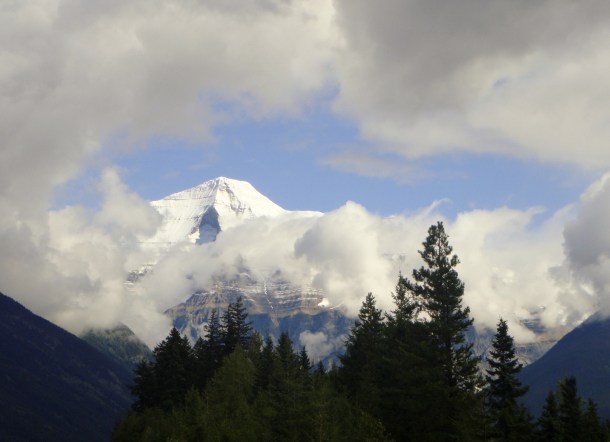
Clouds surrounding,

Momentarily crowning,

In regal splendour.

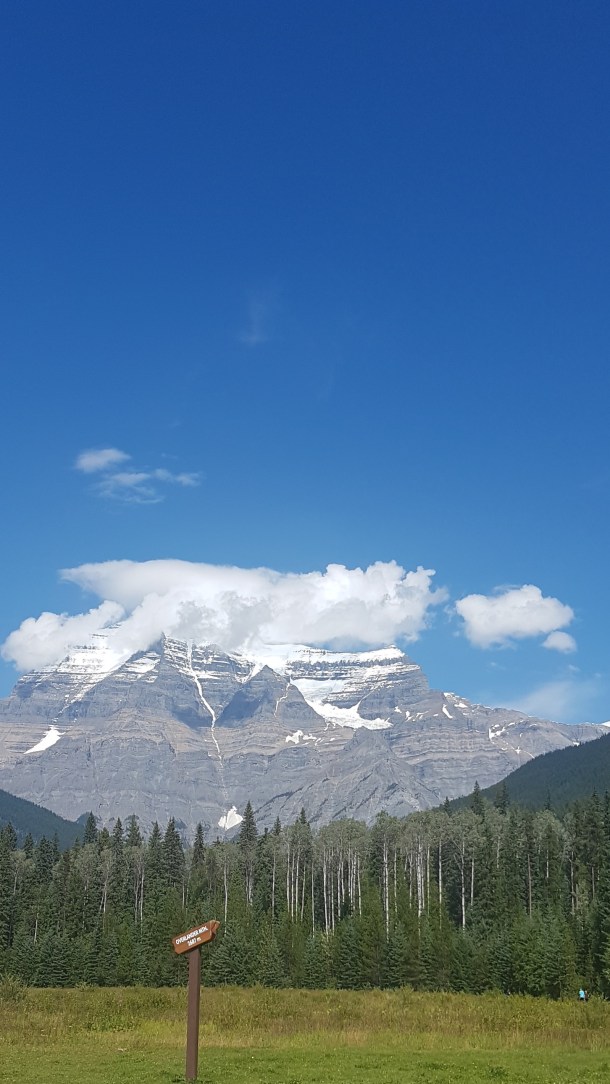
I take many pictures of Mount Robson as I drive from Edmonton to parts of British Columbia. Even with clouds, it has a majesty about it.


.


Metamorphosis

As I reflect on my blogging, I note a significant change in tone, voice, and content. When I began, I did it for the wrong reasons, driven from ego. Transformation is about one’s self.

Thich Nhat Hanh shared the following about the miracle of being alive:

“People usually consider walking on water or in thin air a miracle. But I think the real miracle is not to walk either on water or in thin air, but to walk on earth. Every day we are engaged in a miracle which we don’t even recognize: a blue sky, white clouds, green leaves, the black, curious eyes of a child—our own two eyes. All is a miracle.”

Transforming is not the same as change. Change is always happening, often running below the radar. When something or someone transforms, I bear witness to it or that human. I am pulled up short and take a second look, perhaps more. I become aware of the remarkable change, which is part of a larger, less visible cycle. I am aware of the remarkableness of the world and its inhabitants.

Experiencing metamorphosis is about seeing one’s life in its simplicity and ordinary elements, in the extraordinary. In this way, living is the miracle. Just being aware of what surrounds me and what I encounter is the mindfulness that makes life a miracle.

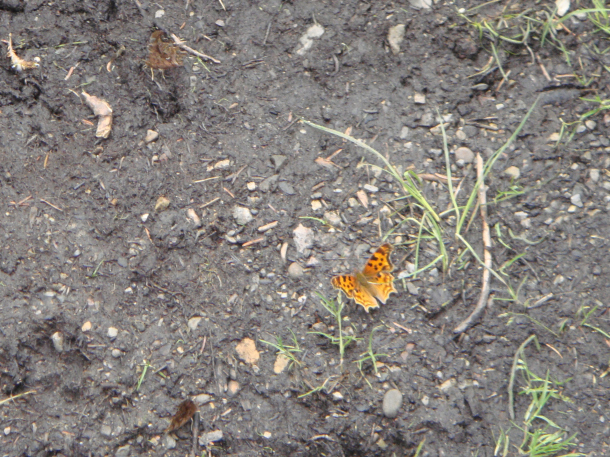
I took this picture of a butterfly. I was aware of its beauty and how it made life fuller.

Merely changing,

Occupies my idle mind.

Denying, silencing–

Another self.

Questioning–

One’s inner terrain.

Who is this self?

What life is this self living?

Maturing,

Emerging,

A chrysalis–

Thoughtful gift.

Flourishing beyond rhetoric,

Journeying with others,

Appreciating–

Valorizing.

Happy Haiku

As part of my PhD, the university required I take two ethics courses. In 2012, I took an ethics class. A central theme in the course was the role eudaimonia plays in one’s life. We often translate eudaimonia as being happiness. It is more than being happy in the moment, as that is fleeting. Instead, Aristotle expanded on it to mean human flourishing and even blessedness, which occurs even in moments of distress.

When we think of eudaimonia in that way, it opens up opportunites to reflect on how we experience flourishing. In my case, it is the human relationships, a love of sports, hockey specifically, and writing, particularly poetry. I began to write poetry again, not because I felt at ease with the world, rather because I was unhappy at the time. It was opening up my heart in ways to allow this unhappiness to be dealt with one in ways to help me flourish.

Writing haiku is one poetic form I enjoy. Part of writing them is fun I had teaching how to write them. Students challenged me to write a haiku on the spot. I always began with an idea usually, but not allows, about nature. I got three lines down and then went back to select better words and focus on the syllables.

Students seemed to engage differently as they saw me enjoying writing haiku. Adults sometimes complained. For example parents and administrators questioned teaching poetry. I responded with it is good to write poetry as we learn how to select and use language in precise ways, plus it is fun. They did not always get it. Students did.

Here are a couple of examples that come to mind. It is not that we write as much as it is a process of writing and being written.

coursing cool current

tearing over life’s rocks

crossing to healing

Language and words bridge one’s private struggles and and make it visible and public. I strugled with these haiku. I think I need more practice. I hope they make sense.

Wearing down rough edges

Bridging life’s busyness

Pausing to flourish.

.

Imperfection

In my last post, I wrote using a line from Mary Oliver: “what is it you plan to do with your one wild and precious life?” Today, I turn to a wonderful poem by Elizabeth Carlson, Imperfection. What does it mean to be imperfect as I explore what I will do with my one wild and precious life?

In pursusing what it means to live this one and wild precious life, one needs to fall “in love with [their] imperfections.” One of my imperfections might be I continuously and restlessly explore where my life is taking me. In a way, I find an echo of Thomas Merton in this, and I paraphrase, some pursue what calls us without finding it and that is our calling.

I am unsure it is that straightforward and I sense what I have done is ignored where I am at in life, ignoring what makes me who I am with each imperfection. One such imperfection might be I lock in on a particular quality and allow it to define me more broadly.

Instead of discerning what is in front of me, I focus on things I do not control. Henri Nouwen wrote a beautiful book, Discernment: Reading the Signs of Daily Life. In it, he suggests people, events, and signs are put in front of each of us to guide us in life. I defined myself as a teacher for most of my adult life and it was hard to set this aside.

I realize the likeliehood of returning to the classroom is remote. There are prevailing biases in play e.g. age . It appears few, if any, post-secondardy institutions want an aging male who does not fit their paradigm of a professor. Yet, the signs were there, despite my imperfections, something was calling. Over the past year, I co-authored a published paper and was invited to join in several other writing projects, joined a peer review journal board, and, most recently, was invited to submit proposals emerging from my dissertation.

The challenge is to get past an imperfection such as a single way of defining one’s self. Maybe someone will overlook age, gender, race, etc. and invite me to teach in their institution. I have to be awake to who appears and, at this time, it is people asking me to write and be part of those projects.

I am falling in love
with my imperfections
The way I never get the sink really clean,
forget to check my oil,
lose my car in parking lots,
miss appointments I have written down,
am just a little late.

I am learning to love
the small bumps on my face
the big bump of my nose,
my hairless scalp,
chipped nail polish,
toes that overlap.
Learning to love
the open-ended mystery
of not knowing why

I am learning to fail
to make lists,
use my time wisely,
read the books I should.

Instead I practice inconsistency,
irrationality, forgetfulness.

Probably I should
hang my clothes neatly in the closet
all the shirts together, then the pants,
send Christmas cards, or better yet
a letter telling of
my perfect family.

But I’d rather waste time
listening to the rain,
or lying underneath my cat
learning to purr.

I used to fill every moment
with something I could
cross off later.

Perfect was
the laundry done and folded
all my papers graded
the whole truth and nothing but

Now the empty mind is what I seek
the formless shape
the strange off center
sometimes fictional
me.

I leave you with a quote from Henri Nouwen and a picture.

“Where does my complete flowering as a human being connect with the needs of the world?”

While I stand by the turbulent river, I take time to listen and observe carefully what moves me in this moment to make the world a better place.

New Intersections

I began to write my first sentence to introduce the poem I intended to post and realized the prose had a poetic quality. I have been fussing since writing Autumn Promises about a lack of inspiration.

Inspiration is not something we chase. Instead, it emerges. I am reading Deeper than Words by Brother David Steindl-Rast. He refers to Jung’s concept of synchronicity. There are moments things emerge from nowhere with no real explanation.

The last few weeks I spent ruminating over where I am going. I am not teaching in a classroom and teaching is calling for me, deeply spirtual and inspiriting for me. When I talk to colleagues and others, they think I would be a good fit for college and university education faculties, but there is little happening and little on the horizon.

As a result, I considers how I reshape, without certainty and chasing, where I go next. The result is a Youtube channel and a Facebook Page with an introductory video about mindfulness in daily life. In various forms, I wrote about this topic in my PhD course work, presented on it, and facilitated retreats and workshops.

I posted the video below. If you have feedback on content, delivery, and directions for this project, please let me know.

Day arrives,

New intersections in life,

“Where next?”

Paths unmarked,

No map,

Experience informs a blurred present.

Take each step,

Inspired by hope,

Inspired by wonder,

Inspired by awe,

Mindful,

Aware of words and acts,

Fill with love and kindness,

Care for one another.


Autumn Promises

In preparing a short presentation on mindfulness in daily life and autumn, I ended up writing a poem about autumn. More than writing, I reflected on how I understand seasonal cycles, including the equinox we experienced on the weekend.

I considered how I define phenomena. For example, autumn or fall was defined by my teaching with phrases such as “see you in the fall, school begins in the fall, and have a good summer, see you in the fall for school.” Nature does not define autumn quite so neatly.

Yes, there is a moment where the time from the longest and shortest days of sunlight is exactly balanced, but Nature and her other living beings are responding according to instinct and invisiable cues, not on artificial times. Trees are slow to change colour and shed their leaves this year, the rabbits in the yard are still brown/grey, and the geese are still gathering to feast on the grain left in farmers’ fields.

For me, autumn is a beautiful mix of the other seasons. On my walks, I experience the cool wind hinting of winter, the warmth of the sun suggesting summer is not gone, and the smell of decay to prepare the way for spring renewal and rejuvenation.

As well, there many metaphors and carry in our daily lives. Understood as a time of harvest, gathering, and bounty, autumn reminds me to be mindful of those moments when we gather, the memories and stories we gather to share with one another, and the readying for dormant times in life vital to our rejuvenation. This happens at all times of the year.

Another aspect of reflecting, preparing, and presenting was I felt rejuvenated. I am not teaching this fall and have been a bit down. Yesterday, I felt presenting and the writing that went with it put some “spring” in my step to be a little punny. I recording the presentation as a series of videos to upload and to put some of my poems into a book to publish.

Autumn arrives unannounced,

Alluding to other seasons

Touching body and soul as I walk.

Cool breeze;

Winter’s promise of dormant moments,

Readying for rebirth.

Afternoon sun chasing chill,

Warming body and soul,

Hinting summer remains.

Vibrant aesthetics;

 Artist colouring leave from Her palette,

Hanging above; fallen mates carpet ground.

Secluded, shaded, dampness,

Rich aroma of decay,

Spring depends on fall’s work.

Is there a typical autumn day?

Is there a typical autumn moment?

Nature whispers, “Maybe; Maybe not.”

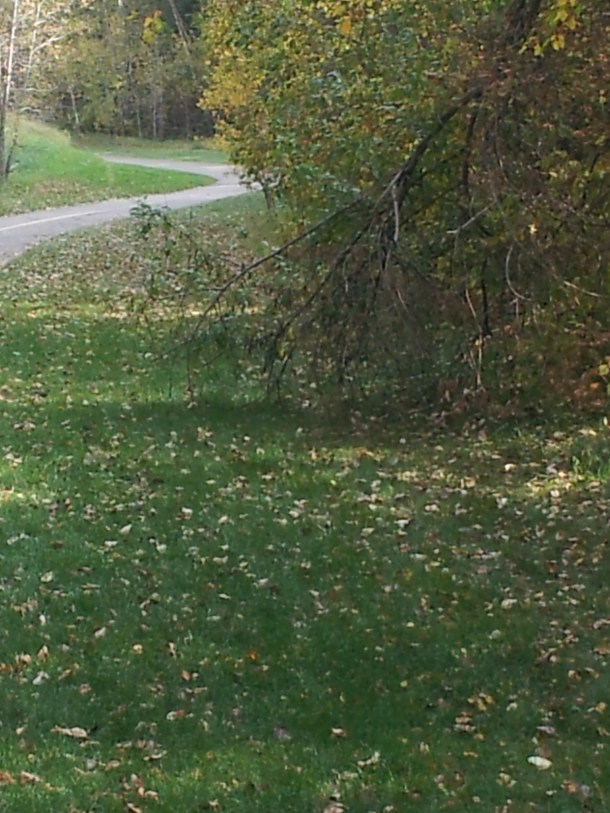
This was a picture I took several years ago in the river valley. I remember the aroma of decay as it had been a cool and wet fall followed by some warmth.

Mountains, Clouds, and Love

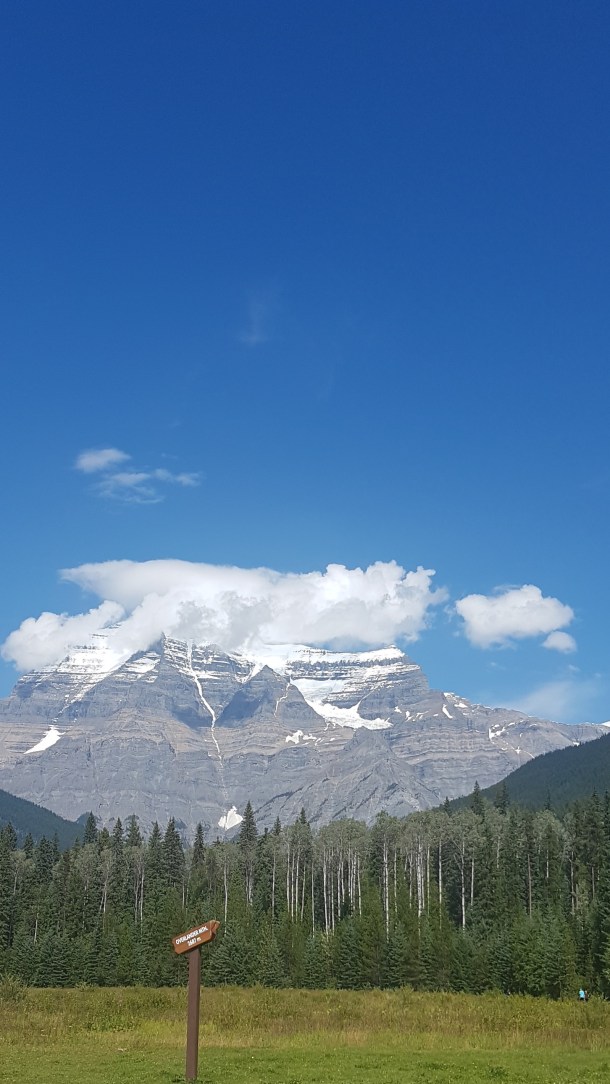
Kathy and I were in British Columbia, visiting family, for a week. We stop at Mount Robson on our way to Prince George, which is where we first met and lived after we were married.

Mount Robson is highest point in the Canadian Rockies and we have driven by it many times on our way to and from Prince George. We take pictures of it at every opportunity and stop to bask in its majesty and richness.

Toni Morrison provided this wonderful quote about mountains and leaders:

“Did you ever see the way the clouds love a mountain? They circle all around it; sometimes you can’t even see the mountain for the clouds. But you know what? You go up top and what do you see? His head. The clouds never cover the head. His head pokes through, because the clouds let him; they don’t wrap him up. They let him keep his head up high, free, with nothing to hide him or bind him.”

Here are two pictures I took of Mount Robson with a little cloud cover circling and loving the mountain at the top, letting its head poke through.


A Powerful Weapon

via A Powerful Weapon

Eddie Two Hawks provides wonderful quotes from various sources. Today’s is one from Nelson Mandela who was a champion of freedom, compassion, and education. Education is leading others into the world they will inhabit and letting them learn about the world. It is a transformative and just process that continuously act on each person as they act on the world they inhabit.

With each new generation, hope springs anew. Education is not just school. It is as John Dewey suggested one’s whole life experience. Dewey suggested life is a person’s meta-vocation and other interests become vocations. Here, I follow Thomas Merton and Parker Palmer and understand vocation as a calling that most fully expresses who I am.

Teachers and elders play substantial roles in one’s education. Furthermore, education does not cease, meaning others play roles throughout our lives in our becoming educated. It is a life-long process, but not in a slick way summarized with glib cliche, life-long learning.

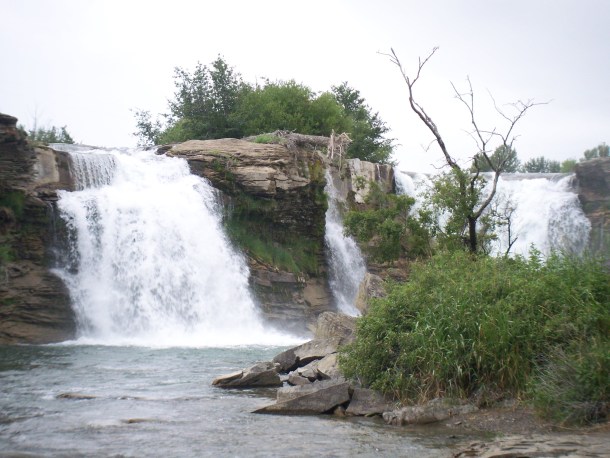
For me, education is best described in poetic terms such as Mary Oliver asking: “Tell me, what is it you plan to do with your one wild and precious life?” It is a waterfall carving out new space, transforming itself and the landscape it passes through with each passing moment.

100_4184


Dr. Seuss

via Dr. Seuss

Heather offers three Dr. Seuss quotes. I am particularly taken by the third one, which calls on me to step with care and tact.

Regardless of where I am, I am with people, in the world, and in relationships. It is easy to take these for granted. Often, children and youth embrace differences more readily than adults.

Through the use of satire, made up words, and unusual characters, Theodor Geisel took a stand against bullies, hypocrites, and demagogues. I think his characters depict pluralism we live in. Yes, there is no Lorax, Yertle the Turtle, or Cat in the Hat, but we can appreciate and defer to the beauty of their differences. Even within  differences, I find more similarities and common ground with others.

We need this in the world we co-inhabit with other beings, sentient and non-sentient. Too often, people who masquerade as leaders tell us to see difference as problematic, to see Nature as something to exploit, and to separate ourselves from our better angels. Perhaps our better angels are Thing 1 and Thing 2.

298x322 Unique Dr Seuss Images Ideas Dr Seuss Art, Dr

I retrieved this image from Clip Art Mag.