Tag Archives: reflecting

Focusing on the Essential

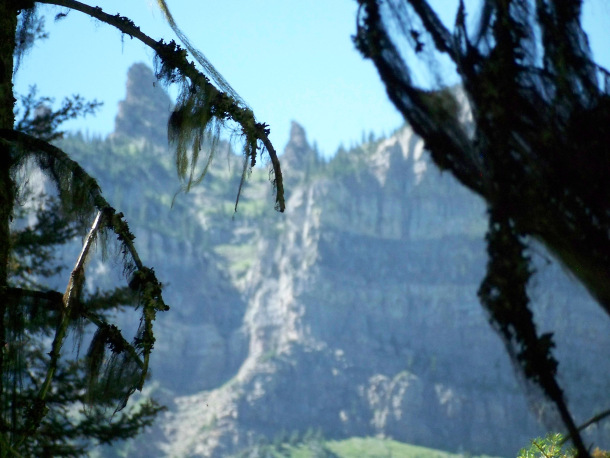
I took this picture in the summer of 2012. I sometimes keep blurry phots to remind me to try bring and keep things in focus. They remind me life is not always in sharp focus and there are times to step back, pause, and reflect. I think this is essential amidst multiple crises we are experiening: health, economic, and social justice. The health crisis accentuated and made more visible the social and economic fault lines in the world, including in so-called advanced countries. These inequities include the wars, hunger, Amazonian deforestation, accelerating climate change, etc.
It is essential to keep our eye not on the outcome to correct the injustices, inequities, and lack of democracy in the world, but on the processes that will overcome those phenomena. John Lewis in Across that Bridge: A Vision for Change and the Future of America stated

“You are a light. You are the light. Never let anyone—any person or any force—dampen, dim or diminish your light. Study the path of others to make your way easier and more abundant. Lean toward the whispers of your own heart, discover the universal truth, and follow its dictates. […] Release the need to hate, to harbor division, and the enticement of revenge. Release all bitterness. Hold only love, only peace in your heart, knowing that the battle of good to overcome evil is already won. Choose confrontation wisely, but when it is your time don’t be afraid to stand up, speak up, and speak out against injustice. And if you follow your truth down the road to peace and the affirmation of love, if you shine like a beacon for all to see, then the poetry of all the great dreamers and philosophers is yours to manifest in a nation, a world community, and a Beloved Community that is finally at peace with itself.”

The title could read any country in the world and the world itself. In focusing each of our light, we can gradually transform the world, making it better, more just, more equitable, and more democratic; a beloved community.

One’s spirit wearies;

One’s travails weighing heavy–

From within,

A voice calling.

Seeking peace;

Turning inward–

Posing prayerfully,

Listening for wisdom.

Paying homage;

Celebrating–

Carving paths through wilderness,

Cherishing one another.

Appreciating difference in unity;

Opening hearts to one another–

Reaching outstretched hands,

Grateful for common humanity.

I leave you with the video of the reading of the poem Invictus by Tybre Faw. What gives me hope is there are young people like this who are the light.

 

The Establishment

I wrote this poem when I was in high school, so some 50 years ago about the time I wrote Angry Young Poet. I updated both poems several years ago, but the underlying theme was evident in the orginals and I tried to keep that in mind in editing.

I found both poems as part of handwritten notes I dug through one weeked while Kathy was away. What struck me was how little things change. In fact, I might argue things are more entrenched than ever; the rich got richer and the poor poorer. One only has to consider the enormous wealth being accumlated by billionaires during the multiple crises we are experiencing.

Multiple crises, health, economic, and social justice, might give us room to re-imagine the world we want for our children and grandchildren. Instead, I am afraid we are more entrenched in our binary positions. Despite this, I hold out hope, not optimism and positivity, that we can begin the process of transforming the world to make it more democratic, socially just, and equitable. Part of my writing is revisiting an article I published in 2012 called Rocky River: Building a Learning Organization to re-imagine how we might educate children, youth, and adults. I begin re-imagining with a simple shift in language and call those engaged in teaching and learning educands a word Paulo Freire used in Pedagogy of Hope: Revisiting Pedagogy of the Oppressed.

More broadly, we can apply the learning organization’s principles to other institutions. Peter Senge cautioned it is hard work and takes time. Unlike other revolutionaries, Freire stated incremental change, based on dialogue between humans, was essential to transforming the world. Although Senge does not draw on Freire’s dialogic model, he suggests dialogue, with deep and caring listening, is at the heart of transforming institutions.

They know best for the rest–

Indoctrinating,

Not transforming,

Recalling non-existent good old days.

In disagreeing–

Simply wrong-headedness,

Daring to rebel:

Who are we to question?

Having it made–

Hunting and gathering,

Material wealth signaling success,

Repress, suppress, oppress.

Depending them to know best.

Maintaining existing order,

Demanding blind loyalty,

Failing to practice what preach.

I re-worded the poem again. I see how little changed in 50 years. Without a picture, I thought of which blues musician might best convey my message. I immediately thought of Nina Simone, who sings with edge. When I play her songs for undergrads, those with backgrounds of privilege demonstrate a visible level of discomfort.


Open Heart; Open Mind

Even in a metropolitan region of over a million people, Nature is visible. Nature immerses humans in ways that we can take-for-granted. Several years ago, I stepped out of the house and was greeted by the Moon in an early morning sky and the morning star was just above it. It is not a great picture, but reminded me of the rewards when I open my eyes, heart, and mind. Miracles exist; I only have to be open to them.

Nature awaiting

Quietly revealing self

Opening whole self.

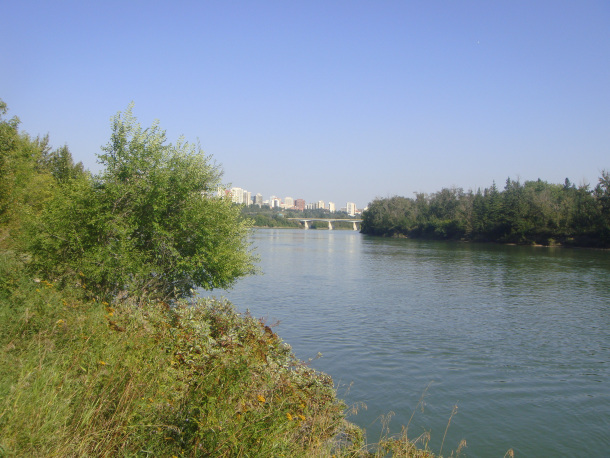
As well, we are fortunate to have a large river, the North Saskatchewan, running through the heart of Edmonton. Its Cree name is kisiskâciwanisîpiy meaning swift current and its Blackfoot name is omaka-ty meaning big river. I took this picture during one of many walks in the valley, looking into the centre of the city. I presents a contrast between what we think of as progress and how Nature still exists within our understanding of this progress.

Seeing what one wants,

Hearing what one chooses,

Opening one’s whole self.

Beholding Nature’s gifts,

Holding close,

Hiding, only if one chooses.

Just Visiting

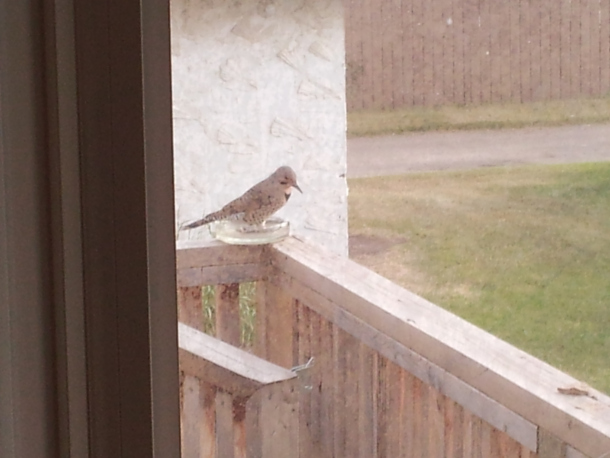
I was on a conference call when I took this picture and was limited in my movements. I took the picture through the window and tried to get to the door, but it was gone before I even got it open a crack. I think it is a western northern flicker woodpecker, but am not 100% sure. It is the first time I recall one showing up in my backyard.

I am unsure why the ashtray was a landing-place. Maybe it looked a bit like a nest. Or, it had a bit of water to drink. It was not used, so it was used that day. It had been raining, so it might be a protected spot out of wet and wind. This is a reminder of the old house and its memories.

Today, a visitor calls–

Pausing,

Lighting down,

Escaping wind and wet.

Making right to home–

Glancing to and fro,

Window framing,

Keeping me at bay.

I move to greet–

Suddenly, slipping away

Leaving, quickly as arrived

Withou bidding adieu.

Sabbath – Making One’s Self More Human

It has been a while since I wrote about the concept of Sabbath where I disconnect to reconnect. I allude to it in The Greater Scheme. It is a practice I am trying to get back into on a regular basis. Wendell Berry writes poetry on the theme and Wayne Muller wrote Sabbath: Finding Rest, Renewal and Delight in Our Busy Lives. It is taking a pause.

Muller cuts across demoninations, traditions, faiths, and philosophies. I used it at a retreat several years ago. There were people who did not see themselves as religious or bound to a particular tradition. What we are often looking for is a spiritual space to heal, make whole. Heal and whole share an etymological root.

Too often, in a busy world, we forget to slow down. Hannah Arendt wrote the Ancient Greeks leaned towards contemplation (vita comtemplativa), while in modern society we remain forever in motion (vita activa). Neither is healthy; health shares the same etmology with whole and heal.

Parker Palmer, drawing on Thomas Merton, proposes we bring harmony between the two. It is a way of feeling at home, the core of who we each are and where we belong. The word hearth, which is the heart of our home, shares etymology with heal, whole, and health.

The poem and picture in the post The Greater Scheme was taken as part of a walking meditation activity, where the teacher asked us to look at the world as if through new eyes. It is, when I am in harmony with myself, I am most creative. At the same time, I was involved in a monthly conference call with critical friends and was interviewed about some work I did related to mindful servant-leadership as it applied to teaching. I think the peaceful feeling I felt emerged from the silence and solitude at the retreat, the critical exploring of my self, and the creative work I was engaged in at the time.

Spacious, silence, solitude…

Seeking refuge,

A peaceful room.

Lovingkindness discovers–

A heart breaks open,

The present its own reward.

Silently spirit revealing–

Speaking,

Softly, gently, tenderly,

Begging its quiet voice be heard.

Solace seeks me–

Unmarked path emerging,

A step at a time.

Sabbath–

Wisdom revealing itself,

Making more human.

I took this picture on a hike into Kootenai Lake in Glacier National Park earlier that summer. We saw a handful of people and the hike was peaceful, disconnecting us from the busyness of life for an entire day.

Turbulent Calmness

On June 29, I posted a similar poem and theme. I am not sure what led me to post two that shared the same title. It is likely, early in the school year, it feels chaotic. Early in a school year, there are moments of repreive in this feeling and, as the year gains momentum, they become more common. As one co-participant in my dissertation put it: “I learn to stand in the middle of the storm.”

The other inflluence was I took several courses in my PhD about leading in complex and chaotic times. Servant-leadership, mindful leadership, and transformational leadership are forms of leadership particularly effective in times. We focus on questions about what needs to be changed, how do we engage each person in change, and how does each person become a leader in their own right? These forms share common features: grounded in the present, ethically guided, there is foresight without being set in certainty, etc. Mixed in this was courses on the Tao of Leadership, Systems Leadership, Leadership and Justice, Dialogic Leadership, etc. When I re-entered the classroom each September, what I learned in my PhD founds its way in with me. How could I better serve each student? How could we transform and share our experiences into something nourishing each other’s lives? How could I make a difference for each student? How could they grow and become better leaders than me?

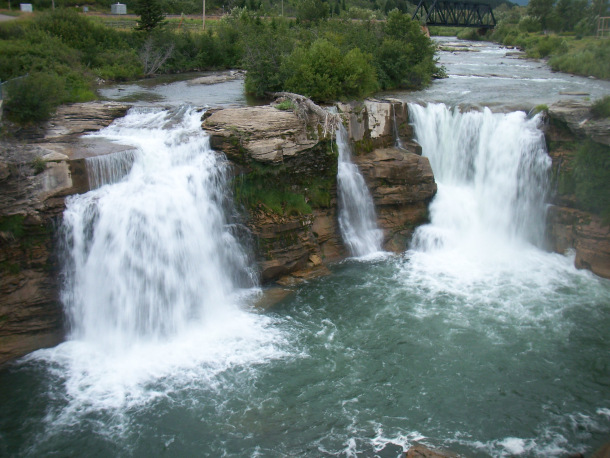
I took the pictures at Lundreck Falls as a reminder of how quickly nature can bring a sense of calm back even in the midst of what is initially chaotic. Within a short distance from the falls, the water pools and calms, at least on the surface. What goes on underneath the surface can remain chaotic and complex much like life, needing non-judgemental, humility, foresight, patience, and wisdom to navigate the unforseeable and unpredictable.


Needless to say, I wrote a poem about the challenges of remaining calm in the midst of the storm sometimes raging around me.

Growing awareness–

Standing still,

Humbling one’s self,

To gain foresight–

Insight;

Emerging clarity,

Wisdom.

Entering life’s stream–

Even calm waters,

Hiding shoals, rocks, currents,

In turbulence–

Dropping labels,

Ceasing unwarranted judgment,

Falling awake.

Calm Within Turbulence

I probably overthink some things including the concept of “thinking outside the box” and “getting outside of the comfort zone.” We need structure in our lives or it becomes chaos. We trust the familiar, sometimes too much. Moving from the equilibrium and stability of what we are each comfortable with causes us to begin to feel out of control.

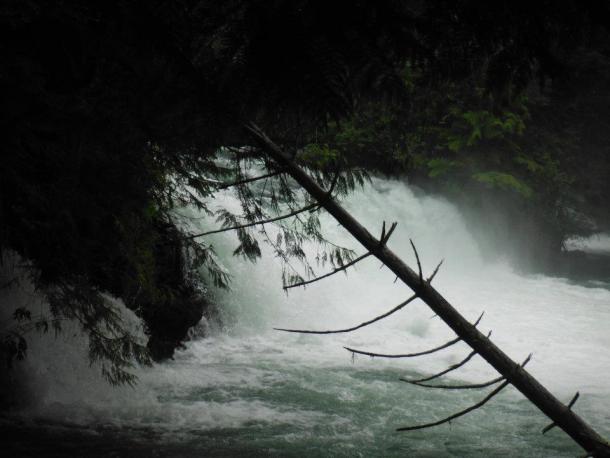
I love waterfalls and fast water. They remind me, just over the horizon, things will not be easy to plan for. There will be things I cannot see around the bend, hidden in below the chaotic, turbulent waters, and it is continuously changing. We have white water rafted and going down a mountain fed stream in the morning is different than later in the day. Early in the morning, the waters tend to be lower and, as the day heats up, more water flows, covering rocks that were easily seen earlier.

Awakening each morning,

Smiling into the day,

Soaking in moment.

Pausing,

Letting calm find me,

Amidst turbulence.

I do not recall where we got this picture. I think it was in British Columbia towards the headwaters of the Fraser River. We have not rafted in this kind of river and I doubt you could. To handle the chaos, one would have to portage and detour around the rapids. Part of the skill of navigating is to have the wisdom to realize what is impassable.

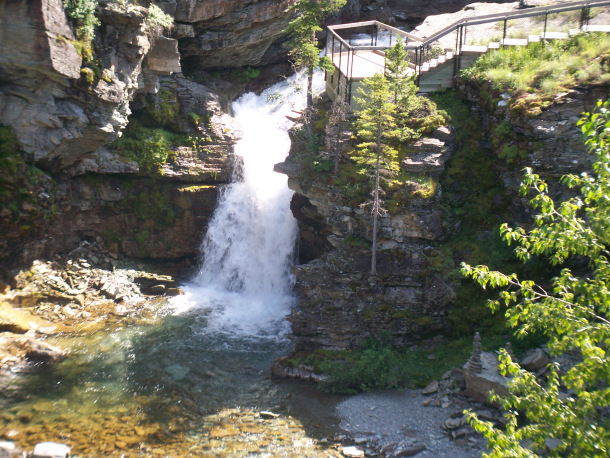
For me, getting to a point where I can view certain waterfalls is impossible. I have a significant fear of heights and it limits where I can go. In Waterton Lakes National Parks, we did a lot of hiking. I was able to access most of the paths, but this was one I had to stop. I could see the top of the falls and Kathy was my eyes, taking pictures. She got to the platform overlooking the falls, which are called bridal falls as they are often veiled with mist.

Beauty revealed,

Lifting veil from other’s eyes,

Even mist is gone.

.

Surprises

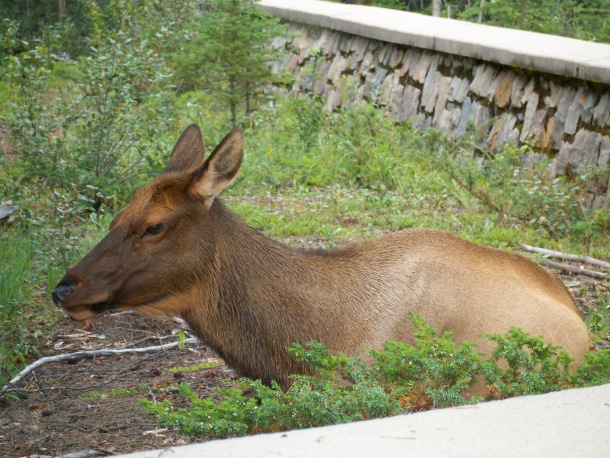
It was a perfect day. We wandered in Jasper National Park, enjoyed scenery, surprises and I was with my favourite person. We found the best at the end of the day. I posted a picture of a bull elk on Yellowstone 2005 . I took that picture from 15-20 metres. Kathy took this picture of a cow elk chewing her cud. She seemed aware of our presence. We were quiet and, as others joined us in a secluded area, she posed. The wall was about 1 metre thick wall and a similar height.

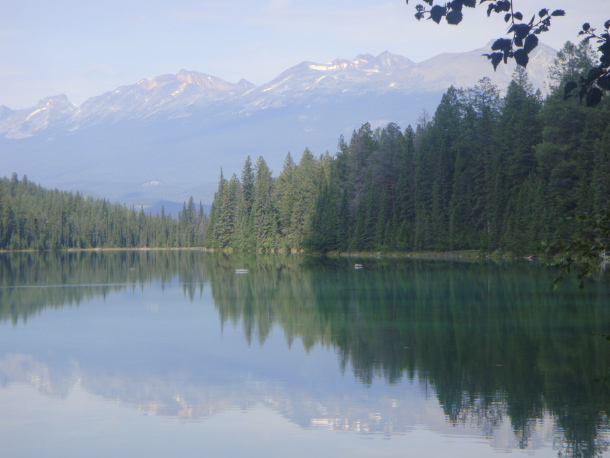
Earlier in the day, we hiked for a couple of hours in the Valley of Five Lakes, exploring some of the small lakes in the valley. We were able to get close to three of the lakes and took pictures. The other two did not have paths into them and were quite deep in the bush. Here are the three lakes we got close to. Each has its own personality, so to speak.

At one of the lakes, I forget which one we came across another visitor who posed for a picture.

And, I close the day with a poem:

In the end,

Day emerged as it began–

Arriving at trail’s head.

Rediscovering mountains,

Reflecting in clear lakes,–

Sharing personalities.

Adieu to blue skies,

Threatening clouds;

Delivering promise.

Welcoming the unexpected,

Unfolding patiently–

Like the day.

Angry Young Poet

In keeping with Why Do I Write Poetry, the following poem is one I wrote many at about the same time. This is the third time I visited the poem in terms of writing and editing. Several years ago and while explaining the importance of teaching poetry, a student asked if I wrote poetry in junior high school and I responded, “Yes!”. He asked me to share with them. I found them in a small lock box I keep at home and shared several with the class. We talked about the context I wrote the poem in. Even in Canada, I lived in the shadow of the Vietnam conflict and struggled with what that meant.

Sam Intrator suggested teachers expose adolescent students complex, existential questions of life as they move through those formative years. I wrote my poems in 1969. It was a time when identity was increasingly rooted in a global nature of the world, not just immediate community and family. War entered homes via television. Increasingly, I discovered my voice through poetry, expressing an abhorrence to institutional and government sanctioned killing. What set me apart from my peers, was I took no sides. Each was equally wrong in my mind, advancing their ideological stance. My teacher, Mr. McKenzie, an innovative English teacher, encouraged us to discover our voices.

I shared the following poem with my students. We talked about how metaphors of war are used commonly in various institutions and how I found this as troubling as the violence and trauma of war. That feeling re-emerged over the past months with describing dealing with Covid-19 in war-like terms and the troubling events of the past weeks where purported leaders feel it is OK to speak about human beings, not citizens, as an enemy and objects to be manipulated for financial gain based on the basest forms of self-interests. It is worse than the war as it takes on invisible and pervasive forms. It is a form of Social Darwinism where the strong survive, trampling on those further down what is understood as a food chain premised on unfettered oppression of other humans, including various forms of systemic violence. Consider billionaires, in the Covid-19 crisis, gained while those in most need lose what little support they had.

I contrast this with Jacinda Ardern‘s message as the Prime Minister of New Zealand. In The Atlantic, Uri Friedman describes her as an empathetic leader. What emerged in reading the article was we de-serve better leadership, mindful, transforming, serving, etc. focusing on people as humans, not objects.

Students asked me to share poems and I did, with the context within which I wrote them. Parents, who were in the classroom each day, asked about my candour. I responded “I am not about changing minds. I try to change how each student thinks about the world, to see under the surface, reveal a sordid underbelly, and revel in the wonderfulness of human life.” This is a hopeful message, and the leadership we need is evident e.g. Jesus, Buddha, Muhammed, Mary Wollenstonecroft, Anne Frank, Maya Angelou, Soujouner Truth, Rosa Parks, etc.

Win or Lose: What Difference Does it Make?

A game–

Darwin misunderstood,

No great thing to win.

War and it language!

Bells ringing hollow,

Men, women, children gone!

Woe! vanquished losers and winners;

Humans, vanquished in every sense–

Thriving on dividing.

Resenting conquerors,

Rebuilding ruins–

On countless graves.

Morally rudderless,

Blaming the fallen,

Beggaring humans.

Homes on streets,

Hollowing souls–

What war brings?

Innocence dying–

Prryhric victories,

What war brings?

Comrades fallen,

Enemies vanquished–

Proving nothing.

Will we learn?

I pray

For human survival.

I leave you with the following video and song. We listened to Harry Belafonte, and I still do, with his uplifting and hopeful message. We are in this together, not against one another, with each other.

Transforming

Several years ago, I arrived home, after spending time in Spokane. I struggled in the first few days back and reflected on what was happening. Quite often, I resist routine and find it is hard work.

Rarely, are we alone in our travails. It is universal Real change, transformation is slow, purposeful, and patient process. Upon looking at pictures we took on our travels and for all of nature’s ability to sometimes erupt and change rapidly, most change is slow and transformational. For the most part, deep change, transforming, in nature is a great model to observe.

I wrote the following poem in response to those reflections.

Waiting,

Impatient–

Desiring more

Leaning into headwinds,

Transforming–

Slow, patient, with purpose

Lacking blueprint.

Journeying,

With one’s self–

With companions,

Breaking bread,.

Trusting–

Devoting,

Changing together.

Embracing,

No explaining,

Words unnecessary–

Smiling assurances.

Looking back,

Revealing worn paths–

Sharing,

Sheltering one another

Pressing ahead–

Certain in uncertainty.

I took the picture on the way to Kootenai Lake in Glacier National Park. Even on a well worn path, there is a limited view of what is behind and ahead. As well, there are many things hidden along the path, there and invisible. There is always a trust in other people and in the path as I move ahead with purpose. Paradox exists in the feeling of certainty in an always uncertain world.