Category Archives: Photography

The Real Work

I was laid up for the last few days. I have allergies and this time of the year is always a challenge. I think I picked up a bug to give me a double-whammy. I slept a good part of Friday and Saturday and, on Sunday, was upright for most of the day.

I am not sure if I will post later. While sitting upright and not doing much else on Sunday, this Wendell Berry poem kept poking at me.

Living is paradoxical. Parker Palmer described how this creates tension in living. Just as we think everything is as it should be, something pokes at us and unsettles us, calling on us to begin our real work and commencing the real journey. Being mindful and attentive remind us to be still and look below the surface of what is happening.

It may be that when we no longer know what to do
we have come our real work,

and that when we no longer know which way to go
we have come to our real journey.

The mind that is not baffled is not employed.

The impeded stream is the one that sings.

This is Athabasca Falls. The river upstream is quite wide and as it comes around the corner suddenly narrows. In Wendell Berry’s poem, it is impeded and creates a great force that carves out solid granite.
Silence of Poetry

Current shares the same etymological roots as curriculum: currere.

How we make meaning of living is like the spaces between words in a poem. It is in silence that meaning emerges. It flows between the words and stanzas.

We need silence in our lives to find meaning. It is standing on the edge of a mountain lake without others. There is a peace there.

“We are all visitors to this time, this place. We are just passing through. Our purpose here is to observe, to learn, to grow, to love… and then we return home.” Aboriginal Proverb

Living is a text,

Traveling through time and space,

Leaving others to ponder meaning;

A meaning that is never whole.

Engulfed in silence,

Emerging from a peace(ful) moment,

One’s inner voice speaks;

As if an other speaks.

Wrapped in meditative moments

When silence is a poem,

Bringing the text to life;

Sending it on its way again.


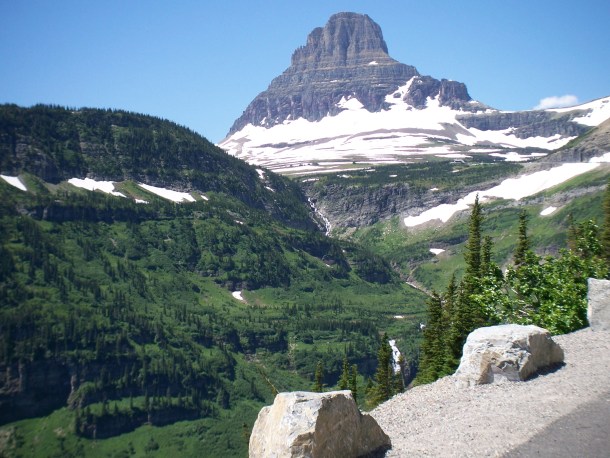
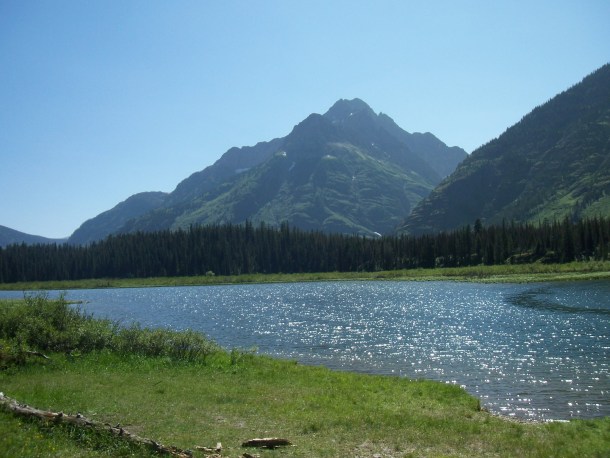
This is a small lake we walked to in Glacier National Park.

Eloquence of Ambiguity

Language matters. Yesterday, I read a post on an educational blog. Essentially, the person argued that “data driven education” was stupid and education was “child driven.” I accept children make choices about what they learn. As a teacher, I used data, including their choices, to inform how I taught.

What I understood demeaned anyone who spoke differently than this person. It is in pluralism and diversity the essence of eloquent ambiguity that we appreciate the world and receive gifts.

Most people accept a world that is grey and their language appreciates the eloquence of ambiguity. Language has a way of fixing things as if they were more permanent. It is the capacity of humans to interpret and re-interpret that brings forth the elegance of the world.

Appreciate the world as it is

It does not arrive pre-packaged.

Embrace uncertainty and ambiguity

Let its eloquence emerge.

Open your heart

Receive unimaginable beauty.

There are no pat answers

Only an internal compass that guides you.

This is a path in Waterton Lakes National Park. A person only sees a short distance ahead when walking a path. What comes next is uncertain.

Driftwood

I am back. The retreat was enjoyable and tiring. Although it was called a retreat, it was different in the sense that it involved research, writing, and lots of conversation. I find retreats invigorating. They are not sit, listen, and try taking notes as a speaker blasts through their presentation.

Retreats have a conversational part. Parker Palmer counsels people at his retreats not to take notes. Instead, we spend time writing and conversing how we feel about various prompts. That was a purpose of this retreat. It is the Currere Exchange.

Currere is the etymological root of curriculum, meaning to run the course of one’s life. It is a subjective way of interpreting a planned curriculum in a school. Whether teachers understand it or not, they are doing this continuously. As one of my co-researchers told me we make decisions about what to teach and leave things out we really like.

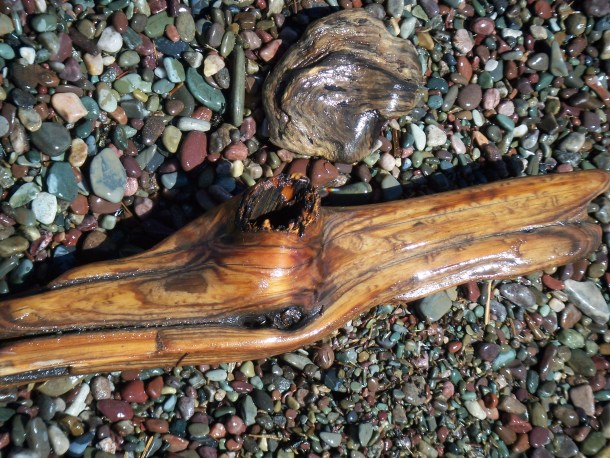
In a sense, currere is polishing a planned curriculum. It is a multi-faceted and complicated conversation between a person (re)membering their lived-experiences, aspire to a particular way of teaching in the future, and synthesize those two moments into the present. Each moment acts as a curriculum to inform the other, complicating one’s teaching in a dialogic way. Others enter the classroom and add to the complicated nature of the conversation, each adding their curriculum to the dialogue. It is like a piece of driftwood, being polished by the forces it comes in contact with.

My story being polished,

I (re)member and imagine;

Washed up on a new shore,

Who I am reflected anew.

I am a character in my story,

I pause a moment,

Noting lustre and matte,

Interpreting new meanings.

Soaking in the contours of living,

Experiencing new awakenings,

Running the course of my life,

Each new moment polishing me afresh.

Kathy took this picture in Waterton Lakes National Park.


Silver Star

When I looked for a poem, this one by William Stafford found me. Mountains appear to be immovable and unchangeable, yet as people do they do so without immediate notice. Yet, when we revisit them, we realize the changes that occurred.

In the case of teachers, Parker Palmer speaks about asking the question “who is the self who teaches?” We are each teachers in our own particular ways, so asking this question is essential. We often overlook this question in pursuit of easier to answer questions about the what, when, where, why, and how.

When we ask who we are, we explore the values that anchor us in living life. In times of crisis, those values guide us and help us through those tough times. Attending to them in mindful ways each day as a gardener would her/his garden grounds us in them in times of real need. They have spiritual meaning that come to life in living and expressing them daily through who we are as a human being.

If we serve our values well, “we will hear the world say, ‘Well done.'” The patience of living a good life, which in Aristotle‘s terms, is indefinable will be the reward. Like a mountain guiding us on our journey, the values we live and express guide us and others on a shared journey.

To be a mountain you have to climb alone

and accept all that rain and snow. You have to look

far away, when evening comes. If a forest

grows, you care; you stand there leaning against

the wind, waiting for someone with faith enough

to ask you to move. Great stones will tumble

against each other and gouge your sides. A storm

will live somewhere in your canyons hoarding its lightning.

If you are lucky, people will give you a dignified

name and bring crowds to admire how sturdy you are,

how long you can hold still for the camera. And some time,

they say, if you last long enough you will hear God;

a voice will roll down from the sky and all your patience

will be rewarded. The whole world will hear it: “Well done.”

From “The Rock Will Wear Away”

Today on the way home, we stopped the Okotoks Erratic or Big Rock. In the Blackfoot language, it is Okotok, which means rock. It weighs about 16, 500 tonnes (18, 000 tons), is about 41 by 18 metres (135 by 60) feet wide, and is about 9 metres high (30 feet).

During the Pleistocene Era between 12, 000 and 17, ooo years, a glacier dropped the big rock in what is now prairie just below the foothills and Rocky Mountains. There are two rocks and on the flat of the prairie they seem erratic and out-of-place. The size of the rocks speaks to the power of nature.

I have a question about this rock. How big was it when the glacier dropped it in its place?

Holly Near is a singer-songwriter. The following is a short excerpt from one of her songs. As she proposes, the rock appears stronger than water. But, is it?

Humans and water are resilient, they come back time and again. Our fragility makes us vulnerable, but, at the same time, provides durability. Like water slowly eroding a large rock down into smaller and smaller bits, humans, through their mindful and collective efforts, can bring about dramatic change to the world.

Can we be like drops of water falling on the stone

Splashing, breaking, disbursing in air

Weaker than the stone by far but be aware

That as time goes by the rock will wear away

And the water comes again

Mindful

Today’s post is short. I was hooded today and the poem that ran through my mind was Mindful by Mary Oliver. This is the ultimate poem for me on a day like today. There is always something that can more or less kill me with delight.

Several speakers today reminded us that it is not the extraordinary we are looking for, but the ordinary that propels us into the extraordinary. Being mindful and attentive in and to the world is an essential element in being propelled.

Everyday
I see or hear
something
that more or less

kills me
with delight,
that leaves me
like a needle

in the haystack
of light.
It was what I was born for —
to look, to listen,

to lose myself
inside this soft world —
to instruct myself
over and over

in joy,
and acclamation.
Nor am I talking
about the exceptional,

the fearful, the dreadful,
the very extravagant —
but of the ordinary,
the common, the very drab,

the daily presentations.
Oh, good scholar,
I say to myself,
how can you help

but grow wise
with such teachings
as these —
the untrimmable light

of the world,
the ocean’s shine,
the prayers that are made
out of grass?

Fluent

I am on the road the next two days so I am tired at the end of relatively long day. John O’ Donohue‘s poetry has a light feel to it, much like a small river that flows easily along its way.

He often wrote blessings and a blessing is something that catches us by surprise. It unfolds in surprising ways, never taking the same path twice. Like the river and, as expressed by Heraclitus in his quote: “No man ever steps in the same river twice, for it’s not the same river and he’s not the same man.”

We cannot live the same moment twice, because we cannot return to it and, even if we could, we would not be the same person. We would return with an understanding of what it meant to step in the river in the first place.

The beauty of living is filled with the richness of uncertainty and complexity. The best we can expect is to be mindful of each moment as we live in it and as it unfolds.

I would love to live

Like a river flows,

Carried by the surprise

Of its own unfolding.

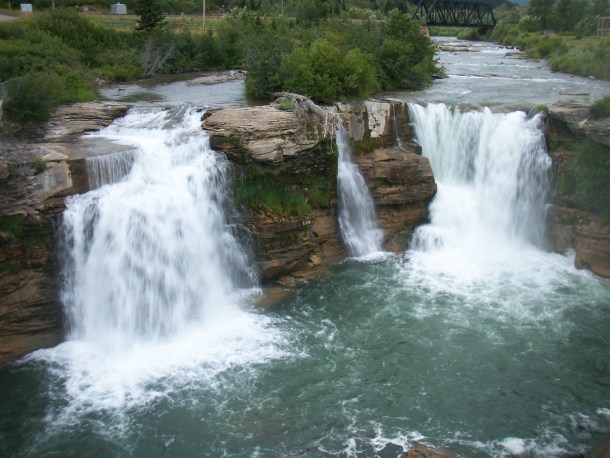
We took this picture several years at Lundbreck Falls. Today, I drove past them and, like me, the river has changed.

For the Children

Gary Snyder wrote this beautiful poem about children being adult’s saving grace in the world. What is new fascinates and they wonder about the newness. For a small child, most of what they encounter is new and calls out to the child to explore and wonder over it.

There is zen and mystical quality to the poem with a reference to meeting in peace somewhere in the future. The essential part of peace is staying together, learning the flowers, and going lightly.

It is not learning about flowers, but learning flowers and going lightly, which I think will take a different way of teaching. This is not a new way of teaching. Instead, it is more likely we have forgotten it, being together and living gently in a world that only has so much to offer us.

The rising hills, the slopes,
of statistics
lie before us,
the steep climb
of everything, going up,
up, as we all
go down.

In the next century
or the one beyond that,
they say,
are valleys, pastures,
we can meet there in peace
if we make it.

To climb these coming crests
one word to you, to
you and your children:

stay together
learn the flowers
go light.

“Natural objects should be sought and seen as they are, not to suit observers, but respectfully as if they were divine beings.” — Goethe

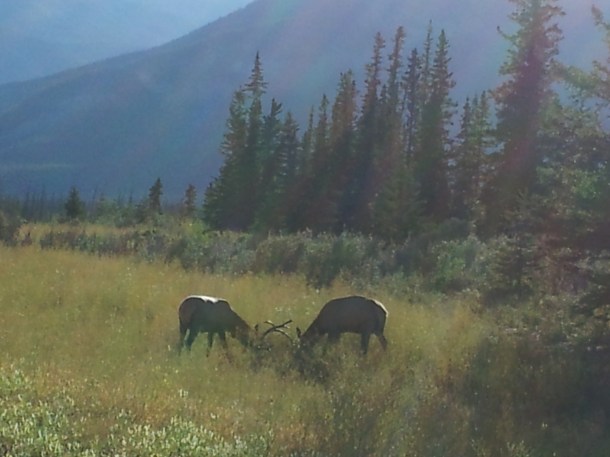
I took this picture several years ago as I drove through Jasper National Park. It was late August before the rutting began, but the bulls were trying to assert dominance. Despite this, people ran into the ditch and talking loudly. I kept my distance and got some great shots from about 100 feet away. As Gary Snyder counseled, I went light.

Drinking with a Hermit Friend in the Mountains

Li Po wrote this short poem about companionship. To be a companion is to literally share one’s bread people journey together. In this case, it is water they are sharing, although it could be something stronger.

When we travel with each other, it is a time to share: converse, drink, food, and nourish each other. We see the other person as a person with flaws and beauty. It is in those moments we are mindful of the other and who they are as a person. Perhaps in their imperfections we discover perfection.

Kathy and I joke with each other as we eat. We offer each other extra napkins and say, “I’ve seen you eat before.”

Together, we drink: two mountain flowers,
opening.
A cup, a cup, and then, to begin again at the
beginning, another cup!
I’m drunk, would sleep . . . you’d better go.
Tomorrow, come again, with your lute, if you
will.
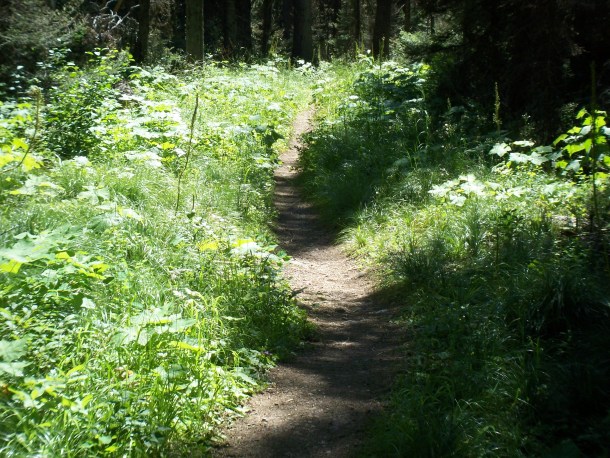
This was a path Kathy and I walked in Glacier National Park. We took a boat down the lake, crossed into Montana, and, because we had our passports, hiked into a lake several miles from the boat launch.