Category Archives: Reflective Moments

Logan’s Pass

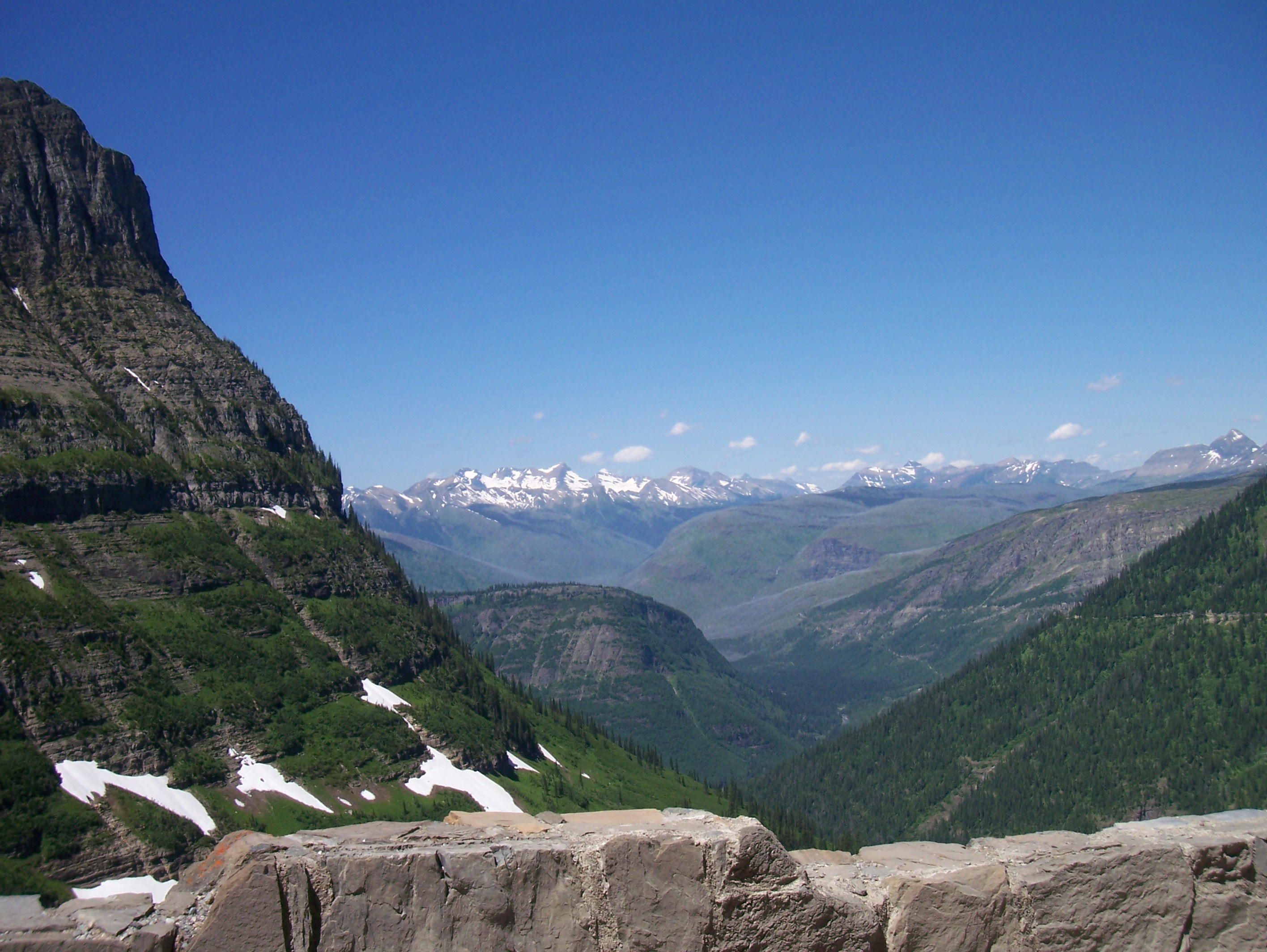
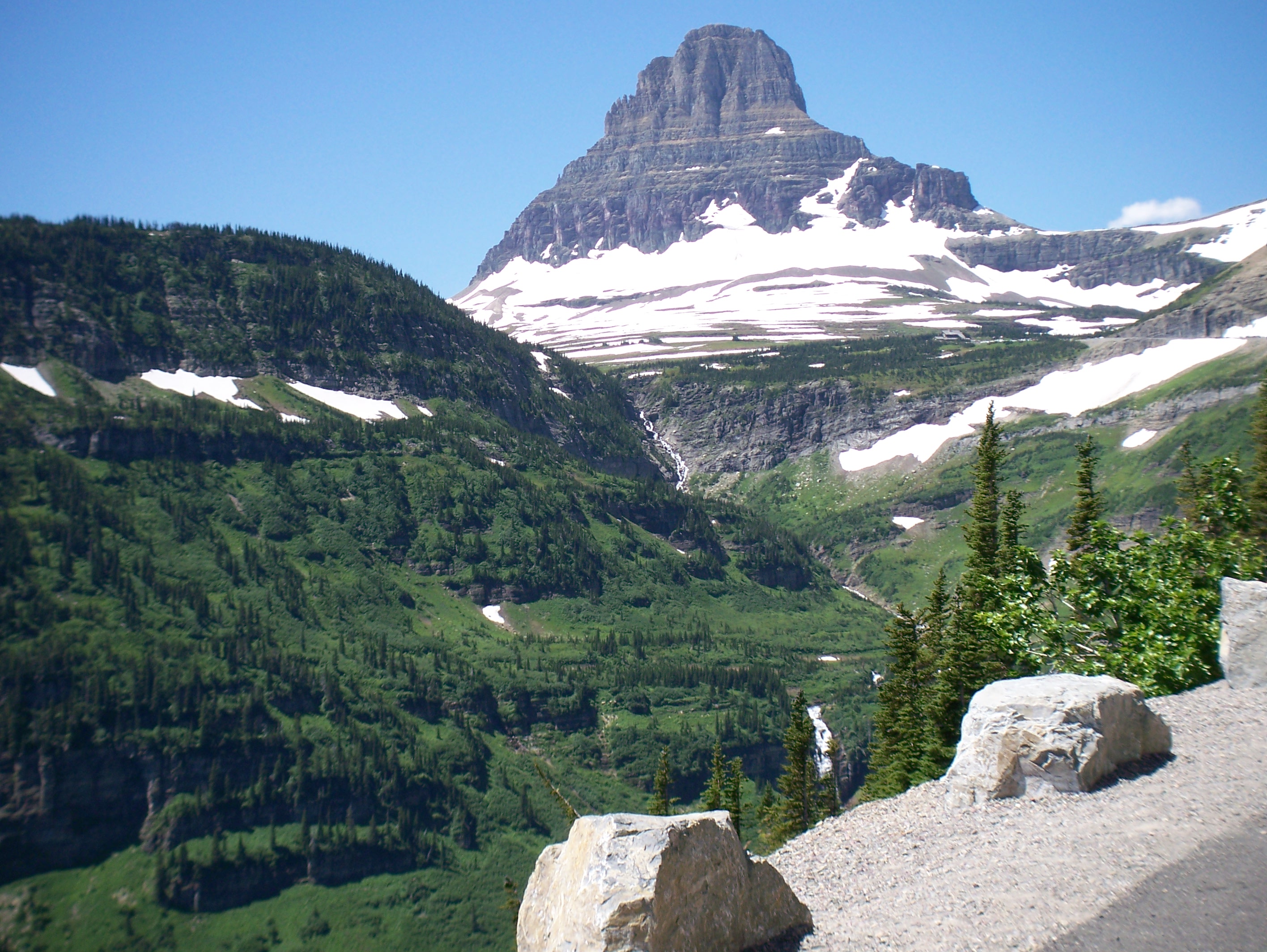
Logan’s Pass includes the Going to the Sun Road in Glacier National Park. When I looked, the view was spectacular and breathtaking.  The park was named for the many glaciers that are part of the landscape and so visible through Logan’s Pass. The glaciers are slowly receding and some estimates suggest they may be gone by mid-Century.
100_4747

Looking straight across from the road, you can see the ice and snow almost at eye level and further out is Jackson Glacier. The road is dotted with short barriers and are not very wide.
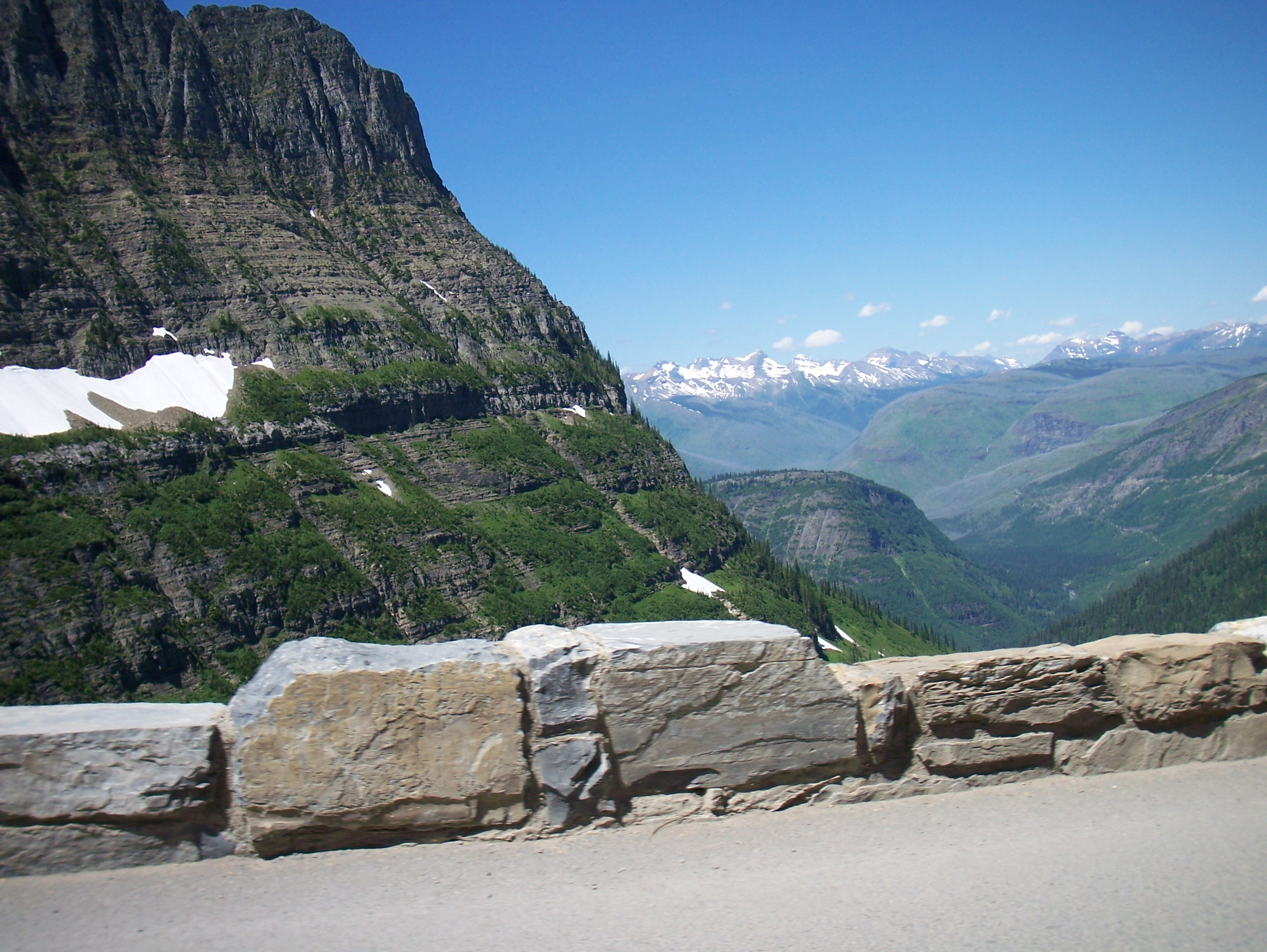
100_4757

The Montana sky is a constant backdrop for the mountains, the ice and snow, and the green in the foreground.
100_4765

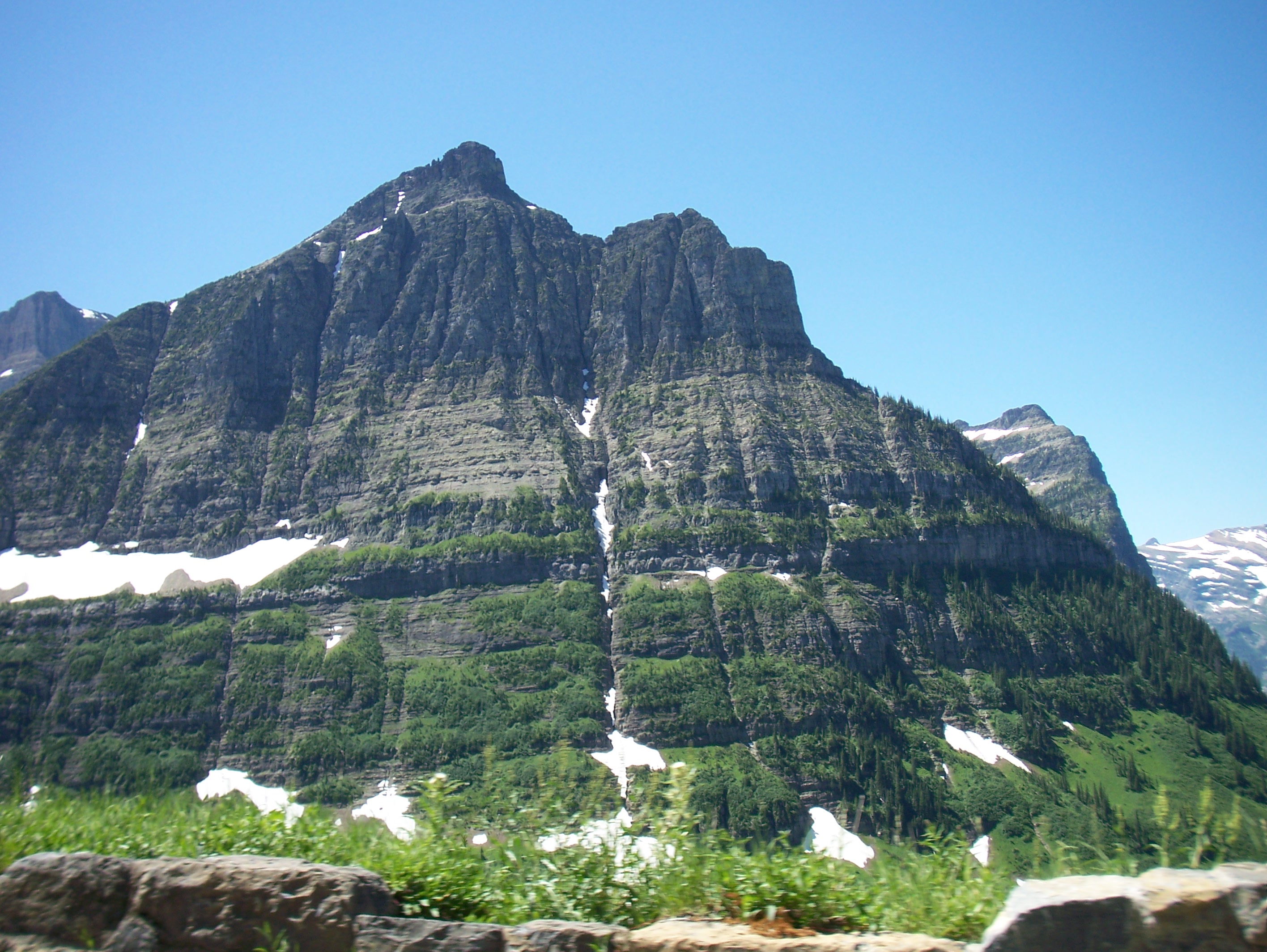
A person constantly feels like they are on the top of the world here. People refer to Glacier National Park as the Crown of the Continent and closeness to the tops of the mountains is a reason. Waterfalls are often in view.
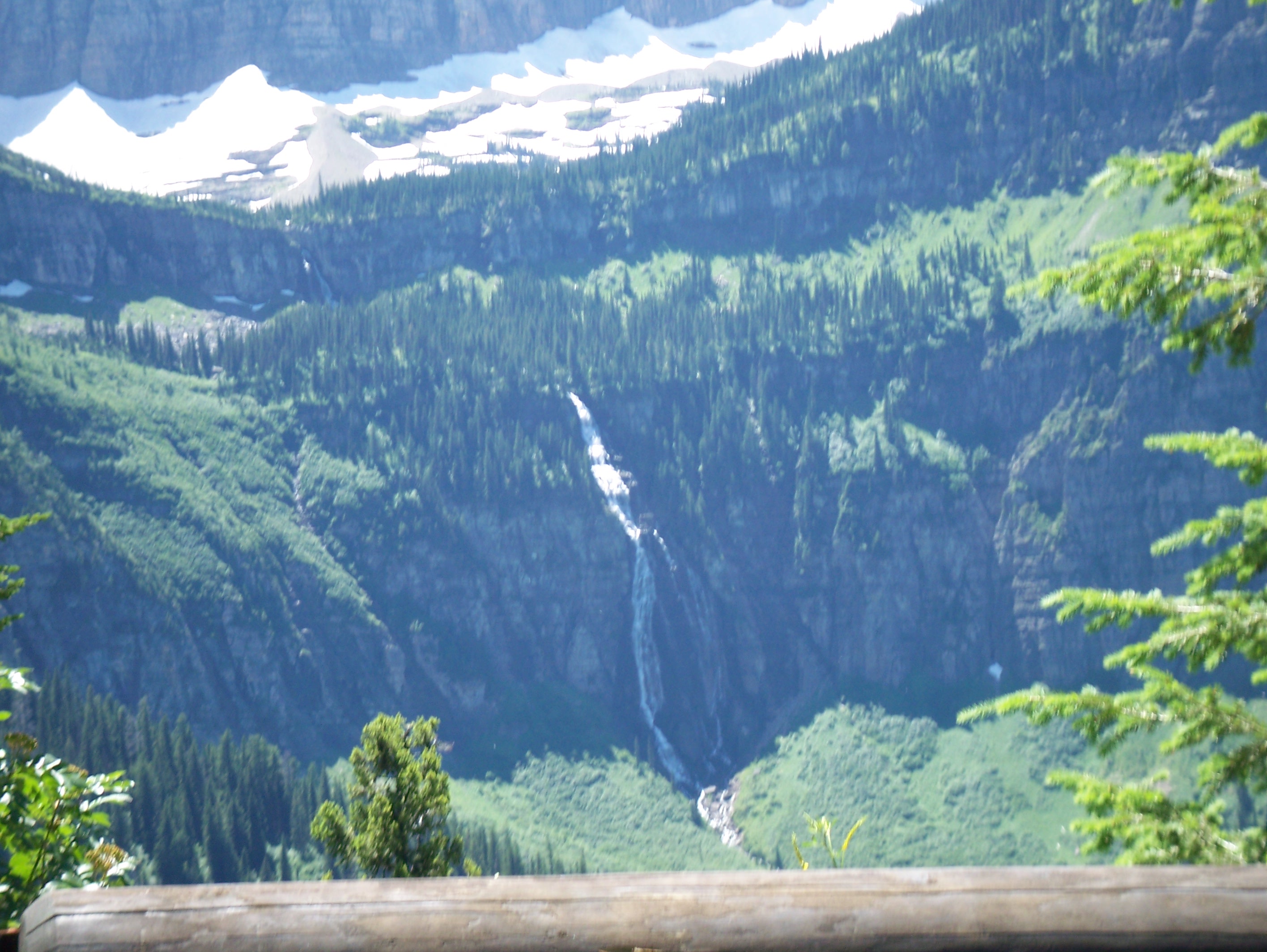
100_4784

Here, there are no real barriers at the edge of the road.
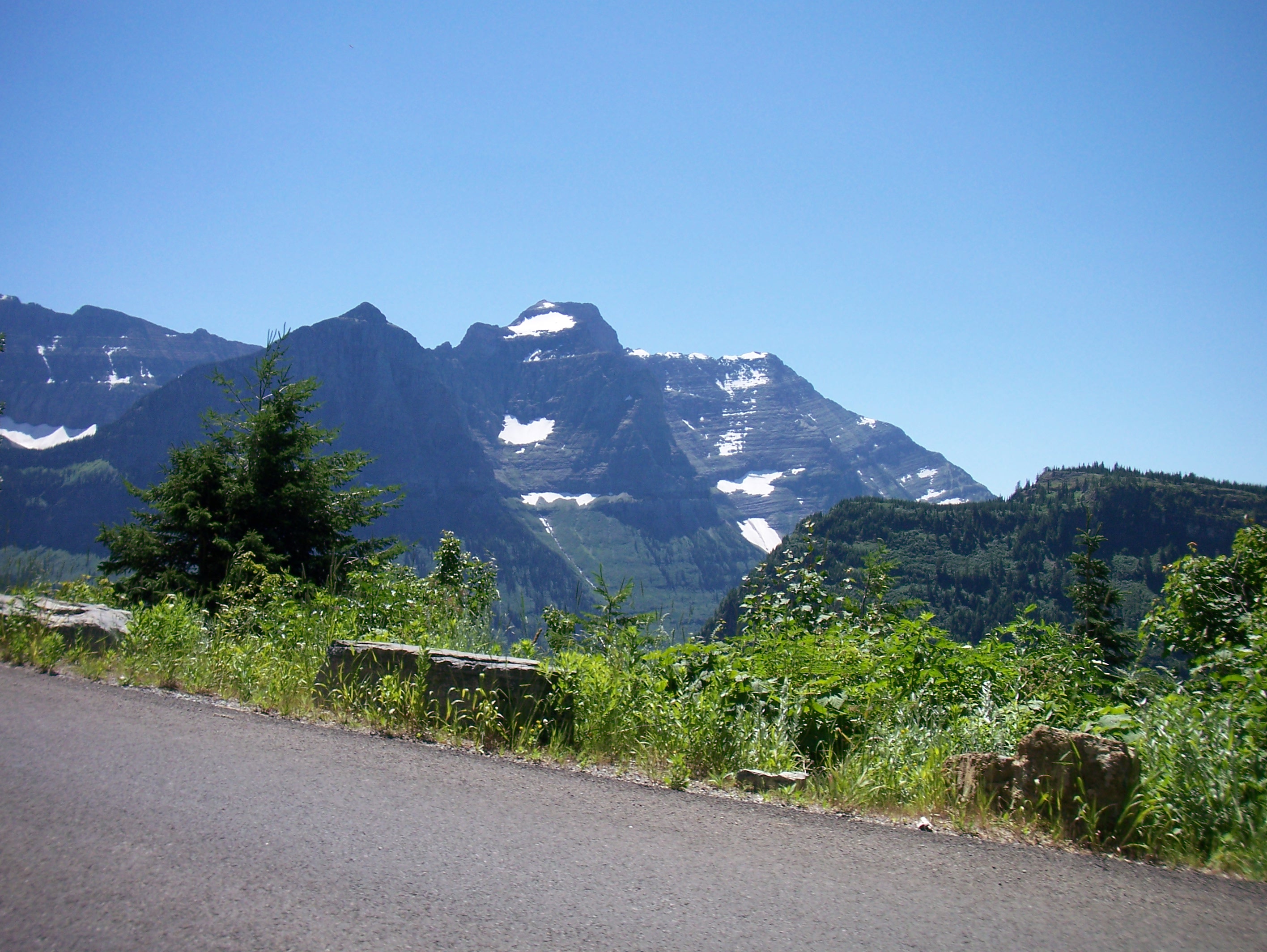
100_4793

Kathy took this picture over her shoulder. It shows the switchbacks and curves in the road.
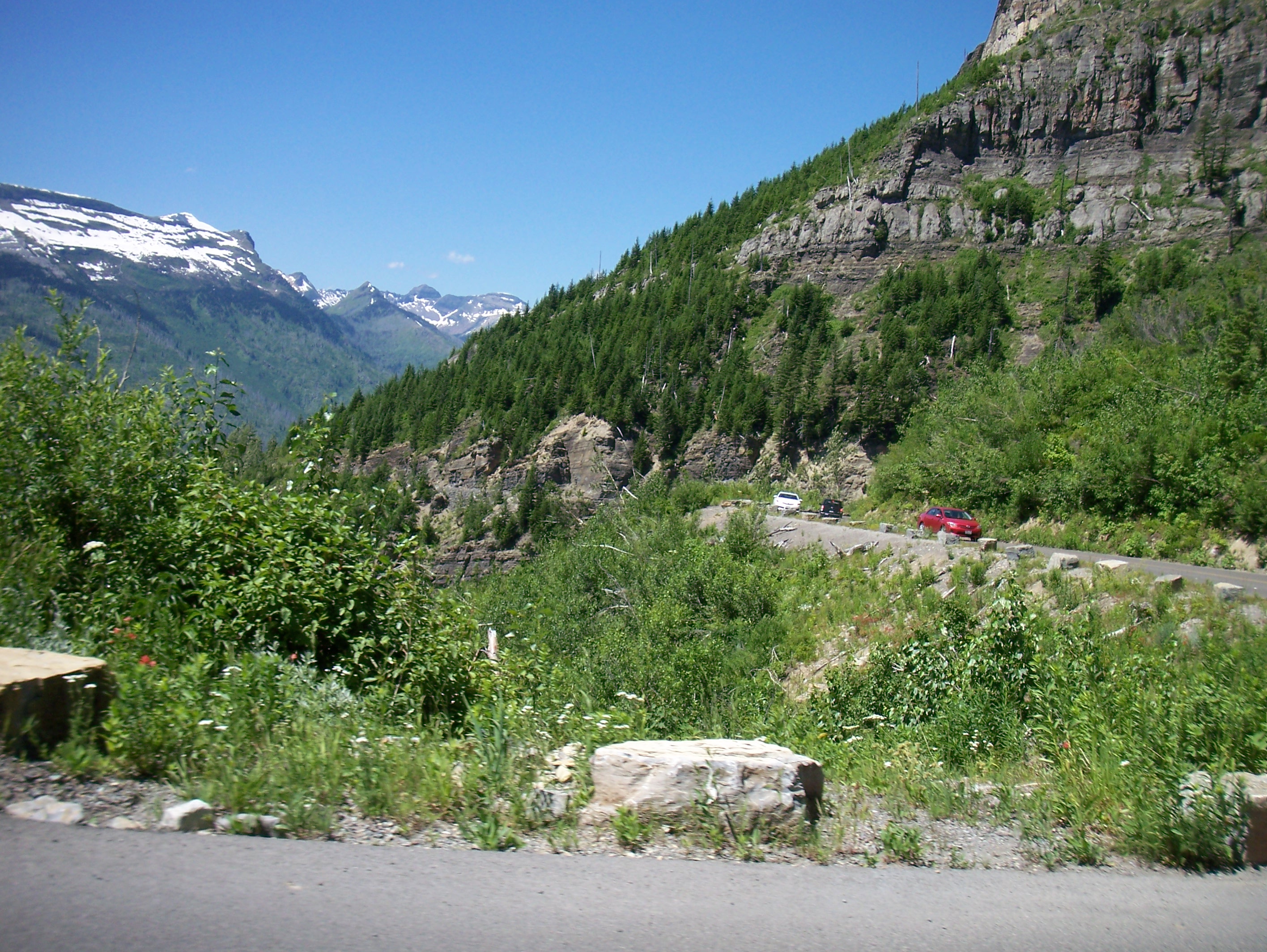
100_4794

I enjoy the contrast provided by the grey granite and the white snow and ice. There is stability and, at the same time, instability visible in nature. The granite looks like it forms a stairway to the top of the world.
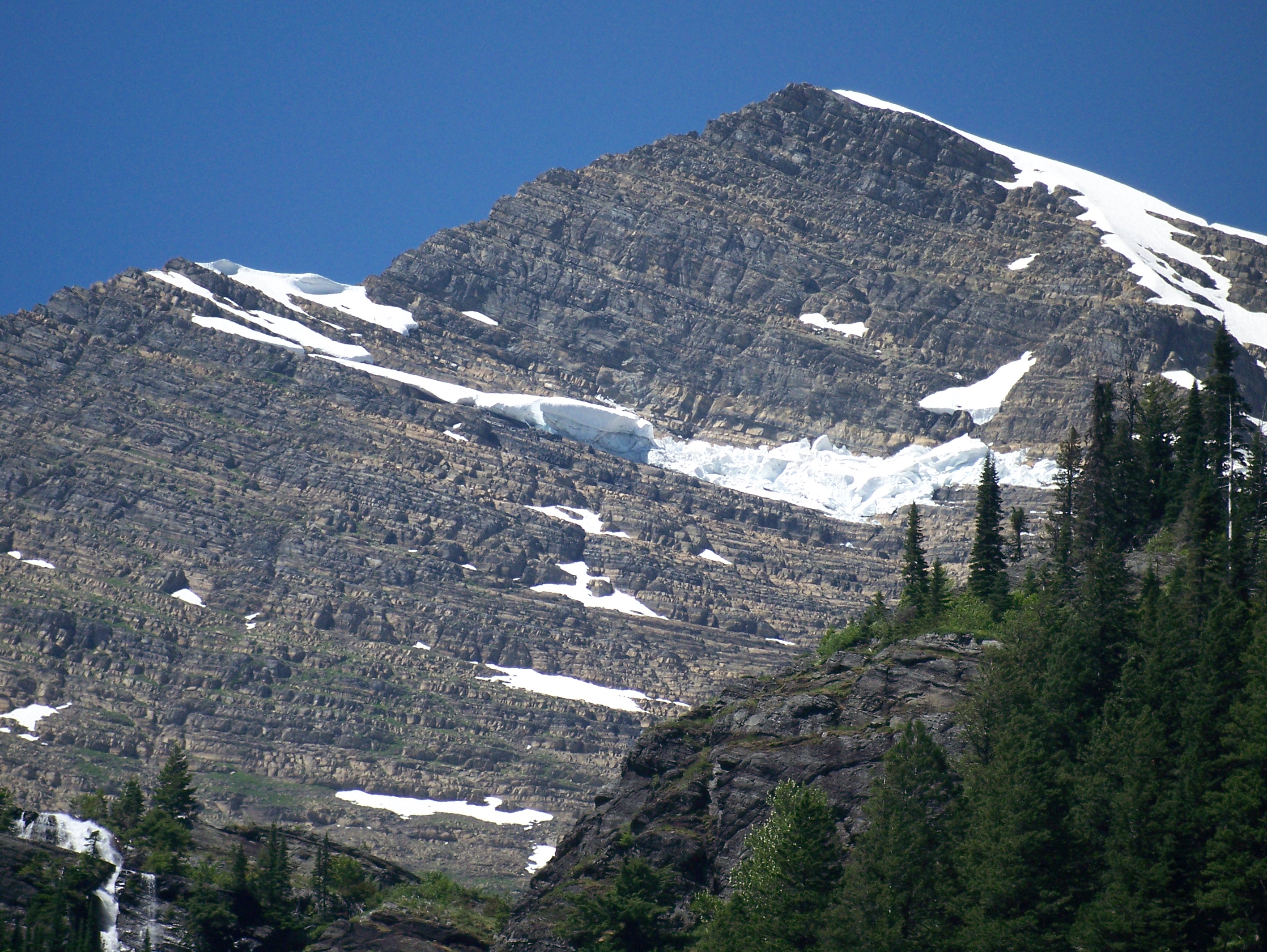
100_4811

Glacier Park Mountains, Glaciers, and Logan’s Pass

Kathy took most of these pictures driving through Logan’s Pass. Glacier National Park is appropriately named. Most of the white spots in the pictures are glaciers or snow pack. There are about 37 glaciers left in the park and most of them are receding or shrinking in size.

We came through the park a later in the summer, but there we saw some of the wildflowers in bloom on the way up Looking Glass Hill overlooking Two Medicine Lake. The mountains and lake serve as a spectacular backdrop. We walked around the lake later.

100_4724

This is looking downstream from Running Eagle Falls or Trick Falls. The glacier on the mountain would likely be considered one of the 25 active glaciers in the park. An active glacier is one that is 25 acres or more. Over 90% of the park is wilderness.

100_4717

This is Jackson Glacier. Although it does not look very high, it is deceptive. The roads climb well up into the pass and travelers end up closer to the mountain tops.

100_4740

This is the tourist stop in Logan’s Pass with the mountains in the background. Parking is at a premium here so we did not get to stop.

100_4750

Most of the pictures we took going through the pass were from the car without stopping. Again, the peaks are not much above the road level.

100_4758

Waterfalls ribbon the mountainsides as they are constantly fed by the glaciers.

100_4768

If you look closely at the picture below, you can see about 3/4 of the way up the road on the left side. It is a slight darkening. The middle of the picture, below the background peak, is basically where the road reaches the summit of Logan’s Pass .

100_4782

Glacier Waterfalls

I am fascinated by waterfalls. It could be they offer paradox in their fury and the stillness found in their sources or in the pools that lay at the base of the falls. Glacier National Park offered opportunities to see waterfalls up close and from a distance

We saw this one from the car as we drove through Logan’s Pass. We saw several waterfalls that fell either right on the highway or right beside it. Literally, we shot pictures from the car as we drove. Parking is at a premium throughout the pass.

100_4780

I want to give perspective on driving through the pass. This is common with even more pronounced switchbacks in places. I can look out of the car window when there is vegetation along the side of the road, but my fear of heights is paralyzing. I don’t drive these roads. Kathy was a mountain goat in an earlier life and is far more comfortable with this driving.

100_4794

We walked in to Running Eagle Falls or Trick Falls. Earlier in the summer and spring, there are two waterfalls caused by spring run off from the snow melt. I copied a picture, which shows the second waterfall above the one in our picture. The link I used rated these falls among the top in the Pacific Northwest.
100_4718

We hiked into Avalanche Lake. We took pictures from both ends of the lake. The first picture shows a series of waterfalls coming down from the mountain side. The snow on the mountains is actually in the form of glaciers.

100_4939

We hiked around the lake and were able to take a few more pictures. Another hiker told us he tried to get closer, but once he was a few feet into the trees he said it was impassable. You can see in this picture that it does not look far but the underbrush is heavy. The link to Avalanche Lake has some pictures taken by someone who was able to get closer to the base of at least one of the waterfalls. As we got closer, the waterfalls look quite different with more ribbons appearing.

100_4943

We were furthest from this waterfall, but the ribbons were clearer as we got closer.

100_4941

I took two pictures in Logan’s Pass. This was one. Once we got to the top of the pass, it was less open and I was able to manage a camera shot. It was right beside the highway. I rolled the window down, as there was no parking and took this picture.

100_4975

Glacier Wildlife

Kathy and I went through Glacier National Park in Montana on our way home. Kathy traveled the route on her way to Spokane. Americans seem to build mountain national parks around the geography which means we saw little wildlife, but we did see some we don’t in Canadian mountain parks. This was clear on the Going to the Sun Road where we saw mountain goats. When we travel through Canadian mountain parks, we see mountain sheep which come down into the valleys during the summer. Goats stay high up where it is cooler. Unless a person hikes the back country, Waterton Lakes National Park, which borders on Glacier, does not have the goats for people to see easily.

This one was on the patch of glacier on the side of the road where it was able to stay cool.

Goat 1

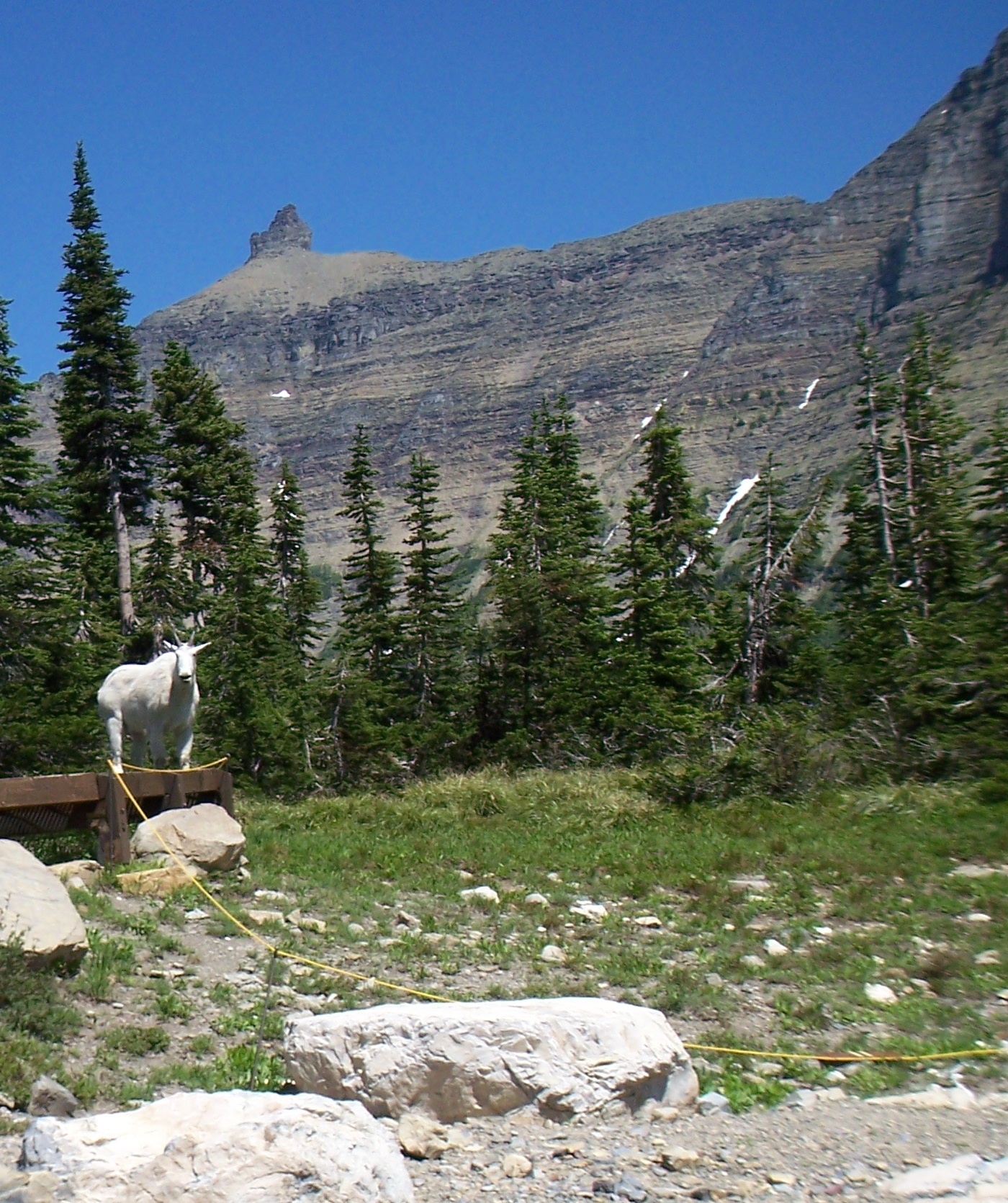
This one posed. You can see they are somewhat comfortable with humans being around, but I still think of them as wildlife. It almost looked a statue.

Goat 3

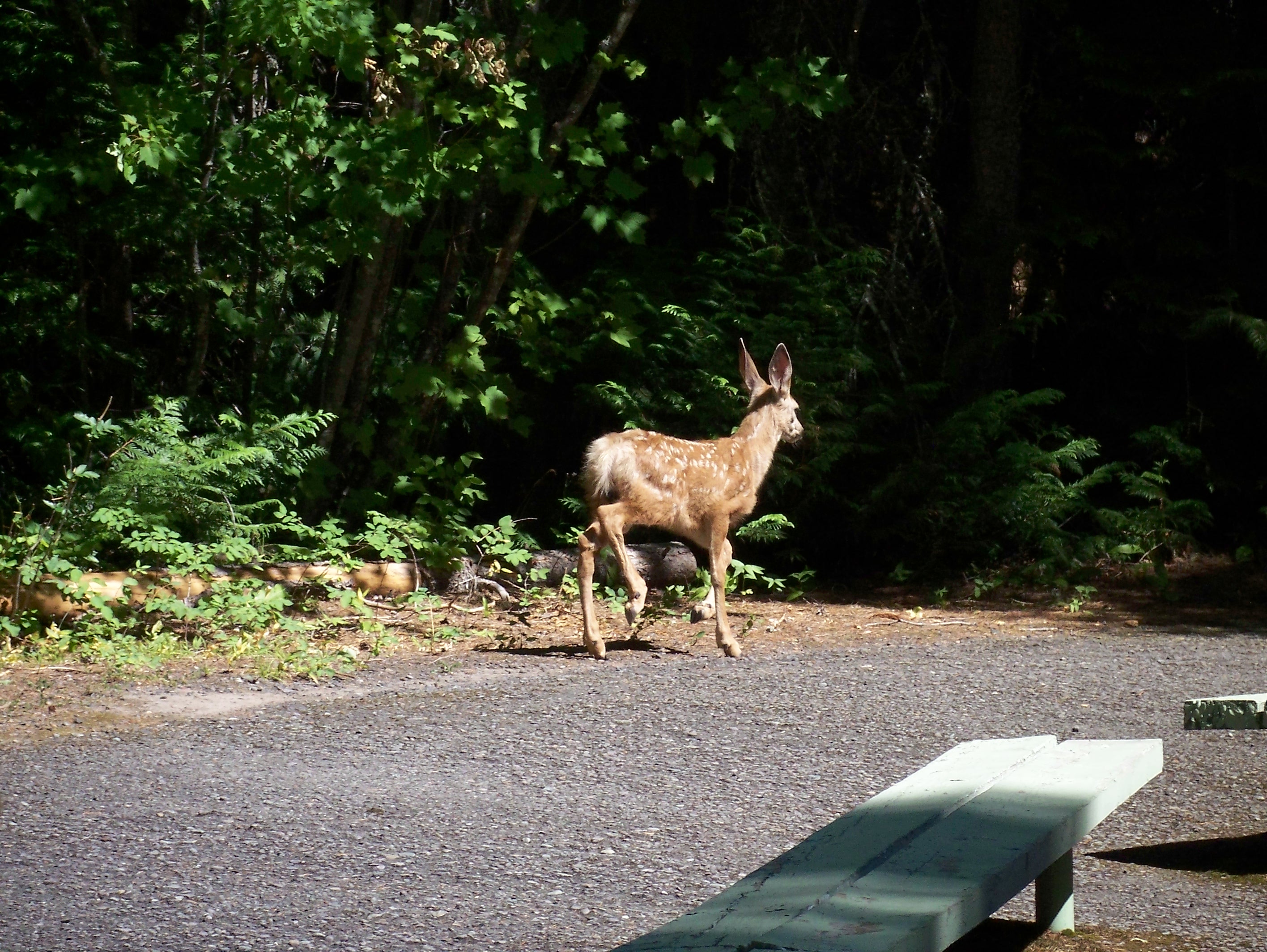
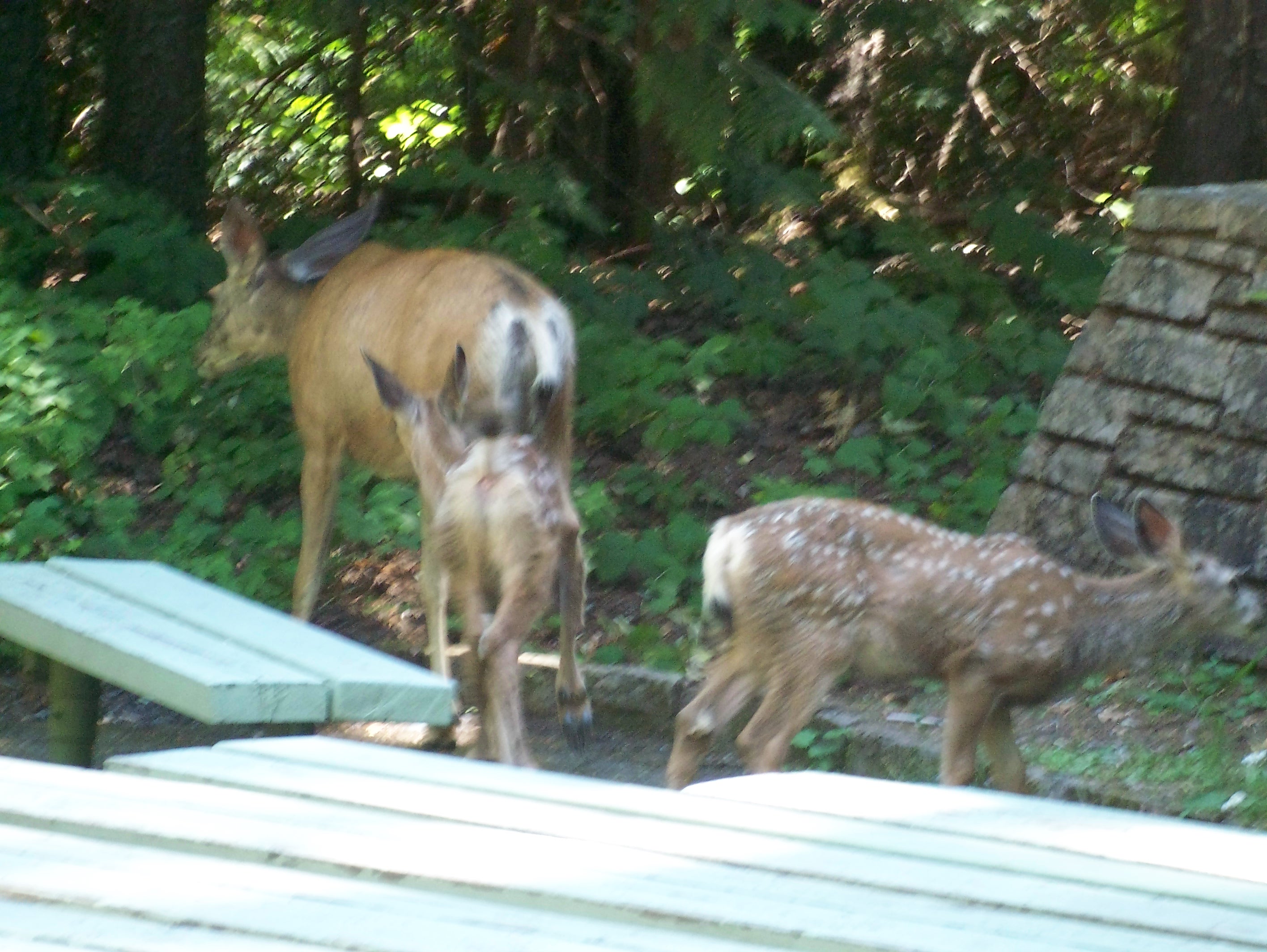
As we hiked, I came around a corner and this spring’s fawn was separated from its mother and twin. I don’t know who was more surprised: him/her or me. Initially, we were 4 or 5 feet apart. Kathy had her camera and got great pictures. The background is part of an amphitheater and the deer were grazing around it.

Deer 1

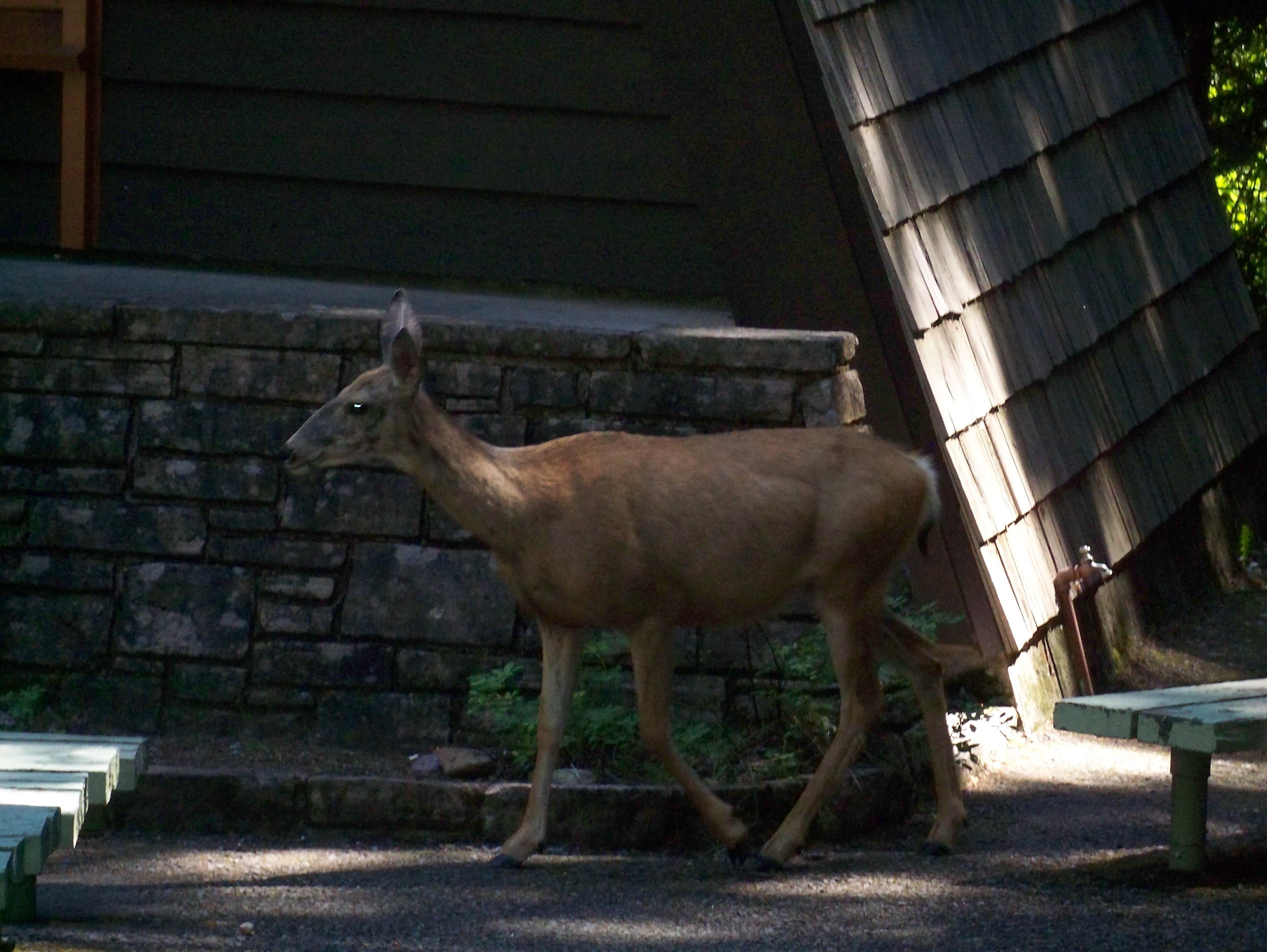
The doe and another fawn were across the amphitheater, but I had inadvertently blocked the path for the first fawn to rejoin them. They made a kind of whistling sound to each other and the doe never appeared overly concerned. She actually grazed on the trees and waited patiently.

Deer 2

The separated fawn took off along a path that was across the clearing.

Deer 3

The fawn re-appeared across the amphitheater and they went off. It seemed like it was all in day’s work for them.

Deer 5

Those Images

Kathy went shopping and bought a book. It sounds mundane, but, when she opened the book, she found a small piece of paper with this Yeats‘ poem written on it. We are headed home tomorrow. We will take a few days, travel into Montana, across Glacier National Park, and head north. We will see some of the wild on that trip. I doubt lions will appear but a mountain lion might show up and maybe an eagle on the wing. Certainly, we find better exercise in sunlight and wind.

On the back or it might be the front of the slip, someone wrote the Gandhi quote: “Be the change you wish to see in the world and PEACE”.

What if I bade you leave

The cavern of the mind?

There’s better exercise

In the sunlight and wind.

I never bade you go

To Moscow or Rome.

Renounce that drudgery,

Call the Muses home.

Seek those images

That constitute the wild.

The lion and the virgin,

The harlot and the child.

Find in middle air

An eagle on the wing.

Recognize the five

That make the Muses sing.

Test

Kay Ryan wrote this deeply spiritual and moving poem. It has a Zen, mystical quality. I am sure there is Something or Someone holding everything together. When something disrupts the ocean of universal consciousness and it goes a little off course or yaws, we feel only the slightest pull. A larger energy field absorbs the drops and warps. The adjustments occur in ways so we are not tested beyond our limits and find a path to walk.

Imagine a surface

so still and vast

that it could test

exactly what

it set in motion

when a single stone

is cast into its ocean.

Possessed of a calm

so far superior

to people’s, it alone

could be assessed

ideally irascible.

In such a case,

if ripples yawed

or circles wobbled

in their orbits

like spun plates

it would be the law

and not so personal

that what drops warps

what warps dissipates.

Harrowing

Parker Palmer wrote this poem with double-meaning in the title. I can live life as a process which ravages, furrows, and scars m face. Living in the past does this. Life is harrowing that way. Or, I leave the travails of yesterday as humis or humility as a foundation for a new crop. I can turn soil, make it richer, and create a greener world.

The poem reminded me of Gadamer‘s concept of fused horizons which is emerging as a central concept in my journey. We can build on the past by using it, good and bad, as a way of making the future a better place. Today’s view; this moment is the place we find our way from.

The plow has savaged this sweet field

Misshapen clods of earth kicked up

Rocks and twisted roots exposed to view

Last year’s growth demolished by the blade.

I have plowed my life this way

Turned over a whole history

Looking for the roots of what went wrong

Until my face is ravaged, furrowed, scarred.

Enough. This job is done.

Whatever’s been uprooted, let it be.

Seedbed for the growing that’s to come.

I plowed to unearth last year’s reasons—

The farmer plows to plant a greening season.

Ars Poetica

My writing is one-dimensional now. I wrote a lot this week. I spend 15-30 minutes everyday free-writing and do more formal writing for classes and dissertation. Nothing has popped up for new poetry, but I feel that will change over the next week or two. Slowly, I am finding that creative, meditative space that poetry occupies and speaks when I am quiet enough to hear.

I read earlier today and came across this poem by Archibald MacLeish. I am unfamiliar with the poet or poem, but the lines about poems being silent and wordless make sense. It is sometimes in the spaces between words that we find the greatest meaning. Here I find my soul. In those moments of silence, regardless their length I am present and attentive.

A poem should be palpable and mute

As a globed fruit;

Dumb

As old medallion to the thumb;

Silent as the sleeve-worn stone

Of casement ledges where the moss has grown–

A poem should be wordless

As the flight of birds.

A poem should be motionless in time

As the moon climbs;

Leaving, as the moon releases

Twig by twig the night-entangled trees–

Leaving, as the moon behind the winter leaves,

Memory by memory of the mind.

A poem should be motionless in time

As the moon climbs.

A poem should be to:

Not true.

For all the history of grief

An empty doorway and a maple leaf;

For love

The leaning grasses and two lights above the sea–

A poem should not mean;

But be.

Mindful

I struggled for a few days with the overwhelming job, or so it seemed, of beginning to craft a purpose statement for the dissertation topic. Thankfully, my advisor told me to read and read and read the classics in education and the not so classic. I immersed myself in John Dewey, who I have read before, Alfred North Whitehead, who I had not read, and Ivan Illich, who worked with Paulo Freire. I am going to re-read Freire.

Last night, I fell asleep thinking about these people and woke up still thinking about them. As I got mobile, it dawned on me what happened and I recalled Mary Oliver’s beautiful poem. I don’t hold answers. I hold questions. Their eloquence lead me into life daily and the answers are often in the things I take for granted. I posted a re-worked purpose statement, based on just letting things percolate and doing some free writing, and one of my colleagues commented back that it was making more sense. Be mindful scholar.

Every day

I see or I hear

something

that more or less

kills me

with delight

that leaves me

like a needle

in the haystack

of light.

It is what I was born for–

to look, to listen,

to lose myself

inside this soft world–

to instruct myself

over and over

in joy,

and acclamation.

Nor am I talking

about the exceptional,

the fearful, the dreadful–

but of the ordinary,

the common, the very drab,

the daily presentations.

Oh, good scholar,

I say to myself,

how can you help

but grow wise

with such teachings

as these–

the untrimmable light

of the world,

the ocean’s shine,

the prayers that are made

out of grass?

Ask Me

Last night, I read, more like re-read, the first two chapters of Let Your Life Speak by Parker Palmer. I find it so interesting to read something for a second, third, or fourth time. I always discover something new in the process. It might only be a word, a sentence, a turn of phrase, but it provides new insight. As I read last night, it was no different. Parker included this poem by William Stafford. I had to read several times, because the words are not in perfect order, but life is not either.

Parker Palmer is on Facebook and I follow him. Today, he posted a July 4th tribute with Leonard Cohen performing Democracy on Youtube. The link is Parker Palmer for those interested.

I am in Spokane and somewhat settled in. As I struggle a bit with making sense of my dissertation topic, this poem makes perfect sense. It is precise and piercing in its questions and somewhat disquieting. In those moments of perturbation, life makes more sense and I learn.

Sometimes when the river is ice ask me

mistakes I have made. Ask me whether

what I have done is my life. Others

have come in their slow way into

my thought, and some have tried to help

or to hurt: ask me what difference their strongest love or hate has made.

I will listen to what you say

You and I can turn and look

at the silent river and wait. We know

is there, hidden; and there

are comings and goings from miles away

that hold the stillness exactly before us.

What the river says, that is what I say.