Category Archives: Writing

As Relevant as Ever

I am headed to New Zealand to present at an International Peace Conference and have been thinking of resistance so needed today. Music, poetry, and art play a significant role in resisting violence, including that imposed by governments and other institutions that are supposed to protect.

One of the first albums I bought was The Freewheelin’ Bob Dylan. I was about 16-years old and I still have the album. It is iconic with songs like Blowin’ In the Wind (melody based on a spiritual called No More Auction Block), Masters of War, A Hard Rain’s a-Gonna Fall, Oxford Town about resistance to desegregation in the American South, and Talkin’ World War III Blues. Dylan covered Lead Belly’s version of I Shall Be Free.

Talkin’ World War III Blues is my favourite song on the album. Dylan was at his best in the spontaneity of the song and it fits with the talking blues genre. In I Shall Be Free, he sings about making love to Elizabeth Taylor. Even in the early 60’s a was a way to avoid the reality that hung over the world was to turn to popular culture as a distraction from the threats of nuclear war.

About the same time, I wrote a poem in school. I know Mr. P. writes poetry is hard to imagine for my students. The poem was about the tragedy of war and it stole lives in absolute ways whether through death or through the physical and psychic damage done to those who were forced into service in a war they did not understand. Many of those who died or were left deeply scarred with the trauma of war were from the African American population, which was about 12% of the American population at the time. Their deaths alone represented about 25% of the casualties, so statistically overrepresented. The personal narratives within their families and communities can not be quantified.

The poem I wrote as a teenager is below.

Win or Lose: What Difference Does it Make?

A game–

Darwin misunderstood,

No great thing to win.

War and it language!

Bells ringing hollow,

Men, women, children gone!

Woe! vanquished losers and winners;

Humans, vanquished in every sense–

Thriving on dividing.

Resenting conquerors,

Rebuilding ruins–

On countless graves.

Morally rudderless,

Blaming the fallen,

Beggaring humans.

Homes on streets,

Hollowing souls–

What war brings?

Innocence dying–

Prryhric victories,

What war brings?

Comrades fallen,

Enemies vanquished–

Proving nothing.

Will we learn?

I pray

For human survival.
Prayer of St. Francis

Today is our wedding anniversary. The Prayer of St. Francis has a special place in our family. We read it at our wedding and used it at celebrations of life. As well, I refer to it in my academic writing and how it guides my life and teaching.

I remember our wedding day clearly. We had interesting happenings. A friend got off the bus in a town an hour from where we the wedding. Kathy drove to get him. My mother kept telling us we couldn’t see each other on our wedding day. It is supposed to be bad luck. The luck has been good as we are together and enjoy each other’s company. I told my mom we had to talk to figure out who was driving to pick up our friend.

Sitting in the front pew of the church, I heard the organ play the wedding song and rose, shaking like a leaf. When I turned to look at Kathy and her dad, the trembling stopped and I understood this was the right person for me.

Lord make me an instrument of your peace,
Where there is hatred let me sow love.
Where there is injury, pardon.
Where there is doubt, faith.
Where there is despair, hope.
Where there is darkness, light.
And where there is sadness, joy.

O divine master grant that I may
Not so much seek to be consoled as to console;
To be understood as to understand;
To be loved as to love
For it is in giving that we receive-
And it’s in pardoning that we are pardoned.
And it’s in dying that we are born to eternal life.
Amen.

Kathy and I enjoy music. Over the years, we attended numerous concerts. Our tastes are eclectic, covering a broad range of genres. We saw John Prine before he passed away. He was a singer you could not put in a box with his blend of quirkiness and socially relevant songs. One song we enjoy is this tongue-in-cheek duet performed with Iris Dement. The night we saw him he performed both male and female parts of the song, adding to the tongue-in-check nature. I don’t take the song to seriously. It is meant to be fun-filled.

In spite of ourselves, we can find life-long happiness and love.

Peace Education

Poverty is the [parent] of crime” – Marcus Aurelius

When I completed my PhD, I was uncertain where I would go next. I thought I would write and present about what becoming a teacher meant, after all that was the subject of my dissertation. As good luck would have it, I meandered in a different direction, teaching a philosophy of education course and supervising student-teachers. As well, I began to write and present, initially with colleagues and more on my own, about what we call an andragogy of hope. This morphed re-imagining education, including how we educate aspiring teachers and how they continue to educate themselves once in the profession. Now, I am combining hope, peace, and holistic education under one umbrella. They are interrelated and, in my mind, essential to the future of a world for our children, grandchildren, and future generations.

When I enter K-12 classrooms, and for that matter post-secondary ones, it strikes me how little has changed and what has changed is more a regression than a moving forward. Yes, we have different tools in our classroom, but students often sit in rows, teachers deliver from the front, and there is little true deep dives into curricular topics, exploring the contours of their topography. Teachers tells me they cannot touch certain topics as a small slice of their community will shout others down. Parker Palmer says classrooms should be spaces where tensions, holding our differences hospitably. In other words, they would be safe spaces where dialogue, deep listening, and civil discourse emerge.

Imagine, if teachers educated themselves to open up hospitable spaces, where listening to beloved others was essential. John Lennon wrote and sang “You may say I’m a dreamer/But I’m not the only one/I hope someday you’ll join us/And the world will be as one.” Peace begins as a dream, which suggests it is situational and contextually bound, without giving up its universal elements. Systems theory proposes each person, each classroom can be a node, reaching out to others in a the network. Furthermore, this is trans-disciplinary, which suggests soloed classrooms and teaching one subject at a time is passe.

I understand inertia of the status quo and wishes of ideologues, politicians, bureaucrats, technocrats, etc. in ivory towers act as barriers to transforming education at all levels. It is actually dangerous work, which means teachers at all levels need to be expert in ways they may not have imagined. Dangerous work means being creative:

“Perhaps there is no peace for an [teacher] other than the peace found in the heat of combat. But now the [teacher] is in the amphitheatre. Of necessity, [their] voice is not quite the same; it is not nearly so firm. To create today means to create dangerously” — Albert Camus


This song is from a collaboration between Maria Muldaur and Women’s Voices For Peace Choir.

Tourtière – French Canadian Meat Pie

I mentioned the tourtière we eat at Christmas. Kathy makes it with store-bought pie crusts, which works well.Tourtière uses various ground meats. Over the years, we had ground beef, pork, turkey, and people who hunt would use ground wild meat. Depending on the year, Kathy will add gravy to the ground meat to bake in the pie. It depends on what we have in the fridge and you could use broth. If a person uses lean meat, it moistens it. This year we will add gravy from our Thanksgiving turkey over the pie after it is made. The other unique feature to tourtière is it is often made with mashed potatoes mixed in with the meat, usually with various vegetables that have been simmered in a broth. We eat a lot of sweet potatoes so that is another alternative to mix in.

The original tourtière was made with ground veal, which is quite expensive. When my mémère (grandmother) and pépère (grandfather) moved to Alberta to homestead 100+ years ago, they modified the recipe to use what was available and least expensive. The latter included shipping meat that got a higher price. They would have used wild meat when they could.

½ lb ground lean beef

½ lb ground pork

  • 1 lb meat total per pie

1/3 c chopped onion

¼ c water

1 tsp salt or to taste

¼ tsp pepper or to taste

1/3 c chopped celery

2 pie crusts – make your own or purchase ready-made

Brown meat and vegetables, add salt, pepper, additional spices if desired.

Cool mixture as you don’t want to melt the fats in the pie crust.

Pour meat mixture into pie crust, cover with 2nd pie crust, seal edges, make slits for steam to escape.

Bake in hot oven (425F) 20-25 minutes until browned.

Baked tourtière can be frozen and reheated before serving.

Alternate ingredients: other cooked vegetables such as chopped carrots, green peas, potatoes, sweet potatoes. Some like to add gravy so pie is more moist.

I want to leave you with the following message from Dietrich Bonhoeffer‘s Advent Sermon “The Coming of Jesus into our Midst.” It reminds me of the Christmas message.

…we are faced with the shocking reality:
Jesus stands at the door and knocks, in complete reality.
He asks you for help in the form of a beggar,
in the form of a ruined human being in torn clothing.
He confronts you in every person that you meet.
Christ walks on the earth as your neighbour as long as there are people. He walks on the earth as the one through whom
God calls you, speaks to you and makes his demands.
That is the greatest seriousness and the greatest blessedness of the Advent message. Christ stands at the door. Will you keep the door locked or open it to him?

For those who have followed my blog for a while, you might be aware I am big John Prine fan. We saw him in concert and I have many of his songs on my I-Pod. Yes, I still use an I-Pod. This is his song Christmas in Prison.

The Ordinary in the Extraordinary

It has been awhile since I lasted posted. This wonderful post by Purple Rays came through my feed and it was an opportunity to share it and get re-started.

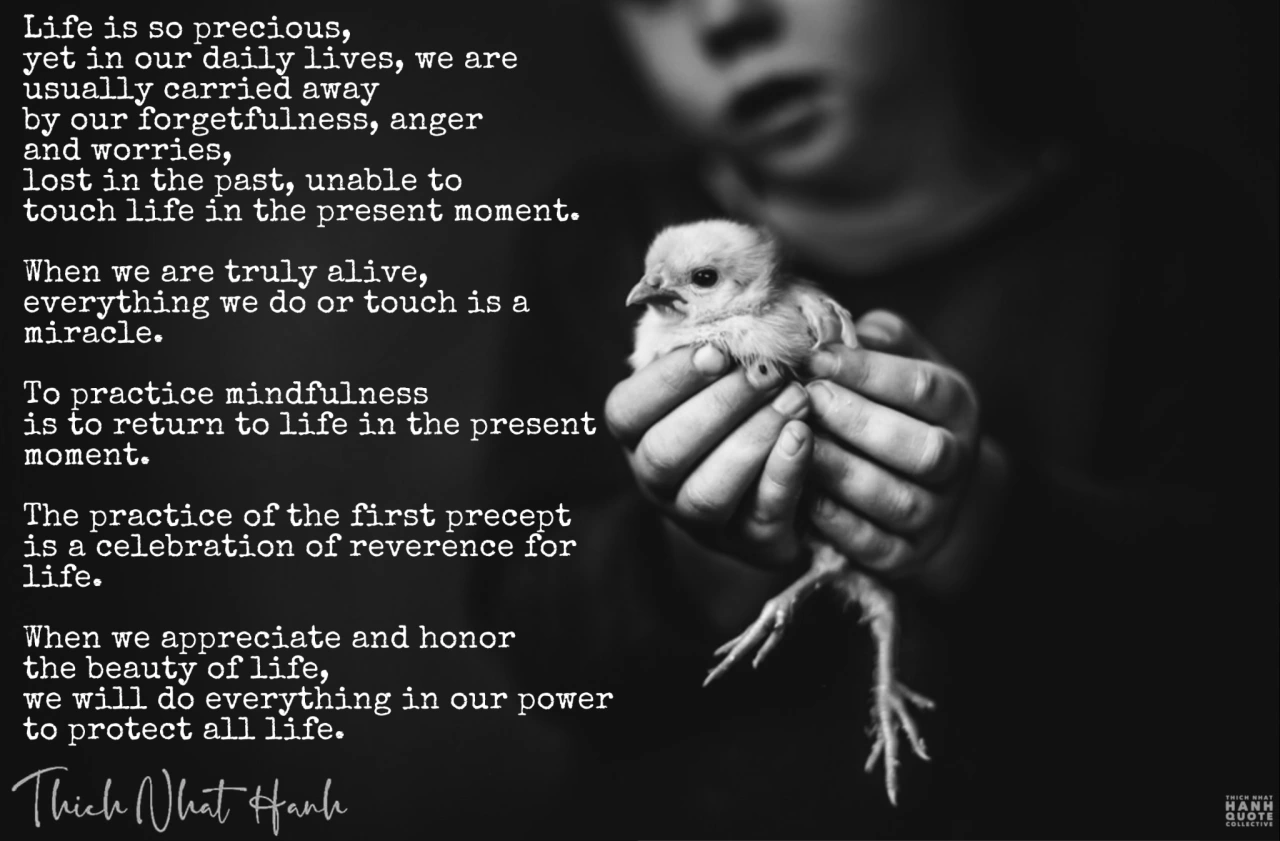
Although the quote is one from Mahatma Gandhi, it reminds me of many by Thich Nhat Hanh. Sometimes, I get busy and forget to pause and take in the world as it is in all its radiant beauty. Or, I forget to be grateful for what I have in life. To be mindful and aware of what brings me gratitude is important. It includes a long-term marriage, children who grew up and found their way, completing a PhD, publishing peer-reviewed articles and poetry, etc. Or, it is as simple as the small, perhaps tiny is a better word, garden in the backyard. It is not there to save money. I planted it to provide fresh tomatoes, basil, and strawberries, along with Kathy’s heritage rhubarb plant. Most mornings, I get check to see what is ripe and ready, I water, and notice the flowers that bring pollinators to the yard. It is less about the big accomplishments and more about the small things that go unnoticed in the shadows of those supposedly bigger and better accomplishments. Thich Nhat Hanh has a lovely quote reminding me to stay in the present , to be mindful of and appreciate everything I do or touch as a miracle.

For those who follow my blog, you may know I love Mary Oliver and her poetry. There is a mystical quality to it. Mystical is taking in the world and life in a subjective way, as a living subject. Rather than as objects to be probed, measured, and analyzed, we explore them and we use poetic terms to describe. Mary Oliver does this in The Summer Day, where she describes how a grasshopper captures her attention. She attends to it and minds its actions and ways of just being in the world–just being a grasshopper. I love the questions Mary Oliver asks in her poetry.

Who made the world?

Who made the swan, and the black bear?

Who made the grasshopper?

This grasshopper, I mean—

the one who has flung herself out of the grass,

the one who is eating sugar out of my hand,

who is moving her jaws back and forth instead of up and down—

who is gazing around with her enormous and complicated eyes.

Now she lifts her pale forearms and thoroughly washes her face.

Now she snaps her wings open, and floats away.

I don’t know exactly what a prayer is.

I do know how to pay attention, how to fall down

into the grass, how to kneel down in the grass,

how to be idle and blessed, how to stroll through the fields, which is what I have been doing all day.

Tell me, what else should I have done?

Doesn’t everything die at last, and too soon?

Tell me, what is it you plan to do

with your one wild and precious life?

Happy New Year – 2023 with Hope

2022 was an eventful year in terms of writing and publishing. It was also surprising as I the two published pieces, a book chapter and a peer-reviewed article, were about hope and had a spiritual component to them. I think hope is a phenomenon we each want in our lives. Those who have followed the blog for a while may recall that The Peace Prayer of St. Francis is an important part of my family’s life. We recite it at various ceremonies when we come together and Kathy and I have a small plaque my mother gave us many years ago.

The line that resonates most with me is “where there is despair hope.” I used the line in the introduction of a book chapter I co-authored. It commemorated the centenary of Paulo Freire‘s birth. Many would associate him with critical pedagogy and his seminal book, Pedagogy of the Oppressed. Later in life, he revisited many of the themes from this book in one called Pedagogy of Hope, which we used as our primary reference. Without hope, we are left with little. We are left with despair.

For me, Emily Dickinson describes the spiritual and paradoxical essence of hope in the following poem:

“Hope” is the thing with feathers –

That perches in the soul –

And sings the tune without the words –

And never stops – at all –

And sweetest – in the Gale – is heard –

And sore must be the storm –

That could abash the little Bird

That kept so many warm –

I’ve heard it in the chillest land –

And on the strangest Sea –

Yet – never – in Extremity,

It asked a crumb – of me.

Hope is spiritual in that what we each hope for can animate our spirit and make our lives more complete. We hear it song most clearly in moments of silence and stillness as we turn inward to listen to the tune without words. Hope is paradoxical as it is fragile and exists in the Gale and storm that makes it sore. We have to be alert to the challenges we face in bringing hope to life. Perhaps it is best expressed in moments where it intersects with the hopes of others who we come in contact with.

My taste in music tends to the eclectic and non-mainstream. Several years ago, I heard Michael Franti on a small radio station (they still exist) I listen to and loved his messages. His songs embody hope, the role the heart plays in it, the reality of hard times, and how we need others to live with hope.

Several years ago, we travelled to Jasper National Park and went on a day tour. As we passed the trees in this picture, the guide told us the tall one was about 300 years old. Due to the difficult conditions, the tree did not realize its fullest height. Despite the challenges, it still grew. Its growth is like hope.

High recognition . . . Learn from the lotus flower

Jonathan provides short, insightful quotes with complementary images. This particular post brings to mind Thich Nhat Hanh’s book No Mud, No Lotus.

Without the mud, there can be no lotus. Too often, we try to avoid the mud and challenges in life. The mud can help ground us in those moments as we take time to rest and reflect. Laozi offers this advice in to deal with life’s challenges: “Do you have the patience to wait/Till your mud settles and the water is clear?/Can you remain unmoving/Till the right action arises by itself?”

Too often, the busyness of life sweeps us away in the rush of its current instead of pausing in the midst of the storm to regain our footing and following the example of nature. There is a universal quality in remaining grounded in the present. Matthew 6:28 reminds us  “Therefore do not be anxious about tomorrow, for tomorrow will be anxious for itself. Sufficient for the day is its own trouble.”

Even the most pressing issues of our time require us to think about what we can do in our little corner of the universe each day, each moment. We should each remember, if we do what we can in our corner of the universe, we are interconnected or, as Thich Nhat Hanh might say, inter-are with each other.

Apache Blessing Prayer — Dawn Pisturino’s Blog

Apache man, 1903, by Edward S. Curtis Apache Blessing Prayer May the sun bring you new energy by day. May the moon softly restore you by night. May the rain wash away your worries. May the breeze blow new strength into your being. May you walk gently through the world and know its beauty all […]

Apache Blessing Prayer — Dawn Pisturino’s Blog

Dawn provides many beautiful posts and I thought this was one that was appropriate as we change the calendar from 2021 to 2022. It reminds us of the how we are interconnected with each other and Mother Earth. Thich Nhat Hanh refers to this as inter-being and we are inter-are with all matter, living and non-living.

As we begin and end each day, we might think in terms of how nature provides energy, restores us, washes away our worries, and blows new strength into our very being and brings new life to our spirit. For this to occur, we need to walk through the world gently and be mindful of the beauty surrounding us.

As we move into the new calendar year, I leave you with a Maya Angelou quote to help guide you through each day of 2022:

The Real Riches — Find Your Middle Ground

This poem from Danna Faulds is a perfect reminder for what Summer offers. Photo by Pixabay on Pexels.com My wealth is wonder. True abundance is the delight I feel on summer nights as fireflies rise from the grass and Orion strides across the sky. I measure my wealth in birdseed and hummingbird feeders, in the […]

The Real Riches — Find Your Middle Ground

Val shares wonderful posts and often includes poems by Danna Faulds. This particular poem caught my eye with words wonder and abundance. Wonder is about being amazed by the world in unexpected ways. It is about experiencing the extraordinary in the ordinary. Wealth is not about material wealth. It is about feeling whole and well, It is about sharing with others what makes us feel a crumb of joy, as Mary Oliver would say.

In the ordinary moments that reveal their extraorindariness, we discover abundance. There are ineffeable, intangible qualities to abundance understood this way. Despite these qualities, abundance brings joy, which is not to be treated as a crumb per Mary Oliver.

I leave you with a Mary Oliver poem, Don’t Hesitate, which echoes the Danna Fauld poem about where I discover my riches and wealth.

If you suddenly and unexpectedly feel joy,
don’t hesitate. Give in to it. There are plenty
of lives and whole towns destroyed or about
to be. We are not wise, and not very often
kind. And much can never be redeemed.
Still, life has some possibility left. Perhaps this
is its way of fighting back, that sometimes
something happens better than all the riches
or power in the world. It could be anything,
but very likely you notice it in the instant
when love begins. Anyway, that’s often the case.
Anyway, whatever it is, don’t be afraid
of its plenty. Joy is not made to be a crumb.

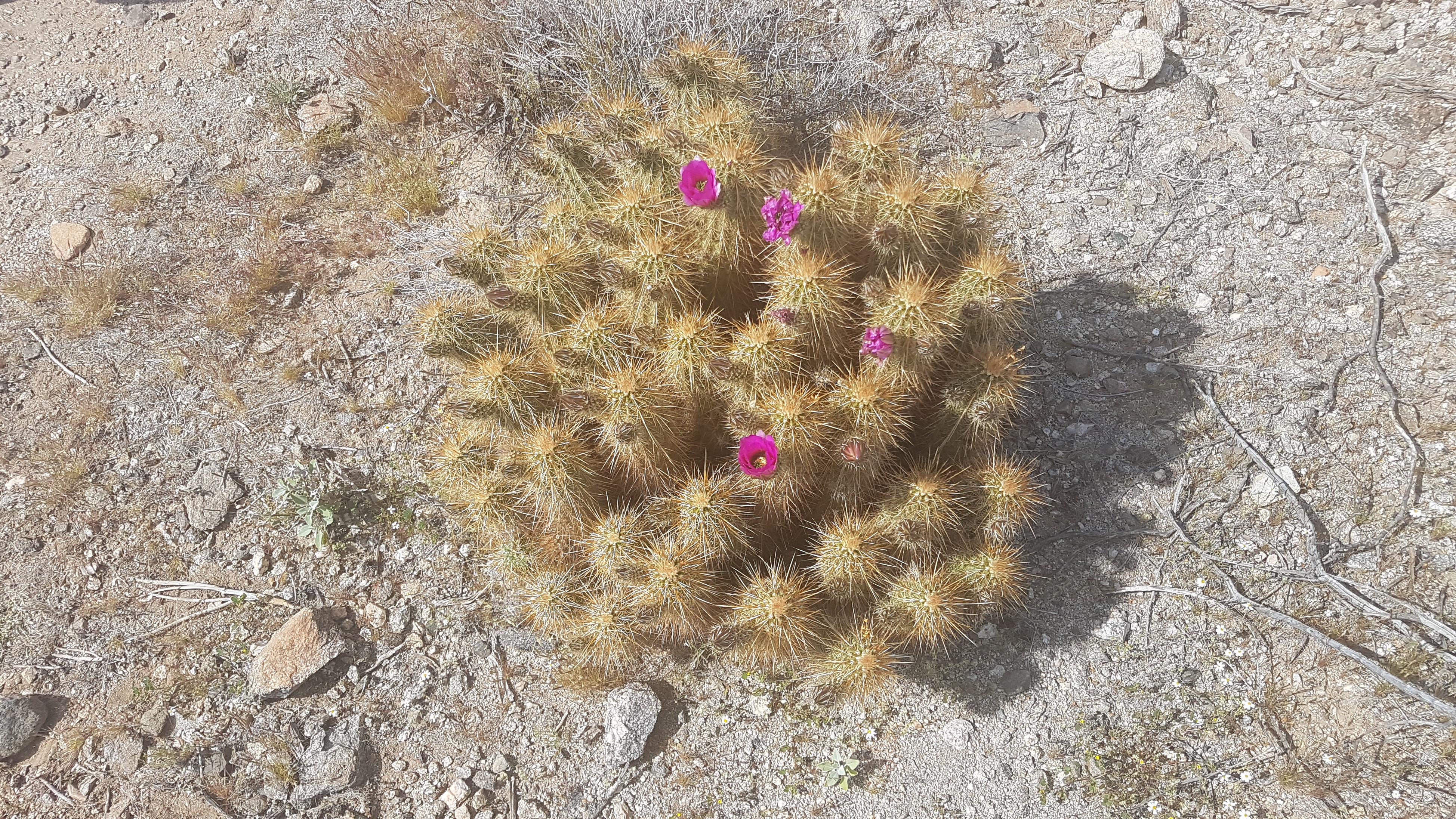
The last time we were in Pheonix we walked the paths in a local park. We noticed this cactus beginning to bloom the first day and stopped each day to check on its progress. It provided joy and abundance just by sharing with us.

By the last day, it had several flowers. Nature worked its magic.

World’s first emergency number — sloppybuddhist

According to Buddha Be patient. You’ll know when it’s time for you to wake up and move ahead. i fell backi lost my trackas my chin sagsand my eyes go blacki want all my senses back *** a day or so ago South Thompson River Valley, July 2021

World’s first emergency number — sloppybuddhist

I have followed Hedy for some time, enjoying her quotes from The Buddha and accompanying photography and poetry. She playfully entitled her about page Nearly Me and describes what it means to be a Sloppy Buddhist. We are always becoming, partially able to follow Buddhist precepts in the process of becoming, and incomplete in how we are to be defined.

The post reminded me of poem, Imperfection by Elizabeth Carlson, in Teaching with Fire (Edited by Sam Intrator and Megan Scribner). The poem was written as Elizabeth Carlson who died at a young age. Perhaps it was that experience, which allowed her to grow to love her imperfections. Despite the sadness, there is a playfulness in the poem e.g., learning to purr as she lays under her cat.

I am falling in love
      with my imperfections
The way I never get the sink really clean,
forget to check my oil,
lose my car in parking lots,
miss appointments I have written down,
am just a little late.

I am learning to love
      the small bumps on my face
      the big bump of my nose,
      my hairless scalp,
chipped nail polish,
toes that overlap.
Learning to love
      the open-ended mystery
            of not knowing why

I am learning to fail
      to make lists,
      use my time wisely,
      read the books I should.

Instead I practice inconsistency,
      irrationality, forgetfulness.

Probably I should
hang my clothes neatly in the closet
all the shirts together, then the pants,
send Christmas cards, or better yet
a letter telling of
      my perfect family.

But I’d rather waste time
listening to the rain,
or lying underneath my cat
     learning to purr.

I used to fill every moment
     with something I could
          cross off later.

Perfect was
     the laundry done and folded
     all my papers graded
     the whole truth and nothing      but

Now the empty mind is what I seek
      the formless shape
      the strange      off center
      sometimes fictional
                                 me.

The quote Hedy used was one about being patient and realizing we will each understand when it is time to wake up and move ahead. She shared some images from nature and they reminded me of the passage from Mattew 6:28-29: “Consider the lilies of the field, how they grow, they neither toil nor spin, yet I tell you even Solomon in all his glory was not arrayed like one of these.” Nature understands the process of patience and just being, waiting to awaken and move forward at the right time. Too often, we do not show ourselves the patience we need to grow and be ready to move forward.

I leave you with the following video by Seasick Steve. That is his his stage name and that and the song share a sense of playfulness in them, too.