Character of Teaching

While having tea in a small coffee shop I inhabit, I jotted down the beginnings of a poem.

A phrase that repeated itself in my dissertation and the interviews was “differences make a difference.” When I began teaching, people asked “what made me go into teaching, particularly at 32 years of age.” It was the sentiment that I might make a difference, maybe not for every student, but for some. It reminds me of the Crosby, Stills, and Nash song: Teach Your Children Well, but it is more than teaching. It is serving them and whatever I do well.

Someday, whether we are teachers or not, we feel a desire to be lost. Responsibilities weigh on us whether we are parents, at our work, partners in a relationship, etc. In our relationships with the weight of responsibilities, something calls us each back. It is more of a whisper. It can only belong to each of us. Teaching was this way for me.

I experience a desire to be lost,

Weighing down on me,

Responsibilities cloak me like a vapour

Covering me with their many coats,

They arrive without being asked.

From the multitude, one desire arises;

A clarion call from the cosmos,

It carresses my soul;

It whispers “be useful and kind.”

A flower sharing its pollen,

Spread on the wings of others;

Teach what is possible–

What is possible of each of us?

Save them from glory seekers and profiteers;

Gently, send them away

Pollinating a new generation,

Flowering anew with compassion,

Rejoice as they float around the corner,

Knowing not what they will sow,

Trusting your character.
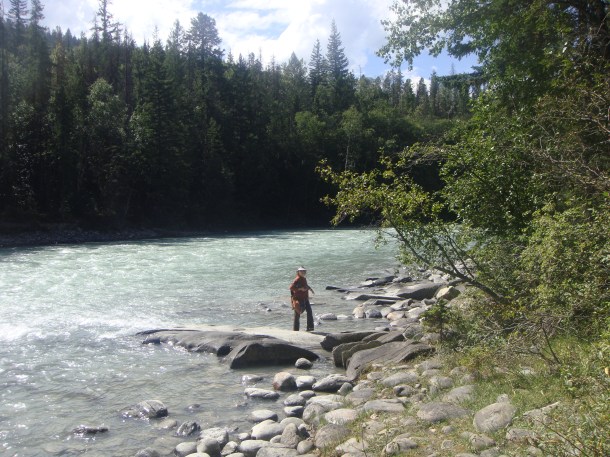
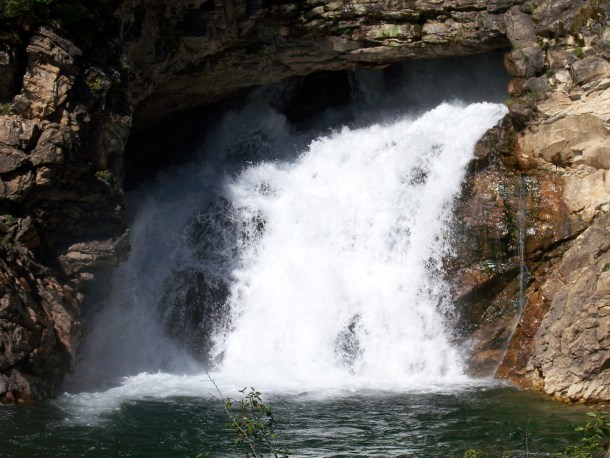
I took this picture on the upper reaches of the Fraser River. Around the corner from Kathy, the river narrows quickly and there is a waterfall.
There was a time I would reject those

Ibn ‘Arabi wrote “My religion is love. Whichever the route love’s caravan shall take, That shall be the path of my faith.” He speaks of a journey and shared path.

I recalled the statement attributed to the German Lutheran pastor Martin Niemöller:

First they came for the Socialists, and I did not speak out—
Because I was not a Socialist.

Then they came for the Trade Unionists, and I did not speak out—
Because I was not a Trade Unionist.

Then they came for the Jews, and I did not speak out—
Because I was not a Jew.

Then they came for me—and there was no one left to speak for me.

When we reject others because of ethnicity, religion, skin colour, politics, gender, etc, we lose sight of what makes us human, our common humanity. This humanity is deeper than any of the markers we have that identify and group us.

Shunryu Suzuki compared mindfulness to a compassionate space that expands and contracts depending on the needs of the moment and the people we share that space. When we reach out to others, we acknowledge we are pilgrims on a shared journey where we speak for and on behalf of each other.

There was a time I would reject those
who were not my faith.
But now, my heart has grown capable
of taking on all forms.
It is a pasture for gazelles,
An abbey for monks.
A table for the Torah.
Kaaba for the pilgrim.
My religion is love.
Whichever the route love’s caravan shall take,
That shall be the path of my faith.

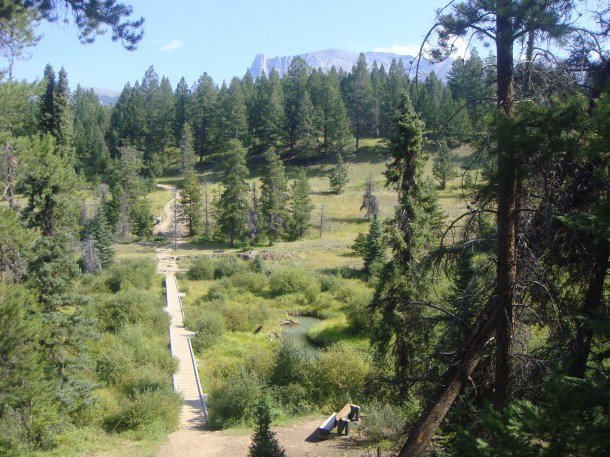
I took this picture in Jasper National Park. Kathy and I walked for several hours on this path just enjoying being there.

i thank You God for this most amazing

When I taught, I used e. e. cummings not just during poetry lessons, but to point out to students we did not always have to follow rules when writing. Following Cummings’ writing, I told students to get thoughts down on paper and we could edit later.

Cummings did not break rules of writing in his poetry. As we see in the first line of this poem, he capitalized two words.

I took the message as opening my eyes and ears to the world around me. As I walked this morning, I noticed birds chirping. One scrambled to hide under a truck parked along the street. In another place, there was a smell of something rotting, maybe someone fertilizing. The wind was chilly, but, when the sun emerged from hiding, i warmed me.

The sounds, sights, smells, touches of the world awaken my senses on those walks. They are like the flow of water I hear from a distance as I approach the river that tumbles over the edge. When I am mindful, I sense nature in a fuller way.

i thank You God for most this amazing
day:for the leaping greenly spirits of trees
and a blue true dream of sky; and for everything
which is natural which is infinite which is yes

(i who have died am alive again today,
and this is the sun’s birthday; this is the birth
day of life and of love and wings: and of the gay
great happening illimitably earth)

how should tasting touching hearing seeing
breathing any–lifted from the no
of all nothing–human merely being
doubt unimaginable You?

(now the ears of my ears awake and
now the eyes of my eyes are opened)

We took this picture in Yellowstone.

The Opening of Eyes

“Look deep into nature, and then you will understand everything better” — Einstein

Several years ago, Kathy and I were in Jasper National Park. We had gone for a drive and stopped at an overview of a valley. The rest area was quite large and we walked around it trying to get different views of the valley.

We noticed something at the far end of the area just on the other side of the low stone wall. We moved quietly towards it and realized it was a young elk, probably a cow. She sat almost perfectly still, posing for the camera.

David Whyte wrote this lovely poem about the opening of eyes. That evening, if our eyes had not been open, we would not have seen the elk quietly laying there with only her head showing above the wall. It begs the question: How much do I miss even with my eyes open? What solid ground do I miss as a I move through life with closed eyes?

The elk would have known we were there, but we took precautions to be still and quiet so to not stress her. The attention to quiet in a quiet place by a wild animal reminded me of opening my eyes to experience the world more fully.

That day I saw beneath dark clouds
the passing light over the water
and I heard the voice of the world speak out,
I knew then, as I had before
life is no passing memory of what has been
nor the remaining pages in a great book
waiting to be read.
It is the opening of eyes long closed.
It is the vision of far off things
seen for the silence they hold.
It is the heart after years
of secret conversing
speaking out loud in the clear air.

It is Moses in the desert
fallen to his knees before the lit bush.
It is the man throwing away his shoes
as if to enter heaven
and finding himself astonished,
opened at last,
fallen in love with solid ground.


Stones of Time

Source: Stones of Time

Olga provided great pictures of water and stones along with a haiku and two quotes. Today, I had a conversation about how do we change the world. I commented that we can only live in the here and now.

Confucius reminds us to do any change we begin with small tasks. When we are mindful and present living in the here and now, we understand the small tasks that call for our attention.

Pericles counsels us that others see and understand the imprint of our living in our actions. Our deeds reflect who we are to children, students, co-workers, neighbours, etc. That was part of our conversation today, as well.

What is most indelible are not our words, but our actions. Who am I as a person is a strong message.


The Difference Between Judging and Discerning

Source: The Difference Between Judging and Discerning

I am on the road for a couple of days, so I am not sure what I can post in terms of original material. I turn to pressing some great posts from others.

Val‘s post resonated with me, because judging and discerning were part of my dissertation. Hans-Georg Gadamer used these concepts in Truth and Method and they formed a significant part of my conceptual framework, literature review, and conclusions.

Gadamer proposed humans judge the world, ideas, and people as they encounter them. He used the term prejudice, which is a way of prejudging the world as we engage with it and others. In effect, there is a right or wrong way to engage. I used parentheses, because it has a negative connotation and to slow the pace of reading. It became (pre)judge and (pre)judice, which annoyed two of my committee members.

When we take more time to read text and (con)text, that which encircles us, we can (dis)cern and (in)form ourselves as we realize the world and people are complex. WE ask eloquent questions that do not have predetermined answers. We let the question frame dialogue with the world and others.

Val said “when we detach [ourselves] from the belief of good or bad, and discern life’s multicolors and shades, we find freedom beyond the rules and conditioning of the mind.” We let go of judgements of a world that is cast in binary choices of black or white, moving to complex (con)textual understandings (sub)ject to discerning and seeking new and continuous understandings. Ted Aoki contended “and” means more than the binary nature of “or.”

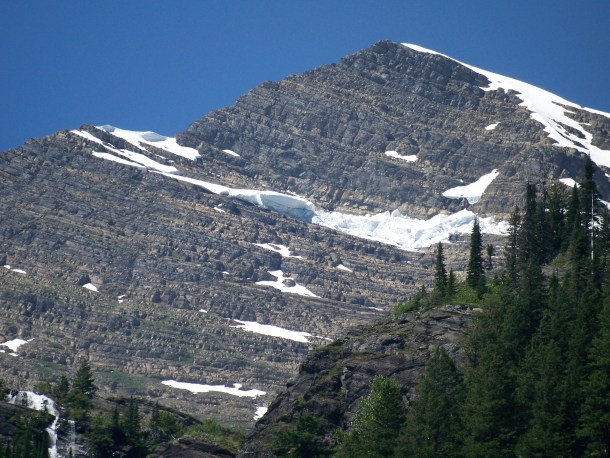
The Mountain Reveals Herself

One of the wonders of driving from Edmonton to Prince George is passing Mount Robson. For many years, we drove past it several times a year, hoping to catch a glimpse of the peak. On many days, clouds cover its peak entirely or in part.

Robson is the highest peak in the Canadian Rockies and the Fraser River headwaters the are in the provincial park bearing its name. We have walked along Robson River a ways, but the path goes for about 19 kilometres to a lake fed directly by a glacier.

An azure ceiling shines above,

Shimmering white lace spreads to meet it,

Rippling up from a white jacket;

A snowy zipper on a granite skirt;

Standing on guard below,

Silently an entourage of green warriors.

Gazing upwards,

Discovering her nobility and splendour,

She majestically reveals her grandeur–

To us mere mortals.

Yellowstone Elk

When we write, we write about things that we experienced and imagine. I have had the good fortune to come close to several large animals and took pictures.

This is a poem about an elk I saw in Yellowstone several years ago. I was able to get to about 30 feet (10 metres) of him, protected by the trees a bit. He impressed me with his calmness. He seemed totally unaware of me, but I am aware they are wild animals and I am the one out of my element.

Frank O’Hara wrote about common things in his poetry i.e. aspirin, lunch hours, and harmonicas. Sometimes, those things seem more exotic like this elk.

I picture him in my mind’s eye,

I recall the story.

Walking up the road

Down into a high-banked ditch.

Quietly, always trees between us,

I ease my way to this moment.

He appears unconcerned,

He does not lift his crown.

Cautiously, I approach,

After all, he is king here.

Head down,

He attends to his concerns.

I approach as close as I can,

One shot to recall I was there.

Imperfection/Perfection

Jacques Derrida wrote about deconstruction, which is about thinking in paradoxes. Instead of thinking about binaries i.e. perfection or imperfection, we consider the opposites as being part of each other. We are unable to think of one without the other and continuously deconstruct the meaning.

This continuous making of meaning is a hermeneutic task of  interpreting. Paul Ricoeur wrote about deep or radical hermeneutics, which considered context as part of the meaning-making process. Radical means to go the roots of something, so it requires the person look below the surface and turn things over.

I took a stab at writing a poem. after reading Mary Oliver today. I am reading a book of her essays called Upstream. She writes prose in a poetic way. I love walking in the mountains. Beauty and perfection of mountains reveal themselves in their lack of symmetry and imperfection. As well, there is always something hidden from sight, on the back side of a mountain and in the crevasses we cannot get close enough to.

Inspired by other’s words

I seek my own.

To discover meaning

I sit quietly and receive.

Meanings hold no meaning,

There can be no certainty.

Always something hidden,

On the backside, underneath.

Imperfection exists,

Making perfection complete.

It awaits my mindfulness,

The extraordinary in the ordinary.

I took this picture unsure of why at the time. Later, I used it in a presentation about environmentalism. Today, it adds depth and meaning to what I am trying to say.

Fog

Our spring is arriving in spits and spurts. There have been spring blizzards with accumulating snow. Another part of our spring is fog. It is unusual in Edmonton and could be due to the warming and cooling that has occurred.

In keeping with the slow arrival of spring and the fog, I wrote this poem. When we lived in Prince George, BC, fog was more common. The city is in a valley at the confluence of the Fraser and Nechako Rivers. Edmonton has fog around the North Saskatchewan River, but the valley is not the same.

In Prince George, if I drove out of the bowl, I looked back and saw the fog hanging over the city. Its lines were not clearly drawn, but blurred and uneven.

Look back into the valley’s bowl

Fog hangs;

The city evaporates,

Gray lines blur my vision.

The road ends at the next curve,

Below, the top of bridges;

Suspended on the still grayness.

Across the rivers,

Mills’ stacks and building tops peek out;

Heads hanging on a gray pillow,

Severed from the city’s body.

Image result for prince George bc and fog images

Image from A Place for Things is taken in Prince George.