Axe Handles

I mentioned in The Wild Rose I am reading Gary Snyder and Wendell Berry. I read this poem several times over the last few months trying to make sense of it. At first, I thought it was a personal and it begins that way. Gary Snyder describes his work teaching his son to throw an axe and shaping the axe handle to fit the work.

As I reflected on the poem, I realized it is about important traditions passed from parents to children. We hone and polish what we wish to retain forming the axe handle. It is a handle for us and our children which provides security as we polish and remove the unwanted.

Most of the time, we are unaware of the work we do without taking time and reflecting. In those moments, we realize what changes, what remains, and what is added knowing each generation makes its own adjustments.

To do it well, we mindfully and attentively approach the work remaining fully present.

One afternoon the last week in April
Showing Kai how to throw a hatchet
One-half turn and it sticks in a stump.
He recalls the hatchet-head
Without a handle, in the shop
And go gets it, and wants it for his own.
A broken-off axe handle behind the door
Is long enough for a hatchet,
We cut it to length and take it
With the hatchet head
And working hatchet, to the wood block.
There I begin to shape the old handle
With the hatchet, and the phrase
First learned from Ezra Pound
Rings in my ears!
“When making an axe handle
the pattern is not far off.”
And I say this to Kai
“Look: We’ll shape the handle
By checking the handle
Of the axe we cut with-”
And he sees. And I hear it again:
It’s in Lu Ji’s Wen Fu, fourth century
A.D. “Essay on Literature”-in the
Preface: “In making the handle Of an axe
By cutting wood with an axe
The model is indeed near at hand.-
My teacher Shih-hsiang Chen
Translated that and taught it years ago
And I see: Pound was an axe,
Chen was an axe, I am an axe
And my son a handle, soon
To be shaping again, model
And tool, craft of culture,
How we go on.

Love Letters to Malaysia Airlines

When I did my undergrad degree, I took a special education course. The major take away from the class was humans have more that binds them together, more in common than what makes us different. We lose track of this in our rush to hold onto ideologies and belief systems that deny our similarities. When we see the other as a neighbour, we can sustain breaths in an atmosphere without borders.

Luggage Lady/Shauna Dickinson's avatarLUGGAGE Lady

.

I wrote these words some time ago (http://luggagelady.net/2012/12/16/we-are-one/) but reposted the piece on my facebook page after last week’s heartbreaking airline tragedy. What happened from there was magical. A dear high school friend contacted me, asking to embed my poem onto her exquisite jewelry website. I replied with a resounding “YES!” and promptly added her lovely creation to a flight attendant networking site:  https://www.facebook.com/aflyguyslounge under “Love Letters to Malaysia Airlines.” (Please take a peek if you’re able as I believe the gracious sentiments from airlines worldwide will put a smile in your heart.)

Whether united by wings, artistic endeavors, or sheer compassion — we traverse this globe together — hearts overlapping… 💞

View original post

the thingness of things

The “thingness of things” caught my attention. Despite the language and words we use, there is always something hidden that is unknowable and unspeakable. Ted Aoki referred to it as the “isness” of a particular phenomenon. With humans we might call it their “whoness.” It is what captures our hearts in the work we do when we slow down enough to be in each ensuing moment. We never have the words to describe fully what that thing or person is. Usually, it is the part we love the most.

tiramit's avatardhamma footsteps

photo-8_Harnham

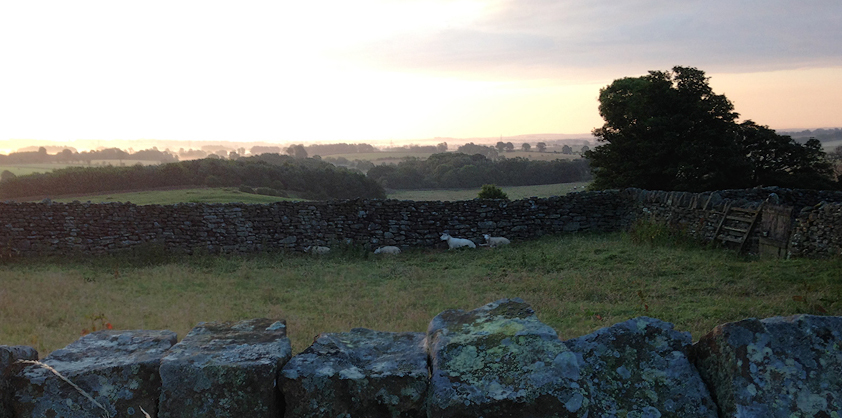
POSTCARD #81: NewcastleFive days in a Buddhist monastery in Northumberland, sitting meditation in the early morning and last thing at night. The photo above was taken at 5.15am. I wanted a picture of the sunrise and didn’t see the sheep in their places next to the wall – slightly startled by a human being leaning over into their enclosure and the click sound of the phone camera. They wait to see if he comes back, forget about it and only the fragrant grass remains… early on a summer’s morning.

After that I’m in the Dhamma Hall, sunlight shining through the roof windows on the Buddha statue, benign and welcoming. Monks with shaven heads sitting on the floor, faded tangerine-brown robes, flowers, incense and candles. Focused on the silence, watching the inbreath/outbreath, seeing the thinking process coming and going. Fragments of a thought pieced together from associated thoughts, memories…

View original post 412 more words

The Wild Rose

I am reading poetry and prose written by Wendell Berry and Gary Snyder. What links the writers, is a shared belief humans live in the world. This fits with my dissertation about pedagogy. Humans are relational and social. When we live relationally and socially, our senses and heart open up to the world differently than living as passive observers.

Relationships are risky. Sometimes it is tempting to step back at times and be outside relationships. In the analytic mind, there is more risk than we want. Literally and metaphorically there are rewards. Literally, when we are present in the world we see wild roses and other natural manifestations bloom. Metaphorically, we see relationships with spouses, children, friends, students, etc. unfold and blossom like wild roses Wendell Berry mentions.

When we are in relationships, there is pleasure and pain mixed. Thomas Merton said we call it falling in love, because it is hard work. When I think of the most wonderful (wonder-filled) occurrences in my life, it is the ones I worked hard at. I found comfort in the hard work even when it hurt. Being mindful and attentive to the blooming in our lives is an essential part of relationships we enter.

Sometimes hidden from me

in daily custom and in trust,

so that I live by you unaware

as by the beating of my heart,

Suddenly you flare in my sight,

a wild rose blooming at the edge

of thicket, grace and light

where yesterday was only shade,

and once I am blessed, choosing

again what I chose before.


* Lost – in the forest

Similar to Val, this is a poem that draws me back to think about it and its meaning. Parker Palmer used this poem in his work to help readers and participants turn inward finding their inner spirit and wisdom that is revealed in moments of quietness and stillness. When we look closely, are present and mindful in life, we see no two trees are the same. It breaks through a statistical malaise of sameness allowing us to see and celebrate the uniqueness that is right in front of us and within us.

Val T Boyko's avatarFind Your Middle Ground

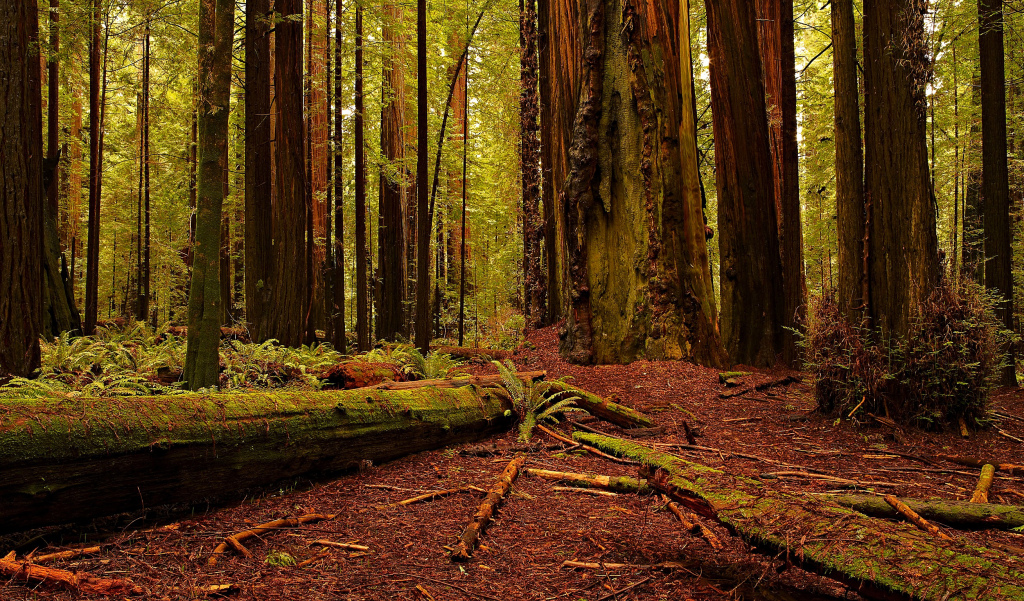
Forests, tress and finding ourselves are themes that keep calling for my attention. The redwoods in California have a soulful impact ❤

Redwood by Kevin Faber

Redwood photo by Kevin Faber

Lost – by David Wagoner

Stand still. The trees ahead and bushes beside you
Are not lost. Wherever you are is called Here,
And you must treat it as a powerful stranger,
Must ask permission to know it and be known.
The forest breathes. Listen. It answers,
I have made this place around you.
If you leave it, you may come back again, saying Here.
No two trees are the same to Raven.
No two branches are the same to Wren.
If what a tree or a bush does is lost on you,
You are surely lost. Stand still. The forest knows
Where you are. You must let it find you.

This is haunting and draws me back to it again and again…

View original post 21 more words

Morning Mourning Thoughts

Humans have a tendency to place themselves at the top of the natural pedestal. We fail to see ourselves as part of something and place outside nature and the world. The result is we end up outside relationships with each other. Ways of life as outlined in the wisdom ways such as the Tao, Christianity, Buddhism, Islam and many others point us in the direction we need to go in. We need to let go and want less. When we live in community and share, there is always enough.

The Loon

I woke up Friday morning at about 2:30 AM and could not get back to sleep. Finally, I turned the light on and read from a book by Jacques Derrida. It was not as exotic as hearing a loon out on the lake Mary Oliver writes about, but I found refuge reading about the Derridean concept différance.

The word is a deliberate misspelling of the word difference in French and the verb differer which means both to defer and differ. It is the space and time we defer to what and who is different as we encounter it and them. A person would not hear the difference (différance) in speech, but would see it in print. Still, if I did not know the word, I could easily not see the difference in writing.

Needless to say, I found my way back to sleep in the magical reading I found in the hour or so that lapsed. Today, I recalled the times camping, hiking, fishing, etc. where the loon called and I stopped wondering whether it spoke to me or someone else in that moment? Was it deferring to some difference I could not sense and imagine.

Not quite four a.m., when the rapture of being alive
strikes me from sleep, and I rise
from the comfortable bed and go
to another room, where my books are lined up
in their neat and colorful rows. How

magical they are! I choose one
and open it. Soon
I have wandered in over the waves of the words
to the temple of thought.

And then I hear
outside, over the actual waves, the small,
perfect voice of the loon. He is also awake,
and with his heavy head uplifted he calls out
to the fading moon, to the pink flush
swelling in the east that, soon,
will become the long, reasonable day.

Inside the house
it is still dark, except for the pool of lamplight
in which I am sitting.

I do not close the book.

Neither, for a long while, do I read on.

What Fills Your World?

What Fills Your World?.

There was no re-blog capacity on the site so I went with pressing it. The Inuit song/poem is a great piece and speaks to the smallness of our troubles and the awareness we need to recognize the small gifts we overlook which make life so extraordinary.

The Swedish proverb speaks to the song as in sharing we find more joy and less sorrow. Someone and something is always present with us even when they are not there physically.

Geography Escapes

Message in a bottle has the sounds of a cast-away poem. We can only hope someone finds the message in their ocean.

raechelshearttoheart's avatarraechelsheart

~

Message In  Bottle

Will It Go To Your Ocean

Sail Communique’

~

View original post

I Will Keep Broken Things

Alice Walker wrote what appears to be a long poem, but it is a musing we undertake daily, sometimes without knowing. What are we discarding? It could be, as she recites, we look at material belongings in our house. It could be, as she concludes, the spiritual and hidden phenomena make us who we are.

We are damaged goods, but it is our imperfections that make us perfectly who we are. We look at things in our houses, which to others seem damaged, and we recall stories behind and under the surface. The stories underneath, never fully tellable, reveal themselves in their incompleteness. Each story is sharable to some extent, but it is always our story. Like a tree, the story is revealed in the inner circles and, then, incompletely. In the end, the imperfections that make us perfectly who we are we keep because they enhance our beauty from within.

I will keep
Broken
Things:
The big clay
Pot
With raised
Iguanas
Chasing
Their
Tails;
Two
Of their
Wise

Heads
Sheared
Off;

I will keep
Broken
things:
The old
Slave
Market
Basket
Brought
To my
Door

By Mississippi
A jagged
Hole
Gouged
In its sturdy
Dark
Oak
Side.

I will keep
Broken
things:
The memory
Of
Those
Long
Delicious
Night
Swims
With
You;

I will keep
Broken
things:
In my house
There
Remains
An

Honored
Shelf
On which
I will
Keep
Broken
Things.

Their beauty
Is
They
Need
Not
Ever
Be
‘fixed.’

I will keep
Your
Wild
Free
Laughter
Though
It is now
Missing
Its
Reassuring
And
Graceful
Hinge.

I will keep
Broken
Things:

Thank you
So much!

I will keep
Broken
Things.

I will keep
You:

Pilgrim
Of
Sorrow.

I will keep
Myself.