Tag Archives: bell hooks

Educating as a Vocation of Hopefulness

I borrow a bell hooks’ quote for my title. Educating is offering a gift of hope, reminding me of a Mary Oliver poem about sorrow: “It took me years to understand that this, too, was a gift.” I learned teaching did not guarantee learning. A student needs to trust a teacher and the hope offered today may take years to realize if ever. The teacher, me, missed the mark and did not go back to understand what that meant

Michelle visits my blog from time to time and what she shares complements my posts. It has been awhile since I posted, so her recent visit led me to look at her posts again. I do regardless of intent to post. The Jane Goodall quote reminds me of one by Elie Wiesel: “The opposite of love is not hate, it’s indifference.” Apathy and indifference are synonyms, so the words are somewhat interchangeable.

Hope has been a frequent part of my recent scholarship and emerges from my life. The Prayer of St. Francis was a reading at our wedding and I have a simple plaque to remind me of what it means in my life. I turn to it in moments where doubt and despair find their way into my life to recite “Lord, make me an instrument of your peace … Where there is despair, hope.”

School can be an unhappy place for many students. In some schools, 60-80% of students are labeled as unwilling and/or unable to learn. When this happens, students lose hope, they become cyphers, and are erased or treated as disposable. Consider the language we direct at others in terms of illegal immigrants, illegal aliens, collateral damage, etc. as if humans are somehow illegal or, as casualties of war, are just a byproduct of being in the wrong place at the wrong time. It is an indictment of those who hold power and the “pathologies of power” (Paul Farmer) that exist in this world. Farmer wrote about his experiences treating Haitians with AIDS, including many women who contracted the disease due to macho posturing of men in a hierarchical society.

The rest of the Prayer of St. Francis is appropriate to reflect upon in considering offering love instead of hate, joy instead of sadness, and being instruments of peace to overcome the indifference and apathy that appears in the language of power and its pathologies. I am an imperfect person who hardly qualifies as a great Christian or Catholic, but the words of the Peace Prayer resonate for me in today’s day to offer hope to others through educating.

In my presentations and articles, I often share Emily Dickinson‘s poem as she reminds me how fragile hope can be. To be accepted, it needs to be offered repeatedly as an authentic gift.

“Hope” is the thing with feathers –

That perches in the soul –

And sings the tune without the words –

And never stops – at all –

And sweetest – in the Gale – is heard –

And sore must be the storm –

That could abash the little Bird

That kept so many warm –

I’ve heard it in the chillest land –

And on the strangest Sea –

Yet – never – in Extremity,

It asked a crumb – of me.
Hope

“Hope” is the thing with feathers –

That perches in the soul –

And sings the tune without the words –

And never stops – at all –

And sweetest – in the Gale – is heard –

And sore must be the storm –

That could abash the little Bird

That kept so many warm –

I’ve heard it in the chillest land –

And on the strangest Sea –

Yet – never – in Extremity,

It asked a crumb – of me.

Emily Dickinson wrote this poem and, although hope is fragile, it has the potential to always be with each of us. Even in the most difficult and inclement times, hope can keep us warm.

More than at any other time in my life, I try to find hope particularly in the small everyday things. I might call those things banal. I often use the opening lines of the poem in writing, publishing, and presenting, which is related to hopeful and nonviolent pedagogy and can be found at Academia.

When I look closely and am mindful of my words and actions, I find seeds of hope in my life that make a change for those closest to me and, in turn, hope they and I nurture those seeds. As bell hooks and Thomas Merton wrote, we enter into communion to take us beyond words and speech. It is an intimate and loving way of being together, sharing, and communicating.

Today, I read Carrie Newcomer‘s Substack essay and the lyrics to her song Sanctuary. What do we do in moments of despair. In a conversation with her friend and mine Parker Palmer, she received the following advice. There are times we march and speak out. Other times, we seek sanctuary, gathering with those we love and respect to share our stories and encourage each other. The word courage comes from the French coeur, meaning heart. What we do is heartfelt as we share the hurt we feel with each other in moments of compassion, the sharing of what we love and the suffering as we look at how it might be overturned. We are not alone. We need to lean on each other and take appropriate action and speak appropriate words even to those we disagree with. Take heart and retain hope in trying times by looking for those people and things that give us hope on a daily basis.

I leave you with Sanctuary by Carrie Newcomer.

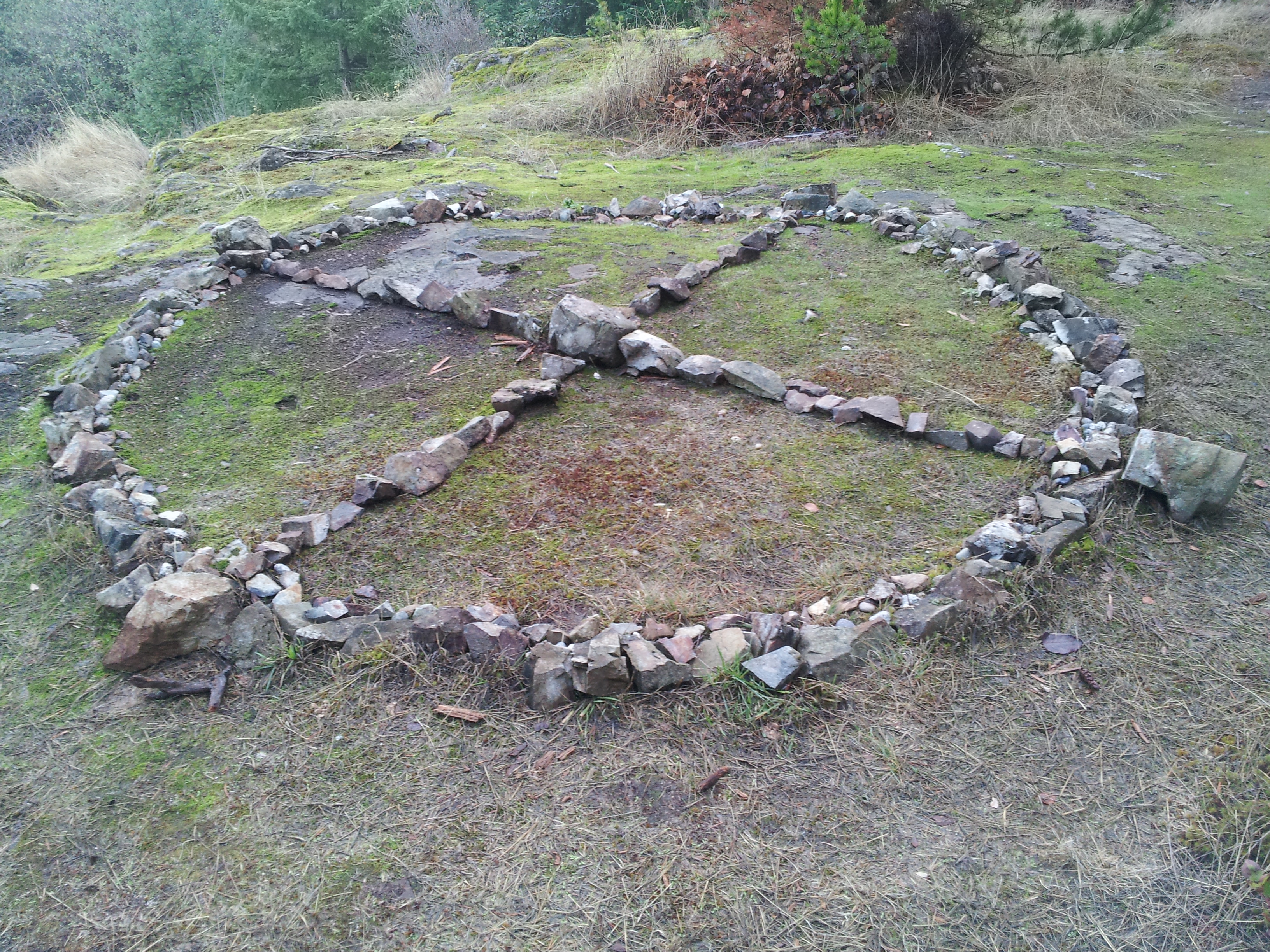
Medicine Wheel

I am unsure the title fits the poem , but I left it as is. This was a hard poem to write as I delved into something I am not 100% confident with and that is quantum spirituality. As a quantum physicist writing from a feminist perspective, Karen Barad writes about entanglement. In short, we are entangled with one another, with non-sentient beings, and the inanimate of the Universe. This involves moral responsiblities in relating to those other beings and things, without even knowing what it is and how we are related to each of them.

Medicine wheels are part of many First Nations’ cultures. They connect people to Nature and reflect our interdependence with Nature and each other. They signal the need for harmony in lives and ground us with and in our world. In my understanding, they have quantum aspects to them as we are entangled in ways that suggest we are always seeking harmony in hopeful ways. What a medicine wheel asks us is to acknowledge interdependence, something those who wield levers are woefully reluctant to do. Instead, humans become resources and chattel in making profits in a zero sum game.

After my post In Seeming Chaos, Hope, I wondered about the current state of world affairs e.g. political crises, health crisis, economic crisis, etc. They are entangled with each other. I cannot simply wish one away and the others remain. Moreover, they existed before COVID-19. We did not see them easily. A lack of access to health care was in place for many people before the pandemic. We warehoused elderly people (the not-so nice term is aging people) as has become our custom in the advanced world e.g. schools.

I began to look for a spiritual connection with quantum physics and entanglement and found it. What was interesting was I have been reading about the connections for years in the writings of The Dalai Lama and Fritoj Capra. (The link is to an article where both are referenced.) What Karen Barad does is presents a detailed case for it from a scientific and feminist perspective. I think the feminine perspective is essential, as I consider bell hooks, Mary Belenky, Riane Eisler, etc. to understand how we move away from what Eisler termed a dominator, patriarchal world based on binaries and assigning a number to one that incorporates a participatory, matriarchal world. In this world, Belenky refers to intuitive, feminine, and I would argue, indigenous ways of knowing and wisdom based on the quality of living we each experience. These are impossible to quantify. However, we can describe them in poetic language. What if we had leaders like Jacinda Ardern and Angela Merkel instead of people who pass themselves off as leaders and fall far short of leading?

Basking in Brother Sun’s warmth–

Healing (in)spiriting waters–

(In)haling sweet air–

Replenishing.

Here,

Feeling welcomed–

Homing in on what’s proper,

Resting in one’s responsibilities.

In relating to the Universe–

While standing in Nature–

When Supporting other beings–

Discovering hope(ful) ways.

Intuiting as quantum beings–

Accepting unfelt entanglement–

Hearing unheard voices–

“Crossing love’s hearth.”

Enriching alchemy–

Inspiring magic.

Seeking peace,

Speaking truth to power.

I took the picture on Bowen Island and began to write the poem.

In Seeming Chaos, Hope

I gave a lot of thought today about hope and its lack of it. I do not confuse hope with positivity and positive mindset. Instead, I understand hope as grounded in reality. Emily Dickinson described it as “the thing with feathers,” suggesting we cannot fully describe it. Its ineffeable nature creates a metaphoric meaning for each of us. Without dreams and hope, Langston Hughes cautions “life is a broken-winged bird/that cannot fly.” With hope and dreams of previous enslaved generations, Maya Angelou repeats the title of her poem “I Rise” as a prayer and refrain against hopelessness.

Too often, people want to pigeon-hole others in binary and dichotomous ways e.g. conservative or progressive. It appears easier and less ambiguous if we can label someone, somehow providing a sense of stability about who this or that person is. What we mis-understand is “and” means something. It acknowledges how complex each human is. We are not usually one thing or the other. Instead, we are mingling of things, experiences informing how we live, and the context within which we live. I want to conserve things e.g. Nature and, at the same time, progress e.g. equity regardless of gender, race, sexual orientation, etc. Neither is premised on political or, in our case, reality TV, sloganeering.

Paulo Freire and bell hooks write about hope, unconditional love, and dialogue in educating children, youth, and adults. I think the critical theory is incorrect. What they propose is critical pedagogy/andragogy where I ground dialogue in listening with lovingkindness to those with different lived-experiences. In mindful, non-judgemental listening, I seek to open up space where the Other shares their reality and wisdom. In acknowledgeing the humanity of the Other and greeting them in dignified silence, I might offer the fragile hope so needed in today’s world. Imagine a world where we greeted one another with dignity, rather than making up slick political mottos and creating disparaging nicknames that assault others?

I wrote this poem after a long, hard day. I thumbed through some right-brain scribbles and this was the result.

Even in chaos, hope–

Faith springing forth,

Beloved Other sharing wisdom:

What do we hold in common.

Communal rhythm,

Symphonic voices arising–

Loving harmonies;

Binding and healing.

Listening,

Giving dignity–

Acknowledging shared ground.

Holding each Other gently,

Unsure together–

Breaking bread

Being safe in this space.

This was the first secular song I heard in church. It was the late 1960’s. Today, I think we do need mountains we have bulldozed, meadows we have paved over, and water we have contaminated. Having said this, we need love and hope equal measure to make those things happen.