Tag Archives: eloquent questions

Leap of Faith

via Quote: Mary Oliver

Mary Oliver is one of my favourite poets. Even when she writes lines in declaratory ways, there is a profound question being asked.

In this wonderful quote shared on Rethinking Life the question is what happens next. Even under the best and most controlled of circumstances, we do not know what will happen in the next moment.

Living is a leap of faith filled with mystery we can embrace. When we believe we control the next moment, the next instance, we fall short. Mindfulness can help us embrace the mystery. Being grounded in each ensuing moment is the only place we can be.

Merry Christmas

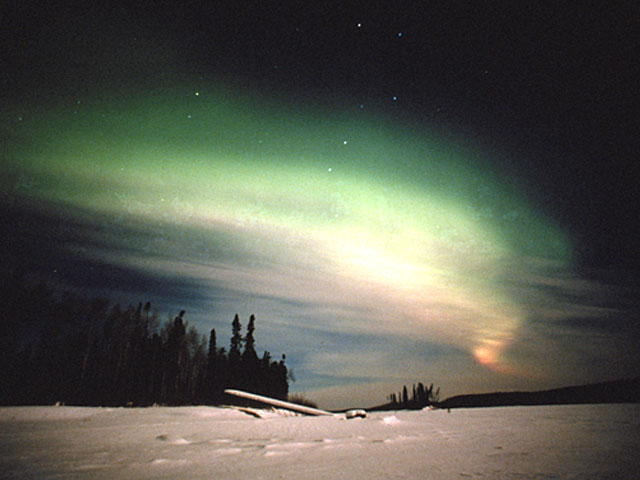
I wrote this poem several years ago about the magic provided by the Northern Lights (Aurora Borealis) and Christmas. What message was in those celestial colours and sounds? As a child, I thought the sky talked to me and told me a creation story.

I grew up in Northern Alberta and Christmas was a special time. I recall cold winter nights. I mean they were cold–almost minus 40 at night. Our windows upstairs were almost completely frosted over. On moonlit nights, the light kept me awake or that is what I told others.

During Advent, my mom and older brothers walked across the street for evening Mass. The younger ones, including me, went to bed. I did not fall asleep right away and would watch out the window for them to come home. I thought no one saw me, but my Mom would come up and tell me to go to bed.

At that time of year, I recall is the Northern Lights and how you could hear them as well as see them light up the sky as they danced across the sky. We don’t see them very often in Edmonton with the urban light.

When we spend time at the farm at Christmas, we hear and see them again. On cold nights we hear the train (about a mile away) and it sounds like it is coming through the house.

Small children–

Breathlessly awaiting,

Peering through frosted window

Soaking it in.

Heavens rippling–

Lights undulating;

A celebratory fury

An indisputable guide.

This old house speaks;

Nature answers–

Heavens crackle

Sweet symphonic sounds shimmering.

Earth’s floor–

Blanketed in white

Celestial colours speaking

Capturing young senses.

A vivid winter scene,

A sensual, sensory palette,

Reminding us–

Christ’s Mass is here.

pic_wonder_northern_lights_lg

Wildness

via Wildness

Michele‘s post reminded me of poems by two of my favourite poets.

Environmentalists refer to Wendell Berry and Mary Oliver‘s poems. An educated guess is that Henry David Thoreau, who Michele quotes, informed their writing.

Wendell Berry wrote in moments of despair he “comes into the peace of wild things who do not tax their lives with forethought.”

Mary Oliver ends Summer Day with the following question: “Tell me, what is it you plan to do/ with your one wild and precious life?” Paradoxically, the question is an answer to her eloquent questions about who created nature.

Nature has a way of being and providing us with lessons for life. It is in meditative moments, when we just are, we grow to understand what that can mean. We grow and value what is essential not to us, but to those who come after us.

“We do not inherit the world from our ancestors, but borrow it from our children.”

How Quotes Enoble Us

via How Quotations Ennoble Us

I love quotes. They make me reflect about meanings that are not clear. They raise eloquent questions that have no pat answers. They inspire me. Balroop provided three quotes that underscore these points.

Poetry is like quotes and I find many quotes from poems and poets. There are spaces between words, lines, and stanzas I can stand in and wonder.

I leave you with quotes that inspire me to think deeply and ask questions about the meaning of my life.

The first two are from Mary Oliver.

“Tell me, what is it you plan to do with your one wild and precious life?”

“Said the river: imagine everything you can imagine, then keep on going.”

The following is from Wendell Berry.

When despair for the world grows in me
and I wake in the night at the least sound…
I come into the peace of wild things
who do not tax their lives with forethought
of grief. I come into the presence of still water.
And I feel above me the day-blind stars
waiting with their light. For a time
I rest in the grace of the world, and am free.


Take Sides

Source: Take Sides

The link is to a quote by Elie Wiesel, a Holocaust survivor and Nobel Peace Prize winner. He is not referring to taking sides over a game. Instead, he speaks to taking sides when we witness wrong-doing and immoral acts. His book Night is a worthwhile reading.

I remind other Christians Jesus reached out to those who were most in need, living on the margins of society. He ate with sinners and tax collectors and stood up against the Pharisees and scribes (Luke 15:1–4) and (Romans 3:23).

We each have to decide what we is immoral and moral. It is not upholding abstract laws and rules, but the spirit of doing what is proper. I did not use the word right or correct . When I do, I fall into a trap of checking a binary box of right or wrong. Instead, I ask “is this proper?” In French, this is a matter of comportment and conduct.

I think the last sentence in the quote are important, worthwhile repeating. It is worth spending time whiling and linger over the words and the depth of their meaning, from a person who suffered and witnessed unthinkable human tragedy perpretrated by other people. “Whereever men and women are persecuted because of their race, religion, or political views, that place must — at that moment — become the center of the universe.”

I am not a big believer in thinking about my legacy, whatever that might be, but I want to be remembered as someone who stood up and spoke out against the wrong done to other people.

Take a Knee

I begin this post with two points. First, I am not American. I spend time in the US and enjoy my time there. One thing I enjoy, and I shared with my students, is the way Americans respond to their National Anthem. Second, Canada, where I live, has social and historical skeletons in the closet i.e. residential schools.

My aim is not to pass judgment, but to cast a different light on what it means to take a knee. In a world that is increasingly secular, perhaps I lose my way in what it means to live in a spiritual way and it can mean many things to different people.

The image that comes to mind when I think of is people kneeling and standing at the foot of the cross of the crucified Jesus. We were not there, but we are told his friends, family members, and followers knelt and stood. It seems there was no one right way.

When Colin Kaepernick first took a knee, I thought of it as praying. The etymology of prayer is to ask earnestly, to beg, and to entreat. Prayer is asking someone i.e. God or something bigger i.e. Universe or a nation than I am to intercede in a concern to me.

To genuflect is to kneel, usually with one knee. It is an act of worship and respect. Parker Palmer wrote about fidelity as something other than mere loyalty. It is loyalty to an obligation, cause, and idea one holds dear.

Who or what one asks depends on one’s spiritual and religious background. What I understand is that there are no fixed answers when I take a knee and pray. I have to listen. Part of praying is silence, listening to what Parker Palmer calls my inner voice. It is only in moments of silence, whether kneeling, standing, or walking, that I hear that inner voice.

I pray in various ways and have since I was a child. When I enter a church, I find holy water, bow to the cross, and complete the sign of the cross. I stand. As I enter a pew I genuflect, taking a knee. I do so with two surgically repaired knees. At times before, during, and after service, I kneel, I pray, and I listen to what my heart says. Other times, I stand. During the Lord’s prayer, I stand and join hands with others asking God to intercede on each of our behalf. As I receive communion, I walk slowly and quietly, bowing my head as I accept the host.

For me, kneeling, standing, and walking quietly show my fidelity to a cause and purpose larger than me. In this case, it is plight of people and our shared humanity. I make a point of being quiet, because it is a time of thoughtful meditation and mindfulness of how the world and I are broken. I beseech someone or something larger than me to intercede and, as Parker Palmer says, to make whole the broken.


Joining the Circus

Yesterday, this poem by Mark Nepo found me. I was checking some emails and a site I subscribe to had this poem on it.

For the first time in 30 years, I will not teach and/or learn in formal way this fall. It crept up on me. Yes, I want to teach. I prefer that to joining a circus. In a sense, I am joining the circus. The theme of the poem is how to deal with ups and downs in life. I applied at several universities and received one interview, but came up short.

My challenge is what will we I do in lieu of teaching in some conventional way? As Nepo says, I ready to kiss anything as I hover like a mystical molecule between one stage and another. Like the dozen beginners, I am learning how to juggle and have to begin somewhere.

Each day, I focus on reading and writing and hope to publish in academic journals.  A colleague suggested I write and shed a different light on teaching. As well, I may take some of my poetry and bundle it together in a book. Perhaps, my smile will be so magical I will asked to teach something I did not expect.

I just saw a handwritten note from

Galileo. He was under house arrest

for believing we’re not the center of

everything. Now behind me, in the park,

a dozen beginners, of all ages, learning how

to juggle. We have to start somewhere. The

young man who’s so magical at this is asked

to instruct. He smiles, “You have to keep

trying. Just not the same thing.” Earlier,

I leaned over a letter from Lincoln to a

dead soldier’s mother. This, just weeks

after losing Susan’s mother, sweet

Eleanor. I keep saying her name to

strangers. You see, we all have to

juggle joy and sorrow. Not to do it

well—we always drop something—but

when the up and down of life are

leaving one hand and not yet land-

ing in the other, then we glow, like

a mystical molecule hovering between

birth and death, ready to kiss anything.
 

The Great Paradox

As a teacher, I wonder how we keep children safe from themselves and, at the same time, not curbing their innate curiosity and imagination.

Pablo Picasso said “Every child is born an artist. The challenge is to remain an artist after you grow up.”

Albert Einstein stated “Imagination is everything. It is the preview of life’s coming attractions.

I am less concise, so I wrote a poem.

Born curious and imaginative,

Children do not have to be taught.

Yes, they can hurt themselves,

Ah, they need guides to walk with them,

Without inflicting greater harm.

The challenge lies in a question:

How do I guide them, without damaging them?

‘Tis a great paradox.


The Poet’s Obligation

I am back. I found it difficult to write a poem and turned to others who might offer me something today.

Pablo Neruda wrote about the poet’s obligation to those cooped up in an office, away from the sounds of nature, and the foam of the sea. Poetry brings the world and its text to people who for whatever reason they are no present to that part of the world.

The poet brings the sea, the thunder, and the foam to the reader in what Neruda called a perpetual cup. Poets share and are part of the world others cannot always find.

The poet is mindful of the world and reflects on it to capture its essence and meaning in ways each person can experience and interpret what that means to them. They pose questions without ready answers to structure each person’s with the world and the poem. The poem becomes a medium to interpret the world as a text.

To whoever is not listening to the sea
this Friday morning, to who ever is cooped up
in house or office, factory or woman
or street or mine or dry prison cell,
to him I come, and without speaking or looking
I arrive and open the door of his prison,
and a vibration starts up, vague and insistent,
a long rumble of thunder adds itself
to the weigh of the planet and the foam,
the groaning rivers of the ocean rise,
the star vibrates quickly in its corona
and the sea beats, dies, and goes on beating.

So. Drawn on by my destiny,
I ceaselessly must listen to and keep
the sea’s lamenting in my consciousness,
I must feel the crash of the hard water
and gather it up in a perpetual cup
so that, wherever those in prison may be,
wherever they suffer the sentence of the autumn,
I may be present with an errant wave,
I may move in and out of the windows,
and hearing me, eyes may lift themselves,
asking “How can I reach the sea?”
And I will pass to them, saying nothing,
the starry echoes of the wave,
a breaking up of foam and quicksand,
a rustling of salt withdrawing itself,
the gray cry of sea birds on the coast.

So, though me, freedom and the sea
will call in answer to the shrouded heart.

To Discriminate

I will not post this weekend, as I am away. As well, I want to begin writing an article, so my schedule will change next week, but I will be back.

After I wrote my poem yesterday, I thought about what it might mean to live in a different way than I do. I cannot. I do not have those experiences. To discriminate is to see and recognize differences. In a world of extreme ideologies, there are those who simply refuse to see differences as essential to our human condition.

Hannah Arendt wrote about living in pluralism being the ultimate human condition. It is what makes us each a person, separates us in some distinct way from others. It is challenging and unavoidable.

I lived in a small town in Northern Alberta when I was young. We were the only French-speaking family with children in the community. I understand others have suffered more than I ever did. It seems it is only the loud ones with most extreme ideology who act and speak with violence that are seen and heard.

Edmund Burke contended “The only thing necessary for the triumph of evil is for good [people] to do nothing.”

Albert Einstein said “Compassionate people are geniuses in the art of living, more necessary to the dignity, security, and joy of humanity than the discoverers of knowledge.”

Thomas Merton pointed us in the direction of mindfulness: “The whole idea of compassion is based on a keen awareness of the interdependence of all these living beings, which are all part of one another, and all involved in one another.”

I think compassion is being mindful of the beauty we find in the differences of others and the world. It is speaking up and out when we see things done that are not proper. It is in being mindful and present to the Other that we are most human. I leave you with these thoughts.

To discriminate,

To see the differences in the Other,

It is what makes living worthwhile.

Without seeing differences,

The world is a monotone,

A sea of sameness.

Without seeing differences,

The world is extreme,

A dangerous place.

Without seeing differences,

I do not see the exceptional,

I cannot see an Other’s humanity.