Tag Archives: nature

The Wild Geese

Wendell Berry is a great poet and writer. Several contributors to one of the texts we use in Eco-Ethics , Rethinking Nature, refer to his thinking. I call it deep thinking and takes us to another level of consciousness where there is an awareness that we are part of something much bigger.

I read Wendell Berry’s work and enjoy it immensely. He does not suggest I think like he does or live like he does in a low-tech world. What he proposes is I take time and think more deeply. I read somewhere that Berry, when he was much younger during the 1960’s was asked to write an anti-Vietnam War poem. He responded that he would not. The person asking was surprised as they had always believed he was opposed to the Vietnam War. He responded by saying he was not opposed to that particular war, just war in general. He wrote an anti-war poem with no reference to Vietnam. When I take time and engage in thinking at this level, I come to a different level of awareness than I usually do. It does not mean that I would things differently than I currently do. I become aware of the values I hold and act accordingly. Obviously, it is tricky. What if my values sanction war? What if my values sanction a view that nature is for human consumption? I think what Berry and others get is when we go deeper and look inside we see that we live in the world and not outside it as spectators.

When I read a poem like The Wild Geese, I am struck by the message of the last line: “What we need is here.” It likely always was. I need to open the persimmon seed to find the tree which is not separate from the seed. I am not separate from daily life or the world. I am in it. I need to go deeper to find it, recognize it, and cherish it.

Horseback on Sunday morning,

harvest over, we taste persimmon

and wild grape, sharp sweet

of summer’s end. In time’s maze

over fall fields, we name names

that went west from here, names

that rest on graves. We open

a persimmon seed

to find the tree that stands in promise,

pale, in the seed’s marrow.

Geese appear high over us,

pass, and the sky closes. Abandon,

as in love or sleep, holds

them in their way, clear,

in the ancient faith: what we need

is here. And we pray, no

for the new earth or heaven, but to be

quiet in the heart, and in eye

clear. What we need is here.
Being a Bee

I commented on How to Land about Eco Ethics. The underlying principle is deep ecology which shifts us from an environmental anthropocentric and views all living beings as having inherent worth and not merely instrumental value. Deep ecology understand a complex interdependence between all living beings and allows that to guide decision-making. We are part of the Earth and not holding dominion over it in this sense. We can make similar decisions about harvesting, mining, and building as we do but use numerous perspectives in doing so.

James Hatley wrote, The Uncanny Goodness of Being Edible to Bears. He referred to hunters, outdoors people, and survivors of bear attacks. People, who are deep ecologists, revere Nature and understand the risks of entering wilderness. Their view is Nature and what it holds makes us more human and complete, as we are one with Nature and not separate.

I wrote this poem as one way to better understand the concept myself.

Am I more than the sum of parts?

More than just a body, a mind, a spirit?

If so, what role might the bee play?

The one who manufactured honey?

The one I so enjoyed with bread today.

Is he or she part of me?

Or, is there even more to it than that?

What about the clover?

The water and other things used in delectable manufacture?

Can I now take that Bee’s perspective?

Ever so fleetingly,

Does it make a difference?

Might it be a lesson in being more human?

Letting the Bee be part of me?

How to Own Land

It has been a hectic week and I finished the first week of being a full-time student. My body and mind know this and are telling me it is time to have Sabbath.

I enjoyed the classes this week and they are an eclectic mix: The Tao of Leadership, Eco Ethics and Leadership, and Leadership, Language , and Culture.

In the Eco Ethics class. we talked about challenges faced by humans as we deal with environmental issues from largely a human driven perspective and agenda. It is about ownership and domination in large part and our thinking has to shift. As my figurative dad, Albert Einstein (wild hair, facial foliage, and eccentric behaviour according to students) said, “We cannot solve problems with the same thinking that got us into those problems.”

I came across this poem that shifted the perspective from humans being outside nature to being part of nature. I used a short story with students written by Leo Tolstoy called How Much Land Does a Man Need? Tolstoy challenged the notion of ownership as we understand it in the ‘advanced world’. Morgan Farley’s message is gentler and takes on the perspective of others living in the world with us, not separate from us.

Find a spot and sit there

until the grass begins

to nose between your thighs.

Climb to the top

of a pine and drink

the wind’s green breath.

Track the stream through alder and scrub,

trade speech

for that cold sweet babble.

Gather sticks and spin them into fire.

Watch the smoke spiral into darkness.

Dream that animals find you.

They weave your hair into warm cloth,

string your teeth on necklaces,

wrap your skin soft around their feet.

Wake to the silence

of your own scattered bones.

Watch them whiten in the sun.

When they have fallen to powder

and blown away,

the land will be yours.

The Thought-Fox

I used this poem with students to explain the source of poetic inspiration. It is probably already there and sneaks out to find literary life and expression. Ted Hughes described the creative process of poetry writing as an animal quietly emerging and appearing.

I will sit, close my eyes, and write each day in my journal. Perhaps, a thought-fox will creep out of the shrubbery of imagination. Sabbath is a good time to start.

I imagine this midnight movement’s forest;

Something else is alive

Beside the clock’s loneliness

And this blank page where my fingers move.

Through the window I see no stars:

Something more near

Though deeper within darkness

Is entering the loneliness:

Cold, delicately as the dark snow,

A fox’s nose touches twig, leaf;

Two eyes serve a moment, that now

And again now, and now, and now

Sets neat prints into the snow,

Between trees, and wearily a lame

Shadow lags by stump and in hollow

Of a body that is bold to come

Across clearings, an eye,

A widening deepening greenness,

Brilliantly, concentratedly,

Coming about its own business

Till, with a sudden sharp hot stink of fox

It enters the dark hole of the head.

The window is starless still; the clock ticks,

The page is printed.

I Believe in All That Has Never Yet Been Spoken

I am getting back into a groove after my first full week home. I let things flow a bit this week. Rilke suggested letting go or not contriving in this poem. When I don’t over plan, I find I am more open and accept the flow of things much like the beginner’s mind of a child. Watching children engrossed in play is a reminder that can happen for me as an adult and, as it does, the river widens and flows in every widening channels. Life becomes somehow larger, but not in an explainable way.

Posting images of our trip through Glacier National Park is believing in all that has never yet been spoken. Nature allows me to speak without using words. It is a palette of creation which speaks without speaking and shares without words. It just is and teaches through its presence.

The role of sabbath is to rest on the swelling and ebbing currents and rest in each moment. Perhaps, as I do, I take an expanded mind and soul into next week.

I believe in all that has never been spoken.

I want to free what waits within me

so that what no one has dared to wish for

may for once spring clear

without my contriving.

If this is arrogant, God, forgive me,

but this is what I need to say.

May what I do flow from me like a river,

no forcing and no holding back,

the way it is with children.

Then in those swelling and ebbing currents,

these deepening tides moving out, returning,

I will sing you as no one ever has,

streaming through widening channels

into the open sea.


Logan’s Pass

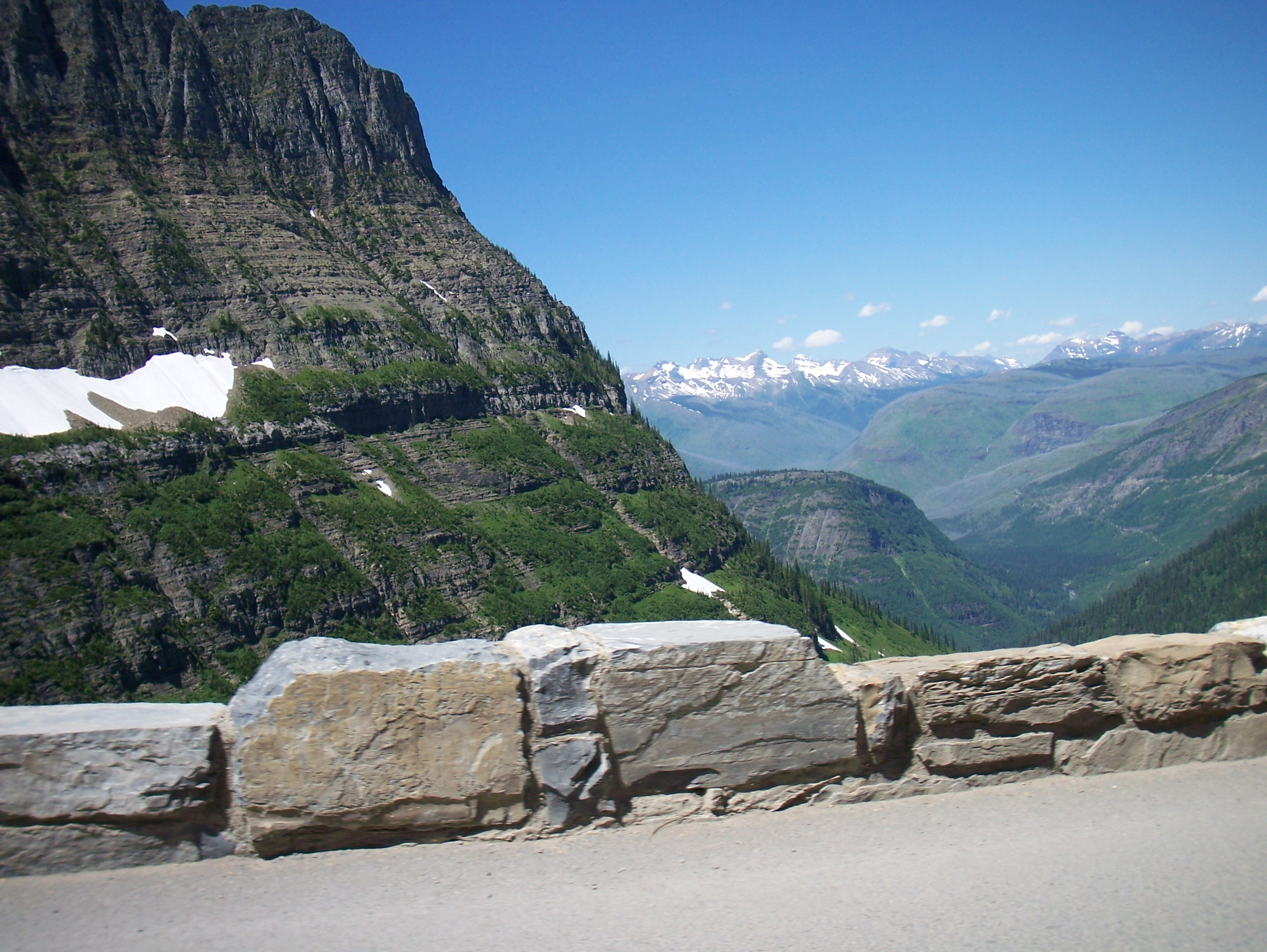
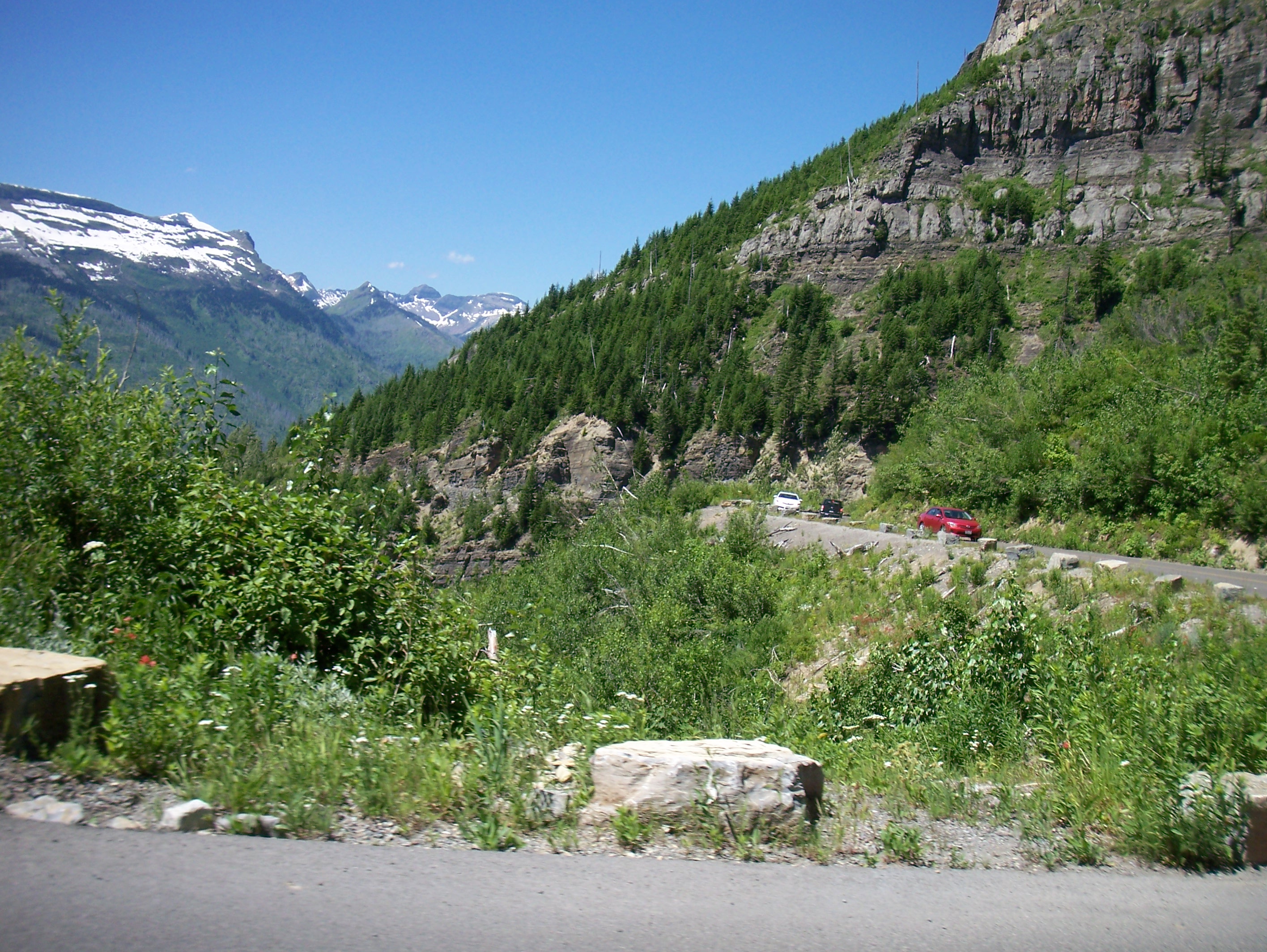
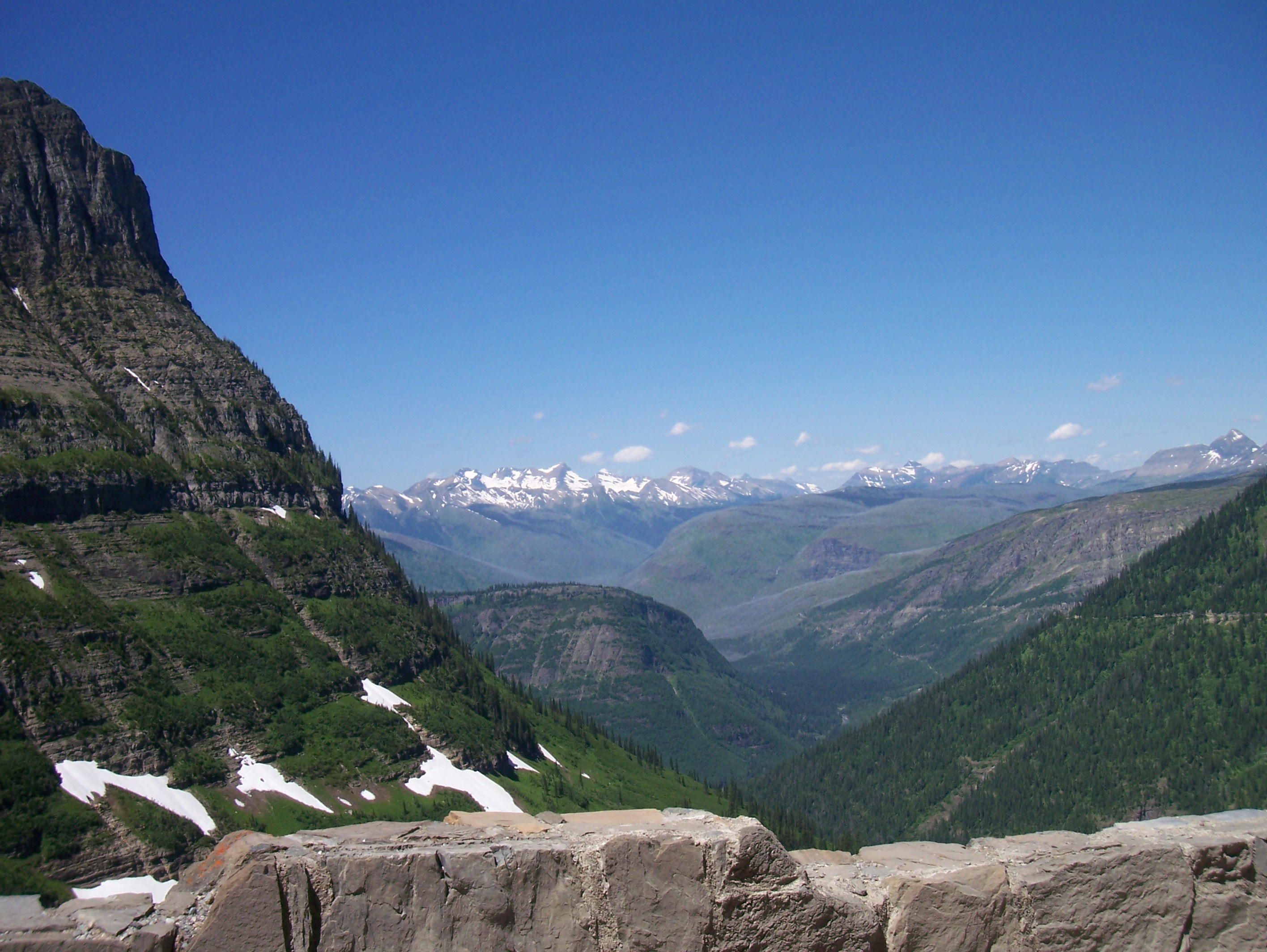
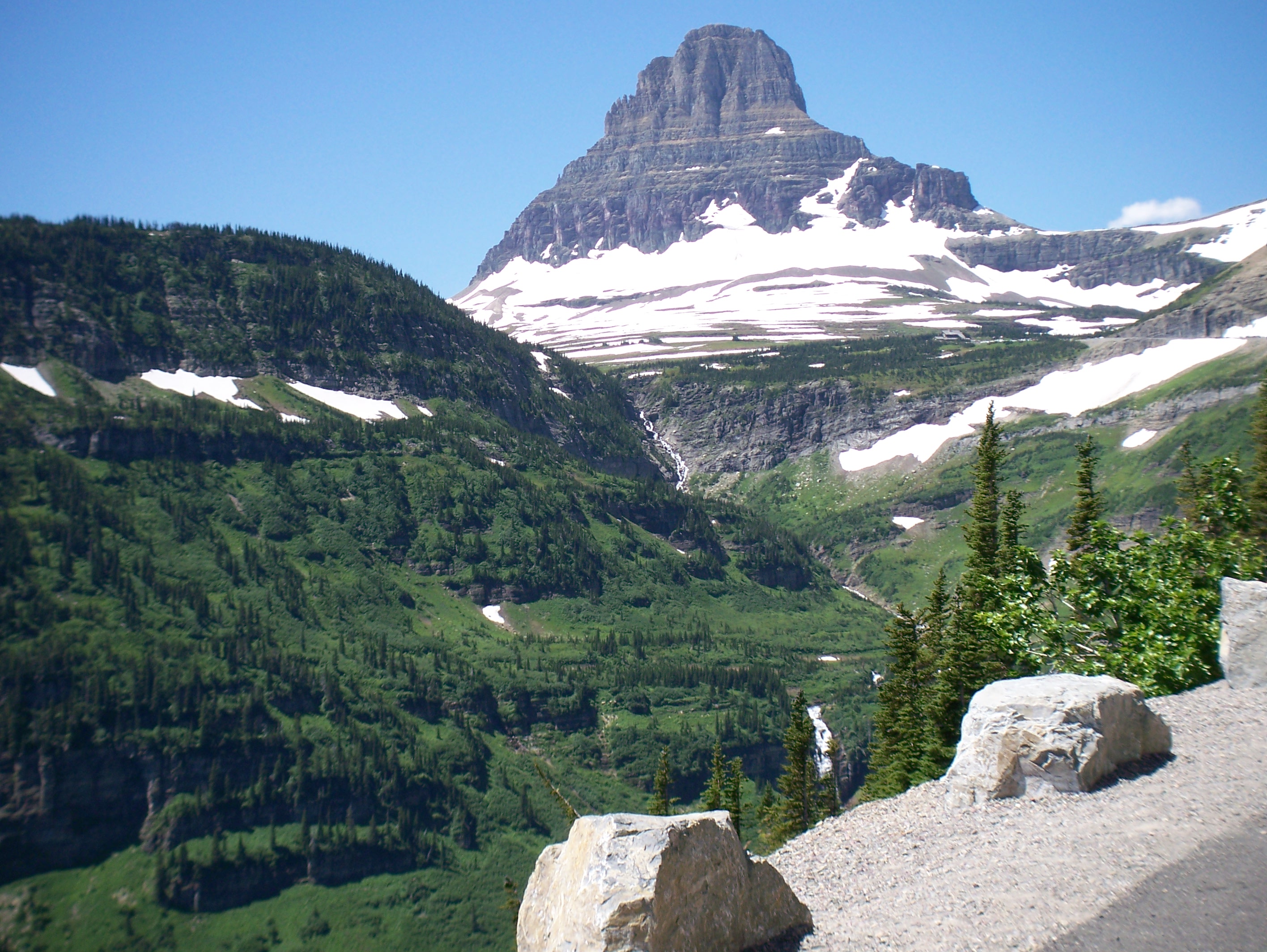
Logan’s Pass includes the Going to the Sun Road in Glacier National Park. When I looked, the view was spectacular and breathtaking.  The park was named for the many glaciers that are part of the landscape and so visible through Logan’s Pass. The glaciers are slowly receding and some estimates suggest they may be gone by mid-Century.

100_4747

Looking straight across from the road, you can see the ice and snow almost at eye level and further out is Jackson Glacier. The road is dotted with short barriers and are not very wide.

100_4757

The Montana sky is a constant backdrop for the mountains, the ice and snow, and the green in the foreground.

100_4765

A person constantly feels like they are on the top of the world here. People refer to Glacier National Park as the Crown of the Continent and closeness to the tops of the mountains is a reason. Waterfalls are often in view.

100_4784

Here, there are no real barriers at the edge of the road.

100_4793

Kathy took this picture over her shoulder. It shows the switchbacks and curves in the road.

100_4794

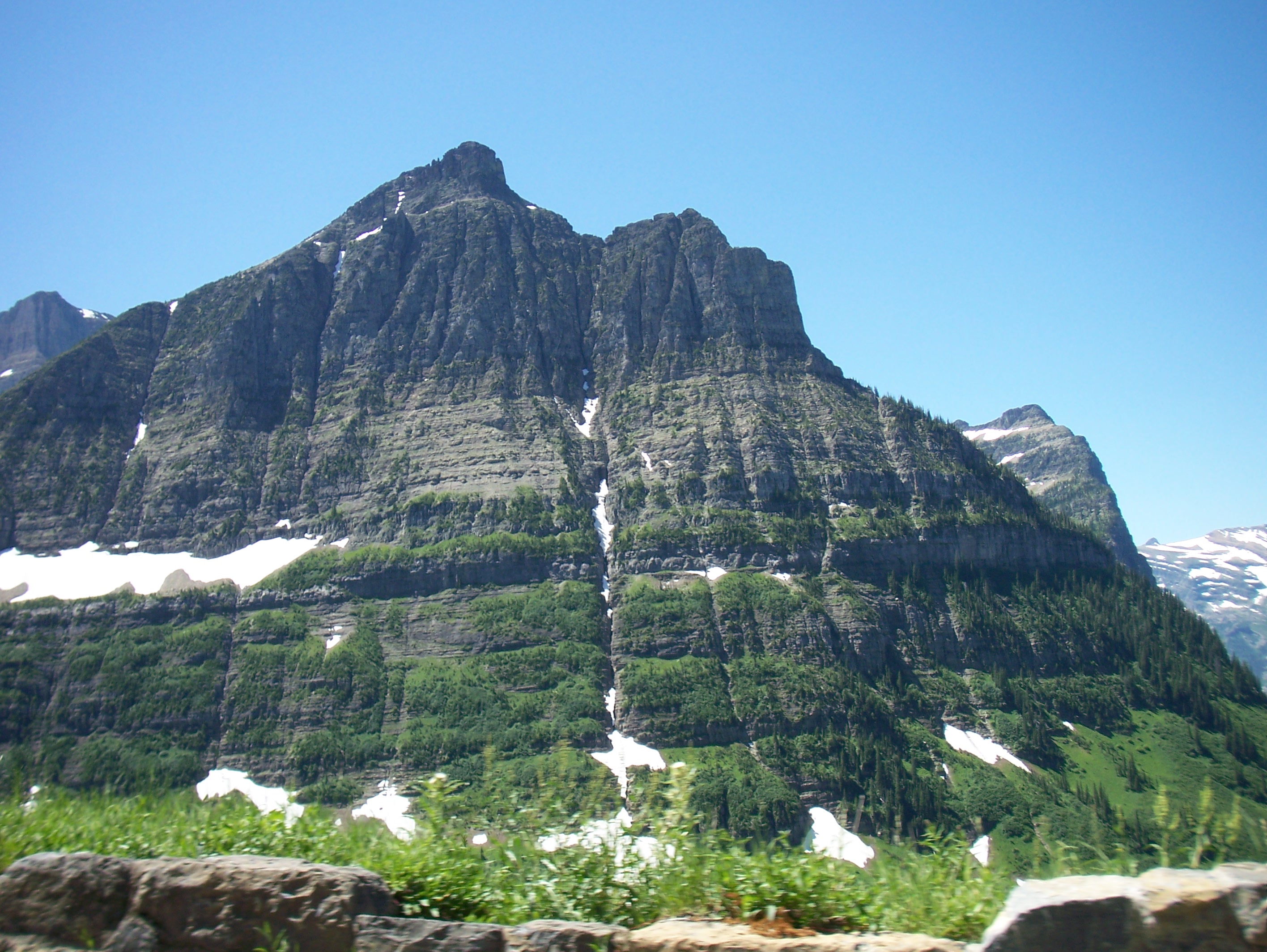
I enjoy the contrast provided by the grey granite and the white snow and ice. There is stability and, at the same time, instability visible in nature. The granite looks like it forms a stairway to the top of the world.

100_4811

Glacier Park Mountains, Glaciers, and Logan’s Pass

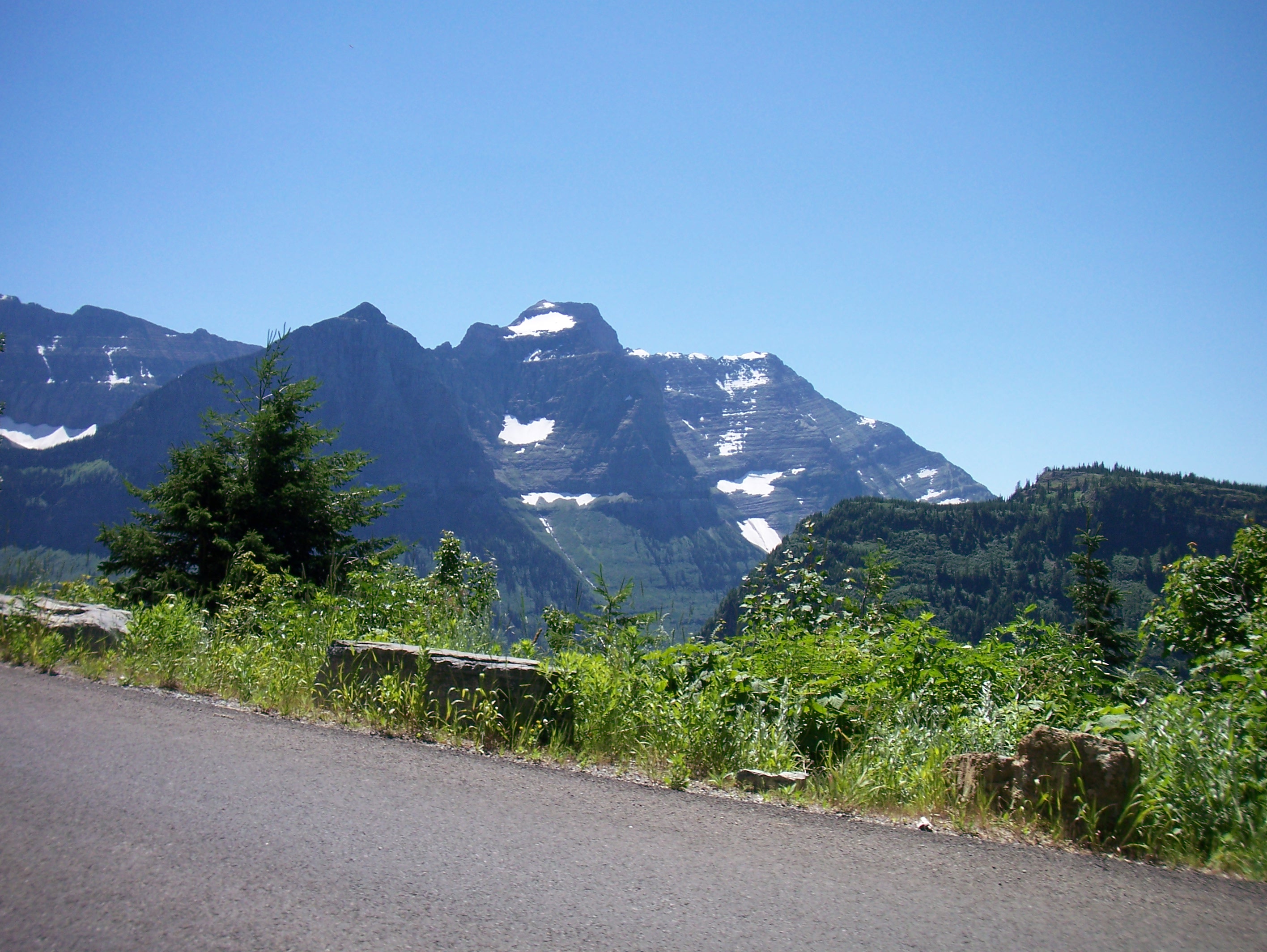
Kathy took most of these pictures driving through Logan’s Pass. Glacier National Park is appropriately named. Most of the white spots in the pictures are glaciers or snow pack. There are about 37 glaciers left in the park and most of them are receding or shrinking in size.

We came through the park a later in the summer, but there we saw some of the wildflowers in bloom on the way up Looking Glass Hill overlooking Two Medicine Lake. The mountains and lake serve as a spectacular backdrop. We walked around the lake later.

100_4724

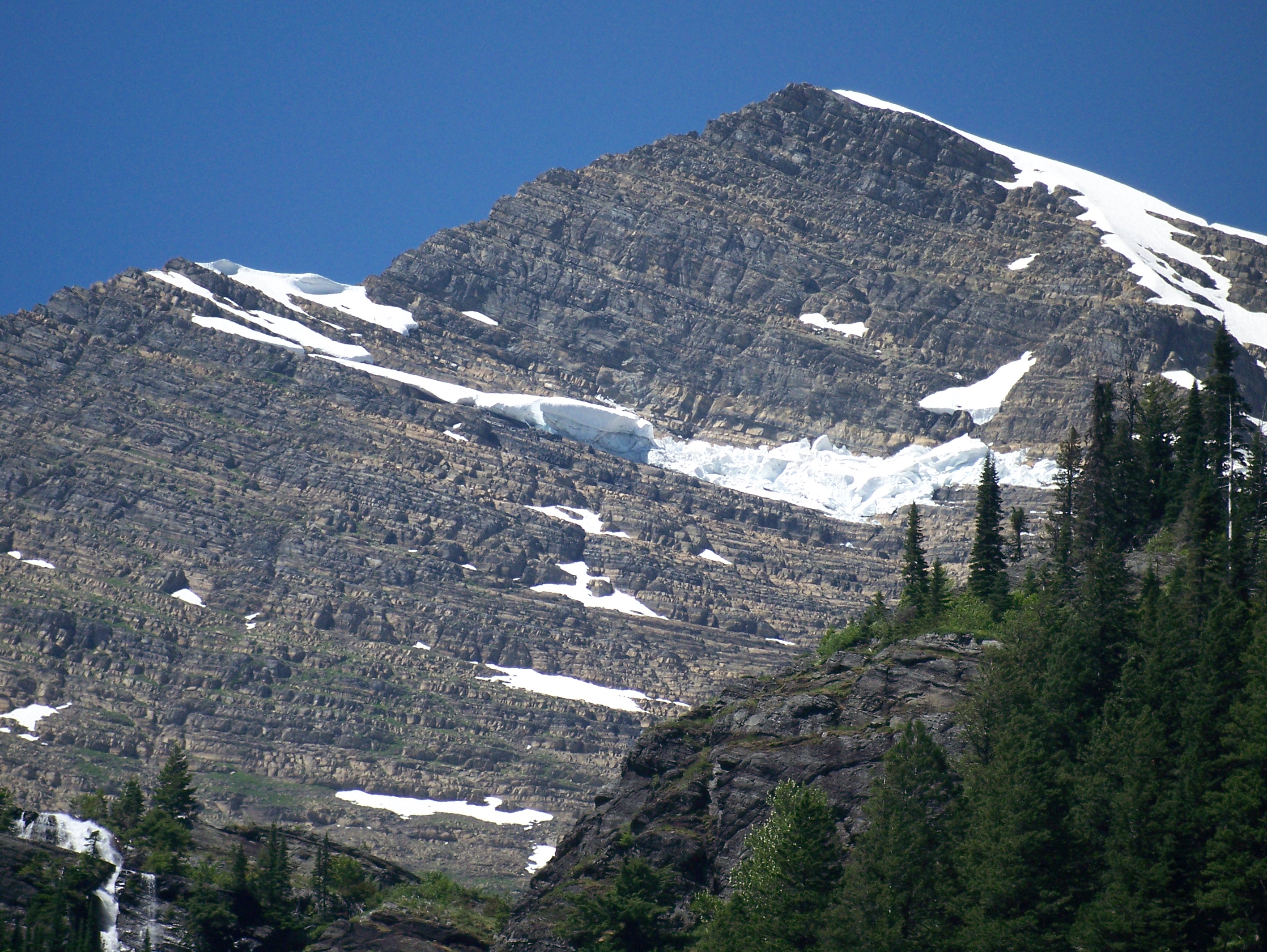
This is looking downstream from Running Eagle Falls or Trick Falls. The glacier on the mountain would likely be considered one of the 25 active glaciers in the park. An active glacier is one that is 25 acres or more. Over 90% of the park is wilderness.

100_4717

This is Jackson Glacier. Although it does not look very high, it is deceptive. The roads climb well up into the pass and travelers end up closer to the mountain tops.

100_4740

This is the tourist stop in Logan’s Pass with the mountains in the background. Parking is at a premium here so we did not get to stop.

100_4750

Most of the pictures we took going through the pass were from the car without stopping. Again, the peaks are not much above the road level.

100_4758

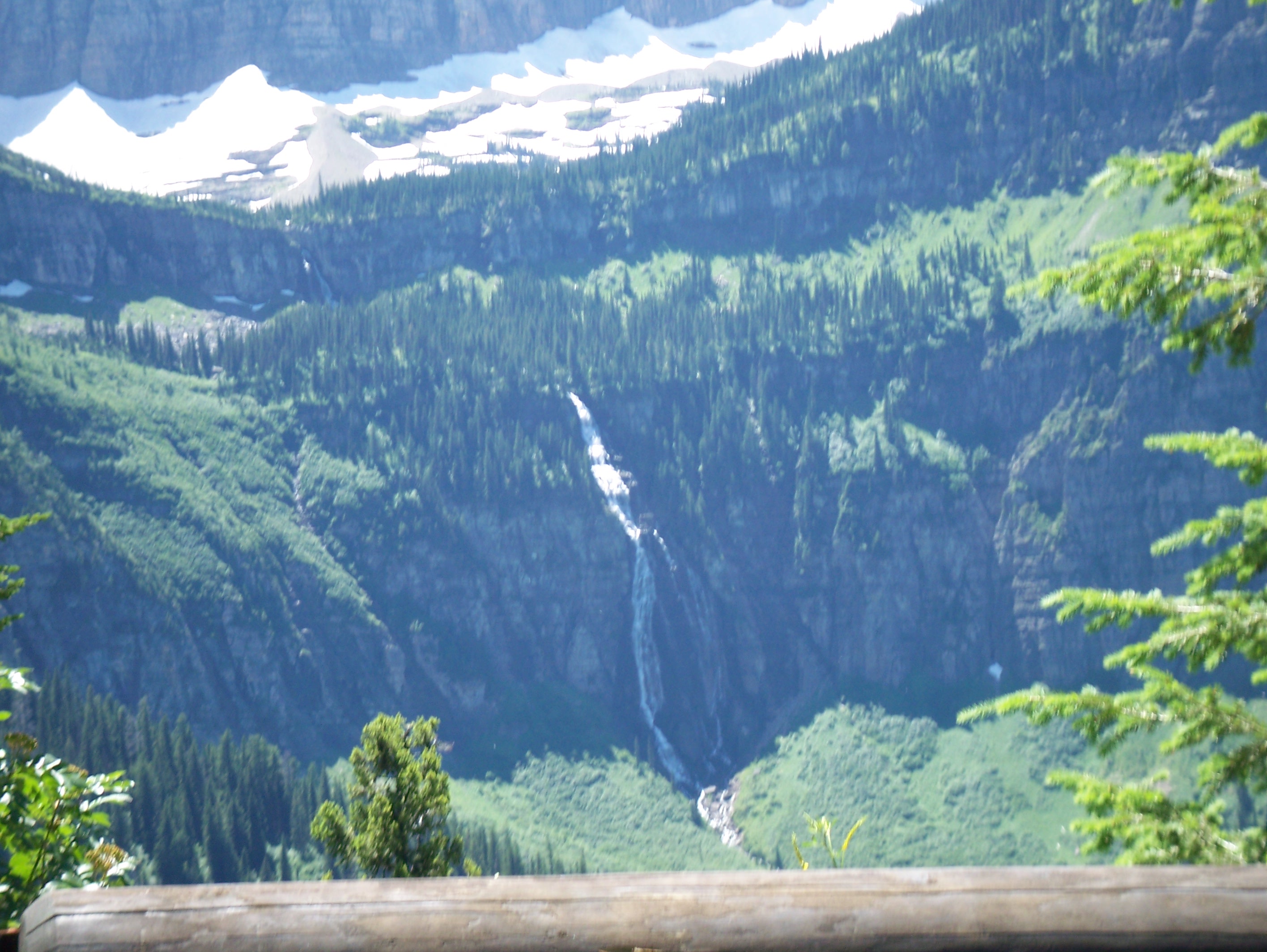
Waterfalls ribbon the mountainsides as they are constantly fed by the glaciers.

100_4768

If you look closely at the picture below, you can see about 3/4 of the way up the road on the left side. It is a slight darkening. The middle of the picture, below the background peak, is basically where the road reaches the summit of Logan’s Pass .

100_4782

Glacier Waterfalls

I am fascinated by waterfalls. It could be they offer paradox in their fury and the stillness found in their sources or in the pools that lay at the base of the falls. Glacier National Park offered opportunities to see waterfalls up close and from a distance

We saw this one from the car as we drove through Logan’s Pass. We saw several waterfalls that fell either right on the highway or right beside it. Literally, we shot pictures from the car as we drove. Parking is at a premium throughout the pass.

100_4780

I want to give perspective on driving through the pass. This is common with even more pronounced switchbacks in places. I can look out of the car window when there is vegetation along the side of the road, but my fear of heights is paralyzing. I don’t drive these roads. Kathy was a mountain goat in an earlier life and is far more comfortable with this driving.

100_4794

We walked in to Running Eagle Falls or Trick Falls. Earlier in the summer and spring, there are two waterfalls caused by spring run off from the snow melt. I copied a picture, which shows the second waterfall above the one in our picture. The link I used rated these falls among the top in the Pacific Northwest.
100_4718

We hiked into Avalanche Lake. We took pictures from both ends of the lake. The first picture shows a series of waterfalls coming down from the mountain side. The snow on the mountains is actually in the form of glaciers.

100_4939

We hiked around the lake and were able to take a few more pictures. Another hiker told us he tried to get closer, but once he was a few feet into the trees he said it was impassable. You can see in this picture that it does not look far but the underbrush is heavy. The link to Avalanche Lake has some pictures taken by someone who was able to get closer to the base of at least one of the waterfalls. As we got closer, the waterfalls look quite different with more ribbons appearing.

100_4943

We were furthest from this waterfall, but the ribbons were clearer as we got closer.

100_4941

I took two pictures in Logan’s Pass. This was one. Once we got to the top of the pass, it was less open and I was able to manage a camera shot. It was right beside the highway. I rolled the window down, as there was no parking and took this picture.

100_4975

Glacier Wildlife

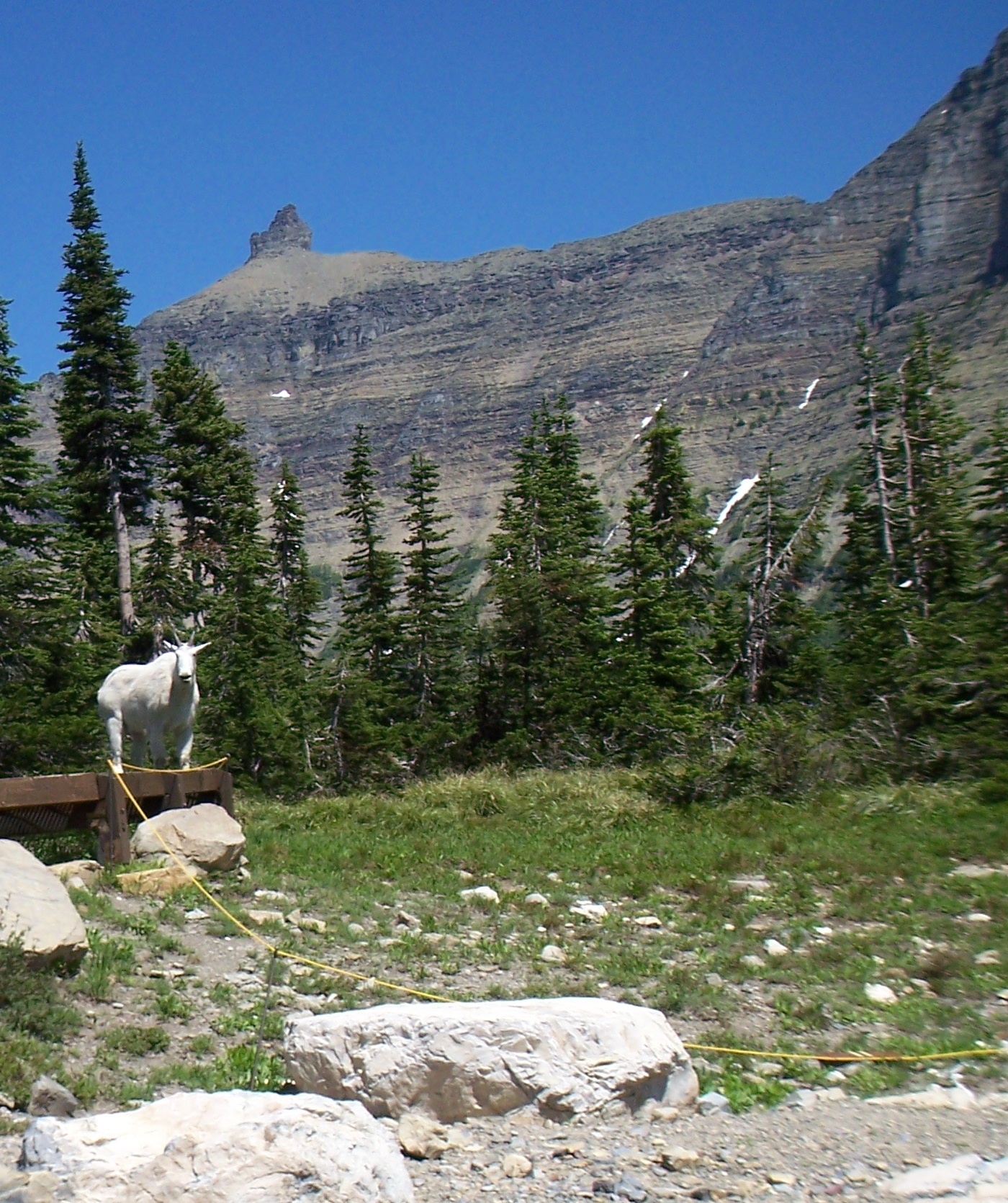
Kathy and I went through Glacier National Park in Montana on our way home. Kathy traveled the route on her way to Spokane. Americans seem to build mountain national parks around the geography which means we saw little wildlife, but we did see some we don’t in Canadian mountain parks. This was clear on the Going to the Sun Road where we saw mountain goats. When we travel through Canadian mountain parks, we see mountain sheep which come down into the valleys during the summer. Goats stay high up where it is cooler. Unless a person hikes the back country, Waterton Lakes National Park, which borders on Glacier, does not have the goats for people to see easily.

This one was on the patch of glacier on the side of the road where it was able to stay cool.

Goat 1

This one posed. You can see they are somewhat comfortable with humans being around, but I still think of them as wildlife. It almost looked a statue.

Goat 3

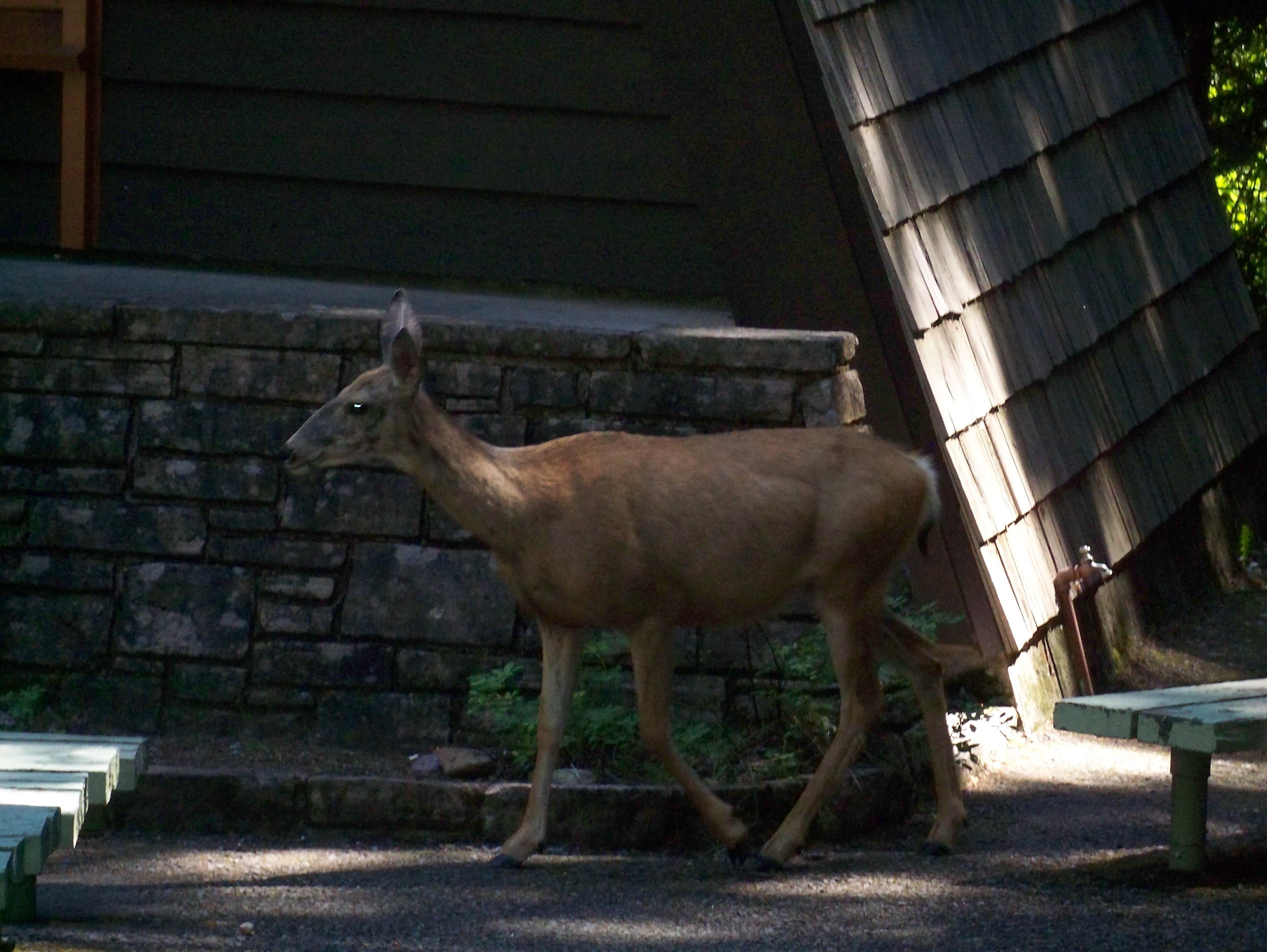
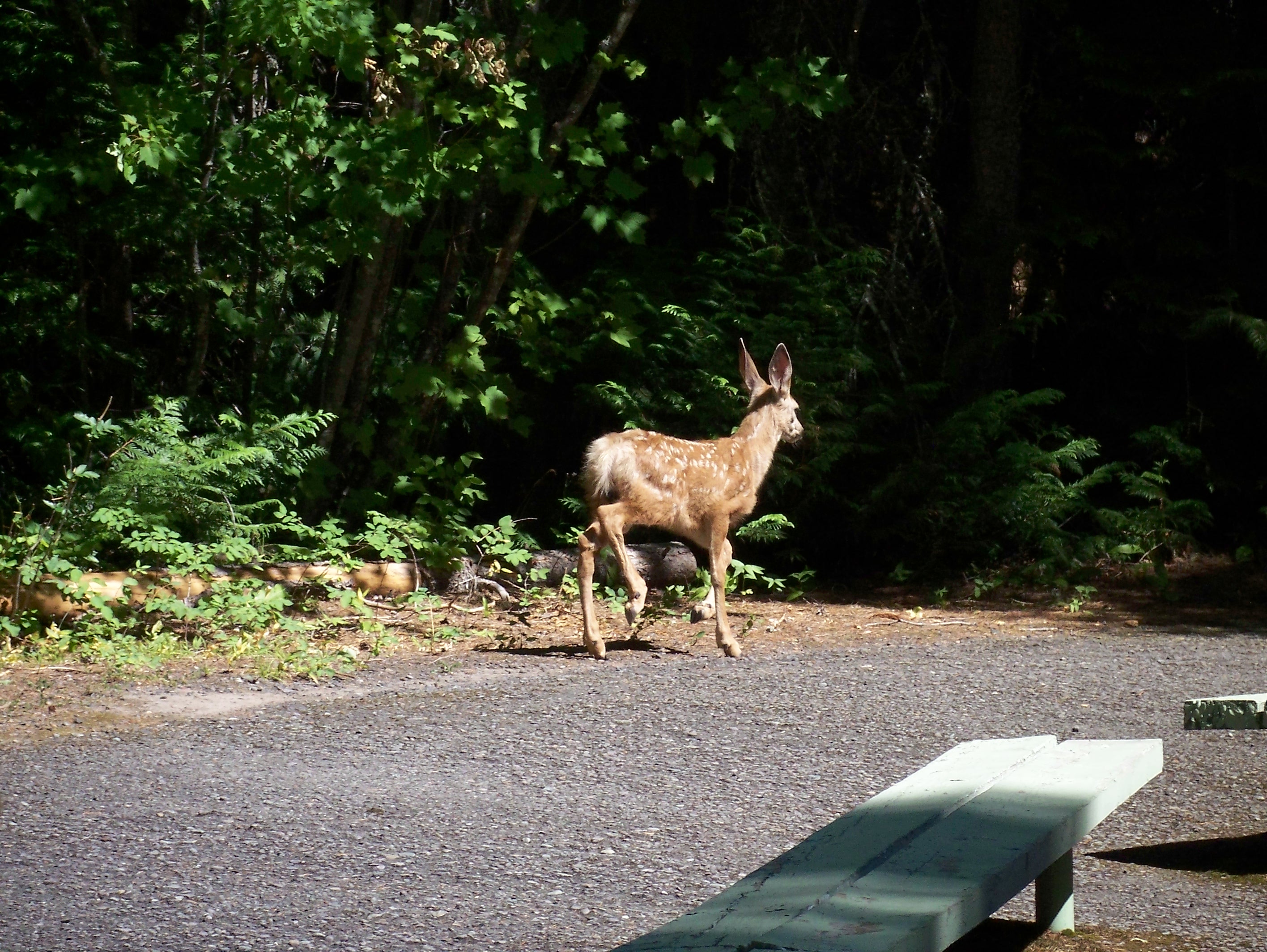
As we hiked, I came around a corner and this spring’s fawn was separated from its mother and twin. I don’t know who was more surprised: him/her or me. Initially, we were 4 or 5 feet apart. Kathy had her camera and got great pictures. The background is part of an amphitheater and the deer were grazing around it.

Deer 1

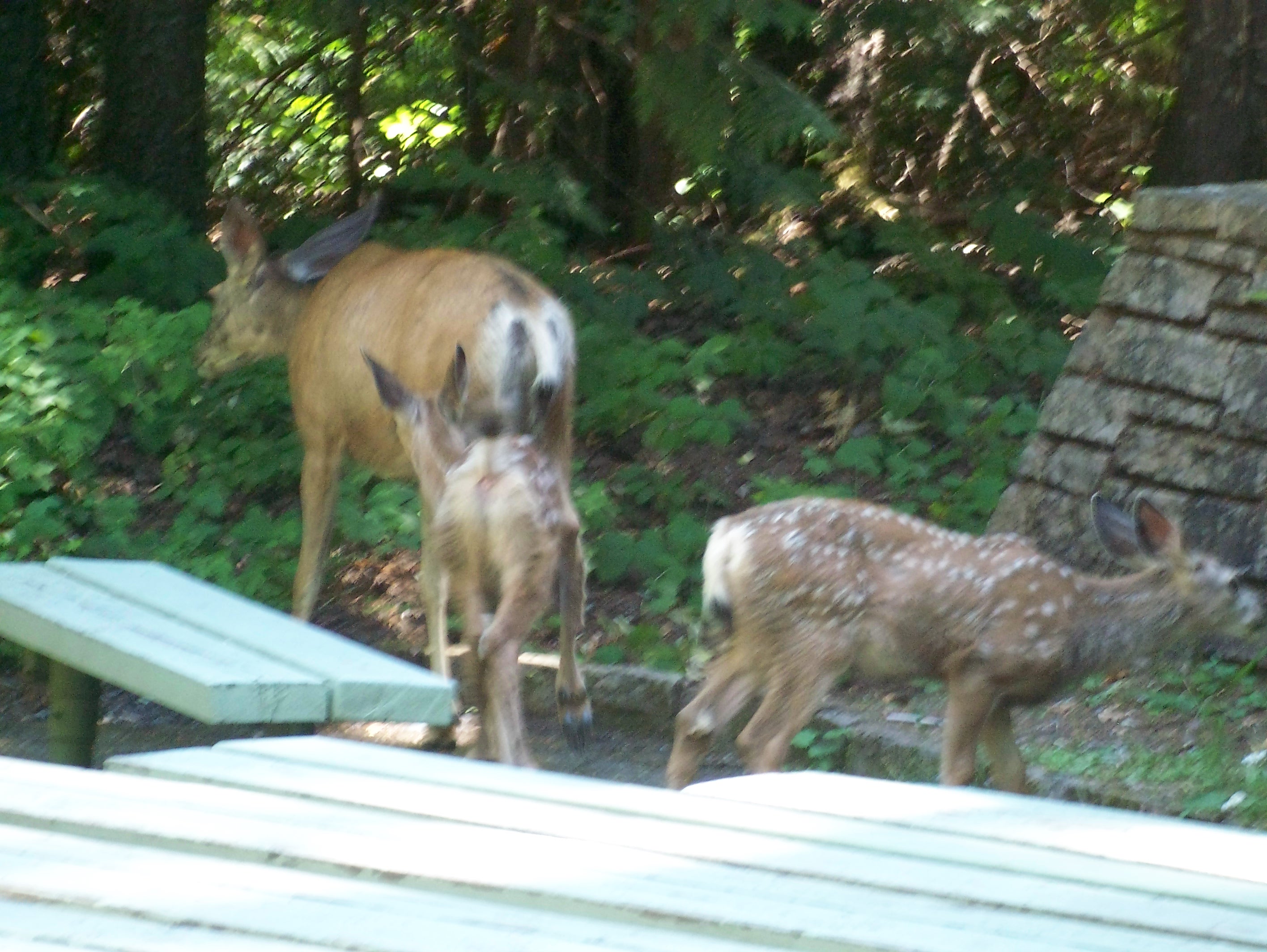
The doe and another fawn were across the amphitheater, but I had inadvertently blocked the path for the first fawn to rejoin them. They made a kind of whistling sound to each other and the doe never appeared overly concerned. She actually grazed on the trees and waited patiently.

Deer 2

The separated fawn took off along a path that was across the clearing.

Deer 3

The fawn re-appeared across the amphitheater and they went off. It seemed like it was all in day’s work for them.

Deer 5

Those Images

Kathy went shopping and bought a book. It sounds mundane, but, when she opened the book, she found a small piece of paper with this Yeats‘ poem written on it. We are headed home tomorrow. We will take a few days, travel into Montana, across Glacier National Park, and head north. We will see some of the wild on that trip. I doubt lions will appear but a mountain lion might show up and maybe an eagle on the wing. Certainly, we find better exercise in sunlight and wind.

On the back or it might be the front of the slip, someone wrote the Gandhi quote: “Be the change you wish to see in the world and PEACE”.

What if I bade you leave

The cavern of the mind?

There’s better exercise

In the sunlight and wind.

I never bade you go

To Moscow or Rome.

Renounce that drudgery,

Call the Muses home.

Seek those images

That constitute the wild.

The lion and the virgin,

The harlot and the child.

Find in middle air

An eagle on the wing.

Recognize the five

That make the Muses sing.