Kathy and I celebrate our anniversary today and this was a reading at our wedding. When I heard the organ, I stood, literally shaking I was so nervous. I turned, looked at Kathy and her Dad, and stopped shaking. What was meant to be was meant to be.
Regardless of one’s relationship with others, intimate or distant, these words guide how we accept the Other, as Emmanuel Levinas said. This way lifts the Other to a human subject in an I-Thou relationship, rather than as an object and it. I hope they continue to guide me as we move forward.
Lord make me an instrument of your peace, Where there is hatred let me sow love. Where there is injury, pardon. Where there is doubt, faith. Where there is despair, hope. Where there is darkness, light. And where there is sadness, joy.
O divine master grant that I may Not so much seek to be consoled as to console; To be understood as to understand; To be loved as to love For it is in giving that we receive- And it’s in pardoning that we are pardoned. And it’s in dying that we are born to eternal life. Amen.
It was a busy and eventful year. Retirement is thought of as a time to step back and slow down. I remain busy and choose to do so, as health permits. I had pieces published and presented at two conferences. If anyone wishes to read or browse the book chapter, two articles, and a draft, I uploaded them to Academia. A by-product of one presentation, Re imagining Teacher Education An Andragogy of Hope, was an interview with the Fig Tree Online Magazine, published in October.
The emerging themes are pedagogies and andragogies of hope and peace. Teachers are vital to opening spaces of hope and peace. For various reasons e.g. time, education, assignments, top-down authoritarian dictates, etc., teachers struggle to infuse pedagogies of hope and peace into their teaching. In a role as a field instructor for student-teachers, I observe teachers and student-teachers who lack the education, confidence, and support in these areas. Furthermore, there is interference from outside the classroom as to what can be taught and there is a risk someone complains if a teacher teaches something someone is unhappy with. In Alberta, the government changed rules about complaints going to school and district administration to a committee of largely non-educators and complaints increased noticeably .
In a world where civil discourse is at a premium and we often equate rhetoric to its colloquial meaning of bombast, we need faculties of education to educate and teachers to continue their education in ways that support pedagogies of hope and peace. Dialogue and the proper use of rhetoric, as eloquent speech and deep listening, are essential to make headway to deal with issues that polarize people into competing ideological camps.
Currently, I am preparing for a conference about teacher education as an andragogy of hope, peace, and non-violence. As well, I submitted a proposal to present at a holistic education conference where I hope to show how hope, peace, and non-violence tap into the spiritual domain often overlooked in teaching and learning. What is essential is to focus on what we can change and how we can each make a difference in our small corners of the world. Prudence can make small differences adding up to larger differences.
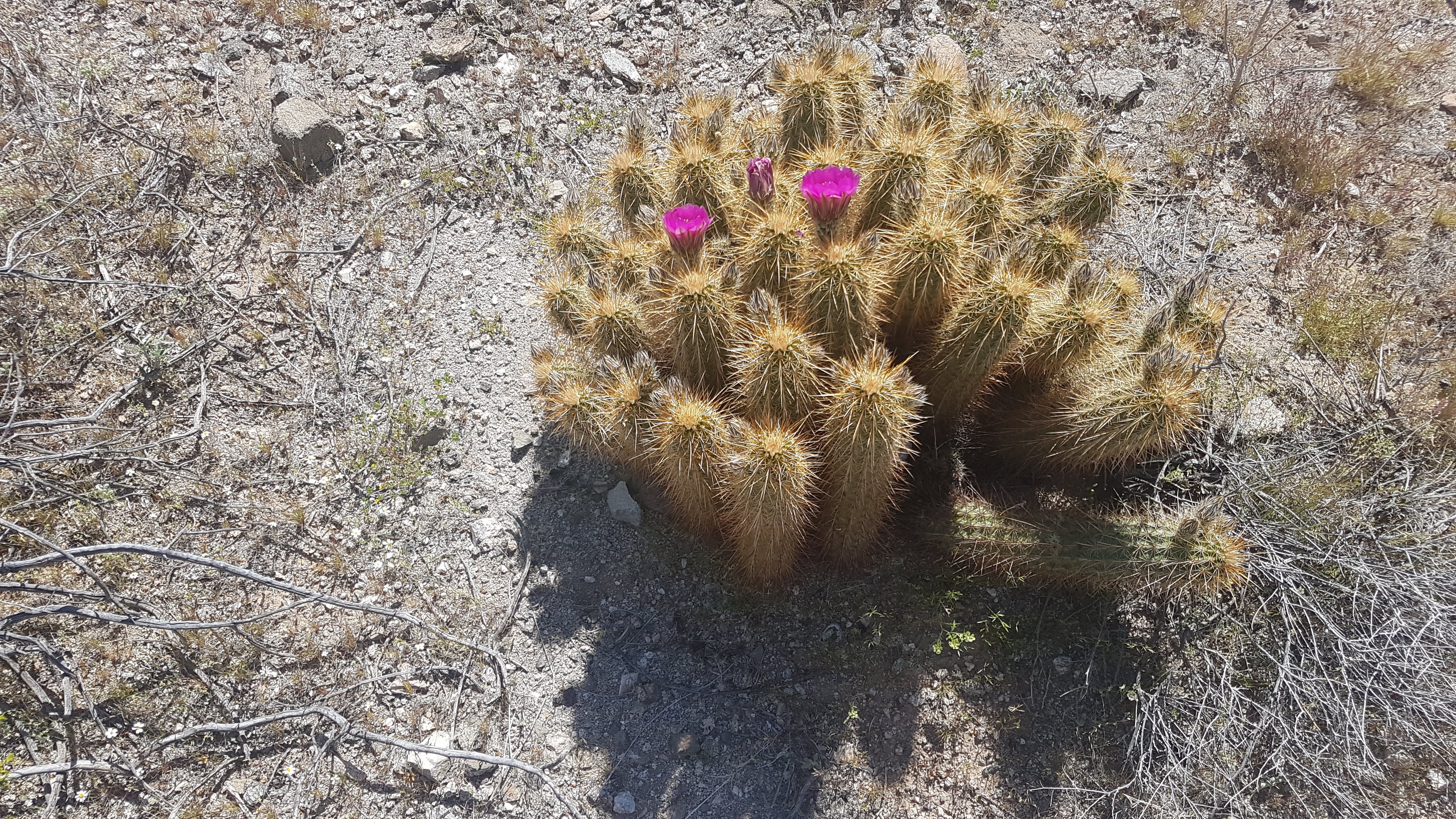
Several years ago, we were in Arizona and hiked in a regional park on an every other day basis. During our hikes, I took pictures of cacti that were blooming. Nature demonstrates hope even in challenging ecological settings. The contrast of the pink with a dull green and brown background serves as a beautiful reminder of hope in challenging times.
I share the Prayer of St. Francis as it has deep meaning in our family and it often referred to as the Peace Prayer. The word peace appears once and is the overarching message. Hope is an integral part of achieving peace.


 ivonprefontaine
 Teacher as Transformer