Category Archives: Leadership

Weaving the Sacred

Humans often set the sacred in opposition to the profane and mundane. In what we might consider of as less sophisticated or mystical traditions, the distinctions are less in evidence. The sacred and profane blend together and are readily experienced in the traditions and daily lives of people. Sophisticated has to do with wisdom (sophia, so who am I to judge what is wisdom in a world I am an outsider to? This stands out to me when I visit Indigenous sites in Alberta and beyond. In ways they are stewards of Nature in ways I cannot be as I do not understand my relationship to Nature in a proper way.

On our way to Waterton, we went to Head-Smashed-In Buffalo Jump Interpretive Centre. It is a UNESCO World Heritage Site.

Archaeologists discovered evidence the site was on a migratory path for indigenous people, primarily the Niitsítapi (Blackfoot Confederacy), who used innovative ways to hunt plains bison at least 5500 years ago. A jump or ‘pishkun’ in Niitsítapi used drive lanes marked by rock cairns. The buffalo ran between the cairns and the last part of the drive lane sloped up, making the jump unnoticeable. The process required perfect human timing and was extremely dangerous.

Legend has it the name comes from an unfortunate incident when a young man wanted a closer view of the action. He waited at the base of the cliff. The hunt was successful and, when he was found, he sustained a broken skull and died.

Head-Smashed-In Buffalo Jump is at the confluence of three geological formations. The Rocky Mountains and Great Plains are well-known. The picture below shows the rise into the Porcupine Hills. Young Niitsítapi men transitioned to manhood through a vision quest and went to the hill in the foreground. The hill, with spiritual meaning to the Niitsítapi, does not have public access.

Journeying alone

Enter spiritual space

Questing for adulthood.

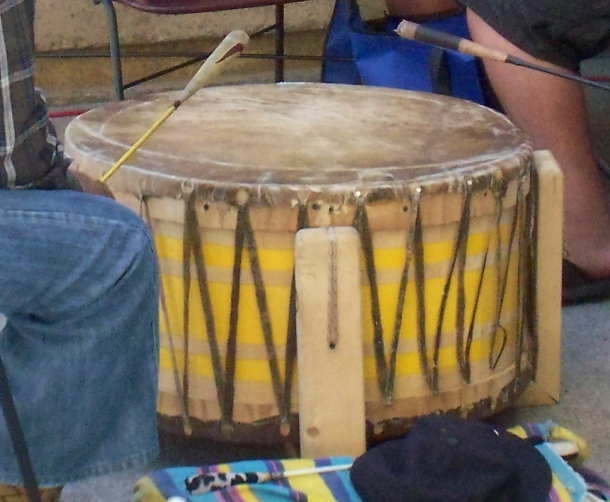
At Smashed-In-Buffalo-Jump’s interpreprative centre, we watched traditional dancing and heard traditional drumming and singing. The drum symbolizes Mother Earth’s heartbeat in Niitsítapi and other indigenous traditions.

Beating hearts gather

Singing, dancing, encircling

Joining as one with Her.
I took this picture as we turned towards Waterton. It was a hot, hazy day, blocking a view of the mountains.

The Niitsítapi meaning ‘original people,’ had their tradtional homes here. The Piikáni (North Piegan), a member of the confederacy, traveled to Waterton’s Blakiston Valley and gathered at Akaitapi (good campsite), providing food, water, and shelter. The area was also used by the Ktunaxa (Kootenay or Kootenai) who traveled from the west, through what is now the Crowsnest Pass.
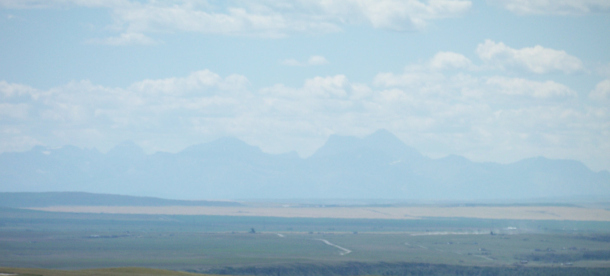
hot, hazy beauty

shimmering above prairies

block distant bastions.

A small herd of bison live in a paddock at Waterton. At one time bison covered the Great Plains of North America. This was literal. People heard them long before they came into view and, when they were visible, it was a mass of brown and black that covered the prairies. Indigenous people used this animals as a ‘walking supermarket’ as almost all its body parts were harvested and usable.
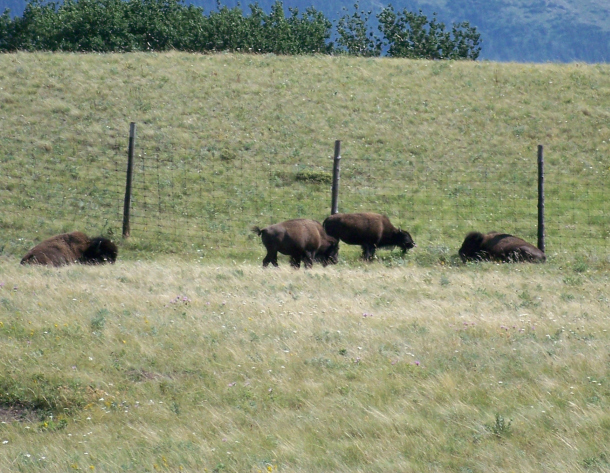
Proud people’s icon

Plains symbol of abundance

Today’s sad sideshow.

We have attended a number of concerts with John Wort Hannam performing. He is from the part of Alberta I highlighted and has a beautiful song about the hills around the area. Enjoy.

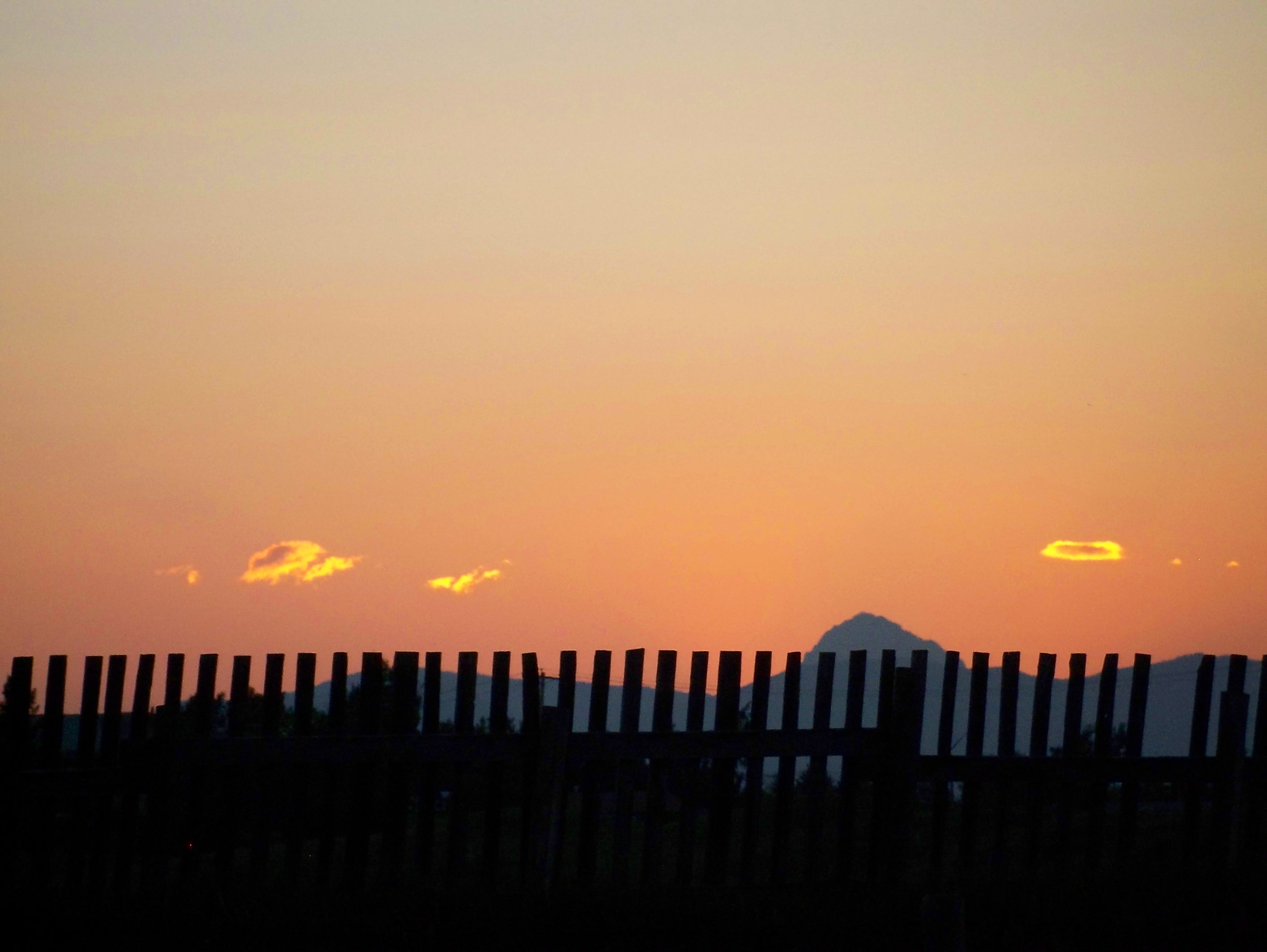
Paradise

Here is another post with photos and poems based on travels through of the natural beauty of Waterton Lakes National Park and Glacier National Park. Parks Canada describes the former as where the prairies and mountains meet. The latter is known as the crown of the continent.

As we drive along Highway 22, we get this view of the mountains in Waterton. The sign says, “Where prairie meets the mountains” and they do. We saw this view later in the day.

This is what a few minutes does in this part of the world.

Embracing mountains

Emerging peaceful fury

Signaling day’s end.

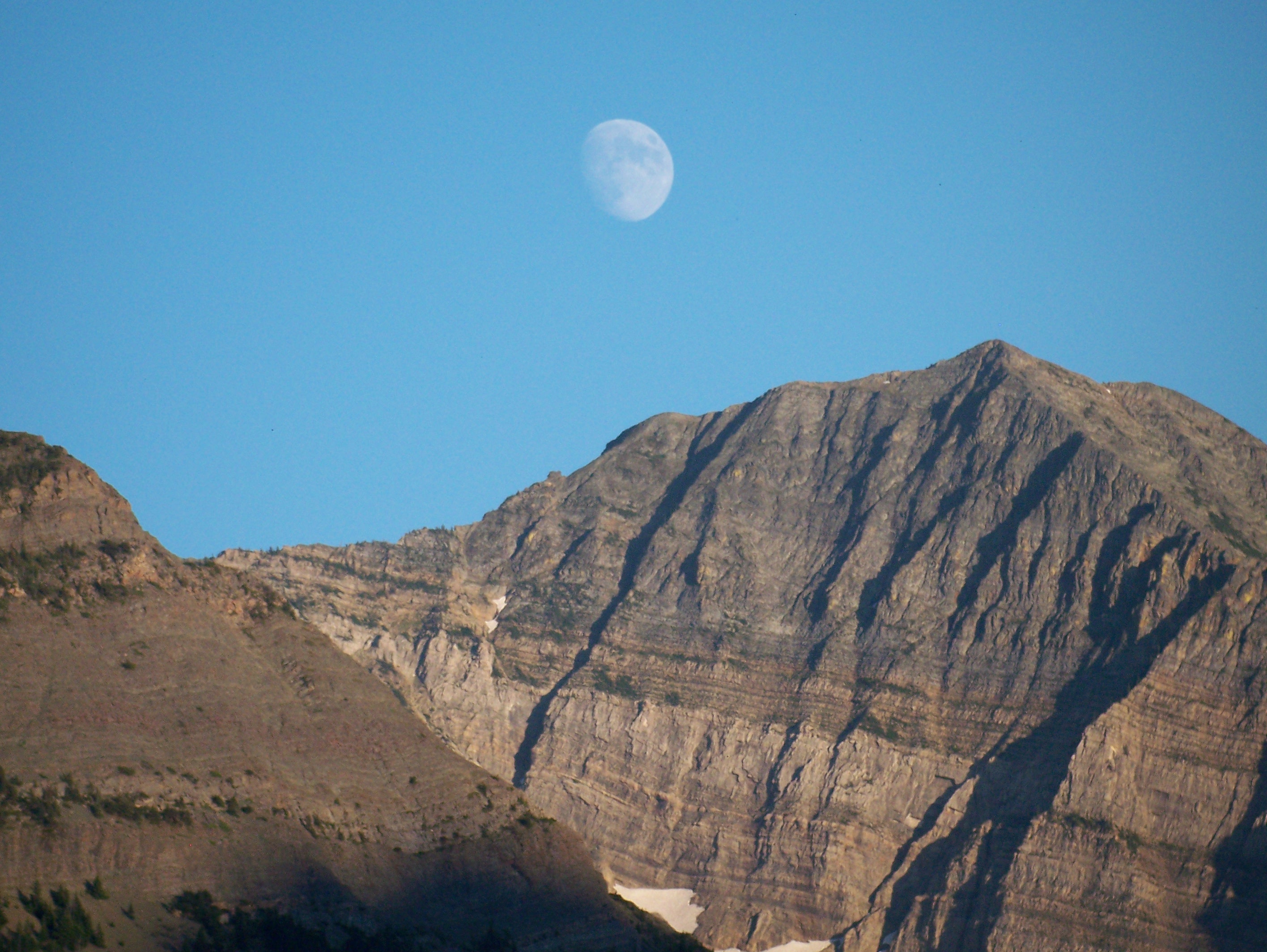
Can you imagine waking up to the view below each day? It is intense. The Canadian census indicates 88 permanent residents of Waterton town site experience this. This is Mount Vimy viewed from the townsite across the big lake.

We traveled down the big lake crossing the Alberta-Montana border about half-way down. We cleared customs with our passports and hiked on the Montana side. At the end of our hike we arrived at to Kootenai. The scenery is spectacular.

Soaring ramparts,

Sheltering nature’s bounty.

In their shadows, safe.

At the end of a dayn hiking we saw this across the lake looking at Mount Vimy again.

Fair maiden rising,

Watchful eye surveys Nature,

Keeping safe til morn.

I know I shared this video a couple of weeks ago. It is my favourite John Prine song and reminds us Paradise is within reach. The challenge is to protect what we have.

Refreshing Pauses

I need to recharge my emotional, spiritual, cognitive, and physical batteries. In a conversation with a colleague in Spokane, we talked about how we were on the go constantly, busy and, when we got to Spokane we slowed down. I fall into a trap of busyness, which brings about a sense of dis-ease. Regardless of how much time I spent in Spokane, I soon realized I fell into a different rhythm of life, one of ease.

Thomas Merton and Thich Nhat Hanh wrote about an active life, one full of busyness, leaving humans depleted. The result is I need times where stress and busyness is reduced to be more present and aware of the life I live. For me, time used to read and write provide necessary breaks.

“Love is our true destiny. We do not find the meaning of life by ourselves alone – we find it with another.” (Thomas Merton)

“We have to learn to live our life as a human being deeply. We need to live each breath deeply so that we have peace, joy and freedom as we breathe.” (Thich Nhat Hanh)

I wrote this poem about a need to recharge batteries, about being present for others, returning hopefully a better person. It is also about finding deeper meaning in my life not always readily visible as I rush around. Black Elk‘s (Heȟáka Sápa) quote inspired the poem, reminding me much of living is recurring in a circle.

Heart opens quietly,

Listen deeply,

Worth waiting.

Lingering in solitude’s support,

Sheltering in its comfort,

Inviting me in.

Not escaping,

Circling back renewed,

Wholeness restored.

Community beckoning

Refreshing pause,

Recurring alchemy of both revitaling.

Neighbours

Here is a wonderful quote from Abraham Joshua Heschel on how we should live life and, I think, view our neighbours in all their forms:

“Our goal should be to live life in radical amazemement [to] get up in the morning and look at the world in a way that takes nothing for granted. Everything is phenomenal; everything is incredible; never treat life casually. To be spiritual is to be amazed.”

I dip into my photographic archives and poems I wrote around them. Again, this is a trip to Waterton Lakes National Park. It is closed right now. It is interesting to revisit the images and remembrances they stir. It is a reminder of living life in radical amazement, taking nothing for granted.

During the trip, we hiked in an area where there were signs about the possible presence of grizzly bear. Its Latin name is Ursus arctos horribilis. The horrible is an apt description if you end up on the wrong side of one.

When I hike, I wonder what hides from my sight and is quiet as I pass. The dense underbrush path hides things from me, giving them a sense of security. The signs reminded me I am not alone, and our neighbours are not always human.

As luck had it, we saw bear that day. At first glance, this one had the right colouring for grizzly. A closer examination indicated it was missing the tell-tale hump on its back and the wider forehead of a grizzly and was a brown coloured black bear. Behaviour wise it was too close to humans, as it was right next to the road and a hotel. Grizzly are pretty reclusive neighbours.

This one was a black bear for sure. Its colour did not make identifying it a problem. As well, it was smaller. That suggests it was younger, probably born a year before we were there.

Even black bear are dangerous. I tell hockey players I coach about the bear rule to decide on what is appropriate language. I tell them, even with our friends, we don’t know what might trigger a negative (horrible) response. Bear attack about 1 out of 10 times they make contact with humans. We just don’t know which of the 10 times.

Hiking someone’s home

Treading warily, softly

Horribilis‘ habitat.

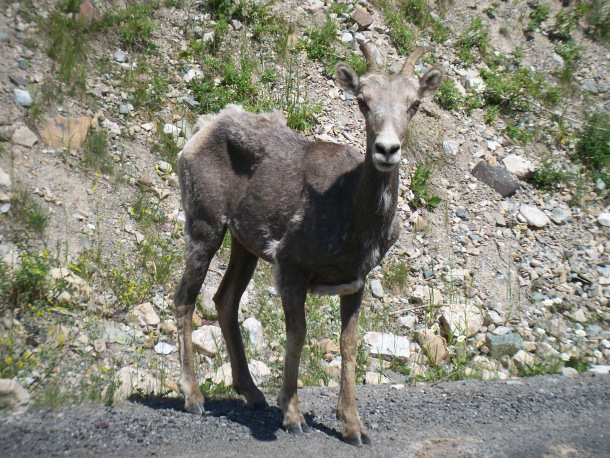
Not all our neighbours are fearsome. This mountain sheep posed for his picture.

I leave you with this poem about neighbours of various forms.

Neighbours near,

Some visible;

Ducks laugh and swim

Distract us, grouse–

Protect family and spouse

Woodpecker’s hunting lunch–

Delectable larvae, I’m sure.

Others less in evidence;

A fish plays–

Loon here and gone

Games of hide and seek.

A moose–

Signs they have been,

Tracks and droppings.

Insects whirring in the stillness’

Butterflies flitting and feeding

Moving seeds from place to place.

Phantom breeze brushing the floor,

Up high, solitary leaf responding

Waving

Trees sighing.

What watches me?

Neighbours present,

Unseen community–

Nature piecing its puzzles,

Seamless, yet not form fitting.

International Peace Park

I love to go to Waterton National Park and, by extension, to Glacier National Park. They border each other on the Alberta-Montana border and form what is known as an International Peace Park.

When I go to Spokane, I drive past the turnoff to Waterton and it brings back by fond memories each time. Kathy and I spent part of our honeymoon, roughing it in a tent, in Waterton. The scenery is beyond spectacular and, when we are in settings like this, the poet in is spoken to.

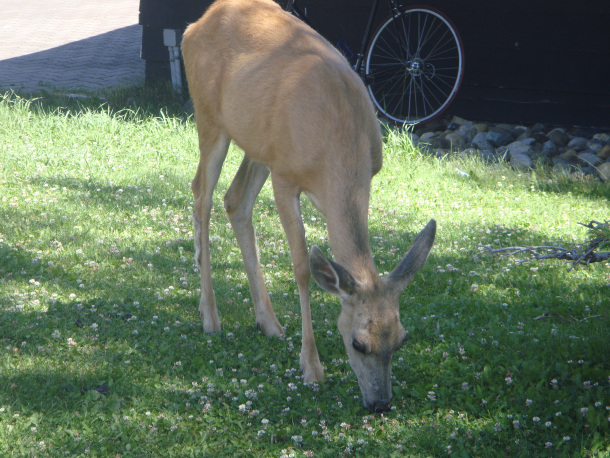
The first day we were there in 2012 this deer was in the townsite unconcerned about human presence.

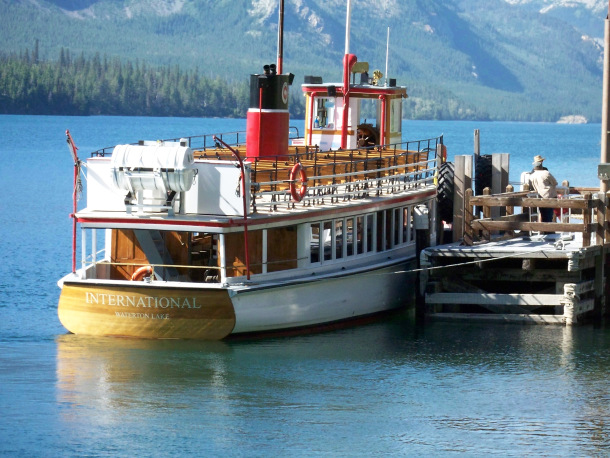
We traveled down the big lake and crossed the Canada-US border. This was the boat we took. Despite appearances, the boat is over 90 years old and was refurbished.

Joining us together

Offering a hopeful message

Carrying peace each day.

Once we got to the American side of the border, we stayed and hiked into Kootenai Lake. We had our passports, cleared customs, and were able to take a later boat. Along the way, I saw some great sights. Having said this, the brush along the trail was so heavy we could not get off of it and I wondered what we missed.

Nature’s cathedral

Dancing lights mingle with shadows

Peace’s benediction.

Happy Haiku

As part of my PhD, the university required I take two ethics courses. In 2012, I took an ethics class. A central theme in the course was the role eudaimonia plays in one’s life. We often translate eudaimonia as being happiness. It is more than being happy in the moment, as that is fleeting. Instead, Aristotle expanded on it to mean human flourishing and even blessedness, which occurs even in moments of distress.

When we think of eudaimonia in that way, it opens up opportunites to reflect on how we experience flourishing. In my case, it is the human relationships, a love of sports, hockey specifically, and writing, particularly poetry. I began to write poetry again, not because I felt at ease with the world, rather because I was unhappy at the time. It was opening up my heart in ways to allow this unhappiness to be dealt with one in ways to help me flourish.

Writing haiku is one poetic form I enjoy. Part of writing them is fun I had teaching how to write them. Students challenged me to write a haiku on the spot. I always began with an idea usually, but not allows, about nature. I got three lines down and then went back to select better words and focus on the syllables.

Students seemed to engage differently as they saw me enjoying writing haiku. Adults sometimes complained. For example parents and administrators questioned teaching poetry. I responded with it is good to write poetry as we learn how to select and use language in precise ways, plus it is fun. They did not always get it. Students did.

Here are a couple of examples that come to mind. It is not that we write as much as it is a process of writing and being written.

coursing cool current

tearing over life’s rocks

crossing to healing

Language and words bridge one’s private struggles and and make it visible and public. I strugled with these haiku. I think I need more practice. I hope they make sense.

Wearing down rough edges

Bridging life’s busyness

Pausing to flourish.

.

Nature and Progress

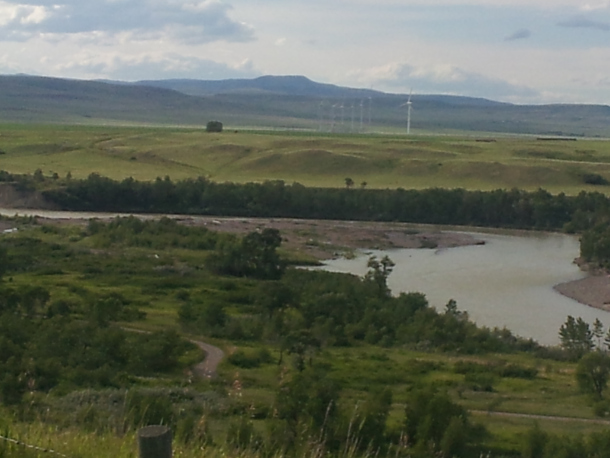
Several years ago, Kathy and I drove through the Crowsnest Pass to Spokane. I stopped at an overlook in Brocket. The Pikani Nation (Aapátohsipikáni, Piikáni, and Pekuni) people live there. The sight was awe-inspiring with a contrast between Nature and a wind power farm designed with precision suggesting humans control the environment. How different this idea is from farming in tradtional ways. Nature humbles me when I pause to understand and be grateful for my place and role in it, not as an outsider colonizing and domesticating.

Progress creates an illusion we control Nature. It humbles me when it reminds me that is not a true picture. It is humbling when I pause to understand what a small place I hold in its complete picture, a picture too large to be fully grasped by individuals and collectives.

It is times such as these, not limited to the pandemic, Nature holds the upper hand. It is a Creator, which can be understood in religious terms and in spiritual terms.

Acting as backdrop;

Mountains, sky, clouds,

Providing depth and breadth,

Contrasting our progress.

Human products,

Made by mortal hands,

Marching winged machines,

Small, almost indistinct on this canvas.

Without pattern, yet poetic

River meandering a perfect line,

Finding its way,

Unseen hands guiding,

Winding its way home.

Brocket 1

“Will you teach your children what we have taught our children? That the earth is our mother? What befalls the earth befalls all the sons of the earth. This we know: the earth does not belong to man, man belongs to the earth. All things are connected like the blood that unites us all. Man did not weave the web of life, he is merely a strand in it. Whatever he does to the web, he does to himself. One thing we know: our god is also your god. The earth is precious to him and to harm the earth is to heap contempt on its creator.” Chief Seattle

Companion

Etymologically, companion is breaking and sharing bread (panis, pa, and pain) with one another as we come together (com). It is associated with being on a journey, meeting others on the path, and stopping to eat with one another.

Companion lends itself towards metaphor, taking us beyond the literal. Faith and cultural traditions have stories related to helping one another, showing compassion and companionship to others. The word compassion means to share the joys and sorrows fo one’s life with others. When we do this, we do so because we can relate to what someone else is experiencing e.g. the loss of loved one.

On this quest we call life, we can questioning what it means to live this life. How do I share it? I am reading Parker Palmer‘s On the Brink of Everything. Parker repeats this need to understand and share in, sometimes, unexpected ways. It is not a calculated process, which humans often can fall into. After all, to be human is to fall short. It is to do the proper thing and bring out the better angels in ourselves and others.

I tend to think a lot, but this is a time where I am thinking even more. What forms of leadership do we want moving forward? How do we bring some harmony to a world often divided? How do we engage in meaningful dialogue to listen with open hearts to others who have much different experiences?

Arise,

This morning.

Tentatively step into the unknowable,

Discerning one’s voice afresh,

Discovering one’s purpose anew.

Asking,

What nourishes, waters, and heals one’s soul?

Who walks with us?

Who joins us?

Who shares the journey?

Who breaks bread with us?

How do we find refuge in one another?

As we pause and share the path,

Never quite able to step into the other’s steps.

Take care,

In one’s questing,

Speak mindfully, heartfully, graciously

Hear mindfully, heartfully, graciously

Your self and others encountered.

I took this picture in Waterton Lakes National Park. When I hike, nature reminds me to sense how much is closer at hand than I realize. What don’t I see? What don’t I hear? The coronovirus gives me time to reflect and question my priorities. What do I value? Am I true to my values? There are things and people who remain invisible and unheard, yet may be closer at hand than I realize. How do I become a companion and share in their journey without imposing?

Set the Backpack Down

Several years ago, I was in the midst of professional struggles and wrote this poem while attending a retreat based on Parker Palmer‘s work. At the time, I was reading his book, The Heart of Democracy. In the book, I came across the following quote:

“Suffering breaks our hearts, but the heart [that is] supple … breaks open, not apart, [and] can grow into greater capacity for the many forms of love. Only the supple heart can hold suffering in a way that opens to new life.”

Joanna Macy has a similar quote: “The heart that breaks open can contain the whole universe.” If my memory is accurate it is this quote that informed Parker’s writing at the time. It is about hopefulness. Hopefulness is not going it alone. It is walking up the mountain together, with those who we can share the burdens of our mutual journey together. Companionship is about sharing bread along the journey, not hoarding it. This is an apt metaphor. What does bread mean in our daily lives?

Parker reminded me passion is not just about love that comes easily. Passion is love has moments of suffering, sometimes long moments. We can each grow through these moments or wallow in self-pity. The other part of suffering is I was not in it alone. Whether it was a colleague who listened, parents who came to check in with me every few days, or Kathy giving me space to make career decisions, I was not in these moments alone.

At the time, I was writing poetry for the first time in years and it was a healing space; a space where I tried to become whole. An essential part of becoming whole is speaking from the heart, which may not mean speaking out loud. In speaking to one another this way, I must listen more closely.

Weighing us down;

We set backpacks down,

Without companions,

The path terrifying,

The mountain is high,

Its peak obscured.

Sharing one’s load;

Trusting,

Settng one’s course right,

Being true to one’s heart,

Only other hearts hear,

Will others hear?

Speaking one’s truth;

Inviting,

Sharing

Lightening loads;

Strengthening our resolve,

Straighening backs,

Squaring shoulders,

Holding heads high.

Will we walk together?

Will we share our loads?

Will we lighten the journey?

I leave you with a wonderful short video from a Canadian performer, David Francey called Morning Train.


The Simple Life

I began looking through some poetry I have written over the years and the first one I came across was this one called The Simple Life. I am going through the poetry, as I think with the time provided, I might look to put them into a coherent form and publish a book of poetry. I promised myself I would do this and have been given the time to work on project.

I enjoy solitude. For me, it is time to recharge batteries. Even on holidays, I spend time with Kathy and not many others. We visit family and friends, and hike. On the trail, we meet people to see plants and animals of the area.

It is good to be alone at times,

Sheltered by comforting trees,

The wind singing its song,

Here, I experience freedom and peace,

For the moment, worries set aside.

Minnows dart at the water’s edge,

Dancing between light and shadows,

Seemingly, without a care,

There, they experience home’s safety;

Its primal call.

Here, this is me,

I exist within a simple space;

An unseen hand beckons me,

I wave to this life,

Enjoying it each time I return;

Nature’s beauty gradually revealed.

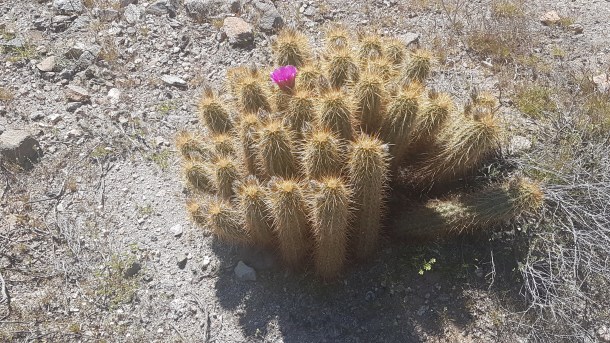
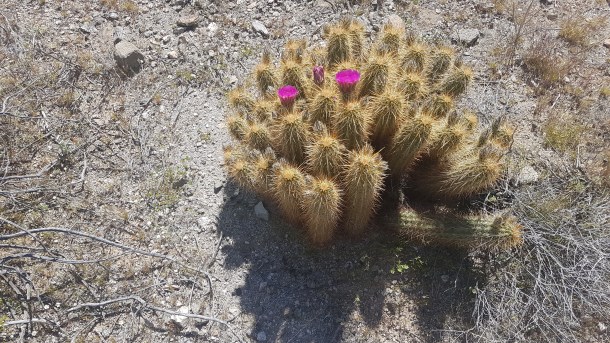
I wrote the poem after spending the day hiking in Waterton Lake National. The one reference is to standing by the lake and watching minnows dart in and out of the sun and shadows. In Arizona, we hiked in an area of Buckeye called Skyline Regional Park.

I took the pictures below over five or six days as the cactus blossomed. As a result, we walked the same path with some variations over that time. We got to see nature’s beauty gradually being revealed.