Category Archives: Nature in All Its Glory

Look, the trees…..

via Look, the trees…..

I have been offline for the past week, as we moved into our new house, which is located on the same lot we lived on before. We still do not have Internet, so I go to a local coffee shop once a day and sometimes every other day to catch up. Purple Rays provided a wonderful post to get back in the groove.

When we bought our house 40 years ago, it came with two relatively large spruce trees in the front. Those remain in place as proud sentinels and, as Mary Oliver describes trees in to the new houses we build on the same lot, one for Kathy and I and the other our youngest son built.

We chose to stay and build for several reasons. First and foremost, it gave our son a chance to have his own house. Second, we enjoy the community we live in and have been part of the fabric of it for 40 plus years. It is an area of Edmonton that has tremendous stablity despite the rapid growth of the metro area. We have neighbours who have lived in this community longer than we have.

The house on the left is our house and the one on the right is our son’s house as the trees stand guard.


Gift

I began reading a book called Thomas Merton—Evil and Why We Suffer: From Purified Soul Theodicy to Zen. The author, David Oberson, explores the evolution of Merton’s view of good and evil throughout his adult life, framed, first, through a mystical and monastic Christian view and, then, a growing interest in Zen Buddhism towards the end of his life.

I have always been fascinated with Merton’s wide ranging relationships, nurtured through letter writing. Some I knew about from previous readings e.g., Thich Nhat Hanh, Dororthy Day, Martin Luther King, Jr., etc. Today, I found another one of his relationships; this one with the poet Czeslaw Milosz who lived under Nazi and  Soviet oppressors in Poland before moving to the US. Merton and Milosz shared concerns about totaliarianism, scientism, racism, etc., which I can only imagine would be intensified in today’s global climate.

Milosz wrote a beautiful poem called Gift to remind me suffering that emerges from life is impermanent. In this poem, he reminds me their is always something beautiful and good, as he alludes to nature and creation that emerges to replace the suffering.

A day so happy.
Fog lifted early, I worked in the garden.
Hummingbirds were stopping over honeysuckle flowers.
There was no thing on earth I wanted to possess.
I knew no one worth my envying him.
Whatever evil I had suffered, I forgot.
To think that once I was the same man did not embarrass me.
In my body I felt no pain.
When straightening up, I saw the blue sea and sails.

I took this picture in BC about two years ago. As I walked on this morning, I reached a higher spot on the path and saw the lake in the distance fog covered. Like the fog, the suffering lifts with time and a warming sun. I let go of the envy, anger, grasping to be present when I work in the garden that is nature.

Fresh Quotes: Mary Oliver

via Fresh Quotes: Mary Oliver

Nancy posted this over two years ago and reblogged it on her site Strawberry Indigo after Mary Oliver passed away.

I noted the other day what draws me to Mary Oliver’s poetry are the questions, direct and indirect she poses. Several years ago, I concluded a presentation on Mindful Servant-Leadership with the following question from her poem Summer Day with this quote: “Tell me what is it you plan to do/with your one wild and precious life?”

Another quote Nancy shared which fits is “Instructions for a living a life/Pay attention/Be astonished/Tell about it.” This raises questions about how I pay attention, how we reveal being astonished, and how I give an account of myself and respond through stories. Rather than answers, as Rilke says, “Be patient toward all that is unsolved in your heart and to try to love the questions themselves like locked rooms.” Without preconceived answers, there is eloquence and beauty in one’s questions, living themselves out in ever broadening circles.

Mary Oliver reminds me to “some room in your heart for the unimaginable.” At my age, I understand myself as a river meandering through the landscape rather than cutting through rocks. Perhaps, this appears predictable, but I ask “what is invisible and moves with currents below the surface? What has life taught me? How do I share with others, who often are disinclined to slow down, stop, and listen?”

What I recall is I did the same, filled with busyness and urgency of life, not in the moment, but in some future I chased. Instead of meandering, I was a rushing river carving out a path without concern for what might appear. The second river flows through a narrow channel, with high banks I cannot see over. The first river flows in ways I can look back and ahead, understanding there is mystery flowing below the surface. What is obvious is often superficial, rather than mystical.

Above Numa Falls


Wild Geese by Mary Oliver

via Wild Geese by Mary Oliver

Yesterday was a day of riches as this wonderful Mary Oliver poem was posted by Dawn and re-blogged by John and Kenne.

There are prayerful and questioning qualities in Mary Oliver’s poetry that challenge me to think about the universe as a place where each sentient and non-sentient being thrives and flourishes. We grow mindful of our needs as they relate to the needs of other living and non-living being. Living is a practical and ethical way of standing in the world. Practical and ethical ways of living are essential to growing spiritually and acting with care towards sentient and non-sentient beings.

Wendell Berry has a poem entitled The Wild Geese asking me to be thankful for the gifts that come to me each day. What do I take-for-granted? What do I overlook and treat as ordinary that I can celebrate as (extra)ordinary? As Mary Oliver asks, “how does my body ‘love what it loves?'” How do I notice the universe and let myself find its way home each day?

Here, is a video of me reading the two poems about geese and the poet’s reminder of being present to what is here.


Thanksgiving

Today is Canadian Thanksgiving. We celebrated yesterday with two sons and a partner due to work schedules. We will celebrate again for American Thanksgiving. This is in part due to my time in the US completing my PhD and we have extended family who are from the US.

The idea of two Thanksgivings led me to reflect. What am I grateful for each day? I am thankful for family, friends, good neighbours, good health, a house that will feel like home as it is built on our original property, and many other people and things.

What if we thought of each day as a day to give thanks, a thanksgiving?

I wrote this poem called Thanksgiving several years ago.

Gratitude and thankfulness

Share each sacred moment–

Turn to beloved others,

Hold tight,

Acknowledge worth,

(Extra)ordinary emerges from ordinary

Moment by moment–

The taken-for-granted

Reveals itself.

Sharing bounty,

Feeling blessed,

Expressing gratitude,

Saying daily prayers of thankfulness.

I took this in Jasper National Park with the Athabasca Falls behind Kathy.

The video above is by Mary Chapin Carpenter. I have several of her CD’s. Enjoy and be thankful.

Your diet is not only what you eat.

via Your diet is not only what you eat.

Jonathan provided a beautiful image and a poem from Rumi.

What I enjoy most about Rumi’s poetry, is how over time the metaphors he used resonate, perhaps more than ever.

In today’s world, we need to feed our bodies in mindful ways, paying attention to what we watch, listen to, and the people we associate with. They feed the emotional, spiritual, and physical essence of our lives, which are inseparable.

In the modern, hectic days we live in sometimes we forget to nourish the soul and what inspirits us. For me, some of it is time with those close to me, my writing, and nature.

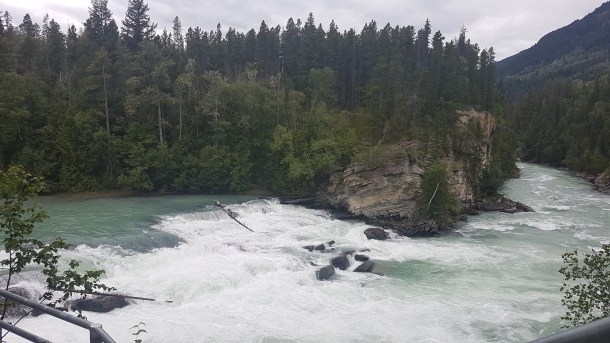
Rearguard Falls August 2019

In August, Kathy and I stopped at Rearguard Falls, located in the upper reaches of the Fraser River. As a result, I enjoyed three phenomena that inspirit me: time with Kathy, nature, and writing, although the last one was delayed.

Autumn Promises

In preparing a short presentation on mindfulness in daily life and autumn, I ended up writing a poem about autumn. More than writing, I reflected on how I understand seasonal cycles, including the equinox we experienced on the weekend.

I considered how I define phenomena. For example, autumn or fall was defined by my teaching with phrases such as “see you in the fall, school begins in the fall, and have a good summer, see you in the fall for school.” Nature does not define autumn quite so neatly.

Yes, there is a moment where the time from the longest and shortest days of sunlight is exactly balanced, but Nature and her other living beings are responding according to instinct and invisiable cues, not on artificial times. Trees are slow to change colour and shed their leaves this year, the rabbits in the yard are still brown/grey, and the geese are still gathering to feast on the grain left in farmers’ fields.

For me, autumn is a beautiful mix of the other seasons. On my walks, I experience the cool wind hinting of winter, the warmth of the sun suggesting summer is not gone, and the smell of decay to prepare the way for spring renewal and rejuvenation.

As well, there many metaphors and carry in our daily lives. Understood as a time of harvest, gathering, and bounty, autumn reminds me to be mindful of those moments when we gather, the memories and stories we gather to share with one another, and the readying for dormant times in life vital to our rejuvenation. This happens at all times of the year.

Another aspect of reflecting, preparing, and presenting was I felt rejuvenated. I am not teaching this fall and have been a bit down. Yesterday, I felt presenting and the writing that went with it put some “spring” in my step to be a little punny. I recording the presentation as a series of videos to upload and to put some of my poems into a book to publish.

Autumn arrives unannounced,

Alluding to other seasons

Touching body and soul as I walk.

Cool breeze;

Winter’s promise of dormant moments,

Readying for rebirth.

Afternoon sun chasing chill,

Warming body and soul,

Hinting summer remains.

Vibrant aesthetics;

 Artist colouring leave from Her palette,

Hanging above; fallen mates carpet ground.

Secluded, shaded, dampness,

Rich aroma of decay,

Spring depends on fall’s work.

Is there a typical autumn day?

Is there a typical autumn moment?

Nature whispers, “Maybe; Maybe not.”
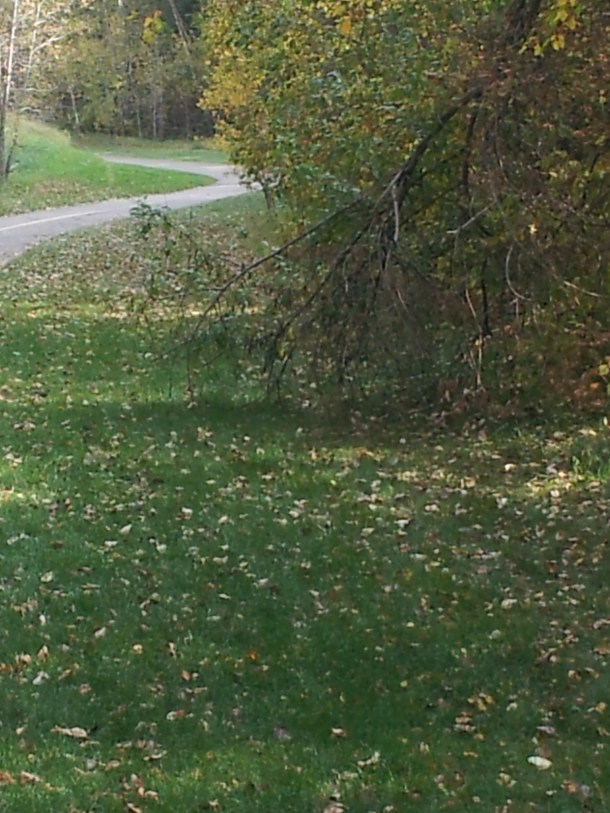
This was a picture I took several years ago in the river valley. I remember the aroma of decay as it had been a cool and wet fall followed by some warmth.

CHANGE OF A WORLDVIEW

via CHANGE OF A WORLDVIEW

Worldview is interesting. I find words, like worldview and mindset, take on meanings based on my most immediate needs as opposed to different, more complex view.

Bruce offered me something to ponder based on the concept of Universal Christ, sometimes referred to as Cosmic Christ. In this, I consider God not as a finite, fixed entity easily imagined and as a complex entity existing beyond my thinking and imagining.

Richard Rohr calls me to understand God and universe as more complex than I am able to imagine. It is OK to try imagine who and what they might be, but they are so complex my mind cannot grasp them. There is always a considerable amount beyond my reach, calling me to resist temptation of neo-Platonic and neo-Thomistic views locking me into finite, fixed ways reflecting my own limits rather than those of God and universe. There is always something “uncanny” and hidden from my view.

Reading Father Rohr, I find echoes of Thomas Merton. Both authors remind me there is far more I do not know than I do and can know. Through nature, God is always revealing and telling me something new, humbling me in the face of my ignorance.

100_4747

Kathy took this picture several years ago driving through Glacier National Park. Although the picture is fixed, the landscape itself never can be. It is always changing with snow melting and falling; trees growing, the stream eroding the landscape, etc.

It reminds me of the Herclitus quote: “No man ever steps in the same river twice, for it’s not the same river and he’s not the same man.”

…the little bit of love that I sow now will bear fruits…

via …the little bit of love that I sow now will bear fruits…

Purple Rays shared a beautiful quote from Henri Nouwen, a Catholic priest who spent his early career as an academic and shifted to L’Arche as a caregiver for disabled adults.

I recently read In the Name of Jesus: Reflections on Christian Leadership. He wrote not about leadership writ large, but about his leadership during his early years at L’Arche and how much he learned from those he was to give care.

Transitioning from one role to another is always challenging. Nouwen provides insight into the challenges how he shifted away from leadership focused on being “relevant, popular, and powerful” to leadership more aligned with servant and love for others as a shepherd caring for each member of a flock.

How do I serve others? This is an essential question in my life as I transition from teaching in a classroom and to something new and, as yet, undefined. Perhaps, more importantly, it will always remain, at best, ill-defined.

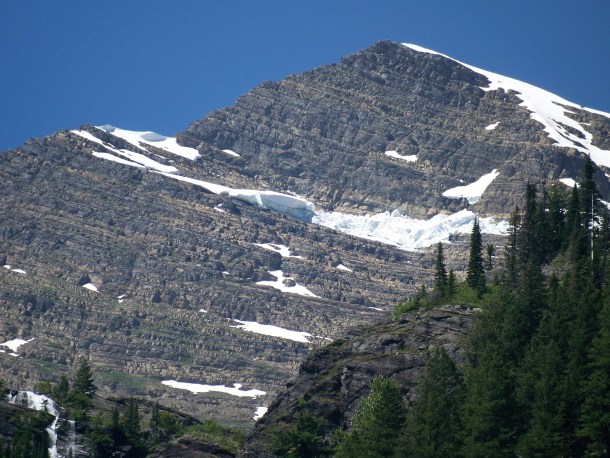
Mountain's Layers

Perhaps, like the mountain, each striation will serve to help me author new stories and embrace the very mystery of the future, based on history and traditions that help me serve and be minful of the needs of others.


Mountains, Clouds, and Love

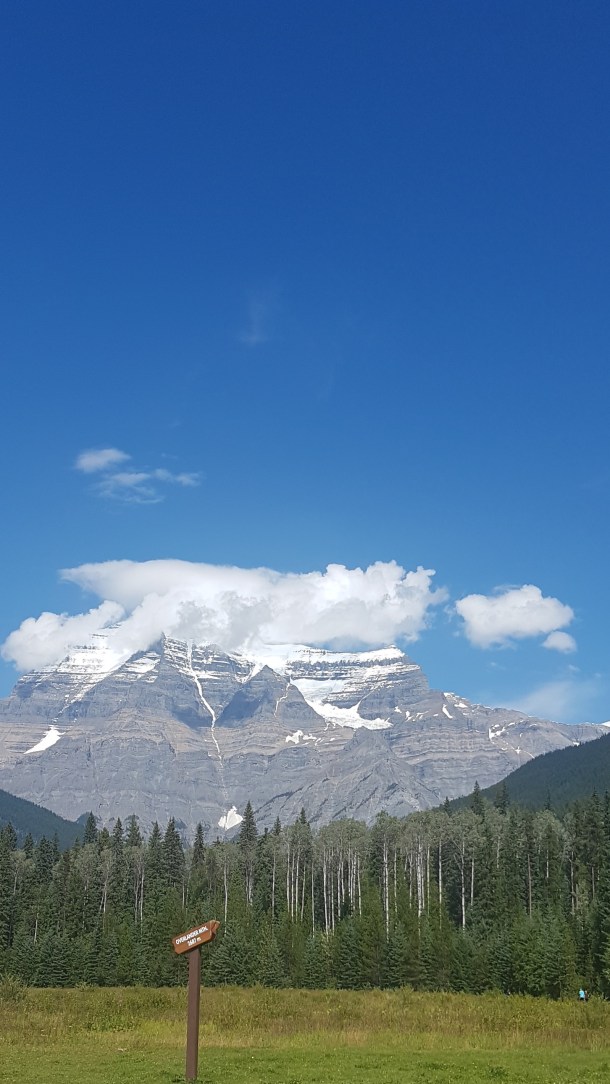
Kathy and I were in British Columbia, visiting family, for a week. We stop at Mount Robson on our way to Prince George, which is where we first met and lived after we were married.

Mount Robson is highest point in the Canadian Rockies and we have driven by it many times on our way to and from Prince George. We take pictures of it at every opportunity and stop to bask in its majesty and richness.

Toni Morrison provided this wonderful quote about mountains and leaders:

“Did you ever see the way the clouds love a mountain? They circle all around it; sometimes you can’t even see the mountain for the clouds. But you know what? You go up top and what do you see? His head. The clouds never cover the head. His head pokes through, because the clouds let him; they don’t wrap him up. They let him keep his head up high, free, with nothing to hide him or bind him.”

Here are two pictures I took of Mount Robson with a little cloud cover circling and loving the mountain at the top, letting its head poke through.