Category Archives: Photography

Nature and Progress

Several years ago, Kathy and I drove through the Crowsnest Pass to Spokane. I stopped at an overlook in Brocket. The Pikani Nation (Aapátohsipikáni, Piikáni, and Pekuni) people live there. The sight was awe-inspiring with a contrast between Nature and a wind power farm designed with precision suggesting humans control the environment. How different this idea is from farming in tradtional ways. Nature humbles me when I pause to understand and be grateful for my place and role in it, not as an outsider colonizing and domesticating.

Progress creates an illusion we control Nature. It humbles me when it reminds me that is not a true picture. It is humbling when I pause to understand what a small place I hold in its complete picture, a picture too large to be fully grasped by individuals and collectives.

It is times such as these, not limited to the pandemic, Nature holds the upper hand. It is a Creator, which can be understood in religious terms and in spiritual terms.

Acting as backdrop;

Mountains, sky, clouds,

Providing depth and breadth,

Contrasting our progress.

Human products,

Made by mortal hands,

Marching winged machines,

Small, almost indistinct on this canvas.

Without pattern, yet poetic

River meandering a perfect line,

Finding its way,

Unseen hands guiding,

Winding its way home.
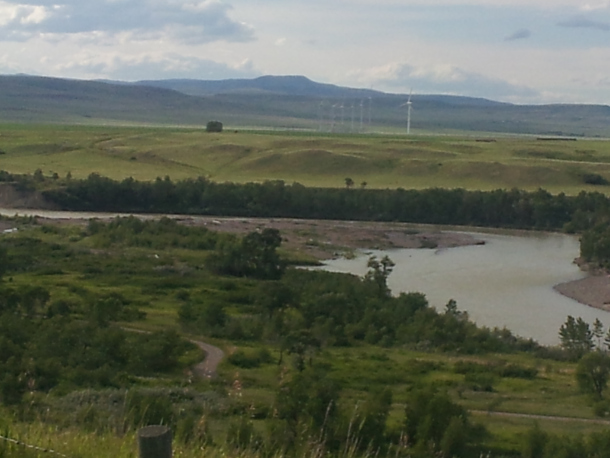
Brocket 1

“Will you teach your children what we have taught our children? That the earth is our mother? What befalls the earth befalls all the sons of the earth. This we know: the earth does not belong to man, man belongs to the earth. All things are connected like the blood that unites us all. Man did not weave the web of life, he is merely a strand in it. Whatever he does to the web, he does to himself. One thing we know: our god is also your god. The earth is precious to him and to harm the earth is to heap contempt on its creator.” Chief Seattle
Nature’s Palette

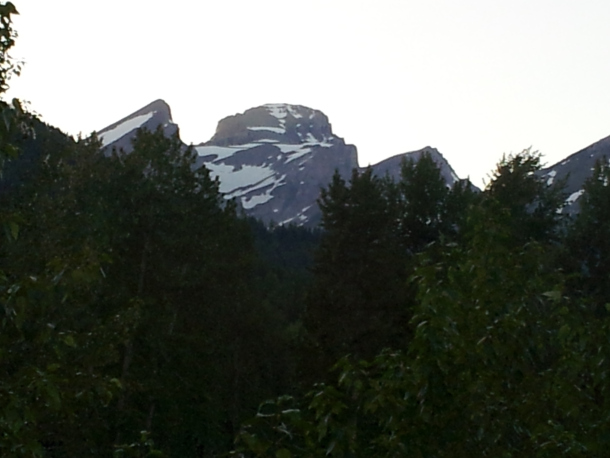
Regardless of where we travel, we are always in a different ecology. In the mountains, I see how they reach into the sky and how they impact the sky my view. Quite often, I see this change as it is different than what I see at home. Change happens regardless and, when I am out of what I understand as “normal,” change appears different. For me, this is noticeable as the sun sets

Fingers reach the sky

Colours mingle with others

Day merges into night.

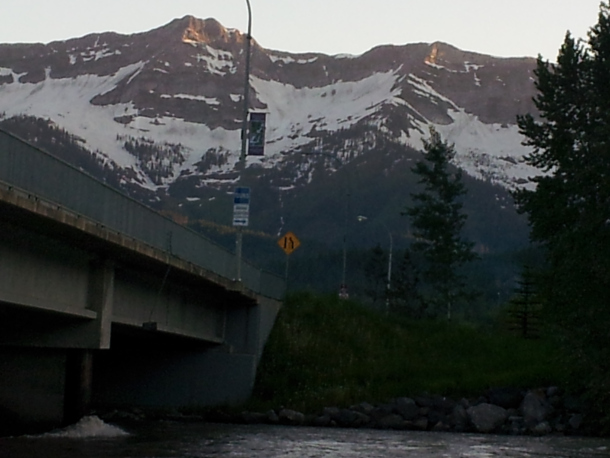
I took this picture several years ago on our way to Spokane. As we walked by the river, the sun set. It was a bit overcast and gray, so the colours blended together more than I am used to.

We walked and came around a back street getting another view of the mountains.

last colours dancing

this day slipping away

dark curtain sliding in place.

Rich palette in hand

Desert sky as a canvas

Nature painting masterpieces.

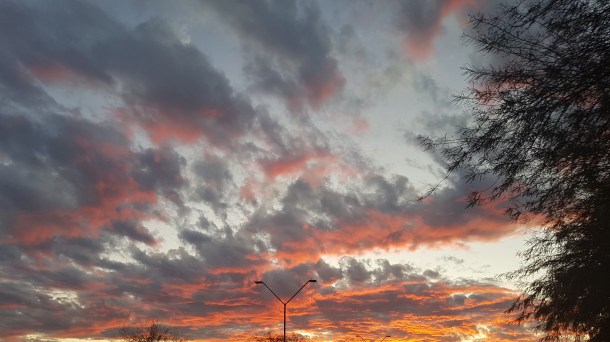
In early March, Kathy and I were in Phoenix. I walk every day and this was my last walk of the day. As I walked, I walked into the sunset and the sky lit up with vivid colours. I suspect being in a desert setting had something to do with it. It is hard to believe we were in a large urban setting.

I always try to remember Nature is all around me. Take care and stay well.

Companion

Etymologically, companion is breaking and sharing bread (panis, pa, and pain) with one another as we come together (com). It is associated with being on a journey, meeting others on the path, and stopping to eat with one another.

Companion lends itself towards metaphor, taking us beyond the literal. Faith and cultural traditions have stories related to helping one another, showing compassion and companionship to others. The word compassion means to share the joys and sorrows fo one’s life with others. When we do this, we do so because we can relate to what someone else is experiencing e.g. the loss of loved one.

On this quest we call life, we can questioning what it means to live this life. How do I share it? I am reading Parker Palmer‘s On the Brink of Everything. Parker repeats this need to understand and share in, sometimes, unexpected ways. It is not a calculated process, which humans often can fall into. After all, to be human is to fall short. It is to do the proper thing and bring out the better angels in ourselves and others.

I tend to think a lot, but this is a time where I am thinking even more. What forms of leadership do we want moving forward? How do we bring some harmony to a world often divided? How do we engage in meaningful dialogue to listen with open hearts to others who have much different experiences?

Arise,

This morning.

Tentatively step into the unknowable,

Discerning one’s voice afresh,

Discovering one’s purpose anew.

Asking,

What nourishes, waters, and heals one’s soul?

Who walks with us?

Who joins us?

Who shares the journey?

Who breaks bread with us?

How do we find refuge in one another?

As we pause and share the path,

Never quite able to step into the other’s steps.

Take care,

In one’s questing,

Speak mindfully, heartfully, graciously

Hear mindfully, heartfully, graciously

Your self and others encountered.

I took this picture in Waterton Lakes National Park. When I hike, nature reminds me to sense how much is closer at hand than I realize. What don’t I see? What don’t I hear? The coronovirus gives me time to reflect and question my priorities. What do I value? Am I true to my values? There are things and people who remain invisible and unheard, yet may be closer at hand than I realize. How do I become a companion and share in their journey without imposing?

The Simple Life

I began looking through some poetry I have written over the years and the first one I came across was this one called The Simple Life. I am going through the poetry, as I think with the time provided, I might look to put them into a coherent form and publish a book of poetry. I promised myself I would do this and have been given the time to work on project.

I enjoy solitude. For me, it is time to recharge batteries. Even on holidays, I spend time with Kathy and not many others. We visit family and friends, and hike. On the trail, we meet people to see plants and animals of the area.

It is good to be alone at times,

Sheltered by comforting trees,

The wind singing its song,

Here, I experience freedom and peace,

For the moment, worries set aside.

Minnows dart at the water’s edge,

Dancing between light and shadows,

Seemingly, without a care,

There, they experience home’s safety;

Its primal call.

Here, this is me,

I exist within a simple space;

An unseen hand beckons me,

I wave to this life,

Enjoying it each time I return;

Nature’s beauty gradually revealed.

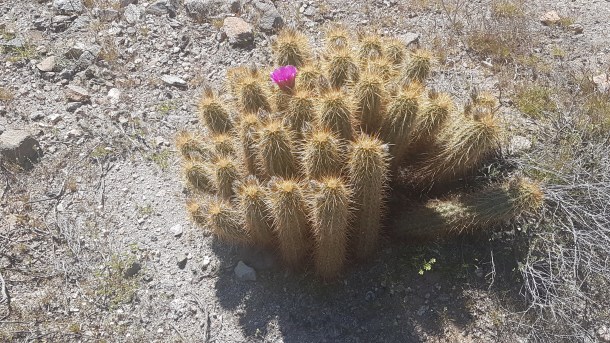
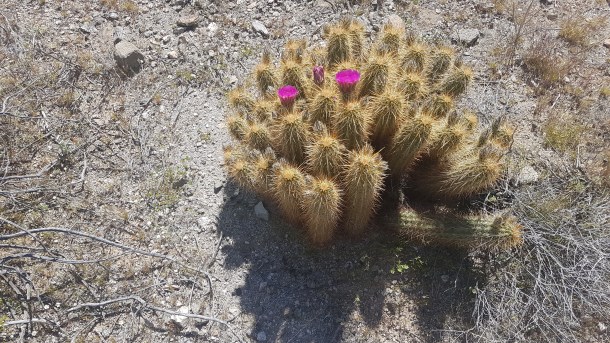
I wrote the poem after spending the day hiking in Waterton Lake National. The one reference is to standing by the lake and watching minnows dart in and out of the sun and shadows. In Arizona, we hiked in an area of Buckeye called Skyline Regional Park.

I took the pictures below over five or six days as the cactus blossomed. As a result, we walked the same path with some variations over that time. We got to see nature’s beauty gradually being revealed.

A Grateful Haiku

via A Grateful Haiku

What are each grateful for at this time? We live in unusual times. As I go through my daily routine, I read articles and posts about how this is a time to rethink what we value and what we are each grateful for in our lives.

Tanya wrote a haiku about the symbiotic relationship between a monarch butterfly in its larval stage and milkweed. I often overlook how nature provides a sense of harmony I have to look deeper to see. When I look past the monarch butterfly’s beauty to its larval form I understand it exists by taking bites out of the milkweed flower’s beauty.

In that vein, when I read the comments, I realized it was “dueling haiku” between Tanya and Stephen. I appreciated what lay beneath the surface of the post and was grateful for their poetry skills. After all it is National Poetry Month.

Thich Nhat Hanh reminds me to find the extraordinary, I look past and beneath the surface of the visible to uncover hidden beauty. Yesterday, it snowed and was cold, below 0 Fahrenheit (about 20 degrees Celsius), and there was beauty. I took this picture of a tree in our front yard with the clear sky in the background. If it had been January, not the end of March, it might have been easier to see beauty. I remind myself we need this snow to melt and add to a needed water table so we might grow and harvest later in the year.

Front Yard with Fresh Snow March 31, 2020

I recently wrote about challenges of being unable to teach in a university setting. At my age, the doors appear closed. As I reflected and wrote, I realized my days, as a teacher in some formal way, might be over. Quite frankly, we do not value the wisdom elders have to offer. Emerging from this sense of frustration and despair was a sense something else was calling me: to write in various ways. This is a form of teaching perhaps and a gift I had not been grateful enough to have.

Yesterday, a colleague and I were advised we were accepted to write a peer-reviewed article for a special edition of a journal. This is asecond peer-reviewed article in several months that has been accepted. For that, I am grateful. In being grateful, I need to look past how things appear superficially and re-cogize there is more I am becoming.

I leave you with this beautiful video from the late Israel Kamakawiwo`Ole or IZ as he was known.

https://www.youtube.com/watch?v=y5JicO2bKec

Happy Birthday Dr. Seuss

Regardless of where I am, I am in relationship with other humans and the world we share. It is easy to take these relationships for granted. Over the years, I discovered, children and youth embrace differences more readily than adults.

Through the use of satire, made up words, and unusual characters, Theodor Geisel, better known to us as Dr. Seuss, took a stand against bullies, hypocrites, and demagogues. In this way, I think his characters depict pluralism we live in. Yes, there is no Lorax, Yertle the Turtle, or Cat in the Hat, but we can learn to appreciate and defer to their beautiful differences. Even within  differences, I find more similarities and common ground with others, a sense of community of humans.

We need this in the world we co-inhabit with other sentient and non-sentient beings. Too often, people who masquerade as leaders tell us to see difference as a problem, to exploit Nature, and to separate ourselves from our better angels. Perhaps our better angels are Thing 1 and Thing 2.

298x322 Unique Dr Seuss Images Ideas Dr Seuss Art, Dr

I retrieved the Thing 1 and Thing 2 image from Clip Art Mag.

I took this picture Sunday at the Japanese Friendship Garden. Even in the midst of an urban setting, like Phoenix, we discover spots where nature and humans co-exist in almost perfect harmony. In truth, we are never separate from nature and humans. It is only in our thoughts we are separate, somehow superior. When we are present and mindful, we recognize there are no boundaries.

Here are four of my favourite Dr. Seuss quotes:

Today you are You, that is truer than true.
There is no one alive who is Youer than You.

Don’t cry because it’s over. Smile because it happened.
Unless someone like you cares a whole awful lot, nothing is going to get better. It’s not.

So be sure when you step, step with care and great tact.
And remember that life’s A Great Balancing Act.

Albert Einstein

via Albert Einstein

Mrs. Vee offers a quote from Einstein and a headshot. The quote suggests imagination, which is unbounded, is more important than knowledge, which is limited in scope.

Those who educate provide “images for [the] imagination and for forming…memory….to grasp the ‘circumstances’ [we live in] in their infinite variety.” I use the word educate purposely, as each of us learns in settings other than schools. Schools are formal places where a particular agenda is followed.

Over the last few months, I struggled as I transitioned from having taught and wanting to teach. I define myself as a teacher. I taught one term at a small, private, Christian-based university. I applied twice for a tenure track position and have been ignored both times. I think there are multiple things at play and will deal with three. First, others my age are ready to retire. They say things like “I worked to get to this stage.” I understand teaching as a calling, so never worked to get to this stage. Second, it turns out, in the eyes of some, I am the wrong kind of Christian. I am Catholic, yet I am probably, in the eyes of many Catholics, the wrong kind of Catholic. Third, I limited my imagination. I think this is natural. I have not been here before and have few images for imagination. I only knew myself as a teacher, limiting the possibilities of what I could do and who I was still becoming.

The last point is essential. I mentioned this in the last two posts. I have been writing and am invited by others in to collaborate. I can imagine myself as a writer. I don’t know what kind of writer and what other doors it will open up. But, I have been here before.

Kathy reminds me frequently that “when one door closes, another opens.” What I have to recall is I do not know what will happen as I walk through the new door. I can imagine it and, with imagining, new worlds open up and hope exists.

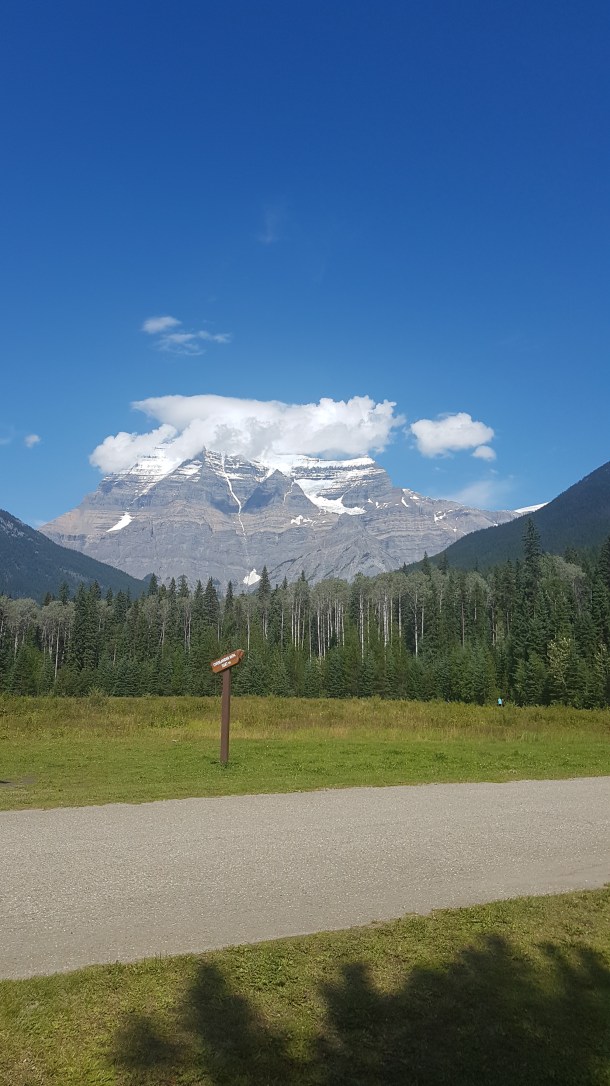
Mount Robson 1 August 2019

This is the front side of Mt. Robson. I have never seen the backside. I can imagine what it might look like based on what I see and what I have read about it. There is a glacier and lake on the mountain. Based on past experience (history), I can imagine sitting on the edge of the lake, like I can imagine sitting and writing the next poem, article, book chapter, a book about teaching in the best little school in the world, etc. I get to imagine my life, so I don’t have to be the right kind of anything for administrators who can only operate in binary terms.

My Ojibwa prayer.

via My Ojibwa prayer.

John shares a beautiful prayer and a wonderful segue into a New Year. Many Indigenous peoples, like the Ojibwa (Anishinaabe and Saulteaux) cherished Mother Earth in their spirituality. Also in his post, there is a cover of John Lennon‘s Imagine.

When I read the prayer, I consider what questions arise from the various words and lines John shares. What if each human being prayed for peace? What would this mean? What if we questioned how much an acre of land is worth in human life, lives of other creatures, and destruction to land ? What if we each reflected on sacred places we seek refuge in, whether they are in some remote spot, a city park, or our backyard garden? What do those places mean to each of us? What is the cost to us if they disappear?

John’s words remind me of a story Leo Tolstoy wrote, How Much Land Does a Man Need? The main character Pahom consumed with greed makes a bargain with the devil to acquire as much land by walking around and returning to the starting point by the time the sun sets. As it turns out, Pahom’s greed gets in the way and he fails, giving up his soul and life in exchange for a grave that constitutes the amount of land he needs in his life.

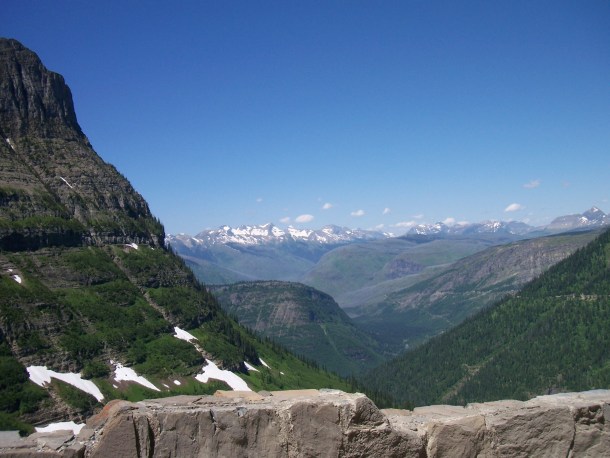
100_4758

Kathy took this picture from the one of the overviews on the Road to the Sun in Glacier National Park.

There is not a flower that opens, not a seed that falls into the ground, and not an ear of
wheat that nods on the end of its stalk in the wind that does not preach and proclaim the
greatness and the mercy of God to the whole world. There is not an act of kindness or
generosity, not an act of sacrifice done, or a word of peace and gentleness spoken . . .
that does not sing hymns to God.

Thomas Merton, The Seven Storey Mountain (1948)

Quote: I looked in temples, churches and mosques…-Rumi

via Quote: I looked in temples, churches and mosques…-Rumi

George is a prodigous blogger, sharing poetry, quotes like this one, and video clips of many of my favourite performers e.g. Leonard Cohen, Nina Simone, Neil Young, etc.

As Rumi suggests, we should look inwards to find the divine as we enter the New Year. Here are words from Mary Oliver to bid farewell to 2019 and usher in 2020:

This is, I think, what holiness is:

The natural world, where every moment is full of
the passion to keep moving

Inside every mind there’s a hermit’s cave full of light,
full of snow, full of concentration

I’ve knelt there, and so have you,
hanging on to what you love, to what is lovely.

Inside each of us there is “a hermit’s cave full of light” where we can be thankful for whato is in our lives and what they each bring into our lives. Take care, enjoy, and be safe as we continue the journey.

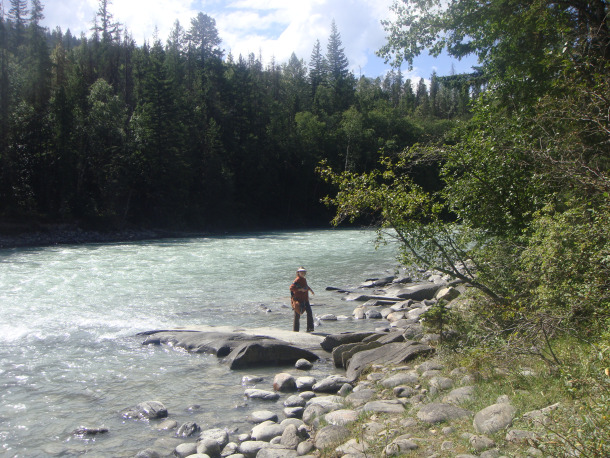
Fraser River Near Headwaters

I know I shared this picture previously, but it serves to remind me the most important person in my life and memories we share with each other.

A spiritual reflection on the Centenary of Thomas Merton – Part 1

via A spiritual reflection on the Centenary of Thomas Merton – Part 1

Bruce posts wonderful text, accompanied by exceptional images. This post caught my eye as I looked through Bruce’s blog. It is about Thomas Merton and his enduring work as a pacifist, activist and support of inter-faith dialogue.

I read Merton and book about his writings frequently. I grew up in the shadow of Vatican II, which promoted inter-faith dialogue and Merton, Brother David Steindel-Rast, Karen Armstrong, Thich Nhat Hanh, etc. attract me to their work.

I find them to be prophetic and mystical, often signaling challenges we will face long before they are evident to most of us. For example, Bruce included a wonderful quote from a letter Merton wrote to Rachel Carson after reading Silent Spring. Both offered prophetic views, as mystics, of a world to come and challenges we faced in the 1950’s.

I leave you with this quote from Thomas Merton and wish each of you the best. However, we each celebrate we need to share our love for each other and the world we share with each other.

The beginning of love
is the will to let those we love
be perfectly themselves,
the resolution not to twist them
to fit our own image.”
~Thomas Merton

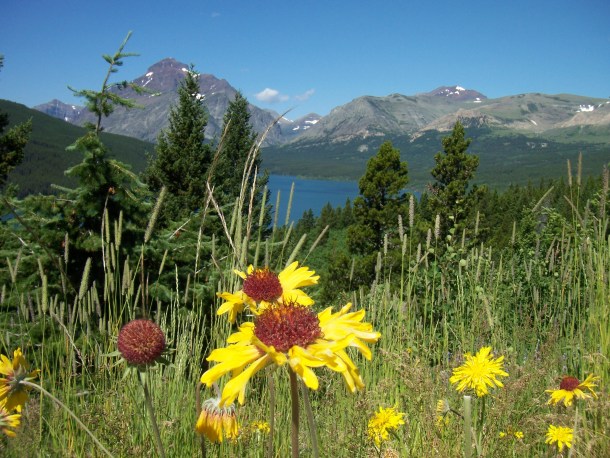
Daffodils, Lake, and Mountain in Glacier

I share this image often. Kathy took it in Glacier National Park. She shared it with me out of love and I share it with my love for the people who will see it and nature we are stewards of, echoing Wendell Berry when we say: We Do Not Inherit the Earth from Our Ancestors; We Borrow It from Our Children